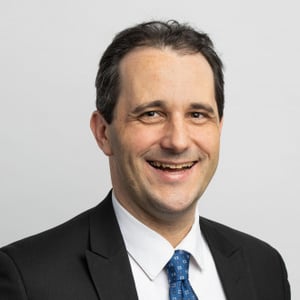
District Judge, United States District Court for the Northern District of Texas
Biography
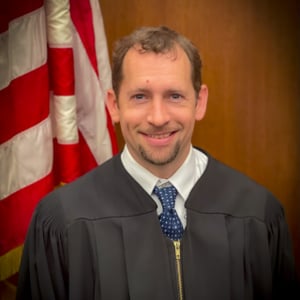
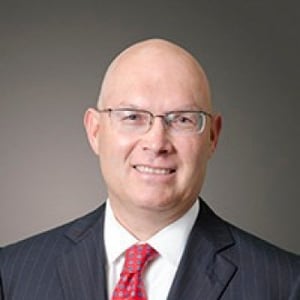
Judge Brantley Starr was appointed to United States District Court for the Northern District of Texas in August 2019. Before his appointment, Judge Starr was the Deputy First Assistant Attorney General of Texas. Prior to that appointment, he served as Deputy Attorney General for Legal Counsel. From 2011 to 2015, Judge Starr served as career staff attorney to Texas Supreme Court Justice Eva Guzman. From 2008 to 2011, he practiced at King & Spalding, LLP. He served in the Office of the Solicitor General from 2006 to 2008. Prior to that, Judge Starr clerked for then-Justice Don Willett on the Texas Supreme Court after serving at the Office of the Attorney General. Judge Starr received his law degree from the University of Texas School of Law and his bachelor of arts degree from Abilene Christian University in 2001. Judge Starr has taught the Origins of the Constitution Class at the University of Texas law, Texas A&M law, and SMU law.
Senior Vice President for Legal Studies, Cato Institute
Biography
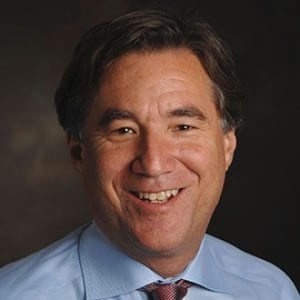
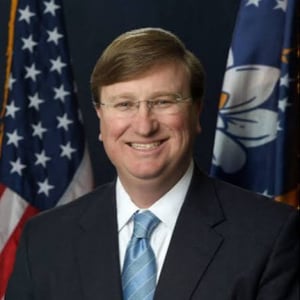
Clark Neily is senior vice president for legal studies at the Cato Institute. His areas of interest include constitutional law, overcriminalization, civil forfeiture, police accountability, and gun rights. Neily is the author of Terms of Engagement: How Our Courts Should Enforce the Constitution’s Promise of Limited Government. His writing has appeared in the Wall Street Journal, Forbes, and National Review Online, as well as various law reviews, including the Harvard Journal of Law and Public Policy, George Mason Law Review, Georgetown Journal of Law and Public Policy, NYU Journal of Law and Liberty, and Texas Review of Law and Politics. Neily is a frequent guest speaker and lecturer for the Federalist Society, Institute for Humane Studies, and American Constitution Society.
Before joining Cato in 2017, Neily was a senior attorney and constitutional litigator at the Institute for Justice and director of the Institute’s Center for Judicial Engagement. He is also an adjunct professor at the University of Texas School of Law, where he teaches constitutional litigation and public-interest law.
Neily served as co-counsel in District of Columbia v. Heller, the historic case in which the Supreme Court held for the first time that the Second Amendment protects an individual right to own a gun for self-defense.
Neily began his legal career as a law clerk to Judge Royce Lamberth on the U.S. District Court for the District of Columbia. After that he spent four years in the trial department of the Dallas-based firm Thompson & Knight. Neily received his undergraduate and law degrees from the University of Texas, where he was Chief Articles Editor of the Texas Law Review.
Ashe Family Chair Professor of Law, Georgia State University College of Law
Biography
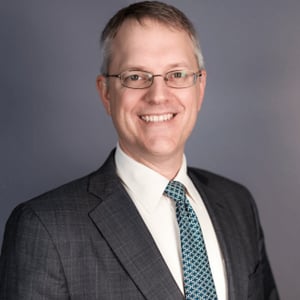
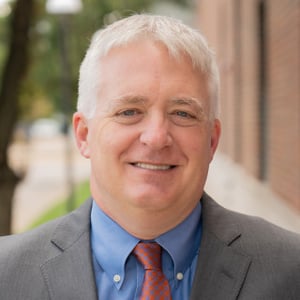
Eric J. Segall graduated from Emory University, Phi Beta Kappa and summa cum laude, and from Vanderbilt Law School, where he was the research editor for the Law Review and member of Order of the Coif. He clerked for the Chief Judge Charles Moye Jr. for the Northern District of Georgia, and Albert J. Henderson of the 11th Circuit Court of Appeals. After his clerkships, Segall worked for Gibson, Dunn & Crutcher and the U.S. Department of Justice, before joining the Georgia State faculty in 1991.
Segall teaches federal courts and constitutional law I and II. He is the author of the books Originalism as Faith and Supreme Myths: Why the Supreme Court is not a Court and its Justices are not Judges. His articles on constitutional law have appeared in, among others, the Harvard Law Review Forum, the Stanford Law Review On Line, the UCLA Law Review, the George Washington Law Review, the Washington University Law Review, the University of Pennsylvania Journal of Constitutional Law, the Northwestern University Law Review Colloquy, and Constitutional Commentary among many others.
Segall’s op-eds and essays have appeared in the New York Times, the LA Times, The Atlantic, SLATE, Vox, Salon, and the Daily Beast, among others. He has appeared on CNN, Fox News, MSNBC, and France 24 and all four of Atlanta’s local television stations. He has also appeared on numerous local and national radio shows.
Julius E. Davis Professor of Law, University of Minnesota Law School
Biography
Ilan Wurman is the Julius E. Davis Professor of Law at the University of Minnesota, where he teaches administrative law and constitutional law. He previously taught at Arizona State University. He writes primarily on the Fourteenth Amendment, administrative law, separation of powers, and constitutionalism. His academic writing has appeared in the Yale Law Journal, the Stanford Law Review, the University of Chicago Law Review, the University of Pennsylvania Law Review, the Virginia Law Review, the Duke Law Journal, the Minnesota Law Review, the Notre Dame Law Review, and the Texas Law Review among other journals.
Professor Wurman is the author of the new book The Constitution of 1789: A New Introduction (Cambridge 2026). His previous books include A Debt Against the Living: An Introduction to Originalism (Cambridge 2017), and The Second Founding: An Introduction to the Fourteenth Amendment (Cambridge 2020). He is also the author of the casebook, Administrative Law Theory and Fundamentals: An Integrated Approach (Foundation Press 3d ed. 2025).
Professor Wurman practices law with the firm Tully Bailey. He has litigated a variety of administrative law and constitutional law cases, including cases involving COVID-19 restrictions, transmission lines, and Appointments Clause challenges. He also devised winning public nuisance theories to force city governments to address the increasingly challenging public camping crises throughout the country.
Professor of Law, South Texas College of Law Houston
Biography
Josh Blackman is a national thought leader on constitutional law and the United States Supreme Court. Josh’s work was quoted during two presidential impeachment trials. He has testified before Congress and advises federal and state lawmakers. Josh regularly appears on TV, including NBC, CBS, ABC, Fox, and the BBC. Josh is also a frequent guest on NPR and other syndicated radio programs. He has published commentaries in the New York Times, Wall Street Journal, Washington Post, and leading national publications.
Since 2012, Josh has served as a professor at the South Texas College of Law Houston. He holds the Centennial Chair of Constitutional Law. Josh is an Adjunct Fellow at the Manhattan Institute. Josh has written more than seven dozen law review articles that have been cited more than a thousand times. Josh was selected as the Jurist of the Year by the Texas Journal of Law & Public Policy, received the inaugural Meese III Originalism Award, and was awarded the Inaugural Joseph Story Award. Josh was selected by Forbes Magazine for the “30 Under 30” in Law and Policy. Josh is the President of the Harlan Institute, and founded FantasySCOTUS, the Internet’s Premier Supreme Court Fantasy League. He blogs at the Volokh Conspiracyand posts@JoshMBlackman.
Chairman and Founder, Institute for Free Speech; Josiah H. Blackmore II/Shirley M. Nault Designated Professor of Law, Capital University Law School
Biography
Bradley Smith is one of the nation’s foremost experts on campaign finance and election law, having served as a Commissioner on the Federal Election Commission from 2000 to 2005, including as Vice Chairman of the Commission in 2003 and Chairman in 2004. While serving as FEC Commissioner, the Wall Street Journal dubbed him, “the only honorable man in this bordello.”
His articles on election law have appeared in the Yale Law Journal, the Georgetown Law Journal, the University of Pennsylvania Law Review, and other top journals, and he contributes regularly to popular publications such as The Wall Street Journal and National Review.
In her book on the history of campaign finance reform, "Big Money Unleashed" (Univ. Of Chicago Press 2024), legal historian Ann Southworth writes, "Smith has done more than any other scholar since the 1970s to advance the legal theories that ultimately prevailed in the Roberts Court."
Smith has been the Josiah H. Blackmore II/Shirley M. Nault Professor of Law at Capital University Law School, and has also held appointments at West Virginia University and Princeton University. He is a cum laude graduate of Harvard Law School and Kalamazoo College.
President and General Counsel, New Civil Liberties Alliance
Biography
NCLA’s President and General Counsel, Mark Chenoweth, has observed the administrative state up close and personal from perches in all four branches of the federal government. Mark served as the first chief of staff to Congressman Mike Pompeo, as legal counsel to Commissioner Anne Northup at the U.S. Consumer Product Safety Commission, as an attorney advisor in the Office of Legal Policy at the U.S. Department of Justice, and as a law clerk to the Hon. Danny J. Boggs on the U.S. Court of Appeals for the Sixth Circuit.
Mark has worked in several different roles in the private sector as well. He began his legal career in D.C. as a regulatory associate at Wilmer, Cutler & Pickering. He then returned to his home state of Kansas to serve as in-house counsel for Koch Industries. Most recently he spent over four years as general counsel of the Washington Legal Foundation.
Mark is a graduate of Yale College and the University of Chicago Law School, where he co-founded the Institute for Justice Clinic on Entrepreneurship and became a Tony Patiño Fellow. Mark has been widely quoted and/or published in newspapers and websites including the New York Times, San Francisco Chronicle, New Hampshire Union Leader, and Metropolitan Corporate Counsel. He has also had recurring op-eds in the Los Angeles Daily Journal, and at Forbes.com.
Leveraging his background as former deputy director of the Office of Federal Contract Compliance Programs (OFCCP), a role in which he managed the agency's enforcement and policymaking activities, Bill defends clients in enforcement litigation, audits, and complaint investigations brought by the OFCCP.
Bill focuses his practice onOFCCP-related compliance issues, including matters of agency jurisdiction, privileged compensation self-evaluations and adverse impact analyses, Affirmative Action Program development and implementation, and Internet Applicant requirements.
He also defends systemic discrimination claims investigated or brought by the U.S. Equal Employment Opportunity Commission (EEOC). And when clients embark on workforce reduction implementation, Bill also provides assistance with federal law matters like privileged statistical risk studies and compliance withOlder Workers Benefit Protection Act (OWBPA), and the Worker Adjustment and Retraining Notification Act (WARN).
Bill has more than two decades of experience assisting clients across a broad range of industries, including petrochemical, energy, consumer products, manufacturing, technology, transportation, retail, pharmaceuticals, and financial services.
Bill is an active participant in community affairs and pro bono work. He has an active federal pro bono practice helping veterans obtain U.S. Department of Veterans Affairs (VA) benefits. He served as lead counsel in Military Order of the Purple Heart v. Sec’y of Veterans Affairs, 580 F.3d 1293 (Fed. Cir. 2009) (invalidating VA’s “extraordinary award review,” and thereby precluding VA from annuallyoverturning 400 benefits awards of $25,000 or more to veterans).
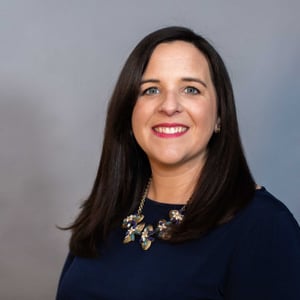
Kara Rollins, Litigation Counsel, comes to NCLA with experience in vindicating client’s rights from agency overreach and holding the administrative state accountable through government transparency projects. Before joining NCLA, Kara was Counsel for Cause of Action Institute where she represented clients in various Federal Trade Commission enforcement actions. She also engaged in strategic research and oversight of Executive Branch agencies, focusing on administrative rulemaking and government oversight and compliance. Prior to joining the Cause of Action Institute in 2016, she clerked for the Hon. Karen M. Cassidy, A.J.S.C. in the Superior Court of New Jersey, Union Vicinage. Preceding her legal career, Kara served as the Political Programs Manager for the National Federation of Independent Business, where she worked with small business owners throughout the country and learned firsthand about the adverse impact the regulatory state has on individuals.
Kara graduated with honors from Rutgers College, Rutgers University with a B.A. in Political Science in 2007, and cum laude from Catholic University’s Columbus School of Law in 2014. During law school, she was a member of The Catholic University Law Review and a Moot Court Associate for the Seigenthaler-Sutherland Cup National First Amendment Moot Court Competition.
Kara is admitted to practice in the District of Columbia, New York, and New Jersey, as well as to the U.S. District Court for the District of Columbia, the U.S. Court of Appeals for the Eleventh Circuit, and the U.S. Supreme Court.
Vice President for Legal Affairs, Mackinac Center for Public Policy
Biography
Patrick Wright is Vice President for Legal Affairs at the Mackinac Center for Public Policy, where he directs the Mackinac Center Legal Foundation. He joined the Center in June 2005 after serving for three years as a Michigan Supreme Court commissioner, a post in which he made recommendations to the court concerning which state appeals court cases it should hear.
Prior to that, Wright spent four years as an assistant attorney general for the State of Michigan, where he gained significant litigation and appellate advocacy experience. He joined the state Attorney General’s Office after one year as a policy advisor in the Senate Majority Policy Office of the Michigan Senate. Wright also spent two years as a law clerk to Hon. H. Russell Holland, a United States district court judge in Alaska.
Wright received his law degree at George Washington University in Washington, D.C. He graduated with honors in 1994. He received his undergraduate degree in political science from the University of Michigan in 1990. In 2025, he was the first public interest attorney to receive the Federalist Society Michigan Lawyers Chapter Grano Award.
Aside from directly representing clients, Wright has filed numerous amicus briefs, including many to the United States Supreme Court. In 2018, the Supreme Court cited his brief on behalf of the Center in the Janus v. AFSCME decision. In addition to being featured in many state publications, he has been published nationally in The Wall Street Journal, The Washington Post, and The Hill. He has appeared on the Sean Hannity Show and was interviewed by Shepard Smith on Fox News.
Wright lives in Midland, Mich., with his wife and sons.
Director, Center for Judicial Engagement, Institute for Justice
Biography
Anthony Sanders is the Director of the Center for Judicial Engagement (CJE) at the Institute for Justice and a senior attorney. He joined IJ in 2010. As CJE’s director, he educates the public about the proper role of judges in enforcing constitutional limits on the size and scope of government. As a senior attorney he litigates cutting-edge constitutional cases protecting economic liberty, private property, freedom of speech and other individual liberties in both federal and state courts across the country.
One area of Anthony’s expertise is on using state constitutions to protect individual rights. He is the author of the book, published by University of Michigan Press, Baby Ninth Amendments: How Americans Embraced Unenumerated Rights and Why It Matters. He has also written several law review articles on state constitutional law, unenumerated rights, judicial review, economic liberty, property rights, international law, and other subjects. His work has appeared in publications such as the Iowa Law Review, Minnesota Law Review, American University Law Review, and Rutgers Law Review, and he has published opinion pieces in leading media outlets across the country. Further, he frequently speaks to various audiences on these matters and others, including judicial engagement, free speech, civil forfeiture, and the continuing importance of Magna Carta. Additionally, he hosts the weekly Short Circuit podcast, which often records live in front of law student audiences.
Anthony has litigated several cases in various state courts on state constitutional protections, as well as in federal courts on matters such as economic liberty, free speech, administrative law, and fines and fees abuse. Prior to joining IJ, Anthony served as a law clerk to Justice W. William Leaphart on the Montana Supreme Court. Anthony also worked for several years in private practice in Chicago where he was an active member of the Chicago Bar Association and chaired its Civil Rights Committee.
Anthony received his law degree cum laude from the University of Minnesota Law School in 2004, where he served as an articles submission editor for the Minnesota Law Review. He received his undergraduate degree from Hamline University in St. Paul, Minnesota, and his master’s degree from the University of Wisconsin-Madison. A dual U.S. and U.K. citizen, Anthony grew up on the islands of Vashon in Washington State, and Alderney in the British Channel Islands.
Laurence H. Silberman Chair in Constitutional Governance, American Enterprise Institute; Executive Director, Antonin Scalia Law School’s C. Boyden Gray Center for the Study of the Administrative State
Biography
Adam J. White is the Laurence H. Silberman Chair in Constitutional Governance and senior fellow at the American Enterprise Institute, where he focuses on the Supreme Court and the administrative state. He also directs the Antonin Scalia Law School’s C. Boyden Gray Center for the Study of the Administrative State.
He writes on regulation and constitutional government for a variety of publications. He practiced law in Washington, D.C., after clerking for the D.C. Circuit's Judge David Sentelle. He also has been chairman of the ABA's Administrative Law Section.
In 2021, he served on the Presidential Commission on the Supreme Court of the United States, where he criticized “Court packing” and other efforts to restructure the Supreme Court.
Alston & Bird Professor of Law, Duke University School of Law
Biography
Professor Young teaches constitutional law, federal courts, and foreign relations law. He is one of the nation's leading authorities on the constitutional law of federalism, having written extensively on the Rehnquist Court's "Federalist Revival" and the difficulties confronting courts as they seek to draw lines between national and state authority. He also is an active commentator on foreign relations law, where he focuses on the interaction between domestic and supranational courts and the application of international law by domestic courts. Professor Young also writes on constitutional interpretation and constitutional theory. He has been known to dabble in maritime law and comparative constitutional law.
A native of Abilene, Texas, Professor Young joined the Duke Law faculty in 2008, after serving as the Charles Alan Wright Chair in Federal Courts at the University of Texas at Austin School of Law, where he had taught since 1999. He graduated from Dartmouth College in 1990 and Harvard Law School in 1993. After law school, he served as a law clerk to Judge Michael Boudin of the 1st U.S. Circuit Court of Appeals (1993-94) and to Justice David Souter of the U.S. Supreme Court (1995-96). Professor Young practiced law at Cohan, Simpson, Cowlishaw, & Wulff in Dallas, Texas (1994-95) and at Covington & Burling in Washington, D.C. (1996-98), where he specialized in appellate litigation. He has also been a visiting professor at Harvard Law School (2004-05) and Villanova University School of Law (1998-99), as well as an adjunct professor at Georgetown University Law Center (1997).
Elected to the American Law Institute in 2006, Professor Young is an active participant in both public and private litigation in his areas of interest. He has been the principal author of amicus briefs on behalf of leading constitutional scholars in several recent Supreme Court cases, including Medellin v. Texas(concerning presidential power and the authority of the International Court of Justice over domestic courts) and Gonzales v. Raich (concerning federal power to regulate medical marijuana).