

This event has concluded.
Third Annual Banquet
The California Club 538 South Flower StreetLos Angeles, California 90071

Here are the latest events.





Dr. John Eastman is the former Henry Salvatori Professor of Law & Community Service and former Dean at Chapman University's Dale E. Fowler School of Law, where he had been a member of the faculty since 1999, specializing in Constitutional Law, Legal History, and Property. He is a founding director of the Center for Constitutional Jurisprudence, a public interest law firm affiliated with the Claremont Institute that he founded in 1999. He has a Ph.D. in Government from the Claremont Graduate School and a J.D. from the University of Chicago Law School, and a B.A. in Politics and Economics from the University of Dallas. He serves as the Chairman of the Board of the National Organization for Marriage.
Prior to joining the Chapman law faculty, Dr. Eastman served as a law clerk to the Honorable Clarence Thomas, Associate Justice, Supreme Court of the United States, and to the Honorable J. Michael Luttig, Judge, United States Court of Appeals for the Fourth Circuit and practiced law with the national law firm of Kirkland & Ellis. Dr. Eastman has also represented numerous clients in important constitutional law matters and has argued before the Supreme Court. On behalf of the Claremont Institute Center for Constitutional Jurisprudence, he has participated as amicus curiae before the Supreme Court of the United States, U.S. Courts of Appeals, and State Supreme Courts in more than one hundred cases of constitutional significance, including Boy Scouts of America v. Dale, Zelman v. Simmons-Harris (the school vouchers case), Kelo v. New London, Ct. (eminent domain), and Van Orden v. Perry (the 10 Commandments case). He has also appeared as an expert legal commentator on numerous television and radio programs, including C-SPAN, Fox News, PBS, NewsHour, and The O'Reilly Factor.
Duane and Kelly Roberts Dean and Professor of Law, Pepperdine University School of Law
Dean Tacha is Duane and Kelly Roberts Dean of the School of Law and professor of law. Previously, she was a Circuit Judge, U.S. Court of Appeals for the Tenth Circuit, since January, 1986. She served as Chief Judge from January 2001 through 2007. Dean Tacha earned her bachelor of arts degree from the University of Kansas in 1968 and her juris doctorate from the University of Michigan in Ann Arbor in 1971, and was a White House Fellow (1971-1972).
She returned to the University of Kansas where she served as associate professor at its School of Law from 1974-1977 and as professor of law from 1977-1985. She served as associate dean from 1977-1979, as associate vice chancellor for Academic Affairs from 1979-1981, and as vice chancellor for Academic Affairs between 1981-1985. In 1992, Dean Tacha received the KU Alumni Association's Fred Ellsworth Medallion for extraordinary service to the university and received its most prestigious award, the Distinguished Service Citation, in 1996. In January of 2010, she was named "Kansan of the Year" by the organization Native Sons and Daughters of Kansas.
Prior to joining the University of Kansas, she practiced law in Washington, D.C. and Kansas, and was for three years Director of the Douglas County Legal Aid Clinic (1974-1977). During her distinguished career, Dean Tacha served as a member of the Judicial Conference of the United States and was named in 2006 by U.S. Supreme Court Chief Justice John Roberts to the Conference's Executive Committee. Previously, Chief Justice Rehnquist appointed her to serve two terms as Chair of the Conference's Committee on the Judicial Branch which oversees the federal judiciary's relationship with Congress and the executive branch. Dean Tacha also was a member of the United States Sentencing Commission which is responsible for studying and making recommendations to Congress about federal sentencing policy.
She has represented the judiciary of the United States internationally on several occasions, including participating in the American College of Trial Lawyers Anglo-American Legal Exchange among members of the bench and bar in the United States and in the United Kingdom. In 1992, the American Bar Association selected Dean Tacha as a member of a delegation of lawyers and judges who traveled to Albania to assist that nation in developing a new constitution and government, and in 2007, Judge Tacha represented American judges in the Canadian-American Legal Exchange.
As a spokesperson for enhanced ethics, professionalism, and civility in the legal profession, Dean Tacha has been active in the American Inns of Court movement. She helped found the Judge Hugh Means American Inn of Court in Lawrence, served on the national Board of Trustees of the American Inns of Court, and was its national president from 2004-2008. Her contributions to the legal profession were recognized when she was named recipient of the Devitt Award in 2007, the highest honor given to a federal judge for distinguished lifetime service. In 2008, she was recipient of the John Marshall Award, which the American Bar Association bestows for positively impacting the justice system.
Dean Tacha holds professional memberships in the American Bar Association, American Bar Foundation (Life Member), American Law Institute, Kansas Bar Association, Phi Beta Kappa, and Order of Coif and she is admitted to the Bar in Kansas, Missouri, and the District of Columbia. Additionally, she is a past chair of the Appellate Judges Conference and a former member of the ABA's Commission on Women in the Profession.
Dean Tacha has held leadership positions in numerous civic and charitable organizations including chairing the Kansas Territorial Sesquicentennial Commission, the Lawrence/Douglas County Heritage Area Commission, and the Freedom's National Heritage Area Board of Trustees. She has served as a member of the board of directors or as a trustee at Kansas State Historical Society, Kansas Health Foundation, Baker University, Saint Paul School of Theology, Lawrence Arts Center, and First United Methodist Church, Lawrence, to name a few.
President, North Star Opinion Research
Dr. Whit Ayres is the President of North Star Opinion Research, formerly Ayres, McHenry, & Associates Inc. Prior to establishing the firm, Ayres served as Senior Executive Assistant for Budget and Policy to Governor Carroll Campbell in South Carolina. He also served as a tenured member of the political science faculty at the University of South Carolina.
Ayres is the Co-Founder of Resurgent Republic with former Republican National Committee Chairman Ed Gillespie. Resurgent Republic develops and disseminates creative conservative messages for the 21st century. The organization conducts periodic surveys and focus groups, and releases the results to the public through its Web site, www.resurgentrepublic.com. He also is the Chairman of the American Association of Political Consultants, (www.theaapc.org), a bi-partisan national organization that promotes the political consulting industry, protects political freedom of speech, and fosters ethical behavior in political campaigns.
Known for his expertise and sharp strategic insight, Ayres is a guest periodically on Fox News, CNN, and National Public Radio. His comments and analysis appear in The Wall Street Journal, The New York Times, The Washington Post, The Los Angeles Times, USA Today, and numerous regional newspapers.
He graduated from Davidson College in Davidson, North Carolina, with a major in political science, and received an M.A. and Ph.D. in political science from the University of North Carolina at Chapel Hill.
Ayres is an active private pilot, flying his Beechcraft Baron throughout the eastern U.S., and he is a member of the Aircraft Owners and Pilots Association. He is also the Virginia State Racquetball champion in his age division.
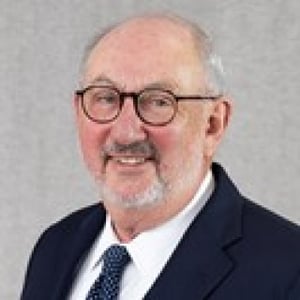
Partner, McGuireWoods LLP
George Terwilliger is co-head of the firm's white collar practice and leads the firm's Strategic Response and Crisis Management practice group. Following his fifteen years of public service in the US Department of Justice, where he began as a law clerk and concluded as Acting Attorney General, George has provided counsel in government and internal investigations, agency enforcement proceedings and in civil and criminal litigation. He has represented many of the nation's and the world's largest corporations, including major financial institutions, energy companies, public institutions as well as leading business and government officials, including members of the US Senate and House as well as cabinet officials. He has also represented lawyers and corporate legal departments in investigations. As a result of both his private sector work and government positions, George is called upon to provide counsel as well as commentary to government officials, Congress and private organizations on national security, homeland defense, terrorism, and other public policy and legal issues. George's work regularly involves providing counsel in the executive suites and boardrooms of major corporations.
In private practice for international law firms, George has represented national and international financial, energy, telecommunications, industrial and healthcare companies. He is a recognized expert in leading credible corporate internal investigations and his experience designing and executing both targeted and global legal compliance reviews has involved work in more than 60 countries around the globe. George is an expert on the Foreign Corrupt Practices Act and regularly provides counsel to companies addressing FCPA issues. No stranger to high stakes litigation and crisis events, George helped lead the Bush-Cheney legal team in the 2000 Florida vote recount, served as special outside counsel to a Senate committee investigating vote fraud allegations, served as counsel to an executive commission on gambling, and has represented many clients in politically charged election law and similar cases. He has guided corporations and individual through high stakes matters of intense public interest. He represented an incumbent president in First Amendment litigation concerning the right to have an inaugural prayer said in a public ceremony.
At the Department of Justice, George served for 10 years as a frontline federal prosecutor, handling hundreds of investigations, trials and appeals, including in white collar and national security cases. President Ronald Reagan appointed him as a U.S. attorney, and he next served as the deputy attorney general and as acting attorney general during the George H.W. Bush administration. As Deputy Attorney General, George ran the Justice Department's operations, overseeing all the nation's federal prosecutors, as well as the FBI and other law enforcement agencies. He also had leadership responsibility in several national and international crises, including a hostage-taking in a federal prison and the federal law enforcement response to domestic unrest in Los Angeles. In several instances, he personally handled negotiations of high-profile criminal and civil matters in the United States and abroad.
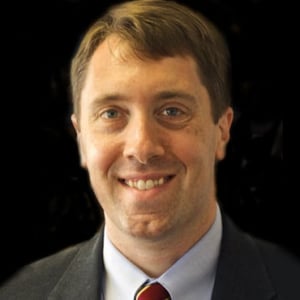
Professor of Law, Antonin Scalia Law School, George Mason University
Eric R. Claeys is Professor of Law at the Antonin Scalia Law School, George Mason University. He has written widely in the fields of property, private law, and constitutional law. Professor Claeys’s current research interests focus on flourishing- and labor-based natural rights justifications for property—in American property theory, in intellectual property, and in contemporary regulation of shale gas exploration and hydraulic fracturing. He is a member of the American Law Institute, he serves on the ALI’s Members’ Consultative Group for the first Restatement of Copyright, and he also serves as an adviser to the Restatement (Fourth) of the Law of Property.
Professor Claeys received his JD from the University of Southern California Gould School of Law. He received his AB from Princeton University, and he is a former visiting fellow and current member of Princeton’s Politics Department’s James Madison Program in American Ideals and Institutions. After law school, Professor Claeys clerked for the Hon. Melvin Brunetti, U.S. Court of Appeals for the Ninth Circuit, and the Hon. William H. Rehnquist, Chief Justice of the United States.
Professor Claeys’s main teaching interests include Property, Torts, Jurisprudence, and Intellectual Property. In recent years, he has also taught Water Law, Remedies, Estates and Trusts, Trade Secrecy, Constitutional Law, Torts, and Oil and Gas law. Spring 2018, he is teaching Torts and Jurisprudence as a Visiting Professor at Harvard Law School.
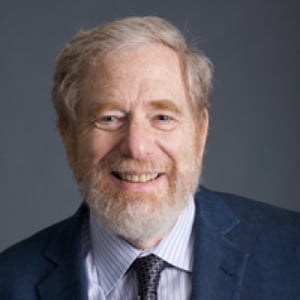
Carmack Waterhouse Professor of Constitutional Law, Georgetown Law
After graduating from Harvard Law School in 1971, Professor Seidman served as a law clerk for J. Skelly Wright of the D.C. Circuit and U.S. Supreme Court Justice Thurgood Marshall. He then was a staff attorney with the D.C. Public Defender Service until joining the Law Center faculty in 1976. He teaches a variety of courses in the fields of constitutional and criminal law. He is co-author of a constitutional law casebook and the author of many articles concerning criminal justice and constitutional law. His most recent books are Silence and Freedom (Stanford 2007), Our Unsettled Constitution: A New Defense of Constitutionalism and Judicial Review (Yale 2001) and Equal Protection of the Laws (Foundation 2002).
Senior Legal Fellow, Edwin Meese III Institute for the Rule of Law, Advancing American Freedom
David B. Smith, PLLC
David B. Smith has over 35 years of white collar criminal experience. He has litigated scores of cases and argued more than one hundred federal criminal appeals as a federal prosecutor and defense attorney, including extensive experience with civil and criminal litigation in the Supreme Court of the United States. Mr. Smith has been repeatedly named in the list of preeminent lawyers in the field of white collar criminal defense by Best Lawyers in America (2012-2021) and Virginia Super Lawyers (2009-2020), and has received the President’s Commendation for outstanding service from the National Association of Criminal Defense Lawyers in 1993, 1994, and 2004. He served for nine years on the Board of the NACDL and has been Chair of its Forfeiture Committee since 1990. He is also a Vice-Chair of its Amicus Committee.
For nearly a decade prior to entering private practice, Mr. Smith was a prosecutor in the Criminal Division of the United States Department of Justice and at the United States Attorney’s Office for the Eastern District of Virginia, where he was involved in complex white collar criminal investigations, trials, and appeals involving defense procurement fraud, congressional bribery, espionage, tax evasion, mail fraud, false claims and other crimes. In 1995-1996, Mr. Smith served as an Associate Independent Counsel in the investigation of Michael Espy, the former secretary of agriculture.
Mr. Smith is regarded as the foremost expert in the country on asset forfeiture law and practice. He is the author of the leading two-volume legal treatise on forfeiture, Prosecution and Defense of Forfeiture Cases (2020), published by Matthew Bender, and co-author of Civil RICO (2020), also published by Matthew Bender. He has testified before congressional committees several times with respect to forfeiture, restitution, and money laundering legislation. Mr. Smith has regularly counseled the Senate and House Judiciary Committees on forfeiture legislation, and was heavily involved in drafting the Civil Asset Forfeiture Reform Act of 2000. He has also assisted the federal advisory committees in writing the procedural rules governing criminal and civil forfeiture proceedings. In 2000-2001, Mr. Smith was appointed by Senator Richard Shelby (R. Ala.), the Chairman of the Senate Intelligence Committee, to serve as a Commissioner with the Judicial Review Commission on Foreign Asset Control.

Laurence A. Tisch Professor of Law and Director, Classical Liberal Institute, New York University School of Law; Director, Classical Liberal Institute, Civitas Institute University of Texas at Austin
Richard A. Epstein is the Laurence A. Tisch Professor of Law, at New York University, a senior research fellow at the Civitas Institute at the University of Texas Austin, and a senior Lecturer, the University of Chicago. He received an LL.D., h.c . from the University of Ghent, 2003 , and an LLD h.c . from the University of Siegen in 2018 and the Bradley Prize in 2011. He has been a member of the American Academy of Arts and Sciences since 1985. He has edited both the Journal of Legal Studies (1981-1991) and the Journal of Law and Economics (1991-2001). He is also a founder and director of the Classical Liberal Institute at NYU Law School. His most recent book is The Classical Liberal Constitution: The Uncertain Quest for Limited Government (2014). His other books include Takings: Private Property and the Power of Eminent Domain ( 1985); Bargaining with the State (1993); Simple Rules for a Complex World (1995); Principles for a Free Society: Reconciling Individual Liberty and the Common Good (1998); Skepticism and Freedom: A Modern Theory of Classical Liberalism (2003); Design for Liberty: Private Property, Public Administration and the Rule of Law (2011), and most recently, The Myth of Birthright citizenship—and Beyond (2026). He has taught courses in , administrative law, antitrust, constitutional, contracts, environmental law, land use planning; real property, torts and water law. He has written and spoken extensively on a wide range of topics, and is writes a regular column for Defining Ideas.
Senior Counsel, Orrick, Herrington & Sutcliffe LLP
Michael J. Madigan is a litigation partner in Orrick's Washington, D.C., office. Mr. Madigan has more than 30 years of experience in white collar criminal investigations, congressional and corporate investigations, corporate governance issues and Washington, D.C., legislative and political issues. He began his legal career by serving as a federal prosecutor where he tried more than 100 jury trials. At age 30, he served as Counsel to Senator Howard Baker on the historic Senate Watergate Committee. In addition, Mr. Madigan has served as Chief Counsel for Senator Fred Thompson's Campaign Finance investigation, Counsel to the Church Committee and Minority Counsel of the Senate Intelligence Committee.
Mr. Madigan has successfully defended corporate and individual clients (including law firms and accounting firms) in a variety of complex criminal, civil and congressional investigations; conducted corporate internal investigations and counseled on corporate governance and Foreign Corrupt Practices Act issues.
Mr. Madigan has been elected to and/or been asked to serve on a variety of boards and has been involved in the major decision-making of each organization, including the Board of Governors of the D.C. Bar (elected to two three-year terms); the Board of Trustees of the District of Columbia Public Defender Service; the Boards of Directors of the Robert A. Shuker Scholarship Fund, Inc.; the Frederick B. Abramson Memorial Foundation, the D.C. Conference on Opportunities for Minorities in the Legal Profession, the Council for Court Excellence and the Bar Association of the District of Columbia (elected to two two-year terms).
Mr. Madigan has been appointed to serve on a number of commissions and committees, including the District of Columbia Federal Judicial Nominating Commission (federal judge selection), the Magistrate Judge Selection Committee (Vice Chairman), the D.C. Judicial Nomination Commission (local judge selection), the D.C. Circuit Judicial Conference and the Mayor's Corporation Counsel Advisory Committee. He has taught Trial Advocacy at the National Institute of Trial Advocacy for the past 20 years, where he received the "Justin Simon Award for Excellence in Teaching" and has been a Delegate to both the D.C. Circuit and D.C. Judicial Conferences for the last 15 years.
Mr. Madigan is a Fellow in the International Academy of Trial Lawyers and a "Master" in the Edward Bennett Williams Inn of Court. He is a Member of the Barristers, the Lawyers Club and the Cosmos Club.
President, TRACE International
Alexandra Wrage is the author of Bribery and Extortion: Undermining Business, Governments and Security and the host of the training DVD Toxic Transactions: Bribery, Extortion and the High Price of Bad Business produced by NBC. Ms. Wrage has written three compliance guidebooks and is a guest blogger on the Huffington Post. She speaks frequently on topics of international law, anti-corruption initiatives and the hidden costs of corruption.
Ms. Wrage currently serves on the Independent Governance Committee (IGC) of the Fédération Internationale de Football Association (FIFA), football’s governing body. She has previously served as Chair of the Anti-Corruption Committee of the ABA’s International Section and Chair of the International Legal Affairs Committee of the Association of Corporate Counsel. She has participated in anti-bribery working groups with the OECD and the UN Global Compact. Ms. Wrage was named one of the “Canadians Changing the World” by the Toronto Globe and Mail in 2011.
Prior to founding TRACE, Ms. Wrage was international counsel at Northrop Grumman where she was responsible for managing and improving the company’s FCPA program, including policy revisions, training, monitoring and board briefings.
Ms. Wrage, a Canadian, studied law at Kings College, Cambridge University. She is a member of the Maryland and District of Columbia bar associations.
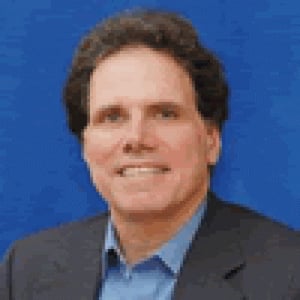
Senior Research Fellow, Open Technology Institute, New America Foundation
As a Senior Research Fellow with New America's Open Technology Institute, Michael Calabrese focuses on developing and advocating policies to promote pervasive connectivity, including spectrum policy reform, wireless broadband deployment and IT investment and innovation more broadly. The founding director of New America's Wireless Future program, Mr. Calabrese also served as Vice President (2003-2010) and was instrumental in establishing the organization's programs in areas including retirement security, health policy and the Next Social Contract Initiative.
Previously, Mr. Calabrese served as General Counsel of the Congressional Joint Economic Committee, as Director of Domestic Policy Programs at the Center for National Policy, and as pension and employee benefits counsel at the national AFL-CIO.
An attorney and graduate of both Stanford Business and Law Schools, Mr. Calabrese speaks and writes frequently on issues related to spectrum, wireless broadband, and Internet policy, as well as on Next Social Contract issues related to improving retirement security and health coverage. He has co-authored three books and published opinion articles in The New York Times, The Washington Post, The Atlantic Monthly and other leading outlets.
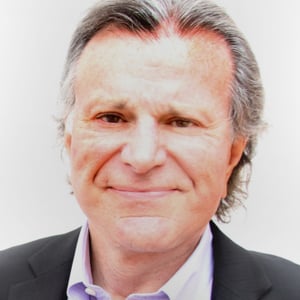
H.H. Macaulay Endowed Professor of Economics, Clemson College of Business
Thomas Hazlett is the Hugh H. Macaulay Endowed Professor of Economics at Clemson University. He has previously held faculty positions at George Mason University, the University of California, Davis, and the Wharton School, and served as Chief Economist of the Federal Communications Commission. A noted expert in regulatory economics and information markets, his research has appeared in academic forums such as the Journal of Law & Economics, RAND Journal of Economics, the Journal of Financial Economics, the University of Pennsylvania Law Review and the Columbia Law Review. He has also written for such popular periodicals as the Wall Street Journal, The Economist, Slate, the N.Y. Times, N.Y. Daily News, Reuters.com, Business Week, The New Republic and the Financial Times. His most recent book, The Political Spectrum: The Tumultuous Liberation of Wireless Technology, from Herbert Hoover to the Smartphone, (Yale, 2017), was featured as one of the top tech books of the year at CES 2018.
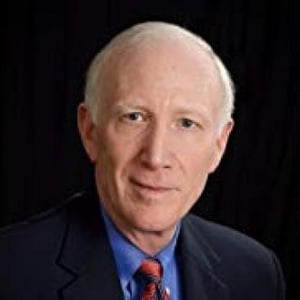
President, The Free State Foundation
Randolph J. May is Founder and President of The Free State Foundation. The Free State Foundation is an independent, non-profit free market-oriented think tank founded in 2006.
From October 1999-May 2006, May was a Senior Fellow and Director of Communications Policy Studies at The Progress & Freedom Foundation, a Washington, DC-based think tank. Prior to joining PFF, he practiced communications, administrative, and regulatory law as a partner at major national law firms. From 1978 to 1981, May served as Assistant General Counsel and Associate General Counsel at the Federal Communication Commission.
May has held numerous leadership positions in bar associations. He is a past Chair of the American Bar Association’s Section of Administrative Law and Regulatory Practice. He is a Fellow of the National Academy of Public Administration. Mr. May also has served as a Public Member of the Administrative Conference of the United States and currently is a Senior Fellow at ACUS.
Mr. May has published more than two hundred articles and essays on communications, administrative and constitutional law topics. He is author of A Call for a Radical New Communications Policy: Proposals for Free Market Reform, and co-author of #CommActUpdate: A Communications Law Fit for the Digital Age and The Constitutional Foundations of Intellectual Property. Mr. May is editor of two books, Communications Law and Policy in the Digital Age: The Next Five Years and New Directions in Communications Policy. In addition, he is the co-editor of two other books, Net Neutrality or Net Neutering: Should Broadband Internet Services Be Regulated? and Communications Deregulation and FCC Reform. In the past, Mr. May has written regular columns on legal and regulatory affairs for Legal Times and the National Law Journal, leading national legal periodicals.
He received his A.B. from Duke University and his J.D. from Duke Law School, where he serves as a member of the Board of Visitors.
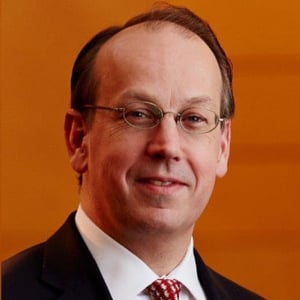
Partner, Clement & Murphy, PLLC
Paul served as the 43rd Solicitor General of the United States from June 2005 until June 2008. Before his confirmation as Solicitor General, he served as Acting Solicitor General for nearly a year and as Principal Deputy Solicitor General for over three years.
Paul has argued over 100 cases before the United States Supreme Court, including McConnell v. FEC, Tennessee v. Lane, United States v. Booker, MGM v. Grokster, Hobby Lobby v. Burwell, Epic Systems Corp. v. Lewis, Rucho v. Common Cause, Facebook v. Duguid, and TransUnion v. Ramirez. Paul has argued more Supreme Court cases since 2000 than any lawyer in or out of government. He has also argued many important cases in the lower courts, including Walker v. Cheney, United States v. Moussaoui and NFL v. Brady.
Paul’s practice focuses on appellate matters, constitutional litigation and strategic counseling. He represents a broad array of clients in the Supreme Court and in federal and state appellate courts. Last year, for example, he successfully argued Supreme Court cases involving significant issues of energy regulation, statutory interpretation, state sovereign immunity and Article III standing, and successfully argued a trademark appeal in the Fourth Circuit, and a constitutional appeal before the en banc Eleventh Circuit.
Paul focuses on high-stakes appeals. In recent years, he successfully defended a $1.2 billion jury verdict for clients in a Tenth Circuit case, while securing the reversal of an over $2 billion jury verdict for another client in the Seventh Circuit and the approval of a nearly $1 billion dollar class action settlement in the Third Circuit. He has initiated major administrative law challenges and constitutional litigation against the federal government, such as the successful challenge to the HHS drug-pricing rule and threatened challenges that led to the withdrawal of the Treasury Department’s proposed cryptocurrency regulations. He also counsels clients on a variety of strategic legal questions, whether arising from pending legislation, government inquiries or ongoing litigation.
Paul has undertaken substantial pro bono engagements in the Supreme Court, such as twice successfully representing the defendant in Bond v. United States and successfully representing the Omaha Tribe in Nebraska v. Parker, the guardian ad litem in Adoptive Couple v. Baby Girl, the defendant in Sekhar v. United States, a high school football coach in Kennedy v. Bremerton, and the Little Sisters of the Poor. Paul’s pro bono representation also precipitated the federal government’s confession of error in United States v. Rojas.
Following law school, Paul clerked for Judge Laurence H. Silberman of the U.S. Court of Appeals for the D.C. Circuit and for Associate Justice Antonin Scalia of the U.S. Supreme Court. After his clerkships, he went on to serve as Chief Counsel of the U.S. Senate Subcommittee on the Constitution, Federalism and Property Rights.
Paul is a Distinguished Lecturer in Law at the Georgetown University Law Center, where he has taught in various capacities since 1998. He also serves as a Senior Fellow of the Law Center’s Supreme Court Institute. He is the Justice Joseph Story Distinguished Practitioner in Residence at the Gray Center at Scalia Law School.