

This event has concluded.
United States Supreme Court Update: A Review of the 2011-2012 Term
Sullivans Steakhouse 300 Colorado StreetAustin, Texas

Here are the latest events.



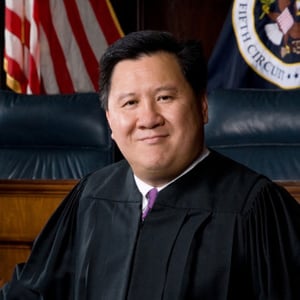
Judge, United States Court of Appeals, Fifth Circuit
James C. Ho is a Circuit Judge on the U.S. Court of Appeals for the Fifth Circuit. Before taking the bench on January 4, 2018, he was a partner and co-chair of the national Appellate and Constitutional Law practice group of Gibson, Dunn & Crutcher LLP.
As an appellate litigator for over a decade, including three years as the Solicitor General of Texas, Judge Ho presented 50 oral arguments in federal and state courts nationwide. He won numerous appeals, including three merits cases at the U.S. Supreme Court. He was routinely ranked among the nation’s leading lawyers by Benchmark, Chambers, Law360, The Legal 500, and The National Law Journal, among other publications. His work has been cited favorably by courts at every level of both the federal and state judiciaries. He won a Best Brief Award from the National Association of Attorneys General for every year that he served as solicitor general, and he is the only state solicitor general in history to be invited by the U.S. Supreme Court to express the views of a state.
Judge Ho has served in all three branches of the federal government. On the Senate Judiciary Committee, he served as chief counsel of the Subcommittees on the Constitution and Immigration under Senator John Cornyn. At the Justice Department, he served as Special Assistant to the Assistant Attorney General for Civil Rights and an attorney-advisor at the Office of Legal Counsel. He clerked for Judge Jerry E. Smith of the U.S. Court of Appeals for the Fifth Circuit and Justice Clarence Thomas of the U.S. Supreme Court.
His record of public service also includes appointments as vice chair of the Federal Judicial Evaluation Committee in Texas and co-chair of the National Asian Pacific American Bar Association Judiciary Committee, and as a member of the U.S. Magistrate Judge Merit Selection Panel for the Northern District of Texas, the U.S. delegation to the United Nations Committee on the Elimination of Racial Discrimination, and the Continuity of Government Commission.
In addition, Judge Ho has served as an Adjunct Professor of Law at the University of Texas School of Law, where he taught seminars on U.S. Supreme Court Litigation and Religious Liberty. He has authored numerous articles in respected law reviews nationwide, including an annual feature on exemplary judicial writing for The Green Bag Almanac & Reader. He previously served as senior editor of The Green Bag and as co-editor of Pub. L. Misc.
Judge Ho graduated from Stanford University with honors and a B.A. in Public Policy in 1995, and the University of Chicago Law School with high honors in 1999. Before law school, he was a legislative aide to California State Senator Quentin Kopp. He and his wife Allyson live in Dallas, Texas, with their twin daughter and son.
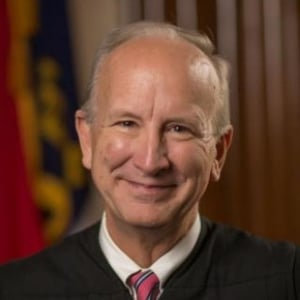
Chief Justice, North Carolina Supreme Court
Chief Justice Paul Newby was born in Asheboro and grew up in Jamestown, N.C. He received his B.A. degree in Public Policy Studies from Duke University and law degree from UNC-Chapel Hill School of Law.
Chief Justice Newby was first elected to the Supreme Court as an Associate Justice in 2004. He was elevated to the highest judicial office in North Carolina in the 2020 election. As Chief Justice, he is head of the Judicial Branch, a co-equal branch of state government with the Legislative and Executive branches. He is entrusted with leading the Judicial Branch and its 7,600 elected officials and employees.
He is an adjunct professor of law at Campbell University and has published a book on the North Carolina Constitution.
Chief Justice Newby’s legal experience includes private practice and corporate inhouse legal counsel. He also served almost 20 years as an Assistant United States Attorney, during which he played an integral role in conducting the undercover sting operation that recovered North Carolina’s original copy of the Bill of Rights, stolen in the aftermath of the Civil War.
Chief Justice Newby is an Eagle Scout and is the recipient of the Heroism Award (for rescuing nine people from a riptide), the God and Service Award, the Silver Beaver Award, and the Scouter of the Year Award. In 2012, he was designated a Distinguished Eagle Scout, a national honor that recognizes both his service to the Boy Scouts and his dedication to public service.
Chief Justice Newby has been married to Macon Tucker Newby since 1983, and they have four children. He is active in his local church, where he serves as a teacher and mentor to young professionals.
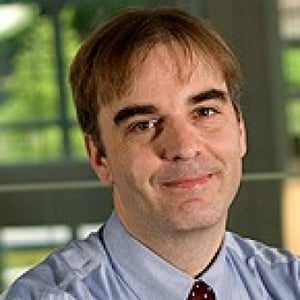
Alston & Bird Professor of Law, Duke University School of Law
Professor Young teaches constitutional law, federal courts, and foreign relations law. He is one of the nation's leading authorities on the constitutional law of federalism, having written extensively on the Rehnquist Court's "Federalist Revival" and the difficulties confronting courts as they seek to draw lines between national and state authority. He also is an active commentator on foreign relations law, where he focuses on the interaction between domestic and supranational courts and the application of international law by domestic courts. Professor Young also writes on constitutional interpretation and constitutional theory. He has been known to dabble in maritime law and comparative constitutional law.
A native of Abilene, Texas, Professor Young joined the Duke Law faculty in 2008, after serving as the Charles Alan Wright Chair in Federal Courts at the University of Texas at Austin School of Law, where he had taught since 1999. He graduated from Dartmouth College in 1990 and Harvard Law School in 1993. After law school, he served as a law clerk to Judge Michael Boudin of the 1st U.S. Circuit Court of Appeals (1993-94) and to Justice David Souter of the U.S. Supreme Court (1995-96). Professor Young practiced law at Cohan, Simpson, Cowlishaw, & Wulff in Dallas, Texas (1994-95) and at Covington & Burling in Washington, D.C. (1996-98), where he specialized in appellate litigation. He has also been a visiting professor at Harvard Law School (2004-05) and Villanova University School of Law (1998-99), as well as an adjunct professor at Georgetown University Law Center (1997).
Elected to the American Law Institute in 2006, Professor Young is an active participant in both public and private litigation in his areas of interest. He has been the principal author of amicus briefs on behalf of leading constitutional scholars in several recent Supreme Court cases, including Medellin v. Texas(concerning presidential power and the authority of the International Court of Justice over domestic courts) and Gonzales v. Raich (concerning federal power to regulate medical marijuana).
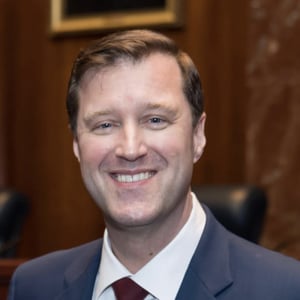
Justice, Texas Supreme Court
Evan Young is a Justice of the Supreme Court of Texas. Governor Greg Abbott, who appointed Young to fill an unexpired term, swore him into office on November 10, 2021. Justice Young was elected to a full term in November 2022.
Young graduated summa cum laude from Duke University in 1999, where he was inducted into Phi Beta Kappa. He was a British Marshall Scholar at Oxford University, where he completed his studies in 2001 and earned a First Class Honours degree in Modern History, focusing on British constitutional history. He earned his law degree from Yale Law School in 2004.
Young then worked as a lawyer in the judicial and executive branches of the federal government. He first served as a law clerk to Judge J. Harvie Wilkinson III of the U.S. Court of Appeals for the Fourth Circuit, and then to Justice Antonin Scalia at the U.S. Supreme Court. In 2006, after his clerkship with Justice Scalia ended, Justice Young became Counsel to the Attorney General at the U.S. Department of Justice, serving in the Office of the Attorney General under Attorneys General Alberto R. Gonzales and Michael B. Mukasey. While on the Attorney General’s staff, he accepted a detail to the U.S. Embassy in Baghdad, Iraq, where he was the Deputy Rule of Law Coordinator. In that position he worked to assist the Iraqi government in its efforts to strengthen its legal regime, including, for example, its courts and prison system.
Young returned to Texas and joined the Austin office of Baker Botts L.L.P. in 2009. His practice focused on trial and appellate litigation. He argued cases before both the Supreme Court of the United States and the Supreme Court of Texas, as well as many federal and state appellate courts. He represented clients across the country before every level of the state and federal judiciary.
Before joining the Texas Supreme Court, Young was appointed in 2017 by Governor Abbott and confirmed by the Texas Senate to serve as a member of the Texas Judicial Council, which is the policy-making body for the Texas Judiciary. In 2015, the Texas Supreme Court appointed him to the Supreme Court Advisory Committee, which assists the Court in drafting the rules that govern litigation in Texas courts. He served on both until his elevation to the bench.
Justice Young is an elected member of the American Law Institute and a member of the Texas Philosophical Society. He has been an adjunct law professor for many years at the University of Texas School of Law, where he has frequently taught the Federal Courts and Religious Liberty courses. He also has been an adjunct professor at the University of Mississippi School of Law, where he has taught multiple courses involving U.S. Supreme Court history. He served as Chair of the State Bar of Texas Business Law Section, Chair of the National Center for Missing and Exploited Children's Texas Regional Office, and Trustee of the Texas Supreme Court Historical Society.
Justice Young and his wife, Tobi, live in Austin with their daughter.
President, Center for Responsible Lending
Mr. Calhoun is President of the Center for Responsible Lending (CRL), a nonprofit, nonpartisan research and policy organization dedicated to protecting homeownership and family wealth by promoting access to fair terms of credit for low-wealth families. CRL has conducted or commissioned landmark studies on the impact of predatory lending laws, worked with states on legislative issues, and pressed for regulatory changes governing mortgage and payday lending. Mr. Calhoun has testified on the federal level in both the U.S House of Representatives and the U.S. Senate. He also currently serves as vice chair of the Federal Reserve Board’s Consumer Advisory Council.
CRL is an affiliate of the Center for Community Self-Help, a nonprofit community development lender, for which Mr. Calhoun has served as General Counsel. He also previously managed Self-Help’s home loan secondary market and real estate development programs. Self-Help’s mission is to create ownership and economic opportunity for women, rural residents and minority and low-wealth families through home mortgage and small business financing. It has provided over $5 billion in financing to more than 60,000 home buyers across the nation, with a loss rate of less than 0.5%.
Mr. Calhoun has specialized in consumer law for more than twenty five years. He has made presentations on predatory lending issues to many organizations, including the FDIC and the National Association of Attorneys General. He holds a B.A. in economics with honors from Duke University and a law degree from the University of North Carolina.
President, Canfield & Associates, Inc.
Anne Canfield is President of Canfield & Associates, Inc., a firm she formed in October 1996. Canfield & Associates, Inc. is a consulting firm providing strategic planning, policy advice, and representational services to major corporations on federal and state legislative and regulatory issues in the financial services, health care, tax, trade and budget policy areas. Ms. Canfield’s affiliated firm, Canfield Press, LLC, publishes The GSE Report, a publication that tracks and analyzes activities of the government-sponsored enterprises including Fannie Mae, Freddie Mac, the Federal Home Loans Banks, Ginnie Mae, Farmer Mac, the Postal Service, TVA, and assistance plans implemented by international governments to stabilize their financial systems. The GSE Report is distributed worldwide to public policy officials, academics, analysts, industry participants, and the media. Ms. Canfield’s firm also publishes the – Roadmap to Financial and Housing Market Stabilization Plans, a weekly publication that tracks the efforts of both the U.S.and worldwide governments to stabilize the financial system; Roadmap to the Dodd-Frank Act, a publication that tracks the requirements of the Act and the federal government’s agencies efforts to implement it; Roadmap to GSE Reform, a newer publication that tracks and compares the legislative initiatives that are being considered on Capitol Hill; The Mortgage Report, a quarterly publication that provides a comprehensive review of the legislative, regulatory and litigation challenges facing the mortgage industry; and the Washington Roundup, a weekly publication that summarizes the U.S. Government’s legislative and regulatory activities in key policy areas which are of interest to the firm’s clients. Prior to forming Canfield & Associates, Inc. Ms. Canfield was a Principal in the firm of McClure, Gerard & Neuenschwander, Inc. (MGN). Ms. Canfield joined MGN following ten years at GE/GE Capital Services. In that position, she developed and implemented corporate policy and legislative and regulatory strategies both domestically and abroad. Before joining GE Capital, Ms. Canfield had over eleven years of experience on Capitol Hill, working as a senior staff advisor for three Members of the U.S. House of Representatives, and then as the senior advisor and Senate Finance Committee aide to a member of the Senate Finance Committee. Ms. Canfield received degrees from Northwestern University and the University of Paris, Paris, France.
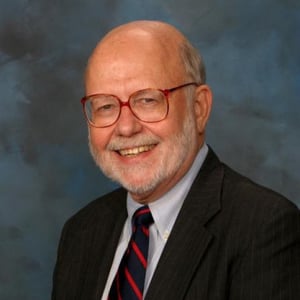
Principal, Ely & Company, Inc.
Bert Ely has specialized in deposit insurance and banking structure issues since 1981. In 1986, he became an early predictor of the S&L crisis and a taxpayer bailout of the FSLIC. In 1991, he was the first person to correctly predict the non-crisis in commercial banking; in 1992, he predicted an eventual taxpayer bailout of the Japanese banking system.
Bert continuously monitors conditions in the banking and S&L industries, monetary policy, and the growing federalization of credit risk. He has helped to draft legislation to enact the cross-guarantee concept for privatizing banking regulation and its related deposit insurance and systemic risks. He has testified on numerous occasions before congressional committees on banking issues and he often speaks on these matters to bankers and others.
Bert first established his consulting practice in 1972. Before that, he was the chief financial officer of a public company, a consultant with Touche, Ross & Company, and an auditor with Ernst & Ernst. He received his MBA from the Harvard Business School in 1968 and his Bachelor's degree in economics in 1964 from Case Western Reserve University.
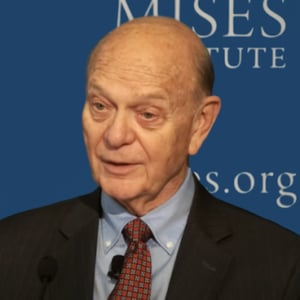
Senior Fellow, Mises Institute
Alex J. Pollock is a Senior Fellow with the Mises Institute, providing thought and policy leadership on financial issues and the study of financial systems. His work includes cycles of booms and busts, financial crises with their political responses, housing finance, government-sponsored enterprises, risk and uncertainty, central banking, banking and financial regulation, corporate governance, retirement finance, student loans, and the politics of finance.
He previously served as the Principal Deputy Director of the Office of Financial Research in the U.S. Treasury Department 2019-2021. He was a Distinguished Senior Fellow with the R Street Institute 2015-2019 and 2021, and a resident fellow at the American Enterprise Institute, 2004-2015. Among the many aspects of his AEI work, he developed the One Page Mortgage Form to give borrowers in clear form the key information they need in order to know what they are committing themselves to. He was President and CEO of the Federal Home Loan Bank of Chicago from 1991 to 2004. There he invented the Mortgage Partnership Finance program, which successfully created front-end mortgage credit risk sharing beginning in 1997. His decades of banking experience include being a Visiting Scholar at the Federal Reserve Bank of St. Louis, 1991.
Pollock was a director of the CME Group 2004-2019 and of Ascendium Education Group 1989-2019. He is a director and past-chairman of the Great Books Foundation and a past president of the International Union for Housing Finance.
He is the co-author of Surprised Again! - The COVID Crisis and the New Market Bubble (2022), and the author of Finance and Philosophy—Why We’re Always Surprised (2018) and Boom and Bust: Financial Cycles and Human Prosperity (2011), as well as numerous articles and Congressional testimony.
Pollock is a graduate of Williams College, the University of Chicago, and Princeton University.
His work is available on alexjpollock.com.
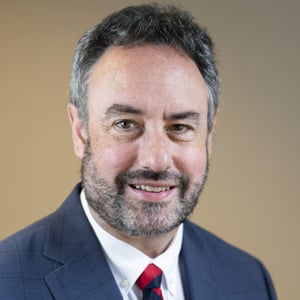
Research Director, Independence Institute
David B. Kopel is Research Director at the Independence Institute; Adjunct Scholar at the Cato Institute; and Senior Fellow at the University of Wyoming College of Law, Firearms Research Center. He received his B.A. in history with Highest Honors from Brown University and his J.D. magna cum laude from the University of Michigan Law School.
He is the author of over 20 books, including the textbook Firearm Law and the Second Amendment: Regulation, Rights, and Policy (Aspen Pubs. 4th ed. forthcoming 2026). His scholarship and briefs have been cited 7 Supreme Court cases--including Heller, McDonald, and Bruen--and in 140 lower courts opinions. He is the author of 120 scholarly articles. His shorter articles often appear on The Volokh Conspiracy blog, hosted by Reason magazine. His topics of interest include the right to arms throughout history, the Colorado Constitution, and law enforcement policy.
Senior Fellow in Constitutional Jurisprudence, Independence Institute
Professor Robert G. Natelson is a constitutional scholar and author.
Rob’s constitutional scholarship has been cited repeatedly by justices and parties at the U.S. Supreme Court—as well as by federal appeals courts, and at least 18 state supreme courts.
Rob’s research into the Constitution’s original meaning has carried him to libraries throughout the United States and in Britain, including four months at Oxford University. His books and articles span many different parts of the Constitution, including groundbreaking studies of the Necessary and Proper Clause, the Indian Commerce Clause, federalism, Founding-Era interpretation, regulation of elections, and the amendment process of Article V. He created the first-ever online bibliography for 18th century materials used in constitutional research. He is a contributing author to the Encyclopedia of the Supreme Court of the United States (on Magna Carta). He contributed eight essays to the third edition of the Heritage Guide to the Constitution: five on the amendment procedure and one each on the Guarantee Clause, the Postal Clause, and the Recess Appointments Clause.
U.S. Supreme Court justices have relied explicitly on Rob’s research in 41 citations in 13 separate cases.
Senior Staff Attorney, Knight First Amendment Institute
Alex Abdo is a senior staff attorney at the Knight First Amendment Institute. Prior to joining the Institute, he was a senior staff attorney at the ACLU. He has been at the forefront of litigation relating to NSA surveillance, encryption, anonymous speech online, government transparency, and the post-9/11 abuse of detainees in U.S. custody. In 2015, he argued the closely watched appeal that resulted in the Second Circuit invalidating the NSA’s call-records program. He graduated from Yale College and Harvard Law School. After law school, Alex clerked for the Hon. Barbara M.G. Lynn, United States District Judge for the Northern District of Texas, and for the Hon. Rosemary Barkett, United States Circuit Judge for the Eleventh Circuit Court of Appeals.
Partner, Davis Polk & Wardwell LLP
Kenneth Wainstein is a partner at Davis Polk & Wardwell, where he focuses his practice on corporate internal investigations and civil and criminal enforcement proceedings. Ken spent over 20 years in a variety of law enforcement and national security positions in the government. Between 1989 and 2001, Ken served as an Assistant U.S. Attorney in both the Southern District of New York and the District of Columbia, where he handled criminal prosecutions ranging from public corruption to gang prosecution cases and held a variety of supervisory positions, including Acting United States Attorney. In 2001, he was appointed Director of the Executive Office for U.S. Attorneys, where he provided oversight and support to the 94 U.S. Attorneys’ Offices. Between 2002 and 2004, Ken served as General Counsel of the Federal Bureau of Investigation and then as Chief of Staff to Director Robert S. Mueller III. In 2004, Ken was appointed and then confirmed as United States Attorney for the District of Columbia, where he had the privilege to lead the largest United States Attorney’s Office in the country. In 2006, the U.S. Senate confirmed Ken as the first Assistant Attorney General for National Security. In that position, Ken established and led the new National Security Division, which consolidated DOJ’s law enforcement and intelligence activities on counterterrorism and counterintelligence matters. In 2008, after 19 years at the Justice Department, Ken was named Homeland Security Advisor by President George W. Bush. In this capacity, he coordinated the nation’s counterterrorism, homeland security, infrastructure protection, and disaster response and recovery efforts. He advised the President, convened and chaired meetings of the Cabinet Officers on the Homeland Security Council, and oversaw the inter-agency coordination process for homeland security and counterterrorism programs.

Dr. John Eastman is the former Henry Salvatori Professor of Law & Community Service and former Dean at Chapman University's Dale E. Fowler School of Law, where he had been a member of the faculty since 1999, specializing in Constitutional Law, Legal History, and Property. He is a founding director of the Center for Constitutional Jurisprudence, a public interest law firm affiliated with the Claremont Institute that he founded in 1999. He has a Ph.D. in Government from the Claremont Graduate School and a J.D. from the University of Chicago Law School, and a B.A. in Politics and Economics from the University of Dallas. He serves as the Chairman of the Board of the National Organization for Marriage.
Prior to joining the Chapman law faculty, Dr. Eastman served as a law clerk to the Honorable Clarence Thomas, Associate Justice, Supreme Court of the United States, and to the Honorable J. Michael Luttig, Judge, United States Court of Appeals for the Fourth Circuit and practiced law with the national law firm of Kirkland & Ellis. Dr. Eastman has also represented numerous clients in important constitutional law matters and has argued before the Supreme Court. On behalf of the Claremont Institute Center for Constitutional Jurisprudence, he has participated as amicus curiae before the Supreme Court of the United States, U.S. Courts of Appeals, and State Supreme Courts in more than one hundred cases of constitutional significance, including Boy Scouts of America v. Dale, Zelman v. Simmons-Harris (the school vouchers case), Kelo v. New London, Ct. (eminent domain), and Van Orden v. Perry (the 10 Commandments case). He has also appeared as an expert legal commentator on numerous television and radio programs, including C-SPAN, Fox News, PBS, NewsHour, and The O'Reilly Factor.
Partner, Gibson Dunn & Crutcher
Douglas R. Cox is a partner in the Washington, D.C. office of Gibson, Dunn & Crutcher and Vice-Chair of the firm's Crisis Management Practice Group. He practices in the areas of constitutional and general commercial litigation, appellate law, and governmental matters.
Mr. Cox has represented numerous clients in litigation before federal and state trial and appellate courts. He played a principal role in the firm's successful representation of the prevailing candidate before the Supreme Court of the United States in Bush v. Palm Beach County Canvassing Board and Bush v. Gore, stemming from the 2000 presidential election, and in other cases before the Supreme Court involving equal protection, voting rights and election law, the scope of the jury trial right under the Seventh Amendment, and other constitutional and statutory issues.
Mr. Cox successfully represented the National Association of Securities Dealers ("NASD") in a series of trial and appellate matters, including DL Capital Group, LLC v. Nasdaq Stock Market, Inc., 409 F.3d 93 (2d Cir. 2005) and Sparta Surgical Corp. v. NASD, 159 F.3d 1209 (9th Cir. 1998).
Mr. Cox frequently represents accounting firms in a variety of matters, including matters involving the SEC and PCAOB. He also has substantial experience representing clients before congressional investigating committees.
Mr. Cox previously served for five years during the Reagan and Bush Administrations in the Justice Department's Office of Legal Counsel, becoming Principal Deputy Assistant Attorney General during the Bush Administration. In that Office, he provided legal advice to Executive Branch departments; resolved legal disputes on behalf of the Attorney General between Executive Branch departments; prepared formal opinions of the Attorney General; drafted and issued opinions on legal issues of importance to the Executive Branch; and advised Congress as to the constitutionality of pending legislation.
From 1981 through 1987, Mr. Cox practiced in New York City with a national firm, representing major corporations in state and federal courts. His practice focused on intellectual property, securities, and international tax litigation.
Mr. Cox received his law degree, cum laude, from Harvard Law School in 1980, where he served as Editor-in-Chief of the Harvard Journal of Law and Public Policy from 1979-1980. He received his undergraduate degree in history, magna cum laude, from Princeton University in 1977. He attended Oxford University on a Knox Scholarship in 1980-1981.
In 2005, Chief Justice Rehnquist appointed Mr. Cox to serve as a member of the Judicial Conference Standing Committee on Rules of Practice and Procedure. In 2008 he was reappointed by Chief Justice Roberts.
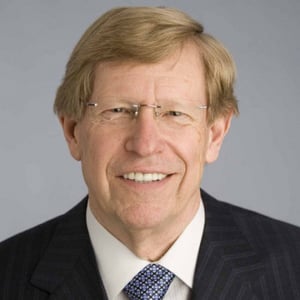
Partner, Gibson Dunn & Crutcher LLP
Theodore B. Olson is a Partner in Gibson, Dunn & Crutcher’s Washington, D.C. office; a founder of the Firm’s Crisis Management, Sports Law, and Appellate and Constitutional Law Practice Groups.
Mr. Olson was Solicitor General of the United States during the period 2001-2004. From 1981-1984, he was Assistant Attorney General in charge of the Office of Legal Counsel in the U.S. Department of Justice. Except for those two intervals, he has been a lawyer with Gibson, Dunn & Crutcher in Los Angeles and Washington, D.C. since 1965.
Selected by Time magazine in 2010 as one of the 100 most influential people in the world, Mr. Olson is one of the nation’s premier appellate and United States Supreme Court advocates. He has argued 65 cases in the Supreme Court and has prevailed in over 75% of those cases. These include the two Bush v Gore cases arising out of the 2000 presidential election; Citizens United v Federal Election Commission; Hollingsworth v Perry, the case affirming the overturning of California’s Proposition 8, banning same-sex marriages; Murphy v NCAA, overturning a federal law prohibiting states from authorizing sports betting; and U.S. Dept. of Homeland Security v Regents of the Univ. of Calif., challenging the Trump Administration’s rescission of the Deferred Action for Childhood Arrivals (“DACA”). Mr. Olson’s practice is concentrated on appellate and constitutional law, federal legislation, media and commercial disputes, and assisting clients with strategies for the containment, management and resolution of major legal crises. He has handled cases at all levels of state and federal court systems throughout the United States. Mr. Olson co-authored “Redeeming the Dream, the Case for Marriage Equality” with David Boies. Both were featured in HBO’s award-winning documentary, “The Case Against 8.”
Mr. Olson's Supreme Court arguments have included cases involving separation of powers; federalism; voting rights; the Tenth Amendment; the First Amendment; the Equal Protection and Due Process Clauses; jury trial rights; punitive damages; takings of property; the Commerce Clause; administrative law; taxation; criminal law; sports wagering; copyright, patent and antitrust; securities; campaign finance; foreign sovereign immunities; telecommunications; the environment; the internet; the Supremacy Clause; and other federal constitutional and statutory questions. As Solicitor General, during the presidency of George W. Bush, Mr. Olson was the Government's principal advocate in the United States Supreme Court, responsible for supervising and coordinating all appellate litigation of the United States, and a legal adviser to the President and the Attorney General. As Assistant Attorney General for the Office of Legal Counsel during the Reagan Administration, Mr. Olson was the Executive Branch's principal legal adviser, rendering legal guidance to the President and to the heads of the Executive Branch departments on a wide range of constitutional and federal statutory questions, and assisting in formulating and articulating the Executive Branch's position on constitutional issues.
Mr. Olson has served as private counsel to two Presidents, Ronald W. Reagan and George W. Bush, in addition to serving those two Presidents in high-level positions in the Department of Justice. He has twice been awarded the United States Department of Justice's Edmund J. Randolph Award, its highest award for public service and leadership, and also received the Department of Defense's Distinguished Public Service Award, its highest civilian award, for his advocacy in the courts of the United States, including the Supreme Court. He also received the American Bar Association Medal, its highest award for “exceptionally distinguished service by a lawyer or lawyers to the cause of American jurisprudence.” Mr. Olson is to receive the 2021 Jack Valenti Friend of the White House Fellows Award in the Fall of 2021 to be presented by the White House Fellows Foundation and Association.
Mr. Olson is a member of the Commission on White House Fellowships; a member of the Board of Trustees of the Ronald Reagan Presidential Foundation; a member of the Board of Visitors of the Federalist Society; the Board of Directors of the Knight First Amendment Institute at Columbia University; and the 9/11 Pentagon Memorial Foundation. He was a visiting scholar at the National Constitution Center in 2007. He served on the President's Privacy and Civil Liberties Oversight Board from 2006 to 2008; and of the Council of the Administrative Conference of the United States from 2010 to 2020. He was Co-Chair of the Knight Commission on the Information Needs of Communities in a Democracy from 2008-2009, and served two terms on the Board of Directors of the National Center for State Courts.
Mr. Olson is a Fellow of both the American College of Trial Lawyers and the American Academy of Appellate Lawyers. He has been repeatedly listed in legal publications as one of the nation’s leading appellate lawyers. The late New York Times columnist William Safire described Mr. Olson as his generation's "most persuasive advocate" before the Supreme Court and "the most effective Solicitor General in decades.”
Mr. Olson received his law degree in 1965 from the University of California at Berkeley (Boalt Hall) where he was a member of the California Law Review and Order of the Coif. He received his bachelor's degree from the University of the Pacific, where he was recognized as the outstanding graduating student in both forensics and journalism. He has written and lectured extensively on appellate advocacy, oral communication in the courtroom, civil justice reform, and constitutional and administrative law.