

Laurence A. Tisch Professor of Law and Director, Classical Liberal Institute, New York University School of Law; Director, Classical Liberal Institute, Civitas Institute University of Texas at Austin
Richard A. Epstein is the Laurence A. Tisch Professor of Law, at New York University, a senior research fellow at the Civitas Institute at the University of Texas Austin, and a senior Lecturer, the University of Chicago. He received an LL.D., h.c . from the University of Ghent, 2003 , and an LLD h.c . from the University of Siegen in 2018 and the Bradley Prize in 2011. He has been a member of the American Academy of Arts and Sciences since 1985. He has edited both the Journal of Legal Studies (1981-1991) and the Journal of Law and Economics (1991-2001). He is also a founder and director of the Classical Liberal Institute at NYU Law School. His most recent book is The Classical Liberal Constitution: The Uncertain Quest for Limited Government (2014). His other books include Takings: Private Property and the Power of Eminent Domain ( 1985); Bargaining with the State (1993); Simple Rules for a Complex World (1995); Principles for a Free Society: Reconciling Individual Liberty and the Common Good (1998); Skepticism and Freedom: A Modern Theory of Classical Liberalism (2003); Design for Liberty: Private Property, Public Administration and the Rule of Law (2011), and most recently, The Myth of Birthright citizenship—and Beyond (2026). He has taught courses in , administrative law, antitrust, constitutional, contracts, environmental law, land use planning; real property, torts and water law. He has written and spoken extensively on a wide range of topics, and is writes a regular column for Defining Ideas.
Laurence A. Tisch Professor of Law and Director, Classical Liberal Institute, New York University School of Law; Director, Classical Liberal Institute, Civitas Institute University of Texas at Austin
Richard A. Epstein is the Laurence A. Tisch Professor of Law, at New York University, a senior research fellow at the Civitas Institute at the University of Texas Austin, and a senior Lecturer, the University of Chicago. He received an LL.D., h.c . from the University of Ghent, 2003 , and an LLD h.c . from the University of Siegen in 2018 and the Bradley Prize in 2011. He has been a member of the American Academy of Arts and Sciences since 1985. He has edited both the Journal of Legal Studies (1981-1991) and the Journal of Law and Economics (1991-2001). He is also a founder and director of the Classical Liberal Institute at NYU Law School. His most recent book is The Classical Liberal Constitution: The Uncertain Quest for Limited Government (2014). His other books include Takings: Private Property and the Power of Eminent Domain ( 1985); Bargaining with the State (1993); Simple Rules for a Complex World (1995); Principles for a Free Society: Reconciling Individual Liberty and the Common Good (1998); Skepticism and Freedom: A Modern Theory of Classical Liberalism (2003); Design for Liberty: Private Property, Public Administration and the Rule of Law (2011), and most recently, The Myth of Birthright citizenship—and Beyond (2026). He has taught courses in , administrative law, antitrust, constitutional, contracts, environmental law, land use planning; real property, torts and water law. He has written and spoken extensively on a wide range of topics, and is writes a regular column for Defining Ideas.
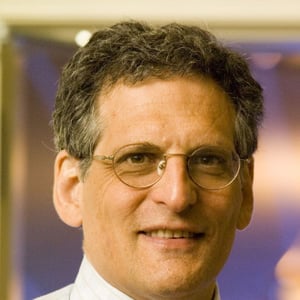
Patricia A. Dore Professor of Administrative Law, Florida State University College of Law
Mark Seidenfeld is the author of influential publications on how administrative law doctrine relates to institutional behavior and agency accountability. Professor Seidenfeld is recognized as one of the country's leading scholars on federal administrative law. He is also author of Microeconomic Predicates to Law and Economics (Anderson Pub. Co., 1996).
He teaches courses in Administrative Law, Constitutional Law, Legislation & Regulation, and has taught courses on a variety of areas of federal regulation. Professor Seidenfeld clerked for the Honorable Patricia Wald of the United States Court of Appeals for the D.C. Circuit and served as assistant counsel for the New York State Public Service Commission. He currently serves on the Scholarship Awards Committee of the American Bar Association's Section on Administrative Law & Regulatory Practice. He holds a B.A. in physics from Reed College and an M.A. in theoretical physics from Brandeis University. He is also a 1983 graduate of Stanford Law School, where he was a senior articles editor for Stanford Law Review and elected to the Order of the Coif.
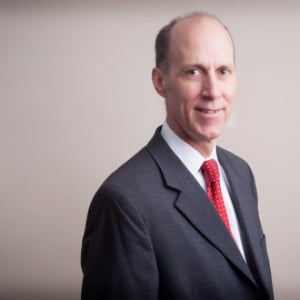
Distinguished Senior Fellow and Antonin Scalia Chair in Constitutional Studies, Ethics and Public Policy Center
Edward Whelan is a Distinguished Senior Fellow of the Ethics and Public Policy Center and holds EPPC’s Antonin Scalia Chair in Constitutional Studies. He is the longest-serving President in EPPC’s history, having held that position from March 2004 through January 2021.
Mr. Whelan directs EPPC’s program on The Constitution, the Courts, and the Culture. His areas of expertise include constitutional law and the judicial confirmation process. As a contributor to National Review Online’s Bench Memos blog, he has been a leading commentator on nominations to the Supreme Court and the lower courts and on issues of constitutional law. He has written essays and op-eds for leading newspapers—including the Wall Street Journal, the New York Times, and the Washington Post—opinion journals, and academic symposia and law reviews. The National Law Journal has named Mr. Whelan among its “Champions and Visionaries” in the practice of law in D.C.
Mr. Whelan is co-editor of three volumes of Supreme Court Justice Antonin Scalia’s work: Scalia Speaks: Reflections on Law, Faith, and Life Well Lived (Crown Forum, 2017), a New York Times bestselling collection of speeches by Justice Scalia; On Faith: Lessons from an American Believer (Crown Forum, 2019), a collection of Justice Scalia’s writings on faith and religion; and The Essential Scalia: On the Constitution, the Courts, and the Rule of Law (Crown Forum, 2020), a collection of Justice Scalia’s views on legal issues.
Mr. Whelan, a lawyer and a former law clerk to Justice Scalia, has served in positions of responsibility in all three branches of the federal government. From just before the terrorist attacks of September 11, 2001, until joining EPPC in 2004, Mr. Whelan was the Principal Deputy Assistant Attorney General for the Office of Legal Counsel in the U.S. Department of Justice. In that capacity, he advised the White House Counsel’s Office, the Attorney General and other senior DOJ officials, and departments and agencies throughout the executive branch on difficult and sensitive legal questions. Mr. Whelan previously served on Capitol Hill as General Counsel to the U.S. Senate Committee on the Judiciary. In addition to clerking for Justice Scalia, he was a law clerk to Judge J. Clifford Wallace of the U.S. Court of Appeals for the Ninth Circuit.
In 1981 Mr. Whelan graduated with honors from Harvard College and was inducted into Phi Beta Kappa. He received his J.D. magna cum laude in 1985 from Harvard Law School, where he was a member of the Board of Editors of the Harvard Law Review.
For more on Mr. Whelan’s background, see this interview.
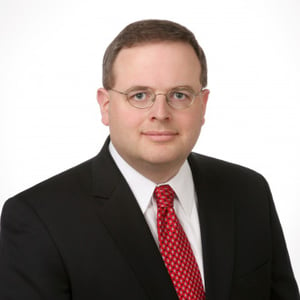
Partner, Hogan Lovells U.S. LLP
Michael P. Kelly is a partner at the law firm of Hogan Lovells U.S. LLP and represents corporations and individuals in a wide range of matters involving federal criminal law. He defends companies and individuals facing criminal cases and investigations brought by the United States Department of Justice. He helps boards of directors and corporations respond to allegations of potentially illegal conduct, including through extensive, thorough, and swift internal investigations. He works from the firm’s Washington, D.C. office, and represents clients in cases in the United States and abroad.
In defending clients in criminal cases, Mr. Kelly has helped them resolve issues involving a wide range of U.S. criminal law, including statutes related to the Foreign Corrupt Practices Act (FCPA), money laundering, conspiracy, tax fraud, wire fraud, mail fraud, sanctions, health care fraud, and theft. He has conducted investigations in numerous countries, including in the United Kingdom, France, Switzerland, Austria, the Czech Republic, Poland, and Brazil.
Some of Mr. Kelly’s cases include the following:
Martindale-Hubbell has awarded Mr. Kelly with its highest rating in White Collar Crime, Criminal Law, and Litigation. In doing so, Martindale-Hubbell cited one defense lawyer who reported: "Michael Kelly and I represented separate individuals in a very complicated and difficult criminal investigation for the past three years. His work on this case was outstanding. His efforts were the primary reason the case was concluded in a very favorable way for our clients and four others. He is an outstanding lawyer and a gentleman."
Mr. Kelly writes frequently on issues of criminal law. His articles have appeared in publications such as American Criminal Law Review, Global Investigations Review, Corporate Counsel, Bloomberg BNA, European Lawyer, and International Law Office. Mr. Kelly also has extensive experience in complex civil cases, including class actions, involving a large variety of civil claims. Prior to entering private practice, Mr. Kelly served as a law clerk to U.S. District Judge Ewing Werlein, Jr. of the U.S. District Court for the Southern District of Texas.
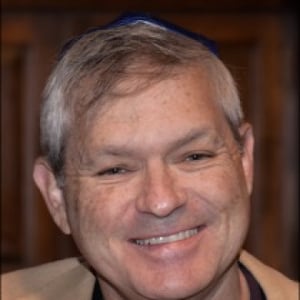
Founder, Wanger Investment Management

Senior Fellow and Director of Constitutional Studies, Manhattan Institute
Ilya Shapiro is a senior fellow and director of constitutional studies at the Manhattan Institute and a contributing editor of City Journal. Previously he was executive director and senior lecturer at the Georgetown Center for the Constitution, and before that a vice president of the Cato Institute.
Shapiro is the author of Lawless: The Miseducation of America’s Elites (2025) and Supreme Disorder: Judicial Nominations and the Politics of America’s Highest Court (2020), coauthor of Religious Liberties for Corporations? (2014), and editor of 11 volumes of the Cato Supreme Court Review (2008-18). He has contributed to a variety of academic, popular, and professional publications, including the Wall Street Journal, Harvard Journal of Law & Public Policy, Washington Post, Los Angeles Times, USA Today, National Review, and Newsweek. He also regularly provides commentary for various media outlets, writes the Shapiro’s Gavel newsletter on Substack, and once appeared on the Colbert Report.
Shapiro has testified many times before Congress and state legislatures and has filed more than 500 amicus curiae “friend of the court” briefs in the Supreme Court. He lectures regularly on behalf of the Federalist Society, is a member of the board of fellows of the Jewish Policy Center, was an inaugural Washington Fellow at the National Review Institute, and has been an adjunct law professor at the George Washington University and University of Mississippi. He is also the chairman of the board of advisers of the Mississippi Justice Institute, a barrister in the Edward Coke Appellate Inn of Court, and a former member of the Virginia Advisory Committee to the U.S. Commission on Civil Rights.
Earlier in his career, Shapiro was a special assistant/adviser to the Multi-National Force in Iraq on rule-of-law issues and practiced at Patton Boggs and Cleary Gottlieb. Before entering private practice, he clerked for Judge E. Grady Jolly of the U.S. Court of Appeals for the Fifth Circuit. He holds an AB from Princeton University, an MSc from the London School of Economics, and a JD from the University of Chicago Law School.
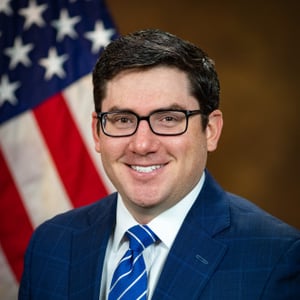
Partner; Firmwide Chair, Appeals, Issues & Strategy Practice, Perkins Coie LLP
Michael Huston is co-chair of the Appeals, Issues & Strategy practice at Perkins Coie LLP, where he counsels some of the World’s leading companies on appellate matters and all aspects of litigation strategy.
Michael is a former Assistant to the Solicitor General at the United States Department of Justice. In that role, he represented the federal government before the Supreme Court of the United States. Michael has argued nine cases before the Supreme Court and briefed hundreds more. He is a member of the Edward Coke Appellate Inn of Court.
Michael previously practiced appellate and administrative law at Gibson, Dunn & Crutcher LLP in Washington, DC. He served as a law clerk to the Honorable John G. Roberts, Jr., Chief Justice of the United States, and to the Honorable Raymond M. Kethledge of the United States Court of Appeals for the Sixth Circuit.
Michael graduated first in his class from the University of Michigan Law School, where he received the Henry M. Bates Memorial Scholarship Award—the law school's highest honor. He served as an editor on the Michigan Law Review.
Michael graduated summa cum laude from the University of Arizona with a bachelor's degree in political science and philosophy. He was elected Phi Beta Kappa.

Topics
SCOTUS Declares That the PTO Is Not A Safe Space
Yesterday, the U.S. Supreme Court released its opinion, Matal v. Tam, previously known as Lee...
Topics
With the Supreme Court's Abandonment, it's Time for States to Protect Property Rights
Private property is a critical ingredient in freedom. That’s why the U.S. Constitution refers to...
Bottleneckers: The Origins of Occupational Licensing and What Can Be Done About Its Excesses
Dick M. Carpenter
Federalist Society Review, Volume 18
Note from the Editor: This article critically discusses economic regulation in general and occupational licensing in...
Undermining Voluntary Property Arrangements
Richard A. Epstein
Short video featuring Richard Epstein
Should the government be involved in property arrangements between private individuals? In this episode, a...
Capture and Dealing with Common Property
Richard A. Epstein
Short video featuring Richard Epstein
What rules govern the acquisition and use of property? In the third installment of Introduction...
Chevron's Foundation: Congressional Delegation of Interpretive Primacy - Podcast
Mark Seidenfeld
Administrative Law & Regulation Practice Group Podcast
This Teleforum explores the foundation for Chevron deference to agency statutory interpretation, and the implications...
Topics
Supreme Court Opinions & Orders Update
Today the Supreme Court released three more opinions. A summary follows: (1) Perry v. Merit...
Scalia and Gorsuch on Chevron Deference
Edward Whelan
Short video featuring Edward Whelan
How do Supreme Court Justices differ in opinion on Chevron deference? Edward Whalen, President of...
SEC Increased Use of Administrative Proceedings and "The $2,200 Man"
Michael Kelly, Eric Wanger
Regulatory Transparency Project Teleforum
In many federal investigations, a regulatory agency must bring legal action against a company or...
Courthouse Steps: Two Cases - Matal v. Tam and Packingham v. North Carolina - Podcast
Ilya Shapiro, Michael Huston
Free Speech & Election Law Practice Group Podcast
The Court has ruled today in two important cases, Matal v. Tam (aka "The Slants"...