Regulatory Takings Law: Exceptions to the Penn Central Approach
Short video featuring Eric Claeys
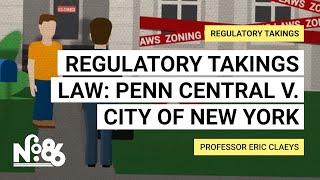
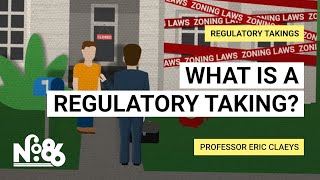
When is a landowner most likely to prevail over the government in a regulatory takings dispute? Professor Eric Claeys, Professor of Law at Antonin Scalia Law School at George Mason University, discusses the two cases that carve out exceptions to the Penn Central approach, which in general construes regulatory takings cases in a way that gives government activity the benefit of the doubt.
The first exception is “touching,” when a land use restriction orders the owner to allow a physical thing or person to come onto the property, the lead case for which is Loretto v. Teleprompter Manhattan CATV Corp (1982). The second exception is “preventing any use” as determined by the case Lucas v. South Carolina Coastal Council (1992).
As always, the Federalist Society takes no position on particular legal or public policy issues; all expressions of opinion are those of the speaker.
Read more about Penn Central Transportation Company V. New York City here

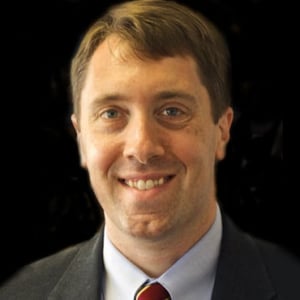
Professor of Law, Antonin Scalia Law School, George Mason University
Eric R. Claeys is Professor of Law at the Antonin Scalia Law School, George Mason University. He has written widely in the fields of property, private law, and constitutional law. Professor Claeys’s current research interests focus on flourishing- and labor-based natural rights justifications for property—in American property theory, in intellectual property, and in contemporary regulation of shale gas exploration and hydraulic fracturing. He is a member of the American Law Institute, he serves on the ALI’s Members’ Consultative Group for the first Restatement of Copyright, and he also serves as an adviser to the Restatement (Fourth) of the Law of Property.
Professor Claeys received his JD from the University of Southern California Gould School of Law. He received his AB from Princeton University, and he is a former visiting fellow and current member of Princeton’s Politics Department’s James Madison Program in American Ideals and Institutions. After law school, Professor Claeys clerked for the Hon. Melvin Brunetti, U.S. Court of Appeals for the Ninth Circuit, and the Hon. William H. Rehnquist, Chief Justice of the United States.
Professor Claeys’s main teaching interests include Property, Torts, Jurisprudence, and Intellectual Property. In recent years, he has also taught Water Law, Remedies, Estates and Trusts, Trade Secrecy, Constitutional Law, Torts, and Oil and Gas law. Spring 2018, he is teaching Torts and Jurisprudence as a Visiting Professor at Harvard Law School.