
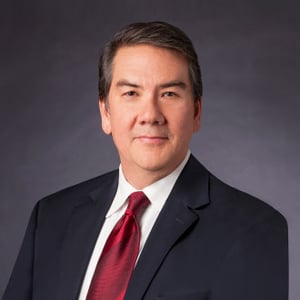
Director of Property Rights Litigation, Pacific Legal Foundation
Robert Thomas is Pacific Legal Foundation’s director of its Property Rights practice group. He is an expert on property rights, takings, land use, and eminent domain issues.
After more than three decades in private practice in Hawaii and California representing property owners in takings, eminent domain, and land use cases, Robert joined PLF’s team of freedom fighters in 2021.
He has litigated cases in both state and federal court. As counsel for the property owners in County of Hawaii v. C&J Coupe Family Limited Partnership, he helped establish the rule that courts are not mere “rubber stamps” when a local government is taking property by eminent domain. Another case, Hamilton ex rel. Lethem v. Lethem, held that a parent’s liberty interest in raising and disciplining his child included a right to fair procedures, including notice and a judicial hearing before the family court could restrict parent-child contact.
Robert is a frequent speaker on property rights, takings, land use, and eminent domain issues nationwide. He also regularly publishes scholarly and practical articles in his area of practice, most recently including, “Hoist the Yellow Flag and Spam® Up: The Separation of Powers Limitation on Hawaii’s Emergency Authority”, 43 U. Haw. L. Rev. 71 (2020) and “Evaluating Emergency Takings: Flattening the Economic Curve”, 29 Wm. & Mary Bill Rts. J. 1145 (2021).
An elected member of the American Law Institute, Robert received his LLM, with honors, from Columbia Law School, where he was a Harlan Fiske Stone Scholar, and his JD from the University of Hawaii School of Law, where he served as editor of the Law Review. He also serves as the inaugural Joseph T. Waldo Visiting Chair in Property Rights Law at William & Mary Law School in Williamsburg, Virginia, where he teaches upper-division courses in eminent domain, land use, property rights, and property law.
When he’s not working, you might find Robert writing and publishing his blog on land use, property, and takings law, inversecondemnation.com, one of the most widely read blogs on those subjects.
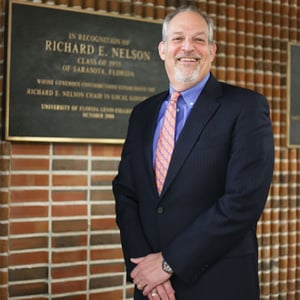
Richard E. Nelson Eminent Scholar Chair in Local Government Professor of Law, University of Florida Levin College of Law
Michael Allan Wolf joined the faculty of the University of Florida Levin College of Law in August, 2003, as the first occupant of the Richard E. Nelson Chair in Local Government Law. Professor Wolf has been teaching and writing for more than three decades in the areas of land-use planning, property, local government, constitutional, environmental, and urban revitalization law; and legal and constitutional history. He earned his B.A. degree from Emory University, his J.D. degree from the Georgetown University Law Center, and his A.M. (history) and Ph.D. (History of American Civilization) degrees from Harvard University. Professor Wolf, who was Professor of Law and History at the University of Richmond, held his first law teaching appointment at Oklahoma City University and has also served as a visiting professor, first at the University of Richmond, then at American University.
Since 2000, Professor Wolf has been the General Editor of Powell on Real Property (17 volumes), the most prominent treatise in the area that is regularly cited by state and federal courts. Other recent books include Land Use Law (with Daniel R. Mandelker, 2015-), The Supreme Court and the Environment: The Reluctant Protector (2012), Land Use Planning and the Environment: A Casebook (with Charles M. Haar, 2010), Powell on Real Property: Michael Allan Wolf Desk Edition (a one-volume abridgement of the treatise, 2009), The Zoning of America: Euclid v. Ambler (2008), and Strategies for Environmental Success in an Uncertain Judicial Climate (editor and contributor, 2005). His writings have also appeared in a wide variety of law and law-related journals (including the Harvard Law Review, Michigan Law Review, and Fordham Law Review), many of them contributions to symposia on topics in land-use regulation, environmental law, eminent domain, and regulatory takings. His commentaries have been featured in national newspapers and on National Public Radio.

Partner, Clement & Murphy, PLLC
Paul served as the 43rd Solicitor General of the United States from June 2005 until June 2008. Before his confirmation as Solicitor General, he served as Acting Solicitor General for nearly a year and as Principal Deputy Solicitor General for over three years.
Paul has argued over 100 cases before the United States Supreme Court, including McConnell v. FEC, Tennessee v. Lane, United States v. Booker, MGM v. Grokster, Hobby Lobby v. Burwell, Epic Systems Corp. v. Lewis, Rucho v. Common Cause, Facebook v. Duguid, and TransUnion v. Ramirez. Paul has argued more Supreme Court cases since 2000 than any lawyer in or out of government. He has also argued many important cases in the lower courts, including Walker v. Cheney, United States v. Moussaoui and NFL v. Brady.
Paul’s practice focuses on appellate matters, constitutional litigation and strategic counseling. He represents a broad array of clients in the Supreme Court and in federal and state appellate courts. Last year, for example, he successfully argued Supreme Court cases involving significant issues of energy regulation, statutory interpretation, state sovereign immunity and Article III standing, and successfully argued a trademark appeal in the Fourth Circuit, and a constitutional appeal before the en banc Eleventh Circuit.
Paul focuses on high-stakes appeals. In recent years, he successfully defended a $1.2 billion jury verdict for clients in a Tenth Circuit case, while securing the reversal of an over $2 billion jury verdict for another client in the Seventh Circuit and the approval of a nearly $1 billion dollar class action settlement in the Third Circuit. He has initiated major administrative law challenges and constitutional litigation against the federal government, such as the successful challenge to the HHS drug-pricing rule and threatened challenges that led to the withdrawal of the Treasury Department’s proposed cryptocurrency regulations. He also counsels clients on a variety of strategic legal questions, whether arising from pending legislation, government inquiries or ongoing litigation.
Paul has undertaken substantial pro bono engagements in the Supreme Court, such as twice successfully representing the defendant in Bond v. United States and successfully representing the Omaha Tribe in Nebraska v. Parker, the guardian ad litem in Adoptive Couple v. Baby Girl, the defendant in Sekhar v. United States, a high school football coach in Kennedy v. Bremerton, and the Little Sisters of the Poor. Paul’s pro bono representation also precipitated the federal government’s confession of error in United States v. Rojas.
Following law school, Paul clerked for Judge Laurence H. Silberman of the U.S. Court of Appeals for the D.C. Circuit and for Associate Justice Antonin Scalia of the U.S. Supreme Court. After his clerkships, he went on to serve as Chief Counsel of the U.S. Senate Subcommittee on the Constitution, Federalism and Property Rights.
Paul is a Distinguished Lecturer in Law at the Georgetown University Law Center, where he has taught in various capacities since 1998. He also serves as a Senior Fellow of the Law Center’s Supreme Court Institute. He is the Justice Joseph Story Distinguished Practitioner in Residence at the Gray Center at Scalia Law School.
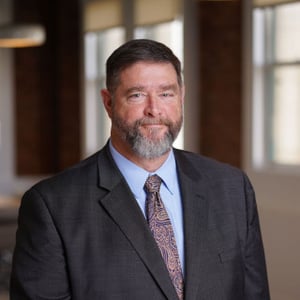
Partner, Briscoe Prows Kao Ivester & Bazel LLP
Tony Francois is experienced in Water and Real Property Law, Land Use and Zoning, Environmental Regulation, Natural Resources Development, Agricultural Law, and Constitutional Law. He has represented homeowners, builders, farmers and ranchers, trade associations, and water districts in administrative, civil, and criminal proceedings before state and federal administrative agencies and state and federal trial and appellate courts. He is a member of the California State Bar and the Northern, Eastern, and Central Districts of California and the Districts of New Mexico and North Dakota, and has litigated cases in federal courts in California, Oregon, Washington, Idaho, Montana, Nevada, Arizona, New Mexico, Colorado, North and South Dakota, Minnesota, Massachusetts, Maryland, South Carolina, and the District of Columbia, as well as the Sixth, Eighth, Ninth, and Tenth Circuit Courts of Appeals. He has appeared before the Supreme Courts of California, Idaho, Nevada, and the United States.
Prior to attending law school, he served as an infantry officer in the United States Army, and was stationed in the former West Germany during the fall of the Berlin Wall.
Tony was an Attorney at Pacific Legal Foundation from 2012 to 2021. He was a lobbyist for 10 years, first with California Farm Bureau Federation from 2003 to 2007, and then with KP Public Affairs from 2007 to 2012. He was an attorney at McQuaid, Bedford & Van Zandt in San Francisco from 1999 – 2003.
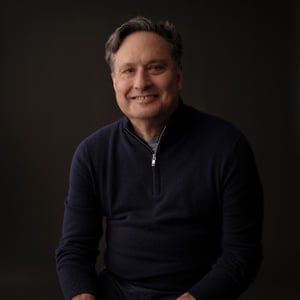
Chief Legal Officer, Airbnb
Ron Klain oversees Airbnb’s global legal and ethics functions and community policy team.
Ron served as the 30th White House Chief of Staff, from January 2021 to February 2023 – the longest tenure of any Democratic President’s first chief of staff.
Ron’s career in public service began as a law clerk to Supreme Court Justice Byron White for the Court’s 1987 and 1988 Terms. Following his time clerking at the Supreme Court, Ron was Chief Counsel of the Senate Judiciary Committee, Staff Director of the Senate Democratic Leadership Committees, Associate Counsel for Judicial Selection under President Clinton, Chief of Staff to Vice President Al Gore, Chief of Staff and Counselor to the US Attorney General, and Chief of Staff to Vice President Joe Biden. In the Obama administration, Ron served as White House Ebola Response Coordinator, to tackle the West African Ebola epidemic of 2014-15.
In the private sector, Ron has served as Partner and National Practice Group Chair at the law firm of O’Melveny & Myers, from 1999-2004 and again in 2023. Earlier he was General Counsel for the technology investment firm Revolution LLC from 2005 to 2020.

Professor of Law and Executive Director, Law and Economics Center, Antonin Scalia Law School, George Mason University
Donald Kochan is Professor of Law and Executive Director of the Law & Economics Center (LEC). Professor Kochan is an elected member of the American Law Institute (ALI) and serves as an Adviser to ALI's Restatement of the Law Fourth, Property project. Professor Kochan is a Nonresident Scholar at the Center for the Constitution at Georgetown University Law Center, where he was a Visiting Scholar in residence during Fall 2018. Before joining the Antonin Scalia Law School faculty, he was the Parker S. Kennedy Professor in Law at Chapman University’s Dale E. Fowler School of Law from 2004 to 2020. From 2003 to 2004, Professor Kochan was an Olin Fellow at the University of Virginia School of Law. During 2002-2003, he was a Visiting Assistant Professor of Law at George Mason’s Scalia Law School.
Professor Kochan’s scholarship focuses on areas of property law, constitutional law, administrative law, local government law, natural resources and environmental law, and law & economics. He has published several books and more than 50 scholarly articles and essays in well-regarded law journals. His work has been cited in more than a dozen state and federal court opinions, in more than 75 briefs filed in state and federal courts including more than 25 filed in the U.S. Supreme Court, in dozens of books and treatises, and in more than 800 scholarly articles.
Professor Kochan received his JD from Cornell Law School, where he was a John M. Olin Scholar in Law and Economics and managing editor of the Cornell International Law Journal. During law school, he also served as editor and executive editor of the Harvard Journal of Law & Public Policy symposium issues in 1997 and 1998. He received his BA from Western Michigan University, magna cum laude, with majors in both political science and philosophy, where he studied as the John W. Gill Medallion Scholar and was honored as the Presidential Scholar (awarded to the top graduate in the political science department).
After graduating from law school, Professor Kochan was a law clerk to The Honorable Richard F. Suhrheinrich of the United States Court of Appeals for the Sixth Circuit. Following his clerkship, Professor Kochan was an associate with the firm of Crowell & Moring LLP in Washington, D.C., where he specialized in natural resources & environmental law as well as tort, products, and consumer civil litigation & legislative affairs.
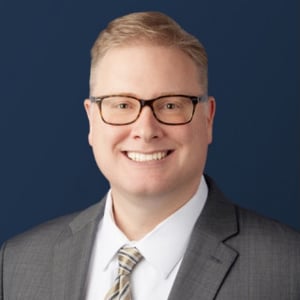
Senior Legal Fellow, Pacific Legal Foundation
Steve Davis is a Senior Legal Fellow in Pacific Legal Foundation’s Constitutional Scholarship group and chair's the Federalist Society's Property Rights Practice Group Executive Committee. Steve’s work at PLF focuses on the study of the U.S. Constitution’s protection of property rights, and he plans and conducts Pacific Legal Foundation-sponsored conferences, symposia, and academic workshops on property rights issues and the Constitution. He enjoys pursuing constitutional scholarship research, writing, and speaking and is a frequent speaker at law and history seminars.
Prior to joining PLF, Steve litigated all stages of property rights cases in federal trial and appellate courts in private practice at large and small law firms. He filed property rights claims on behalf of hundreds of private property owners who own land in over a dozen states against the federal government, litigating those claims through trial and appeal. He also maintained a robust amicus-party practice in the U.S. Supreme Court, filing briefs on behalf of many legal scholars and public-interest groups.
Beginning in 2006, Steve served as an Assistant United States Attorney for the Eastern District of Missouri, litigating civil rights, constitutional tort, tort, and employment discrimination claims in federal district court and the Eighth Circuit Court of Appeals.
Following law school, Steve began his legal career pursing his passion for public policy and the legislative process in the Missouri legislature, where he served first as chief of staff to the minority leader of the Missouri House of Representatives and then was twice elected by the members of the House as the House’s 62nd Chief Clerk and Administrator.
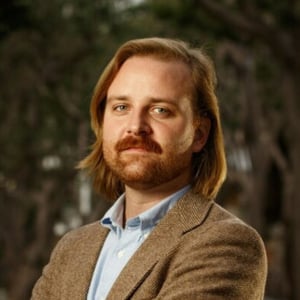
Senior Director of Legislation and Research, California YIMBY
M. Nolan Gray is the Senior Director of Legislation and Research for California YIMBY and a professional city planner. He is currently completing a Ph.D. in city planning at UCLA. Gray currently lives in Los Angeles, where he serves on the North Westwood Neighborhood Council. He is a widely published author, with work appearing in outlets such as The Atlantic, Bloomberg Citylab, and The Guardian.
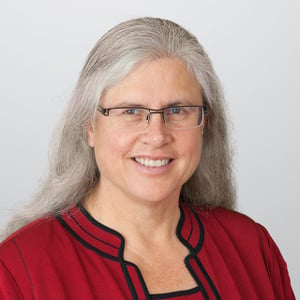
Partner, Holland & Knight
Jennifer Hernandez has practiced land use and environmental law for more than 30 years, and leads Holland & Knight's West Coast Land Use and Environmental Group. Ms. Hernandez divides her time between the firm's San Francisco and Los Angeles offices.
Ms. Hernandez is the only California lawyer ranked by her clients and peers in Chambers USA in the top tier of both land use/zoning and environmental lawyers. In addition, she was recognized as the top environmental litigator of the year in the San Francisco Bay Area by Best Lawyers, and received a California Lawyer of the Year award from the State Bar of California for her work on California's largest and most innovative land use and conservation agreement between her private landowner client and five major environmental organizations, including the Sierra Club and Natural Resources Defense Council. She also has received numerous civil rights awards for her work on overcoming environmentalist opposition to housing and other projects needed and supported by minority communities.
During his tenure as mayor of San Francisco, Willie Brown named October 9, 2002, as "Jennifer Hernandez Day" in San Francisco in honor of her work as a "warrior on the Brownfields" to restore and redevelop former industrial lands. Ms. Hernandez is the longest-serving minority board member (23 years) of the California League of Conservation voters, was appointed by President Clinton to serve as a trustee for the Presidio National Park in San Francisco, and serves on the board of directors for California Forward and Sustainable Conservation.
Ms. Hernandez works for private sector, public agency and nonprofit clients on a broad range of projects in Bay Area, Southern California and Central Valley communities, including infill and master-planned mixed-use housing and commercial projects, university and research facilities, transportation and infrastructure projects, renewable and other energy projects, and local agency plan and ordinance updates. She has written three books, and more than 50 articles, on environmental and land use topics, and regularly teaches land use, environmental and climate law in law and business schools, colleges and seminars. She also serves on the firm's Directors Committee and received the firm's highest honor – the Chesterfield Smith Award – for her community service.
Ms. Hernandez graduated with honors from Harvard University and Stanford Law School, and clerked for Region 20 of the National Labor Relations Board (NLRB) before beginning her land use and environmental law career. Ms. Hernandez is the daughter and granddaughter of steelworkers and was raised in Pittsburg, California. She and her husband live in Berkeley and Los Angeles.

Professor of Law, Antonin Scalia Law School, George Mason University
ILYA SOMIN is Professor of Law at George Mason University and the B. Kenneth Simon Chair in Constitutional Studies at the Cato Institute. His research focuses on constitutional law, property law, democratic theory, federalism, and migration rights. He is the author of Free to Move: Foot Voting, Migration, and Political Freedom (Oxford University Press, revised and expanded edition, 2022), Democracy and Political Ignorance: Why Smaller Government is Smarter (Stanford University Press, revised and expanded second edition, 2016), and The Grasping Hand: Kelo v. City of New London and the Limits of Eminent Domain (University of Chicago Press, 2015, rev. paperback ed., 2016), coauthor of A Conspiracy Against Obamacare: The Volokh Conspiracy and the Health Care Case (Palgrave Macmillan, 2013), and co-editor of Eminent Domain: A Comparative Perspective (Cambridge University Press, 2017). Democracy and Political Ignorance has been translated into Italian and Japanese.
Somin’s work has appeared in numerous scholarly journals, including the Yale Law Journal, Stanford Law Review, Northwestern University Law Review, Georgetown Law Journal, Critical Review, and others. Somin has also published articles in a variety of popular press outlets, including the New York Times, Washington Post, Wall Street Journal, Los Angeles Times, CNN, NBC, The Atlantic, USA Today, Boston Globe, US News and World Report, South China Morning Post, National Law Journal and Reason. He has been quoted or interviewed by the New York Times, Washington Post, Wall Street Journal, Time, Newsweek, The Economist, the Christian Science Monitor, the Financial Times, The Guardian, the Associated Press, CBS, MSNBC, NPR, BBC, Reuters, the Canadian Broadcasting Corporation, the Australian Broadcasting Corporation, Radio Free Europe/Radio Liberty, Al Jazeera, and the Voice of America, among other media.
Somin’s writings have been cited in decisions by the United States Supreme Court, multiple state supreme courts and lower federal courts, and the Supreme Court of Israel. He is co-counsel for the plaintiffs in VOS Selections, Inc. v. Trump, a case challenging the constitutionality of President Trump’s “Liberation Day” tariffs. Somin has testified on the use of drones for targeted killing in the War on Terror before the US Senate Judiciary Subcommittee on the Constitution, Civil Rights, and Human Rights. In 2009, he testified on property rights issues at the United States Senate Judiciary Committee confirmation hearings for Supreme Court Justice Sonia Sotomayor. Somin writes regularly for the popular Volokh Conspiracy law and politics blog, now affiliated with Reason magazine (previously affiliated with the Washington Post from 2014 to 2017). From 2006 to 2013, he served as Co-Editor of the Supreme Court Economic Review, one of the country’s top-rated law and economics journals.
Somin has served as a visiting professor at the University of Pennsylvania Law School. He has also been a visiting professor or scholar at the Georgetown University Law Center, the University of Hamburg, Germany, the University of Torcuato Di Tella in Buenos Aires, Argentina, Uriel Reichman University in Israel, and Zhengzhou University in China. He is a University Affiliate of the Schar School of Policy and Government at George Mason University, and an affiliated faculty member of the George Mason University Institute for Immigration Research. Before joining the faculty at George Mason, Somin was the John M. Olin Fellow in Law at Northwestern University Law School in 2002-2003. In 2001-2002, he clerked for the Hon. Judge Jerry E. Smith of the U.S. Court of Appeals for the Fifth Circuit. Professor Somin earned his B.A., Summa Cum Laude, at Amherst College, M.A. in Political Science from Harvard University, and J.D. from Yale Law School.

Judge, United States Court of Appeals, Third Circuit
Stephanos Bibas is a judge on the U.S. Court of Appeals for the Third Circuit. Judge Bibas was previously a professor of law and criminology at the University of Pennsylvania Law School. As director of the Penn Law Supreme Court Clinic, he argued six cases before the Supreme Court of the United States and filed briefs in dozens of others. He graduated summa cum laude and Phi Beta Kappa from Columbia University in 1989 with a B.A. in political theory and from Oxford University in 1991 with a B.A. in jurisprudence. He then earned his J.D. from Yale Law School in 1994.
After graduating from Yale Law, Judge Bibas clerked for Judge Patrick Higginbotham of the U.S. Court of Appeals for the Fifth Circuit and Justice Anthony Kennedy on the Supreme Court and was a litigation associate at Covington & Burling LLP in Washington, D.C. Thereafter, Judge Bibas served as an Assistant U.S. Attorney in the Southern District of New York, where he successfully prosecuted the world’s leading expert in Tiffany stained glass for hiring a grave robber to steal priceless Tiffany windows from cemeteries. Before his tenure at Penn Law, Judge Bibas taught at the University of Chicago Law School and the University of Iowa College of Law and was a research fellow at Yale Law School. He has published two books and seventy scholarly articles.
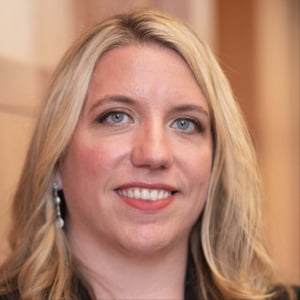
Louis D. Brandeis Professor of Law and Deputy Dean, Harvard Law School
Molly Brady is the Louis D. Brandeis Professor of Law at Harvard Law School, where she teaches property law and related subjects. Her scholarship uses historical analyses of property institutions and land use doctrines to explore broader theoretical questions. Her current research projects involve the relationship between covenants and zoning, the persistence of community knowledge in property doctrine, and the uses of history in state constitutional law. She is also an Associate Reporter for the American Law Institute’s Fourth Restatement of Property.
Previously, Professor Brady taught at the University of Virginia School of Law, where she received the 2019 UVA Student Council Distinguished Teaching Award, the 2018 Z Society Distinguished Faculty Award for “one outstanding member of the University’s faculty who has positively impacted the student body,” and an invitation to the Seven Society 27th Annual Monticello Dinner Series for “exemplary scholarship and transformative instruction of students.” Her recent article, “The Forgotten History of Metes and Bounds,” won both the Association of American Law Schools’ Scholarly Papers Prize for junior faculty members in their first five years of law teaching and the American Society for Legal History’s William Nelson Cromwell Article Prize for the year’s best paper by an early-career scholar.
Professor Brady received an AB summa cum laude in history from Harvard College, where she was elected to Phi Beta Kappa and was awarded the Harvard-Radcliffe Foundation for Women’s Athletics Prize for the top female scholar-athlete. Professor Brady then obtained her JD from Yale Law School, where she was the two-time recipient of the Parker Prize for legal history scholarship and was awarded the Quintin Johnstone Prize in Real Property Law, the Jewell Prize for an outstanding contribution to a Yale Law School journal, and the Cullen Prize for the best paper written by a first-year student. Following graduation, she served as a clerk to Judge Bruce M. Selya on the US Court of Appeals for the First Circuit and practiced at Ropes and Gray in Boston as a corporate associate focusing on intellectual property transactions. After leaving practice, she was in the first graduating class of the PhD in Law program at Yale University.
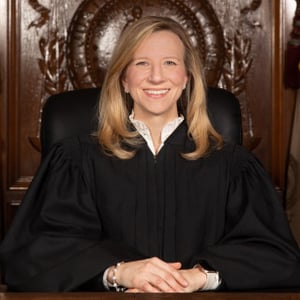
Justice, Supreme Court of Tennessee
Justice Sarah Campbell was confirmed to the Tennessee Supreme Court in 2022. She previously served as an Associate Solicitor General in the Tennessee Attorney General’s Office and as an associate at the law firm of Williams & Connolly LLP in Washington, DC. Justice Campbell earned her law degree from Duke University School of Law, a Master of Public Policy degree from Duke University, and her undergraduate degree from the University of Tennessee, where she received the Torchbearer Award. She served as a law clerk for Justice Samuel A. Alito, Jr. on the United States Supreme Court and Judge William H. Pryor Jr. on the U.S. Court of Appeals for the Eleventh Circuit.
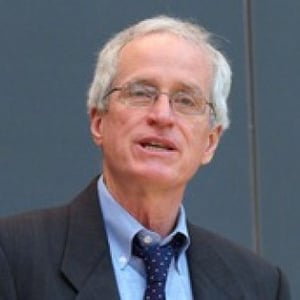
Lecturer, Harvard Law School
James E. Tierney is the former Attorney General of Maine and a Lecturer at Harvard Law School where he teaches a course on the role of state attorneys general while directing the Harvard Attorney General clinic. For thirteen years he was the Director of the National State Attorneys General Program at Columbia Law School, and he has also taught courses at Boston College Law School, Northeastern Law School and the University of Maine School of Law.
Mr. Tierney served as the Attorney General of Maine from 1980 until 1990. During his ten years as Attorney General of Maine, Mr. Tierney played an active role in the National Association of Attorneys General (NAAG) and has instructed newly elected state Attorneys General on the effective performance of their office. Mr. Tierney has also served as a Special Prosecutor in Florida, Pennsylvania, Minnesota and Vermont and, on behalf of NAAG, has authored an analysis of the operations of state grand jury practice throughout the United States. He travels regularly to visit in offices of attorney general where he conducts ethics seminars for incumbent attorneys general and their staffs.
Tierney has served on the Board of both the American Judicature Society and was a member of the Board of Commentators of the Courtroom Television Network. In April of 2006, Professor Tierney was selected as the Columbia Law School Public Interest Professor of the Year. This award, which is given to the faculty member or administrator who has most supported and inspired a significant portion of the public interest law student community, is selected by a vote of students.
Tierney is married to Maine author Elizabeth Strout. He has five children and eight grandchildren.
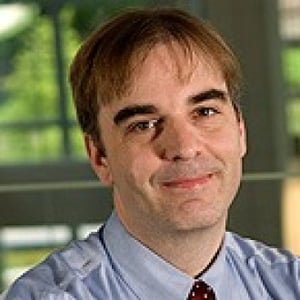
Alston & Bird Professor of Law, Duke University School of Law
Professor Young teaches constitutional law, federal courts, and foreign relations law. He is one of the nation's leading authorities on the constitutional law of federalism, having written extensively on the Rehnquist Court's "Federalist Revival" and the difficulties confronting courts as they seek to draw lines between national and state authority. He also is an active commentator on foreign relations law, where he focuses on the interaction between domestic and supranational courts and the application of international law by domestic courts. Professor Young also writes on constitutional interpretation and constitutional theory. He has been known to dabble in maritime law and comparative constitutional law.
A native of Abilene, Texas, Professor Young joined the Duke Law faculty in 2008, after serving as the Charles Alan Wright Chair in Federal Courts at the University of Texas at Austin School of Law, where he had taught since 1999. He graduated from Dartmouth College in 1990 and Harvard Law School in 1993. After law school, he served as a law clerk to Judge Michael Boudin of the 1st U.S. Circuit Court of Appeals (1993-94) and to Justice David Souter of the U.S. Supreme Court (1995-96). Professor Young practiced law at Cohan, Simpson, Cowlishaw, & Wulff in Dallas, Texas (1994-95) and at Covington & Burling in Washington, D.C. (1996-98), where he specialized in appellate litigation. He has also been a visiting professor at Harvard Law School (2004-05) and Villanova University School of Law (1998-99), as well as an adjunct professor at Georgetown University Law Center (1997).
Elected to the American Law Institute in 2006, Professor Young is an active participant in both public and private litigation in his areas of interest. He has been the principal author of amicus briefs on behalf of leading constitutional scholars in several recent Supreme Court cases, including Medellin v. Texas(concerning presidential power and the authority of the International Court of Justice over domestic courts) and Gonzales v. Raich (concerning federal power to regulate medical marijuana).
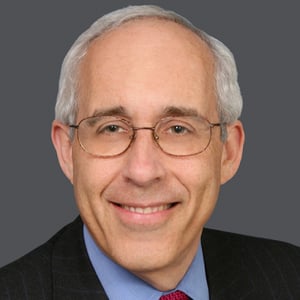
Partner, Mayer Brown LLP
Andrew Pincus is a partner in Mayer Brown LLP resident in Washington, D.C. His practice focuses on Supreme Court and appellate litigation.
Andy has argued 29 cases in the Supreme Court of the United States, including Lamps Plus, Inc. v. Varela and Frank v. Gaos in the October 2018 Term; as well as his recent victories in Impression Products, Inc. v. Lexmark International, Inc. (2017); Kindred Nursing Home Centers Limited Partnership v. Clark (2017); and Spokeo, Inc. v. Robins (2016). Law360 ranked Andy’s victory in AT&T Mobility v. Concepcion (2011), as the most important Supreme Court class action decision of the last 15 years.
Andy appears regularly before federal and state appellate courts and federal district courts. His practice also includes written and oral advocacy before Congress, other legislative bodies, and regulatory agencies regarding a variety of policy and legal issues.
A former Assistant to the Solicitor General in the United States Department of Justice (1984-1988), Andy co-founded and serves as co-director of the Yale Law School's Supreme Court Advocacy Clinic (2006-present), which provides pro bono representation in 10-15 Supreme Court cases each year.
While serving as General Counsel of the United States Department of Commerce (1997-2000), Andy had principal responsibility for the Digital Millennium Copyright Act and the Electronic Signatures in Global and National Commerce Act. He also participated in formulation of policy concerning privacy, domain name management, taxation of electronic commerce, export controls, international trade, and consumer protection.
Andy is a graduate of Yale College and Columbia Law School, where he was a Notes & Comments Editor of the Columbia Law Review. He served as Law Clerk to the Honorable Harold H. Greene, United States District Court for the District of Columbia (1981-1982).
Partner, Briscoe Prows Kao Ivester & Bazel LLP
Tony Francois is experienced in Water and Real Property Law, Land Use and Zoning, Environmental Regulation, Natural Resources Development, Agricultural Law, and Constitutional Law. He has represented homeowners, builders, farmers and ranchers, trade associations, and water districts in administrative, civil, and criminal proceedings before state and federal administrative agencies and state and federal trial and appellate courts. He is a member of the California State Bar and the Northern, Eastern, and Central Districts of California and the Districts of New Mexico and North Dakota, and has litigated cases in federal courts in California, Oregon, Washington, Idaho, Montana, Nevada, Arizona, New Mexico, Colorado, North and South Dakota, Minnesota, Massachusetts, Maryland, South Carolina, and the District of Columbia, as well as the Sixth, Eighth, Ninth, and Tenth Circuit Courts of Appeals. He has appeared before the Supreme Courts of California, Idaho, Nevada, and the United States.
Prior to attending law school, he served as an infantry officer in the United States Army, and was stationed in the former West Germany during the fall of the Berlin Wall.
Tony was an Attorney at Pacific Legal Foundation from 2012 to 2021. He was a lobbyist for 10 years, first with California Farm Bureau Federation from 2003 to 2007, and then with KP Public Affairs from 2007 to 2012. He was an attorney at McQuaid, Bedford & Van Zandt in San Francisco from 1999 – 2003.
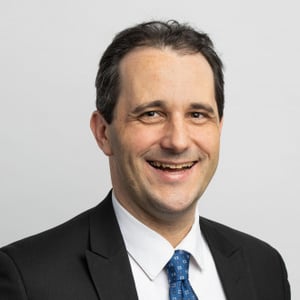
Director, Center for Judicial Engagement, Institute for Justice
Anthony Sanders is the Director of the Center for Judicial Engagement (CJE) at the Institute for Justice and a senior attorney. He joined IJ in 2010. As CJE’s director, he educates the public about the proper role of judges in enforcing constitutional limits on the size and scope of government. As a senior attorney he litigates cutting-edge constitutional cases protecting economic liberty, private property, freedom of speech and other individual liberties in both federal and state courts across the country.
One area of Anthony’s expertise is on using state constitutions to protect individual rights. He is the author of the book, published by University of Michigan Press, Baby Ninth Amendments: How Americans Embraced Unenumerated Rights and Why It Matters. He has also written several law review articles on state constitutional law, unenumerated rights, judicial review, economic liberty, property rights, international law, and other subjects. His work has appeared in publications such as the Iowa Law Review, Minnesota Law Review, American University Law Review, and Rutgers Law Review, and he has published opinion pieces in leading media outlets across the country. Further, he frequently speaks to various audiences on these matters and others, including judicial engagement, free speech, civil forfeiture, and the continuing importance of Magna Carta. Additionally, he hosts the weekly Short Circuit podcast, which often records live in front of law student audiences.
Anthony has litigated several cases in various state courts on state constitutional protections, as well as in federal courts on matters such as economic liberty, free speech, administrative law, and fines and fees abuse. Prior to joining IJ, Anthony served as a law clerk to Justice W. William Leaphart on the Montana Supreme Court. Anthony also worked for several years in private practice in Chicago where he was an active member of the Chicago Bar Association and chaired its Civil Rights Committee.
Anthony received his law degree cum laude from the University of Minnesota Law School in 2004, where he served as an articles submission editor for the Minnesota Law Review. He received his undergraduate degree from Hamline University in St. Paul, Minnesota, and his master’s degree from the University of Wisconsin-Madison. A dual U.S. and U.K. citizen, Anthony grew up on the islands of Vashon in Washington State, and Alderney in the British Channel Islands.
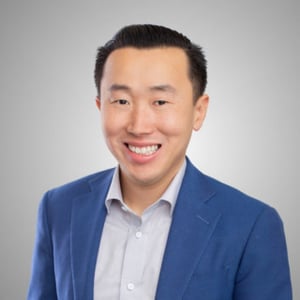
Vice President of Legal Affairs, Beacon Center of Tennessee
Wen Fa is the Vice President of Legal Affairs at the Beacon Center of Tennessee. He also serves on Beacon’s senior leadership team. Wen leads Beacon’s legal department in its efforts to protect the constitutional rights of property owners, entrepreneurs, and other Americans in courts across the United States. Having immigrated to America from Beijing, Wen believes that property rights, economic liberty, and equality under the law are essential to a free society and strives to advance those principles through his work.
Before joining Beacon, Wen was a senior attorney with Pacific Legal Foundation, where he litigated numerous cases involving equality under the law, free speech, economic liberty, and property rights. Wen litigated two Supreme Court cases: Minnesota Voters Alliance v. Mansky, which vindicated the free speech rights of voters, and Cedar Point Nursery v. Hassid, which secured the property rights of agricultural businesses. Wen has also secured important victories for farmers standing up against a racially discriminatory federal farm loan forgiveness program and small business owners who fought back against racial preferences in small business grants.
In addition to litigation, Wen promotes liberty through speeches, debates, and op-eds. Wen testified before Congress in 2021 and has published numerous op-eds in newspapers such as the Wall Street Journal, the Hill, and San Francisco Chronicle. He has spoken about his work in podcasts, on television, and in speeches to students at Georgetown, Duke, and law schools around the country.
Wen graduated with a bachelor’s degree in finance from the University of Texas-Dallas, a master’s degree in political theory from the London School of Economics, where he studied under libertarian scholar Chandran Kukathas, and a law degree from the University of Michigan. Wen is licensed to practice law in California, Texas, and several federal courts, including the Supreme Court of the United States.

Euclid at 100: The Past, Present, and Future of Zoning in America
Isaiah McKinney, Robert H. Thomas, Michael A. Wolf
This year marks the 100th anniversary of the Supreme Court's decision in Village of Euclid v....
Property & Personal Rights: A Discussion of Short-Term Rental Regulations
Paul D. Clement, Tony Francois, Ron Klain, Donald J. Kochan
Short-term rentals—popularized by Airbnb and Vrbo—have been given modern platforms for the customary alternative to...
The California Wildfires and America’s Housing Challenges
Stephen Davis, Nolan Gray, Jennifer L. Hernandez, Ilya Somin
How California’s state and local governments act in the wake of the devastating wildfires will...
Panel I: Federalism and the Separation of Powers
Stephanos Bibas, Maureen Brady, Sarah Keeton Campbell, James E. Tierney, Ernest Young
It has been said that American-style split sovereignty provides the people a “double security” for...
Litigation Update: New York's "Rent Stabilization Act" Part III
Andrew J. Pincus
Does New York’s “rent stabilization” law violate the federal Constitution? The law, which regulates approximately...
Courthouse Steps Decision: Tyler v. Hennepin County, Minnesota
Tony Francois
On Thursday, May 25, 2023, the Supreme Court issued a unanimous decision in Tyler v....
Washington Supreme Court Allows Some Claims To Proceed in Challenge to Delivery Fee Ordinance
Anthony Sanders
In a recent Washington Supreme Court decision, Washington Food Industry Association v. City of Seattle,...
Topics
California Regulation Ruled an Uncompensated Taking in Cedar Point Nursery v. Hassid
On June 23, 2021, the United States Supreme Court issued an important decision for property...
Courthouse Steps Decision Teleforum: Cedar Point Nursery v. Hassid
The Supreme Court issued its decision in Cedar Point Nursery v. Hassid today, June 23, 2021,...
Cedar Point Nursery v. Hassid - Post-Decision SCOTUScast
Wencong Fa
On June 23rd, 2021 the Supreme Court decided Cedar Point Nursery v. Hassid, a case...