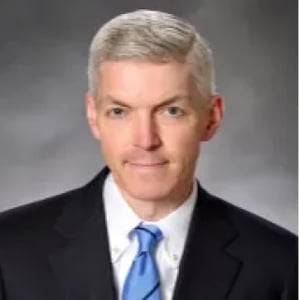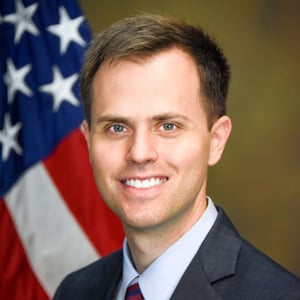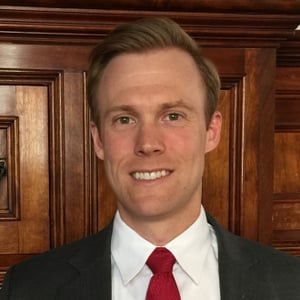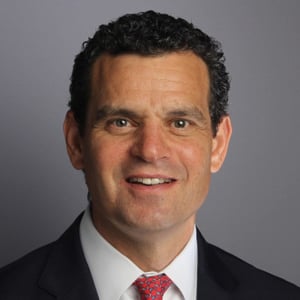
Leadership Counsel, Washington State Senate Republican Caucus
Daniel Himebaugh serves as Leadership Counsel for the Washington State Senate Republican Caucus.
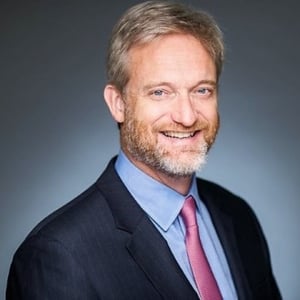
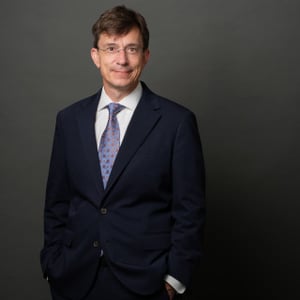
Senior Fellow in Constitutional Jurisprudence, Independence Institute
Professor Robert G. Natelson is a constitutional scholar and author.
Rob’s constitutional scholarship has been cited repeatedly by justices and parties at the U.S. Supreme Court—as well as by federal appeals courts, and at least 18 state supreme courts.
Rob’s research into the Constitution’s original meaning has carried him to libraries throughout the United States and in Britain, including four months at Oxford University. His books and articles span many different parts of the Constitution, including groundbreaking studies of the Necessary and Proper Clause, the Indian Commerce Clause, federalism, Founding-Era interpretation, regulation of elections, and the amendment process of Article V. He created the first-ever online bibliography for 18th century materials used in constitutional research. He is a contributing author to the Encyclopedia of the Supreme Court of the United States (on Magna Carta). He contributed eight essays to the third edition of the Heritage Guide to the Constitution: five on the amendment procedure and one each on the Guarantee Clause, the Postal Clause, and the Recess Appointments Clause.
U.S. Supreme Court justices have relied explicitly on Rob’s research in 41 citations in 13 separate cases.
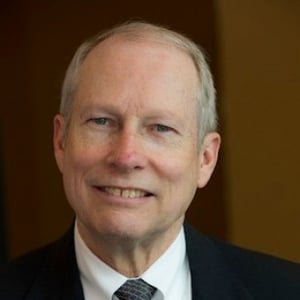
United States Senator from Oklahoma
Senator Lankford of Oklahoma served four years in the U.S. House of Representatives and was elected to the U.S. Senate to complete an unexpired term on November 4, 2014 and re-elected to a full six-year senate term on November 8, 2016.
As chairman of the Senate Subcommittee on Regulatory Affairs and Federal Management, Lankford fights unnecessary and burdensome regulation and advocates for a more restrained federal government.
Personal faith, local decision-making, and opportunity for every person, regardless of their background, are core values for Senator Lankford. Before his time in Congress, from 1995 to 2009, the Senator served as Director of Student Ministry at the Baptist Convention of Oklahoma and Director of the Falls Creek Youth Camp, the largest youth camp in the United States, with more than 51,000 individuals attending each summer.
Committee Assignments:
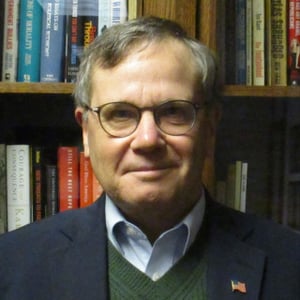
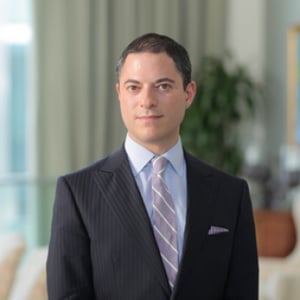
President, Ira Shapiro Global Strategies, LLC
Ira Shapiro is the President of Ira Shapiro Global Strategies, LLC, a consulting firm specializing in international trade, U.S.-Japan relations, and American politics, which he founded in 2014. He brings to the firm 40 years of experience in senior staff positions in the U.S. Senate, the Clinton administration, and private law practice. He is also the author of the critically acclaimed book, The Last Great Senate: Courage and Statesmanship in Times of Crisis, published in 2012.
Mr. Shapiro came to Washington, D.C., in October 1975, to work as Legislative Legal Counsel to Senator Gaylord Nelson (D.-Wisconsin), probably the greatest environmentalist ever to serve in the Senate. In his 12 years working in the Senate, Mr. Shapiro also worked for other Senators. He served as Minority Staff Director to the Governmental Affairs Committee, Staff Director and Chief Counsel to the special Senate Committee on Official Conduct, counsel to Senator Majority Leader Robert Byrd, and the first chief of staff for Jay Rockefeller.
During the deep recession of the early 1980’s, Mr. Shapiro began to focus on America’s position in international trade. He became one of a handful of Senate staffers seeking to define a new U.S. trade and competitiveness policy, working closely with leaders in business, labor, and academia concerned about the same issues. When Bill Clinton became president, Mr. Shapiro became General Counsel to United States Trade Representative Mickey Kantor in February 1993. As General Counsel, he played a central role in the negotiation and legislative approval of the North American Free Trade Agreement (NAFTA) and the multilateral Uruguay Round that created the World Trade Organization and the current trade rules.
In 1995, President Clinton nominated Mr. Shapiro for Ambassadorial rank, which the Senate rapidly and unanimously approved. Ambassador Shapiro served as the principal U.S. trade negotiator with Japan and Canada, helping to successfully resolve some of the most contentious bilateral disputes with America’s two leading trading partners: autos and auto parts, semiconductors and insurance with Japan, and softwood lumber with Canada.
Mr. Shapiro has experience in dealing with the European Union, Canada, Mexico and China, but he has focused particularly on Japan, and U.S-Japan relations. He has 30 years of extensive and diverse experience in dealing with the Japanese government and business community. He first worked with Japan as Chief of Staff to Senator Rockefeller and played a key role in the efforts to save Wheeling Pittsburgh Steel through a joint venture with Nisshin Steel of Japan. After his work in the Clinton administration, as many other trade lawyers and consultants shifted their focus to China, Mr. Shapiro continued to concentrate his work on U.S.-Japan relations. In September 2012, Mr. Shapiro became the Chairman of the National Association of Japan-America Societies (NAJAS), the Washington-based organization that supports the activities of 36 Japan-America Societies around the country. As Chairman, he speaks frequently about U.S.-Japan relations and the importance of the Trans-Pacific Partnership (TPP) negotiations, appearing in Dallas-Ft. Worth, Atlanta, Houston, Philadelphia, San Diego, Cincinnati, Chicago, Denver, Seattle and San Francisco. On December 10, 2015, during a celebration of the 70th anniversary of the end of the War, Japanese Ambassador to the U.S., Ken-Ichiro Sasae, gave Mr. Shapiro the Foreign Minister’s Commendation, an award from the Japanese Ministry of Foreign Affairs in recognition of his outstanding achievements in promoting friendship between Japan and the United States.
Mr. Shapiro is well known in Tokyo, where he has spoken regularly and been received considerable press coverage. In February 2014, he came to Tokyo at the invitation of the Japan External Trade Organization (JETRO), and spoke to several leading business organizations, including Keidanren, the Japan Electronics Association (JEITA), and the Japan Foreign Trade Council. In September 2013, his remarks at the Japan National Press Club attracted 45 reporters. Mr. Shapiro’s interviews have appeared in Asahi Shimbun, Japan Times, Nikkei, and on NHK, where Tokyo’s best known interviewer, Kaori Iida, interviewed him for 30 minutes.
Mr. Shapiro has considerable experience working at the intersection of trade and health. From 2001-2003, representing the Campaign for Tobacco Free Kids, he played a prominent role in the negotiation of the Framework Convention on Tobacco Control (FCTC), the first global treaty negotiated under the auspices of the World Health Organization. He authored an article contending that cigarettes should be treated as an exception to the normal trade rules, because of their lethal nature. Most recently, Mr. Shapiro served on a Council on Foreign Relations task force studying the spread of non-communicable diseases in the developing world.
Since leaving government, Mr. Shapiro has practiced international trade law in Washington, D.C., and been a partner in several major law firms, most recently Greenberg Traurig, LLP. In August 2015, while continuing his own law work, he became a Senior Advisor to the Albright Stonebridge Group (ASG), a premier consulting firm with tremendous global reach co-chaired by Madeleine Albright, Sandy Berger and Carlos Gutierrez. He has specialized in WTO disputes, and played an important role in the landmark cases brought by the United States against China for copyright piracy, representing the motion picture, recording and publishing industries.
Mr. Shapiro has a long history of deep involvement in Democratic presidential campaigns, and was part of the legal teams that helped Bill Clinton and Al Gore make their vice presidential choices. Mr. Shapiro ran an unsuccessful, but widely admired, race for Congress in Maryland in 2002. A local newspaper described his campaign as the “antidote to cynicism that he promised to deliver.”
He writes and speaks frequently about U.S. politics, and particularly the U.S. Senate. After the publication of his book in 2012, Mr. Shapiro spoke in 19 states, including appearances at four Presidential Libraries (Kennedy, Ford, Carter and Clinton). His articles have been published in the New York Times, Bloomberg Review, ccn.com, and local newspapers in Seattle, Detroit, and Portland, Maine.
Mr. Shapiro graduated from Brandeis University, magna cum laude with honors in politics, in 1969, received his Master’s degree in political science from the University of California at Berkeley in 1970, and his law degree from the University of Pennsylvania in 1973. Before coming to Washington to work in the Senate, Mr. Shapiro clerked for a federal district judge in Philadelphia and practiced law in Chicago.
E. Claiborne Robins Distinguished Chair in Law, University of Richmond School of Law
Professor Kurt Lash teaches and writes about constitutional law. Founder and director of the Richmond Program on the American Constitution, Professor Lash has published widely on the subjects of constitutional law and constitutional history, including The Fourteenth Amendment and the Privileges or Immunities of American Citizenship (Cambridge University Press, 2014), The Lost History of the Ninth Amendment (Oxford University Press, 2009), and The American First Amendment in the Twenty-first Century: Cases and Materials(with William W. Van Alstyne) (5th ed., Foundation Press, 2014). An elected member of the American Law Institute, Professor Lash’s work has appeared in numerous legal journals including the Stanford Law Journal, Georgetown Law Journal, Virginia Law Review, andNotre Dame Law Review. He has been a visiting professor at Northwestern University School of Law and is the former director of the University of Illinois College of Law Program in Constitutional Theory, History, and Law.
Judge, United States District Court, Eastern District of Arkansas
Lee Philip Rudofsky is a judge on the United States District Court for the Eastern District of Arkansas. Prior to his 2019 appointment by President Trump, Judge Rudofsky served as the Solicitor General of Arkansas, an Assistant General Counsel at Walmart, a Senior Litigation Associate at Kirkland & Ellis, and counsel to several Republican political campaigns. Today, in addition to his judicial service, Judge Rudofsky teaches law school classes on founding-era constitutional history and, separately, speaks to students across the country about the October 7th Massacre and the subsequent Israeli response. In 2024, Judge Rudofsky helped establish an annual judicial education mission to Israel that offers American judges the opportunity to learn first-hand about the Israeli legal system, Israeli society, and legal issues related to the Israel-Hamas war.
Chairman, Center for Equal Opportunity
Linda Chavez is Chairman of the Center for Equal Opportunity. She has published opinions and columns in newspapers across the country and appears regularly on cable news. Chavez is the author of the three books: Out of the Barrio: Toward a New Politics of Hispanic Assimilation, An Unlikely Conservative: The Transformation of an Ex-Liberal, and Betrayal: How Union Bosses Shake Down Their Members and Corrupt American Politics. She has been honored by the Library of Congress as a "Living Legend" and as nominee for Secretary of Labor by President George W. Bush.
Chavez has held many appointed positions and has served on numerous corporate and nonprofit boards. Among her appointed positions has been Chairman, National Commission on Migrant Education (1988-1992); White House Director of Public Liaison (1985); Staff Director of the U.S. Commission on Civil Rights (1983-1985); and member of the Administrative Conference of the United States (1984-1986). Chavez was also the Republican nominee for U.S. Senator from Maryland in 1986 and was elected by the United Nations' Human Rights Commission to serve a four-year term as U.S. Expert to the U.N. Sub-commission on the Prevention of Discrimination and Protection of Minorities.
Chavez earned her BA from the University of Colorado.
Senior Fellow, Center for Equal Opportunity
Eastland is an accomplished journalist who was editor of The Virginian-Pilot in Norfolk, Va., before working in the Reagan administration as a speechwriter for Attorney General William French Smith and as director of public affairs for Attorney General Edwin Meese.
Eastland was later a resident scholar at the Ethics and Public Policy Center and the editor of Forbes MediaCritic. In 2001, he became publisher of The Weekly Standard and, in 2013, an executive editor. He is now a contributing editor at the magazine. Eastland has published seven books, including two on race preferences, Counting by Race (1979) and Ending Affirmative Action (1996). "The Center has done exceptional work on matters involving race and ethnicity," said Eastland, "and I look forward to contributing to its efforts in behalf of equal protection under the law."
CEO president and general counsel Roger Clegg recalled his work with Eastland during their days together in the Reagan Justice Department: "Terry is an expert on the media, a skilled editor, and a brilliant writer." CEO chairman and founder Linda Chavez said, "Eastland's writing on affirmative action has been among the most incisive and compelling on the issue over the years and will add depth to CEO's work in this arena."
Director, Educational Opportunities Project, Lawyers’ Committee for Civil Rights Under Law
Brenda Shum is Director of the Educational Opportunities Project at the Lawyers' Committee for Civil Rights Under law where she oversees complex litigation, public policy advocacy, and programs designed to ensure educational equity for all students and to eliminate discriminatory practices in schools. sHer practice focuses on the enforcement of civil rights in both K-12 and higher education systems. She is part of the legal team representing underrepresented minority students and applicants defending race conscious admissions policies at Harvard and the University of North Carolina. She was one of the lead counsel in successful litigation which challenged Maryland's failure to desegregate its discriminatory system of higher education, and she served as part of the legal team that settled a lawsuit against the Louisiana State Department of Education which challenged the state's failure to address disability discrimination in New Orleans charter schools. As Director of the Educational Opportunities Project, Brenda works to ensure that federal and state policy protects our most vulnerable students, including students of color, students with disabilities, low-income students, and English Language Learners. Brenda serves on the steering committee for the National Coalition for School Diversity, the Education Civil Rights Alliance, and the Dignity in Schools Campaign. She also oversees the Parental Readiness and Empowerment Program, an initiative designed to support parents and families in becoming more effective advocates for their children, and Let Us Learn, an initiative that protects the right of all students to enroll in public school regardless of immigration status.
Freelance Journalist and Author
Stuart Taylor, Jr. is a Washington writer focusing on legal and policy issues and a National Journal contributing editor. He occasionally practices law.
Taylor has coauthored three books. All have been acclaimed by commentators across the ideological spectrum. In January 2017, KC Johnson and Taylor authored The Campus Rape Frenzy: The Attack on Due Process at America's Universities. In 2012, Richard Sander and Taylor authored Mismatch: How Affirmative Action Hurts Students It's Intended to Help, and Why Universities Won't Admit It. In 2007, Taylor and Johnson authored Until Proven Innocent: Political Correctness and the Shameful Injustices of the Duke Lacrosse Rape Fraud. Sander and Taylor have also filed amicus briefs in Supreme Court cases involving admissions preferences.
Since 1980, Taylor has done reporting and commentary about issues ranging from the biggest Supreme Court cases to race, voting rights, mindlessly excessive criminal penalties, guilt-presuming campus rape processes, journalistic bias, the death penalty, war powers, gerrymandering, guns, polarization, civil liberties, national security, torture, campaign finance, education, impeachment, and other issues. He has often been called one of the nation's best legal journalists and is known for challenging both liberal and conservative conventional wisdom.
Taylor was a reporter for The New York Times from 1980-1988, covering legal affairs and then the Supreme Court. He wrote commentaries and long features for The American Lawyer, Legal Times and their affiliates from 1989-1997, and for National Journal and Newsweek from 1998 through 2010. He has written (less often) on a freelance basis for numerous publications since 2010. He has written op-eds for The Washington Post, The New York Times, The Wall Street Journal, The Los Angeles Times, USA Today, and The New York Daily News and longer commentaries for RealClearPolitics, The Atlantic, The New Republic, the (late) Weekly Standard, National Review, Slate, The Daily Beast, Harper’s, Reader’s Digest, Time and other magazines. He has been interviewed on all major television and radio networks. He taught “Law and the News Media” at Stanford Law School in 2011 and 2012 and practices law on occasion.
Taylor graduated from Princeton University in 1970 with an A.B. in History. After working as a reporter for the Baltimore Evening Sun and Sun from 1971-1974, he moved to Harvard Law School, was a Harvard Law Review note editor, and graduated in 1977 at the top of his class, with high honors. He also won a Frederick Sheldon Traveling Fellowship and traveled around the world in 1977-1978 while studying freedom of the press in the United Kingdom and Kenya.
Taylor practiced law with Wilmer, Cutler & Pickering, in Washington, D.C., from 1977-1980 before returning to journalism in 1980 by joining the Washington Bureau of The New York Times.
Taylor's journalism honors include the 2009 Northern California Innocence Project Media Award for his work on the Duke lacrosse rape fraud; a 2002 National Headliner Award for best special magazine column on one subject; and a share of The American Lawyer’s National Magazine Award for a March 1990 special issue on the drug war. He was a National Magazine Award finalist in 1993 and 1997 and was nominated by The New York Times for a Pulitzer Prize in 1988.
President, Asian American Coalition for Education
Mr. Yukong Zhao is a distinguished Chinese American civil-rights activist, the President of the Asian American Coalition for Education, and the author of the book, The Chinese Secrets For Success: Five Inspiring Confucian Values.
In May 2015 Mr. Zhao and other Asian American leaders united 64 Asian American organizations and filed a civil-rights complaint against Harvard University. As the largest joint action taken by Asian-American communities in recent history, the plaintiffs contend that the complaint helped expose Ivy League colleges’ systematic discrimination against Asian American applicants to the national and world stage. The complaint is currently under the investigation by the U.S. Department of Justice.
In addition to continuing the fight for Asian American children's equal education rights, Mr. Zhao also writes columns in Orlando Sentinel, Forbes, The World Journal, Sing Tao Daily and IndiaWest to promote Chinese culture and advance Asian American social progress.
Senior Research Fellow, Center for Equal Opportunity
In D.C. area for over 20 years, Althea Nagai, Ph.D., is a research fellow at the Center for Equal Opportunity. She has conducted numerous statistical analyses on racial and ethnic preferences in higher education, including racial and ethnic preferences in undergraduate education at five public universities in Virginia, the University of Michigan, two Arizona universities, the University of Wisconsin-Madison, two Ohio universities, and various law and medical schools. In addition, she has written two essays for CEO focusing on Asian Americans, “Too Many Asian Americans,” and “Harvard Investigates Harvard.”
She has also has done work on other statistical studies in the field of social policy. Her first study was a content analysis and critique of the national history standards with John Fonte and Lynne Cheney. She has also conducted studies on marriage, religion, and family structure; on adolescent risk behavior; on philanthropy and social change; and on American elites (American Elites, with Robert Lerner and Stanley Rothman, 1996 Yale University Press).
Chairman, Center for Equal Opportunity
Linda Chavez is Chairman of the Center for Equal Opportunity. She has published opinions and columns in newspapers across the country and appears regularly on cable news. Chavez is the author of the three books: Out of the Barrio: Toward a New Politics of Hispanic Assimilation, An Unlikely Conservative: The Transformation of an Ex-Liberal, and Betrayal: How Union Bosses Shake Down Their Members and Corrupt American Politics. She has been honored by the Library of Congress as a "Living Legend" and as nominee for Secretary of Labor by President George W. Bush.
Chavez has held many appointed positions and has served on numerous corporate and nonprofit boards. Among her appointed positions has been Chairman, National Commission on Migrant Education (1988-1992); White House Director of Public Liaison (1985); Staff Director of the U.S. Commission on Civil Rights (1983-1985); and member of the Administrative Conference of the United States (1984-1986). Chavez was also the Republican nominee for U.S. Senator from Maryland in 1986 and was elected by the United Nations' Human Rights Commission to serve a four-year term as U.S. Expert to the U.N. Sub-commission on the Prevention of Discrimination and Protection of Minorities.
Chavez earned her BA from the University of Colorado.
Senior Fellow, Center for Equal Opportunity
Eastland is an accomplished journalist who was editor of The Virginian-Pilot in Norfolk, Va., before working in the Reagan administration as a speechwriter for Attorney General William French Smith and as director of public affairs for Attorney General Edwin Meese.
Eastland was later a resident scholar at the Ethics and Public Policy Center and the editor of Forbes MediaCritic. In 2001, he became publisher of The Weekly Standard and, in 2013, an executive editor. He is now a contributing editor at the magazine. Eastland has published seven books, including two on race preferences, Counting by Race (1979) and Ending Affirmative Action (1996). "The Center has done exceptional work on matters involving race and ethnicity," said Eastland, "and I look forward to contributing to its efforts in behalf of equal protection under the law."
CEO president and general counsel Roger Clegg recalled his work with Eastland during their days together in the Reagan Justice Department: "Terry is an expert on the media, a skilled editor, and a brilliant writer." CEO chairman and founder Linda Chavez said, "Eastland's writing on affirmative action has been among the most incisive and compelling on the issue over the years and will add depth to CEO's work in this arena."
Director, Educational Opportunities Project, Lawyers’ Committee for Civil Rights Under Law
Brenda Shum is Director of the Educational Opportunities Project at the Lawyers' Committee for Civil Rights Under law where she oversees complex litigation, public policy advocacy, and programs designed to ensure educational equity for all students and to eliminate discriminatory practices in schools. sHer practice focuses on the enforcement of civil rights in both K-12 and higher education systems. She is part of the legal team representing underrepresented minority students and applicants defending race conscious admissions policies at Harvard and the University of North Carolina. She was one of the lead counsel in successful litigation which challenged Maryland's failure to desegregate its discriminatory system of higher education, and she served as part of the legal team that settled a lawsuit against the Louisiana State Department of Education which challenged the state's failure to address disability discrimination in New Orleans charter schools. As Director of the Educational Opportunities Project, Brenda works to ensure that federal and state policy protects our most vulnerable students, including students of color, students with disabilities, low-income students, and English Language Learners. Brenda serves on the steering committee for the National Coalition for School Diversity, the Education Civil Rights Alliance, and the Dignity in Schools Campaign. She also oversees the Parental Readiness and Empowerment Program, an initiative designed to support parents and families in becoming more effective advocates for their children, and Let Us Learn, an initiative that protects the right of all students to enroll in public school regardless of immigration status.
Freelance Journalist and Author
Stuart Taylor, Jr. is a Washington writer focusing on legal and policy issues and a National Journal contributing editor. He occasionally practices law.
Taylor has coauthored three books. All have been acclaimed by commentators across the ideological spectrum. In January 2017, KC Johnson and Taylor authored The Campus Rape Frenzy: The Attack on Due Process at America's Universities. In 2012, Richard Sander and Taylor authored Mismatch: How Affirmative Action Hurts Students It's Intended to Help, and Why Universities Won't Admit It. In 2007, Taylor and Johnson authored Until Proven Innocent: Political Correctness and the Shameful Injustices of the Duke Lacrosse Rape Fraud. Sander and Taylor have also filed amicus briefs in Supreme Court cases involving admissions preferences.
Since 1980, Taylor has done reporting and commentary about issues ranging from the biggest Supreme Court cases to race, voting rights, mindlessly excessive criminal penalties, guilt-presuming campus rape processes, journalistic bias, the death penalty, war powers, gerrymandering, guns, polarization, civil liberties, national security, torture, campaign finance, education, impeachment, and other issues. He has often been called one of the nation's best legal journalists and is known for challenging both liberal and conservative conventional wisdom.
Taylor was a reporter for The New York Times from 1980-1988, covering legal affairs and then the Supreme Court. He wrote commentaries and long features for The American Lawyer, Legal Times and their affiliates from 1989-1997, and for National Journal and Newsweek from 1998 through 2010. He has written (less often) on a freelance basis for numerous publications since 2010. He has written op-eds for The Washington Post, The New York Times, The Wall Street Journal, The Los Angeles Times, USA Today, and The New York Daily News and longer commentaries for RealClearPolitics, The Atlantic, The New Republic, the (late) Weekly Standard, National Review, Slate, The Daily Beast, Harper’s, Reader’s Digest, Time and other magazines. He has been interviewed on all major television and radio networks. He taught “Law and the News Media” at Stanford Law School in 2011 and 2012 and practices law on occasion.
Taylor graduated from Princeton University in 1970 with an A.B. in History. After working as a reporter for the Baltimore Evening Sun and Sun from 1971-1974, he moved to Harvard Law School, was a Harvard Law Review note editor, and graduated in 1977 at the top of his class, with high honors. He also won a Frederick Sheldon Traveling Fellowship and traveled around the world in 1977-1978 while studying freedom of the press in the United Kingdom and Kenya.
Taylor practiced law with Wilmer, Cutler & Pickering, in Washington, D.C., from 1977-1980 before returning to journalism in 1980 by joining the Washington Bureau of The New York Times.
Taylor's journalism honors include the 2009 Northern California Innocence Project Media Award for his work on the Duke lacrosse rape fraud; a 2002 National Headliner Award for best special magazine column on one subject; and a share of The American Lawyer’s National Magazine Award for a March 1990 special issue on the drug war. He was a National Magazine Award finalist in 1993 and 1997 and was nominated by The New York Times for a Pulitzer Prize in 1988.
President, Asian American Coalition for Education
Mr. Yukong Zhao is a distinguished Chinese American civil-rights activist, the President of the Asian American Coalition for Education, and the author of the book, The Chinese Secrets For Success: Five Inspiring Confucian Values.
In May 2015 Mr. Zhao and other Asian American leaders united 64 Asian American organizations and filed a civil-rights complaint against Harvard University. As the largest joint action taken by Asian-American communities in recent history, the plaintiffs contend that the complaint helped expose Ivy League colleges’ systematic discrimination against Asian American applicants to the national and world stage. The complaint is currently under the investigation by the U.S. Department of Justice.
In addition to continuing the fight for Asian American children's equal education rights, Mr. Zhao also writes columns in Orlando Sentinel, Forbes, The World Journal, Sing Tao Daily and IndiaWest to promote Chinese culture and advance Asian American social progress.
Senior Research Fellow, Center for Equal Opportunity
In D.C. area for over 20 years, Althea Nagai, Ph.D., is a research fellow at the Center for Equal Opportunity. She has conducted numerous statistical analyses on racial and ethnic preferences in higher education, including racial and ethnic preferences in undergraduate education at five public universities in Virginia, the University of Michigan, two Arizona universities, the University of Wisconsin-Madison, two Ohio universities, and various law and medical schools. In addition, she has written two essays for CEO focusing on Asian Americans, “Too Many Asian Americans,” and “Harvard Investigates Harvard.”
She has also has done work on other statistical studies in the field of social policy. Her first study was a content analysis and critique of the national history standards with John Fonte and Lynne Cheney. She has also conducted studies on marriage, religion, and family structure; on adolescent risk behavior; on philanthropy and social change; and on American elites (American Elites, with Robert Lerner and Stanley Rothman, 1996 Yale University Press).
Professor of Social and Political Theory, University of Buckingham
Norman Patrick Barry was an English political philosopher best known as an exponent of classical liberalism. For much of his career he was a professor of social and political theory at the University of Buckingham. He passed away in October 2008.
Laurence A. Tisch Professor of Law and Director, Classical Liberal Institute, New York University School of Law; Director, Classical Liberal Institute, Civitas Institute University of Texas at Austin
Richard A. Epstein is the Laurence A. Tisch Professor of Law, at New York University, a senior research fellow at the Civitas Institute at the University of Texas Austin, and a senior Lecturer, the University of Chicago. He received an LL.D., h.c . from the University of Ghent, 2003 , and an LLD h.c . from the University of Siegen in 2018 and the Bradley Prize in 2011. He has been a member of the American Academy of Arts and Sciences since 1985. He has edited both the Journal of Legal Studies (1981-1991) and the Journal of Law and Economics (1991-2001). He is also a founder and director of the Classical Liberal Institute at NYU Law School. His most recent book is The Classical Liberal Constitution: The Uncertain Quest for Limited Government (2014). His other books include Takings: Private Property and the Power of Eminent Domain ( 1985); Bargaining with the State (1993); Simple Rules for a Complex World (1995); Principles for a Free Society: Reconciling Individual Liberty and the Common Good (1998); Skepticism and Freedom: A Modern Theory of Classical Liberalism (2003); Design for Liberty: Private Property, Public Administration and the Rule of Law (2011), and most recently, The Myth of Birthright citizenship—and Beyond (2026). He has taught courses in , administrative law, antitrust, constitutional, contracts, environmental law, land use planning; real property, torts and water law. He has written and spoken extensively on a wide range of topics, and is writes a regular column for Defining Ideas.
Professor of Law, Georgetown Law
After graduating from law school, where he served on the Harvard Law Review and won the Sears Prize, Professor Peller clerked for the Honorable Morris Lasker of the U.S. District Court for the Southern District of New York. He was a member of the University of Virginia Law faculty from 1982-1988 prior to joining the Georgetown faculty. He has taught Constitutional Law, Contracts, Torts, Civil Rights, Bargain, Exchange & Liability, Criminal Procedure, Radical Legal Thought, and Jurisprudence at Georgetown. His writings are primarily in the field of legal theory and legal history. His most recent book is Critical Race Consciousness: Reconsidering American Ideologies of Racial Justice (Paradigm 2012).
Edward H. Levi Distinguished Service Professor of Law, University of Chicago Law School
Geoffrey R. Stone is the Edward H. Levi Distinguished Service Professor at the University of Chicago. Mr. Stone joined the faculty in 1973, after serving as a law clerk to Supreme Court Justice William J. Brennan, Jr. He later served as Dean of the Law School (1987-1994) and Provost of the University of Chicago (1994-2002).
Stone is the author of many books on constitutional law, including Sex and the Constitution: Sex, Religion and Law from America’s Origins to the Twenty-First Century (2017); Speaking Out: Reflections of Law, Liberty and Justice (2010 & 2016); Top Secret: When Our Government Keeps Us in the Dark (2007), War and Liberty: An American Dilemma (2007), Perilous Times: Free Speech in Wartime (2004), and Eternally Vigilant: Free Speech in the Modern Era(Chicago 2002). He is also an editor of two leading casebooks, Constitutional Law (7th ed. 2013) and The First Amendment (5th ed. 2016). Stone is an editor of The Supreme Court Reviewand chief editor of a twenty-volume series, Inalienable Rights, which is being published by the Oxford University Press.
Stone was appointed by President Obama to serve on the President’s Review Group on Intelligence and Communications Technologies, which evaluated the government’s foreign intelligence surveillance programs in the wake of Edward Snowden’s leaks. He is a Fellow of the American Academy of Arts and Sciences, a member of the America Law Institute, the National Advisory Council of the American Civil Liberties Union, a member of the American Philosophical Society, and a member of the Board of Advisors of the Council for Democracy and Technology. He has served as Chair of the Board of the American Constitution Society and Chair of the Board of the Chicago Children’s Choir.
Stone has also written amicus briefs for constitutional scholars in a number of Supreme Court cases, including Obergefell v. Hodges, Whole Woman’s Heath v. Hellerstadt, Lawrence v. Texas, United States v. Windsor, United States v. Stevens, and Rasul v. Bush. He was also one of the lawyers who represented President Bill Clinton in the Supreme Court in Clinton v. Jones.
Professor of Social and Political Theory, University of Buckingham
Norman Patrick Barry was an English political philosopher best known as an exponent of classical liberalism. For much of his career he was a professor of social and political theory at the University of Buckingham. He passed away in October 2008.
Laurence A. Tisch Professor of Law and Director, Classical Liberal Institute, New York University School of Law; Director, Classical Liberal Institute, Civitas Institute University of Texas at Austin
Richard A. Epstein is the Laurence A. Tisch Professor of Law, at New York University, a senior research fellow at the Civitas Institute at the University of Texas Austin, and a senior Lecturer, the University of Chicago. He received an LL.D., h.c . from the University of Ghent, 2003 , and an LLD h.c . from the University of Siegen in 2018 and the Bradley Prize in 2011. He has been a member of the American Academy of Arts and Sciences since 1985. He has edited both the Journal of Legal Studies (1981-1991) and the Journal of Law and Economics (1991-2001). He is also a founder and director of the Classical Liberal Institute at NYU Law School. His most recent book is The Classical Liberal Constitution: The Uncertain Quest for Limited Government (2014). His other books include Takings: Private Property and the Power of Eminent Domain ( 1985); Bargaining with the State (1993); Simple Rules for a Complex World (1995); Principles for a Free Society: Reconciling Individual Liberty and the Common Good (1998); Skepticism and Freedom: A Modern Theory of Classical Liberalism (2003); Design for Liberty: Private Property, Public Administration and the Rule of Law (2011), and most recently, The Myth of Birthright citizenship—and Beyond (2026). He has taught courses in , administrative law, antitrust, constitutional, contracts, environmental law, land use planning; real property, torts and water law. He has written and spoken extensively on a wide range of topics, and is writes a regular column for Defining Ideas.
Professor of Law, Georgetown Law
After graduating from law school, where he served on the Harvard Law Review and won the Sears Prize, Professor Peller clerked for the Honorable Morris Lasker of the U.S. District Court for the Southern District of New York. He was a member of the University of Virginia Law faculty from 1982-1988 prior to joining the Georgetown faculty. He has taught Constitutional Law, Contracts, Torts, Civil Rights, Bargain, Exchange & Liability, Criminal Procedure, Radical Legal Thought, and Jurisprudence at Georgetown. His writings are primarily in the field of legal theory and legal history. His most recent book is Critical Race Consciousness: Reconsidering American Ideologies of Racial Justice (Paradigm 2012).
Edward H. Levi Distinguished Service Professor of Law, University of Chicago Law School
Geoffrey R. Stone is the Edward H. Levi Distinguished Service Professor at the University of Chicago. Mr. Stone joined the faculty in 1973, after serving as a law clerk to Supreme Court Justice William J. Brennan, Jr. He later served as Dean of the Law School (1987-1994) and Provost of the University of Chicago (1994-2002).
Stone is the author of many books on constitutional law, including Sex and the Constitution: Sex, Religion and Law from America’s Origins to the Twenty-First Century (2017); Speaking Out: Reflections of Law, Liberty and Justice (2010 & 2016); Top Secret: When Our Government Keeps Us in the Dark (2007), War and Liberty: An American Dilemma (2007), Perilous Times: Free Speech in Wartime (2004), and Eternally Vigilant: Free Speech in the Modern Era(Chicago 2002). He is also an editor of two leading casebooks, Constitutional Law (7th ed. 2013) and The First Amendment (5th ed. 2016). Stone is an editor of The Supreme Court Reviewand chief editor of a twenty-volume series, Inalienable Rights, which is being published by the Oxford University Press.
Stone was appointed by President Obama to serve on the President’s Review Group on Intelligence and Communications Technologies, which evaluated the government’s foreign intelligence surveillance programs in the wake of Edward Snowden’s leaks. He is a Fellow of the American Academy of Arts and Sciences, a member of the America Law Institute, the National Advisory Council of the American Civil Liberties Union, a member of the American Philosophical Society, and a member of the Board of Advisors of the Council for Democracy and Technology. He has served as Chair of the Board of the American Constitution Society and Chair of the Board of the Chicago Children’s Choir.
Stone has also written amicus briefs for constitutional scholars in a number of Supreme Court cases, including Obergefell v. Hodges, Whole Woman’s Heath v. Hellerstadt, Lawrence v. Texas, United States v. Windsor, United States v. Stevens, and Rasul v. Bush. He was also one of the lawyers who represented President Bill Clinton in the Supreme Court in Clinton v. Jones.
Extraterritorial Ambition: State Energy Taxes and the Question of Imported Electricity
Daniel Himebaugh
Federalist Society Review, Volume 19
Note from the Editor: This article discusses the extraterritoriality doctrine and whether and how it...
The Founders Interpret the Constitution: The Division of Federal and State Powers
Robert G. Natelson
Federalist Society Review, Volume 19
Note from the Editor: This article surveys ratification-era statements by defenders of the proposed Constitution...
Senate Rule 22: Executive Nominations and the Role of Debate [POLICYbrief]
James Lankford, Ira Shapiro
Short video featuring James Lankford and Ira Shapiro
Is an excessive amount of post-cloture debate in the Senate holding up the executive nomination...
Topics
Docket Watch: State of Alaska v. Alaska Democratic Party
In State of Alaska v. Alaska Democratic Party, the Supreme Court of Alaska affirmed...
Reconstructing First Principles [NSS 2018]
Kurt T. Lash
Short video featuring Kurt Lash
With its dramatic expansion of individual rights, did the Fourteenth Amendment change the structure of...
Wilson v. Sellers - Post-Decision SCOTUScast
Lee Rudofsky
SCOTUScast featuring Lee Rudofsky
On April 17, 2018, the Supreme Court decided Wilson v. Sellers, a case involving the...
Are U.S. Colleges and Universities Barring Asian Applicants Based on their Race?
Linda L. Chavez, Terry H. Eastland, Brenda Shum, Stuart S. Taylor, Yukong Zhao, Althea Nagai
Regulatory Transparency Project
On May 22, the Regulatory Transparency Project and the Center for Equal Opportunity co-sponsored a...
Are U.S. Colleges and Universities Barring Asian Applicants Based on their Race?
Linda L. Chavez, Terry H. Eastland, Brenda Shum, Stuart S. Taylor, Yukong Zhao, Althea Nagai
Regulatory Transparency Project
On May 22, the Regulatory Transparency Project and the Center for Equal Opportunity co-sponsored a...
Panel I: The Classical Theory of Law [Archive Collection]
Norman P. Barry, Janice L. Calabresi, Richard A. Epstein, Gary Peller, Geoffrey R. Stone
1987 National Student Symposium
On April 3, 1987, the University of Chicago chapter hosted the Sixth Annual National Student...
Panel I: The Classical Theory of Law [Archive Collection]
Norman P. Barry, Janice L. Calabresi, Richard A. Epstein, Gary Peller, Geoffrey R. Stone
1987 National Student Symposium
On April 3, 1987, the University of Chicago chapter hosted the Sixth Annual National Student...