
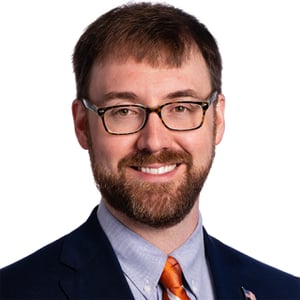
Senior Legal Fellow, Courts and the Constitution, Legal Policy Center, The Heritage Foundation
Zack is a Senior Legal Fellow of Courts and the Constitution at The Heritage Foundation.
He previously served for several years as an Assistant United States Attorney in the Northern District of Florida. Prior to that, he spent two years as an associate in the Washington, D.C. office of Cleary Gottlieb Steen & Hamilton, which he joined after clerking for the Hon. Emmett R. Cox on the United States Court of Appeals for the Eleventh Circuit.
Smith received his undergraduate, master’s, and law degrees from the University of Florida. During law school, Smith served as the Editor in Chief of the Florida Law Review and served on the executive boards of several student organizations, including the UF Chapter of the Federalist Society.

Deputy Assistant Attorney General, Office of Legal Policy, Department of Justice
GianCarlo Canaparo serves as Deputy Assistant Attorney General in the Office of Legal Policy at the Department of Justice. There, he oversees the Office's regulatory work and is the Department's liaison to the Office of Information and Regulatory Affairs. He also assists the White House in the process of selecting nominees for federal judgeships and advises Department leadership on policy and legal matters.
Before joining the Department, Canaparo was a senior legal fellow at The Heritage Foundation’s Edwin Meese III Center for Legal and Judicial Studies where he researched constitutional law, administrative law, and civil rights.
Canaparo’s scholarship has appeared in various law reviews including the Harvard Journal of Law and Public Policy, the Notre Dame Law Review, the Georgetown Journal of Law and Public Policy, the Texas Review of Law and Politics, and the Administrative Law Review. His research has been cited by Justice Neil Gorsuch and featured in the Wall Street Journal and Washington Post. His analysis has appeared in Law & Liberty, Civitas, Fox News, The National Review, Law 360, FedSoc Blog, and other outlets.
Canaparo co-hosted The Heritage Foundation’s SCOTUS 101 podcast, which follows the Supreme Court’s arguments and opinions and features interviews with judges, advocates, and scholars.
After graduating Georgetown law, Canaparo spent three years at the law firm of Skadden, Arps, Slate, Meagher & Flom and two years as a federal law clerk. He earned his bachelor’s degree in economics from the University of California at Davis.
Canaparo is a classical pianist and organist.
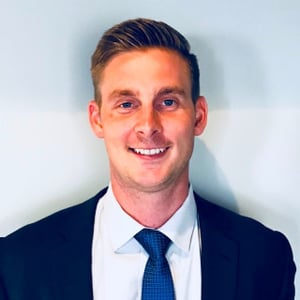
Daniel Rankin graduated from Tulane University, where he studied business law and political science, and the University of Texas School of Law, where he served in editorial positions on the Texas Review of Law & Politics and the Journal of Law; Technology. He has clerkships with Judge Don Willett on the U.S. Court of Appeals for the Fifth Circuit, Justice Evan Young on the Supreme Court of Texas, Judge Jeffrey Brown on the U.S. District Court for the Southern District of Texas, and Justice John Devine on the Supreme Court of Texas. He also has fellowships with the Institute for Justice and the Texas Office of the Solicitor General.

President, Cass & Associates, PC
Ronald A. Cass is Dean Emeritus of Boston University School of Law (where he was Dean from 1990-2004), President of Cass & Associates, PC, former Vice-Chairman and Commissioner of the U.S. International Trade Commission, former faculty member at Boston University School of Law and the University of Virginia Law School, and Distinguished Senior Fellow at the C. Boyden Gray Center for the Study of the Administrative State. Dean Cass also sits as an arbitrator for commercial, international, and intellectual property rights disputes, and is a former United States member of the Panel of Conciliators of the International Centre for Settlement of Investment Disputes. He is a member of the Council of the Administrative Conference of the United States and has received seven presidential appointments, spanning Presidents Ronald Reagan to Donald J. Trump.
As a law professor, lecturer, and scholar, Dean Cass has been teaching and writing about a wide array of legal issues on topics such as administrative law and regulation, antitrust, constitutional law, communications, intellectual property, international trade, separation of powers, and legal process. He has published more than 160 scholarly books, chapters, articles, and papers, including a leading casebook on administrative law. Dean Cass has taught judges as well as students in schools of law, economics, business, and public policy and has held academic appointments in the United States, Europe, and Latin America.
In addition to his academic work, Dean Cass has participated in numerous important legal cases as an amicus, consultant, or expert, and has advised businesses, law firms, investment funds, and government agencies on a range of trade, antitrust, intellectual property, and regulatory issues. He has a broad range of affiliations with professional groups, and has received numerous honors, fellowships and awards.
Dean Cass is a graduate of the University of Virginia and the University of Chicago Law School.
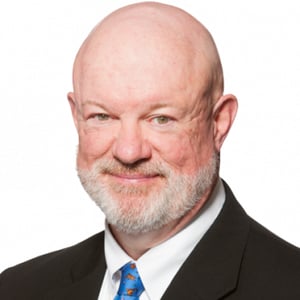
Senior Legal Fellow, the Meese Institute for the Rule of Law, Advancing American Freedom
Paul J. Larkin is a Senior Legal Fellow in the Meese Institute for the Rule of Law at Advancing American Freedom. Paul has held various positions in the federal and state governments throughout his career, such as being an attorney in the Organized Crime and Racketeering Section of the Criminal Division at the U.S. Department of Justice, an Assistant to the Solicitor General in the Office of the Solicitor General at the U.S. Department of Justice, Special Agent-in-Charge and Acting Director of the Criminal Investigation Division at the Environmental Protection Agency, and a member of the Parole Abolition and Sentencing Reform Commission and of the Juvenile Justice Reform Commission in the Office of Virginia Governor George Allen.
He has also worked at Verizon Communications and two law firms in Washington, D.C. His current research is principally in the fields of drug policy, criminal justice policy, and administrative law and policy. He has published numerous articles in law and public policy journals, both in print and online.

Amicus Attorney, The Foundation for Individual Rights and Expression
Abby joined FIRE after her tenure at the Becket Fund for Religious Liberty, where she litigated First Amendment student group cases from coast to coast. She also worked at a trial litigation boutique in southern California. Abby has filed briefs on the First Amendment in state and federal court at the trial and appellate court levels, including before the U.S. Supreme Court.
Abby received her B.S. in economics and her B.A. in Chinese language and literature from the University of Pittsburgh, where she graduated summa cum laude. During college, she also spent a year at Tsinghua University as a Boren Fellow. She later received her J.D. from the University of Chicago Law School, where she won the 2018 Hinton Moot Court Competition. After law school, Abby clerked for the Honorable Michael B. Brennan on the Seventh Circuit Court of Appeals in Milwaukee, Wisconsin. She is admitted to practice in New York and California, as well as several federal appellate courts and the U.S. Supreme Court.
Abby lives outside Dallas, Texas, with her husband and family. They enjoy reading together, volunteering with their local church, and continuing to fix their leaky pool.
Assistant Solicitor General, Office of the Texas Attorney General
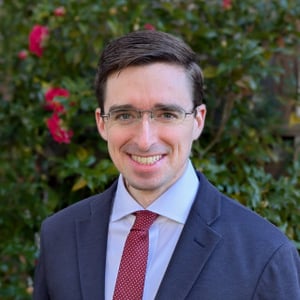
Solicitor General, Alabama Office of the Attorney General
Barrett Bowdre serves as solicitor general in the Alabama Attorney General’s Office, where he oversees the state’s appellate docket and helps defend the state’s interests in courts throughout the country. He previously served as principal deputy solicitor general and, before that, deputy solicitor general. He is a former law clerk to Judge Paul J. Kelly, Jr., of the U.S. Court of Appeals for the Tenth Circuit, then-Chief Judge W. Keith Watkins of the U.S. District Court for the Middle District of Alabama, and then-Chief Judge Ed Carnes of the U.S. Court of Appeals for the Eleventh Circuit. He holds a J.D., summa cum laude, from the University of Alabama School of Law and a B.A., cum laude, from Furman University. Before attending law school, he worked as a research assistant at the American Enterprise Institute, where he researched civic education initiatives and helped compile literary anthologies exploring the American character.
Sean Collins is a member of the University of Alabama School of Law class of 2024. After graduation, he will serve as a law clerk to Judge Allen Winsor of the U.S. District Court for the Northern District of Florida, then as a law clerk to Judge Robert Luck of the U.S. Court of Appeals for the Eleventh Circuit. Before attending law school, he graduated magna cum laude from Hillsdale College, where he studied Classics, Philosophy, and Religion and was a member of one of the only undergraduate Federalist Society chapters in the country.

Attorney, Institute for Justice
Anya Bidwell (née Cherkasova) leads IJ’s Project on Immunity and Accountability (“PIA”). Through this project, Anya works to promote judicial engagement and ensure that government officials are held to account when they violate individuals’ constitutional rights. Anya also serves as an adviser on the American Law Institute’s Restatement of the Law, Constitutional Torts project.
One of Anya’s PIA cases—Gonzalez v. Trevino—was heard by the United States Supreme Court on March 20, 2024. She argued the case for the petitioner, with the goal of convincing the Justices that retaliatory arrests not involving on-the-spot decisions by police officers should be actionable under the First Amendment regardless of probable cause. The decision is expected in June.
This was Anya’s third appearance before the U.S. Supreme Court. She second-chaired Brownback v. King (an excessive force case) and Tennessee Wine & Spirits Retailers Association v. Thomas (a commerce clause case) in November 2020 and January 2019 respectfully.
Before joining IJ, Anya worked for a top national law firm, handling cases in trial and appellate courts. She earned her J.D. with honors from the University of Texas. Two years prior to entering law school, Anya received a master’s degree in Global Policy Studies, also from the University of Texas, and wrote a thesis on asymmetric warfare.
Anya spent her childhood in Ukraine and Kyrgyzstan. At 16, she left her family behind and came to America on a university scholarship. Her upbringing motivated her to study law and become an advocate for a strong, independent judiciary.
Anya’s work has been featured in numerous publications, including the Washington Post, the Wall Street Journal, the New York Times, USA Today, and the Guardian. She is also the host of live recordings of our Short Circuit podcast and a co-producer of our documentary-style podcast Bound by Oath.
Senior Fellow in Constitutional Jurisprudence, Independence Institute
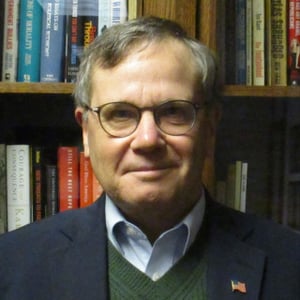
Professor Robert G. Natelson is a constitutional scholar and author.
Rob’s constitutional scholarship has been cited repeatedly by justices and parties at the U.S. Supreme Court—as well as by federal appeals courts, and at least 18 state supreme courts.
Rob’s research into the Constitution’s original meaning has carried him to libraries throughout the United States and in Britain, including four months at Oxford University. His books and articles span many different parts of the Constitution, including groundbreaking studies of the Necessary and Proper Clause, the Indian Commerce Clause, federalism, Founding-Era interpretation, regulation of elections, and the amendment process of Article V. He created the first-ever online bibliography for 18th century materials used in constitutional research. He is a contributing author to the Encyclopedia of the Supreme Court of the United States (on Magna Carta). He contributed eight essays to the third edition of the Heritage Guide to the Constitution: five on the amendment procedure and one each on the Guarantee Clause, the Postal Clause, and the Recess Appointments Clause.
U.S. Supreme Court justices have relied explicitly on Rob’s research in 41 citations in 13 separate cases.

State Court Docket Watch: Wisconsin Manufacturers v. Evers
Zack Smith
Court holds that public records law prohibits pre-release judicial review state disclosures on business' employee health records
In a 4-3 decision by Justice Rebecca Frank Dallet, the Wisconsin Supreme Court held that...
State Court Docket Watch: El Koussa v. Attorney General
GianCarlo Canaparo
Supreme Judicial Court of Massachusetts blocks two ballot petitions since that were not "related" or "mutually dependent"
In El Koussa v. Attorney General, the Supreme Judicial Court of Massachusetts held that...
State Court Docket Watch: Roberts v. Arizona
Daniel B. Rankin
Arizona's highest court rules that a state agency overstepped their bounds
Important issues of federalism and administrative law almost always boil down to one simple yet...
Chevron—Complicated, Start to Finish
Ronald A. Cass
Federalist Society Review, Volume 23
A Review of Thomas W. Merrill, The Chevron Doctrine: Its Rise and Fall, and the...
Revitalizing the Nondelegation Doctrine
Paul James Larkin
Federalist Society Review, Volume 23
A Review of The Administrative State Before the Supreme Court: Perspectives on the Nondelegation Doctrine (Peter...
State Court Docket Watch: Planned Parenthood of the Heartland v. Reynolds
Abigail Smith
The Supreme Court of Iowa ruled that the Iowa Constitution does not guarantee a right to an abortion
In Planned Parenthood of the Heartland, Inc. v. Reynolds (Planned Parenthood III),[1] the Supreme Court...
State Court Docket Watch: Washington v. Palla Sum
Daniel Ortner
In Washington v. Palla Sum, the Washington Supreme Court considered whether courts in Washington should...
State Court Docket Watch: Glass v. City of Montgomery
Barrett Bowdre, Sean Collins
Alabama’s constitution prohibits the legislature from enacting a “local law”—one that applies only in one...
State Court Docket Watch: In re: D.D.
Anya Bidwell
Hard cases make bad law.[1] In re: D.D.[2]—a Maryland policing case involving the odor of...
The Original Understanding of the Indian Commerce Clause: An Update
Robert G. Natelson
Federalist Society Review, Volume 23
The Congress shall have Power . . . To regulate Commerce with foreign Nations, and...