
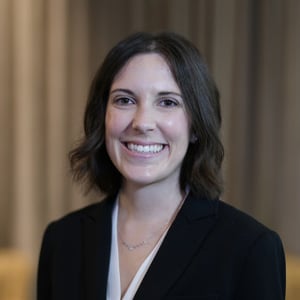
Director, Faculty Relations, The Federalist Society
Katie McClendon is the Director of Faculty Relations at the Federalist Society, where she has worked since 2015.
Katie holds a J.D. from the University of Pennsylvania Law School and a B.A. in Political Science from Biola University, where she was a member of the Torrey Honors Institute. She is a fellow of the John Jay Institute and the Blackstone Legal Fellowship. Katie is originally from Los Angeles, and she now lives with her husband and four children in Atlanta.

Amicus Attorney, The Foundation for Individual Rights and Expression
Abby joined FIRE after her tenure at the Becket Fund for Religious Liberty, where she litigated First Amendment student group cases from coast to coast. She also worked at a trial litigation boutique in southern California. Abby has filed briefs on the First Amendment in state and federal court at the trial and appellate court levels, including before the U.S. Supreme Court.
Abby received her B.S. in economics and her B.A. in Chinese language and literature from the University of Pittsburgh, where she graduated summa cum laude. During college, she also spent a year at Tsinghua University as a Boren Fellow. She later received her J.D. from the University of Chicago Law School, where she won the 2018 Hinton Moot Court Competition. After law school, Abby clerked for the Honorable Michael B. Brennan on the Seventh Circuit Court of Appeals in Milwaukee, Wisconsin. She is admitted to practice in New York and California, as well as several federal appellate courts and the U.S. Supreme Court.
Abby lives outside Dallas, Texas, with her husband and family. They enjoy reading together, volunteering with their local church, and continuing to fix their leaky pool.

Deputy Assistant Attorney General, Office of Legal Policy, Department of Justice
GianCarlo Canaparo serves as Deputy Assistant Attorney General in the Office of Legal Policy at the Department of Justice. There, he oversees the Office's regulatory work and is the Department's liaison to the Office of Information and Regulatory Affairs. He also assists the White House in the process of selecting nominees for federal judgeships and advises Department leadership on policy and legal matters.
Before joining the Department, Canaparo was a senior legal fellow at The Heritage Foundation’s Edwin Meese III Center for Legal and Judicial Studies where he researched constitutional law, administrative law, and civil rights.
Canaparo’s scholarship has appeared in various law reviews including the Harvard Journal of Law and Public Policy, the Notre Dame Law Review, the Georgetown Journal of Law and Public Policy, the Texas Review of Law and Politics, and the Administrative Law Review. His research has been cited by Justice Neil Gorsuch and featured in the Wall Street Journal and Washington Post. His analysis has appeared in Law & Liberty, Civitas, Fox News, The National Review, Law 360, FedSoc Blog, and other outlets.
Canaparo co-hosted The Heritage Foundation’s SCOTUS 101 podcast, which follows the Supreme Court’s arguments and opinions and features interviews with judges, advocates, and scholars.
After graduating Georgetown law, Canaparo spent three years at the law firm of Skadden, Arps, Slate, Meagher & Flom and two years as a federal law clerk. He earned his bachelor’s degree in economics from the University of California at Davis.
Canaparo is a classical pianist and organist.
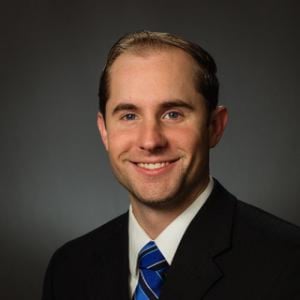
Senior Counsel, Alliance Defending Freedom
Caleb Dalton serves as senior counsel with Alliance Defending Freedom, where he plays a key role at the Center for Academic Freedom representing clients seeking to speak freely on campus without fear of unconstitutional government censorship. In this role, he has served as lead counsel in cases such as Queens College Students for Life v. City University of New York Board of Trustees, Ratio Christi v. University of Houston—Clear Lake, and Apodaca v. White (California State University) successfully representing students in eliminating restrictive “speech zones” and discriminatory student organization funding and recognition policies.
Since joining ADF in 2013, Dalton has served on multiple teams representing private individuals and government entities to affirm the fundamental freedoms of speech and religious liberty. With ADF’s Center for Conscience initiatives, he played a key role in the successful petition for certiorari in Masterpiece Cakeshop v. Colorado Civil Rights Commission at the U.S. Supreme Court. He has also been appointed special assistant attorney general to represent the state of Arizona’s interests in multiple complex constitutional matters.
Dalton earned his Juris Doctor, cum laude, from Regent University School of Law, where he served as an editor of the Regent Law Review and a member of the Trial Advocacy Board. He is the co-author of Kendall-Hunt’s textbook, Moot Court: Making Your Case and Pleasing the Court. Dalton has appeared on national news outlets and been published in news and law journals. He is a member of the bar in Arizona, Virginia, and the District of Columbia; he is also admitted to practice before multiple federal district and appellate courts, including the U.S. Supreme Court.
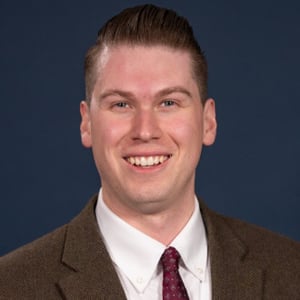
Charles Yates is an attorney in Pacific Legal Foundation’s environmental practice group, where he litigates to defend private property rights and uphold the structural protections guaranteed by the Constitution’s separation of powers.
His inspiration to focus on environmental law comes from the special case of government overreach it presents, where individual rights too often give way to collectivist notions and where misguided government policies create a cure worse than the disease. Charles has a particularly strong belief in the important role that the productive use of natural resources plays for human flourishing. To these ends, his practice at PLF focuses primarily on the Endangered Species Act, the Clean Water Act, and related regulatory issues.
Charles credits his strong belief in the principles of individual liberty and limited, constitutional government to his family. His personal philosophy developed further while studying the works of Adam Smith, John Locke, James Madison, and other classical liberals. Born and raised in Australia, Charles has always admired the U.S. Constitution as the purest and most enduring application of the ideals of individual liberty and limited government. It was these influences that impressed upon him the desire to pursue a career in public interest litigation.
After obtaining a B.A. in political science and international relations from the University of Western Australia, Charles moved to the U.S., where he earned his J.D. magna cum laude from the University of Baltimore School of Law. During law school, he served as president of his school’s chapter of The Federalist Society and was an editor of the University of Baltimore Law Review. Other highlights from his law school days include an internship at the Cato Institute and a clerkship at the Institute for Justice.
Charles lives in Sacramento with his wife Maxine. In his spare time, he enjoys reading and playing the bass guitar.

Partner, Holtzman Vogel
Joe Burns is a partner with Holtzman Vogel and focuses his practice on representing candidates and party committees in election cases throughout New York State.
Prior to joining the firm, Joe served as Deputy Director of Election Operations at the New York State Board of Elections. In this role, he worked with county Boards of Elections, candidates, and party committees, and was involved in New York State's transition from lever to optical scan voting. He also conducted hearings for the NYSBOE and represented it in court proceedings.
Additionally, Joe has served as an attorney for the Erie County and New York State Republican Committees, and has also represented candidates for a variety of public offices throughout New York State, including candidates for U.S. Congress and New York State Supreme Court.
From 2018 to 2024, Joe was the Deputy Administrative Director for the Erie County Water Authority; and from 2015 to 2018, he was the Secretary to the Erie County Water Authority.
A life-long resident of Upstate New York and active member of the Western New York community, Joe served as vice chair of the Erie County Charter Revision Commission in 2016 and was a member of the Erie County Advisory Commission on Reapportionment in 2021. City and State named Joe to its Upstate Power 100 list in 2024, and in 2025, Joe was named as one of New York State’s Law Power 100 by City and State.
Joe is a frequent commentator and author on New York State and national politics, and election law.
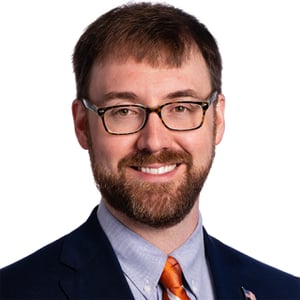
Senior Legal Fellow, Courts and the Constitution, Legal Policy Center, The Heritage Foundation
Zack is a Senior Legal Fellow of Courts and the Constitution at The Heritage Foundation.
He previously served for several years as an Assistant United States Attorney in the Northern District of Florida. Prior to that, he spent two years as an associate in the Washington, D.C. office of Cleary Gottlieb Steen & Hamilton, which he joined after clerking for the Hon. Emmett R. Cox on the United States Court of Appeals for the Eleventh Circuit.
Smith received his undergraduate, master’s, and law degrees from the University of Florida. During law school, Smith served as the Editor in Chief of the Florida Law Review and served on the executive boards of several student organizations, including the UF Chapter of the Federalist Society.
Stephen Cranney has a dual PhD in sociology and demography from the University of Pennsylvania and is a freelance data scientist in the Washington, DC, area.
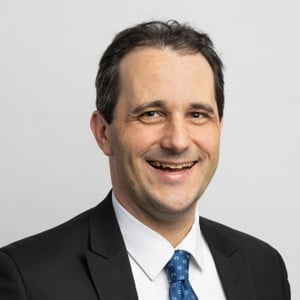
Director, Center for Judicial Engagement, Institute for Justice
Anthony Sanders is the Director of the Center for Judicial Engagement (CJE) at the Institute for Justice and a senior attorney. He joined IJ in 2010. As CJE’s director, he educates the public about the proper role of judges in enforcing constitutional limits on the size and scope of government. As a senior attorney he litigates cutting-edge constitutional cases protecting economic liberty, private property, freedom of speech and other individual liberties in both federal and state courts across the country.
One area of Anthony’s expertise is on using state constitutions to protect individual rights. He is the author of the book, published by University of Michigan Press, Baby Ninth Amendments: How Americans Embraced Unenumerated Rights and Why It Matters. He has also written several law review articles on state constitutional law, unenumerated rights, judicial review, economic liberty, property rights, international law, and other subjects. His work has appeared in publications such as the Iowa Law Review, Minnesota Law Review, American University Law Review, and Rutgers Law Review, and he has published opinion pieces in leading media outlets across the country. Further, he frequently speaks to various audiences on these matters and others, including judicial engagement, free speech, civil forfeiture, and the continuing importance of Magna Carta. Additionally, he hosts the weekly Short Circuit podcast, which often records live in front of law student audiences.
Anthony has litigated several cases in various state courts on state constitutional protections, as well as in federal courts on matters such as economic liberty, free speech, administrative law, and fines and fees abuse. Prior to joining IJ, Anthony served as a law clerk to Justice W. William Leaphart on the Montana Supreme Court. Anthony also worked for several years in private practice in Chicago where he was an active member of the Chicago Bar Association and chaired its Civil Rights Committee.
Anthony received his law degree cum laude from the University of Minnesota Law School in 2004, where he served as an articles submission editor for the Minnesota Law Review. He received his undergraduate degree from Hamline University in St. Paul, Minnesota, and his master’s degree from the University of Wisconsin-Madison. A dual U.S. and U.K. citizen, Anthony grew up on the islands of Vashon in Washington State, and Alderney in the British Channel Islands.


Federalist Society Review, Volume 23
Katie McClendon
The Federalist Society Review is the legal journal of the Federalist Society. The Review is...
State Court Docket Watch: Young Americans for Liberty v. St. John IV
Abigail Smith
Alabama Supreme Court revives a challenge to campus speech restrictions.
In Young Americans for Liberty at the University of Alabama in Huntsville v. St. John...
State Court Docket Watch: Matthews v. Industrial Commission of Arizona
GianCarlo Canaparo
Arizona Supreme Court employs corpus linguistics in a search for the original public meaning of a state constitutional provision.
How does originalism work with state constitutions? Justice Clint Bolick, writing for the Arizona Supreme...
State Court Docket Watch: Rouch World v. Department of Civil Rights
Caleb Dalton
Michigan Supreme Court rules that discrimination on the basis of sexual orientation is prohibited by the state's civil rights law.
In Rouch World, LLC v. Department of Civil Rights, the Michigan Supreme Court expounded on...
State Court Docket Watch: Mills v. Arizona Board of Technical Registration
Arizona Supreme Court clarifies the doctrine of administrative exhaustion in Arizona
In Mills v. Arizona Board of Technical Registration,[1] the Arizona Supreme Court considered whether...
State Court Docket Watch: Ritter v. Oklahoma
Charles Yates
A Significant Separation of Powers Decision from the Supreme Court of Oklahoma
The drafters of the Oklahoma Constitution—“[f]earing excessive power in the hands of one individual”—strictly...
State Court Docket Watch: Harkenrider v. Hochul
Joseph Thomas Burns
NY Court of Appeals rules that procedures in state constitution were violated in enactment of redistricting plans
On April 27, 2022, the New York State Court of Appeals invalidated the Congressional and...
State Court Docket Watch: Tennessee v. Deberry
Zack Smith
Tennessee Supreme Court grapples with whether no penalty is the same thing as a "lesser penalty."
Does a state statute only mean what it says and nothing more? In a...
Measuring and Evaluating Public Responses to Religious Rights Rulings
Creighton Roland Meland, Stephen Cranney
Federalist Society Review, Volume 23
The story of Jack Phillips and his cake shop—Masterpiece Cakeshop—is by now familiar. Jack Phillips...
State Court Docket Watch: Ohio v. O'Malley
Anthony Sanders
Ohio Supreme Court refuses to adopt a standard for addressing excessive fines claims.
In 2019, in Timbs v. Indiana, the U.S. Supreme Court declared that the Excessive Fines...