
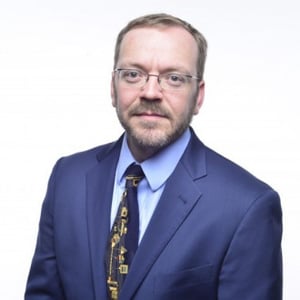
Vice President for Legal Affairs, Goldwater Institute

General Counsel, United States Senator Jim Banks
Elle Bernstein serves as General Counsel to United States Senator Jim Banks (R-IN). In her capacity as General Counsel, Elle handles immigration policy, pro-life issues, and judicial nominations. Elle has served as counsel for amicus briefs on abortion and the Constitution, Title IX, and religious liberty. Her article, “Beyond Barbara: Towards A Jurisprudence of Nationhood,” is forthcoming in the Notre Dame Journal of Law, Ethics, and Public Policy.
Elle co-founded the Pro-Life Lawyers Caucus and is an executive committee member of the Federalist Society’s Immigration Practice Group. She has also held fellowships with the Claremont Institute, the James Wilson Institute, and Alliance Defending Freedom.
Previously, Elle was an Associate in the Washington, D.C. office of Gibson, Dunn & Crutcher LLP and clerked for the Honorable James C. Ho of the United States Court of Appeals for the Fifth Circuit.
Elle holds a B.A. in Philosophy from the King’s College and a J.D. from the University of Chicago Law School.
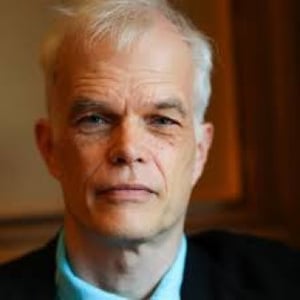
Senior Editor, National Review
Historian Richard Brookhiser is a senior editor of National Review, a senior fellow at the National Review Institute, and the author of several books, including Founders’ Son, Right Time, Right Place, George Washington on Leadership, What Would the Founders Do?, Gentleman Revolutionary, Rules of Civility, America’s First Dynasty, Alexander Hamilton, American, Founding Father: Rediscovering George Washington, Way of the WASP, and The Outside Story.
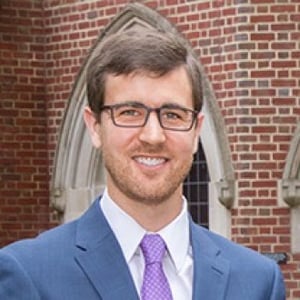
Professor of Law & Helen L. Crocker Faculty Scholar, Stanford Law School
Jud Campbell joined the faculty of Stanford Law School in 2023. He previously served as a professor of law at the University of Richmond School of Law and as a visiting professor of law at the University of Chicago Law School and at Harvard Law School. His academic focus is constitutional history and First Amendment law. His publications include articles in the Stanford Law Review, Yale Law Journal, Harvard Law Review, Texas Law Review, Constitutional Commentary, and Law and History Review. After completing his J.D. at Stanford Law School, he clerked for Judge Diane S. Sykes on the U.S. Court of Appeals for the Seventh Circuit, and for Judge José A. Cabranes on the U.S. Court of Appeals for the Second Circuit. He then served as the Executive Director of the Stanford Constitutional Law Center. He holds a bachelor’s degree from the University of North Carolina at Chapel Hill and two master’s degrees from the London School of Economics, where he studied as a Marshall Scholar.

Leitner Family Professor of International Law and Co-Founder & Co-Director of the Center on Asian Americans & the Law, Fordham University School of Law
Thomas H. Lee is the Leitner Family Professor of International Law at Fordham, where he teaches civil procedure, constitutional law, federal courts, international law, and the U.S. law of civil-military relations. His meticulously researched and historically-grounded scholarship has argued that the Eleventh Amendment reflected the classical international law principle that only a sovereign state—not its citizens or subjects— has rights against other sovereign states; that the Alien Tort Statute was a national-security peacekeeping statute, not an international human-rights statute, enacted in 1789 when the United States was a militarily weak state; and that the Natural Born Citizen Clause regarding presidential eligibility reflected natural-law principles of membership by descent as well as domestic birthplace. His current research examines the nature of Article III judicial power and the role of the federal courts in American society.
He is Co-Director of the Center on Asian Americans and the Law, Special Counsel at Hughes Hubbard & Reed, and a Member of the American Law Institute. He was Special Counsel to the General Counsel of the U.S. Department of Defense, a Member of the ICSID Panel of Conciliators, Adviser to the Constitutional Court of Korea, and Visiting Professor at Columbia, Harvard, and the University of Virginia law schools, as well as Faculty Director of International and Graduate Studies at Fordham from 2006 to 2019. Before his academic career, Lee clerked for Judge Michael Boudin of the First Circuit and Justice David Souter of the Supreme Court and served as an active-duty U.S. naval cryptology officer, afloat on submarines and surface combatants and ashore in Korea, Japan, and with the National Security Agency. He holds A.B. (summa cum laude), A.M. (Regional Studies—East Asia), and J.D. degrees from Harvard, where he was Articles Chair of the Harvard Law Review and a Ph.D. candidate (ABD) in Government.
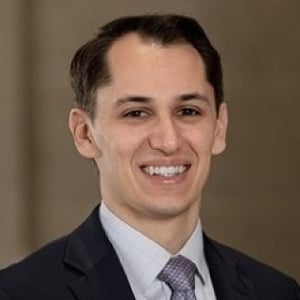
Assistant Professor of Law, Capital University Law School
Nathaniel M. Fouch is an Assistant Professor of Law at Capital University Law School in Columbus, Ohio. He previously clerked at every level of the state judiciary, including for Justice Pat DeWine of the Ohio Supreme Court. Professor Fouch was the founding president of both the Dayton Lawyers Chapter of the Federalist Society and the Dayton Catholic Lawyers Guild. He earned his B.A. from Berea College and his J.D. cum laude from the University of St. Thomas School of Law. His work on the Ohio Constitution and state constitutionalism has been cited by the Ohio Supreme Court. Professor Fouch lives in Dayton, Ohio, with his wife, Theresa, and their three young children.
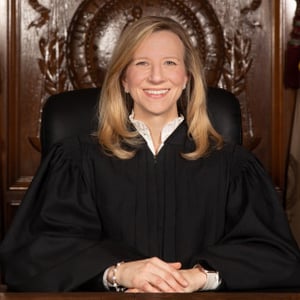
Justice, Supreme Court of Tennessee
Justice Sarah Campbell was confirmed to the Tennessee Supreme Court in 2022. She previously served as an Associate Solicitor General in the Tennessee Attorney General’s Office and as an associate at the law firm of Williams & Connolly LLP in Washington, DC. Justice Campbell earned her law degree from Duke University School of Law, a Master of Public Policy degree from Duke University, and her undergraduate degree from the University of Tennessee, where she received the Torchbearer Award. She served as a law clerk for Justice Samuel A. Alito, Jr. on the United States Supreme Court and Judge William H. Pryor Jr. on the U.S. Court of Appeals for the Eleventh Circuit.
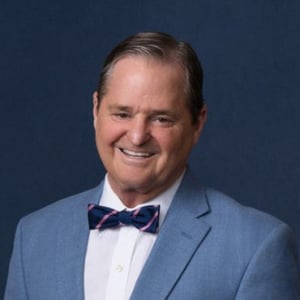
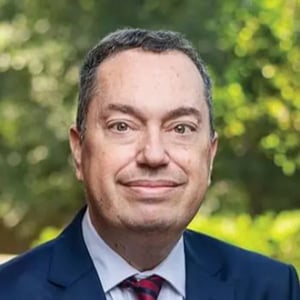
Professor of Law, University of Alabama School of Law
Professor Rosen received his LLM with honors from the University of London, London School of Economics, in 1997, his JD from Yale Law School in 1994, and his BS from Cornell University, School of Industrial and Labor Relations, in 1991 as a Merill Presidential Scholar. He served as a Senior Editor of the Yale Law Journal and an Editor of the Yale Journal of International Law. Upon graduation from Yale, he clerked for the Honorable Edward E. Carnes of the U.S. Court of Appeals for the Eleventh Circuit in Montgomery, Alabama. From 1995 to 1996, he was an associate with the Washington, D.C. firm of Fried, Frank, Harris, Shriver & Jacobson. From 1998 to 2002, he worked in Washington, D.C. for the U.S. Securities and Exchange Commission's Division of Market Regulation, where he achieved the rank of Special Counsel. During his time at the Commission, he provided counsel on matters before the President's Working Group on Financial Markets, aided the restoration of financial markets following the terrorist attacks of September 11, 2001, assisted with legislative drafting, and worked on matters including foreign market access, financial derivatives, market structure, and the regulation of exchanges and over-the-counter markets. While at the SEC, Professor Rosen received the Commission's Law and Policy Award and the Manuel F. Cohen Award from the Securities Law Committee of the Federal Bar Association. Before arriving at the University of Alabama, he served as the first Fellow for the Fordham University School of Law's Center for Corporate, Securities and Financial Law in New York City. He has spoken both in the United States and abroad at events sponsored by such organizations as the Association of American Law Schools, the American Society of International Law, the Law and Society Association, the Southeastern Association of Law Schools, Futures Industry Association, the Small Business Committee of the American Bar Association's Section on Business Law, the Washington Campus, National Regulatory Services, and the United Kingdom's City and Financial Conferences.
Professor Rosen has taught multiple courses at the law school including business organizations, securities regulation, international business transactions, economy in crisis (public policy-making role-playing simulation course), integrated financial regulation (banking, commodities, securities, and insurance law), and conflict of laws. He also holds a courtesy appointment in the Department of Economics, Finance, and Legal Studies at The University of Alabama’s Culverhouse College of Commerce and Business Administration and has been appointed to The University of Alabama Graduate School faculty in connection with his work on PhD dissertation committees. His focus on inter-disciplinary matters also has led to his membership in organizations such as the American Economic Association, American Finance Association, and American Law and Economics Association. He has advised The Journal of the Legal Profession and was awarded the Edward M. Friend Jr. Award in the year he coached the law school's team to its first appearance in the national final rounds as a super-regional champion in the American Bar Association's National Appellate Advocacy Competition. He has served as Director of the law school's successful judicial clerkship program, and the law school's students selected him for the 2007-2008 Outstanding Faculty Member Award.
Since joining the legal academy, Professor Rosen continues his public policy work and has advised federal and state government officials. His expertise is sought in various contexts. For example, he has testified before the Committee on Financial Services of the United States House of Representatives. Professor Rosen also currently serves as a Uniform Law Commissioner. He was appointed to represent Alabama on the Uniform Law Commission by the Governor for a term of service that runs to April 4, 2023.
Professor Rosen also continues to be involved in legal matters around the globe. He has advised on business law curricula in Ethiopia and has been selected to teach courses at Australia National University in Canberra, Pusan National University in Korea, and the University of Fribourg in Switzerland. He has served as Director of the law school's exchange program with the University of Fribourg. In addition, he has served as a Corresponding Editor for the American Society of International Law's International Legal Materials and as Co-Chair of ASIL’s Teaching International Law Interest Group. His work for the American Bar Association has included service to the Section of International Law and Practice. His interest in development issues also has led to his participation in the World Bank's Law, Justice, and Development Week program and the International Finance Corporation's Doing Business Project. Moreover, he has served as a member of the Board of Directors of the American Society of Comparative Law and has been selected to be the United States Reporter on Company Law and the Law of Succession for the Congress of the Academy of International Comparative Law in Vienna, Austria.
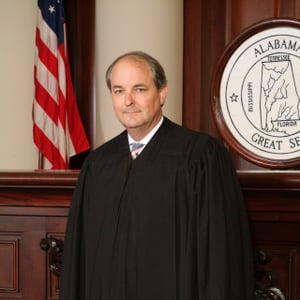
Justice, Alabama Supreme Court
Justice William B. Sellers was appointed by Governor Kay Ivey in May 2017. He was elected to a full term in 2018 and re-elected in 2024. His current term expires in 2031.
Justice Sellers received a Bachelor of Arts degree from Hillsdale College in 1985, a Juris Doctorate from the University of Alabama in 1988, and a Masters of Laws in Taxation from New York University in 1989. Justice Sellers practiced law in Montgomery for 28 years. He maintained a general business practice with emphasis on taxation, business organizations and finance. A major part of Justice Sellers's practice involved tax litigation.
Justice Sellers is a member of numerous civic organizations and professional associations. In 2012, he received the President's Award for service to the Alabama Bar Association. In 2013, Governor Robert Bentley appointed Justice Sellers to the Alabama State Council on the Arts. In August 2014, Justice Sellers was elected chairman of the Fair Ballot Commission. He is past president of the Rotary Club of Montgomery, past chairman of the Montgomery Area Business Committee for the Arts, chairman of the River Region United Way Campaign in 2008, and past chairman of the YMCA of Greater Montgomery. Justice Sellers was a member of the Electoral College in 2004, 2008, 2012, and 2016.
Justice Sellers is admitted to practice before the United States Supreme Court, the Supreme Court of Alabama, the District of Columbia Court of Appeals, the United States District Courts for the Middle and Northern Districts of Alabama, the United States Court of Appeals for the Eleventh Circuit, and the United States Tax Court. He is a member of the Alabama State Bar, the Montgomery County Bar Association, and the District of Columbia Bar. Since 2014, he has served as the community liaison with the International Officers School at Maxwell Air Force Base.
Justice Sellers and his wife, Lee, have been married for 37 years. They are members of Trinity Presbyterian Church and have three adult children and two grandchildren.
General Counsel, United States Senator Jim Banks
Elle Bernstein serves as General Counsel to United States Senator Jim Banks (R-IN). In her capacity as General Counsel, Elle handles immigration policy, pro-life issues, and judicial nominations. Elle has served as counsel for amicus briefs on abortion and the Constitution, Title IX, and religious liberty. Her article, “Beyond Barbara: Towards A Jurisprudence of Nationhood,” is forthcoming in the Notre Dame Journal of Law, Ethics, and Public Policy.
Elle co-founded the Pro-Life Lawyers Caucus and is an executive committee member of the Federalist Society’s Immigration Practice Group. She has also held fellowships with the Claremont Institute, the James Wilson Institute, and Alliance Defending Freedom.
Previously, Elle was an Associate in the Washington, D.C. office of Gibson, Dunn & Crutcher LLP and clerked for the Honorable James C. Ho of the United States Court of Appeals for the Fifth Circuit.
Elle holds a B.A. in Philosophy from the King’s College and a J.D. from the University of Chicago Law School.
Senior Editor, National Review
Historian Richard Brookhiser is a senior editor of National Review, a senior fellow at the National Review Institute, and the author of several books, including Founders’ Son, Right Time, Right Place, George Washington on Leadership, What Would the Founders Do?, Gentleman Revolutionary, Rules of Civility, America’s First Dynasty, Alexander Hamilton, American, Founding Father: Rediscovering George Washington, Way of the WASP, and The Outside Story.
Professor of Law & Helen L. Crocker Faculty Scholar, Stanford Law School
Jud Campbell joined the faculty of Stanford Law School in 2023. He previously served as a professor of law at the University of Richmond School of Law and as a visiting professor of law at the University of Chicago Law School and at Harvard Law School. His academic focus is constitutional history and First Amendment law. His publications include articles in the Stanford Law Review, Yale Law Journal, Harvard Law Review, Texas Law Review, Constitutional Commentary, and Law and History Review. After completing his J.D. at Stanford Law School, he clerked for Judge Diane S. Sykes on the U.S. Court of Appeals for the Seventh Circuit, and for Judge José A. Cabranes on the U.S. Court of Appeals for the Second Circuit. He then served as the Executive Director of the Stanford Constitutional Law Center. He holds a bachelor’s degree from the University of North Carolina at Chapel Hill and two master’s degrees from the London School of Economics, where he studied as a Marshall Scholar.
Leitner Family Professor of International Law and Co-Founder & Co-Director of the Center on Asian Americans & the Law, Fordham University School of Law
Thomas H. Lee is the Leitner Family Professor of International Law at Fordham, where he teaches civil procedure, constitutional law, federal courts, international law, and the U.S. law of civil-military relations. His meticulously researched and historically-grounded scholarship has argued that the Eleventh Amendment reflected the classical international law principle that only a sovereign state—not its citizens or subjects— has rights against other sovereign states; that the Alien Tort Statute was a national-security peacekeeping statute, not an international human-rights statute, enacted in 1789 when the United States was a militarily weak state; and that the Natural Born Citizen Clause regarding presidential eligibility reflected natural-law principles of membership by descent as well as domestic birthplace. His current research examines the nature of Article III judicial power and the role of the federal courts in American society.
He is Co-Director of the Center on Asian Americans and the Law, Special Counsel at Hughes Hubbard & Reed, and a Member of the American Law Institute. He was Special Counsel to the General Counsel of the U.S. Department of Defense, a Member of the ICSID Panel of Conciliators, Adviser to the Constitutional Court of Korea, and Visiting Professor at Columbia, Harvard, and the University of Virginia law schools, as well as Faculty Director of International and Graduate Studies at Fordham from 2006 to 2019. Before his academic career, Lee clerked for Judge Michael Boudin of the First Circuit and Justice David Souter of the Supreme Court and served as an active-duty U.S. naval cryptology officer, afloat on submarines and surface combatants and ashore in Korea, Japan, and with the National Security Agency. He holds A.B. (summa cum laude), A.M. (Regional Studies—East Asia), and J.D. degrees from Harvard, where he was Articles Chair of the Harvard Law Review and a Ph.D. candidate (ABD) in Government.
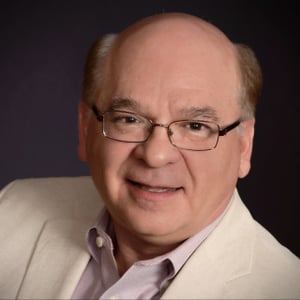
E.I. White Chair and Distinguished Professor of Law and Kauffman Professor of Entrepreneurship and Innovation, Syracuse University College of Law
Professor Robin Paul Malloy is the E.I. White Chair and Distinguished Professor of Law, and the Kauffman Professor of Entrepreneurship and Innovation. He is a leading expert on property, real estate transactions, land use law and zoning, and on law, markets, and marketization. He has pioneered work on land use and disability law. He is also recognized as a leading legal scholar on the jurisprudence of Adam Smith. Several of his works on market theory and law are translated into Chinese, Spanish, and Japanese. Professor Malloy has published twenty books (four with Cambridge University Press) and over 30 scholarly articles, in addition to numerous book chapters and essays. His latest book is titled Law and the Invisible Hand; A Theory of Adam Smith’s Jurisprudence (Cambridge 2021). He is a series editor on collections for Cambridge University Press, Routledge, and Edward Elgar. Malloy’s casebook on Real Estate Transactions (with Smith, now in its 6th edition) is the leading book on the subject and is used at law schools across the country. His casebook on Land Use Law and Zoning is now in its second edition (with Malagrino). Malloy has been the Sun Life Research Fellow at Oxford University, U.K.; the Dickenson Dees Fellow at University of Durham, U.K.; and for three consecutive summers served as a teaching fellow in China (Beijing and Shanghai) with the Committee on Legal Education Exchange with China. He currently serves on the International Advisory Board for the Law and Economics Program at St. Gallens University, Switzerland, and is a member of the Turin School of Local Regulation, Turin, Italy.
Malloy is the founding president of the Association for Law, Property, and Society. He currently serves on the Board of the Veterans Health Research Institute of CNY. He served on the Board of the National Italian American Bar Association for 20 years and was Vice Chair of the Zoning Board of Appeal for the Town of DeWitt, NY for 10 years. He has also served on numerous committees of the Association of American Law Schools.
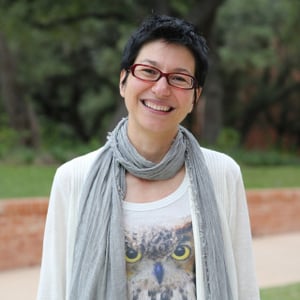
Professor of Economics, Trinity University
I am an enthusiastic teacher, and I bring my passion for learning in the classroom. In my research, I work in the history of economic thought, specializing in the 18th century. My focus is on Adam Smith, David Hume, monetary theories, and the Scottish Enlightenment.
I analyze how self-interest interacts with other motivational drives, with systematic biases, and with the surrounding institutional environment. I also explore the links between the Scottish Enlightenment and the results from behavioral economics, evolutionary biology, and neuroeconomics.
I regularly publish in History of Political Economy (HOPE), The Journal of the History of Economic Thought (JHET), and History of Economic Ideas (HEI). I wrote the Routledge Guidebook of Smith's Wealth of Nations (2020).
The European Society for the History of Economic Thought awarded my HOPE 2008 "The Adam Smith Problem in Reverse: Self-Interest in Adam Smith's Wealth of Nations, and Theory of Moral Sentiments" the prize of Best Article of Year (2009). I was the book review editor for the Journal of the History of Economic Thought, the vice-president of the History of Economics Society, and i am the current president of the International Adam Smith Society and the current president of the History of Economics Society.
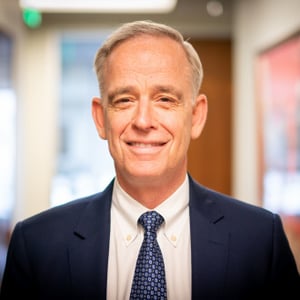
Executive Vice President, The Federalist Society
Dean Reuter is Executive Vice President at the Federalist Society for Law and Public Policy Studies. He has served in two federal government agency Offices of the Inspector General, as Counsel to the Inspector General and Deputy Inspector General, responsible for policing the use of federal funds granted and contracted through those agencies. As such, he helped conduct and oversee criminal investigations across the country. He is the principal author of the non-fiction book, The Hidden Nazi: The Untold Story of America's Deal with the Devil, and editor of Liberty’s Nemesis: The Unchecked Expansion of the State and Confronting Terror: 9/11 and the Future of American National Security. He was appointed by the President and served as Vice-Chairman of the Board of Directors of the Corporation for National and Community Service, and recently served as an appointee on the U.S. Commission on Presidential Scholars. He is a graduate of Hood College (BA with Honors) and the University of Maryland School of Law.
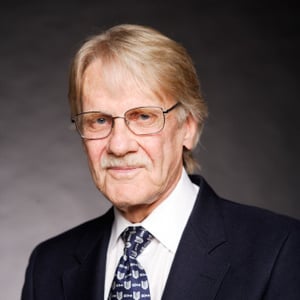
Professor Emeritus, George Mason University
Vernon L. Smith, often called the "father of experimental economics", is a leading scholar celebrated for transforming economics into an experimental science. He was awarded the Nobel Prize in Economic Sciences in 2002 for his pioneering work in using laboratory experiments to test economic theories, particularly regarding market mechanisms and price formation.
Smith served as Professor of Economics and Law from 2001 to 2008 at George Mason University. He founded the Interdisciplinary Center for Economic Science (ICES) at Mason, and served as a fellow of the Mercatus Center. He remains a Professor Emeritus at Mason, where a building on the Arlington campus is named in his honor.
Currently, Smith is a professor at Chapman University within the Argyros School of Business and Economics and the Fowler School of Law. At Chapman, he established the Economic Science Institute, a research center dedicated to the continued study of experimental methods in economics and across other disciplines.
An alum of Caltech (B.S.), the University of Kansas (M.A.), and Harvard University (Ph.D.), Smith has held previous appointments at universities including Purdue, Brown, and the University of Arizona.
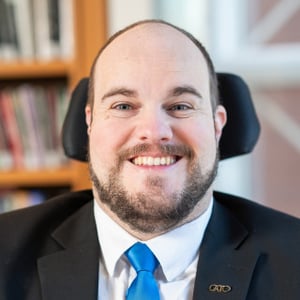
Director, Project on Criminal Justice, Cato Institute
Matthew Cavedon is the Director of the Cato Institute’s Project on Criminal Justice. He focuses on reforming plea-driven mass adjudication, ensuring police accountability, and defending constitutional criminal originalism. Cavedon’s scholarship has been published (or is forthcoming in) publications including the Arizona State Law Journal, Cato Supreme Court Review, Seattle University Law Review, and Georgetown Journal of Law and Public Policy. Formerly a Georgia public defender and fellow at the Institute for Justice, Cavedon has taught law school courses on criminal law and procedure, as well as the First Amendment. Cavedon clerked for a U.S. district court and the Supreme Court of Georgia. He came to Cato following a fellowship at the Emory University Center for the Study of Law and Religion.
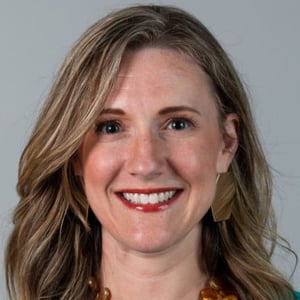
Chief Counsel, Legal Policy, Koch Capabilities, LLC
Sarah Field is Chief Counsel, Legal Policy at Koch Capabilities, LLC, where she develops and scales Koch-wide strategic policy initiatives on a variety of legal, judicial, and regulatory topics.
Sarah specializes in leading initiatives that require rapid vision development, start-up, and scaling expertise. This has included leading criminal justice reform and constitutionally limited government initiatives for the Stand Together community, overseeing the comprehensive portfolio of the Stand Together community’s issue areas, driving Americans for Prosperity’s long-term vision and strategy for addressing the country’s political environment, and leading judicial engagement strategy at Americans for Prosperity.
Before that, Sarah served as Executive Director of the Center for Shared Services, which provided compliance, talent development, and operational support for the Stand Together community. Previously, Sarah held roles at the Charles Koch Foundation, the Federalist Society, and a variety of other nonprofit organizations.
Sarah serves on the board of Americans for Public Safety, an organization dedicated to public safety, justice, and the rule of law.
Sarah received her B.A. from Grove City College, her law degree from Case Western Reserve University School of Law, and is an alumna of the Koch Associate Program.

America 250: Proclaiming Liberty, John Adams, Thomas Jefferson, and the Declaration of Independence
Sacramento Lawyer Chapter
Sacramento, CAWhat Were the Founders' Views of Citizenship?
Elle Rogers Bernstein, Richard Brookhiser, Jud Campbell, Thomas Lee
In this Federalist Society America250 series, experts analyze modern legal and policy debates through the...
What Were the Founders' Views of Citizenship?
The Founders Gave Us the Tools Series
The Declaration of Independence and State Constitutions
Dayton Lawyer Chapter
Dayton, OHAmerica 250: How Colonial and Early State Constitutions Influenced the Declaration of Independence
Memphis Lawyer Chapter
Memphis, TNJefferson's Path to Philadelphia: The Five Key Phrases of the Declaration of Independence
Montgomery Lawyer Chapter
Montgomery, ALWhy Adam Smith Still Matters: 250 Years of The Wealth of Nations
Robin P. Malloy, Maria P. Paganelli, Dean Reuter, Vernon L. Smith
Published in the same pivotal year as the Declaration of Independence, An Inquiry into the...
Celebrating the 250th Anniversary of the Declaration of Independence: How The Founders Would Answer Mayor Mamdani and Socialists
San Francisco Lawyer Chapter
San Francisco, CACourthouse Steps Decision: Ellingburg v. United States
Matthew P. Cavedon, Sarah Field
Ellingburg v. United States concerned whether forced restitution under the Mandatory Victims Restitution Act of 1996...
Reluctant Revolutionaries—Anticipating the Inevitability of the Declaration of Independence
Huntsville Lawyer Chapter
Huntsville, AL