
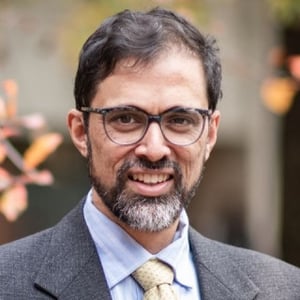
James Monroe Distinguished Professor of Law and Albert Clark Tate, Jr., Professor of Law, University of Virginia School of Law
Professor Saikrishna Prakash’s scholarship focuses on separation of powers, particularly executive powers. He teaches Constitutional Law, Foreign Relations Law and Presidential Powers at the Law School.
Prakash’s most recent book, “The Living Presidency: An Originalist Argument Against Its Ever-Expanding Powers,” was published by Harvard Belknap Press in 2020. He also authored “Imperial from the Beginning: The Constitution of the Original Executive” (Yale University Press, 2015). The former book focuses on the modern presidency while the latter considers the presidency of the Founders.
Prakash has authored over 75 law review articles. Among them are “Of Synchronicity and Supreme Law” in the Harvard Law Review, “The Indefensible Duty to Defend” in the Columbia Law Review, and “50 States, 50 Attorneys General and 50 Approaches to the Duty to Defend” and “The Executive Power Over Foreign Affairs” in the Yale Law Journal.
Prakash has published op-eds in The New York Times, The Wall Street Journal and the Los Angeles Times. At the request of Democrats and Republicans, he has testified before Congress on matters of presidential removal, the Mueller Report and how Congress might better check the presidency. He is currently a Miller Center Senior Fellow. In 2015, he received the Roger Traynor award for faculty scholarship. In the same year, he received an honorable mention from the American Society of Legal Writers for his book “Imperial from the Beginning.” He has given named lectures at William & Mary Law School, Princeton University and Toledo Law School, and keynote addresses at several conferences.
Prakash majored in economics and political science at Stanford University. At Yale Law School, he served as senior editor of the Yale Law Journal and received the John M. Olin Fellowship in Law, Economics and Public Policy. He subsequently clerked for Judge Laurence H. Silberman of the U.S. Court of Appeals for the District of Columbia Circuit and for Justice Clarence Thomas of the U.S. Supreme Court. After practicing in New York for two years, he served as a visiting professor at the University of Illinois College of Law and as an associate professor at Boston University School of Law. He then spent several years at the University of San Diego School of Law as the Herzog Research Professor of Law. Prakash has been a visiting professor at Northwestern University and the University of Chicago. He also has served as a James Madison Fellow at Princeton University and Visiting Research Fellow at the Hoover Institution of War & Peace at Stanford University.
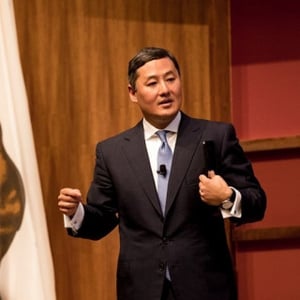
Emanuel S. Heller Professor of Law, University of California at Berkeley; Thomas Smith Senior Research Fellow, Civitas Institute, University of Texas at Austin
John Yoo is the Emanuel Heller Professor of Law at the University of California at Berkeley. He is also the Thomas Smith Senior Research Fellow, Civitas Institute, at the University of Texas at Austin. He is also a Nonresident Senior Fellow at the American Enterprise Institute.
His most recent book, The Politically Incorrect Guide to the Supreme Court, co-authored with Robert Delahunty, was published in 2023. Professor Yoo’s other books include Defender-in-Chief: Trump’s Fight for Presidential Power; Striking Power: How Cyber, Robots, and Space Weapons Change the Rules for War; Point of Attack: Preventive War, International Law, and Global Welfare; and Crisis and Command: A History of Executive Power from George Washington to George Bush.
He is a co-author of volumes 1 and 2 of R. Rossum, G. Tarr, V. Munoz & J. Yoo American Constitution Law (Routledge, 2026), and a co-editor of the eight-volume series on the 250th anniversary of the American Revolution, We Hold These Truths, with Yuval Levin and Adam White of the American Enterprise Institute.
Professor Yoo has published more than 100 articles in academic journals on subjects including national security, constitutional law, international law, and the Supreme Court. He also regularly contributes to the editorial pages of the Wall Street Journal, New York Times, Washington Post, Los Angeles Times, and National Review, among others.
Professor Yoo has served in all three branches of government. He was an official in the U.S. Department of Justice, where he worked on national security and terrorism issues after the 9/11 attacks. He served as general counsel of the U.S. Senate Judiciary Committee. He has been a law clerk for Supreme Court Justice Clarence Thomas and federal appeals Judge Laurence Silberman. He has been a visiting professor at the University of Texas at Austin’s School of Civic Leadership, Seoul National University, the Interdisciplinary Center Herzliya, Keio University, Trento University, the University of Chicago, and the Free University of Amsterdam.
Professor Yoo supervises the Public Law and Policy Program and the California Constitution Center. He also serves on the boards of Founding Forward, the Washington Legal Foundation, the Pacific Legal Foundation, the Ulysses Grant Institute, the Federalist Society’s Separation of Powers and Federalism Division, the Universidad Cientifica del Sur Law School, and the Asia-Pacific Law Institute at Seoul National University. He is a winner of the Federalist Society’s Paul Bator award and the Heritage Foundation’s Edwin Meese III Originalism Lectureship.
Professor Yoo graduated from Yale Law School and summa cum laude from Harvard College.
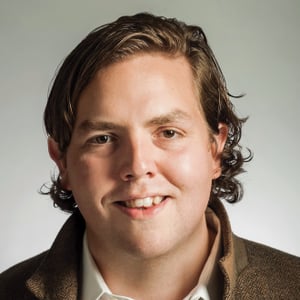
Harry Kalven, Jr. Professor of Law & Faculty Director, Constitutional Law Institute, University of Chicago Law School
William Baude is a Professor of Law and the Faculty Director of the Constitutional Law Institute at the University of Chicago Law School, where he teaches federal courts, constitutional law, and conflict of laws. His current research interests include different aspects of the Fourteenth Amendment (particularly both Section One and Section Three) and the nature of judicial discretion.
Among his other activities Baude is: the co-editor of two textbooks, The Constitution of the United States and Hart & Wechsler's Federal Courts in the Federal System; an Affiliated Scholar at the Center for the Study of Constitutional Originalism; a founding member of the Academic Freedom Alliance; a member of the American Law Institute; an occasional blogger at The Volokh Conspiracy; and a podcaster on Divided Argument. He also recently served on the Presidential Commission on the Supreme Court of the United States.
Professor Baude received his BS in Mathematics from the University of Chicago and his JD from Yale Law School. He then clerked for then-Judge Michael McConnell on the United States Court of Appeals, and Chief Justice John Roberts on the United States Supreme Court. Before joining the Chicago faculty, he was a fellow at the Stanford Constitutional Law Center, and a lawyer in Washington, DC.
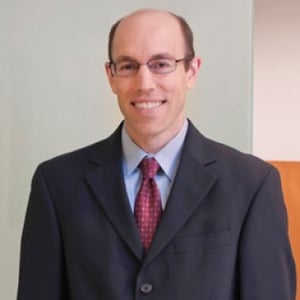
University Professor for Teaching Excellence and Robert and Elizabeth Scott Research Professor of Law, William & Mary Law School
Jeffrey Bellin received his undergraduate degree from Columbia University (summa cum laude) and his law degree from Stanford Law School (order of the coif). After graduating from law school, Professor Bellin clerked for the Honorable Merrick Garland of the U.S. Court of Appeals for the District of Columbia Circuit. Following his clerkship, Professor Bellin served as a prosecutor with the United States Attorney’s Office in Washington, D.C.; and practiced with the San Diego office of Latham & Watkins.
Professor Bellin received a 2019 SCHEV Outstanding Faculty award, the Commonwealth's highest honor for faculty at Virginia's public and private colleges and universities. In 2018, he received the law school’s McGlothlin Award for Exceptional Teaching; in 2017, Professor Bellin was named a University Professor for Teaching Excellence (three-year term) upon the recommendation of a College-wide faculty search committee; and he received the Walter Williams Memorial Teaching Award from the 2014 graduating class. Professor Bellin was also awarded a Plumeri Award for Faculty Excellence in 2015, and Cabell Research Professorships in 2015-16 and 2016-17.
In recent years, Professor Bellin has been called upon by the federal courts to investigate allegations of misconduct against federal judges. His report on one investigation formed the basis for a published opinion in a particularly high-profile case. See In re Charges of Judicial Misconduct, 769 F.3d 762 (D.C. Cir. 2014). He also serves on the National Center for State Courts’ Research Advisory Council.
Professor Bellin’s legal writing is regularly cited in federal and state judicial opinions and scholarly commentary. He also contributes to the media, appearing frequently on Bloomberg Law Radio and Hearsay with Cathy Lewis (NPR). His commentary has been featured in numerous other media outlets, including CNN, ABC, USA Today, NPR, and the Washington Post.
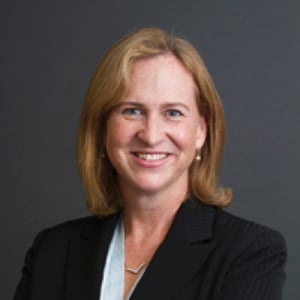
Anne Fleming Research Professor; Professor of Law, Georgetown Law
Laura K. Donohue is a Professor of Law at Georgetown Law, Director of Georgetown's Center on National Security and the Law, and Director of the Center on Privacy and Technology. She writes on constitutional law, legal history, emerging technologies, and national security law. Her most recent book, The Future of Foreign Intelligence: Privacy and Surveillance in a Digital Age (Oxford University Press, 2016), was awarded the 2016 IIT Chicago-Kent College of Law/Roy C. Palmer Civil Liberties Prize. She also has written The Cost of Counterterrorism: Power, Politics, and Liberty (Cambridge University Press, 2008); and Counterterrorist Law and Emergency Law in the United Kingdom 1922-2000 (Irish Academic Press, 2007).
Professor Donohue's articles have been published by California Law Review, University of Chicago Law Review, Stanford Law Review, University of Pennsylvania Law Review, Harvard Journal of Law and Public Policy, and other scholarly journals.
In November 2015, the U.S. Foreign Intelligence Surveillance Court appointed her as one of five amici curiae under the 2015 USA FREEDOM Act.
Professor Donohue is a Life Member of the Council on Foreign Relations; an Advisory Board Member of the Electronic Privacy Information Center; and a Member of the American Bar Association's Standing Committee on Law and National Security. She is a Senior Scholar at Georgetown Law's Center for the Constitution.
Donohue obtained her AB in Philosophy (with Honors) from Dartmouth College; her MA in Peace Studies (with Distinction) from the University of Ulster, Northern Ireland; her JD (with Distinction) from Stanford Law School; and her PhD in History from the University of Cambridge, England.
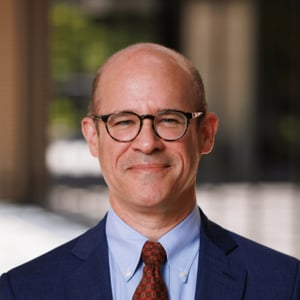
Professor of Law, Stanford Law School
Orin S. Kerr is a Professor of Law at Stanford Law School, where he teaches and writes in the areas of criminal procedure and computer crime law. Kerr earned mechanical engineering degrees from Princeton University and Stanford University before graduating with a J.D. from Harvard Law School. He is a former law clerk to Justice Anthony M. Kennedy at the United States Supreme Court and Judge Leonard I. Garth of the U.S. Court of Appeals for the Third Circuit.

Judge, United States Court of Appeals, District of Columbia Circuit
Judge Katsas was appointed to the D.C. Circuit in December 2017. He graduated from Princeton University and Harvard Law School, where he was an executive editor on the Harvard Law Review. Between 1989 and 1992, he served as a law clerk to Judge Edward Becker on the Third Circuit, to then-Judge Clarence Thomas on the D.C. Circuit, and to Justice Thomas on the Supreme Court. Between 1992 and 2001, he was an associate and then partner in the Washington office of Jones Day, where he specialized in appellate and complex civil litigation. Between 2001 and 2009, he served in many senior positions in the Department of Justice, including as Assistant Attorney General for the Civil Division and as Acting Associate Attorney General. In 2009, he returned to Jones Day. From January to December 2017, he served as Deputy Assistant to the President and Deputy Counsel to the President.
Before joining the bench, Judge Katsas argued more than 75 appeals, including three cases in the Supreme Court, 13 cases in the D.C. Circuit, and cases in every other federal court of appeals. By appointment of the Chief Justice, he served on the Advisory Committee on Appellate Rules from 2013 to 2017. In 2016, he was elected to membership in the American Academy of Appellate Lawyers.
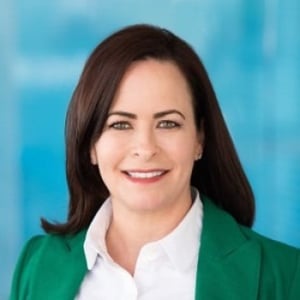
Executive Vice President, Policy, Business Roundtable
Ambassador Kristen Silverberg is Executive Vice President, Policy at Business Roundtable, where she leads the Policy team. She previously served as a Managing Director at the Institute of International Finance. She served in the George W. Bush Administration as U.S. Ambassador to the European Union from 2008 to 2009 and as Assistant Secretary of State for International Organization Affairs from 2005 to 2008. Prior to her time at the State Department, she held a number of senior positions at the White House including Deputy Domestic Policy Advisor.
Ambassador Silverberg served in 2003 in Baghdad, Iraq for which she received the Secretary of Defense Medal for Outstanding Public Service. She formerly practiced law at Williams and Connolly, LLP in Washington, DC and served as a law clerk to Supreme Court Justice Clarence Thomas and Judge David Sentelle of the U.S. Court of Appeals. She attended Harvard College and the University of Texas School of Law, where she graduated with High Honors.
Ambassador Silverberg serves on the Board of Directors of the CDC Foundation, the Board of Directors of the International Republican Institute, the Board of Directors of Vorbeck Materials, the Advisory Board of the Texas National Security Review, the National Advisory Council of the Aspen Institute Future of Work Initiative, and was recognized by the World Economic Forum as a Young Global Leader.
Emanuel S. Heller Professor of Law, University of California at Berkeley; Thomas Smith Senior Research Fellow, Civitas Institute, University of Texas at Austin
John Yoo is the Emanuel Heller Professor of Law at the University of California at Berkeley. He is also the Thomas Smith Senior Research Fellow, Civitas Institute, at the University of Texas at Austin. He is also a Nonresident Senior Fellow at the American Enterprise Institute.
His most recent book, The Politically Incorrect Guide to the Supreme Court, co-authored with Robert Delahunty, was published in 2023. Professor Yoo’s other books include Defender-in-Chief: Trump’s Fight for Presidential Power; Striking Power: How Cyber, Robots, and Space Weapons Change the Rules for War; Point of Attack: Preventive War, International Law, and Global Welfare; and Crisis and Command: A History of Executive Power from George Washington to George Bush.
He is a co-author of volumes 1 and 2 of R. Rossum, G. Tarr, V. Munoz & J. Yoo American Constitution Law (Routledge, 2026), and a co-editor of the eight-volume series on the 250th anniversary of the American Revolution, We Hold These Truths, with Yuval Levin and Adam White of the American Enterprise Institute.
Professor Yoo has published more than 100 articles in academic journals on subjects including national security, constitutional law, international law, and the Supreme Court. He also regularly contributes to the editorial pages of the Wall Street Journal, New York Times, Washington Post, Los Angeles Times, and National Review, among others.
Professor Yoo has served in all three branches of government. He was an official in the U.S. Department of Justice, where he worked on national security and terrorism issues after the 9/11 attacks. He served as general counsel of the U.S. Senate Judiciary Committee. He has been a law clerk for Supreme Court Justice Clarence Thomas and federal appeals Judge Laurence Silberman. He has been a visiting professor at the University of Texas at Austin’s School of Civic Leadership, Seoul National University, the Interdisciplinary Center Herzliya, Keio University, Trento University, the University of Chicago, and the Free University of Amsterdam.
Professor Yoo supervises the Public Law and Policy Program and the California Constitution Center. He also serves on the boards of Founding Forward, the Washington Legal Foundation, the Pacific Legal Foundation, the Ulysses Grant Institute, the Federalist Society’s Separation of Powers and Federalism Division, the Universidad Cientifica del Sur Law School, and the Asia-Pacific Law Institute at Seoul National University. He is a winner of the Federalist Society’s Paul Bator award and the Heritage Foundation’s Edwin Meese III Originalism Lectureship.
Professor Yoo graduated from Yale Law School and summa cum laude from Harvard College.
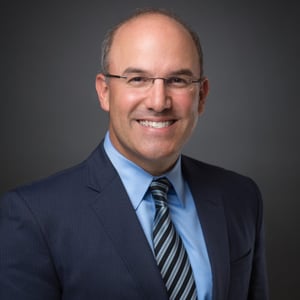
K2 Integrity, Global Co-Managing Partner and Chief Strategy Officer
The Honorable Juan Zarate is the global co-managing partner and chief strategy officer for the global consulting firm, K2 Integrity. He is also the co-founder and Chair of the Board of Consilient, an innovative new fintech.
He is the chairman and co-founder of the Center on Economic and Financial Power (CEFP) at the Foundation for Defense of Democracies, senior adviser at the Center for Strategic and International Studies(CSIS), and a senior fellow at West Point’s Combating Terrorism Center. He was a visiting lecturer in law at the Harvard Law School for eight years and is a published author, including his books “Treasury’s War” (2013) and “Forging Democracy” (1994).
Mr. Zarate sits on the boards of various organizations, including Northwestern Mutual, Cambridge Quantum Computing North America Holdings, Guardian Space Technologies Systems, and the Director’s Advisory Board for the National Counterterrorism Center (NCTC). Since 2014, Mr. Zarate has served as an independent advisor to Coinbase, the largest virtual asset service provider in the United States. With two appointments by Pope Francis,Mr. Zarate sat on the board of the Vatican’s Financial Information Authority for over five years; the Boston Dynamics board for over three years; and for seven years, he was the U.S. advisor on HSBC’s Financial System Vulnerabilities Committee (overseeing remediation of the bank’s anti-money laundering system and adherence with the U.S.DOJ deferred prosecution agreement) and remains an advisor to HSBC’s Group Risk Committee.
Mr. Zarate served as the deputy assistant to the president and deputy national security adviser for combating terrorism (“counterterrorism czar”) from 2005 to 2009, where he was responsible for developing and implementing the U.S. counterterrorism strategy and policies related to transnational security threats, including hostage-taking, piracy, anti-money laundering, kleptocracy, transnational organized crime, and international energy infrastructure protection,. He was responsible for conceiving and leading major initiatives in the post 9/11 period, including the establishment of the Global Initiative to Combat Nuclear Terrorism (GICNT).
He was the first ever assistant secretary of the treasury for terrorist financing and financial crimes. In this role, he led the post-9/11 anti-money laundering and sanctions regime expansion in the United States; helped develop the international standards for AML/CFT and proliferation finance; supervised the Financial Crimes Enforcement Network (FINCEN), the Office of Foreign Assets Control (OFAC), and the Treasury’s Executive Office for Asset Forfeiture (TEOAF); drove the innovative use of the Treasury’s national security–related powers and ultimately the establishment of the Office of Terrorism and Financial Intelligence (TFI). He has also led some of the largest asset recovery ventures in history, including the return of over $3 billion in Iraqi assets.
Mr. Zarate is a former federal terrorism prosecutor, prior to 9/11, serving on the prosecution teams in the East Africa bombings and USS Cole cases, among others. He is a magna cum laude graduate of Harvard College, a cum laude graduate of the Harvard Law School, and a Rotary Fellow at the Universidad de Salamanca. At Harvard College, he won the John P. Reardon Award, as the best male student athlete.

Senior Vice President for Legal Studies, Cato Institute
Clark Neily is senior vice president for legal studies at the Cato Institute. His areas of interest include constitutional law, overcriminalization, civil forfeiture, police accountability, and gun rights. Neily is the author of Terms of Engagement: How Our Courts Should Enforce the Constitution’s Promise of Limited Government. His writing has appeared in the Wall Street Journal, Forbes, and National Review Online, as well as various law reviews, including the Harvard Journal of Law and Public Policy, George Mason Law Review, Georgetown Journal of Law and Public Policy, NYU Journal of Law and Liberty, and Texas Review of Law and Politics. Neily is a frequent guest speaker and lecturer for the Federalist Society, Institute for Humane Studies, and American Constitution Society.
Before joining Cato in 2017, Neily was a senior attorney and constitutional litigator at the Institute for Justice and director of the Institute’s Center for Judicial Engagement. He is also an adjunct professor at the University of Texas School of Law, where he teaches constitutional litigation and public-interest law.
Neily served as co-counsel in District of Columbia v. Heller, the historic case in which the Supreme Court held for the first time that the Second Amendment protects an individual right to own a gun for self-defense.
Neily began his legal career as a law clerk to Judge Royce Lamberth on the U.S. District Court for the District of Columbia. After that he spent four years in the trial department of the Dallas-based firm Thompson & Knight. Neily received his undergraduate and law degrees from the University of Texas, where he was Chief Articles Editor of the Texas Law Review.
Professor of Law, Stanford Law School
Orin S. Kerr is a Professor of Law at Stanford Law School, where he teaches and writes in the areas of criminal procedure and computer crime law. Kerr earned mechanical engineering degrees from Princeton University and Stanford University before graduating with a J.D. from Harvard Law School. He is a former law clerk to Justice Anthony M. Kennedy at the United States Supreme Court and Judge Leonard I. Garth of the U.S. Court of Appeals for the Third Circuit.
Harry Kalven, Jr. Professor of Law & Faculty Director, Constitutional Law Institute, University of Chicago Law School
William Baude is a Professor of Law and the Faculty Director of the Constitutional Law Institute at the University of Chicago Law School, where he teaches federal courts, constitutional law, and conflict of laws. His current research interests include different aspects of the Fourteenth Amendment (particularly both Section One and Section Three) and the nature of judicial discretion.
Among his other activities Baude is: the co-editor of two textbooks, The Constitution of the United States and Hart & Wechsler's Federal Courts in the Federal System; an Affiliated Scholar at the Center for the Study of Constitutional Originalism; a founding member of the Academic Freedom Alliance; a member of the American Law Institute; an occasional blogger at The Volokh Conspiracy; and a podcaster on Divided Argument. He also recently served on the Presidential Commission on the Supreme Court of the United States.
Professor Baude received his BS in Mathematics from the University of Chicago and his JD from Yale Law School. He then clerked for then-Judge Michael McConnell on the United States Court of Appeals, and Chief Justice John Roberts on the United States Supreme Court. Before joining the Chicago faculty, he was a fellow at the Stanford Constitutional Law Center, and a lawyer in Washington, DC.
University Professor for Teaching Excellence and Robert and Elizabeth Scott Research Professor of Law, William & Mary Law School
Jeffrey Bellin received his undergraduate degree from Columbia University (summa cum laude) and his law degree from Stanford Law School (order of the coif). After graduating from law school, Professor Bellin clerked for the Honorable Merrick Garland of the U.S. Court of Appeals for the District of Columbia Circuit. Following his clerkship, Professor Bellin served as a prosecutor with the United States Attorney’s Office in Washington, D.C.; and practiced with the San Diego office of Latham & Watkins.
Professor Bellin received a 2019 SCHEV Outstanding Faculty award, the Commonwealth's highest honor for faculty at Virginia's public and private colleges and universities. In 2018, he received the law school’s McGlothlin Award for Exceptional Teaching; in 2017, Professor Bellin was named a University Professor for Teaching Excellence (three-year term) upon the recommendation of a College-wide faculty search committee; and he received the Walter Williams Memorial Teaching Award from the 2014 graduating class. Professor Bellin was also awarded a Plumeri Award for Faculty Excellence in 2015, and Cabell Research Professorships in 2015-16 and 2016-17.
In recent years, Professor Bellin has been called upon by the federal courts to investigate allegations of misconduct against federal judges. His report on one investigation formed the basis for a published opinion in a particularly high-profile case. See In re Charges of Judicial Misconduct, 769 F.3d 762 (D.C. Cir. 2014). He also serves on the National Center for State Courts’ Research Advisory Council.
Professor Bellin’s legal writing is regularly cited in federal and state judicial opinions and scholarly commentary. He also contributes to the media, appearing frequently on Bloomberg Law Radio and Hearsay with Cathy Lewis (NPR). His commentary has been featured in numerous other media outlets, including CNN, ABC, USA Today, NPR, and the Washington Post.
Anne Fleming Research Professor; Professor of Law, Georgetown Law
Laura K. Donohue is a Professor of Law at Georgetown Law, Director of Georgetown's Center on National Security and the Law, and Director of the Center on Privacy and Technology. She writes on constitutional law, legal history, emerging technologies, and national security law. Her most recent book, The Future of Foreign Intelligence: Privacy and Surveillance in a Digital Age (Oxford University Press, 2016), was awarded the 2016 IIT Chicago-Kent College of Law/Roy C. Palmer Civil Liberties Prize. She also has written The Cost of Counterterrorism: Power, Politics, and Liberty (Cambridge University Press, 2008); and Counterterrorist Law and Emergency Law in the United Kingdom 1922-2000 (Irish Academic Press, 2007).
Professor Donohue's articles have been published by California Law Review, University of Chicago Law Review, Stanford Law Review, University of Pennsylvania Law Review, Harvard Journal of Law and Public Policy, and other scholarly journals.
In November 2015, the U.S. Foreign Intelligence Surveillance Court appointed her as one of five amici curiae under the 2015 USA FREEDOM Act.
Professor Donohue is a Life Member of the Council on Foreign Relations; an Advisory Board Member of the Electronic Privacy Information Center; and a Member of the American Bar Association's Standing Committee on Law and National Security. She is a Senior Scholar at Georgetown Law's Center for the Constitution.
Donohue obtained her AB in Philosophy (with Honors) from Dartmouth College; her MA in Peace Studies (with Distinction) from the University of Ulster, Northern Ireland; her JD (with Distinction) from Stanford Law School; and her PhD in History from the University of Cambridge, England.
Professor of Law, Stanford Law School
Orin S. Kerr is a Professor of Law at Stanford Law School, where he teaches and writes in the areas of criminal procedure and computer crime law. Kerr earned mechanical engineering degrees from Princeton University and Stanford University before graduating with a J.D. from Harvard Law School. He is a former law clerk to Justice Anthony M. Kennedy at the United States Supreme Court and Judge Leonard I. Garth of the U.S. Court of Appeals for the Third Circuit.
Harry Kalven, Jr. Professor of Law & Faculty Director, Constitutional Law Institute, University of Chicago Law School
William Baude is a Professor of Law and the Faculty Director of the Constitutional Law Institute at the University of Chicago Law School, where he teaches federal courts, constitutional law, and conflict of laws. His current research interests include different aspects of the Fourteenth Amendment (particularly both Section One and Section Three) and the nature of judicial discretion.
Among his other activities Baude is: the co-editor of two textbooks, The Constitution of the United States and Hart & Wechsler's Federal Courts in the Federal System; an Affiliated Scholar at the Center for the Study of Constitutional Originalism; a founding member of the Academic Freedom Alliance; a member of the American Law Institute; an occasional blogger at The Volokh Conspiracy; and a podcaster on Divided Argument. He also recently served on the Presidential Commission on the Supreme Court of the United States.
Professor Baude received his BS in Mathematics from the University of Chicago and his JD from Yale Law School. He then clerked for then-Judge Michael McConnell on the United States Court of Appeals, and Chief Justice John Roberts on the United States Supreme Court. Before joining the Chicago faculty, he was a fellow at the Stanford Constitutional Law Center, and a lawyer in Washington, DC.
University Professor for Teaching Excellence and Robert and Elizabeth Scott Research Professor of Law, William & Mary Law School
Jeffrey Bellin received his undergraduate degree from Columbia University (summa cum laude) and his law degree from Stanford Law School (order of the coif). After graduating from law school, Professor Bellin clerked for the Honorable Merrick Garland of the U.S. Court of Appeals for the District of Columbia Circuit. Following his clerkship, Professor Bellin served as a prosecutor with the United States Attorney’s Office in Washington, D.C.; and practiced with the San Diego office of Latham & Watkins.
Professor Bellin received a 2019 SCHEV Outstanding Faculty award, the Commonwealth's highest honor for faculty at Virginia's public and private colleges and universities. In 2018, he received the law school’s McGlothlin Award for Exceptional Teaching; in 2017, Professor Bellin was named a University Professor for Teaching Excellence (three-year term) upon the recommendation of a College-wide faculty search committee; and he received the Walter Williams Memorial Teaching Award from the 2014 graduating class. Professor Bellin was also awarded a Plumeri Award for Faculty Excellence in 2015, and Cabell Research Professorships in 2015-16 and 2016-17.
In recent years, Professor Bellin has been called upon by the federal courts to investigate allegations of misconduct against federal judges. His report on one investigation formed the basis for a published opinion in a particularly high-profile case. See In re Charges of Judicial Misconduct, 769 F.3d 762 (D.C. Cir. 2014). He also serves on the National Center for State Courts’ Research Advisory Council.
Professor Bellin’s legal writing is regularly cited in federal and state judicial opinions and scholarly commentary. He also contributes to the media, appearing frequently on Bloomberg Law Radio and Hearsay with Cathy Lewis (NPR). His commentary has been featured in numerous other media outlets, including CNN, ABC, USA Today, NPR, and the Washington Post.
Anne Fleming Research Professor; Professor of Law, Georgetown Law
Laura K. Donohue is a Professor of Law at Georgetown Law, Director of Georgetown's Center on National Security and the Law, and Director of the Center on Privacy and Technology. She writes on constitutional law, legal history, emerging technologies, and national security law. Her most recent book, The Future of Foreign Intelligence: Privacy and Surveillance in a Digital Age (Oxford University Press, 2016), was awarded the 2016 IIT Chicago-Kent College of Law/Roy C. Palmer Civil Liberties Prize. She also has written The Cost of Counterterrorism: Power, Politics, and Liberty (Cambridge University Press, 2008); and Counterterrorist Law and Emergency Law in the United Kingdom 1922-2000 (Irish Academic Press, 2007).
Professor Donohue's articles have been published by California Law Review, University of Chicago Law Review, Stanford Law Review, University of Pennsylvania Law Review, Harvard Journal of Law and Public Policy, and other scholarly journals.
In November 2015, the U.S. Foreign Intelligence Surveillance Court appointed her as one of five amici curiae under the 2015 USA FREEDOM Act.
Professor Donohue is a Life Member of the Council on Foreign Relations; an Advisory Board Member of the Electronic Privacy Information Center; and a Member of the American Bar Association's Standing Committee on Law and National Security. She is a Senior Scholar at Georgetown Law's Center for the Constitution.
Donohue obtained her AB in Philosophy (with Honors) from Dartmouth College; her MA in Peace Studies (with Distinction) from the University of Ulster, Northern Ireland; her JD (with Distinction) from Stanford Law School; and her PhD in History from the University of Cambridge, England.
Professor of Law, Stanford Law School
Orin S. Kerr is a Professor of Law at Stanford Law School, where he teaches and writes in the areas of criminal procedure and computer crime law. Kerr earned mechanical engineering degrees from Princeton University and Stanford University before graduating with a J.D. from Harvard Law School. He is a former law clerk to Justice Anthony M. Kennedy at the United States Supreme Court and Judge Leonard I. Garth of the U.S. Court of Appeals for the Third Circuit.
Judge, United States Court of Appeals, District of Columbia Circuit
Judge Katsas was appointed to the D.C. Circuit in December 2017. He graduated from Princeton University and Harvard Law School, where he was an executive editor on the Harvard Law Review. Between 1989 and 1992, he served as a law clerk to Judge Edward Becker on the Third Circuit, to then-Judge Clarence Thomas on the D.C. Circuit, and to Justice Thomas on the Supreme Court. Between 1992 and 2001, he was an associate and then partner in the Washington office of Jones Day, where he specialized in appellate and complex civil litigation. Between 2001 and 2009, he served in many senior positions in the Department of Justice, including as Assistant Attorney General for the Civil Division and as Acting Associate Attorney General. In 2009, he returned to Jones Day. From January to December 2017, he served as Deputy Assistant to the President and Deputy Counsel to the President.
Before joining the bench, Judge Katsas argued more than 75 appeals, including three cases in the Supreme Court, 13 cases in the D.C. Circuit, and cases in every other federal court of appeals. By appointment of the Chief Justice, he served on the Advisory Committee on Appellate Rules from 2013 to 2017. In 2016, he was elected to membership in the American Academy of Appellate Lawyers.
Executive Vice President, Policy, Business Roundtable
Ambassador Kristen Silverberg is Executive Vice President, Policy at Business Roundtable, where she leads the Policy team. She previously served as a Managing Director at the Institute of International Finance. She served in the George W. Bush Administration as U.S. Ambassador to the European Union from 2008 to 2009 and as Assistant Secretary of State for International Organization Affairs from 2005 to 2008. Prior to her time at the State Department, she held a number of senior positions at the White House including Deputy Domestic Policy Advisor.
Ambassador Silverberg served in 2003 in Baghdad, Iraq for which she received the Secretary of Defense Medal for Outstanding Public Service. She formerly practiced law at Williams and Connolly, LLP in Washington, DC and served as a law clerk to Supreme Court Justice Clarence Thomas and Judge David Sentelle of the U.S. Court of Appeals. She attended Harvard College and the University of Texas School of Law, where she graduated with High Honors.
Ambassador Silverberg serves on the Board of Directors of the CDC Foundation, the Board of Directors of the International Republican Institute, the Board of Directors of Vorbeck Materials, the Advisory Board of the Texas National Security Review, the National Advisory Council of the Aspen Institute Future of Work Initiative, and was recognized by the World Economic Forum as a Young Global Leader.
Emanuel S. Heller Professor of Law, University of California at Berkeley; Thomas Smith Senior Research Fellow, Civitas Institute, University of Texas at Austin
John Yoo is the Emanuel Heller Professor of Law at the University of California at Berkeley. He is also the Thomas Smith Senior Research Fellow, Civitas Institute, at the University of Texas at Austin. He is also a Nonresident Senior Fellow at the American Enterprise Institute.
His most recent book, The Politically Incorrect Guide to the Supreme Court, co-authored with Robert Delahunty, was published in 2023. Professor Yoo’s other books include Defender-in-Chief: Trump’s Fight for Presidential Power; Striking Power: How Cyber, Robots, and Space Weapons Change the Rules for War; Point of Attack: Preventive War, International Law, and Global Welfare; and Crisis and Command: A History of Executive Power from George Washington to George Bush.
He is a co-author of volumes 1 and 2 of R. Rossum, G. Tarr, V. Munoz & J. Yoo American Constitution Law (Routledge, 2026), and a co-editor of the eight-volume series on the 250th anniversary of the American Revolution, We Hold These Truths, with Yuval Levin and Adam White of the American Enterprise Institute.
Professor Yoo has published more than 100 articles in academic journals on subjects including national security, constitutional law, international law, and the Supreme Court. He also regularly contributes to the editorial pages of the Wall Street Journal, New York Times, Washington Post, Los Angeles Times, and National Review, among others.
Professor Yoo has served in all three branches of government. He was an official in the U.S. Department of Justice, where he worked on national security and terrorism issues after the 9/11 attacks. He served as general counsel of the U.S. Senate Judiciary Committee. He has been a law clerk for Supreme Court Justice Clarence Thomas and federal appeals Judge Laurence Silberman. He has been a visiting professor at the University of Texas at Austin’s School of Civic Leadership, Seoul National University, the Interdisciplinary Center Herzliya, Keio University, Trento University, the University of Chicago, and the Free University of Amsterdam.
Professor Yoo supervises the Public Law and Policy Program and the California Constitution Center. He also serves on the boards of Founding Forward, the Washington Legal Foundation, the Pacific Legal Foundation, the Ulysses Grant Institute, the Federalist Society’s Separation of Powers and Federalism Division, the Universidad Cientifica del Sur Law School, and the Asia-Pacific Law Institute at Seoul National University. He is a winner of the Federalist Society’s Paul Bator award and the Heritage Foundation’s Edwin Meese III Originalism Lectureship.
Professor Yoo graduated from Yale Law School and summa cum laude from Harvard College.
K2 Integrity, Global Co-Managing Partner and Chief Strategy Officer
The Honorable Juan Zarate is the global co-managing partner and chief strategy officer for the global consulting firm, K2 Integrity. He is also the co-founder and Chair of the Board of Consilient, an innovative new fintech.
He is the chairman and co-founder of the Center on Economic and Financial Power (CEFP) at the Foundation for Defense of Democracies, senior adviser at the Center for Strategic and International Studies(CSIS), and a senior fellow at West Point’s Combating Terrorism Center. He was a visiting lecturer in law at the Harvard Law School for eight years and is a published author, including his books “Treasury’s War” (2013) and “Forging Democracy” (1994).
Mr. Zarate sits on the boards of various organizations, including Northwestern Mutual, Cambridge Quantum Computing North America Holdings, Guardian Space Technologies Systems, and the Director’s Advisory Board for the National Counterterrorism Center (NCTC). Since 2014, Mr. Zarate has served as an independent advisor to Coinbase, the largest virtual asset service provider in the United States. With two appointments by Pope Francis,Mr. Zarate sat on the board of the Vatican’s Financial Information Authority for over five years; the Boston Dynamics board for over three years; and for seven years, he was the U.S. advisor on HSBC’s Financial System Vulnerabilities Committee (overseeing remediation of the bank’s anti-money laundering system and adherence with the U.S.DOJ deferred prosecution agreement) and remains an advisor to HSBC’s Group Risk Committee.
Mr. Zarate served as the deputy assistant to the president and deputy national security adviser for combating terrorism (“counterterrorism czar”) from 2005 to 2009, where he was responsible for developing and implementing the U.S. counterterrorism strategy and policies related to transnational security threats, including hostage-taking, piracy, anti-money laundering, kleptocracy, transnational organized crime, and international energy infrastructure protection,. He was responsible for conceiving and leading major initiatives in the post 9/11 period, including the establishment of the Global Initiative to Combat Nuclear Terrorism (GICNT).
He was the first ever assistant secretary of the treasury for terrorist financing and financial crimes. In this role, he led the post-9/11 anti-money laundering and sanctions regime expansion in the United States; helped develop the international standards for AML/CFT and proliferation finance; supervised the Financial Crimes Enforcement Network (FINCEN), the Office of Foreign Assets Control (OFAC), and the Treasury’s Executive Office for Asset Forfeiture (TEOAF); drove the innovative use of the Treasury’s national security–related powers and ultimately the establishment of the Office of Terrorism and Financial Intelligence (TFI). He has also led some of the largest asset recovery ventures in history, including the return of over $3 billion in Iraqi assets.
Mr. Zarate is a former federal terrorism prosecutor, prior to 9/11, serving on the prosecution teams in the East Africa bombings and USS Cole cases, among others. He is a magna cum laude graduate of Harvard College, a cum laude graduate of the Harvard Law School, and a Rotary Fellow at the Universidad de Salamanca. At Harvard College, he won the John P. Reardon Award, as the best male student athlete.
Judge, United States Court of Appeals, District of Columbia Circuit
Judge Katsas was appointed to the D.C. Circuit in December 2017. He graduated from Princeton University and Harvard Law School, where he was an executive editor on the Harvard Law Review. Between 1989 and 1992, he served as a law clerk to Judge Edward Becker on the Third Circuit, to then-Judge Clarence Thomas on the D.C. Circuit, and to Justice Thomas on the Supreme Court. Between 1992 and 2001, he was an associate and then partner in the Washington office of Jones Day, where he specialized in appellate and complex civil litigation. Between 2001 and 2009, he served in many senior positions in the Department of Justice, including as Assistant Attorney General for the Civil Division and as Acting Associate Attorney General. In 2009, he returned to Jones Day. From January to December 2017, he served as Deputy Assistant to the President and Deputy Counsel to the President.
Before joining the bench, Judge Katsas argued more than 75 appeals, including three cases in the Supreme Court, 13 cases in the D.C. Circuit, and cases in every other federal court of appeals. By appointment of the Chief Justice, he served on the Advisory Committee on Appellate Rules from 2013 to 2017. In 2016, he was elected to membership in the American Academy of Appellate Lawyers.
Executive Vice President, Policy, Business Roundtable
Ambassador Kristen Silverberg is Executive Vice President, Policy at Business Roundtable, where she leads the Policy team. She previously served as a Managing Director at the Institute of International Finance. She served in the George W. Bush Administration as U.S. Ambassador to the European Union from 2008 to 2009 and as Assistant Secretary of State for International Organization Affairs from 2005 to 2008. Prior to her time at the State Department, she held a number of senior positions at the White House including Deputy Domestic Policy Advisor.
Ambassador Silverberg served in 2003 in Baghdad, Iraq for which she received the Secretary of Defense Medal for Outstanding Public Service. She formerly practiced law at Williams and Connolly, LLP in Washington, DC and served as a law clerk to Supreme Court Justice Clarence Thomas and Judge David Sentelle of the U.S. Court of Appeals. She attended Harvard College and the University of Texas School of Law, where she graduated with High Honors.
Ambassador Silverberg serves on the Board of Directors of the CDC Foundation, the Board of Directors of the International Republican Institute, the Board of Directors of Vorbeck Materials, the Advisory Board of the Texas National Security Review, the National Advisory Council of the Aspen Institute Future of Work Initiative, and was recognized by the World Economic Forum as a Young Global Leader.
Emanuel S. Heller Professor of Law, University of California at Berkeley; Thomas Smith Senior Research Fellow, Civitas Institute, University of Texas at Austin
John Yoo is the Emanuel Heller Professor of Law at the University of California at Berkeley. He is also the Thomas Smith Senior Research Fellow, Civitas Institute, at the University of Texas at Austin. He is also a Nonresident Senior Fellow at the American Enterprise Institute.
His most recent book, The Politically Incorrect Guide to the Supreme Court, co-authored with Robert Delahunty, was published in 2023. Professor Yoo’s other books include Defender-in-Chief: Trump’s Fight for Presidential Power; Striking Power: How Cyber, Robots, and Space Weapons Change the Rules for War; Point of Attack: Preventive War, International Law, and Global Welfare; and Crisis and Command: A History of Executive Power from George Washington to George Bush.
He is a co-author of volumes 1 and 2 of R. Rossum, G. Tarr, V. Munoz & J. Yoo American Constitution Law (Routledge, 2026), and a co-editor of the eight-volume series on the 250th anniversary of the American Revolution, We Hold These Truths, with Yuval Levin and Adam White of the American Enterprise Institute.
Professor Yoo has published more than 100 articles in academic journals on subjects including national security, constitutional law, international law, and the Supreme Court. He also regularly contributes to the editorial pages of the Wall Street Journal, New York Times, Washington Post, Los Angeles Times, and National Review, among others.
Professor Yoo has served in all three branches of government. He was an official in the U.S. Department of Justice, where he worked on national security and terrorism issues after the 9/11 attacks. He served as general counsel of the U.S. Senate Judiciary Committee. He has been a law clerk for Supreme Court Justice Clarence Thomas and federal appeals Judge Laurence Silberman. He has been a visiting professor at the University of Texas at Austin’s School of Civic Leadership, Seoul National University, the Interdisciplinary Center Herzliya, Keio University, Trento University, the University of Chicago, and the Free University of Amsterdam.
Professor Yoo supervises the Public Law and Policy Program and the California Constitution Center. He also serves on the boards of Founding Forward, the Washington Legal Foundation, the Pacific Legal Foundation, the Ulysses Grant Institute, the Federalist Society’s Separation of Powers and Federalism Division, the Universidad Cientifica del Sur Law School, and the Asia-Pacific Law Institute at Seoul National University. He is a winner of the Federalist Society’s Paul Bator award and the Heritage Foundation’s Edwin Meese III Originalism Lectureship.
Professor Yoo graduated from Yale Law School and summa cum laude from Harvard College.
K2 Integrity, Global Co-Managing Partner and Chief Strategy Officer
The Honorable Juan Zarate is the global co-managing partner and chief strategy officer for the global consulting firm, K2 Integrity. He is also the co-founder and Chair of the Board of Consilient, an innovative new fintech.
He is the chairman and co-founder of the Center on Economic and Financial Power (CEFP) at the Foundation for Defense of Democracies, senior adviser at the Center for Strategic and International Studies(CSIS), and a senior fellow at West Point’s Combating Terrorism Center. He was a visiting lecturer in law at the Harvard Law School for eight years and is a published author, including his books “Treasury’s War” (2013) and “Forging Democracy” (1994).
Mr. Zarate sits on the boards of various organizations, including Northwestern Mutual, Cambridge Quantum Computing North America Holdings, Guardian Space Technologies Systems, and the Director’s Advisory Board for the National Counterterrorism Center (NCTC). Since 2014, Mr. Zarate has served as an independent advisor to Coinbase, the largest virtual asset service provider in the United States. With two appointments by Pope Francis,Mr. Zarate sat on the board of the Vatican’s Financial Information Authority for over five years; the Boston Dynamics board for over three years; and for seven years, he was the U.S. advisor on HSBC’s Financial System Vulnerabilities Committee (overseeing remediation of the bank’s anti-money laundering system and adherence with the U.S.DOJ deferred prosecution agreement) and remains an advisor to HSBC’s Group Risk Committee.
Mr. Zarate served as the deputy assistant to the president and deputy national security adviser for combating terrorism (“counterterrorism czar”) from 2005 to 2009, where he was responsible for developing and implementing the U.S. counterterrorism strategy and policies related to transnational security threats, including hostage-taking, piracy, anti-money laundering, kleptocracy, transnational organized crime, and international energy infrastructure protection,. He was responsible for conceiving and leading major initiatives in the post 9/11 period, including the establishment of the Global Initiative to Combat Nuclear Terrorism (GICNT).
He was the first ever assistant secretary of the treasury for terrorist financing and financial crimes. In this role, he led the post-9/11 anti-money laundering and sanctions regime expansion in the United States; helped develop the international standards for AML/CFT and proliferation finance; supervised the Financial Crimes Enforcement Network (FINCEN), the Office of Foreign Assets Control (OFAC), and the Treasury’s Executive Office for Asset Forfeiture (TEOAF); drove the innovative use of the Treasury’s national security–related powers and ultimately the establishment of the Office of Terrorism and Financial Intelligence (TFI). He has also led some of the largest asset recovery ventures in history, including the return of over $3 billion in Iraqi assets.
Mr. Zarate is a former federal terrorism prosecutor, prior to 9/11, serving on the prosecution teams in the East Africa bombings and USS Cole cases, among others. He is a magna cum laude graduate of Harvard College, a cum laude graduate of the Harvard Law School, and a Rotary Fellow at the Universidad de Salamanca. At Harvard College, he won the John P. Reardon Award, as the best male student athlete.
Emanuel S. Heller Professor of Law, University of California at Berkeley; Thomas Smith Senior Research Fellow, Civitas Institute, University of Texas at Austin
John Yoo is the Emanuel Heller Professor of Law at the University of California at Berkeley. He is also the Thomas Smith Senior Research Fellow, Civitas Institute, at the University of Texas at Austin. He is also a Nonresident Senior Fellow at the American Enterprise Institute.
His most recent book, The Politically Incorrect Guide to the Supreme Court, co-authored with Robert Delahunty, was published in 2023. Professor Yoo’s other books include Defender-in-Chief: Trump’s Fight for Presidential Power; Striking Power: How Cyber, Robots, and Space Weapons Change the Rules for War; Point of Attack: Preventive War, International Law, and Global Welfare; and Crisis and Command: A History of Executive Power from George Washington to George Bush.
He is a co-author of volumes 1 and 2 of R. Rossum, G. Tarr, V. Munoz & J. Yoo American Constitution Law (Routledge, 2026), and a co-editor of the eight-volume series on the 250th anniversary of the American Revolution, We Hold These Truths, with Yuval Levin and Adam White of the American Enterprise Institute.
Professor Yoo has published more than 100 articles in academic journals on subjects including national security, constitutional law, international law, and the Supreme Court. He also regularly contributes to the editorial pages of the Wall Street Journal, New York Times, Washington Post, Los Angeles Times, and National Review, among others.
Professor Yoo has served in all three branches of government. He was an official in the U.S. Department of Justice, where he worked on national security and terrorism issues after the 9/11 attacks. He served as general counsel of the U.S. Senate Judiciary Committee. He has been a law clerk for Supreme Court Justice Clarence Thomas and federal appeals Judge Laurence Silberman. He has been a visiting professor at the University of Texas at Austin’s School of Civic Leadership, Seoul National University, the Interdisciplinary Center Herzliya, Keio University, Trento University, the University of Chicago, and the Free University of Amsterdam.
Professor Yoo supervises the Public Law and Policy Program and the California Constitution Center. He also serves on the boards of Founding Forward, the Washington Legal Foundation, the Pacific Legal Foundation, the Ulysses Grant Institute, the Federalist Society’s Separation of Powers and Federalism Division, the Universidad Cientifica del Sur Law School, and the Asia-Pacific Law Institute at Seoul National University. He is a winner of the Federalist Society’s Paul Bator award and the Heritage Foundation’s Edwin Meese III Originalism Lectureship.
Professor Yoo graduated from Yale Law School and summa cum laude from Harvard College.

Dr. John Eastman is the former Henry Salvatori Professor of Law & Community Service and former Dean at Chapman University's Dale E. Fowler School of Law, where he had been a member of the faculty since 1999, specializing in Constitutional Law, Legal History, and Property. He is a founding director of the Center for Constitutional Jurisprudence, a public interest law firm affiliated with the Claremont Institute that he founded in 1999. He has a Ph.D. in Government from the Claremont Graduate School and a J.D. from the University of Chicago Law School, and a B.A. in Politics and Economics from the University of Dallas. He serves as the Chairman of the Board of the National Organization for Marriage.
Prior to joining the Chapman law faculty, Dr. Eastman served as a law clerk to the Honorable Clarence Thomas, Associate Justice, Supreme Court of the United States, and to the Honorable J. Michael Luttig, Judge, United States Court of Appeals for the Fourth Circuit and practiced law with the national law firm of Kirkland & Ellis. Dr. Eastman has also represented numerous clients in important constitutional law matters and has argued before the Supreme Court. On behalf of the Claremont Institute Center for Constitutional Jurisprudence, he has participated as amicus curiae before the Supreme Court of the United States, U.S. Courts of Appeals, and State Supreme Courts in more than one hundred cases of constitutional significance, including Boy Scouts of America v. Dale, Zelman v. Simmons-Harris (the school vouchers case), Kelo v. New London, Ct. (eminent domain), and Van Orden v. Perry (the 10 Commandments case). He has also appeared as an expert legal commentator on numerous television and radio programs, including C-SPAN, Fox News, PBS, NewsHour, and The O'Reilly Factor.

Debate: The True Extent of Executive Power
Boston Lawyers Chapter - Online Event
Supreme Court Review
Los Angeles Lawyers Chapter
Should Jurors Be Instructed About Jury Nullification? [POLICYbrief]
Clark Neily, Orin S. Kerr
When a member of a jury believes a defendant is guilty and chooses to acquit...
Panel: Originalism and the Fourth Amendment
William Baude, Jeffrey Bellin, Laura Donohue, Orin S. Kerr
On January 3-4, 2020, the Federalist Society hosted its 22nd annual Faculty Conference at the...
Panel: Originalism and the Fourth Amendment
William Baude, Jeffrey Bellin, Laura Donohue, Orin S. Kerr
On January 3-4, 2020, the Federalist Society hosted its 22nd annual Faculty Conference at the...
Panel: Originalism and the Fourth Amendment
22nd Annual Federalist Society Faculty Conference
Washington, DCEconomic Law & Policy as a Tool of National Security
Gregory G. Katsas, Kristen Silverberg, John C. Yoo, Juan C. Zarate
On November 15, 2019, the Federalist Society's International & National Security Law Practice Group hosted...
Economic Law & Policy as a Tool of National Security
Gregory G. Katsas, Kristen Silverberg, John C. Yoo, Juan C. Zarate
On November 15, 2019, the Federalist Society's International & National Security Law Practice Group hosted...
Does the Fourteenth Amendment Guarantee Birthright Citizenship? [POLICYbrief]
John C. Yoo, John C. Eastman
What does the text of the Constitution say about United States citizenship? Does the Fourteenth...
Economic Law & Policy as a Tool of National Security
2019 National Lawyers Convention
Washington, DC