Should Jurors Be Instructed About Jury Nullification? [POLICYbrief]
Short video featuring Clark Neily and Orin Kerr
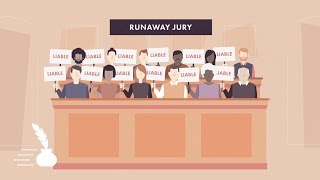
When a member of a jury believes a defendant is guilty and chooses to acquit the defendant anyway for reasons of justice, law misapplication, or harsh punishment, this is known as jury nullification. The validity of jury nullification is an idea that is hotly debated in criminal justice, and in this episode of POLICYbrief, Cato Institute’s Clark Neily argues in favor of instructing jurors about what Neily calls “conscientious acquittal,” while Berkeley Law’s Orin Kerr argues that jury nullification empowers niche and sometimes undesirable views of justice.
As always, the Federalist Society takes no particular legal or public policy positions. All opinions expressed are those of the speaker.
Learn more about Clark Neily:
https://www.cato.org/people/clark-neily
Follow Clark Neily on Twitter: @ConLawWarrior
https://twitter.com/ConLawWarrior
Learn more about Orin Kerr:
https://www.law.berkeley.edu/our-faculty/faculty-profiles/orin-kerr/
Follow Orin Kerr on Twitter: @OrinKerr
https://twitter.com/OrinKerr
Related links:
Our Broken Justice System
https://www.cato.org/policy-report/mayjune-2019/our-broken-justice-system
The problem with jury nullification
https://www.washingtonpost.com/news/volokh-conspiracy/wp/2015/08/10/the-problem-with-jury-nullification/
Bring Back The Jury Trial
https://www.law.georgetown.edu/public-policy-journal/blog/bring-back-the-jury-trial/
Differing views:
Jury Nullification: Good or Bad?
https://www.lawliberty.org/2018/01/16/jury-nullification-good-or-bad/
More on the debate over jury nullification – a response to Orin Kerr
https://www.washingtonpost.com/news/volokh-conspiracy/wp/2015/08/10/more-on-the-debate-over-jury-nullification-a-response-to-orin-kerr/
It’s Perfectly Constitutional to Talk About Jury Nullification
https://www.aclu.org/blog/free-speech/its-perfectly-constitutional-talk-about-jury-nullification
Changing views of jury power
https://link.springer.com/article/10.1007%2FBF01044616

Senior Vice President for Legal Studies, Cato Institute
Clark Neily is senior vice president for legal studies at the Cato Institute. His areas of interest include constitutional law, overcriminalization, civil forfeiture, police accountability, and gun rights. Neily is the author of Terms of Engagement: How Our Courts Should Enforce the Constitution’s Promise of Limited Government. His writing has appeared in the Wall Street Journal, Forbes, and National Review Online, as well as various law reviews, including the Harvard Journal of Law and Public Policy, George Mason Law Review, Georgetown Journal of Law and Public Policy, NYU Journal of Law and Liberty, and Texas Review of Law and Politics. Neily is a frequent guest speaker and lecturer for the Federalist Society, Institute for Humane Studies, and American Constitution Society.
Before joining Cato in 2017, Neily was a senior attorney and constitutional litigator at the Institute for Justice and director of the Institute’s Center for Judicial Engagement. He is also an adjunct professor at the University of Texas School of Law, where he teaches constitutional litigation and public-interest law.
Neily served as co-counsel in District of Columbia v. Heller, the historic case in which the Supreme Court held for the first time that the Second Amendment protects an individual right to own a gun for self-defense.
Neily began his legal career as a law clerk to Judge Royce Lamberth on the U.S. District Court for the District of Columbia. After that he spent four years in the trial department of the Dallas-based firm Thompson & Knight. Neily received his undergraduate and law degrees from the University of Texas, where he was Chief Articles Editor of the Texas Law Review.
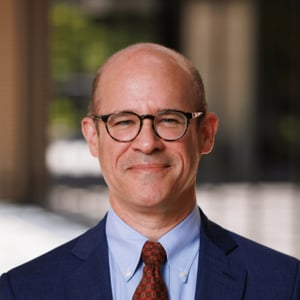
Professor of Law, Stanford Law School
Orin S. Kerr is a Professor of Law at Stanford Law School, where he teaches and writes in the areas of criminal procedure and computer crime law. Kerr earned mechanical engineering degrees from Princeton University and Stanford University before graduating with a J.D. from Harvard Law School. He is a former law clerk to Justice Anthony M. Kennedy at the United States Supreme Court and Judge Leonard I. Garth of the U.S. Court of Appeals for the Third Circuit.