

Director, Project on Criminal Justice, Cato Institute
Matthew Cavedon is the Director of the Cato Institute’s Project on Criminal Justice. He focuses on reforming plea-driven mass adjudication, ensuring police accountability, and defending constitutional criminal originalism. Cavedon’s scholarship has been published (or is forthcoming in) publications including the Arizona State Law Journal, Cato Supreme Court Review, Seattle University Law Review, and Georgetown Journal of Law and Public Policy. Formerly a Georgia public defender and fellow at the Institute for Justice, Cavedon has taught law school courses on criminal law and procedure, as well as the First Amendment. Cavedon clerked for a U.S. district court and the Supreme Court of Georgia. He came to Cato following a fellowship at the Emory University Center for the Study of Law and Religion.

Interim Executive Director, Foundation Against Intolerance and Racism

Public Policy Director, Southern Center for Human Rights
Tiffany Williams Roberts is Director of the Public Policy Unit at Southern Center for Human Rights. She joined the organization in April 2018 as the Community Engagement & Movement Building Counsel. She has practiced criminal defense since 2008, first as a public defender with the Atlanta Judicial Circuit Public Defender and later as a solo practitioner. As a public defender, Tiffany represented hundreds of indigent clients facing felony prosecution and graduated from Gideon’s Promise trial advocacy training program. She expanded her private practice to include civil rights litigation for victims of police abuse.
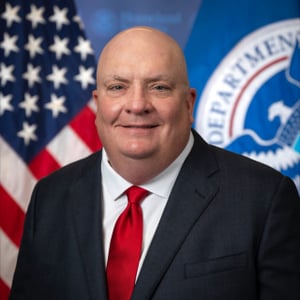
Acting Assistant Commissioner of Customs and Border Protection, Office of Professional Responsibility, U.S. Department of Homeland Security
Brian M. Fish is currently the Senior Advisor to the General Counsel at the Department of Homeland Security where he works on immigration and law enforcement issues. Previously, he was a trial attorney with the United States Immigration and Customs Enforcement, where he represented the Department of Homeland Security in removal hearings before the U.S. Immigration Court. Additionally, he was a Special Assistant United States Attorney and a Baltimore City homicide prosecutor. He is a member of the Federalist Society's Criminal Law & Procedure Practice Group Executive Committee and the President of its Baltimore Lawyers Chapter. He earned his B.A. from LaSalle University in 1992 and his J.D. from Loyola University New Orleans School of Law in 1998.
Director of Litigation, Immigration Reform Law Institute
Mr. Hajec joined the Immigration Reform Law Institute (IRLI) in 2017 as its Director of Litigation, and is responsible for overseeing IRLI’s public interest litigation. Previously, he has focused his career on constitutional and other civil rights law in the public interest, and has had an abiding concern about the many adverse effects of illegal and excessive legal immigration on American jobs and communities.
At IRLI, in addition to representing plaintiffs in immigration-related civil lawsuits, he has overseen the drafting and filing of nearly 100 briefs, mostly amicus curiae briefs in defense of the Trump administration’s immigration initiatives, which have been subjected to an unprecedented degree of legal assault by well-funded interest groups.
Prior to joining IRLI, Mr. Hajec was an attorney at the Center for Individual Rights (CIR), where he litigated a string of high-profile cases, including the defense of videographer James O’Keefe in suits brought by former ACORN employees, a class action suit on behalf of Asian American students discriminated against by the New York City public schools, and a case that resulted in the U.S. Court of Appeals for the Fifth Circuit’s striking down Texas’s psychologists licensing statute as an overbroad restriction on free speech.
Before CIR, Mr. Hajec was an officer in the Navy Judge Advocate General’s Corps, where he served as a defense counsel before courts-martial and then as Appellate Government Counsel, arguing over 100 appeals before the Navy-Marine Corps Court of Criminal Appeals and the Court of Appeals for the Armed Forces. He received the Navy Commendation Medal for his legal work, and also because of his poor handling of an emergency during a hurricane.
He received his law degree from the University of Pennsylvania Law School and his undergraduate degree, cum laude, from the University of Michigan. He has a Ph.D. in philosophy from the University of Miami, and studied philosophy and sociology at Oxford University.
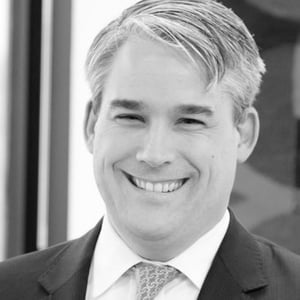
Partner, Klasko Immigration Law Partners, LLP
William A. Stock (Bill) is one of the country’s leading immigration lawyers. A founding member of Klasko Immigration Law Partners, LLP, he has practiced immigration law exclusively for over twenty years. His clients include small businesses, medium sized companies, and multinational corporations and their employees, as well as individual clients, investors and researchers.
Bill leads a team of thirty-two attorneys, senior and junior paralegals in obtaining employment-based immigration benefits for clients, such as nonimmigrant visa classification (H-1B, L-1, E-1 and E-2, TN and O-1); permanent residence or “green card” status through Labor Certification or as immigrants of Exceptional or Extraordinary Ability (EB-1, EB-2 and EB-3); investment-based immigration (EB-5); and unusual or complicated matters such as physician J-1 waivers, visas for entrepreneurs, and mandamus or APA review actions brought in federal court.
Bill served as President of the American Immigration Lawyers Association (AILA), the 16,000 member national organization of immigration lawyers in 2017. He has long been active in the association on both a national and state level and has served several terms on the Association’s Board of Governors. In 2000, he received the Association’s Joseph Minsky Award for outstanding accomplishments in immigration law.
Bill is a Senior Editor of AILA’s annual Immigration & Nationality Law Handbook, and is the co-author of the “J Visa Guidebook” from Lexis Publishing. He was an Adjunct Professor at the Villanova University School of Law. He has been included since 2004 in Best Lawyers in America (Woodward/ White Inc.); since 2006 in Chambers Global: The World’s Leading Lawyers for Business (Chambers and Partners), Who’s Who in American Law, and The International Who’s Who of Business Lawyers. Bill is also featured as a 20 top practitioner in the area of Immigration Law by Lawdragon.
A summa cum laude graduate of the University of St. Thomas (St. Paul, MN), (B.A.1990), he received his law degree from the University of Minnesota (J.D., magna cum laude, 1993) where he was a member of the Order of the Coif.

Vice President, Edwin Meese III Institute for the Rule of Law, Advancing American Freedom
John G. Malcolm oversees Advancing American Freedom’s work to increase understanding of the Constitution and the rule of law as Vice President of the organization’s Edwin Meese III Institute for the Rule of Law. Malcolm brings to the challenge a wealth of legal expertise and experience in both the public and private sectors.
Prior to joining Advancing American Freedom in 2025, Malcolm was the Vice President of the Institute for Constitutional Government and the Director of the Meese Center for Legal and Judicial Studies at the Heritage Foundation. Prior to joining Heritage in 2012, Malcolm was general counsel at the U.S. Commission on International Religious Freedom, as well as a distinguished practitioner in residence at Pepperdine Law School. From 2004 to 2009, Malcolm was executive vice president and director of worldwide anti-piracy operations for the Motion Picture Association.
Malcolm served as a deputy assistant attorney general in the Department of Justice’s Criminal Division from 2001 to 2004, where he oversaw sections on computer crime and intellectual property, domestic security, child exploitation and obscenity, and special investigations. Immediately prior to that, he was a founding partner in the Atlanta law firm of Malcolm & Schroeder, LLP.
From 1990 to 1997, Malcolm was an assistant U.S. attorney in Atlanta, assigned to the fraud and public corruption section, and also an associate independent counsel, investigating fraud and abuse in the Department of Housing and Urban Development. He was honored with the Director’s Award for Superior Performance for his work in connection with the successful prosecution of Walter Leroy Moody Jr., who assassinated an 11th Circuit judge and the head of the Savannah chapter of the NAACP.
A graduate of Harvard Law School and Columbia College, Malcolm began his career as a law clerk to a federal district court judge and a federal appellate court judge, and as an associate at the Atlanta-based law firm of Sutherland, Asbill & Brennan (new Eversheds Sutherland).
Malcolm, who resides in Washington, D.C., serves on the Board of Trustees of the Washington National Opera and is a Senate-confirmed member of the Board of Directors of the Legal Services Corporation, the largest funder of civil legal aid in the United States.
Dean and Mabie-Apallas Professor of Public Interest Law and Chic, School of Law
Kevin R. Johnson is Dean, Mabie-Apallas Professor of Public Interest Law, and Professor of Chicana/o Studies. He joined the UC Davis law faculty in 1989 and was named Associate Dean for Academic Affairs in 1998. Johnson became Dean in 2008. He has taught a wide array of classes, including immigration law, civil procedure, complex litigation, Latinos and Latinas and the law, and Critical Race Theory. In 1993, he was the recipient of the law school's Distinguished Teaching Award.
Dean Johnson has published extensively on immigration law and civil rights. Published in 1999, his book How Did You Get to Be Mexican? A White/Brown Man's Search for Identity was nominated for the 2000 Robert F. Kennedy Book Award. Dean Johnson’s latest book, Immigration Law and the US-Mexico Border (2011), received the Latino Literacy Now’s International Latino Book Awards – Best Reference Book. Dean Johnson blogs at ImmigrationProf, and is a regular contributor on immigration on SCOTUSblog.
A regular participant in national and international conferences, Dean Johnson has also held leadership positions in the Association of American Law Schools and is the recipient of an array of honors and awards. He is quoted regularly by the New York Times, Los Angeles Times, and other national and international news outlets.
A magna cum laude graduate of Harvard Law School, where he served as an editor of the Harvard Law Review, Dean Johnson earned an A.B. in economics from UC Berkeley, graduating Phi Beta Kappa. After law school, he clerked for the Honorable Stephen Reinhardt of the U.S. Court of Appeals for the Ninth Circuit and worked as an attorney at the international law firm of Heller Ehrman White & McAuliffe. Dean Johnson has served on the board of directors of Legal Services of Northern California since 1996 and currently is President of the board. From 2006-11, he served on the board of directors of the Mexican American Legal Defense and Education Fund, the leading Mexican-American civil rights organization in the United States.
Dean Johnson is the recipient of many awards and honors, including the Association of American Law Schools Minority Groups Section Clyde Ferguson Award (2004), the Hispanic National Bar Association Law Professor of the Year award (2006), the National Association of Chicana and Chicano Studies Scholar of the Year award (2008), the Central American Resource Center (CARECEN) Romero Vive Award (2012), and the Centro Legal de la Raza Outstanding Achievements in the Law Award (2015). In 2003, he was elected to the American Law Institute.

Dr. John Eastman is the former Henry Salvatori Professor of Law & Community Service and former Dean at Chapman University's Dale E. Fowler School of Law, where he had been a member of the faculty since 1999, specializing in Constitutional Law, Legal History, and Property. He is a founding director of the Center for Constitutional Jurisprudence, a public interest law firm affiliated with the Claremont Institute that he founded in 1999. He has a Ph.D. in Government from the Claremont Graduate School and a J.D. from the University of Chicago Law School, and a B.A. in Politics and Economics from the University of Dallas. He serves as the Chairman of the Board of the National Organization for Marriage.
Prior to joining the Chapman law faculty, Dr. Eastman served as a law clerk to the Honorable Clarence Thomas, Associate Justice, Supreme Court of the United States, and to the Honorable J. Michael Luttig, Judge, United States Court of Appeals for the Fourth Circuit and practiced law with the national law firm of Kirkland & Ellis. Dr. Eastman has also represented numerous clients in important constitutional law matters and has argued before the Supreme Court. On behalf of the Claremont Institute Center for Constitutional Jurisprudence, he has participated as amicus curiae before the Supreme Court of the United States, U.S. Courts of Appeals, and State Supreme Courts in more than one hundred cases of constitutional significance, including Boy Scouts of America v. Dale, Zelman v. Simmons-Harris (the school vouchers case), Kelo v. New London, Ct. (eminent domain), and Van Orden v. Perry (the 10 Commandments case). He has also appeared as an expert legal commentator on numerous television and radio programs, including C-SPAN, Fox News, PBS, NewsHour, and The O'Reilly Factor.
Ella A. and Ernest H. Fisher Professor of Law, Ohio Northern University Claude W. Pettit College of Law
Professor Lewis joined the Ohio Northern faculty in August, 2006. Lewis flew F-14's for the United States Navy in Operation Desert Shield, conducted strike planning for Desert Storm and was deployed to the Persian Gulf to enforce the no-fly zone over Iraq. He was a Topgun graduate in 1992 and was featured in a NOVA documentary on Topgun and aircraft carriers.
After his naval service, Lewis graduated from Harvard Law School, cum laude, was a management consultant with McKinsey and Company, and served as a litigation associate with McGuireWoods, LLP, in Norfolk, Virginia.
Professor Lewis published more than a dozen articles and essays on various aspects of the law of war and the conflict between the US and al Qaeda. His work has been cited by the Seventh, Ninth and Eleventh Circuit Courts of Appeals. He has testified before Congress on the legality of drone strikes in Pakistan and Yemen and on the civil liberties tradeoffs associated with trying some Al Qaeda members or terrorist suspects before military commissions. His op-eds have appeared in numerous media outlets including the LA Times and the New York Post and he has appeared on Public Radio International to discuss the increasing use of armed drones in warfare. He delivered scores of presentations and panel presentations before military and law school audiences alike including presentations to the international Military Operations Law conference in Queensland, Australia, the US Army's JAG School in Charlottesville, VA and law school events at Stanford, Chicago, Columbia, Penn, Duke, Texas and Northwestern among others.
Professor Lewis received the Award for Excellence in Classroom Teaching for the 2007-08 academic year.
He taught Commercial Law, International Law, a Law of War Seminar and Torts. He also taught Corporate Finance and Accounting for Lawyers. His other teaching interests included Civil Procedure and Contracts.
Partner, Faegre Drinker Biddle & Reath LLP
Brian J. Paul is an appellate lawyer and leads law teams in high-stakes commercial litigation. He has briefed and argued everything from weighty abstract constitutional issues to dollars-and-cents business issues and everything in-between, both on appeal and in trial courts around the country. A member of the American Law Institute, recent past-president of the Seventh Circuit Bar Association and top-tier ranked Chambers appellate lawyer, Brian had one client say about him: “Brian is one of the most respected and skilled appellate lawyers, not only in Indianapolis but across the country. He is trusted to deliver timely guidance on complex issues.” Another said: “He is excellent. I enjoyed working with him. He is able to put things into layman’s terms and explains things really well. His written and oral advocacy are short, crisp and to the point.”
Clients hire Brian to digest the complex, and make the complex simple and compelling for busy, generalist judges. In his writing, he strives to cut through jargon and legalese, and distill things down to what’s important. In his oral advocacy, by intense preparation, he strives to be the advocate whom judges trust for the right answers. In the dozens of cases he has argued, Brian has helped clients win on both sides of the “v.” His recent representations include:

Topics
Inside the Oral Argument of Trump v. CASA: Will the Court Rein in Universal Injunctions?
On May 15, 2025, the U.S. Supreme Court heard oral arguments in Trump v. CASA, Inc.,...
Topics
Biden-Harris Administration Withdraws Significant Proposed Rules
In the waning days of the Biden-Harris administration, multiple agencies have announced that they are...
Public Defenders and Political Advocacy: What Is a Public Defender's Role?
Matthew P. Cavedon, Maud Maron, Tiffany Williams Roberts
Over the past several years, a debate has erupted within the world of indigent defense:...
Topics
Wisconsin Enacts Laws Limiting Powers of Governor and Attorney General
On Tuesday, December 5, the Republican-controlled Wisconsin Legislature made national headlines for enacting legislation that...
Federalism and Social Policy with Robert Doar
Puget Sound Lawyers Chapter
Seattle, WASanctuary Cities
Brian M. Fish, Christopher Hajec, William A. Stock
In 2015, 32-year old Kate Steinle was shot in San Francisco by an Illegal Immigrant....
The Problem with the Proliferation of Collateral Consequences
John G. Malcolm
Note from the Editor: This article discusses collateral consequences of criminal convictions and argues that...
U.S. v. Texas - Podcast
Kevin W. Johnson, John C. Eastman
All eyes are on the United States Supreme Court as it prepares to hear oral argument in...
Topics
Everyone Gets Taken In By The Poverty Scam
At the Manhattan Contrarian blog, one of my favorite themes is the government's "poverty" scam—that is,...
Targeting US Citizens with Drones, Is Anywhere Safe?
Michael W. Lewis, Brian J. Paul
On May 10, 2012, the Indianapolis Lawyers Chapter of the Federalist Society hosted an event...