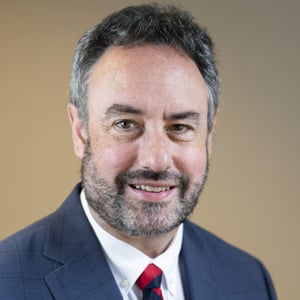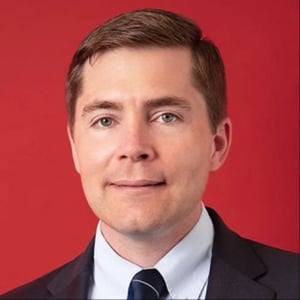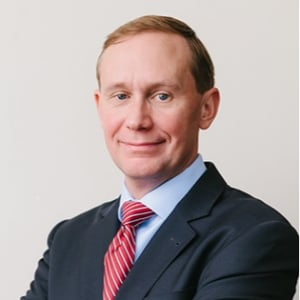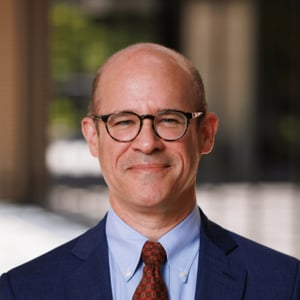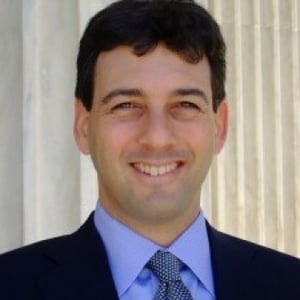
Partner, Gibson Dunn & Crutcher
Douglas R. Cox is a partner in the Washington, D.C. office of Gibson, Dunn & Crutcher and Vice-Chair of the firm's Crisis Management Practice Group. He practices in the areas of constitutional and general commercial litigation, appellate law, and governmental matters.
Mr. Cox has represented numerous clients in litigation before federal and state trial and appellate courts. He played a principal role in the firm's successful representation of the prevailing candidate before the Supreme Court of the United States in Bush v. Palm Beach County Canvassing Board and Bush v. Gore, stemming from the 2000 presidential election, and in other cases before the Supreme Court involving equal protection, voting rights and election law, the scope of the jury trial right under the Seventh Amendment, and other constitutional and statutory issues.
Mr. Cox successfully represented the National Association of Securities Dealers ("NASD") in a series of trial and appellate matters, including DL Capital Group, LLC v. Nasdaq Stock Market, Inc., 409 F.3d 93 (2d Cir. 2005) and Sparta Surgical Corp. v. NASD, 159 F.3d 1209 (9th Cir. 1998).
Mr. Cox frequently represents accounting firms in a variety of matters, including matters involving the SEC and PCAOB. He also has substantial experience representing clients before congressional investigating committees.
Mr. Cox previously served for five years during the Reagan and Bush Administrations in the Justice Department's Office of Legal Counsel, becoming Principal Deputy Assistant Attorney General during the Bush Administration. In that Office, he provided legal advice to Executive Branch departments; resolved legal disputes on behalf of the Attorney General between Executive Branch departments; prepared formal opinions of the Attorney General; drafted and issued opinions on legal issues of importance to the Executive Branch; and advised Congress as to the constitutionality of pending legislation.
From 1981 through 1987, Mr. Cox practiced in New York City with a national firm, representing major corporations in state and federal courts. His practice focused on intellectual property, securities, and international tax litigation.
Mr. Cox received his law degree, cum laude, from Harvard Law School in 1980, where he served as Editor-in-Chief of the Harvard Journal of Law and Public Policy from 1979-1980. He received his undergraduate degree in history, magna cum laude, from Princeton University in 1977. He attended Oxford University on a Knox Scholarship in 1980-1981.
In 2005, Chief Justice Rehnquist appointed Mr. Cox to serve as a member of the Judicial Conference Standing Committee on Rules of Practice and Procedure. In 2008 he was reappointed by Chief Justice Roberts.
Partner, Gibson Dunn & Crutcher LLP
Miguel A. Estrada is a partner in the Washington, D.C. office of Gibson, Dunn & Crutcher.
Mr. Estrada has represented clients before federal and state courts throughout the country in a broad range of matters. He has argued 24 cases before the United States Supreme Court, and briefed many others. He has also argued dozens of appeals in the lower federal courts.
Best Lawyers® recognized Mr. Estrada as a 2020 Lawyer of the Year in Intellectual Property Litigation and as a Lawyer of the Year in Appellate Practice. He has been recognized by Benchmark Litigation as a 2020 U.S. Appellate Litigation “Star”. In 2014, The American Lawyer named Mr. Estrada a “Litigator of the Year,” praising his “brains and tenacity” and noting he is the lawyer to call for “a tough, potentially unwinnable case.” From 2014-2021, Chambers & Partners has named him as one of a handful of attorneys that it ranked in the top tier among the nation’s leading appellate lawyers. Chambers & Partners noted that “clients are impressed by his intellect and ability, with one saying, ‘His papers are just blindingly clear in what they say and devastating in how they marshal the arguments.’” The Atlantic described his oral argument in a 2014 high-profile separation-of-powers case as “one of the most dazzling arguments the marble chamber has heard in many years.”
Mr. Estrada was selected by his peers for inclusion in the 2020 edition of The Best Lawyers in America® in the area of Appellate Law, in addition to previous recognition by the publication in the specialties of Bet-the-Company Litigation, Commercial Litigation and Criminal Defense: White Collar, Intellectual Property Litigation, and Regulatory Enforcement Litigation in the areas of SEC, Telecom, and Energy. In 2017, he was elected as a member of the American Law Institute. In 2021, Mr. Estrada was named among the Lawdragon 500 Leading Lawyers in America. In 2004, Legal Times named him one of the top 12 appellate litigators in the D.C. area, noting that “people who follow appellate practice in Washington have known for several years that Estrada . . . is one of the best around.” Also in 2004, Washingtonian Magazine named him one of the top constitutional law lawyers “who could become one of the legends of the Supreme Court bar.”
Mr. Estrada joined Gibson Dunn in 1997, after serving for five years as Assistant to the Solicitor General of the United States. He previously served as Assistant U.S. Attorney and Deputy Chief of the Appellate Section, U.S. Attorney’s Office, Southern District of New York. In those capacities, Mr. Estrada represented the government in numerous jury trials and in many appeals before the U.S. Court of Appeals for the Second Circuit. Before joining the U.S. Attorney’s Office, Mr. Estrada practiced corporate law in New York with Wachtell, Lipton, Rosen & Katz.
Mr. Estrada is a Trustee of the Supreme Court Historical Society. He was formerly a member of the Board of Visitors of Harvard Law School.
Mr. Estrada served as a law clerk to the Honorable Anthony M. Kennedy in the U.S. Supreme Court from 1988 to 1989 and to the Honorable Amalya L. Kearse in the U.S. Court of Appeals for the Second Circuit from 1986 to 1987. He received a J.D. degree magna cum laude in 1986 from Harvard Law School, where he was editor of the Harvard Law Review. Mr. Estrada graduated with an A.B. degree magna cum laude and Phi Beta Kappa in 1983 from Columbia College, New York. He is fluent in Spanish and proficient in French.
Representative Supreme Court matters include:
In 2011, the Supreme Court appointed Mr. Estrada to brief and argue two criminal cases –Dorsey v. United States and Hill v. United States – in which the Solicitor General declined to defend the judgments of the court of appeals. Mr. Estrada was appointed to argue the position that the Solicitor General had declined to defend.
Mr. Estrada was also part of the team that successfully presented then Governor Bush’s position to the Supreme Court in Bush v. Gore (2000). Other cases that Mr. Estrada handled in the Supreme Court include Granholm v. Heald (2005) (dormant Commerce Clause and Twenty-First Amendment), Vermont Agency of Natural Resources v. United States ex rel. Stevens (2000) (False Claims Act, Article III standing and Eleventh Amendment immunity), Old Chief v. United States (1997) (rules of evidence), United States v. Mezzanatto (1995) (evidence and plea bargaining), United States v. Robertson (1995) (constitutional limits on Congress’s Commerce Clause powers), Citizens Bank of Maryland v. Strumpf (1995) (bankruptcy law), and NOW, Inc. v. Scheidler (1994) (RICO).
Recent Court of Appeals matters include:
In addition, Mr. Estrada is lead appellate counsel to Vivendi S.A. in two securities-fraud appeals from jury verdicts that are currently pending in the Second Circuit, and to the National Association of Broadcasters in a challenge to certain procedures promulgated by the FCC in connection with the upcoming Spectrum Auction. Mr. Estrada also recently presented argument before the D.C. Circuit on behalf of the tobacco industry in a first amendment challenge to certain compelled disclosures that were imposed as part of the government’s long-running civil RICO case against the industry.
Other matters:
Milton R. Underwood Chair in Free Enterprise, Vanderbilt University Law School
Brian Fitzpatrick is the Milton R. Underwood Chair in Free Enterprise and Professor of Law at Vanderbilt Law School, where his research focuses on class action litigation, federal courts, judicial selection, and constitutional law. He is best known for his empirical studies of class action settlements as well as his book The Conservative Case for Class Actions (University of Chicago Press, 2019). Professor Fitzpatrick joined Vanderbilt's law faculty in 2007 after serving as the John M. Olin Fellow at New York University School of Law. He graduated first in his class from Harvard Law School and went on to clerk for Judge Diarmuid O'Scannlain on the U.S. Court of Appeals for the Ninth Circuit and Justice Antonin Scalia on the U.S. Supreme Court. After his clerkships, Professor Fitzpatrick practiced commercial and appellate litigation for several years at Sidley Austin in Washington, D.C., and served as Special Counsel for Supreme Court Nominations to U.S. Senator John Cornyn. Before earning his law degree, Fitzpatrick graduated summa cum laude with a bachelor's of science in chemical engineering from the University of Notre Dame. He has received the Hall-Hartman Outstanding Professor Award, which recognizes excellence in classroom teaching, for his Civil Procedure and Federal Courts courses.
Pio Cardinal Laghi Distinguished Chair in Law, Professor and Co-director of the Terrence J. Murphy Institute for Catholic Thought, Law, and Public Policy, University of St. Thomas School of Law - Minnesota
Professor Gregory Sisk is the Pio Cardinal Laghi Distinguished Chair in Law at the University of St. Thomas School of Law in Minneapolis, Minnesota.
He received his B.A. from Montana State University and his J.D. from the University of Washington School of Law, where he graduated first in his class, was an editor on the law review, and president of the moot court board. Prior to joining the legal academy, he served as a legal advisor in all three branches of the federal government: as a legislative assistant to a U.S. Senator, as a law clerk to a U.S. Court of Appeals judge, and as an appellate attorney with the U.S. Department of Justice representing the United States in the courts of appeals and the Supreme Court. Subsequent to his government service, he was in private practice as the head of the appellate department of a Seattle law firm.
Professor Sisk joined the University of St. Thomas law faculty in 2003, after teaching for twelve years at the Drake University Law School, where he had also been named as the Richard M. & Anita Calkins Distinguished Professor. He teaches Professional Responsibility and Civil Procedure, as well as a new course with original materials on Litigation with the Federal Government. His casebook, "Litigation With the Federal Government: Cases and Materials," was published by Foundation Press in 2000 and has been adopted at several law schools, including Georgetown University, George Washington University, Catholic University, New York University, the University of Pittsburgh, and McGeorge School of Law.
Professor Sisk also is author of the leading treatise on the subject, "Litigation With the Federal Government," published as the fourth edition by ALI-ABA in 2006. He has published nearly three dozen articles on litigation with the federal government, judicial decisionmaking, awards of attorney's fees, professional responsibility, constitutional interpretation, law and religion, and tort reform. His articles have been cited by the United States Supreme Court, several federal courts of appeals, and the supreme courts of several states. His empirical study of judicial decisionmaking and the influence of judicial background, co-authored with Professors Michael Heise and Andrew Morriss, was published in the New York University Law Review and received the 1999 Article Prize from the Law and Society Association.
Professor Sisk has remained active as a member of the legal profession. He served as reporter for the Iowa Rules of Professional Conduct Drafting Committee appointed by the Iowa Supreme Court to draft the new set of ethics rules to govern lawyers in Iowa. He is a member of the American Law Institute, the nation's premier law reform organization. He maintains a limited practice, primarily as an appellate attorney and as an expert witness on professional ethics and conduct. For example, he briefed a leading environmental/federal-common-law case as counsel for amicus curiae and then was invited to argue the central issue before the U.S. Court of Appeals for the Ninth Circuit. More important than success on the merits, however, was the testament that the court gave to the attorneys in the case: "Litigation often produces criticism for its participants. This case, however, was extraordinarily well briefed and argued by consummate professionals on both sides and we are grateful for that." Atchison, Topeka & Santa Fe Railway Co. v. Brown & Bryant, Inc., 132 F.3d 1295, 1303 n.5 (9th Cir. 1997), amended, 159 F.3d 358, 365 n.6 (9th Cir. 1998).
Professor Sisk is also active with the Conference on Catholic Legal Thought, writing and speaking about religion and public life and the role of faith in professional life. He occasionally participates as a member of the Mirror of Justice blog, which present a diverse array of Catholic perspectives on the law, public life, and social justice.
J.D., University of Washington Law School
B.A., Montana State University
Partner, Schaerr | Jaffe LLP
Erik Jaffe has been involved in appeals on a broad range of legal issues, including First Amendment challenges to campaign finance reform, Commerce Clause challenges to Health Care Reform and other federal legislation, Equal Protection Clause challenges to affirmative action in education, First Amendment challenges to school vouchers, Fifth Amendment challenges to takings of property, Second Amendment challenges to restrictions on gun ownership, and a wide variety of cases involving patents, copyrights, ERISA, securities fraud, federal preemption, environmental regulation, and other state and federal constitutional and statutory matters. He has represented businesses and non-profit groups, Judges, Senators, former government officials, Nobel Prize winners, and a broad cross-section of private individuals. Mr. Jaffe has been involved in over 120 Supreme Court matters, including filing over 30 cert. petitions, representing half-a-dozen parties on the merits, and filing over 70 amicus briefs at both the cert. and merits stages.
A 1990 graduate of the Columbia University School of Law, Mr. Jaffe was a law clerk to Judge Douglas H. Ginsburg of the United States Court of Appeals for the District of Columbia Circuit from 1990 to 1991. Following that clerkship he spent five years in litigation practice with the Washington, D.C. law firm of Williams & Connolly. In the summer of 1996 he left Williams & Connolly to clerk for Supreme Court Justice Clarence Thomas. At the end of that clerkship he started his own practice, and he was a sole practitioner from 1997 to 2018. He joined the firm of Schaerr | Jaffe LLP in 2018.
Professor of Law, Antonin Scalia Law School, George Mason University
Adam Mossoff is Professor of Law at Antonin Scalia Law School, George Mason University. He has published extensively on why patents, copyrights, and other intellectual property rights have been—and should be—legally secured to innovators and creators as property rights. His scholarship has been relied on by the United States Supreme Court, by lower federal courts, and by U.S. federal agencies. He has been invited to testify numerous times before the U.S. Senate and the House of Representatives on intellectual property legislation. His writings on intellectual property policy have also appeared in the Wall Street Journal, New York Times, Forbes, Investors Business Daily, and in other media outlets. His journal articles can be downloaded here.
Professor Mossoff is a longstanding member of the Executive Committee of the Intellectual Property Practice Group of the Federalist Society, on which he served as Chairperson from 2016-2018, and he is Chair of the Intellectual Property Working Group of the Regulatory Transparency Project of the Federalist Society. He is a Senior Fellow and Chair of the Forum for Intellectual Property at the Hudson Institute, a Visiting Intellectual Property Fellow at the Heritage Foundation, and a member of the Board of Directors of the Center for Intellectual Property Understanding. He is a member of the Intellectual Property Rights Policy Committee of ANSI and he has served as Chair and Vice-Chair of the Intellectual Property Committee of the IEEE-USA, on which he remains a member in good standing.

Partner, Crowell & Moring LLP, Crowell & Moring LLP
Trevor K. Copeland is a partner in the law firm of Crowell & Moring LLP (formerly Brinks Gilson & Lione PC).
His patent prosecution experience includes work on medical devices, sunglasses, footwear, sprinklers and irrigation equipment, decorative statuary and water gardens, biotechnology and general mechanical arts. He works closely with clients having products in these areas to develop intellectual property acquisition and management strategies, as well as to protect new ideas and products while respecting the rights of others.
Mr. Copeland's further practice includes design protection, whereby clients are able to protect the unique and valuable ornamental designs of their products using patent, copyright, and/or trademark. He has also litigated utility patents on clients' behalf, and has worked on preliminary injunction lawsuits for both design and utility patents, including winning a preliminary injunction against a foreign company preparing to launch an infringing laser-level device with a suction base.
Mr. Copeland has former experience as a high school biology and chemistry teacher, and as a visiting scientist with a Fungal Biochemistry and Molecular Genetics Laboratory Group.
Laurence A. Tisch Professor of Law and Director, Classical Liberal Institute, New York University School of Law; Director, Classical Liberal Institute, Civitas Institute University of Texas at Austin
Richard A. Epstein is the Laurence A. Tisch Professor of Law, at New York University, a senior research fellow at the Civitas Institute at the University of Texas Austin, and a senior Lecturer, the University of Chicago. He received an LL.D., h.c . from the University of Ghent, 2003 , and an LLD h.c . from the University of Siegen in 2018 and the Bradley Prize in 2011. He has been a member of the American Academy of Arts and Sciences since 1985. He has edited both the Journal of Legal Studies (1981-1991) and the Journal of Law and Economics (1991-2001). He is also a founder and director of the Classical Liberal Institute at NYU Law School. His most recent book is The Classical Liberal Constitution: The Uncertain Quest for Limited Government (2014). His other books include Takings: Private Property and the Power of Eminent Domain ( 1985); Bargaining with the State (1993); Simple Rules for a Complex World (1995); Principles for a Free Society: Reconciling Individual Liberty and the Common Good (1998); Skepticism and Freedom: A Modern Theory of Classical Liberalism (2003); Design for Liberty: Private Property, Public Administration and the Rule of Law (2011), and most recently, The Myth of Birthright citizenship—and Beyond (2026). He has taught courses in , administrative law, antitrust, constitutional, contracts, environmental law, land use planning; real property, torts and water law. He has written and spoken extensively on a wide range of topics, and is writes a regular column for Defining Ideas.
Associate Professor of Law, New York Law School
James Grimmelmann is Associate Professor at New York Law School and a member of its Institute for Information Law and Policy. He received his J.D. from Yale Law School, where he was Editor-in-Chief of LawMeme and a member of the Yale Law Journal. Prior to law school, he received an A.B. in computer science from Harvard College and worked as a programmer for Microsoft. He has served as a Resident Fellow of the Information Society Project at Yale, as a legal intern for Creative Commons and the Electronic Frontier Foundation, and as a law clerk to the Honorable Maryanne Trump Barry of the United States Court of Appeals for the Third Circuit.
He studies how the law governing the creation and use of computer software affects individual freedom and the distribution of wealth and power in society. As a lawyer and technologist, he aims to help these two groups speak intelligibly to each other. He writes about intellectual property, virtual worlds, search engines, online privacy, and other topics in computer and Internet law. Recent publications include The Internet Is a Semicommons, 78 Fordham L. Rev. 2799 (2010), Saving Facebook, 94 Iowa L. Rev. 1137 (2009), and The Ethical Visions of Copyright Law, 77 Fordham L. Rev. 2005 (2009).
He has been blogging since 2000 at the Laboratorium (http://laboratorium.net/). His home page is at http://james.grimmelmann.net/.
Assistant Professor of Law, University of Chicago Law School
Jonathan Masur received a BS in physics and an AB in political science from Stanford University in 1999 and his JD from Harvard Law School in 2003. After graduating from law school, he clerked for Judge Richard Posner of the U.S. Court of Appeals for the Seventh Circuit and for Chief Judge Marilyn Hall Patel of the U.S. District Court for the Northern District of California. He taught at the Law School as a Bigelow Fellow and Lecturer in Law before joining the faculty in 2007.
His research and teaching interests include administrative law, legislation, behavioral law and economics, patent law, and criminal law.
President, TechFreedom
Berin Szoka serves as President of TechFreedom. Previously, he was a Senior Fellow and the Director of the Center for Internet Freedom at The Progress & Freedom Foundation. Before joining PFF, he was an Associate in the Communications Practice Group at Latham & Watkins LLP, where he advised clients on regulations affecting the Internet and telecommunications industries. Before joining Latham's Communications Practice Group, Szoka practiced at Lawler Metzger Milkman & Keeney, LLC, a boutique telecommunications law firm in Washington, and clerked for the Hon. H. Dale Cook, Senior U.S. District Judge for the Northern District of Oklahoma. Szoka received his Bachelor's degree in economics from Duke University and his juris doctor from the University of Virginia School of Law, where he served as Submissions Editor of the Virginia Journal of Law and Technology. He is admitted to practice law in the District of Columbia and California (inactive).
U.S. Court of Appeals, Seventh Circuit
Diane P. Wood received her BA in 1971 and her JD in 1975 from the University of Texas at Austin. After graduation, she clerked for Judge Irving L. Goldberg of the Fifth Circuit and for Justice Harry A. Blackmun of the U.S. Supreme Court. She then worked briefly for the U.S. State Department on international investment, antitrust, and transfer of technology issues. Moving on to Covington & Burling, Judge Wood continued a more general antitrust and commercial litigation practice until June 1980. In 1980–81, she was an assistant professor at the Georgetown University Law Center. In 1981, she joined the faculty of the Law School. She spent 1985–86 on leave as a Visiting Professor at Cornell Law School, and she was on leave during the fall quarter 1986, while she worked on the project to revise the Department of Justice Antitrust Guide for International Operations. She served as Associate Dean from 1989 through 1992. From 1993 until 1995, she was deputy assistant general in the Antitrust Division of the U.S. Department of Justice with responsibility for the Division's International, Appellate, and Legal Policy matters. Before becoming a judge of the U.S. Court of Appeals for the Seventh Circuit in 1995, Judge Wood was the Harold J. and Marion F. Green Professor of International Legal Studies.
Judge Wood's research interests include antitrust (both international and general), federal civil procedure, and international trade and business. She has taught in all three fields.
Partner, Gibson Dunn & Crutcher
Douglas R. Cox is a partner in the Washington, D.C. office of Gibson, Dunn & Crutcher and Vice-Chair of the firm's Crisis Management Practice Group. He practices in the areas of constitutional and general commercial litigation, appellate law, and governmental matters.
Mr. Cox has represented numerous clients in litigation before federal and state trial and appellate courts. He played a principal role in the firm's successful representation of the prevailing candidate before the Supreme Court of the United States in Bush v. Palm Beach County Canvassing Board and Bush v. Gore, stemming from the 2000 presidential election, and in other cases before the Supreme Court involving equal protection, voting rights and election law, the scope of the jury trial right under the Seventh Amendment, and other constitutional and statutory issues.
Mr. Cox successfully represented the National Association of Securities Dealers ("NASD") in a series of trial and appellate matters, including DL Capital Group, LLC v. Nasdaq Stock Market, Inc., 409 F.3d 93 (2d Cir. 2005) and Sparta Surgical Corp. v. NASD, 159 F.3d 1209 (9th Cir. 1998).
Mr. Cox frequently represents accounting firms in a variety of matters, including matters involving the SEC and PCAOB. He also has substantial experience representing clients before congressional investigating committees.
Mr. Cox previously served for five years during the Reagan and Bush Administrations in the Justice Department's Office of Legal Counsel, becoming Principal Deputy Assistant Attorney General during the Bush Administration. In that Office, he provided legal advice to Executive Branch departments; resolved legal disputes on behalf of the Attorney General between Executive Branch departments; prepared formal opinions of the Attorney General; drafted and issued opinions on legal issues of importance to the Executive Branch; and advised Congress as to the constitutionality of pending legislation.
From 1981 through 1987, Mr. Cox practiced in New York City with a national firm, representing major corporations in state and federal courts. His practice focused on intellectual property, securities, and international tax litigation.
Mr. Cox received his law degree, cum laude, from Harvard Law School in 1980, where he served as Editor-in-Chief of the Harvard Journal of Law and Public Policy from 1979-1980. He received his undergraduate degree in history, magna cum laude, from Princeton University in 1977. He attended Oxford University on a Knox Scholarship in 1980-1981.
In 2005, Chief Justice Rehnquist appointed Mr. Cox to serve as a member of the Judicial Conference Standing Committee on Rules of Practice and Procedure. In 2008 he was reappointed by Chief Justice Roberts.
Partner, Gibson Dunn & Crutcher LLP
Miguel A. Estrada is a partner in the Washington, D.C. office of Gibson, Dunn & Crutcher.
Mr. Estrada has represented clients before federal and state courts throughout the country in a broad range of matters. He has argued 24 cases before the United States Supreme Court, and briefed many others. He has also argued dozens of appeals in the lower federal courts.
Best Lawyers® recognized Mr. Estrada as a 2020 Lawyer of the Year in Intellectual Property Litigation and as a Lawyer of the Year in Appellate Practice. He has been recognized by Benchmark Litigation as a 2020 U.S. Appellate Litigation “Star”. In 2014, The American Lawyer named Mr. Estrada a “Litigator of the Year,” praising his “brains and tenacity” and noting he is the lawyer to call for “a tough, potentially unwinnable case.” From 2014-2021, Chambers & Partners has named him as one of a handful of attorneys that it ranked in the top tier among the nation’s leading appellate lawyers. Chambers & Partners noted that “clients are impressed by his intellect and ability, with one saying, ‘His papers are just blindingly clear in what they say and devastating in how they marshal the arguments.’” The Atlantic described his oral argument in a 2014 high-profile separation-of-powers case as “one of the most dazzling arguments the marble chamber has heard in many years.”
Mr. Estrada was selected by his peers for inclusion in the 2020 edition of The Best Lawyers in America® in the area of Appellate Law, in addition to previous recognition by the publication in the specialties of Bet-the-Company Litigation, Commercial Litigation and Criminal Defense: White Collar, Intellectual Property Litigation, and Regulatory Enforcement Litigation in the areas of SEC, Telecom, and Energy. In 2017, he was elected as a member of the American Law Institute. In 2021, Mr. Estrada was named among the Lawdragon 500 Leading Lawyers in America. In 2004, Legal Times named him one of the top 12 appellate litigators in the D.C. area, noting that “people who follow appellate practice in Washington have known for several years that Estrada . . . is one of the best around.” Also in 2004, Washingtonian Magazine named him one of the top constitutional law lawyers “who could become one of the legends of the Supreme Court bar.”
Mr. Estrada joined Gibson Dunn in 1997, after serving for five years as Assistant to the Solicitor General of the United States. He previously served as Assistant U.S. Attorney and Deputy Chief of the Appellate Section, U.S. Attorney’s Office, Southern District of New York. In those capacities, Mr. Estrada represented the government in numerous jury trials and in many appeals before the U.S. Court of Appeals for the Second Circuit. Before joining the U.S. Attorney’s Office, Mr. Estrada practiced corporate law in New York with Wachtell, Lipton, Rosen & Katz.
Mr. Estrada is a Trustee of the Supreme Court Historical Society. He was formerly a member of the Board of Visitors of Harvard Law School.
Mr. Estrada served as a law clerk to the Honorable Anthony M. Kennedy in the U.S. Supreme Court from 1988 to 1989 and to the Honorable Amalya L. Kearse in the U.S. Court of Appeals for the Second Circuit from 1986 to 1987. He received a J.D. degree magna cum laude in 1986 from Harvard Law School, where he was editor of the Harvard Law Review. Mr. Estrada graduated with an A.B. degree magna cum laude and Phi Beta Kappa in 1983 from Columbia College, New York. He is fluent in Spanish and proficient in French.
Representative Supreme Court matters include:
In 2011, the Supreme Court appointed Mr. Estrada to brief and argue two criminal cases –Dorsey v. United States and Hill v. United States – in which the Solicitor General declined to defend the judgments of the court of appeals. Mr. Estrada was appointed to argue the position that the Solicitor General had declined to defend.
Mr. Estrada was also part of the team that successfully presented then Governor Bush’s position to the Supreme Court in Bush v. Gore (2000). Other cases that Mr. Estrada handled in the Supreme Court include Granholm v. Heald (2005) (dormant Commerce Clause and Twenty-First Amendment), Vermont Agency of Natural Resources v. United States ex rel. Stevens (2000) (False Claims Act, Article III standing and Eleventh Amendment immunity), Old Chief v. United States (1997) (rules of evidence), United States v. Mezzanatto (1995) (evidence and plea bargaining), United States v. Robertson (1995) (constitutional limits on Congress’s Commerce Clause powers), Citizens Bank of Maryland v. Strumpf (1995) (bankruptcy law), and NOW, Inc. v. Scheidler (1994) (RICO).
Recent Court of Appeals matters include:
In addition, Mr. Estrada is lead appellate counsel to Vivendi S.A. in two securities-fraud appeals from jury verdicts that are currently pending in the Second Circuit, and to the National Association of Broadcasters in a challenge to certain procedures promulgated by the FCC in connection with the upcoming Spectrum Auction. Mr. Estrada also recently presented argument before the D.C. Circuit on behalf of the tobacco industry in a first amendment challenge to certain compelled disclosures that were imposed as part of the government’s long-running civil RICO case against the industry.
Other matters:
Managing Partner, Brown Wegner LLP
Mr. Brown leads a law firm in California focused on trials and appeals in intellectual property and other complex commercial disputes. Previously, he practiced for more than a decade in the Intellectual Property Group at Jones Day, was an Adjunct Professor at Chapman University School of Law, and served a judicial law clerk to a federal district judge in Los Angeles. Mr. Brown has been named a Southern California Super Lawyer for ten years, was listed among the Top 50 Lawyers in Orange County several years. He is a Master in the Howard T. Markey Intellectual Property American Inn of Court.
Education
Lawyer, Helmer & Friedman LLP
Andrew H. Friedman is a partner with the law firm of Helmer & Friedman LLP, primarily represents employees in all aspects of employment law. He is author of the definitive reference volume: Litigating Employment Discrimination Cases (James Publishing, 2005-09). Mr. Friedman received his J.D. degree from Cornell Law School and his B.A. degree in history and psychology, cum laude, from Vanderbilt University. Mr. Friedman has received the highest possible Martindale-Hubblerating ("AV"), indicating that he is ranked at the highest level of professional excellence. Law & Politics Magazine and the publishers of Los Angeles Magazine selected Mr. Friedman as a 2006, 2007, 2008, 2009 and 2010 Southern California "Super Lawyer" in the category of Labor and Employment Law. He is a prolific author and editor of many employment-related publications including and he has also written many law review articles. He is a popular speaker and moderator on employment law issues.
Lawyer, Girardi and Keese
Thomas V. Girardi is widely regarded by his peers as one of the nation's top trial lawyers and with nearly fifty years of experience representing victims, Mr. Girardi has obtained numerous multi-million dollar verdicts and settlements, handling claims involving wrongful death, commercial litigation, products liability, bad faith insurance, and toxic torts. In 2003, he received the most prestigious honor of being inducted into the Trial Lawyer Hall of Fame by the California State Bar. Mr. Girardi is a Member of the Board of Directors and former President of the prestigious International Academy of Trial Lawyers, an invitation-only worldwide organization, limited to 500 trial lawyers. Mr. Girardi is also the first trial lawyer to be appointed to the California Judicial Council, the policymaking body of the state courts. Mr. Girardi is a frequent speaker, writer, and commentator on employment law issues and appears weekly "Champions of Justice" radio show on KRLA 870 AM in Southern California.
Lawyer, Proskauer Rose
Anthony J. Oncidi heads the Labor & Employment Law Group in the Los Angeles office of Proskauer Rose. Tony represents employers and management in all aspects of labor relations and employment law. A substantial portion of Tony’s practice involves the defense of employers in large class actions, employment discrimination, harassment and wrongful termination litigation in state and federal court as well as arbitration proceedings, including FINRA matters. Tony is the author of the treatise titled Employment Discrimination Depositions (Juris Pub’g 2009), co-author of Proskauer on Privacy (PLI 2009), and, since 1990, has been a regular columnist for the official publication of the Labor and Employment Law Section of the State Bar of California and the Los Angeles Daily Journal. Tony also is a regular commentator on employment-related issues for radio, television, and print media. He is an appointed Hearing Examiner for the Los Angeles Police Commission Board of Rights and has served as an Adjunct Professor of Law and a guest lecturer at USC Law School and a guest lecturer at UCLA Law School.
Attorney and Legal Commentator
John Shu is an attorney and legal commentator. His focus areas include constitutional law, securities & corporate law, antitrust law, administrative law, politics, and international affairs. Mr. Shu has lectured and published on a wide variety of issues.
Mr. Shu served President George H.W. Bush and President George W. Bush. He also served Judge Stanley Sporkin, U.S. District Court for the District of Columbia, who was Director of Enforcement at the U.S. Securities & Exchange Commission and General Counsel at the Central Intelligence Agency, and Judge Paul Roney, U.S. Court of Appeals for the Eleventh Circuit, who was Presiding Judge of the Foreign Intelligence Surveillance Court of Review.
Mr. Shu is a member of the National Committee on U.S. - China Relations, the Pacific Council on International Policy, and the Foreign Policy Association.
Dr. John Eastman is the former Henry Salvatori Professor of Law & Community Service and former Dean at Chapman University's Dale E. Fowler School of Law, where he had been a member of the faculty since 1999, specializing in Constitutional Law, Legal History, and Property. He is a founding director of the Center for Constitutional Jurisprudence, a public interest law firm affiliated with the Claremont Institute that he founded in 1999. He has a Ph.D. in Government from the Claremont Graduate School and a J.D. from the University of Chicago Law School, and a B.A. in Politics and Economics from the University of Dallas. He serves as the Chairman of the Board of the National Organization for Marriage.
Prior to joining the Chapman law faculty, Dr. Eastman served as a law clerk to the Honorable Clarence Thomas, Associate Justice, Supreme Court of the United States, and to the Honorable J. Michael Luttig, Judge, United States Court of Appeals for the Fourth Circuit and practiced law with the national law firm of Kirkland & Ellis. Dr. Eastman has also represented numerous clients in important constitutional law matters and has argued before the Supreme Court. On behalf of the Claremont Institute Center for Constitutional Jurisprudence, he has participated as amicus curiae before the Supreme Court of the United States, U.S. Courts of Appeals, and State Supreme Courts in more than one hundred cases of constitutional significance, including Boy Scouts of America v. Dale, Zelman v. Simmons-Harris (the school vouchers case), Kelo v. New London, Ct. (eminent domain), and Van Orden v. Perry (the 10 Commandments case). He has also appeared as an expert legal commentator on numerous television and radio programs, including C-SPAN, Fox News, PBS, NewsHour, and The O'Reilly Factor.
Partner, Steptoe & Johnson LLP
Stewart Baker is a partner in the law firm of Steptoe & Johnson in Washington, D.C. From 2005 to 2009, he was the first Assistant Secretary for Policy at the Department of Homeland Security. His law practice covers cybersecurity, data protection, homeland security, and travel and foreign investment regulation; he has been awarded one patent.
Mr. Baker has been General Counsel of the National Security Agency and General Counsel of the commission that investigated WMD intelligence failures prior to the Iraq war. He is the author of Skating on Stilts, a book on terrorism, cybersecurity, and other technology issues; he also hosts the weekly Cyberlaw Podcast.
2011 Annual Supreme Court Round Up
Douglas R. Cox, Miguel A. Estrada
On July 12, 2011, Miguel Estrada of Gibson Dunn & Crutcher delivered the Annual Supreme Court...
2011 Annual Supreme Court Round Up
Washington, DC Lawyers Chapter
Washington, DCWal-Mart v. Dukes - Post-Decision SCOTUScast
Brian T. Fitzpatrick
On June 20, 2011, the Supreme Court announced its decision in Wal-Mart v. Dukes, a...
United States v. Tohono O'odham Nation - Post-Decision SCOTUScast
Gregory Sisk
On April 26, 2011, the Supreme Court announced its decision in United States v. Tohono...
Nevada Commission on Ethics v. Carrigan - Post-Decision SCOTUScast
Erik S. Jaffe
On June 13, 2011, the Supreme Court announced its decision in Nevada Commission on Ethics...
Panel on the Wal-Mart Gender Discrimination Lawsuit
Irvine, CaliforniaIs ‘Born in the USA’ the Meaning of Citizenship? A Pro and Con Look at the Historical Record
Denver, ColoradoSkating on Stilts: Technology and Terrorism
Birminghamd, AlabamaMicrosoft Corp. v. i4i Limited Partnership - Post-Decision SCOTUScast
Adam Mossoff
On June 9, 2011, the Supreme Court announced its decision in Microsoft Corp. v. i4i...
The First Amendment Online: Search, Privacy & Personalization
Trevor K. Copeland, Richard A. Epstein, James Grimmelmann, Jonathan Masur, Berin Szóka, Diane P. Wood
Congress is aflutter with online privacy bills, while arguments for regulating search engines, social networks...