
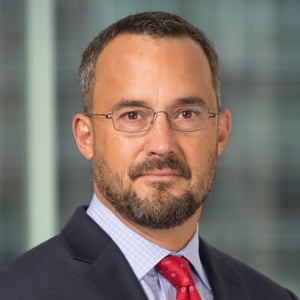
Senior Vice President for Legal Studies, Cato Institute
Clark Neily is senior vice president for legal studies at the Cato Institute. His areas of interest include constitutional law, overcriminalization, civil forfeiture, police accountability, and gun rights. Neily is the author of Terms of Engagement: How Our Courts Should Enforce the Constitution’s Promise of Limited Government. His writing has appeared in the Wall Street Journal, Forbes, and National Review Online, as well as various law reviews, including the Harvard Journal of Law and Public Policy, George Mason Law Review, Georgetown Journal of Law and Public Policy, NYU Journal of Law and Liberty, and Texas Review of Law and Politics. Neily is a frequent guest speaker and lecturer for the Federalist Society, Institute for Humane Studies, and American Constitution Society.
Before joining Cato in 2017, Neily was a senior attorney and constitutional litigator at the Institute for Justice and director of the Institute’s Center for Judicial Engagement. He is also an adjunct professor at the University of Texas School of Law, where he teaches constitutional litigation and public-interest law.
Neily served as co-counsel in District of Columbia v. Heller, the historic case in which the Supreme Court held for the first time that the Second Amendment protects an individual right to own a gun for self-defense.
Neily began his legal career as a law clerk to Judge Royce Lamberth on the U.S. District Court for the District of Columbia. After that he spent four years in the trial department of the Dallas-based firm Thompson & Knight. Neily received his undergraduate and law degrees from the University of Texas, where he was Chief Articles Editor of the Texas Law Review.
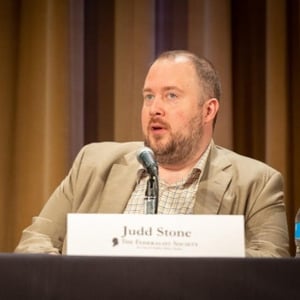
Stone Hilton, Founding Partner
A founding partner of Stone Hilton, Judd Stone is well respected both in Texas and across the nation as an insightful and tenacious appellate litigator. A lifelong Texan, Judd has argued dozens of appeals in both federal and state court, including arguing eight cases before the United States Supreme Court.
Judd began his legal career clerking for United States Supreme Court Justice Antonin Scalia and Fifth Circuit Chief Judge Edith H. Jones. With a J.D. from Northwestern University School of Law where he graduated first in his class, Judd's academic and professional credentials place him among the most distinguished lawyers in the profession. At the helm of countless major legal battles and emergency appeals for the State of Texas, Judd's deep understanding of the law and persuasive advocacy have been instrumental in shaping legal precedents. His tenure as the Solicitor General of Texas is a testament to his expertise and the trust placed in him by high-ranking state officials. Judd's strategic prowess extends beyond the courtroom; his advisory roles have made him a respected figure among policymakers.
His contributions to Stone Hilton and the legal community are characterized by his meticulous approach to cases, his acumen as a counselor, and his unwavering commitment to justice. As a partner at Stone Hilton, Judd continues to apply his formidable talents to advocate for his clients with the utmost dedication and to uphold the pillars of integrity and excellence that the firm stands for.
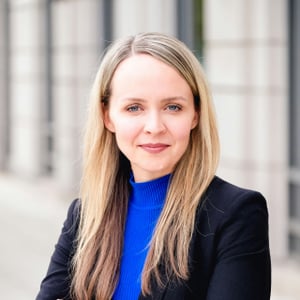
Professor of Law and Faculty Director for the Georgetown Center for the Constitution, Georgetown University Law Center
Stephanie Barclay is a Professor of Law at Georgetown Law School, and the Faculty Director of the Georgetown Center for the Constitution. Her research focuses on the role our different democratic institutions play in protecting minority rights, particularly at the intersection of free speech and religious exercise. Barclay‘s work is published or is forthcoming in leading journals such as the Harvard Law Review, the Chicago Law Review, the University of Pennsylvania Law Review, and the Yale Law Journal Forum. One of her articles was also selected for the 2020 Stanford/Harvard/Yale Junior Faculty Forum. Her work has been featured in many media outlets, including The New York Times, The Wall Street Journal, The Washington Post, USA Today, Bloomberg BNA, The Hill, and Law 360. And her work has also been cited by the U.S. Supreme Court.
Prior to joining Georgetown, Barclay was twice voted Professor of the Year. Barclay has also litigated constitutional cases at both the trial and appellate level, including before the U.S. Supreme Court. Barclay served as a law clerk to Judge N. Randy Smith on the U.S. Court of Appeals for the Ninth Circuit, and to Justice Neil M. Gorsuch of the U.S. Supreme Court.
Barclay is a Faculty Affiliate at the Constitutional Law Center at Stanford Law School; and she is a Nootbaar Fellow at the Nootbaar Institute on Law, Religion, and Ethics at Pepperdine University. She currently serves as the Chair for the AALS Law and Religion Section and as a Member of the Executive Committee for the AALS Constitutional Law Section. She graduated summa cum laude from BYU Law School, where she was elected to the Order of the Coif. She is completing a Ph.D. in Law at Oxford University as a Clarendon Scholar and a Tang Scholar.
Transfer Pricing Senior Associate, PricewaterhouseCoopers LLP
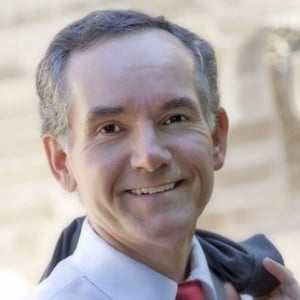
Robert H. McKinney Professor of Law Emeritus and Adjunct Professor of Religious Studies, Indiana University Bloomington - Maurer School of Law
Professor Conkle has been a member of the Maurer School of Law faculty since 1983, Professor Conkle teaches Constitutional Law, the First Amendment, and Law and Religion. His research addresses constitutional law and theory, religious liberty, and the role of religion in American law, politics, and public life. His most recent book is Religion, Law, and the Constitution, Second Edition (Foundation Press, 2022).
Conkle has been honored for his achievements both within and beyond the classroom. He is a two-time recipient of the Leon H. Wallace Teaching Award and has twice won the Gavel Award for outstanding contribution to the graduating class. He has received six faculty fellowships for outstanding scholarship, and in 1999 he was named the Robert H. McKinney Professor of Law. He retired from full-time teaching in December 2017 but continues to be involved in the Law School community.
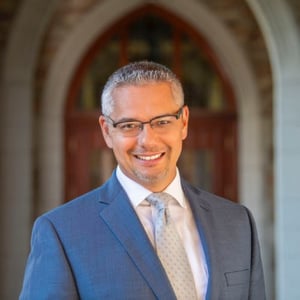
Tocqueville Associate Professor Department of Political Science and Concurrent Associate Professor of Law, University of Notre Dame Law School
Vincent Phillip Muñoz is the Tocqueville Associate Professor of Religion & Public Life in the Department of Political Science at the University of Notre Dame. He is the founding director of Notre Dame's undergraduate minor in Constitutional Studies and directs Notre Dame's Tocqueville Program for Inquiry into Religion and Public Life.
Muñoz writes and teaches across the fields of constitutional law, American politics, and political philosophy with a focus on religious liberty and the American Founding. His first book, God and the Founders: Madison, Washington, and Jefferson (Cambridge University Press, 2009) won the Hubert Morken Award from the American Political Science Association for the best publication on religion and politics in 2009 and 2010. His First Amendment church-state case reader, Religious Liberty and the American Supreme Court: The Essential Cases and Documents (Rowman & Littlefield) was first published in 2013 (revised edition, 2015) and is being used at Notre Dame and other leading universities.
Muñoz's current project is a scholarly monograph on the natural right of religious liberty and the original meaning of the First Amendment's Religion Clauses. Articles from that project have appeared in American Political Science Review, The Harvard Journal of Law and Public Policy, Notre Dame Law Review, American Political Thought, and the University of Pennsylvania's Journal of Constitutional Law.
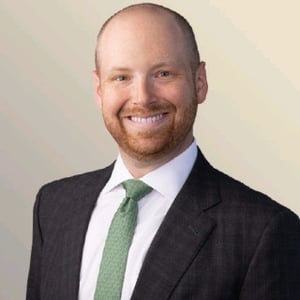
Solicitor General, Iowa Office of the Attorney General
Eric Wessan serves as Iowa’s Solicitor General in the Iowa Attorney General’s Office. In that role, Wessan leads Iowa’s litigation before State and federal appellate courts, including the Iowa and U.S. Supreme Courts. Before that role, Wessan worked on complex commercial litigation at two large law firms in Chicago. Wessan also served as a law clerk for the Honorable James C. Ho on the U.S. Court of Appeals for the Fifth Circuit and for the Honorable John F. Kness on the U.S. District Court for the Northern District of Illinois. Wessan is a graduate of the University of Chicago Law School, with honors, and of the University of Chicago.
Professor of Law and Faculty Director for the Georgetown Center for the Constitution, Georgetown University Law Center
Stephanie Barclay is a Professor of Law at Georgetown Law School, and the Faculty Director of the Georgetown Center for the Constitution. Her research focuses on the role our different democratic institutions play in protecting minority rights, particularly at the intersection of free speech and religious exercise. Barclay‘s work is published or is forthcoming in leading journals such as the Harvard Law Review, the Chicago Law Review, the University of Pennsylvania Law Review, and the Yale Law Journal Forum. One of her articles was also selected for the 2020 Stanford/Harvard/Yale Junior Faculty Forum. Her work has been featured in many media outlets, including The New York Times, The Wall Street Journal, The Washington Post, USA Today, Bloomberg BNA, The Hill, and Law 360. And her work has also been cited by the U.S. Supreme Court.
Prior to joining Georgetown, Barclay was twice voted Professor of the Year. Barclay has also litigated constitutional cases at both the trial and appellate level, including before the U.S. Supreme Court. Barclay served as a law clerk to Judge N. Randy Smith on the U.S. Court of Appeals for the Ninth Circuit, and to Justice Neil M. Gorsuch of the U.S. Supreme Court.
Barclay is a Faculty Affiliate at the Constitutional Law Center at Stanford Law School; and she is a Nootbaar Fellow at the Nootbaar Institute on Law, Religion, and Ethics at Pepperdine University. She currently serves as the Chair for the AALS Law and Religion Section and as a Member of the Executive Committee for the AALS Constitutional Law Section. She graduated summa cum laude from BYU Law School, where she was elected to the Order of the Coif. She is completing a Ph.D. in Law at Oxford University as a Clarendon Scholar and a Tang Scholar.
Transfer Pricing Senior Associate, PricewaterhouseCoopers LLP
Robert H. McKinney Professor of Law Emeritus and Adjunct Professor of Religious Studies, Indiana University Bloomington - Maurer School of Law
Professor Conkle has been a member of the Maurer School of Law faculty since 1983, Professor Conkle teaches Constitutional Law, the First Amendment, and Law and Religion. His research addresses constitutional law and theory, religious liberty, and the role of religion in American law, politics, and public life. His most recent book is Religion, Law, and the Constitution, Second Edition (Foundation Press, 2022).
Conkle has been honored for his achievements both within and beyond the classroom. He is a two-time recipient of the Leon H. Wallace Teaching Award and has twice won the Gavel Award for outstanding contribution to the graduating class. He has received six faculty fellowships for outstanding scholarship, and in 1999 he was named the Robert H. McKinney Professor of Law. He retired from full-time teaching in December 2017 but continues to be involved in the Law School community.
Tocqueville Associate Professor Department of Political Science and Concurrent Associate Professor of Law, University of Notre Dame Law School
Vincent Phillip Muñoz is the Tocqueville Associate Professor of Religion & Public Life in the Department of Political Science at the University of Notre Dame. He is the founding director of Notre Dame's undergraduate minor in Constitutional Studies and directs Notre Dame's Tocqueville Program for Inquiry into Religion and Public Life.
Muñoz writes and teaches across the fields of constitutional law, American politics, and political philosophy with a focus on religious liberty and the American Founding. His first book, God and the Founders: Madison, Washington, and Jefferson (Cambridge University Press, 2009) won the Hubert Morken Award from the American Political Science Association for the best publication on religion and politics in 2009 and 2010. His First Amendment church-state case reader, Religious Liberty and the American Supreme Court: The Essential Cases and Documents (Rowman & Littlefield) was first published in 2013 (revised edition, 2015) and is being used at Notre Dame and other leading universities.
Muñoz's current project is a scholarly monograph on the natural right of religious liberty and the original meaning of the First Amendment's Religion Clauses. Articles from that project have appeared in American Political Science Review, The Harvard Journal of Law and Public Policy, Notre Dame Law Review, American Political Thought, and the University of Pennsylvania's Journal of Constitutional Law.
Solicitor General, Iowa Office of the Attorney General
Eric Wessan serves as Iowa’s Solicitor General in the Iowa Attorney General’s Office. In that role, Wessan leads Iowa’s litigation before State and federal appellate courts, including the Iowa and U.S. Supreme Courts. Before that role, Wessan worked on complex commercial litigation at two large law firms in Chicago. Wessan also served as a law clerk for the Honorable James C. Ho on the U.S. Court of Appeals for the Fifth Circuit and for the Honorable John F. Kness on the U.S. District Court for the Northern District of Illinois. Wessan is a graduate of the University of Chicago Law School, with honors, and of the University of Chicago.
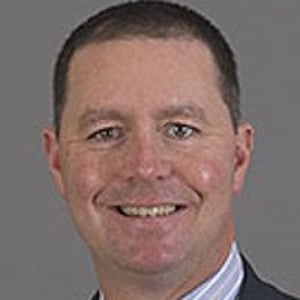
Judge, United States District Court, Northern District of Illinois
John Fitzgerald Kness is a judge on the United States District Court for the Northern District of Illinois. He was nominated by President Donald Trump on June 24, 2019. The United States Senate confirmed Kness on February 12, 2020, by a vote of 81-12.
Kness was the general counsel of the College of DuPage from 2016 to 2020.
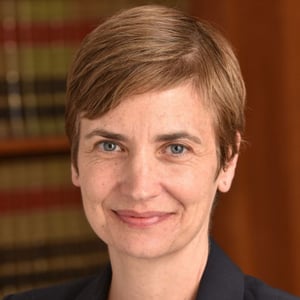
Vice Dean for Faculty Development and Professor of Law, UCLA Law
Joanna Schwartz is Vice Dean for Faculty Development and Professor of Law at UCLA School of Law. She teaches Civil Procedure and a variety of courses on police accountability and public interest lawyering. In 2015, she received UCLA's Distinguished Teaching Award.
Professor Schwartz is one of the country's leading experts on police misconduct litigation. Professor Schwartz additionally studies the dynamics of modern civil litigation. She is co-author, with Stephen Yeazell, of a leading casebook, Civil Procedure (9th Edition), and her scholarship has appeared in the New York University Law Review, the Texas Law Review, the UCLA Law Review, and the Yale Law Journal, among others.
Professor Schwartz is a graduate of Brown University and Yale Law School. After law school, Professor Schwartz clerked for Judge Denise Cote of the Southern District of New York and Judge Harry Pregerson of the Ninth Circuit Court of Appeals. She was then associated with Emery Celli Brinckerhoff & Abady LLP, in New York City, where she specialized in police misconduct, prisoners' rights, and First Amendment litigation.
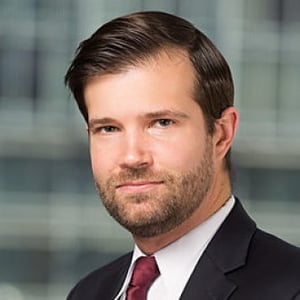
Research Fellow, CATO Institute
Jay Schweikert is a research fellow with the Cato Institute’s Project on Criminal Justice. His research and advocacy focuses on accountability for prosecutors and law enforcement, plea bargaining, Sixth Amendment trial rights, and the provision and structuring of indigent defense.
Before joining Cato, Schweikert spent four years doing civil and criminal litigation at Williams & Connolly LLP. He holds a JD from Harvard Law School, where he was an articles editor for the Harvard Law Review, and chaired the Harvard Federalist Society’s student colloquium program. Following law school, Schweikert clerked for Judge Diane Sykes of the U.S. Court of Appeals for the Seventh Circuit and Judge Laurence Silberman of the U.S. Court of Appeals for the DC Circuit.
He holds a BA in political science and economics from Yale University.
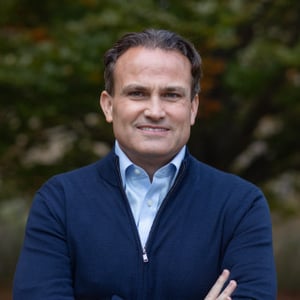
Professor of Law, University of Michigan Law School
Christopher J. Walker is a Professor of Law at the University of Michigan. Prior to joining Michigan law faculty in 2022, he spent a decade teaching at The Ohio State University Moritz College of Law. He previously clerked for Justice Anthony Kennedy of the U.S. Supreme Court, worked on the Civil Appellate Staff at the U.S. Department of Justice, and served on the Senate Judiciary Committee staff for the Gorsuch Supreme Court confirmation. Professor Walker’s research focuses on administrative law, regulation, and law and policy at the agency level. Outside the law school, he chaired the American Bar Association’s Section of Administrative Law and Regulatory Practice in 2020-21 and served as one of forty Public Members of the Administrative Conference of the United States from 2016-2022, and he continues to serve in both organizations in various capacities. He also works of counsel at the U.S. Chamber Litigation Center. In 2022, he received the Federalist Society’s Joseph Story Award.
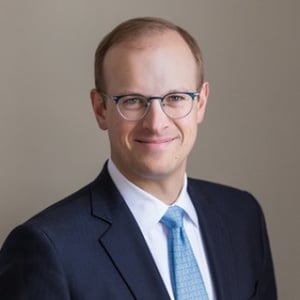
Partner, Consovoy McCarthy Park PLLC
Jeffrey Harris is an experienced litigator who focuses on constitutional, appellate, and regulatory matters. He is currently a partner at Consovoy McCarthy Park PLLC. In 2015, he was named to the Legal Times list of “D.C.’s Rising Stars,” which identified “some of the most accomplished young attorneys in the D.C. area.” Mr. Harris previously served as Associate Administrator of the Office of Information and Regulatory Affairs (OIRA). In that role, he was second in charge of the 50-person office within the Executive Office of the President that reviews all significant federal regulatory actions and coordinates regulatory policy across the federal government.
Before his government service, Mr. Harris was a partner at Bancroft PLLC and Kirkland & Ellis LLP, where his practice focused on Supreme Court, appellate, and complex litigation. Mr. Harris has extensive experience litigating before the U.S. Supreme Court. He has been the lead drafter of more than 100 merits briefs, amicus briefs, and certiorari-stage briefs, and he has contributed to 10 wins in cases before the Court.
Mr. Harris has also litigated numerous high-profile cases in the federal courts of appeals, federal and state trial courts, administrative agencies, and arbitral tribunals. He has successfully argued before the U.S. Courts of Appeals for the Sixth, Ninth, Eleventh, and D.C. Circuits, achieving wins on behalf of airlines, telecommunications providers, and pro bono clients. He has also argued numerous dispositive motions in federal district court and has participated in the trial of a significant voting rights case.
Mr. Harris served as a law clerk to Chief Justice John G. Roberts, Jr., of the U.S. Supreme Court, and Judges David Sentelle and Laurence Silberman of the U.S. Court of Appeals for the D.C. Circuit. He earned his J.D. magna cum laude from Harvard Law School and his A.B. magna cum laude from Georgetown University. He is a member of the District of Columbia and Virginia bars.
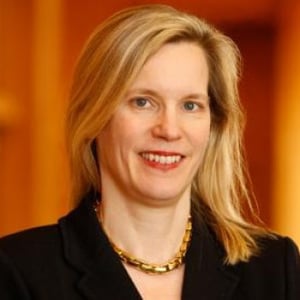
John S. Battle Professor of Law, University of Virginia School of Law
Julia D. Mahoney teaches courses in property, government finance, constitutional law and nonprofit organizations. A graduate of Yale Law School, she joined the University of Virginia faculty as an associate professor in 1999 and is now John S. Battle Professor of Law. She has also taught at the University of Southern California Law School and the University of Chicago Law School, and before entering the legal academy, practiced law at the New York firm Wachtell, Lipton, Rosen & Katz. Her scholarly articles include works on land preservation, eminent domain, health care reform and property rights in human biological materials.
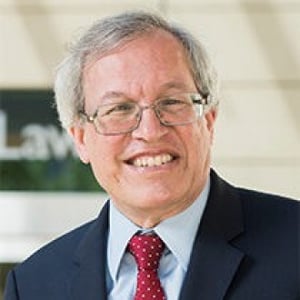
Dean and Jesse H. Choper Distinguished Professor of Law, UC Berkeley School of Law
Erwin Chemerinsky became the 13th Dean of Berkeley Law on July 1, 2017, when he joined the faculty as the Jesse H. Choper Distinguished Professor of Law.
Prior to assuming this position, from 2008-2017, he was the founding Dean and Distinguished Professor of Law, and Raymond Pryke Professor of First Amendment Law, at University of California, Irvine School of Law, with a joint appointment in Political Science. Before that he was the Alston and Bird Professor of Law and Political Science at Duke University from 2004-2008, and from 1983-2004 was a professor at the University of Southern California Law School, including as the Sydney M. Irmas Professor of Public Interest Law, Legal Ethics, and Political Science. He also has taught at DePaul College of Law and UCLA Law School.
He is the author of eleven books, including leading casebooks and treatises about constitutional law, criminal procedure, and federal jurisdiction. His most recent books are, We the People: A Progressive Reading of the Constitution for the Twenty-First Century (Picador Macmillan) published in November 2018, and two books published by Yale University Press in 2017, Closing the Courthouse Doors: How Your Constitutional Rights Became Unenforceable and Free Speech on Campus (with Howard Gillman).
He also is the author of more than 200 law review articles. He writes a regular column for the Sacramento Bee, monthly columns for the ABA Journal and the Daily Journal, and frequent op-eds in newspapers across the country. He frequently argues appellate cases, including in the United States Supreme Court.
In 2016, he was named a fellow of the American Academy of Arts and Sciences. In 2017, National Jurist magazine again named Dean Chemerinsky as the most influential person in legal education in the United States.
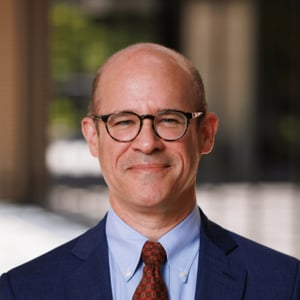
Professor of Law, Stanford Law School
Orin S. Kerr is a Professor of Law at Stanford Law School, where he teaches and writes in the areas of criminal procedure and computer crime law. Kerr earned mechanical engineering degrees from Princeton University and Stanford University before graduating with a J.D. from Harvard Law School. He is a former law clerk to Justice Anthony M. Kennedy at the United States Supreme Court and Judge Leonard I. Garth of the U.S. Court of Appeals for the Third Circuit.

Emanuel S. Heller Professor of Law, University of California at Berkeley; Senior Research Fellow, School of Civic Leadership, Civitas Institute, University of Texas at Austin; Nonresident Senior Fellow, American Enterprise Institute
John Yoo is the Emanuel Heller Professor of Law. He is also Distinguished Visiting Scholar, School of Civic Leadership and Senior Research Fellow, Civitas Institute, at the University of Texas at Austin. He is also a Nonresident Senior Fellow at the American Enterprise Institute.
His most recent book, The Politically Incorrect Guide to the Supreme Court, co-authored with Robert Delahunty, was published in 2023. Professor Yoo’s other books include Defender-in-Chief: Trump’s Fight for Presidential Power; Striking Power: How Cyber, Robots, and Space Weapons Change the Rules for War, Point of Attack: Preventive War, International Law, and Global Welfare, and Crisis and Command: A History of Executive Power from George Washington to George Bush.
Professor Yoo has published more than 100 articles in academic journals on subjects including national security, constitutional law, international law, and the Supreme Court. He also regularly contributes to the editorial pages of the Wall Street Journal, New York Times, Washington Post, Los Angeles Times, and National Review, among others.
Professor Yoo has served in all three branches of government. He was an official in the U.S. Department of Justice, where he worked on national security and terrorism issues after the 9/11 attacks. He served as general counsel of the U.S. Senate Judiciary Committee. He has been a law clerk for Supreme Court Justice Clarence Thomas and federal appeals Judge Laurence Silberman. He has been a visiting professor at Seoul National University in South Korea, the Interdisciplinary Center in Israel, Keio University in Japan, Trento University in Italy, the University of Chicago, and the Free University of Amsterdam.
Professor Yoo supervises the Public Law and Policy Program and the California Constitution Center. He also serves on the boards of the Pacific Legal Foundation, the Federalist Society’s Separation of Powers and Federalism Division, the Universidad Cientifica del Sur Law School, and the Asia-Pacific Law Institute at Seoul National University. He is a winner of the Federalist Society’s Paul Bator award and been the Edwin Meese III Originalism Lecturer at the Heritage Foundation.
Professor Yoo graduated from Yale Law School and summa cum laude from Harvard College.
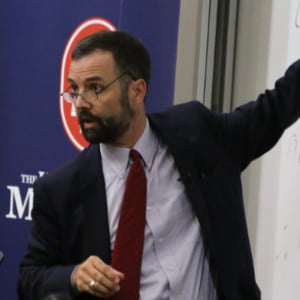
Professor of Law and Jamie L. Whitten Chair in Law and Government, University of Mississippi School of Law
Christopher Green (https://law.olemiss.edu/faculty-directory/christopher-green/) is Professor of Law and Jamie L. Whitten Chair in Law and Government at the University of Mississippi, where he has taught since 2006. He is a graduate of Princeton University and Yale Law School, and has a PhD in philosophy from the University of Notre Dame. He clerked for Judge Rhesa H. Barksdale on the Fifth Circuit and is the author of Equal Citizenship, Civil Rights, and the Constitution: The Original Sense of the Privileges or Immunities Clause (2015) and a large number of articles and essays on constitutional theory and the Fourteenth Amendment, including the two-part Original Sense of the (Equal) Protection Clause and Clarity and Reasonable Doubt in Early State-Constitutional Judicial Review. He is an affiliated scholar with the University of San Diego Center for the Study of Constitutional Originalism.
Senior Vice President for Legal Studies, Cato Institute
Clark Neily is senior vice president for legal studies at the Cato Institute. His areas of interest include constitutional law, overcriminalization, civil forfeiture, police accountability, and gun rights. Neily is the author of Terms of Engagement: How Our Courts Should Enforce the Constitution’s Promise of Limited Government. His writing has appeared in the Wall Street Journal, Forbes, and National Review Online, as well as various law reviews, including the Harvard Journal of Law and Public Policy, George Mason Law Review, Georgetown Journal of Law and Public Policy, NYU Journal of Law and Liberty, and Texas Review of Law and Politics. Neily is a frequent guest speaker and lecturer for the Federalist Society, Institute for Humane Studies, and American Constitution Society.
Before joining Cato in 2017, Neily was a senior attorney and constitutional litigator at the Institute for Justice and director of the Institute’s Center for Judicial Engagement. He is also an adjunct professor at the University of Texas School of Law, where he teaches constitutional litigation and public-interest law.
Neily served as co-counsel in District of Columbia v. Heller, the historic case in which the Supreme Court held for the first time that the Second Amendment protects an individual right to own a gun for self-defense.
Neily began his legal career as a law clerk to Judge Royce Lamberth on the U.S. District Court for the District of Columbia. After that he spent four years in the trial department of the Dallas-based firm Thompson & Knight. Neily received his undergraduate and law degrees from the University of Texas, where he was Chief Articles Editor of the Texas Law Review.
Stone Hilton, Founding Partner
A founding partner of Stone Hilton, Judd Stone is well respected both in Texas and across the nation as an insightful and tenacious appellate litigator. A lifelong Texan, Judd has argued dozens of appeals in both federal and state court, including arguing eight cases before the United States Supreme Court.
Judd began his legal career clerking for United States Supreme Court Justice Antonin Scalia and Fifth Circuit Chief Judge Edith H. Jones. With a J.D. from Northwestern University School of Law where he graduated first in his class, Judd's academic and professional credentials place him among the most distinguished lawyers in the profession. At the helm of countless major legal battles and emergency appeals for the State of Texas, Judd's deep understanding of the law and persuasive advocacy have been instrumental in shaping legal precedents. His tenure as the Solicitor General of Texas is a testament to his expertise and the trust placed in him by high-ranking state officials. Judd's strategic prowess extends beyond the courtroom; his advisory roles have made him a respected figure among policymakers.
His contributions to Stone Hilton and the legal community are characterized by his meticulous approach to cases, his acumen as a counselor, and his unwavering commitment to justice. As a partner at Stone Hilton, Judd continues to apply his formidable talents to advocate for his clients with the utmost dedication and to uphold the pillars of integrity and excellence that the firm stands for.
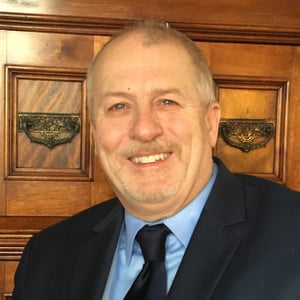
Founder, President, and General Counsel, Wisconsin Institute for Law & Liberty
Rick Esenberg is the founder and current President and General Counsel of the Wisconsin Institute for Law & Liberty, a rapidly expanding law and policy organization headquartered in Milwaukee. Under Rick’s leadership, WILL has grown into one of the more active state-based think tanks and litigation centers in the country. Rick is a frequent litigator in state and federal courts and nationally recognized scholar and commentator on constitutional law, particularly the First Amendment’s guarantees of freedom of speech and religion. He is one of the leading experts on the Wisconsin Constitution and a frequent advocate before the Wisconsin Supreme Court. Rick’s work seeks to advance the rule of law and individual liberty, formed by a robust civil society that forms individual and community character, preserving the wisdom of the past and an openness to the future.
Rick’s commentary has been featured in such outlets as the Wall Street Journal, National Review, Weekly Standard, Real Clear Politics, Milwaukee Journal Sentinel and Washington Examiner. Formerly on the faculty of Marquette University Law School, his scholarship has appeared in such publications as the Harvard Law Review, Harvard Journal of Law & Public Policy, Wake Forest Law Review and William & Mary Bill of Rights Journal. Back when they were a thing, he operated a blog called Shark and Shepherd where he tried to suggest something about the duality of man – “the Jungian thing.”
Rick holds a J.D., magna cum laude, from Harvard Law School, where he was an editor of the Harvard Law Review, and a B.A., summa cum laude, in political science from the University of Wisconsin-Milwaukee. In addition to service on the Marquette Faculty, he was formerly a litigation partner at Foley & Lardner and General Counsel of an international manufacturing firm headquartered in Wisconsin. He lives in Mequon Wisconsin with his wife Karen, golden retrievers Cooper and Riley and more books than he can find places for.
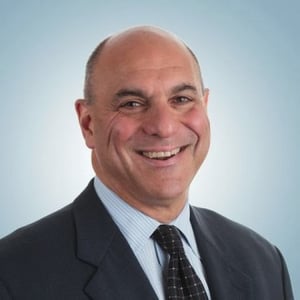
Senior Partner, Pines Bach LLP
Lester Pines is a Senior Partner in the firm.
A Fellow of the American College of Trial Lawyers, he is a respected civil and criminal litigator and appellate advocate. In his over 40 years of practice, he has appeared in trial and appellate courts throughout Wisconsin, in numerous federal district courts, and before the federal 7th Circuit Court of Appeals. After a recent trial, one of Lester’s clients wrote:
"Seeing you in action was like watching an artist create a classic painting from a blank canvas but instead of paint you used facts, figures and, most importantly, words to achieve a masterpiece in the courtroom."
His wide-ranging civil trial practice encompasses commercial claims, employment disputes, constitutional and civil rights matters, personal injury and intellectual property cases. His criminal defense work has involved many high profile cases, especially involving teachers, police officers and other public employees. He is counsel to Madison Teachers Inc., which represents the employees of the Madison Metropolitan School District.
Recently, Lester was featured in a cover story in Isthmus, a Madison weekly newspaper, " Activist Attorney – Lester Pines draws on faith and family in his practice and beyond."
Recent challenges to the constitutionality of newly enacted laws that Lester brought on behalf of his clients include:
Previously, in cases in which he was appointed by former Wisconsin Governor Jim Doyle, Lester defended Wisconsin’s law creating domestic partnerships for same sex couples and stopped an attempt by then Attorney General J.B. Van Hollen to suppress voting in the 2008 Presidential election.
Among the many cases Lester has argued before the Wisconsin Supreme Court, two in particular have shaped Wisconsin law. In 2010 he represented the Zurich American Insurance Company inMiller v. Hanover Insurance, securing the reversal of a $2,000,000 default judgment against his client and achieving a significant change in Wisconsin law regarding relief from such judgments. In an original action in 1996, he successfully argued the case of Thompson v. Craney, which delineated the constitutionally vested powers of the State Superintendent of Public Instruction and protected them from being altered by the Legislature, which the Wisconsin Supreme Court reaffirmed in 2016 in Coyne v. Walker.
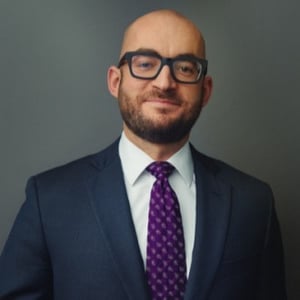
Partner, Eimer Stahl LLP
Ryan is a partner at Eimer Stahl LLP and is based in the firm’s Madison office. He focuses his practice on appellate and complex litigation in a wide variety of areas, including antitrust, constitutional law, corporate law, environmental, ERISA, products liability, and white collar. As part of his practice, Ryan devotes significant time to matters of legal strategy and the art of written and oral advocacy.
Ryan previously served as Chief Deputy Solicitor General of Wisconsin, securing numerous wins in the Supreme Court of the United States, in three federal courts of appeal, and in the state supreme court. Ryan built national, bipartisan coalitions of attorneys general and agencies in support of several lawsuits and briefing efforts, including a Wisconsin-led, 12-state coalition whose suit against the Federal Communications Commission prompted that agency to reverse a major new rule. When he left government, Ryan had a perfect win record in all of his cases to have reached final judgment.
Earlier in his career, Ryan worked in Washington D.C. as an associate in the appellate group of one of the world’s largest law firms.
Ryan also served as a law clerk on the U.S. Supreme Court for the Honorable Antonin Scalia and on the U.S. Court of Appeals for the Ninth Circuit for the Honorable Diarmuid F. O’Scannlain.
Ryan was named to Forbes’ “30 Under 30: Law and Policy” list in 2017. His briefing has won awards from the National Association of Attorneys General and the International Municipal Lawyers Association. He has also won a “best brief” accolade from the State Bar of Wisconsin in the civil category for his written work defending Wisconsin’s right-to-work law.

Qualified Immunity, a Debate--Retain or Abolish?
Clark Neily, Anthony J. Rodregous, Judd Stone
Created by the Supreme Court in 1967, the legal doctrine of qualified immunity shields government...
Balancing Religious Freedoms in a Pluralistic Society
Stephanie Barclay, Richard Benson, Daniel O. Conkle, Vincent Phillip Munoz, Eric Wessan
What should the nature of religious liberty look like in a pluralistic society? The Supreme...
Balancing Religious Freedoms in a Pluralistic Society
Stephanie Barclay, Richard Benson, Daniel O. Conkle, Vincent Phillip Munoz, Eric Wessan
What should the nature of religious liberty look like in a pluralistic society? The Supreme...
Supreme Court Round-Up
Virginia Student Chapter
Charlottesville, VASupreme Court Roundup
California-Berkeley Student Chapter
Berkeley, CASupreme Court Roundup
Mississippi Student Chapter
University, MSQualified Immunity, a Debate--Retain or Abolish?
El Paso Lawyers Chapter - Online Event
Wisconsin Election Law Panel
2020 Wisconsin Lawyers Chapters Conference
WIU.S. SUPREME COURT ROUNDUP: A REVIEW OF KEY OCTOBER 2019 TERM DECISIONS
Memphis Lawyers Chapter - Online Event
The Doctrine of Qualified Immunity
John F. Kness, Joanna C. Schwartz, Jay R. Schweikert, Christopher J. Walker
On August 17, 2020, The Federalist Society's Chicago Lawyers Chapter hosted a virtual panel on...