
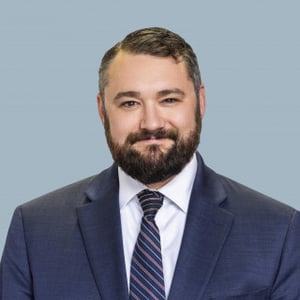
Partner, Ashbrook Byrne Kresge Flowers LLC
Ben Flowers, a partner at Ashbrook Byrne Kresge Flowers LLC, is an accomplished litigator with experience briefing, arguing, and winning high-stakes cases in courts throughout the country.
Before joining the law firm, Ben served as Ohio's 10th Solicitor General. In that role he regularly represented the State of Ohio before the Supreme Court of the United States, the United States Court of Appeals for the Sixth Circuit, and the Supreme Court of Ohio. Most prominently, in National Federation of Independent Business v. Department of Labor, Ben led a multi-state challenge to OSHA's vaccine mandate, ultimately prevailing before the Supreme Court.
Ben is a graduate of The Ohio State University and the University of Chicago Law School. Following law school, Ben clerked for Judge Sandra Ikuta of the U.S. Court of Appeals for the Ninth Circuit and for Justice Antonin Scalia of the Supreme Court of this United States. Ben lives in Upper Arlington, Ohio with his wife Denise and their three very active children.

Senior Fellow and Director of Constitutional Studies, Manhattan Institute
Ilya Shapiro is a senior fellow and director of constitutional studies at the Manhattan Institute and a contributing editor of City Journal. Previously he was executive director and senior lecturer at the Georgetown Center for the Constitution, and before that a vice president of the Cato Institute.
Shapiro is the author of Lawless: The Miseducation of America’s Elites (2025) and Supreme Disorder: Judicial Nominations and the Politics of America’s Highest Court (2020), coauthor of Religious Liberties for Corporations? (2014), and editor of 11 volumes of the Cato Supreme Court Review (2008-18). He has contributed to a variety of academic, popular, and professional publications, including the Wall Street Journal, Harvard Journal of Law & Public Policy, Washington Post, Los Angeles Times, USA Today, National Review, and Newsweek. He also regularly provides commentary for various media outlets, writes the Shapiro’s Gavel newsletter on Substack, and once appeared on the Colbert Report.
Shapiro has testified many times before Congress and state legislatures and has filed more than 500 amicus curiae “friend of the court” briefs in the Supreme Court. He lectures regularly on behalf of the Federalist Society, is a member of the board of fellows of the Jewish Policy Center, was an inaugural Washington Fellow at the National Review Institute, and has been an adjunct law professor at the George Washington University and University of Mississippi. He is also the chairman of the board of advisers of the Mississippi Justice Institute, a barrister in the Edward Coke Appellate Inn of Court, and a former member of the Virginia Advisory Committee to the U.S. Commission on Civil Rights.
Earlier in his career, Shapiro was a special assistant/adviser to the Multi-National Force in Iraq on rule-of-law issues and practiced at Patton Boggs and Cleary Gottlieb. Before entering private practice, he clerked for Judge E. Grady Jolly of the U.S. Court of Appeals for the Fifth Circuit. He holds an AB from Princeton University, an MSc from the London School of Economics, and a JD from the University of Chicago Law School.
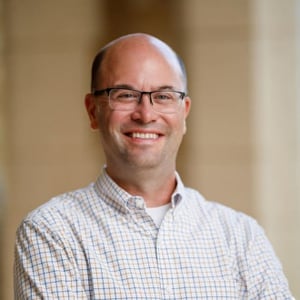
Paul J. Schierl Professor of Law, University of Notre Dame Law School
Professor Richard W. Garnett teaches and writes in the areas of constitutional law, criminal law, the First Amendment, and law and religion. He is a leading authority on questions and debates regarding religious freedom and church-state relations, and is the founding director of Notre Dame Law School’s Program on Church, State, and Society.
Garnett clerked for the late Chief Justice of the United States, William H. Rehnquist, and also for the late Chief Judge of the United States Court of Appeals for the Eighth Circuit, Richard S. Arnold. He earned his J.D. from Yale Law School in 1995 and his B.A., summa cum laude, from Duke University in 1990. He joined the faculty in 1999 after practicing law in Washington, D.C. with Miller, Cassidy, Larroca & Lewin.
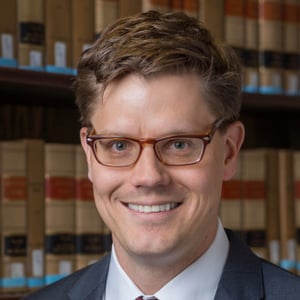
Associate Professor, University of Notre Dame Law School
Jeffrey Pojanowski joined the faculty and community of Notre Dame Law School in 2010. He teaches and writes in the areas of administrative law, jurisprudence, and torts. At present, his scholarship focuses on the legal theory of administrative action, as well as the philosophy and intellectual history of legal reasoning.
Prof. Pojanowski earned his A.B. in Public Policy with highest honors from Princeton University and graduated magna cum laude from Harvard Law School in 2004, where he was Articles Co-Chair for the Harvard Law Review. After law school, he served as a law clerk to then-Judge John Roberts on the United States Court of Appeals for the D.C. Circuit and then to Justice Anthony Kennedy on the Supreme Court of the United States. He then practiced law with Latham & Watkins in Washington, D.C., where he specialized in appellate litigation and administrative-law matters.
Senior Fellow and Director of Constitutional Studies, Manhattan Institute
Ilya Shapiro is a senior fellow and director of constitutional studies at the Manhattan Institute and a contributing editor of City Journal. Previously he was executive director and senior lecturer at the Georgetown Center for the Constitution, and before that a vice president of the Cato Institute.
Shapiro is the author of Lawless: The Miseducation of America’s Elites (2025) and Supreme Disorder: Judicial Nominations and the Politics of America’s Highest Court (2020), coauthor of Religious Liberties for Corporations? (2014), and editor of 11 volumes of the Cato Supreme Court Review (2008-18). He has contributed to a variety of academic, popular, and professional publications, including the Wall Street Journal, Harvard Journal of Law & Public Policy, Washington Post, Los Angeles Times, USA Today, National Review, and Newsweek. He also regularly provides commentary for various media outlets, writes the Shapiro’s Gavel newsletter on Substack, and once appeared on the Colbert Report.
Shapiro has testified many times before Congress and state legislatures and has filed more than 500 amicus curiae “friend of the court” briefs in the Supreme Court. He lectures regularly on behalf of the Federalist Society, is a member of the board of fellows of the Jewish Policy Center, was an inaugural Washington Fellow at the National Review Institute, and has been an adjunct law professor at the George Washington University and University of Mississippi. He is also the chairman of the board of advisers of the Mississippi Justice Institute, a barrister in the Edward Coke Appellate Inn of Court, and a former member of the Virginia Advisory Committee to the U.S. Commission on Civil Rights.
Earlier in his career, Shapiro was a special assistant/adviser to the Multi-National Force in Iraq on rule-of-law issues and practiced at Patton Boggs and Cleary Gottlieb. Before entering private practice, he clerked for Judge E. Grady Jolly of the U.S. Court of Appeals for the Fifth Circuit. He holds an AB from Princeton University, an MSc from the London School of Economics, and a JD from the University of Chicago Law School.
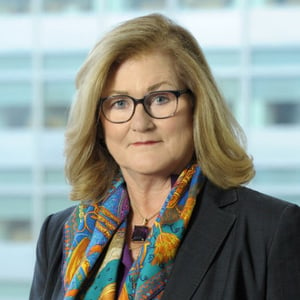
Partner, Jones Day
Corinne Ball has nearly 40 years of experience in business finance and restructuring, with a focus on complex corporate reorganizations and distressed acquisitions, both court-supervised and extra judicial, including matters involving multijurisdictional and cross-border enterprises. She co-leads the New York Office's Business Restructuring & Reorganization Practice and leads the Firm's European Distress Investing and Alternative Capital Initiatives.
Corinne worked extensively on the City of Detroit restructuring, which followed her leading a team of attorneys representing Chrysler in its successful chapter 11 reorganization, which won the Investment Dealers' Digest Deal of the Year award for 2009. She also led a team of attorneys in the restructuring of FGIC and the sale of its portfolio to MBIA; the successful restructuring of Dana Corp., which emerged from bankruptcy in 2008; and has orchestrated many other reorganizations involving companies such as Oncor, Oi, OSX, US Manufacturing, Metaldyne, Axcelis Technologies, Kaiser Aluminum, Tarragon, and The Williams Communications Companies. In addition, she has counseled lenders and bondholders in the ABFS, Comdisco, Excite@Home, Exide SA, GST Communications, the Houston Sport's Authority and Jefferson County, European Wind Farms (Breeze) and the National Portuguese Railway, Loy Yang B, VARIG Airlines, and Worldcom restructurings, among others.
Corinne leads the Firm's distressed M&A efforts and is the featured "Distress M&A" columnist for the New York Law Journal. She won The National Law Journal's "Most Influential Lawyer of the Decade in Bankruptcy & Restructuring," Turnaround Management Association's "International Turnaround Company of the Year" Award, and was named "Dealmaker of the Year" by American Lawyer.
Corinne has served as a director of the American College of Bankruptcy and American Bankruptcy Institute and is a member of the International Institute on Insolvency.
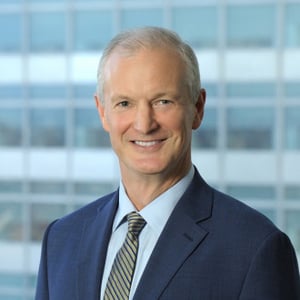
Partner, Jones Day
Todd Geremia is an experienced appellate advocate who has briefed and argued cases throughout the federal appellate system and in New York State. Most of his experience is in complex commercial litigation. Todd has briefed cases in the U.S. Supreme Court and in the U.S. Court of Appeals for the Federal and D.C. Circuits and briefed and argued cases in the U.S. Courts of Appeals for the Second, Third, and Fifth Circuits. He also has extensive experience in representing clients in commercial cases at all levels of the New York state court system. Todd's practice focus is in putative class actions, products liability matters, financial fraud cases — including cases alleging violations of the federal securities laws and state common law claims — and bankruptcy-related litigation.
Representative clients in Todd's recent matters include R.J. Reynolds Tobacco Company, Expedia, Relativity Media, Aradigm Corporation, Cardinal Health, Citibank, Dippin' Dots, Encyclopaedia Britannica EDS, Elekta AB, Lehman Brothers, Lucent Technologies, Pfizer, and the United Services Automobile Association.
Todd is a member of the bar of the State of New York; the U.S. Supreme Court; U.S. Courts of Appeals for the Second, Third, Fifth, Eleventh, Federal, and D.C. Circuits; and the U.S. District Courts for the Southern and Eastern District of New York. He also maintains an active pro bono practice and most recently led the brief writing efforts for two teams prosecuting applications for asylum.
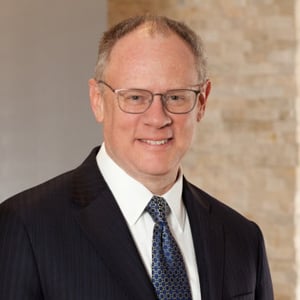
Partner, Jones Day
John Goetz is a recognized authority in aviation and transportation litigation and leads Jones Day's airlines and aviation industry initiative. John has over 30 years of experience defending companies in business and tort litigation and has defended multinational companies such as Doncasters, Parker Hannifin, Penske Automotive, Pilatus Aircraft, Mitsubishi Aircraft, R.J. Reynolds, Textron, U. S. Steel, Yamaha, and WESCO in trial and appellate courts across the United States, Canada, and Europe. John has litigated complex commercial disputes, defended clients in diverse product liability and toxic tort actions, and represented clients in grand jury investigations. He obtained several injunctions preventing the U.S. government from enforcing a key provision of its Affordable Care Act in a landmark case decided by the U.S. Supreme Court.
A licensed pilot, John has defended cases arising from commercial and general aviation accidents in the U.S. and internationally. He also was on trial teams for Parker Hannifin in aviation litigation arising from the crash of a former Missouri governor's plane and in USAir Flight 427. He led the team defending Parker in aviation litigation involving SilkAir Flight 185, FlashAir Flight 604, EgyptAir Flight 990, and other cases. John also counsels aviation, rail, and other clients in NTSB investigations.
John has taught aviation law, deposition skills, and negotiation skills at Duquesne University. He has published articles on litigation strategy, is a frequent speaker at aviation and other seminars, and has served as a hearing committee officer for the Pennsylvania Disciplinary Board. He has been board president for Catholic Charities of Pittsburgh and its Free Health Care Center.
John is the administrative partner for Jones Day's Pittsburgh Office.
Partner, Jones Day
Corinne Ball has nearly 40 years of experience in business finance and restructuring, with a focus on complex corporate reorganizations and distressed acquisitions, both court-supervised and extra judicial, including matters involving multijurisdictional and cross-border enterprises. She co-leads the New York Office's Business Restructuring & Reorganization Practice and leads the Firm's European Distress Investing and Alternative Capital Initiatives.
Corinne worked extensively on the City of Detroit restructuring, which followed her leading a team of attorneys representing Chrysler in its successful chapter 11 reorganization, which won the Investment Dealers' Digest Deal of the Year award for 2009. She also led a team of attorneys in the restructuring of FGIC and the sale of its portfolio to MBIA; the successful restructuring of Dana Corp., which emerged from bankruptcy in 2008; and has orchestrated many other reorganizations involving companies such as Oncor, Oi, OSX, US Manufacturing, Metaldyne, Axcelis Technologies, Kaiser Aluminum, Tarragon, and The Williams Communications Companies. In addition, she has counseled lenders and bondholders in the ABFS, Comdisco, Excite@Home, Exide SA, GST Communications, the Houston Sport's Authority and Jefferson County, European Wind Farms (Breeze) and the National Portuguese Railway, Loy Yang B, VARIG Airlines, and Worldcom restructurings, among others.
Corinne leads the Firm's distressed M&A efforts and is the featured "Distress M&A" columnist for the New York Law Journal. She won The National Law Journal's "Most Influential Lawyer of the Decade in Bankruptcy & Restructuring," Turnaround Management Association's "International Turnaround Company of the Year" Award, and was named "Dealmaker of the Year" by American Lawyer.
Corinne has served as a director of the American College of Bankruptcy and American Bankruptcy Institute and is a member of the International Institute on Insolvency.
Partner, Jones Day
Todd Geremia is an experienced appellate advocate who has briefed and argued cases throughout the federal appellate system and in New York State. Most of his experience is in complex commercial litigation. Todd has briefed cases in the U.S. Supreme Court and in the U.S. Court of Appeals for the Federal and D.C. Circuits and briefed and argued cases in the U.S. Courts of Appeals for the Second, Third, and Fifth Circuits. He also has extensive experience in representing clients in commercial cases at all levels of the New York state court system. Todd's practice focus is in putative class actions, products liability matters, financial fraud cases — including cases alleging violations of the federal securities laws and state common law claims — and bankruptcy-related litigation.
Representative clients in Todd's recent matters include R.J. Reynolds Tobacco Company, Expedia, Relativity Media, Aradigm Corporation, Cardinal Health, Citibank, Dippin' Dots, Encyclopaedia Britannica EDS, Elekta AB, Lehman Brothers, Lucent Technologies, Pfizer, and the United Services Automobile Association.
Todd is a member of the bar of the State of New York; the U.S. Supreme Court; U.S. Courts of Appeals for the Second, Third, Fifth, Eleventh, Federal, and D.C. Circuits; and the U.S. District Courts for the Southern and Eastern District of New York. He also maintains an active pro bono practice and most recently led the brief writing efforts for two teams prosecuting applications for asylum.
Partner, Jones Day
John Goetz is a recognized authority in aviation and transportation litigation and leads Jones Day's airlines and aviation industry initiative. John has over 30 years of experience defending companies in business and tort litigation and has defended multinational companies such as Doncasters, Parker Hannifin, Penske Automotive, Pilatus Aircraft, Mitsubishi Aircraft, R.J. Reynolds, Textron, U. S. Steel, Yamaha, and WESCO in trial and appellate courts across the United States, Canada, and Europe. John has litigated complex commercial disputes, defended clients in diverse product liability and toxic tort actions, and represented clients in grand jury investigations. He obtained several injunctions preventing the U.S. government from enforcing a key provision of its Affordable Care Act in a landmark case decided by the U.S. Supreme Court.
A licensed pilot, John has defended cases arising from commercial and general aviation accidents in the U.S. and internationally. He also was on trial teams for Parker Hannifin in aviation litigation arising from the crash of a former Missouri governor's plane and in USAir Flight 427. He led the team defending Parker in aviation litigation involving SilkAir Flight 185, FlashAir Flight 604, EgyptAir Flight 990, and other cases. John also counsels aviation, rail, and other clients in NTSB investigations.
John has taught aviation law, deposition skills, and negotiation skills at Duquesne University. He has published articles on litigation strategy, is a frequent speaker at aviation and other seminars, and has served as a hearing committee officer for the Pennsylvania Disciplinary Board. He has been board president for Catholic Charities of Pittsburgh and its Free Health Care Center.
John is the administrative partner for Jones Day's Pittsburgh Office.
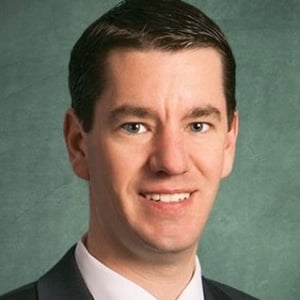
Litigation and Alternative Dispute Resolution Practice Group Member, Bodman PLC
Mr. Rheaume is a member of Bodman's Litigation and Alternative Dispute Resolution Practice Group. He represents clients involved in complex commercial litigation matters and serves as local counsel for national and international law firms.
Mr. Rheaume has been selected to the Michigan Super Lawyers® Rising Stars list since 2013 for business litigation. Prior to joining Bodman, he served as a law clerk to Justice Stephen J. Markman of the Michigan Supreme Court. Based on this experience, Mr. Rheaume is an integral team member of the firm's Appellate Law Practice Group. He has written appellate and amicus briefs in state and federal appellate courts, including the United States Supreme Court.
Mr. Rheaume is President of The Federalist Society-Michigan Chapter. He serves on the alumni board of the Sigma Chi Fraternity of Michigan State University. He is also a board member of the Detroit Economic Club's Young Leader Program.
Mr. Rheaume graduated from Michigan State University College of Law ranked first in his class. While there, he served as an associate editor on The Michigan State Law Review and received Jurisprudence Awards for outstanding achievement in Secured Transactions, Professional Responsibility, Insurance Law, Construction Law, Decedents Estates & Trusts, Bankruptcy, Negotiations, and Income Taxation.
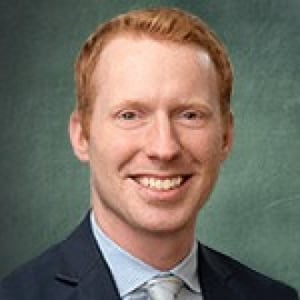
Litigation and Alternative Dispute Resolution Practice Group Member, Bodman PLC
Mr. Kangas is a member of Bodman PLC’s Litigation and ADR Group. He represents diverse clients in complex commercial disputes in both state and federal courts.
Prior to joining Bodman, Mr. Kangas clerked for Hon. Ralph B. Guy, Jr. of the U.S. Court of Appeals for the Sixth Circuit and Hon. Stephen J. Murphy, III of the U.S. District Court for the Eastern District of Michigan. As a law student, he interned with Chief Justice Robert P. Young of the Michigan Supreme Court and Hon. Robert H. Cleland of the U.S. District Court for the Eastern District of Michigan.
While in law school, Mr. Kangas served as Editor of the Michigan Journal of Gender and Law, as President of the Catholic Law Students Association, and as Publicity Chair of the Federalist Society. He also served as a volunteer Student Attorney with the University of Michigan Law School’s Unemployment Insurance Project. Following law school, Mr. Kangas was accepted into the Georgetown Center for the Constitution's Originalism seminar.
Prior to practicing law, Mr. Kangas founded a presentation consulting firm, advising professionals and organizations on persuasive and impactful presentation skills.

Senior Vice President for Legal Studies, Cato Institute
Clark Neily is senior vice president for legal studies at the Cato Institute. His areas of interest include constitutional law, overcriminalization, civil forfeiture, police accountability, and gun rights. Neily is the author of Terms of Engagement: How Our Courts Should Enforce the Constitution’s Promise of Limited Government. His writing has appeared in the Wall Street Journal, Forbes, and National Review Online, as well as various law reviews, including the Harvard Journal of Law and Public Policy, George Mason Law Review, Georgetown Journal of Law and Public Policy, NYU Journal of Law and Liberty, and Texas Review of Law and Politics. Neily is a frequent guest speaker and lecturer for the Federalist Society, Institute for Humane Studies, and American Constitution Society.
Before joining Cato in 2017, Neily was a senior attorney and constitutional litigator at the Institute for Justice and director of the Institute’s Center for Judicial Engagement. He is also an adjunct professor at the University of Texas School of Law, where he teaches constitutional litigation and public-interest law.
Neily served as co-counsel in District of Columbia v. Heller, the historic case in which the Supreme Court held for the first time that the Second Amendment protects an individual right to own a gun for self-defense.
Neily began his legal career as a law clerk to Judge Royce Lamberth on the U.S. District Court for the District of Columbia. After that he spent four years in the trial department of the Dallas-based firm Thompson & Knight. Neily received his undergraduate and law degrees from the University of Texas, where he was Chief Articles Editor of the Texas Law Review.
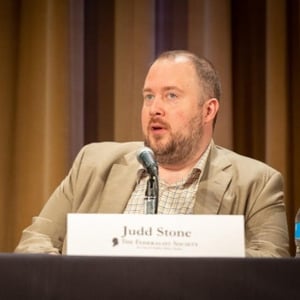
Stone Hilton, Founding Partner
A founding partner of Stone Hilton, Judd Stone is well respected both in Texas and across the nation as an insightful and tenacious appellate litigator. A lifelong Texan, Judd has argued dozens of appeals in both federal and state court, including arguing eight cases before the United States Supreme Court.
Judd began his legal career clerking for United States Supreme Court Justice Antonin Scalia and Fifth Circuit Chief Judge Edith H. Jones. With a J.D. from Northwestern University School of Law where he graduated first in his class, Judd's academic and professional credentials place him among the most distinguished lawyers in the profession. At the helm of countless major legal battles and emergency appeals for the State of Texas, Judd's deep understanding of the law and persuasive advocacy have been instrumental in shaping legal precedents. His tenure as the Solicitor General of Texas is a testament to his expertise and the trust placed in him by high-ranking state officials. Judd's strategic prowess extends beyond the courtroom; his advisory roles have made him a respected figure among policymakers.
His contributions to Stone Hilton and the legal community are characterized by his meticulous approach to cases, his acumen as a counselor, and his unwavering commitment to justice. As a partner at Stone Hilton, Judd continues to apply his formidable talents to advocate for his clients with the utmost dedication and to uphold the pillars of integrity and excellence that the firm stands for.
Senior Vice President for Legal Studies, Cato Institute
Clark Neily is senior vice president for legal studies at the Cato Institute. His areas of interest include constitutional law, overcriminalization, civil forfeiture, police accountability, and gun rights. Neily is the author of Terms of Engagement: How Our Courts Should Enforce the Constitution’s Promise of Limited Government. His writing has appeared in the Wall Street Journal, Forbes, and National Review Online, as well as various law reviews, including the Harvard Journal of Law and Public Policy, George Mason Law Review, Georgetown Journal of Law and Public Policy, NYU Journal of Law and Liberty, and Texas Review of Law and Politics. Neily is a frequent guest speaker and lecturer for the Federalist Society, Institute for Humane Studies, and American Constitution Society.
Before joining Cato in 2017, Neily was a senior attorney and constitutional litigator at the Institute for Justice and director of the Institute’s Center for Judicial Engagement. He is also an adjunct professor at the University of Texas School of Law, where he teaches constitutional litigation and public-interest law.
Neily served as co-counsel in District of Columbia v. Heller, the historic case in which the Supreme Court held for the first time that the Second Amendment protects an individual right to own a gun for self-defense.
Neily began his legal career as a law clerk to Judge Royce Lamberth on the U.S. District Court for the District of Columbia. After that he spent four years in the trial department of the Dallas-based firm Thompson & Knight. Neily received his undergraduate and law degrees from the University of Texas, where he was Chief Articles Editor of the Texas Law Review.
Stone Hilton, Founding Partner
A founding partner of Stone Hilton, Judd Stone is well respected both in Texas and across the nation as an insightful and tenacious appellate litigator. A lifelong Texan, Judd has argued dozens of appeals in both federal and state court, including arguing eight cases before the United States Supreme Court.
Judd began his legal career clerking for United States Supreme Court Justice Antonin Scalia and Fifth Circuit Chief Judge Edith H. Jones. With a J.D. from Northwestern University School of Law where he graduated first in his class, Judd's academic and professional credentials place him among the most distinguished lawyers in the profession. At the helm of countless major legal battles and emergency appeals for the State of Texas, Judd's deep understanding of the law and persuasive advocacy have been instrumental in shaping legal precedents. His tenure as the Solicitor General of Texas is a testament to his expertise and the trust placed in him by high-ranking state officials. Judd's strategic prowess extends beyond the courtroom; his advisory roles have made him a respected figure among policymakers.
His contributions to Stone Hilton and the legal community are characterized by his meticulous approach to cases, his acumen as a counselor, and his unwavering commitment to justice. As a partner at Stone Hilton, Judd continues to apply his formidable talents to advocate for his clients with the utmost dedication and to uphold the pillars of integrity and excellence that the firm stands for.

Topics
Show Me the Monell-y: Municipal Liability for Civil Rights Violations
The Federalist Society is pleased to announce its Student Blog Initiative, a project of the...
Supreme Court Round Up
Cincinnati Lawyers Chapter
The Supreme Court This October Term, November Election, and Beyond
Nashville Lawyers Chapter - Online Event
Supreme Court Roundup
Notre Dame Student Chapter
Notre Dame, INThe Supreme Court This October Term, November Election, and Beyond
Columbia Lawyers Chapter Event
Columbia , SCSpecial Topics in Religious Liberty Series #2: Sex-Abuse Litigation And Chapter 11 Issues for Religious Organizations
Corinne Ball, Todd R. Geremia, John D. Goetz
In the last year, many states had seen a new wave of lawsuits against religious...
State Court Docket Watch: Rafaeli, LLC v. Oakland County
Thomas J. Rheaume, Gordon J. Kangas
When Rafaeli, LLC underpaid its property tax bill by $8.40, the county auctioned off the...
Special Topics in Religious Liberty Series #2: Sex-Abuse Litigation And Chapter 11 Issues for Religious Organizations
TeleforumQualified Immunity, a Debate--Retain or Abolish?
Clark Neily, Anthony J. Rodregous, Judd Stone
Created by the Supreme Court in 1967, the legal doctrine of qualified immunity shields government...
Qualified Immunity, a Debate--Retain or Abolish?
Clark Neily, Anthony J. Rodregous, Judd Stone
Created by the Supreme Court in 1967, the legal doctrine of qualified immunity shields government...