

Managing Partner and Co-Founder, EducationCounsel
With extensive background in providing legal, policy, strategic planning, and advocacy services to educators throughout the country, Mr. Coleman focuses principally on issues of access, diversity, inclusion, and institutional quality in post-secondary education.
Mr. Coleman is a 1984 honors graduate of Duke University School of Law and a 1981 Phi Beta Kappa graduate of the University of Virginia. Mr. Coleman served as Deputy Assistant Secretary of the U.S. Department of Education’s Office for Civil Rights from June 1997 until January 2000, following his tenure as Senior Policy Advisor to the Assistant Secretary for Civil Rights. He has testified before the U.S. Senate and the U.S. Commission on Civil Rights; he has served as an adjunct professor at two law schools and at two graduate schools of education. He currently teaches at the USC Rossier School of Education.
He is a current member of GLSEN’s Board of Directors; a Board member of the National Council for State Authorization Reciprocity (NC-SARA); and a Board member of the Lab School of Washington, which serves students with learning differences. He is a past Chairperson of the Board of Directors for the Institute for Higher Education Policy. Mr. Coleman leads the legal and policy work of the College Board's Access and Diversity Collaborative that he helped establish in 2004, and has been a principal author of numerous amicus briefs filed in federal courts on issues associated with the educational benefits of student diversity and the consideration of race in admissions, as well as the rights of transgender students to a non-discriminatory school environments.
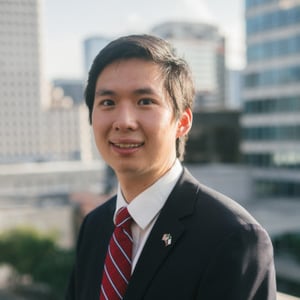
State District Judge, Austin, Texas
Cory Liu is a state district judge in Austin, Texas. He previously served as assistant general counsel to Texas Governor Greg Abbott. Mr. Liu clerked for Judge Andrew Oldham on the U.S. Court of Appeals for the Fifth Circuit and Judge Danny Boggs on the U.S. Court of Appeals for the Sixth Circuit. He was Editor-in-Chief of the Harvard Journal of Law & Public Policy and is a graduate of Harvard Law School and the University of Chicago.

Legal Fellow, Center for the Separation of Powers, Pacific Legal Foundation
Alison Somin joined Pacific Legal Foundation in May 2020 as a legal fellow in the Center for the Separation of Powers and part of the equality before the law practice group.
Before joining the Pacific Legal Foundation team, Alison was a special assistant and counsel for over a decade to Gail Heriot, a member of the bipartisan United States Commission on Civil Rights. She also has deep roots in the liberty movement. Alison was a Koch Associate at the National Federation for Independent Business Legal Foundation and, during law school, completed summer clerkships at the Institute for Justice and the Charles G. Koch Charitable Foundation. She holds a J.D. from Emory University School of Law and an A.B. in history from Dartmouth College.
Her work has been published in the San Francisco Chronicle, the Daily Journal, Texas Journal of Law and Politics, and The Federalist Society’s Engage magazine and blog.
She lives in northern Virginia with her husband Ilya; two children; and golden retriever Willow. In her spare time, she enjoys reading, baking and cooking, children’s art projects, and training and exercising Willow.

Chief Policy Counsel, Council on Criminal Justice and Senior Advisor, Right on Crime
Marc A. Levin is the Chief Policy Counsel for the Council on Criminal Justice (counciloncj.org) and Senior Advisor for Right on Crime.
An attorney and accomplished author on legal and public policy issues, Marc began the Foundation’s criminal justice program in 2005. This work contributed to nationally praised policy changes that have been followed by dramatic declines in crime and incarceration in Texas. Building on this success, in 2010, Levin developed the concept for the Right on Crime initiative, a TPPF project in partnership with Prison Fellowship and the American Conservative Union Foundation. Right on Crime has become the national clearinghouse for conservative criminal justice reforms and has contributed to the adoption of policies in dozens of states that fight crime, support victims, and protect taxpayers.
In 2014, Levin was named one of the “Politico 50” in the magazine’s annual “list of thinkers, doers, and dreamers who really matter in this age of gridlock and dysfunction.”
Marc has testified on criminal justice policy on four occasions before Congress and has testified before legislatures in states including Texas, Nevada, Kansas, Wisconsin, and California. He also has met personally with leaders such as U.S. Presidents, Speakers of the House, and the Justice Commtitee of the United Kingdom Parliament to share his ideas on criminal justice reform. In 2007, he was honored in a resolution unanimously passed by the Texas House of Representatives that stated, “Mr. Levin’s intellect is unparalleled and his research is impeccable.”
Since 2005, Marc has published dozens of policy papers on topics such as sentencing, probation, parole, reentry, and overcriminalization which are available on the TPPF website. Levin’s articles on law and public policy have been featured in publications such as the Wall Street Journal, USA Today, Texas Review of Law & Politics, National Law Journal, New York Daily News, Jerusalem Post, Toronto Star, Atlanta Journal-Constitution, Philadelphia Inquirer, San Francisco Chronicle, Washington Times, Los Angeles Daily Journal, Charlotte Observer, Dallas Morning News, Houston Chronicle, Austin American-Statesman, San Antonio Express-News and Reason Magazine.
In 1999, Marc graduated with honors from the University of Texas with a B.A. in Plan II Honors and Government. In 2002, Marc received his J.D. with honors from the University of Texas School of Law. Marc was a Charles G. Koch Summer Fellow in 1996. He served as a law clerk to Judge Will Garwood on the U.S. Court of Appeals for the Fifth Circuit and Staff Attorney at the Texas Supreme Court.
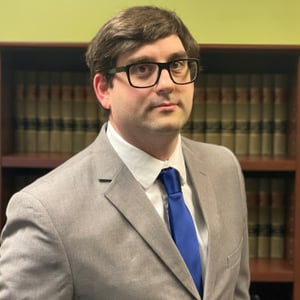
Bureau Chief of the Legal Affairs Unit, Albany County District Attorney’s Office
Vincent Stark is Bureau Chief of the Legal Affairs Unit at the Albany County District Attorney’s Office in Upstate New York. His practice primarily deals with appeals, post-conviction remedies, and sealing and expungement.
Vincent received his juris doctorate cum laude from the University of Notre Dame Law School, where he served as Executive Editor of the Journal of Legislation. He received his bachelor’s degree in Political Science magna cum laude from Syracuse University. After law school he served as a legislative fellow in the New York State Senate before joining the District Attorney’s Office. His published works have appeared in the Albany Law Review and the Georgetown Journal of Gender and the Law, and he has frequently taught classes and CLEs on criminal law, legal research and writing, and sealing and expungement programs to support the re-entry of convicts into society.

Attorney, Institute for Justice
Marie Miller is an attorney with the Institute for Justice. Her practice focuses on protecting economic liberty, property rights, and educational choice.
Marie received her law degree from Indiana University’s Maurer School of Law. She received her undergraduate degree in music from the University of Notre Dame. And she holds masters degrees in music, from Indiana University’s Jacobs School of Music, and public affairs, from Indiana University’s School of Public and Environmental Affairs. After law school, Marie clerked for Chief Justice Loretta H. Rush of the Indiana Supreme Court and for Judge Michael S. Kanne of the U.S. Court of Appeals for the Seventh Circuit.
Managing Partner and Co-Founder, EducationCounsel
With extensive background in providing legal, policy, strategic planning, and advocacy services to educators throughout the country, Mr. Coleman focuses principally on issues of access, diversity, inclusion, and institutional quality in post-secondary education.
Mr. Coleman is a 1984 honors graduate of Duke University School of Law and a 1981 Phi Beta Kappa graduate of the University of Virginia. Mr. Coleman served as Deputy Assistant Secretary of the U.S. Department of Education’s Office for Civil Rights from June 1997 until January 2000, following his tenure as Senior Policy Advisor to the Assistant Secretary for Civil Rights. He has testified before the U.S. Senate and the U.S. Commission on Civil Rights; he has served as an adjunct professor at two law schools and at two graduate schools of education. He currently teaches at the USC Rossier School of Education.
He is a current member of GLSEN’s Board of Directors; a Board member of the National Council for State Authorization Reciprocity (NC-SARA); and a Board member of the Lab School of Washington, which serves students with learning differences. He is a past Chairperson of the Board of Directors for the Institute for Higher Education Policy. Mr. Coleman leads the legal and policy work of the College Board's Access and Diversity Collaborative that he helped establish in 2004, and has been a principal author of numerous amicus briefs filed in federal courts on issues associated with the educational benefits of student diversity and the consideration of race in admissions, as well as the rights of transgender students to a non-discriminatory school environments.
State District Judge, Austin, Texas
Cory Liu is a state district judge in Austin, Texas. He previously served as assistant general counsel to Texas Governor Greg Abbott. Mr. Liu clerked for Judge Andrew Oldham on the U.S. Court of Appeals for the Fifth Circuit and Judge Danny Boggs on the U.S. Court of Appeals for the Sixth Circuit. He was Editor-in-Chief of the Harvard Journal of Law & Public Policy and is a graduate of Harvard Law School and the University of Chicago.
Legal Fellow, Center for the Separation of Powers, Pacific Legal Foundation
Alison Somin joined Pacific Legal Foundation in May 2020 as a legal fellow in the Center for the Separation of Powers and part of the equality before the law practice group.
Before joining the Pacific Legal Foundation team, Alison was a special assistant and counsel for over a decade to Gail Heriot, a member of the bipartisan United States Commission on Civil Rights. She also has deep roots in the liberty movement. Alison was a Koch Associate at the National Federation for Independent Business Legal Foundation and, during law school, completed summer clerkships at the Institute for Justice and the Charles G. Koch Charitable Foundation. She holds a J.D. from Emory University School of Law and an A.B. in history from Dartmouth College.
Her work has been published in the San Francisco Chronicle, the Daily Journal, Texas Journal of Law and Politics, and The Federalist Society’s Engage magazine and blog.
She lives in northern Virginia with her husband Ilya; two children; and golden retriever Willow. In her spare time, she enjoys reading, baking and cooking, children’s art projects, and training and exercising Willow.

Senior Fellow and Director of Constitutional Studies, Manhattan Institute
Ilya Shapiro is a senior fellow and director of constitutional studies at the Manhattan Institute and a contributing editor of City Journal. Previously he was executive director and senior lecturer at the Georgetown Center for the Constitution, and before that a vice president of the Cato Institute.
Shapiro is the author of Lawless: The Miseducation of America’s Elites (2025) and Supreme Disorder: Judicial Nominations and the Politics of America’s Highest Court (2020), coauthor of Religious Liberties for Corporations? (2014), and editor of 11 volumes of the Cato Supreme Court Review (2008-18). He has contributed to a variety of academic, popular, and professional publications, including the Wall Street Journal, Harvard Journal of Law & Public Policy, Washington Post, Los Angeles Times, USA Today, National Review, and Newsweek. He also regularly provides commentary for various media outlets, writes the Shapiro’s Gavel newsletter on Substack, and once appeared on the Colbert Report.
Shapiro has testified many times before Congress and state legislatures and has filed more than 500 amicus curiae “friend of the court” briefs in the Supreme Court. He lectures regularly on behalf of the Federalist Society, is a member of the board of fellows of the Jewish Policy Center, was an inaugural Washington Fellow at the National Review Institute, and has been an adjunct law professor at the George Washington University and University of Mississippi. He is also the chairman of the board of advisers of the Mississippi Justice Institute, a barrister in the Edward Coke Appellate Inn of Court, and a former member of the Virginia Advisory Committee to the U.S. Commission on Civil Rights.
Earlier in his career, Shapiro was a special assistant/adviser to the Multi-National Force in Iraq on rule-of-law issues and practiced at Patton Boggs and Cleary Gottlieb. Before entering private practice, he clerked for Judge E. Grady Jolly of the U.S. Court of Appeals for the Fifth Circuit. He holds an AB from Princeton University, an MSc from the London School of Economics, and a JD from the University of Chicago Law School.
Senior Fellow and Director of Constitutional Studies, Manhattan Institute
Ilya Shapiro is a senior fellow and director of constitutional studies at the Manhattan Institute and a contributing editor of City Journal. Previously he was executive director and senior lecturer at the Georgetown Center for the Constitution, and before that a vice president of the Cato Institute.
Shapiro is the author of Lawless: The Miseducation of America’s Elites (2025) and Supreme Disorder: Judicial Nominations and the Politics of America’s Highest Court (2020), coauthor of Religious Liberties for Corporations? (2014), and editor of 11 volumes of the Cato Supreme Court Review (2008-18). He has contributed to a variety of academic, popular, and professional publications, including the Wall Street Journal, Harvard Journal of Law & Public Policy, Washington Post, Los Angeles Times, USA Today, National Review, and Newsweek. He also regularly provides commentary for various media outlets, writes the Shapiro’s Gavel newsletter on Substack, and once appeared on the Colbert Report.
Shapiro has testified many times before Congress and state legislatures and has filed more than 500 amicus curiae “friend of the court” briefs in the Supreme Court. He lectures regularly on behalf of the Federalist Society, is a member of the board of fellows of the Jewish Policy Center, was an inaugural Washington Fellow at the National Review Institute, and has been an adjunct law professor at the George Washington University and University of Mississippi. He is also the chairman of the board of advisers of the Mississippi Justice Institute, a barrister in the Edward Coke Appellate Inn of Court, and a former member of the Virginia Advisory Committee to the U.S. Commission on Civil Rights.
Earlier in his career, Shapiro was a special assistant/adviser to the Multi-National Force in Iraq on rule-of-law issues and practiced at Patton Boggs and Cleary Gottlieb. Before entering private practice, he clerked for Judge E. Grady Jolly of the U.S. Court of Appeals for the Fifth Circuit. He holds an AB from Princeton University, an MSc from the London School of Economics, and a JD from the University of Chicago Law School.

Senior Vice President for Legal Studies, Cato Institute
Clark Neily is senior vice president for legal studies at the Cato Institute. His areas of interest include constitutional law, overcriminalization, civil forfeiture, police accountability, and gun rights. Neily is the author of Terms of Engagement: How Our Courts Should Enforce the Constitution’s Promise of Limited Government. His writing has appeared in the Wall Street Journal, Forbes, and National Review Online, as well as various law reviews, including the Harvard Journal of Law and Public Policy, George Mason Law Review, Georgetown Journal of Law and Public Policy, NYU Journal of Law and Liberty, and Texas Review of Law and Politics. Neily is a frequent guest speaker and lecturer for the Federalist Society, Institute for Humane Studies, and American Constitution Society.
Before joining Cato in 2017, Neily was a senior attorney and constitutional litigator at the Institute for Justice and director of the Institute’s Center for Judicial Engagement. He is also an adjunct professor at the University of Texas School of Law, where he teaches constitutional litigation and public-interest law.
Neily served as co-counsel in District of Columbia v. Heller, the historic case in which the Supreme Court held for the first time that the Second Amendment protects an individual right to own a gun for self-defense.
Neily began his legal career as a law clerk to Judge Royce Lamberth on the U.S. District Court for the District of Columbia. After that he spent four years in the trial department of the Dallas-based firm Thompson & Knight. Neily received his undergraduate and law degrees from the University of Texas, where he was Chief Articles Editor of the Texas Law Review.

College Admissions: Fair or Fixed?
Art Coleman, Cory R. Liu, Alison E. Somin
As the Supreme Court prepares to hear two cases this fall that challenge race preferential...
Topics
Tweet at Your Own Peril: The Third Circuit Holds that Anyone—Literally Anyone—Can File an Unfair Labor Practice Charge
We’ve all been there: It’s late in the afternoon, and you’ve spent the last few...
College Admissions: Fair or Fixed?
TeleforumTopics
The False Halcyon of Heller: The Federal Juridical Response to Second Amendment Rights
On the narrowest reading, District of Columbia v. Heller and McDonald v. City of Chicago...
Jefferson City: Ilya Shapiro on Supreme Disorder: Judicial Nominations & Politics of SCOTUS
Jefferson City, MOSt. Louis Chapter Presents: Ilya Shapiro on Supreme Disorder: Judicial Nominations & Politics of SCOTUS
St. Louis, MOCourthouse Steps Decision: Determining Finality for Pursuing Liability: The Implications of Thompson v. Clark
Marc Levin, Vincent Stark, Marie Miller
In Thompson v. Clark, the plaintiff sought to bring a civil suit claiming he was...
Topics
The ABA is Stretching the Limits of Law with Diversity, Equity, and Inclusion Rule
The ABA recently put forth a newly revised Standard 206 on Diversity, Equity, and Inclusion....
The Supreme Court and the Second Amendment
Mineola, NYTopics
Stretching the Limits of Judicial Deference to the Military
In the early days of the litigation against the Department of Defense’s COVID-19 vaccine mandate,...