

Professor Emeritus of Law, Antonin Scalia Law School, George Mason University
In 1994, Professor of Law Michael I. Krauss became the law school's first recipient of the university's "Teacher of the Year" award for his engaging and challenging approach in the classroom. Born in the United States but raised in Canada, Professor Krauss speaks legalese in two languages. He earned his B.A. cum laude from Carleton University, his LL.B. summa cum laude from the Université de Sherbrooke, and his LL.M. from Yale Law School, where he was a Commonwealth Scholar. He was Columbia University's Law and Economics Fellow in 1981. He has been teaching at George Mason since 1987 and also has taught at the law schools of Seattle University, the University of Toronto, and the Université de Sherbrooke.
Hired as a law clerk by Justice Louis-Philippe Pigeon of Canada's Supreme Court, Professor Krauss practiced law for Quebec City's largest law firm before entering academia. He also served for five years on Québec's Human Rights Commission. A Salvatori Fellow of the Heritage Foundation and an academic fellow of the Foundation for the Defense of Democracies, Professor Krauss sits on the advisory boards of several think tanks. He served as president of the Virginia Association of Scholars and on the Board of Governors of the Education Section of the Virginia State Bar, and is currently a member of the Board of Governors of the National Association of Scholars.
Professor Krauss teaches Torts, Legal Ethics and Jurisprudence, and has a strong interest in national security issues. His research on torts and ethics is nationally known. He co-authored the first edition of Legal Ethics in a Nutshell in May 2003. This book digests the Model Rules in an engaging and often critical fashion. The second edition was published in 2006. Professor Krauss is now under contract with West Publications to produce an innovative textbook on Products Liability in late 2008.
Professor Krauss received his B.A. cum laude from Carleton University, his LL.B. summa cum laude from the Université de Sherbrooke, and his LL.M. from Yale Law School.
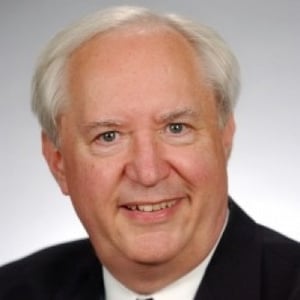
Oppenheim Professor Emeritus of Antitrust and Trade Regulation Law, George Washington University Law School
Thomas D. Morgan is Oppenheim Professor of Antitrust and Trade Regulation Law Emeritus at George Washington University. He was Dean of the Emory University School of Law and on the faculties of the University of Illinois and Brigham Young University. He is co-author of Problems and Materials on Professional Responsibility (14th Ed. 2022), with Professors Mitt Regan and John Dzienkowski. Professor Morgan served as an Associate Reporter for both the American Law Institute’s Restatement of the Law (Third): The Law Governing Lawyers and the American Bar Association’s Ethics 2000 Commission. He is an Executive Committee member of the Federalist Society’s Professional Responsibility and Legal Education Practice Group and a member of the ABA Business Law Section’s Professional Responsibility committee. His book, “The Vanishing American Lawyer” (2010), was published by Oxford University Press.

Executive Vice President, The Federalist Society
Dean Reuter is Executive Vice President at the Federalist Society for Law and Public Policy Studies. He has served in two federal government agency Offices of the Inspector General, as Counsel to the Inspector General and Deputy Inspector General, responsible for policing the use of federal funds granted and contracted through those agencies. As such, he helped conduct and oversee criminal investigations across the country. He is the principal author of the non-fiction book, The Hidden Nazi: The Untold Story of America's Deal with the Devil, and editor of Liberty’s Nemesis: The Unchecked Expansion of the State and Confronting Terror: 9/11 and the Future of American National Security. He was appointed by the President and served as Vice-Chairman of the Board of Directors of the Corporation for National and Community Service, and recently served as an appointee on the U.S. Commission on Presidential Scholars. He is a graduate of Hood College (BA with Honors) and the University of Maryland School of Law.
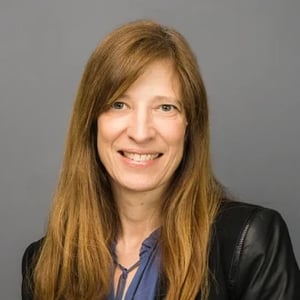
Trustee Professor of Law and Co-Dean for Faculty Scholarship, New York Law School
Rebecca Roiphe studies lawyers’ ethics and the history of the legal profession, focusing on the interaction between lawyers’ work and the rhetoric or ideals of professionalism.
Prior to joining New York Law School, Professor Roiphe worked as a Manhattan prosecutor. She also served as a law clerk for The Honorable Bruce Selya, U.S. Court of Appeals for the First Circuit. She draws on her professional experiences and her training as a historian in her writing. Her scholarship emphasizes the important, mediating role prosecutors play in American democracy and examines the country’s tradition of prosecutorial independence, particularly with regard to the President’s power to control the Department of Justice.
Professor Roiphe’s opinion pieces have appeared in Slate, the New York Review of Books, Politico, U.S. News, and other popular press. She is frequently quoted as an expert on legal ethics and criminal justice in the media, including in The New York Times, The Washington Post, Bloomberg News, Vice News, and the New York Law Journal. Professor Roiphe has appeared on MSNBC and CNN. She is a contributing legal analyst at CBS News, where she appears regularly to discuss national legal issues, particularly those involving Special Counsel Robert Mueller’s probe into Russian influence in the 2016 election and the impeachment trials of President Donald J. Trump.
Professor Emeritus of Law, Antonin Scalia Law School, George Mason University
In 1994, Professor of Law Michael I. Krauss became the law school's first recipient of the university's "Teacher of the Year" award for his engaging and challenging approach in the classroom. Born in the United States but raised in Canada, Professor Krauss speaks legalese in two languages. He earned his B.A. cum laude from Carleton University, his LL.B. summa cum laude from the Université de Sherbrooke, and his LL.M. from Yale Law School, where he was a Commonwealth Scholar. He was Columbia University's Law and Economics Fellow in 1981. He has been teaching at George Mason since 1987 and also has taught at the law schools of Seattle University, the University of Toronto, and the Université de Sherbrooke.
Hired as a law clerk by Justice Louis-Philippe Pigeon of Canada's Supreme Court, Professor Krauss practiced law for Quebec City's largest law firm before entering academia. He also served for five years on Québec's Human Rights Commission. A Salvatori Fellow of the Heritage Foundation and an academic fellow of the Foundation for the Defense of Democracies, Professor Krauss sits on the advisory boards of several think tanks. He served as president of the Virginia Association of Scholars and on the Board of Governors of the Education Section of the Virginia State Bar, and is currently a member of the Board of Governors of the National Association of Scholars.
Professor Krauss teaches Torts, Legal Ethics and Jurisprudence, and has a strong interest in national security issues. His research on torts and ethics is nationally known. He co-authored the first edition of Legal Ethics in a Nutshell in May 2003. This book digests the Model Rules in an engaging and often critical fashion. The second edition was published in 2006. Professor Krauss is now under contract with West Publications to produce an innovative textbook on Products Liability in late 2008.
Professor Krauss received his B.A. cum laude from Carleton University, his LL.B. summa cum laude from the Université de Sherbrooke, and his LL.M. from Yale Law School.
Oppenheim Professor Emeritus of Antitrust and Trade Regulation Law, George Washington University Law School
Thomas D. Morgan is Oppenheim Professor of Antitrust and Trade Regulation Law Emeritus at George Washington University. He was Dean of the Emory University School of Law and on the faculties of the University of Illinois and Brigham Young University. He is co-author of Problems and Materials on Professional Responsibility (14th Ed. 2022), with Professors Mitt Regan and John Dzienkowski. Professor Morgan served as an Associate Reporter for both the American Law Institute’s Restatement of the Law (Third): The Law Governing Lawyers and the American Bar Association’s Ethics 2000 Commission. He is an Executive Committee member of the Federalist Society’s Professional Responsibility and Legal Education Practice Group and a member of the ABA Business Law Section’s Professional Responsibility committee. His book, “The Vanishing American Lawyer” (2010), was published by Oxford University Press.
Executive Vice President, The Federalist Society
Dean Reuter is Executive Vice President at the Federalist Society for Law and Public Policy Studies. He has served in two federal government agency Offices of the Inspector General, as Counsel to the Inspector General and Deputy Inspector General, responsible for policing the use of federal funds granted and contracted through those agencies. As such, he helped conduct and oversee criminal investigations across the country. He is the principal author of the non-fiction book, The Hidden Nazi: The Untold Story of America's Deal with the Devil, and editor of Liberty’s Nemesis: The Unchecked Expansion of the State and Confronting Terror: 9/11 and the Future of American National Security. He was appointed by the President and served as Vice-Chairman of the Board of Directors of the Corporation for National and Community Service, and recently served as an appointee on the U.S. Commission on Presidential Scholars. He is a graduate of Hood College (BA with Honors) and the University of Maryland School of Law.
Trustee Professor of Law and Co-Dean for Faculty Scholarship, New York Law School
Rebecca Roiphe studies lawyers’ ethics and the history of the legal profession, focusing on the interaction between lawyers’ work and the rhetoric or ideals of professionalism.
Prior to joining New York Law School, Professor Roiphe worked as a Manhattan prosecutor. She also served as a law clerk for The Honorable Bruce Selya, U.S. Court of Appeals for the First Circuit. She draws on her professional experiences and her training as a historian in her writing. Her scholarship emphasizes the important, mediating role prosecutors play in American democracy and examines the country’s tradition of prosecutorial independence, particularly with regard to the President’s power to control the Department of Justice.
Professor Roiphe’s opinion pieces have appeared in Slate, the New York Review of Books, Politico, U.S. News, and other popular press. She is frequently quoted as an expert on legal ethics and criminal justice in the media, including in The New York Times, The Washington Post, Bloomberg News, Vice News, and the New York Law Journal. Professor Roiphe has appeared on MSNBC and CNN. She is a contributing legal analyst at CBS News, where she appears regularly to discuss national legal issues, particularly those involving Special Counsel Robert Mueller’s probe into Russian influence in the 2016 election and the impeachment trials of President Donald J. Trump.
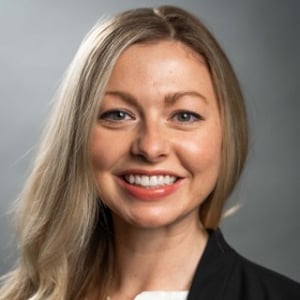
Assistant Solicitor General, Texas
Katie serves as an Assistant Solicitor General for the State of Texas. She previously practiced law at a firm in Washington, D.C. where she focused her legal practice on complex trial and appellate litigation, specializing in data privacy and biometric issues. Before that, Katie served as Chief Counsel to Senator Jeff Flake at the U.S. Senate Judiciary Committee and clerked for Judge Michael B. Brennan of the U.S. Court of Appeals for the Seventh Circuit. Katie graduated from Liberty University and the Antonin Scalia Law School at George Mason University. She is a member of The Federalist Society’s Litigation Practice Group Executive Committee.

Senior Counsel, First Liberty Institute
Stephanie N. Taub serves as Senior Counsel with First Liberty Institute, focusing on litigation, appellate advocacy, and legal education.
While at First Liberty, her article on the rights of faith-based organizations under Title VII of the Civil Rights Act of 1964 has been published in the Texas Review of Law and Politics. She has also authored pieces published in National Review, the Daily Signal, the Washington Times, the Des Moines Register, and the New York Daily News. In 2017, Taub was named one of 15 recipients of the James Wilson Fellowship in natural law.
Before joining First Liberty, Taub worked as a law clerk to the Honorable Reed O’Connor in the U.S. District Court of the Northern District of Texas.
Taub is a Harvard Law School graduate in the class of 2014 and a Blackstone Fellow in the class of 2012. During law school, she served as Co-President of the HLS Christian Fellowship and Managing Technical Editor of the Harvard Human Rights Journal. Taub spent her law school summers defending religious liberty in public interest law firms and clerking in the Texas Office of Solicitor General.
For her undergraduate studies at the University of Southern California, Taub graduated summa cum laude, majoring in Business Administration with a minor in Philosophy.
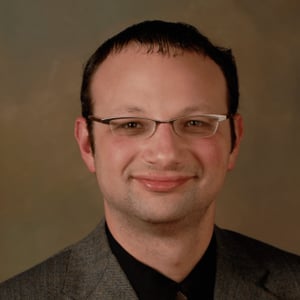
Chief Policy Counsel, Council on Criminal Justice and Senior Advisor, Right on Crime
Marc A. Levin is the Chief Policy Counsel for the Council on Criminal Justice (counciloncj.org) and Senior Advisor for Right on Crime.
An attorney and accomplished author on legal and public policy issues, Marc began the Foundation’s criminal justice program in 2005. This work contributed to nationally praised policy changes that have been followed by dramatic declines in crime and incarceration in Texas. Building on this success, in 2010, Levin developed the concept for the Right on Crime initiative, a TPPF project in partnership with Prison Fellowship and the American Conservative Union Foundation. Right on Crime has become the national clearinghouse for conservative criminal justice reforms and has contributed to the adoption of policies in dozens of states that fight crime, support victims, and protect taxpayers.
In 2014, Levin was named one of the “Politico 50” in the magazine’s annual “list of thinkers, doers, and dreamers who really matter in this age of gridlock and dysfunction.”
Marc has testified on criminal justice policy on four occasions before Congress and has testified before legislatures in states including Texas, Nevada, Kansas, Wisconsin, and California. He also has met personally with leaders such as U.S. Presidents, Speakers of the House, and the Justice Commtitee of the United Kingdom Parliament to share his ideas on criminal justice reform. In 2007, he was honored in a resolution unanimously passed by the Texas House of Representatives that stated, “Mr. Levin’s intellect is unparalleled and his research is impeccable.”
Since 2005, Marc has published dozens of policy papers on topics such as sentencing, probation, parole, reentry, and overcriminalization which are available on the TPPF website. Levin’s articles on law and public policy have been featured in publications such as the Wall Street Journal, USA Today, Texas Review of Law & Politics, National Law Journal, New York Daily News, Jerusalem Post, Toronto Star, Atlanta Journal-Constitution, Philadelphia Inquirer, San Francisco Chronicle, Washington Times, Los Angeles Daily Journal, Charlotte Observer, Dallas Morning News, Houston Chronicle, Austin American-Statesman, San Antonio Express-News and Reason Magazine.
In 1999, Marc graduated with honors from the University of Texas with a B.A. in Plan II Honors and Government. In 2002, Marc received his J.D. with honors from the University of Texas School of Law. Marc was a Charles G. Koch Summer Fellow in 1996. He served as a law clerk to Judge Will Garwood on the U.S. Court of Appeals for the Fifth Circuit and Staff Attorney at the Texas Supreme Court.
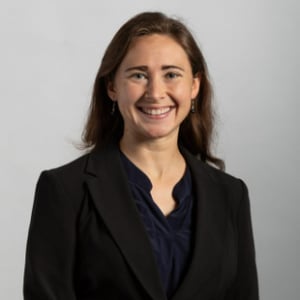
Attorney, Institute for Justice
Marie Miller is an attorney with the Institute for Justice. Her practice focuses on protecting economic liberty, property rights, and educational choice.
Marie received her law degree from Indiana University’s Maurer School of Law. She received her undergraduate degree in music from the University of Notre Dame. And she holds masters degrees in music, from Indiana University’s Jacobs School of Music, and public affairs, from Indiana University’s School of Public and Environmental Affairs. After law school, Marie clerked for Chief Justice Loretta H. Rush of the Indiana Supreme Court and for Judge Michael S. Kanne of the U.S. Court of Appeals for the Seventh Circuit.
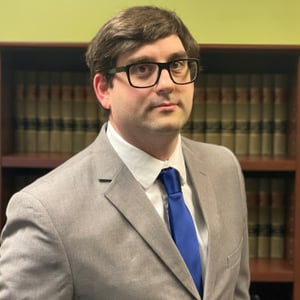
Bureau Chief of the Legal Affairs Unit, Albany County District Attorney’s Office
Vincent Stark is Bureau Chief of the Legal Affairs Unit at the Albany County District Attorney’s Office in Upstate New York. His practice primarily deals with appeals, post-conviction remedies, and sealing and expungement.
Vincent received his juris doctorate cum laude from the University of Notre Dame Law School, where he served as Executive Editor of the Journal of Legislation. He received his bachelor’s degree in Political Science magna cum laude from Syracuse University. After law school he served as a legislative fellow in the New York State Senate before joining the District Attorney’s Office. His published works have appeared in the Albany Law Review and the Georgetown Journal of Gender and the Law, and he has frequently taught classes and CLEs on criminal law, legal research and writing, and sealing and expungement programs to support the re-entry of convicts into society.
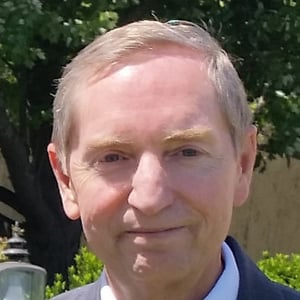
Legal Director & General Counsel, Criminal Justice Legal Foundation
Kent S. Scheidegger has been the Legal Director of the Criminal Justice Legal Foundation since December 1986. He also served as Chairman of the Criminal Law Practice Group of the Federalist Society 2003 to 2005. His articles on criminal and constitutional law have been published in law reviews, national legal publications, and congressional reports. Legal arguments authored by Mr. Scheidegger have been cited and incorporated in several precedent-setting United States Supreme Court decisions.
After receiving a degree in physics with honors from New Mexico State University in 1976, Mr. Scheidegger served for six years in the United States Air Force as a Nuclear Research Officer. He took his law degree with distinction from the University of the Pacific, McGeorge School of Law in 1982 and practiced civil law in Northern California. He was general counsel of California Cooler, Inc. from 1984 until 1986, when he joined the Foundation.
Professor Emeritus of Law, Antonin Scalia Law School, George Mason University
In 1994, Professor of Law Michael I. Krauss became the law school's first recipient of the university's "Teacher of the Year" award for his engaging and challenging approach in the classroom. Born in the United States but raised in Canada, Professor Krauss speaks legalese in two languages. He earned his B.A. cum laude from Carleton University, his LL.B. summa cum laude from the Université de Sherbrooke, and his LL.M. from Yale Law School, where he was a Commonwealth Scholar. He was Columbia University's Law and Economics Fellow in 1981. He has been teaching at George Mason since 1987 and also has taught at the law schools of Seattle University, the University of Toronto, and the Université de Sherbrooke.
Hired as a law clerk by Justice Louis-Philippe Pigeon of Canada's Supreme Court, Professor Krauss practiced law for Quebec City's largest law firm before entering academia. He also served for five years on Québec's Human Rights Commission. A Salvatori Fellow of the Heritage Foundation and an academic fellow of the Foundation for the Defense of Democracies, Professor Krauss sits on the advisory boards of several think tanks. He served as president of the Virginia Association of Scholars and on the Board of Governors of the Education Section of the Virginia State Bar, and is currently a member of the Board of Governors of the National Association of Scholars.
Professor Krauss teaches Torts, Legal Ethics and Jurisprudence, and has a strong interest in national security issues. His research on torts and ethics is nationally known. He co-authored the first edition of Legal Ethics in a Nutshell in May 2003. This book digests the Model Rules in an engaging and often critical fashion. The second edition was published in 2006. Professor Krauss is now under contract with West Publications to produce an innovative textbook on Products Liability in late 2008.
Professor Krauss received his B.A. cum laude from Carleton University, his LL.B. summa cum laude from the Université de Sherbrooke, and his LL.M. from Yale Law School.
Oppenheim Professor Emeritus of Antitrust and Trade Regulation Law, George Washington University Law School
Thomas D. Morgan is Oppenheim Professor of Antitrust and Trade Regulation Law Emeritus at George Washington University. He was Dean of the Emory University School of Law and on the faculties of the University of Illinois and Brigham Young University. He is co-author of Problems and Materials on Professional Responsibility (14th Ed. 2022), with Professors Mitt Regan and John Dzienkowski. Professor Morgan served as an Associate Reporter for both the American Law Institute’s Restatement of the Law (Third): The Law Governing Lawyers and the American Bar Association’s Ethics 2000 Commission. He is an Executive Committee member of the Federalist Society’s Professional Responsibility and Legal Education Practice Group and a member of the ABA Business Law Section’s Professional Responsibility committee. His book, “The Vanishing American Lawyer” (2010), was published by Oxford University Press.
Executive Vice President, The Federalist Society
Dean Reuter is Executive Vice President at the Federalist Society for Law and Public Policy Studies. He has served in two federal government agency Offices of the Inspector General, as Counsel to the Inspector General and Deputy Inspector General, responsible for policing the use of federal funds granted and contracted through those agencies. As such, he helped conduct and oversee criminal investigations across the country. He is the principal author of the non-fiction book, The Hidden Nazi: The Untold Story of America's Deal with the Devil, and editor of Liberty’s Nemesis: The Unchecked Expansion of the State and Confronting Terror: 9/11 and the Future of American National Security. He was appointed by the President and served as Vice-Chairman of the Board of Directors of the Corporation for National and Community Service, and recently served as an appointee on the U.S. Commission on Presidential Scholars. He is a graduate of Hood College (BA with Honors) and the University of Maryland School of Law.
Trustee Professor of Law and Co-Dean for Faculty Scholarship, New York Law School
Rebecca Roiphe studies lawyers’ ethics and the history of the legal profession, focusing on the interaction between lawyers’ work and the rhetoric or ideals of professionalism.
Prior to joining New York Law School, Professor Roiphe worked as a Manhattan prosecutor. She also served as a law clerk for The Honorable Bruce Selya, U.S. Court of Appeals for the First Circuit. She draws on her professional experiences and her training as a historian in her writing. Her scholarship emphasizes the important, mediating role prosecutors play in American democracy and examines the country’s tradition of prosecutorial independence, particularly with regard to the President’s power to control the Department of Justice.
Professor Roiphe’s opinion pieces have appeared in Slate, the New York Review of Books, Politico, U.S. News, and other popular press. She is frequently quoted as an expert on legal ethics and criminal justice in the media, including in The New York Times, The Washington Post, Bloomberg News, Vice News, and the New York Law Journal. Professor Roiphe has appeared on MSNBC and CNN. She is a contributing legal analyst at CBS News, where she appears regularly to discuss national legal issues, particularly those involving Special Counsel Robert Mueller’s probe into Russian influence in the 2016 election and the impeachment trials of President Donald J. Trump.

Judicial Ethics in the Modern Era
Michael I. Krauss, Thomas D. Morgan, Dean Reuter, Rebecca Roiphe
In the modern era, U.S. Supreme Court justices have been cited for what some critics...
Judicial Ethics in the Modern Era
Michael I. Krauss, Thomas D. Morgan, Dean Reuter, Rebecca Roiphe
In the modern era, U.S. Supreme Court justices have been cited for what some critics...
Courthouse Steps Oral Argument Webinar: Kennedy v. Bremerton School District
TeleforumCourthouse Steps Decision: Determining Finality for Pursuing Liability: The Implications of Thompson v. Clark
Topics
In Memoriam Orrin Hatch
In 1976, when I was still in college and the world was young, a 43...
Courthouse Steps Decision Webinar: United States v. Tsarnaev
TeleforumLuncheon with Professor James Duane
Moscow, IDTopics
Is Dworkin’s Definition of Discrimination Dead?
In 1979, the noted legal scholar and philosopher Ronald Dworkin published How to Read the...
Judicial Ethics in the Modern Era
TeleforumState Court Docket Watch: McDonald v. Symphony Bronzeville Park, LLC.
Kateland R. Jackson
In McDonald v. Symphony Park Bronzeville, the Illinois Supreme Court decided that the Illinois Workers’...