
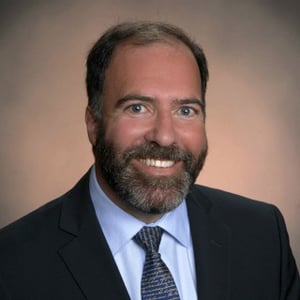
Professor of Law, Widener University Commonwealth Law School
Faculty Fellow, Center for Law, Science & Innovation, Sandra Day O'Connor College of Law, Arizona State University
Dr. Klein is a Faculty Fellow at the Center for Law, Science & Innovation at the Sandra Day O'Connor College of Law at Arizona State University. He is also Principal at Roger D. Klein, MD JD Consulting and Klein & Klein Co., L.P.A. He was formerly Chief Medical Officer at OmniSeq, an oncology focused genomic profiling company that was recently acquired by LabCorp. Previously, Roger was the Medical Director at the Molecular Oncology division at the Cleveland Clinic. He was also the Chair of the Professional Relations Committee at the Association for Molecular Pathology. Prior to joining the Cleveland Clinic, he served as Medical Director of Molecular Oncology at the BloodCenter of Wisconsin where he led the center’s Diagnostic Laboratories’ initiative focused on DNA- and RNA-based testing for evaluation of cancer patients.
Dr. Klein has been an advisor to the Department of Health and Human Services (HHS), the Food and Drug Administration (FDA), the Centers for Medicare and Medicaid Services (CMS), and the Centers for Disease Control and Prevention (CDC). He has participated in and assumed leadership roles in many professional society committees and corporate advisory boards and is a policy advisor to the Heartland Institute.
Dr. Klein is licensed to practice medicine in Ohio, Florida, and Wisconsin. Additionally, he is licensed to practice law in the District of Columbia and Ohio. Roger obtained his Molecular Genetic Pathology certification at Mayo Medical School following completion of his M.D. Yale University School of Medicine. He obtained his J.D. from Yale Law School.

Amicus Attorney, The Foundation for Individual Rights and Expression
Abby joined FIRE after her tenure at the Becket Fund for Religious Liberty, where she litigated First Amendment student group cases from coast to coast. She also worked at a trial litigation boutique in southern California. Abby has filed briefs on the First Amendment in state and federal court at the trial and appellate court levels, including before the U.S. Supreme Court.
Abby received her B.S. in economics and her B.A. in Chinese language and literature from the University of Pittsburgh, where she graduated summa cum laude. During college, she also spent a year at Tsinghua University as a Boren Fellow. She later received her J.D. from the University of Chicago Law School, where she won the 2018 Hinton Moot Court Competition. After law school, Abby clerked for the Honorable Michael B. Brennan on the Seventh Circuit Court of Appeals in Milwaukee, Wisconsin. She is admitted to practice in New York and California, as well as several federal appellate courts and the U.S. Supreme Court.
Abby lives outside Dallas, Texas, with her husband and family. They enjoy reading together, volunteering with their local church, and continuing to fix their leaky pool.

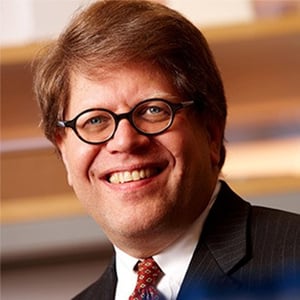
Joel A. Katz Distinguished Professor of Law, University of Tennessee College of Law
Professor Plank joined the UT faculty in 1994 and became the Joel A. Katz Distinguished Professor of Law in 2004. His scholarly interests include the nature of property, the relationship between bankruptcy and non-bankruptcy law, and the historical development and comparison of commercial law and property law systems. He is a nationally recognized expert on mortgage backed and asset backed securities. Before joining the UT faculty, he was a partner with Kutak Rock LLP specializing in real estate finance, commercial finance, bankruptcy, and securities, in particular serving as issuer’s counsel and bankruptcy counsel in securitization transactions. Since joining the UT faculty he has served as an expert witness on securitization and other bankruptcy and commercial law matters, and as a consultant for securitization law firms, providing advice on bankruptcy, commercial law, and real estate issues in connection with securitizations and other transactions. During the 2002-2003 academic year, Professor Plank was a visiting Professor of Law at the Notre Dame Law School.
Professor Plank graduated with honors from Princeton University with a degree in history and a Certificate of Proficiency in Russian Area Studies and then served three years in the United States Marine Corps, including eight months in Vietnam as an infantry platoon commander. He graduated 5th in his class from the University of Maryland School of Law, where he was Editor-in-Chief of the Maryland Law Review. He was a law clerk for the Chief Judge of the Maryland Court of Appeals, an associate with Piper & Marbury in Baltimore, MD, and an assistant attorney general for the State of Maryland. Initially, his practice included a wide variety of transactions and litigation, including a four month trial on the constitutionality of the Maryland public school finance system and oral arguments in the United States Supreme Court and federal and state appellate courts. He then concentrated his practice in real estate, commercial finance, public finance and securities transactions.

Assistant Professor of Law, Willamette University College of Law
Professor Simowitz teaches international business transactions, debtor and creditor law, negotiation, and a seminar on resolving business disputes. His research focuses on cross-border business transactions, litigation, and arbitration.
Before joining Willamette University College of Law, Simowitz was a research fellow at New York University’s (NYU) Center for Transnational Litigation, Arbitration, and Commercial Law and a fellow at the Classical Liberal Institute at NYU. He taught International Litigation & Arbitration with Professor Linda Silberman and before that was an acting assistant professor in the Lawyering Program at NYU. He also taught International Business Transactions at Columbia Law School.
Simowitz received the 2014 Young Scholar’s Award from the American Society of International Law’s Private International Law Interest Group for his work on judgment and award enforcement against intangible assets. He practiced at the New York office of Gibson, Dunn & Crutcher, and clerked for Judge D. Brooks Smith of the U.S. Court of Appeals for the Third Circuit.
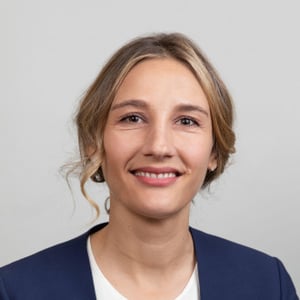
Attorney, Institute for Justice
Anya Bidwell (née Cherkasova) leads IJ’s Project on Immunity and Accountability (“PIA”). Through this project, Anya works to promote judicial engagement and ensure that government officials are held to account when they violate individuals’ constitutional rights. Anya also serves as an adviser on the American Law Institute’s Restatement of the Law, Constitutional Torts project.
One of Anya’s PIA cases—Gonzalez v. Trevino—was heard by the United States Supreme Court on March 20, 2024. She argued the case for the petitioner, with the goal of convincing the Justices that retaliatory arrests not involving on-the-spot decisions by police officers should be actionable under the First Amendment regardless of probable cause. The decision is expected in June.
This was Anya’s third appearance before the U.S. Supreme Court. She second-chaired Brownback v. King (an excessive force case) and Tennessee Wine & Spirits Retailers Association v. Thomas (a commerce clause case) in November 2020 and January 2019 respectfully.
Before joining IJ, Anya worked for a top national law firm, handling cases in trial and appellate courts. She earned her J.D. with honors from the University of Texas. Two years prior to entering law school, Anya received a master’s degree in Global Policy Studies, also from the University of Texas, and wrote a thesis on asymmetric warfare.
Anya spent her childhood in Ukraine and Kyrgyzstan. At 16, she left her family behind and came to America on a university scholarship. Her upbringing motivated her to study law and become an advocate for a strong, independent judiciary.
Anya’s work has been featured in numerous publications, including the Washington Post, the Wall Street Journal, the New York Times, USA Today, and the Guardian. She is also the host of live recordings of our Short Circuit podcast and a co-producer of our documentary-style podcast Bound by Oath.

Courthouse Steps Decision: Allen v. Milligan
TeleforumExplainer Episode 55 - 10 Years On: The Impact and Effects of AMP vs. Myriad
Roger D. Klein
On June 13, 2013, the Supreme Court issued its unanimous decision in Association for Molecular...
Topics
Must the NLRB Follow Rule 56 In Its Summary Judgment Opinions?
In a recent article, published in the Mississippi Law Journal, I argue that the NLRB...
Supreme Court of Texas Says Calling Abortion Murder Is Protected Speech, Not Defamation
Abigail Smith
In Lilith Fund for Reproductive Equity v. Dickson, the Supreme Court of Texas held that...
Bartenwerfer v. Buckley - Post-Decision SCOTUScast
Thomas Eldridge Plank
On February 22, the Supreme Court issued its ruling in Bartenwerfer v. Buckley. At issue was...
Yegiazaryan v. Smagin - Post-Argument SCOTUScast
Aaron D. Simowitz
On April 25, the Supreme Court heard oral argument in Yegiazaryan v. Smagin. At issue is...
The Nevada Supreme Court Recognizes a Damages Remedy Directly Under Its State Constitution
Anya Bidwell
Last year, two state supreme courts, within five months of each other, issued two decisions...
Topics
Crypto King Cites Recent SCOTUS Ruling in Effort to Dismiss Charges
Everyone deserves their day in court. Disgraced former crypto king and FTX founder Sam Bankman-Fried...
Topics
Is Glacier Northwest the Tip of the Iceberg?
Nowadays, labor-law cases are a rare sight at the Supreme Court. The Court usually takes...
Topics
Supreme Court Rules Against EPA’s Claims of Expansive Wetland Authority
On May 25, the Supreme Court of the United States decided Sackett v. EPA, a...