Explainer Episode 55 - 10 Years On: The Impact and Effects of AMP vs. Myriad
Regulatory Transparency Project's Fourth Branch Podcast


On June 13, 2013, the Supreme Court issued its unanimous decision in Association for Molecular Pathology v. Myriad Genetics Inc. a case that would ban attempts to patent naturally occurring DNA sequences.
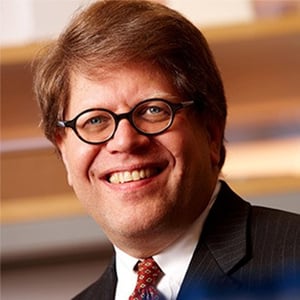
Now, ten years down the line with a decade of hindsight, Dr. Roger Klein, who played a central role as an expert, advisor, and spokesperson for the Association for Molecular Pathology in AMP v. Myriad, joins us to discuss this important case. In this Explainer we discuss the context surrounding this case, the debates that arose, and the impact this rule had across the past 10 years.
Featuring:
Visit our website – www.RegProject.org – to learn more, view all of our content, and connect with us on social media.
*******
As always, the Federalist Society takes no position on particular legal or public policy issues; all expressions of opinion are those of the speaker.

Faculty Fellow, Center for Law, Science & Innovation, Sandra Day O'Connor College of Law, Arizona State University
Dr. Klein is a Faculty Fellow at the Center for Law, Science & Innovation at the Sandra Day O'Connor College of Law at Arizona State University. He is also Principal at Roger D. Klein, MD JD Consulting and Klein & Klein Co., L.P.A. He was formerly Chief Medical Officer at OmniSeq, an oncology focused genomic profiling company that was recently acquired by LabCorp. Previously, Roger was the Medical Director at the Molecular Oncology division at the Cleveland Clinic. He was also the Chair of the Professional Relations Committee at the Association for Molecular Pathology. Prior to joining the Cleveland Clinic, he served as Medical Director of Molecular Oncology at the BloodCenter of Wisconsin where he led the center’s Diagnostic Laboratories’ initiative focused on DNA- and RNA-based testing for evaluation of cancer patients.
Dr. Klein has been an advisor to the Department of Health and Human Services (HHS), the Food and Drug Administration (FDA), the Centers for Medicare and Medicaid Services (CMS), and the Centers for Disease Control and Prevention (CDC). He has participated in and assumed leadership roles in many professional society committees and corporate advisory boards and is a policy advisor to the Heartland Institute.
Dr. Klein is licensed to practice medicine in Ohio, Florida, and Wisconsin. Additionally, he is licensed to practice law in the District of Columbia and Ohio. Roger obtained his Molecular Genetic Pathology certification at Mayo Medical School following completion of his M.D. Yale University School of Medicine. He obtained his J.D. from Yale Law School.