

Paul J. Schierl Professor of Law, University of Notre Dame Law School
Professor Richard W. Garnett teaches and writes in the areas of constitutional law, criminal law, the First Amendment, and law and religion. He is a leading authority on questions and debates regarding religious freedom and church-state relations, and is the founding director of Notre Dame Law School’s Program on Church, State, and Society.
Garnett clerked for the late Chief Justice of the United States, William H. Rehnquist, and also for the late Chief Judge of the United States Court of Appeals for the Eighth Circuit, Richard S. Arnold. He earned his J.D. from Yale Law School in 1995 and his B.A., summa cum laude, from Duke University in 1990. He joined the faculty in 1999 after practicing law in Washington, D.C. with Miller, Cassidy, Larroca & Lewin.
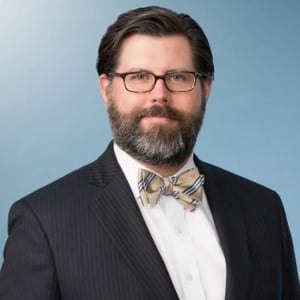
Partner, Faegre Drinker Biddle & Reath LLP
Brian J. Paul is an appellate lawyer and leads law teams in high-stakes commercial litigation. He has briefed and argued everything from weighty abstract constitutional issues to dollars-and-cents business issues and everything in-between, both on appeal and in trial courts around the country. A member of the American Law Institute, recent past-president of the Seventh Circuit Bar Association and top-tier ranked Chambers appellate lawyer, Brian had one client say about him: “Brian is one of the most respected and skilled appellate lawyers, not only in Indianapolis but across the country. He is trusted to deliver timely guidance on complex issues.” Another said: “He is excellent. I enjoyed working with him. He is able to put things into layman’s terms and explains things really well. His written and oral advocacy are short, crisp and to the point.”
Clients hire Brian to digest the complex, and make the complex simple and compelling for busy, generalist judges. In his writing, he strives to cut through jargon and legalese, and distill things down to what’s important. In his oral advocacy, by intense preparation, he strives to be the advocate whom judges trust for the right answers. In the dozens of cases he has argued, Brian has helped clients win on both sides of the “v.” His recent representations include:
Bell, McAndrews & Hiltachk, LLP
Fox Family Pavilion Distinguished Scholar in Residence, University of Pennsylvania
MARCI A. HAMILTON is a Fox Family Pavilion Distinguished Scholar in Residence in the Program for Research on Religion and Urban Civil Society at the University of Pennsylvania. She is also the founder, CEO, and Academic Director of CHILD USA, www.childusa.org, a 501(c)(3) nonprofit academic think tank at the University of Pennsylvania dedicated to interdisciplinary, evidence-based research to prevent child abuse and neglect. Before joining the program on religion at Penn, Professor Hamilton was the Paul R. Verkuil Chair in Public Law at Benjamin N. Cardozo School of Law, Yeshiva University.
Hamilton is the leading public intellectual critic of extreme religious liberty and its impact on vulnerable populations including children, LGBTQ, and women. The author of God vs. the Gavel: The Perils of Extreme Religious Liberty (Cambridge University Press), which was nominated for a Pulitzer Prize, she is also a columnist for Verdict on Justia.com. Hamilton successfully challenged the constitutionality of the Religious Freedom Restoration Act (“RFRA”) at the Supreme Court in Boerne v. Flores (1997), and defeated the RFRA claim brought by the Archdiocese of Milwaukee against hundreds of child sex abuse survivors in Committee of Unsecured Creditors v. Listecki (7th Cir. 2015).
Drawing on her experience studying and advising in cases involving clergy sex abuse, Hamilton is the leading expert on child sex abuse statutes of limitations and has submitted testimony and advised legislators in every state where significant reform has occurred. She is the author of Justice Denied: What America Must Do to Protect Its Children (Cambridge University Press), which advocates for the elimination of child sex abuse statutes of limitations. She has also filed countless pro bono amicus briefs for the protection of children at the United States Supreme Court and the state supreme courts. Her textbook, Children and the Law, co-authored with Martin Gardner, will be published Fall 2017 by Carolina Academic Press, formerly Lexis/Nexis.
Hamilton clerked for United States Supreme Court Justice Sandra Day O’Connor and Judge Edward R. Becker of the United States Court of Appeals for the Third Circuit.
Hamilton has been honored with the 2016 Voice Today, Voice of Gratitude Award; the 2015 Religious Liberty Award, American Humanist Association; the 2014 Freethought Heroine Award; the National Crime Victim Bar Association’s Frank Carrington Champion of Civil Justice Award, 2012; the E. Nathaniel Gates Award for outstanding public advocacy and scholarship, 2008; and selected as a Pennsylvania Woman of the Year Award, 2012, among others. She is also frequently quoted in the national media on RFRA, RLUIPA, First Amendment, clergy sex abuse, and statute of limitations issues.
Professor Hamilton is a graduate of Vanderbilt University, B.A., summa cum laude; Pennsylvania State University, M.A. (English, fiction writing, High Honors); M.A. (Philosophy); and the University of Pennsylvania School of Law, J.D., magna cum laude, where she served as Editor-in-Chief of the University of Pennsylvania Law Review. She is a member of Phi Beta Kappa and Order of the Coif.
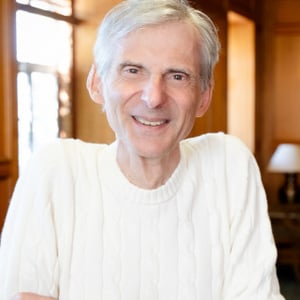
Professor of Law, University of San Diego School of Law
Maimon Schwarzschild is Professor of Law at the University of San Diego, where he has taught
since 1982. He has published extensively on constitutional law, jurisprudence, law and religion,
and civil rights. He is an English barrister and an American lawyer: he was an attorney in the
Civil Rights Division of the US Department of Justice from 1976 to 1981 and practised as a
barrister in London in the 1980s. He was a visiting professor at the Sorbonne for several years,
and has been a visiting professor at the Hebrew University in Jerusalem. He is a Director of the
Institute of Law and Religion at the University of San Diego and a member of the editorial board
of Law and Philosophy. With Gail Heriot he recently co-edited a volume entitled “A Dubious
Expediency: How Race Preferences Damage Higher Education”, published by Encounter Books.
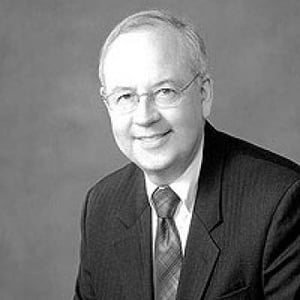
U.S. Court of Appeals, District of Columbia Circuit (1983-1989); U.S. Solicitor General (1989-1993)
Kenneth Starr is a former United States Federal Court of Appeals Judge, U.S. Solicitor General, and Independent Counsel. He is the former President and Chancellor of Baylor University where he held the Louise L. Morrison Chair of Constitutional Law at Baylor University Law School.
Vilas Research Fellow & Professor of Law, University of Wisconsin Law School
Shubha Ghosh has taught in the fields of intellectual property, business organizations, tort law, antitrust, property, and law & economics since Fall 1996. He is the author of over fifty articles and book chapters. He is the co-author of two intellectual property casebooks: Intellectual Property: Private Rights, The Public Interest, and the Regulation of Creative Activity (Thomson West 2007) and Intellectual Property in Business Organizations (Lexis-Nexis 2006).

Professor of Law, Antonin Scalia Law School, George Mason University
Adam Mossoff is Professor of Law at Antonin Scalia Law School, George Mason University. He has published extensively on why patents, copyrights, and other intellectual property rights have been—and should be—legally secured to innovators and creators as property rights. His scholarship has been relied on by the United States Supreme Court, by lower federal courts, and by U.S. federal agencies. He has been invited to testify numerous times before the U.S. Senate and the House of Representatives on intellectual property legislation. His writings on intellectual property policy have also appeared in the Wall Street Journal, New York Times, Forbes, Investors Business Daily, and in other media outlets. His journal articles can be downloaded here.
Professor Mossoff is a longstanding member of the Executive Committee of the Intellectual Property Practice Group of the Federalist Society, on which he served as Chairperson from 2016-2018, and he is Chair of the Intellectual Property Working Group of the Regulatory Transparency Project of the Federalist Society. He is a Senior Fellow and Chair of the Forum for Intellectual Property at the Hudson Institute, a Visiting Intellectual Property Fellow at the Heritage Foundation, and a member of the Board of Directors of the Center for Intellectual Property Understanding. He is a member of the Intellectual Property Rights Policy Committee of ANSI and he has served as Chair and Vice-Chair of the Intellectual Property Committee of the IEEE-USA, on which he remains a member in good standing.

Laurence A. Tisch Professor of Law and Director, Classical Liberal Institute, New York University School of Law; Senior Fellow, The Civitas Institute, University of Texas at Austin
Richard A. Epstein is the inaugural Laurence A. Tisch Professor of Law at NYU School of Law. Prior to his joining the faculty, he was a visiting law professor at NYU from 2007 through 2009. He served as the Peter and Kirstin Bedford Senior Fellow at the Hoover Institution from 2000 to 2024. Since 2024 to the present he is a senior lecturer at the Civitas Institute at the University of Texas—Austin. Epstein is also the James Parker Hall Distinguished Service Professor of Law Emeritus and a senior lecturer at the University of Chicago. His initial law school appointment was at the University of Southern California from 1968 to 1972. Epstein received an LL.D., h.c. from the University of Ghent, 2003. He has been a member of the American Academy of Arts and Sciences since 1985 and was a Senior Fellow of the Center for Clinical Medical Ethics at the University of Chicago Division of Biological Sciences, also from 1983. to 2022 He served as editor of the Journal of Legal Studies from 1981 to 1991, and of the Journal of Law and Economics from 1991-2001. From 2001 to 2010 he was a director of the John M. Olin Program in Law and Economics at the University of Chicago.
His newest book, The Myth of Birthright Citizenship: What the Fourteenth Amendment Really Says was published in 2026 (Encounter Books). Prior to that he has published many books including, The Dubious Morality of the Modern Administrative State (Roman & Littlefield 2020).Earlier he published th Classical Liberal Constitution: The Uncertain Quest for Limited Government (Harvard 2014) iHis previous books include Design for Liberty: Private Property, Public Administration and the Rule of Law (Harvard 2011); The Case Against the Employee Free Choice Act (Hoover 2009); Supreme Neglect: How to Revive the Constitutional Protection of Property Rights (Oxford 2008); Antitrust Decrees in Theory and Practice: Why Less is More (AEI 2007); Overdose: How Excessive Government Regulation Stifles Pharmaceutical Innovation (Yale University Press. 2006); How Progressives Rewrote the Constitution (Cato 2006); Cases and Materials on Torts (Aspen Law & Business; 8th ed. 2004); Skepticism and Freedom: A Modern Case for Classical Liberalism (University of Chicago, 2003); Torts (Aspen Law & Business 1999); Principles for a Free Society: Reconciling Individual Liberty with the Common Good (Perseus Books, 1998): Mortal Peril: Our Inalienable Rights to Health Care (Addison-Wesley, 1997); Simple Rules for a Complex World (Harvard, 1995); Bargaining With the State (Princeton, 1993); Forbidden Grounds: The Case Against Employment Discrimination Laws (Harvard , 1992); Takings: Private Property and the Power of Eminent Domain (Harvard, 1985); and Modern Products Liability Law (Greenwood Press, 1980). He has also edited(with Catherine M. Sharkey) Cases and Materials on the Law of Torts (10th edition 2012).
Professor Epstein has written numerous articles on a wide range of legal and interdisciplinary subjects. He has taught courses in administrative law, antitrust law, civil procedure, communications, constitutional law, contracts, corporations, criminal law, employment discrimination law, environmental law, food and drug law health law and policy, legal history, labor law, property, real estate development and finance, jurisprudence, labor law; land use planning, patents, individual, estate and corporate taxation, Roman Law; torts, and workers' compensation.
Professor Epstein also writes a regular column for Civitas Institute, which also sponsors his podcast, The Libertarian with Charles C.W. Cooke, and Law Talk, with Cooke and John Yoo. He also does a podcast with John Batchelor. And appears regularly on the Freedom File with Judge Andrew Napolitano.
Vice President for Legal Affairs, Cato Institute
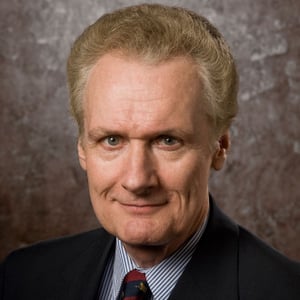
Roger Pilon is the Cato’s Institute’s vice president for legal affairs, the founding director of Cato’s Robert A. Levy Center for Constitutional Studies, the inaugural holder of Cato’s B. Kenneth Simon Chair in Constitutional Studies, and the founding publisher of the Cato Supreme Court Review.
Prior to joining Cato, Pilon held five senior posts in the Reagan administration, including at State and Justice, and was a national fellow at Stanford’s Hoover Institution. In 1989 the Bicentennial Commission presented him with its Benjamin Franklin Award for excellence in writing on the U.S. Constitution. In 2001 Columbia University’s School of General Studies awarded him its Alumni Medal of Distinction. Pilon lectures and debates at universities and law schools across the country and testifies often before Congress.
His writing has appeared in the Wall Street Journal, the Washington Post, the New York Times, the Los Angeles Times, Legal Times, National Law Journal, Harvard Journal of Law and Public Policy, Stanford Law and Policy Review, and elsewhere. He has appeared on ABC’s Nightline, CBS’s 60 Minutes II, Fox News Channel, NPR, CNN, MSNBC, CNBC, C-SPAN, and other media.
Pilon holds a BA from Columbia University, an MA and a PhD from the University of Chicago, and a JD from the George Washington University School of Law.

Chief Judge, United States Court of Appeals, Eleventh Circuit
William H. Pryor Jr. serves as Chief Circuit Judge on the United States Court of Appeals for the Eleventh Circuit.
In 2013–18, he served on the United States Sentencing Commission and, in 2017–18, served as Acting Chair.
He has taught as a visiting professor at the University of Alabama School of Law and previously taught as an adjunct professor at the Cumberland School of Law of Samford University.
He served as the 45th Attorney General of Alabama from 1997 to 2004. When he took office, he was the youngest attorney general in the nation. In his reelection, he received the highest percentage of votes of any statewide candidate.
He graduated magna cum laude from Tulane Law School where he finished first in the common-law curriculum and was editor in chief of the Tulane Law Review. He then served as a law clerk for Judge John Minor Wisdom of the U.S. Court of Appeals for the Fifth Circuit.
He is a member of The American Law Institute and an Adviser for the RESTATEMENT OF THE LAW THIRD, CONFLICT OF LAWS. He is a coauthor with Bryan Garner, Justices Gorsuch and Kavanaugh, and several other judges of a treatise, THE LAW OF JUDICIAL PRECEDENT. He has published in the Yale Law Journal, Columbia Law Review, Virginia Law Review, Notre Dame Law Review, Harvard Journal of Law & Public Policy, Yale Law & Policy Review, George Mason Law Review, Florida Law Review, Alabama Law Review, Case Western Reserve Law Review, and Tulane Law Review. He has published op-eds in The Wall Street Journal, The New York Times, National Review, and USA Today. He has debated at National Lawyers’ Conventions of the Federalist Society (including on National Public Radio) and at the Oxford Union in the United Kingdom. And he is listed among several “widely admired judicial writers” in Bryan Garner’s The Redbook: A Manual on Legal Style.
He is a member of the Tulane Law School Hall of Fame and has received the Defender of the Constitution Award from the Heritage Foundation, the Jurist of the Year Award from the Texas Review of Law & Politics, and the St. Thomas More Award from the St. Thomas More Society of Atlanta. Judge Pryor is also a proud member of the National Society of the Sons of the American Revolution.
Edward H. Levi Distinguished Service Professor of Law, University of Chicago Law School
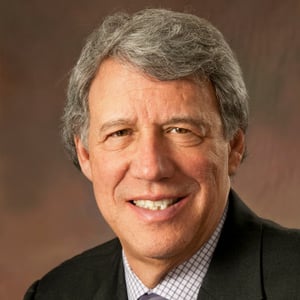
Geoffrey R. Stone is the Edward H. Levi Distinguished Service Professor at the University of Chicago. Mr. Stone joined the faculty in 1973, after serving as a law clerk to Supreme Court Justice William J. Brennan, Jr. He later served as Dean of the Law School (1987-1994) and Provost of the University of Chicago (1994-2002).
Stone is the author of many books on constitutional law, including Sex and the Constitution: Sex, Religion and Law from America’s Origins to the Twenty-First Century (2017); Speaking Out: Reflections of Law, Liberty and Justice (2010 & 2016); Top Secret: When Our Government Keeps Us in the Dark (2007), War and Liberty: An American Dilemma (2007), Perilous Times: Free Speech in Wartime (2004), and Eternally Vigilant: Free Speech in the Modern Era(Chicago 2002). He is also an editor of two leading casebooks, Constitutional Law (7th ed. 2013) and The First Amendment (5th ed. 2016). Stone is an editor of The Supreme Court Reviewand chief editor of a twenty-volume series, Inalienable Rights, which is being published by the Oxford University Press.
Stone was appointed by President Obama to serve on the President’s Review Group on Intelligence and Communications Technologies, which evaluated the government’s foreign intelligence surveillance programs in the wake of Edward Snowden’s leaks. He is a Fellow of the American Academy of Arts and Sciences, a member of the America Law Institute, the National Advisory Council of the American Civil Liberties Union, a member of the American Philosophical Society, and a member of the Board of Advisors of the Council for Democracy and Technology. He has served as Chair of the Board of the American Constitution Society and Chair of the Board of the Chicago Children’s Choir.
Stone has also written amicus briefs for constitutional scholars in a number of Supreme Court cases, including Obergefell v. Hodges, Whole Woman’s Heath v. Hellerstadt, Lawrence v. Texas, United States v. Windsor, United States v. Stevens, and Rasul v. Bush. He was also one of the lawyers who represented President Bill Clinton in the Supreme Court in Clinton v. Jones.

Emanuel S. Heller Professor of Law, University of California at Berkeley; Thomas Smith Senior Research Fellow, The Civitas Institute, University of Texas at Austin
John Yoo is the Emanuel Heller Professor of Law at the University of California at Berkeley. He is also the Thomas Smith Senior Research Fellow, Civitas Institute, at the University of Texas at Austin. He is also a Nonresident Senior Fellow at the American Enterprise Institute.
His most recent book, The Politically Incorrect Guide to the Supreme Court, co-authored with Robert Delahunty, was published in 2023. Professor Yoo’s other books include Defender-in-Chief: Trump’s Fight for Presidential Power; Striking Power: How Cyber, Robots, and Space Weapons Change the Rules for War; Point of Attack: Preventive War, International Law, and Global Welfare; and Crisis and Command: A History of Executive Power from George Washington to George Bush.
He is a co-author of volumes 1 and 2 of R. Rossum, G. Tarr, V. Munoz & J. Yoo American Constitution Law (Routledge, 2026), and a co-editor of the eight-volume series on the 250th anniversary of the American Revolution, We Hold These Truths, with Yuval Levin and Adam White of the American Enterprise Institute.
Professor Yoo has published more than 100 articles in academic journals on subjects including national security, constitutional law, international law, and the Supreme Court. He also regularly contributes to the editorial pages of the Wall Street Journal, New York Times, Washington Post, Los Angeles Times, and National Review, among others.
Professor Yoo has served in all three branches of government. He was an official in the U.S. Department of Justice, where he worked on national security and terrorism issues after the 9/11 attacks. He served as general counsel of the U.S. Senate Judiciary Committee. He has been a law clerk for Supreme Court Justice Clarence Thomas and federal appeals Judge Laurence Silberman. He has been a visiting professor at the University of Texas at Austin’s School of Civic Leadership, Seoul National University, the Interdisciplinary Center Herzliya, Keio University, Trento University, the University of Chicago, and the Free University of Amsterdam.
Professor Yoo supervises the Public Law and Policy Program and the California Constitution Center. He also serves on the boards of Founding Forward, the Washington Legal Foundation, the Pacific Legal Foundation, the Ulysses Grant Institute, the Federalist Society’s Separation of Powers and Federalism Division, the Universidad Cientifica del Sur Law School, and the Asia-Pacific Law Institute at Seoul National University. He is a winner of the Federalist Society’s Paul Bator award and the Heritage Foundation’s Edwin Meese III Originalism Lectureship.
Professor Yoo graduated from Yale Law School and summa cum laude from Harvard College.

George C. Dix Professor in Constitutional Law, Northwestern University Pritzker School of Law
John O. McGinnis is a graduate of Harvard College and Harvard Law School where he was an editor of the Harvard Law Review. He also has an MA degree from Balliol College, Oxford, in philosophy and theology. Professor McGinnis clerked on the U.S. Court of Appeals for the District of Columbia. From 1987 to 1991, he was deputy assistant attorney general in the Office of Legal Counsel at the Department of Justice. He is the author of Accelerating Democracy: Transforming Government Through Technology (Princeton 2013) and Originalism and the Good Constitution (Harvard 2013) (with M. Rappaport). He is a past winner of the Paul Bator award given by the Federalist Society to an outstanding academic under 40. He has been listed by the United States on the roster of panelists who may be called upon to decide World Trade Organization Disputes.
Partner, Baker & Hostetler LLP
Lee A. Casey focuses on federal environmental, constitutional and international law and Alien Tort Statute issues. He also advises clients on compliance issues under the Foreign Corrupt Practices Act (FCPA), U.S. trade sanctions regimes, and federal ethics requirements. Mr. Casey’s practice includes federal, district and appellate court litigation, as well as matters before federal agencies. Prior to joining BakerHostetler, Mr. Casey was an associate with Hunton & Williams, practicing in international, environmental and constitutional law. From 2004 through 2007 he served as an member of the United Nations Subcommission on the Promotion and Protection of Human Rights.
From 1986 to 1993, Mr. Casey served in various capacities in the federal government, including the Office of Legal Policy (1986-90) and the Office of Legal Counsel (1992-93) at the U.S. Department of Justice and served as Deputy Associate General Counsel at the U.S. Department of Energy (1990-92). The Office of Legal Counsel is responsible for advising the Attorney General and the White House on issues of constitutional law and statutory interpretation. The Office of Legal Policy served as a strategic “think tank” for the Reagan Justice Department and was responsible for reviewing candidates for appointments to the federal bench.
Before joining the government in 1986, Mr. Casey was an associate in the Los Angeles firm of Mitchell, Silberberg & Knupp, practicing in the litigation section, with an emphasis on copyright, contract and First Amendment issues. From 1984 to 1985, Mr. Casey served as Law Clerk to the Honorable Alex Kozinski, then Chief Judge of the United States Claims Court. From 1982 to 1984, he practiced at the Detroit firm of Dykema Gossett, focusing on corporate, securities, commercial and intellectual property litigation, and from 1990 through 1994, he served as an Adjunct Professor of Law at George Mason University School of Law in Arlington, Virginia.
Among the chapters, articles and papers that Mr. Casey has authored or co-authored are: “International Law and the Nation-State at the U.N.,” Reclaiming the Language of Freedom at the United Nations: A Guide for U.S. Policymakers, The Heritage Foundation (2006) (with David B. Rivkin, Jr.); “The Dangerous Myth of Universal Jurisdiction,” A Country I Do Not Recognize (ed. Robert H. Bork) (2005) (with David B. Rivkin, Jr.); “Leashing the Dogs of War,” The National Interest (Fall 2003) (with David B. Rivkin, Jr.); “The Limits of Legitimacy: The Rome Statute’s Unlawful Application to Non-State Parties,” 44 Va.J.Int’l L. 63 (Fall 2003) (with David B. Rivkin, Jr.); “Devil’s Advocates: The Danger of Judging Lawyers By Their Clients,” Policy Review (Feb. and Mar. 2002) (with David B. Rivkin, Jr.); “The Case Against the International Criminal Court,” 25 Fordham Int’l L.J. 840 (2002); “Europe in the Balance: The Alarmingly Undemocratic Drift of the European Union,” Policy Review (June and July 2001) (with David B. Rivkin Jr.); “Against an International Criminal Court,” Commentary, May 1998 (with David B. Rivkin, Jr.); “Federalism (Cont’d.),” Commentary, December 1996 (with David B. Rivkin, Jr.); “Presidents and War Powers: Another View,” Common Sense, Winter 1996 (with David B. Rivkin, Jr.); “How Binding Are Contracts?” The American Enterprise, Nov./Dec. 1993 (with David B. Rivkin, Jr.); and “Pirate Constitutionalism: An Essay in Self-Government,” 8 J. of L. & Politics 477 (1992).
Mr. Casey is a member of the California, Michigan and District of Columbia Bar Associations.
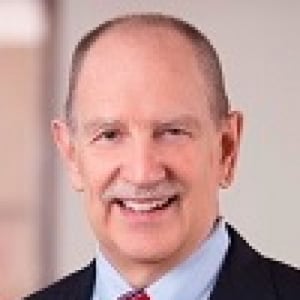
Retired
Tom Gede retired in 2023 as a principal in Morgan Lewis Consulting LLC and of counsel to the firm. He currently consults on a variety of legal and policy matters for both public and private clients. Tom has a national reputation and distinguished background in federal Indian law. Prior to retirement, he represented clients in complex governmental matters in litigation, administrative and regulatory proceedings, including high-profile matters involving state governments. A former senior deputy in the California Attorney General’s office, Tom was amicus coordinator and Supreme Court counsel, and argued cases in the US Supreme Court, the California Supreme Court, and numerous state and federal appellate courts.
Tom also served as executive director of the Conference of Western Attorneys General (CWAG), coordinating activities on key legal and policy issues, such as federal Indian law, energy, environmental, public lands, financial services, and telecommunications, for the attorneys general of 18 western states and territories. In 2016, Tom was elected as a Member of the American Law Institute (ALI), and served as an Adviser on the Restatement of the Law Third - The Law of American Indians. Tom also taught federal Indian law as an adjunct law professor at the University of the Pacific - McGeorge School of Law. He served as an assistant editor for and the author of the Indian gaming chapter in CWAG’s American Indian Law Deskbook (2d & 3d eds.). He has been engaged in Indian gaming and Indian law matters for more than three decades, having focused on the gaming compacts with Indian tribes, as well as complex civil and criminal jurisdiction, land, natural resources, water and law enforcement issues in Indian country. He has testified before Congress on American Indian and Native Alaskan issues. In 2012 he was appointed by Speaker John Boehner to serve on the United States Indian Law and Order Commission, where he examined criminal justice issues in Indian country and Alaska, resulting in the issuance of an important report to the President and Congress.
Chief Judge, United States Court of Appeals, Eleventh Circuit
William H. Pryor Jr. serves as Chief Circuit Judge on the United States Court of Appeals for the Eleventh Circuit.
In 2013–18, he served on the United States Sentencing Commission and, in 2017–18, served as Acting Chair.
He has taught as a visiting professor at the University of Alabama School of Law and previously taught as an adjunct professor at the Cumberland School of Law of Samford University.
He served as the 45th Attorney General of Alabama from 1997 to 2004. When he took office, he was the youngest attorney general in the nation. In his reelection, he received the highest percentage of votes of any statewide candidate.
He graduated magna cum laude from Tulane Law School where he finished first in the common-law curriculum and was editor in chief of the Tulane Law Review. He then served as a law clerk for Judge John Minor Wisdom of the U.S. Court of Appeals for the Fifth Circuit.
He is a member of The American Law Institute and an Adviser for the RESTATEMENT OF THE LAW THIRD, CONFLICT OF LAWS. He is a coauthor with Bryan Garner, Justices Gorsuch and Kavanaugh, and several other judges of a treatise, THE LAW OF JUDICIAL PRECEDENT. He has published in the Yale Law Journal, Columbia Law Review, Virginia Law Review, Notre Dame Law Review, Harvard Journal of Law & Public Policy, Yale Law & Policy Review, George Mason Law Review, Florida Law Review, Alabama Law Review, Case Western Reserve Law Review, and Tulane Law Review. He has published op-eds in The Wall Street Journal, The New York Times, National Review, and USA Today. He has debated at National Lawyers’ Conventions of the Federalist Society (including on National Public Radio) and at the Oxford Union in the United Kingdom. And he is listed among several “widely admired judicial writers” in Bryan Garner’s The Redbook: A Manual on Legal Style.
He is a member of the Tulane Law School Hall of Fame and has received the Defender of the Constitution Award from the Heritage Foundation, the Jurist of the Year Award from the Texas Review of Law & Politics, and the St. Thomas More Award from the St. Thomas More Society of Atlanta. Judge Pryor is also a proud member of the National Society of the Sons of the American Revolution.

Samuel H. McCoy II Professor of Law, University of Virginia School of Law
John F. Duffy is the Samuel H. McCoy II Professor of Law and Class of 1966 Research Professor of Law at the University of Virginia School of Law, where he teaches administrative law, torts and intellectual property. Professor Duffy has published articles on a wide range of administrative law and regulatory issues in journals such as University of Chicago Law Review, Yale Law Journal, Stanford Law Review, Virginia Law Review, Columbia Law Review, Texas Law Review, Northwestern University Law Review, NYU Law Review, University of Pennsylvania Law Review and the Supreme Court Review. His 1998 article Administrative Common Law in Judicial Review, 77 Tex. L. Rev. 113 (1998), was one of the first articles to criticize the Chevron doctrine as being irreconcilable with § 706 of the APA; it won the American Bar Association’s Scholarship Award in Administrative Law. His 2008 article “Are Administrative Patent Judges Unconstitutional?” was covered on National Public Radio), in the New York Times (Adam Liptak, In One Flaw, Questions on Validity of 46 Judges, May 6, 2008), and in the Wall Street Journal (Dan Slater, Patently Unconstitutional, May 6, 2008). The NYT and WSJ agreed that he was “a different kind of law professor,” “one of the lucky few” whose “writings actually wind up changing the law.”
As an attorney in the courts, Duffy has twice successfully convinced the Supreme Court to overturn lower court doctrines that had been applied in many cases over decades but that were unanimously held to be irreconcilable with Supreme Court precedents. See TC Heartland v. Kraft Foods Group Brands, 581 U.S. 258 (2017); KSR v. Teleflex, 550 U.S. 398 (2007).
Prior to entering legal academics, Duffy clerked on the D.C. Circuit for Stephen Williams and on the Supreme Court for Antonin Scalia. While clerking, he became known as Justice Scalia’s “hapless law clerk,” who had been tasked with unearthing three-quarters of a century of legislative history that made “no difference” to the outcome in an otherwise forgettable case. See Conroy v. Aniskoff, 507 U.S. 511, 527-28 (1993) (Scalia, J., concurring in the judgment).
In earlier days, Duffy enjoyed being a professional blackjack player unwelcome in all Atlantic City casinos and a semi-professional road runner (best marathon time 2:24:33). He holds an A.B. in physics from Harvard and a J.D. from the University of Chicago.

Judge, United States Court of Appeals, District of Columbia Circuit
Judge Katsas was appointed to the D.C. Circuit in December 2017. He graduated from Princeton University and Harvard Law School, where he was an executive editor on the Harvard Law Review. Between 1989 and 1992, he served as a law clerk to Judge Edward Becker on the Third Circuit, to then-Judge Clarence Thomas on the D.C. Circuit, and to Justice Thomas on the Supreme Court. Between 1992 and 2001, he was an associate and then partner in the Washington office of Jones Day, where he specialized in appellate and complex civil litigation. Between 2001 and 2009, he served in many senior positions in the Department of Justice, including as Assistant Attorney General for the Civil Division and as Acting Associate Attorney General. In 2009, he returned to Jones Day. From January to December 2017, he served as Deputy Assistant to the President and Deputy Counsel to the President.
Before joining the bench, Judge Katsas argued more than 75 appeals, including three cases in the Supreme Court, 13 cases in the D.C. Circuit, and cases in every other federal court of appeals. By appointment of the Chief Justice, he served on the Advisory Committee on Appellate Rules from 2013 to 2017. In 2016, he was elected to membership in the American Academy of Appellate Lawyers.

Chief Judge, United States Court of Appeals, Sixth Circuit
JEFFREY S. SUTTON is the Chief Judge of the United States Court of Appeals for the Sixth Circuit. He has served as Chair of the Federal Judicial Conference Committee on Rules of Practice and Procedure, Chair of the Advisory Committee on Appellate Rules, and Chair of the Supreme Court Fellows Commission. He currently serves as Chair of the Executive Committee of the Judicial Conference of the United States. Since 1993, Chief Judge Sutton has been an adjunct professor at The Ohio State University College of Law, where he teaches seminars on State Constitutional Law, the United States Supreme Court, and Appellate Advocacy. He also teaches a class on State Constitutional Law at Harvard Law School. Among other publications, he is the author of Who Decides? States as Laboratories of Constitutional Experimentation and 51 Imperfect Solutions: States and the Making of American Constitutional Law. He is the co-author of a casebook, State Constitutional Law: The Modern Experience, as well as The Law of Judicial Precedent. He is also the co-editor of The Essential Scalia: On the Constitution, the Courts, and the Rule of Law. In 2006, Chief Judge Sutton was elected to the American Law Institute, and in 2017 he was elected to its Council.

School Choice, Religious Freedom, and the Constitution(s)
Richard W. Garnett, Brian J. Paul
On June 9, 2011, the Indianapolis Lawyers Chapter hosted Prof. Richard W. Garnett of the...
Elections; Universal Voter Registration; Same Day Voter Registration
Charles H. Bell
Brought to you by the Free Speech & Election Law Practice Group BackgroundVoter registration has traditionally been...
Panel I: What Would the Framers Have Thought of Direct Democracy?
Marci A. Hamilton, Maimon Schwarzschild, Kenneth W. Starr
The Federalist Society presented this panel during the Second Annual Western Conference at The Ronald Reagan...
Are Patents "Private Property" Under the Fifth Amendment? - Event Audio
Michael A. Gollin, Dean A. Monco, Loren A. Smith, Shubha Ghosh, Adam Mossoff
The modern regulatory state affects all forms of property rights, from land to chattels to...
Executive Power in Wartime
Richard A. Epstein, Roger Pilon, William H. Pryor, Geoffrey R. Stone, John C. Yoo
The Federalist Society's Federalism & Separation of Powers Practice Group presented this panel discussion at...
Ramifications of The International Criminal Court for War, Peace And Social Change
Richard G. Wilkins
The Rome Statute of the International Criminal Court (or "Rome Statute") was adopted at a...
Will the ICC Provide Adequate Procedural and Structural Safeguards?
David Stoelting, John O. McGinnis, Lee A. Casey, Thomas F. Gede, John L. Washburn
MR. GEDE: Ladies and gentlemen, on behalf of the Federalist Society for Law and Public...
Federalism Revived? The Printz and City of Boerne Decisions
William H. Pryor, John F. Duffy, Gregory G. Katsas, Jeffrey S. Sutton
The following program was sponsored by the Federalism and Separation of Powers Practice Group at...
Extra-Terrestrial Sanctions in an Interdependent World
Gregory Husisian
U.S. Unilateral Sanctions in the Post-World War Era It is almost a law of nature:...