
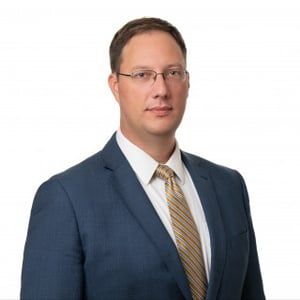
Laurence H. Silberman Chair in Constitutional Governance, American Enterprise Institute; Executive Director, Antonin Scalia Law School’s C. Boyden Gray Center for the Study of the Administrative State
Adam J. White is the Laurence H. Silberman Chair in Constitutional Governance and senior fellow at the American Enterprise Institute, where he focuses on the Supreme Court and the administrative state. He also directs the Antonin Scalia Law School’s C. Boyden Gray Center for the Study of the Administrative State.
He writes on regulation and constitutional government for a variety of publications. He practiced law in Washington, D.C., after clerking for the D.C. Circuit's Judge David Sentelle. He also has been chairman of the ABA's Administrative Law Section.
In 2021, he served on the Presidential Commission on the Supreme Court of the United States, where he criticized “Court packing” and other efforts to restructure the Supreme Court.
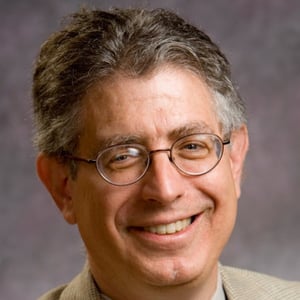
Sho Sato Professor of Law; Faculty Director, Center for Law, Energy, & the Environment, University of California, Berkeley
Dan Farber is the Sho Sato Professor of Law at the University of California, Berkeley. He is also the Co-Director of the Center for Law, Energy, and the Environment. Professor Farber serves on the editorial board of Foundation Press. He is a member of the American Academy of Arts and Sciences and a Life Member of the American Law Institute. He is the editor of Issues in Legal Scholarship.
Professor Farber is a graduate of the University of Illinois, where he earned his B.A., M.A., and J.D. degrees. He graduated, summa cum laude, from the College of Law, where he was the class valedictorian and served as Editor-in-Chief of the University of Illinois Law Review. After graduation from law school, he was a law clerk for Judge Philip W. Tone of the United States Court of Appeals for the Seventh Circuit and then for Justice John Paul Stevens of the Supreme Court of the United States. Professor Farber practiced law with Sidley & Austin, where he primarily worked on energy issues, before joining the University of Illinois College of Law faculty in 1978. He was a member of the University of Minnesota Law School faculty from1981 to 2002, where he was the McKnight Presidential Professor of Public Law. He also has been a Visiting Professor at the Stanford Law School, Harvard Law School, and the University of Chicago Law School.
Among Professor Farber’s eighteen books are RESEARCH HANDBOOK ON PUBLIC CHOICE AND PUBLIC LAW (Elgar 2010) (with A. O’Connell); JUDGMENT CALLS: POLITICS AND PRINCIPLE IN CONSTITUTIONAL LAW (Oxford University Press 2008) (with S. Sherry); RETAINED BY THE PEOPLE: THE “SILENT” NINTH AMENDMENT AND THE RIGHTS AMERICANS DON’T KNOW THEY HAVE (Basic Books 2007); and LINCOLN’S CONSTITUTION (University of Chicago Press 2003).
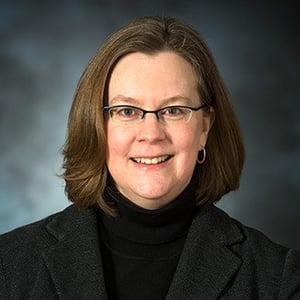
Associate Dean for Research and Intellectual Life, McKnight Presidential Professor in Law, Distinguished McKnight University Professor, Harlan Albert Rogers Professor in Law, Associate Director, Corporate Institute, University of Minnesota Law School
Professor Kristin E. Hickman is the McKnight Presidential Professor in Law, a Distinguished McKnight University Professor, and Harlan Albert Rogers Professor in Law at the University of Minnesota Law School. She also has taught at Harvard Law School and Northwestern University School of Law. Professor Hickman teaches and writes primarily in the areas of administrative law, tax administration, and statutory interpretation. Her articles on these topics have appeared in the Columbia Law Review, Cornell Law Review, Virginia Law Review, Duke Law Journal, and other publications. She also co-authors the Administrative Law Treatise with Richard J. Pierce, Jr., and a casebook on federal administrative law with Pierce and Christopher J. Walker. Her scholarly work has been cited several times in opinions of the United States Supreme Court as well as regularly in lower court judicial opinions and court briefs.
In 2018-19, Professor Hickman served as Special Adviser to the Administrator of the Office of Information and Regulatory Affairs in Washington, D.C. She presently serves as a Senior Fellow, and previously served as a public member and chair of the judicial review committee, for the Administrative Conference of the United States. She also is a Fellow of the American College of Tax Counsel.
Professor Hickman received her B.S. degree in business administration with a concentration in accounting and a secondary major in history from Trinity University in San Antonio, Texas. After practicing for several years as a certified public accountant, Professor Hickman earned her J.D. degree, magna cum laude, from Northwestern University School of Law, where she was awarded the Raoul Berger Prize and the Lowden Wigmore Prize for her scholarly writings. Following law school, Professor Hickman clerked for The Honorable David B. Sentelle of the United States Court of Appeals for the District of Columbia Circuit and practiced law as an associate with the Chicago office of Skadden, Arps, Slate, Meagher & Flom, concentrating on corporate and international tax transactions and matters.
Director, Multinational Business Services, Center for Regulatory Effectiveness
Jim Tozzi is a former regulatory official of the United States Office of Management and Budget (OMB). He currently is the head of the Center for Regulatory Effectiveness, an industry-supported organization that describes itself as a "regulatory watchdog."
Jim Tozzi got his Ph.D. in Economics and Business Administration from the University of Florida. After some time playing jazz as a self-described “bottom-tier” musician in New Orleans, Mr. Tozzi began working in Washington in 1964 at the Department of Defense, Office of the Secretary of the Army, where he worked on budget and strategic response issues. Mr. Tozzi served as an officer in the US Army Corps of Engineers.
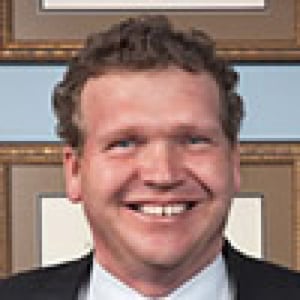
Principal and CEO, Borgelt Law
Roger B. Borgelt is a highly regarded Austin lawyer with 24 years’ experience primarily in the practice of environmental, energy, administrative, utility and professional licensure law. He is listed in Best Lawyers in America® and Texas' Best Lawyers. His firm, Borgelt Law, is listed in Best Law Firms byU.S. News & World Report -- Best Lawyers®. He represents individuals, landowners, suburban areas, businesses, political subdivisions and large institutions before state and federal regulatory agencies, the courts, local governments and the Texas Legislature with consistently favorable and unprecedented results.
Mr. Borgelt is licensed to practice law in Texas and admitted to practice before the U.S. District Court, Western District of Texas. Prior to establishing Borgelt Law in June 2010, he held senior positions in Texas government and excelled as partner at a major regional litigation firm where he led an extensive administrative and regulatory practice focused on environmental, energy, local government, annexation, zoning and permitting, land use and property law matters. He also developed the firm's ethics advising, campaign finance and election law counsel as well as experienced defense of Deceptive Trade Practices Act claims and advising on Texas Public Information Act requests.
His law practice has received high profile media coverage for the past two years through his representation of Homeowners United for Rate Fairness in its appeal of Austin Energy's rate increase to the Texas Public Utility Commission, which resulted in an unprecedented rate discount for his client's suburban customers and cost the City of Austin $1.6 million to defend.
Prior to entering private practice in 2006, he served for seven years in the Office of the Attorney General as Deputy Chief of the Consumer Protection Division and then as an Assistant Attorney General, actively defending consumer interests in the area of deceptive trade, and where he represented major public entities, including Texas A&M University and The UT System, in major gas and electric utilities matters which resulted in significant multi-million dollar savings annually for these institutions and the citizens of Texas. During this period as Assistant Attorney General he appeared frequently before the Texas Public Utility Commission, Railroad Commission and Federal Communications Commission in rulemakings and contested case hearings and appeals, often winning favorable rulings which furthered the Texas public interest and business climate.
He began his law practice as a law clerk at the Railroad Commission in 1989 before becoming a national authority in pesticide law and policy matters as general counsel of a small state environmental agency. During these earliest years of his law practice, he worked extensively with state and federal regulators and legislative and congressional committees examining and resolving complex environmental policy and impacts, including that of NAFTA on states bordering Mexico.
Roger attended UT as a National Merit Scholar. He earned a Bachelor of Arts Degree in Psychology from UT in 1984 before graduating from The University of Texas School of Law in 1988. He is a member of the UT Chancellor's Council, UT Littlefield Society and UT Longhorn Foundation. A lifelong Austinite, he and his wife, Mary Ellen, are active in the Austin community.
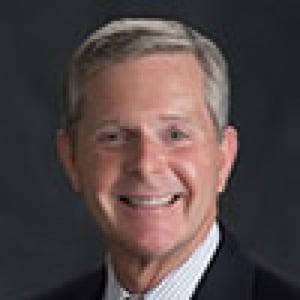
State Representative, District 61, Texas House of Representatives
As State Representative for the 61st District, Phil King represents the people of Parker and Wise counties in the Texas Legislature. He has earned a reputation as a principle-driven conservative who consistently provides key leadership in passing some of Texas’ most sweeping public policy legislation.
King currently serves as Chair of the State and Federal Power and Responsibility Committee. He also serves on the Energy Resources Committee, Environmental Regulation Committee and the Select Committee on Federal Environmental Regulation.
King serves on the National Board of Directors for the American Legislative Exchange Council and was the 2015 National Chair. He also Chairs ALEC’s Center for Innovation and Technology. King also serves on the Board of Directors of the Texas Conservative Coalition Research Institute.
As chair of the Regulated Industries Committee for three legislative sessions, he worked to promote competition in the electricity and telecommunications markets. King is a frequent speaker on public policy issues impacting Texas.
King serves as a Colonel in the Texas State Guard, one of three branches of the Military Forces of the State of Texas. The Guard assists and augments the Texas National Guard and Texas civil authorities during state emergencies and in homeland security.
He is a practicing attorney with the firm of Eggleston King, LLP. Representative King and his family are active members of Trinity Bible Church. Phil and his wife Terry are the proud parents of six children, eight granddaughters and four grandsons.
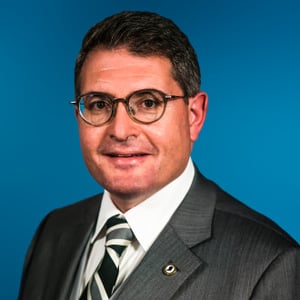
Co-Chairman, The Federalist Society for Law and Public Policy Studies
Leonard is Co-Chairman and former Executive Vice President of the Federalist Society, joining the organization over 25 years ago. Since that time he has been instrumental in helping the organization top 70,000, focusing on the growth of lawyers membership, operations and activities advancing limited, constitutional government. In addition to his work at the Society, Leonard has advised President Trump on judicial selection, assisted with the Gorsuch and Kavanaugh Supreme Court selection and confirmation process, and served as a member of the transition team. He also organized the outside coalition efforts in support of the Roberts and Alito U.S. Supreme Court confirmations. Leonard was appointed by President George W. Bush to three terms to the U.S. Commission on International Religious Freedom as chairman. He was also a U.S. Delegate to the UN Council and UN Commission on Human Rights during the Bush Administration. Leonard was the recipient of the 2009 Bradley Prize, along with the other founders and directors of the Federalist Society, for his work in advancing freedom and the rule of law. He is the coeditor of Presidential Leadership: Rating the Best and the Worst in the White House, as well as the author of opinion editorials in the New York Times,The Wall Street Journal, and Washington Post. Leonard holds degrees from Cornell University and Cornell Law School. He presently resides in Northern Virginia, where he and his wife Sally have raised their seven children.
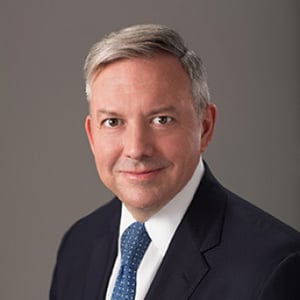
First Court of Appeals, Texas
Michael Massengale was appointed to the First Court of Appeals by Governor Rick Perry on June 15, 2009. He was elected in 2010 and re-elected to a full term in 2012.
Justice Massengale is board certified in civil appellate law by the Texas Board of Legal Specialization. Before joining the court, he was a partner in the trial department at Baker Botts L.L.P. where he specialized in commercial litigation involving corporate mergers and acquisitions, fraudulent transfers, securities fraud, and antitrust. He has also tried a number of personal injury and property damage lawsuits to jury verdicts.
He graduated with honors from The University of Texas School of Law. He earned the Outstanding Editor Award from the Texas Law Review, having published his student note, served as Book Review Editor, and edited the ninth edition of Texas Rules of Form. After law school, he clerked for Judge Harold R. DeMoss, Jr. of the United States Court of Appeals for the Fifth Circuit. He is a graduate of Dartmouth College and an Eagle Scout.
Among other civic and professional activities, Justice Massengale serves as a commissioner on the Permanent Judicial Commission For Children, Youth & Families where he chairs the Training Committee and oversees the Commission's judicial and attorney training programs. He is an elected member of the American Law Institute. He also curates a blog on the history of the Texas Constitution, atwww.texconst.wordpress.com. His wife, Lindsey, is a board-certified ophthalmologist specializing in diseases of the vitreous and retina.
Andrew P. Morriss is Dean and Anthony G. Buzbee Dean's Endowed Chairholder at Texas A&M School of Law and a member of the Board of Advisors for the Center on Culture and Civil Society at the Independent Institute. He is also a Research Fellow at the Center for Labor and Employment Law at New York University; Senior Fellow at the Property & Environment Research Center; Senior Scholar at the Mercatus Center at George Mason University; and a regular Visiting Professor at Universidad Francisco Marroquín, in Guatemala. Prior to coming to the University of Illinois, he served as Galen J. Roush Professor of Business Law and Regulation at Case Western Reserve University.
He received his A.B. degree from Princeton University, his J.D. and a masters degree in public affairs from the University of Texas at Austin, and his Ph.D. (economics) from the Massachusetts Institute of Technology. After law school he clerked for U.S. District Judge Barefoot Sanders in the Northern District of Texas and worked for two years at Texas Rural Legal Aid in Hereford and Plainview, Texas.
Professor Morriss is the author or coauthor of more than forty book chapters and scholarly articles, and he is the co-editor of Cross-Border Human Resources, Labor and Employment Issues: Proceedings of the New York University 54th Annual Conference on Labor (with Samuel Estreicher); Property Stories (with Gerald Korngold); and The Common Law and the Environment (with Roger Meiners). He is the author of the book, Regulation by Litigation (with Bruce Yandle and Andrew Dorchak), and he also regularly writes for The Freeman: Ideas on Liberty and Books & Culture: A Christian Review.
Professor Morriss was recently named one of the Reporters for the Restatement of Employment Law by the American Law Institute (ALI), Senior Fellow for the Institute for Energy Research, and a Reporter for the Restatement of Employment Law by the American Law Institute.
Council Member, District 6, Austin
Council Member Don Zimmerman is a software engineer who is best known for his efforts to fight various tax proposals. In 2002, Zimmerman was elected president of the Northwest Austin Municipal Utility District (MUD) No. 1, where he waged a legal battle against a practice that he maintained was unlawful—combining City property taxes and (MUD) property taxes. Zimmerman won when a court sided with the MUD, thereby successfully defeating the City and the City’s additional tax. In that process, property taxpayers in that area saved $18 million.
Soon thereafter, Zimmerman founded the Travis County Taxpayers Union Special Political Action Committee to fight various local tax proposals. He was extremely active in defeating the 2012 proposed Housing Bonds with nearly 120,000 voters turning out. On December 16, 2014, Zimmerman was elected to District 6, the single-member District that covers Northwest Austin in the City’s new 10-1 Council structure. He was sworn into office on January 6, 2015. He drew a two-year term in the Council lottery and, therefore, will be up for re-election in November of 2016.
Don Zimmerman, a 5th generation Texan, was born minutes from the Alamo in San Antonio. Zimmerman credits his constant battle for liberty and equity under the law to the men and women who fought and died at the Alamo. Zimmerman graduated from Texas A&M with a B.S. in Mechanical Engineering and went on to receive his M.S. the following year. He has lived in Canyon Creek Subdivision of Northwest Austin since 2000. He is married to Jennifer W. Zimmerman.
Principal and CEO, Borgelt Law
Roger B. Borgelt is a highly regarded Austin lawyer with 24 years’ experience primarily in the practice of environmental, energy, administrative, utility and professional licensure law. He is listed in Best Lawyers in America® and Texas' Best Lawyers. His firm, Borgelt Law, is listed in Best Law Firms byU.S. News & World Report -- Best Lawyers®. He represents individuals, landowners, suburban areas, businesses, political subdivisions and large institutions before state and federal regulatory agencies, the courts, local governments and the Texas Legislature with consistently favorable and unprecedented results.
Mr. Borgelt is licensed to practice law in Texas and admitted to practice before the U.S. District Court, Western District of Texas. Prior to establishing Borgelt Law in June 2010, he held senior positions in Texas government and excelled as partner at a major regional litigation firm where he led an extensive administrative and regulatory practice focused on environmental, energy, local government, annexation, zoning and permitting, land use and property law matters. He also developed the firm's ethics advising, campaign finance and election law counsel as well as experienced defense of Deceptive Trade Practices Act claims and advising on Texas Public Information Act requests.
His law practice has received high profile media coverage for the past two years through his representation of Homeowners United for Rate Fairness in its appeal of Austin Energy's rate increase to the Texas Public Utility Commission, which resulted in an unprecedented rate discount for his client's suburban customers and cost the City of Austin $1.6 million to defend.
Prior to entering private practice in 2006, he served for seven years in the Office of the Attorney General as Deputy Chief of the Consumer Protection Division and then as an Assistant Attorney General, actively defending consumer interests in the area of deceptive trade, and where he represented major public entities, including Texas A&M University and The UT System, in major gas and electric utilities matters which resulted in significant multi-million dollar savings annually for these institutions and the citizens of Texas. During this period as Assistant Attorney General he appeared frequently before the Texas Public Utility Commission, Railroad Commission and Federal Communications Commission in rulemakings and contested case hearings and appeals, often winning favorable rulings which furthered the Texas public interest and business climate.
He began his law practice as a law clerk at the Railroad Commission in 1989 before becoming a national authority in pesticide law and policy matters as general counsel of a small state environmental agency. During these earliest years of his law practice, he worked extensively with state and federal regulators and legislative and congressional committees examining and resolving complex environmental policy and impacts, including that of NAFTA on states bordering Mexico.
Roger attended UT as a National Merit Scholar. He earned a Bachelor of Arts Degree in Psychology from UT in 1984 before graduating from The University of Texas School of Law in 1988. He is a member of the UT Chancellor's Council, UT Littlefield Society and UT Longhorn Foundation. A lifelong Austinite, he and his wife, Mary Ellen, are active in the Austin community.
State Representative, District 61, Texas House of Representatives
As State Representative for the 61st District, Phil King represents the people of Parker and Wise counties in the Texas Legislature. He has earned a reputation as a principle-driven conservative who consistently provides key leadership in passing some of Texas’ most sweeping public policy legislation.
King currently serves as Chair of the State and Federal Power and Responsibility Committee. He also serves on the Energy Resources Committee, Environmental Regulation Committee and the Select Committee on Federal Environmental Regulation.
King serves on the National Board of Directors for the American Legislative Exchange Council and was the 2015 National Chair. He also Chairs ALEC’s Center for Innovation and Technology. King also serves on the Board of Directors of the Texas Conservative Coalition Research Institute.
As chair of the Regulated Industries Committee for three legislative sessions, he worked to promote competition in the electricity and telecommunications markets. King is a frequent speaker on public policy issues impacting Texas.
King serves as a Colonel in the Texas State Guard, one of three branches of the Military Forces of the State of Texas. The Guard assists and augments the Texas National Guard and Texas civil authorities during state emergencies and in homeland security.
He is a practicing attorney with the firm of Eggleston King, LLP. Representative King and his family are active members of Trinity Bible Church. Phil and his wife Terry are the proud parents of six children, eight granddaughters and four grandsons.
Co-Chairman, The Federalist Society for Law and Public Policy Studies
Leonard is Co-Chairman and former Executive Vice President of the Federalist Society, joining the organization over 25 years ago. Since that time he has been instrumental in helping the organization top 70,000, focusing on the growth of lawyers membership, operations and activities advancing limited, constitutional government. In addition to his work at the Society, Leonard has advised President Trump on judicial selection, assisted with the Gorsuch and Kavanaugh Supreme Court selection and confirmation process, and served as a member of the transition team. He also organized the outside coalition efforts in support of the Roberts and Alito U.S. Supreme Court confirmations. Leonard was appointed by President George W. Bush to three terms to the U.S. Commission on International Religious Freedom as chairman. He was also a U.S. Delegate to the UN Council and UN Commission on Human Rights during the Bush Administration. Leonard was the recipient of the 2009 Bradley Prize, along with the other founders and directors of the Federalist Society, for his work in advancing freedom and the rule of law. He is the coeditor of Presidential Leadership: Rating the Best and the Worst in the White House, as well as the author of opinion editorials in the New York Times,The Wall Street Journal, and Washington Post. Leonard holds degrees from Cornell University and Cornell Law School. He presently resides in Northern Virginia, where he and his wife Sally have raised their seven children.
First Court of Appeals, Texas
Michael Massengale was appointed to the First Court of Appeals by Governor Rick Perry on June 15, 2009. He was elected in 2010 and re-elected to a full term in 2012.
Justice Massengale is board certified in civil appellate law by the Texas Board of Legal Specialization. Before joining the court, he was a partner in the trial department at Baker Botts L.L.P. where he specialized in commercial litigation involving corporate mergers and acquisitions, fraudulent transfers, securities fraud, and antitrust. He has also tried a number of personal injury and property damage lawsuits to jury verdicts.
He graduated with honors from The University of Texas School of Law. He earned the Outstanding Editor Award from the Texas Law Review, having published his student note, served as Book Review Editor, and edited the ninth edition of Texas Rules of Form. After law school, he clerked for Judge Harold R. DeMoss, Jr. of the United States Court of Appeals for the Fifth Circuit. He is a graduate of Dartmouth College and an Eagle Scout.
Among other civic and professional activities, Justice Massengale serves as a commissioner on the Permanent Judicial Commission For Children, Youth & Families where he chairs the Training Committee and oversees the Commission's judicial and attorney training programs. He is an elected member of the American Law Institute. He also curates a blog on the history of the Texas Constitution, atwww.texconst.wordpress.com. His wife, Lindsey, is a board-certified ophthalmologist specializing in diseases of the vitreous and retina.
Andrew P. Morriss is Dean and Anthony G. Buzbee Dean's Endowed Chairholder at Texas A&M School of Law and a member of the Board of Advisors for the Center on Culture and Civil Society at the Independent Institute. He is also a Research Fellow at the Center for Labor and Employment Law at New York University; Senior Fellow at the Property & Environment Research Center; Senior Scholar at the Mercatus Center at George Mason University; and a regular Visiting Professor at Universidad Francisco Marroquín, in Guatemala. Prior to coming to the University of Illinois, he served as Galen J. Roush Professor of Business Law and Regulation at Case Western Reserve University.
He received his A.B. degree from Princeton University, his J.D. and a masters degree in public affairs from the University of Texas at Austin, and his Ph.D. (economics) from the Massachusetts Institute of Technology. After law school he clerked for U.S. District Judge Barefoot Sanders in the Northern District of Texas and worked for two years at Texas Rural Legal Aid in Hereford and Plainview, Texas.
Professor Morriss is the author or coauthor of more than forty book chapters and scholarly articles, and he is the co-editor of Cross-Border Human Resources, Labor and Employment Issues: Proceedings of the New York University 54th Annual Conference on Labor (with Samuel Estreicher); Property Stories (with Gerald Korngold); and The Common Law and the Environment (with Roger Meiners). He is the author of the book, Regulation by Litigation (with Bruce Yandle and Andrew Dorchak), and he also regularly writes for The Freeman: Ideas on Liberty and Books & Culture: A Christian Review.
Professor Morriss was recently named one of the Reporters for the Restatement of Employment Law by the American Law Institute (ALI), Senior Fellow for the Institute for Energy Research, and a Reporter for the Restatement of Employment Law by the American Law Institute.
Council Member, District 6, Austin
Council Member Don Zimmerman is a software engineer who is best known for his efforts to fight various tax proposals. In 2002, Zimmerman was elected president of the Northwest Austin Municipal Utility District (MUD) No. 1, where he waged a legal battle against a practice that he maintained was unlawful—combining City property taxes and (MUD) property taxes. Zimmerman won when a court sided with the MUD, thereby successfully defeating the City and the City’s additional tax. In that process, property taxpayers in that area saved $18 million.
Soon thereafter, Zimmerman founded the Travis County Taxpayers Union Special Political Action Committee to fight various local tax proposals. He was extremely active in defeating the 2012 proposed Housing Bonds with nearly 120,000 voters turning out. On December 16, 2014, Zimmerman was elected to District 6, the single-member District that covers Northwest Austin in the City’s new 10-1 Council structure. He was sworn into office on January 6, 2015. He drew a two-year term in the Council lottery and, therefore, will be up for re-election in November of 2016.
Don Zimmerman, a 5th generation Texan, was born minutes from the Alamo in San Antonio. Zimmerman credits his constant battle for liberty and equity under the law to the men and women who fought and died at the Alamo. Zimmerman graduated from Texas A&M with a B.S. in Mechanical Engineering and went on to receive his M.S. the following year. He has lived in Canyon Creek Subdivision of Northwest Austin since 2000. He is married to Jennifer W. Zimmerman.
Senior Attorney, Pacific Legal Foundation
Chris Kieser practices in PLF’s property rights and equality before the law practice groups.
His property rights clients include Cedar Point Nursery, which challenged a California regulation requiring them to allow union organizers to invade their private property, as well as Randall and Kimberley Pavlock, who are fighting back against Indiana’s beachfront land grab along Lake Michigan.
Under equality before the law, Chris represents coalitions of Asian-American parents challenging discriminatory admissions policies for selective K-12 schools in New York City; Montgomery County, Maryland; and Fairfax County, Virginia. He also represents a parent organization in Connecticut challenging a racial quota that prevents many Black and Hispanic students from enrolling at the state’s magnet schools.
Chris has published law review articles in the William & Mary Environmental Law Review and the Federalist Society Review. His op-eds have appeared in the New York Daily News, National Review, The Blaze, the Daily Journal, and SCOTUSblog.
Chris clerked for the Honorable Daniel A. Manion of the United States Court of Appeals for the Seventh Circuit and the Honorable Thomas D. Schroeder of the United States District Court for the Middle District of North Carolina. He holds a B.A., cum laude, from the University of Notre Dame, and graduated magna cum laude from Notre Dame Law School in 2013. At Notre Dame, he was an articles editor of the Notre Dame Law Review.
Growing up on Long Island, Chris developed a deep passion for limited government and individual liberty, arguing with his more numerous progressive classmates. This experience made him deeply skeptical that government tinkering at the expense of individual rights ever works, whether it be denying a property owner the use of his land or a student a seat at her desired school because of her race. He chose PLF because it is the national leader in litigation that furthers individual liberty.
When he’s not working, you’re likely to find Chris rooting for the Mets and Fighting Irish or debating some arcane point of law (because apparently that doesn’t happen enough at work).
Chris is currently licensed to practice in California and admitted to practice before the Supreme Court of the United States, the United States Courts of Appeal for the Second, Seventh, and Ninth Circuits, and the U.S. District Courts for the Eastern and Central Districts of California, the Northern District of Indiana, and the Northern District of Illinois.
Clinical Professor, University of Texas at Austin School of Law
Steven T. Collis researches and teaches on religion and law and other First Amendment topics. He is the founding faculty director of the Bech-Loughlin First Amendment Center and of Texas's Law & Religion Clinic. On the topic of religious freedom law, he is a sought-after speaker to academic and lay audiences across the United States, including foreign diplomats from countries in Europe, the Middle East, Asia, and South America on behalf of the United States State Department. He has been interviewed by and quoted in various news and media outlets, including The Deseret News, Bloomberg, The Washington Times, Law360, The Salt Lake Tribune, PBS, The Denver Business Journal, Law Week Colorado, CBN News, and numerous podcasts and television shows. His scholarly work has appeared in The Michigan Law Review, The Nebraska Law Review, The University of Denver Law Review Online, and in his book Deep Conviction, which brings to life the history of free exercise law in the United States for lay audiences.
Prior to joining Texas, Steven was the Olin-Darling Research Fellow in the Constitutional Law Center at Stanford Law School.
Earlier in his career, he was an equity partner at Holland & Hart LLP, where he chaired the firm’s nationwide religious institutions and First Amendment practice group and was a member of the firm's complex civil litigation and employment practice groups. He also taught religious liberty law at the University of Denver Sturm College of Law and clerked for Chief Judge Timothy M. Tymkovich of the United States Court of Appeals for the Tenth Circuit.
Steven graduated magna cum laude from the University of Michigan Law School, where he was elected to the Order of the Coif and served as an editor on The Michigan Law Review and The Michigan Journal of Race and Law. He also holds an M.F.A. in creative writing from Virginia Commonwealth University, where he served as the associate editor of the literary journal Blackbird. He completed his undergraduate studies, with university honors, at Brigham Young University.
Sho Sato Professor of Law; Faculty Director, Center for Law, Energy, & the Environment, University of California, Berkeley
Dan Farber is the Sho Sato Professor of Law at the University of California, Berkeley. He is also the Co-Director of the Center for Law, Energy, and the Environment. Professor Farber serves on the editorial board of Foundation Press. He is a member of the American Academy of Arts and Sciences and a Life Member of the American Law Institute. He is the editor of Issues in Legal Scholarship.
Professor Farber is a graduate of the University of Illinois, where he earned his B.A., M.A., and J.D. degrees. He graduated, summa cum laude, from the College of Law, where he was the class valedictorian and served as Editor-in-Chief of the University of Illinois Law Review. After graduation from law school, he was a law clerk for Judge Philip W. Tone of the United States Court of Appeals for the Seventh Circuit and then for Justice John Paul Stevens of the Supreme Court of the United States. Professor Farber practiced law with Sidley & Austin, where he primarily worked on energy issues, before joining the University of Illinois College of Law faculty in 1978. He was a member of the University of Minnesota Law School faculty from1981 to 2002, where he was the McKnight Presidential Professor of Public Law. He also has been a Visiting Professor at the Stanford Law School, Harvard Law School, and the University of Chicago Law School.
Among Professor Farber’s eighteen books are RESEARCH HANDBOOK ON PUBLIC CHOICE AND PUBLIC LAW (Elgar 2010) (with A. O’Connell); JUDGMENT CALLS: POLITICS AND PRINCIPLE IN CONSTITUTIONAL LAW (Oxford University Press 2008) (with S. Sherry); RETAINED BY THE PEOPLE: THE “SILENT” NINTH AMENDMENT AND THE RIGHTS AMERICANS DON’T KNOW THEY HAVE (Basic Books 2007); and LINCOLN’S CONSTITUTION (University of Chicago Press 2003).
Associate Dean for Research and Intellectual Life, McKnight Presidential Professor in Law, Distinguished McKnight University Professor, Harlan Albert Rogers Professor in Law, Associate Director, Corporate Institute, University of Minnesota Law School
Professor Kristin E. Hickman is the McKnight Presidential Professor in Law, a Distinguished McKnight University Professor, and Harlan Albert Rogers Professor in Law at the University of Minnesota Law School. She also has taught at Harvard Law School and Northwestern University School of Law. Professor Hickman teaches and writes primarily in the areas of administrative law, tax administration, and statutory interpretation. Her articles on these topics have appeared in the Columbia Law Review, Cornell Law Review, Virginia Law Review, Duke Law Journal, and other publications. She also co-authors the Administrative Law Treatise with Richard J. Pierce, Jr., and a casebook on federal administrative law with Pierce and Christopher J. Walker. Her scholarly work has been cited several times in opinions of the United States Supreme Court as well as regularly in lower court judicial opinions and court briefs.
In 2018-19, Professor Hickman served as Special Adviser to the Administrator of the Office of Information and Regulatory Affairs in Washington, D.C. She presently serves as a Senior Fellow, and previously served as a public member and chair of the judicial review committee, for the Administrative Conference of the United States. She also is a Fellow of the American College of Tax Counsel.
Professor Hickman received her B.S. degree in business administration with a concentration in accounting and a secondary major in history from Trinity University in San Antonio, Texas. After practicing for several years as a certified public accountant, Professor Hickman earned her J.D. degree, magna cum laude, from Northwestern University School of Law, where she was awarded the Raoul Berger Prize and the Lowden Wigmore Prize for her scholarly writings. Following law school, Professor Hickman clerked for The Honorable David B. Sentelle of the United States Court of Appeals for the District of Columbia Circuit and practiced law as an associate with the Chicago office of Skadden, Arps, Slate, Meagher & Flom, concentrating on corporate and international tax transactions and matters.
Director, Multinational Business Services, Center for Regulatory Effectiveness
Jim Tozzi is a former regulatory official of the United States Office of Management and Budget (OMB). He currently is the head of the Center for Regulatory Effectiveness, an industry-supported organization that describes itself as a "regulatory watchdog."
Jim Tozzi got his Ph.D. in Economics and Business Administration from the University of Florida. After some time playing jazz as a self-described “bottom-tier” musician in New Orleans, Mr. Tozzi began working in Washington in 1964 at the Department of Defense, Office of the Secretary of the Army, where he worked on budget and strategic response issues. Mr. Tozzi served as an officer in the US Army Corps of Engineers.
Laurence H. Silberman Chair in Constitutional Governance, American Enterprise Institute; Executive Director, Antonin Scalia Law School’s C. Boyden Gray Center for the Study of the Administrative State
Adam J. White is the Laurence H. Silberman Chair in Constitutional Governance and senior fellow at the American Enterprise Institute, where he focuses on the Supreme Court and the administrative state. He also directs the Antonin Scalia Law School’s C. Boyden Gray Center for the Study of the Administrative State.
He writes on regulation and constitutional government for a variety of publications. He practiced law in Washington, D.C., after clerking for the D.C. Circuit's Judge David Sentelle. He also has been chairman of the ABA's Administrative Law Section.
In 2021, he served on the Presidential Commission on the Supreme Court of the United States, where he criticized “Court packing” and other efforts to restructure the Supreme Court.
Principal and CEO, Borgelt Law
Roger B. Borgelt is a highly regarded Austin lawyer with 24 years’ experience primarily in the practice of environmental, energy, administrative, utility and professional licensure law. He is listed in Best Lawyers in America® and Texas' Best Lawyers. His firm, Borgelt Law, is listed in Best Law Firms byU.S. News & World Report -- Best Lawyers®. He represents individuals, landowners, suburban areas, businesses, political subdivisions and large institutions before state and federal regulatory agencies, the courts, local governments and the Texas Legislature with consistently favorable and unprecedented results.
Mr. Borgelt is licensed to practice law in Texas and admitted to practice before the U.S. District Court, Western District of Texas. Prior to establishing Borgelt Law in June 2010, he held senior positions in Texas government and excelled as partner at a major regional litigation firm where he led an extensive administrative and regulatory practice focused on environmental, energy, local government, annexation, zoning and permitting, land use and property law matters. He also developed the firm's ethics advising, campaign finance and election law counsel as well as experienced defense of Deceptive Trade Practices Act claims and advising on Texas Public Information Act requests.
His law practice has received high profile media coverage for the past two years through his representation of Homeowners United for Rate Fairness in its appeal of Austin Energy's rate increase to the Texas Public Utility Commission, which resulted in an unprecedented rate discount for his client's suburban customers and cost the City of Austin $1.6 million to defend.
Prior to entering private practice in 2006, he served for seven years in the Office of the Attorney General as Deputy Chief of the Consumer Protection Division and then as an Assistant Attorney General, actively defending consumer interests in the area of deceptive trade, and where he represented major public entities, including Texas A&M University and The UT System, in major gas and electric utilities matters which resulted in significant multi-million dollar savings annually for these institutions and the citizens of Texas. During this period as Assistant Attorney General he appeared frequently before the Texas Public Utility Commission, Railroad Commission and Federal Communications Commission in rulemakings and contested case hearings and appeals, often winning favorable rulings which furthered the Texas public interest and business climate.
He began his law practice as a law clerk at the Railroad Commission in 1989 before becoming a national authority in pesticide law and policy matters as general counsel of a small state environmental agency. During these earliest years of his law practice, he worked extensively with state and federal regulators and legislative and congressional committees examining and resolving complex environmental policy and impacts, including that of NAFTA on states bordering Mexico.
Roger attended UT as a National Merit Scholar. He earned a Bachelor of Arts Degree in Psychology from UT in 1984 before graduating from The University of Texas School of Law in 1988. He is a member of the UT Chancellor's Council, UT Littlefield Society and UT Longhorn Foundation. A lifelong Austinite, he and his wife, Mary Ellen, are active in the Austin community.
State Representative, District 61, Texas House of Representatives
As State Representative for the 61st District, Phil King represents the people of Parker and Wise counties in the Texas Legislature. He has earned a reputation as a principle-driven conservative who consistently provides key leadership in passing some of Texas’ most sweeping public policy legislation.
King currently serves as Chair of the State and Federal Power and Responsibility Committee. He also serves on the Energy Resources Committee, Environmental Regulation Committee and the Select Committee on Federal Environmental Regulation.
King serves on the National Board of Directors for the American Legislative Exchange Council and was the 2015 National Chair. He also Chairs ALEC’s Center for Innovation and Technology. King also serves on the Board of Directors of the Texas Conservative Coalition Research Institute.
As chair of the Regulated Industries Committee for three legislative sessions, he worked to promote competition in the electricity and telecommunications markets. King is a frequent speaker on public policy issues impacting Texas.
King serves as a Colonel in the Texas State Guard, one of three branches of the Military Forces of the State of Texas. The Guard assists and augments the Texas National Guard and Texas civil authorities during state emergencies and in homeland security.
He is a practicing attorney with the firm of Eggleston King, LLP. Representative King and his family are active members of Trinity Bible Church. Phil and his wife Terry are the proud parents of six children, eight granddaughters and four grandsons.
Co-Chairman, The Federalist Society for Law and Public Policy Studies
Leonard is Co-Chairman and former Executive Vice President of the Federalist Society, joining the organization over 25 years ago. Since that time he has been instrumental in helping the organization top 70,000, focusing on the growth of lawyers membership, operations and activities advancing limited, constitutional government. In addition to his work at the Society, Leonard has advised President Trump on judicial selection, assisted with the Gorsuch and Kavanaugh Supreme Court selection and confirmation process, and served as a member of the transition team. He also organized the outside coalition efforts in support of the Roberts and Alito U.S. Supreme Court confirmations. Leonard was appointed by President George W. Bush to three terms to the U.S. Commission on International Religious Freedom as chairman. He was also a U.S. Delegate to the UN Council and UN Commission on Human Rights during the Bush Administration. Leonard was the recipient of the 2009 Bradley Prize, along with the other founders and directors of the Federalist Society, for his work in advancing freedom and the rule of law. He is the coeditor of Presidential Leadership: Rating the Best and the Worst in the White House, as well as the author of opinion editorials in the New York Times,The Wall Street Journal, and Washington Post. Leonard holds degrees from Cornell University and Cornell Law School. He presently resides in Northern Virginia, where he and his wife Sally have raised their seven children.
First Court of Appeals, Texas
Michael Massengale was appointed to the First Court of Appeals by Governor Rick Perry on June 15, 2009. He was elected in 2010 and re-elected to a full term in 2012.
Justice Massengale is board certified in civil appellate law by the Texas Board of Legal Specialization. Before joining the court, he was a partner in the trial department at Baker Botts L.L.P. where he specialized in commercial litigation involving corporate mergers and acquisitions, fraudulent transfers, securities fraud, and antitrust. He has also tried a number of personal injury and property damage lawsuits to jury verdicts.
He graduated with honors from The University of Texas School of Law. He earned the Outstanding Editor Award from the Texas Law Review, having published his student note, served as Book Review Editor, and edited the ninth edition of Texas Rules of Form. After law school, he clerked for Judge Harold R. DeMoss, Jr. of the United States Court of Appeals for the Fifth Circuit. He is a graduate of Dartmouth College and an Eagle Scout.
Among other civic and professional activities, Justice Massengale serves as a commissioner on the Permanent Judicial Commission For Children, Youth & Families where he chairs the Training Committee and oversees the Commission's judicial and attorney training programs. He is an elected member of the American Law Institute. He also curates a blog on the history of the Texas Constitution, atwww.texconst.wordpress.com. His wife, Lindsey, is a board-certified ophthalmologist specializing in diseases of the vitreous and retina.
Andrew P. Morriss is Dean and Anthony G. Buzbee Dean's Endowed Chairholder at Texas A&M School of Law and a member of the Board of Advisors for the Center on Culture and Civil Society at the Independent Institute. He is also a Research Fellow at the Center for Labor and Employment Law at New York University; Senior Fellow at the Property & Environment Research Center; Senior Scholar at the Mercatus Center at George Mason University; and a regular Visiting Professor at Universidad Francisco Marroquín, in Guatemala. Prior to coming to the University of Illinois, he served as Galen J. Roush Professor of Business Law and Regulation at Case Western Reserve University.
He received his A.B. degree from Princeton University, his J.D. and a masters degree in public affairs from the University of Texas at Austin, and his Ph.D. (economics) from the Massachusetts Institute of Technology. After law school he clerked for U.S. District Judge Barefoot Sanders in the Northern District of Texas and worked for two years at Texas Rural Legal Aid in Hereford and Plainview, Texas.
Professor Morriss is the author or coauthor of more than forty book chapters and scholarly articles, and he is the co-editor of Cross-Border Human Resources, Labor and Employment Issues: Proceedings of the New York University 54th Annual Conference on Labor (with Samuel Estreicher); Property Stories (with Gerald Korngold); and The Common Law and the Environment (with Roger Meiners). He is the author of the book, Regulation by Litigation (with Bruce Yandle and Andrew Dorchak), and he also regularly writes for The Freeman: Ideas on Liberty and Books & Culture: A Christian Review.
Professor Morriss was recently named one of the Reporters for the Restatement of Employment Law by the American Law Institute (ALI), Senior Fellow for the Institute for Energy Research, and a Reporter for the Restatement of Employment Law by the American Law Institute.
Council Member, District 6, Austin
Council Member Don Zimmerman is a software engineer who is best known for his efforts to fight various tax proposals. In 2002, Zimmerman was elected president of the Northwest Austin Municipal Utility District (MUD) No. 1, where he waged a legal battle against a practice that he maintained was unlawful—combining City property taxes and (MUD) property taxes. Zimmerman won when a court sided with the MUD, thereby successfully defeating the City and the City’s additional tax. In that process, property taxpayers in that area saved $18 million.
Soon thereafter, Zimmerman founded the Travis County Taxpayers Union Special Political Action Committee to fight various local tax proposals. He was extremely active in defeating the 2012 proposed Housing Bonds with nearly 120,000 voters turning out. On December 16, 2014, Zimmerman was elected to District 6, the single-member District that covers Northwest Austin in the City’s new 10-1 Council structure. He was sworn into office on January 6, 2015. He drew a two-year term in the Council lottery and, therefore, will be up for re-election in November of 2016.
Don Zimmerman, a 5th generation Texan, was born minutes from the Alamo in San Antonio. Zimmerman credits his constant battle for liberty and equity under the law to the men and women who fought and died at the Alamo. Zimmerman graduated from Texas A&M with a B.S. in Mechanical Engineering and went on to receive his M.S. the following year. He has lived in Canyon Creek Subdivision of Northwest Austin since 2000. He is married to Jennifer W. Zimmerman.
Shareholder, Jackson Lewis PC
Paul DeCamp is a Shareholder in the Washington, D.C. Region office of Jackson Lewis P.C. and leader of the firm’s Wage and Hour Practice Group. His practice focuses exclusively on management-side wage and hour law.
Mr. DeCamp devotes much of his practice to complex litigation, including class, collective, and hybrid actions. He has served as lead or co-counsel in scores of class and putative class cases around the country involving such industries as restaurants, pharmaceutical sales, financial services, retail, medical supplies, security, health care, information technology, and aerospace. Mr. DeCamp also defends federal and state agency investigations, conducts preventive compliance reviews, and provides day-to-day advice and counsel regarding such issues as exempt/non-exempt classification, permissible pay deductions, measuring working time, regular rate calculations for premium overtime pay, determining proper pay and duties for tipped employees, complying with state laws concerning meal and rest periods, and independent contractor status. He has provided extensive wage and hour guidance in a variety of industries including restaurants and hospitality, retail, wholesale distribution, health care, financial services, oil and gas, and government contracting.
Before joining Jackson Lewis, Mr. DeCamp served as Administrator of the U.S. Department of Labor’s Wage and Hour Division, the chief federal officer responsible for interpreting and enforcing the Nation’s wage and hour laws on behalf of roughly 135 million workers in 7.3 million workplaces around the country. Appointed by the President, he was in charge of a federal agency with close to 1,300 employees in more than 220 offices nationwide, operating on an annual budget of more than $170 million.
Mr. DeCamp has testified in Congress on a variety of wage and hour topics, most recently in 2014. He is a frequent speaker at seminars and conferences across the country, as well as an author of numerous articles and book chapters regarding wage and hour law and litigation. He is a member of the American Employment Law Council and the editorial advisory board for Thompson Publishing Group’s four Fair Labor Standards Act publications. Since 2011, Mr. DeCamp has been listed as one of the country's leading labor and employment lawyers in Chambers USA: America's Leading Lawyers for Business. He has also been selected for inclusion in Virginia Super Lawyers since 2013, after having been listed twice in Virginia Super Lawyers Rising Stars. OS Restaurant Partners (now Bloomin’ Brands), which operates Outback Steakhouse and Carrabba’s Italian Grill, among other restaurant concepts, has twice recognized Mr. DeCamp’s team at Jackson Lewis as “Purveyor of the Year.”
Mr. DeCamp received his A.B. in Government, magna cum laude, from Harvard College in 1992. In 1995, he earned his J.D. from the Columbia University School of Law, where he was a Notes Editor for the Columbia Law Review and the Director of the First-Year Moot Court Program. After law school, he clerked for the Honorable Alan E. Norris of the U.S. Court of Appeals for the Sixth Circuit.
Professor of Law, Antonin Scalia Law School, George Mason University
Eric R. Claeys is Professor of Law at the Antonin Scalia Law School, George Mason University. He has written widely in the fields of property, private law, and constitutional law. Professor Claeys’s current research interests focus on flourishing- and labor-based natural rights justifications for property—in American property theory, in intellectual property, and in contemporary regulation of shale gas exploration and hydraulic fracturing. He is a member of the American Law Institute, he serves on the ALI’s Members’ Consultative Group for the first Restatement of Copyright, and he also serves as an adviser to the Restatement (Fourth) of the Law of Property.
Professor Claeys received his JD from the University of Southern California Gould School of Law. He received his AB from Princeton University, and he is a former visiting fellow and current member of Princeton’s Politics Department’s James Madison Program in American Ideals and Institutions. After law school, Professor Claeys clerked for the Hon. Melvin Brunetti, U.S. Court of Appeals for the Ninth Circuit, and the Hon. William H. Rehnquist, Chief Justice of the United States.
Professor Claeys’s main teaching interests include Property, Torts, Jurisprudence, and Intellectual Property. In recent years, he has also taught Water Law, Remedies, Estates and Trusts, Trade Secrecy, Constitutional Law, Torts, and Oil and Gas law. Spring 2018, he is teaching Torts and Jurisprudence as a Visiting Professor at Harvard Law School.
Partner, Bracewell & Giuliani LLP
Jason Hutt advises energy companies, manufacturers, project developers, investor groups and financial institutions about environmental risks and liabilities associated with regulatory compliance, project development, congressional investigations, internal investigations and corporate transactions. He also assists in the defense of administrative, civil and criminal proceedings involving environmental enforcement agencies at the federal and state levels.
Mr. Hutt counsels clients on current and upcoming regulatory developments at the nexus of environmental and energy policy, with focused attention on natural gas development (including hydraulic fracturing), responses to the Deepwater Horizon incident, and climate change. He is nationally recognized for his work on shale gas issues on behalf of producers, oil field services companies, hedge funds and technology developers.
Mr. Hutt routinely is involved in identifying, evaluating and managing environmental risks and opportunities associated with corporate acquisitions, divestitures and financings, including environmental due diligence, purchase and sale agreement negotiation, and post-closing integration efforts. Within the energy sector, his representative experience includes transactions involving petroleum refineries, liquefied natural gas (LNG) import terminals, renewable energy projects (e.g., wind, biofuels and geothermal), natural gas processing plants, cogeneration facilities, oil and gas wells, pipelines, propane retailers and synfuel facilities.
Representative work in other sectors involves operations and industries such as chemical manufacturers, oil field services, independent tank terminal operators, glass manufacturing, textiles manufacturing, uranium mining, industrial cleaning operations, hazardous waste management facilities, paper and plastic manufacturing facilities, and medical equipment manufacturing facilities.
Mr. Hutt performs environmental risk evaluations and advises on permit strategy and contract negotiation in relation to project development. His most recent work has involved onshore and offshore LNG import terminals, highway expansions, coal-fired power plant siting on tribal lands, utility privatizations at military bases, international undersea pipelines, interstate undersea electric transmission cables and a pump-storage project.
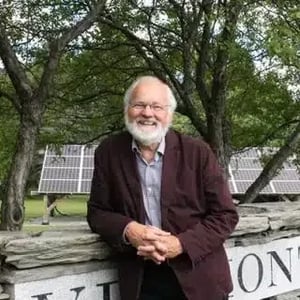
Professor of Law Emeritus; Senior Fellow for Climate Policy, Environmental Law Center, Vermont Law School
Patrick A. Parenteau is Emeritus Professor of Law and Senior Fellow for Climate Policy in the Environmental Law Center at Vermont Law School. He previously served as Director of the Environmental Law Center and was the founding director of the EAC (formerly the Environmental and Natural Resources Law Clinic) in 2004.
Professor Parenteau has an extensive background in environmental and natural resources law. His previous positions include Vice President for Conservation with the National Wildlife Federation in Washington, DC (1976-1984); Regional Counsel to the New England Regional Office of the EPA in Boston (1984-1987); Commissioner of the Vermont Department of Environmental Conservation (1987-1989); and Senior Counsel with the Perkins Coie law firm in Portland, Oregon (1989-1993).
Professor Parenteau has been involved in drafting, litigating, implementing, teaching, and writing about environmental law and policy for over three decades. His current focus is on confronting the profound challenges of climate change through his teaching, publishing, public speaking and litigation.
Professor Parenteau is a Fulbright US Scholar and a Fellow in the American College of Environmental Lawyers. In 2005 he received the National Wildlife Federation’s Conservation Achievement Award in recognition of his contributions to wildlife conservation and environmental education. In 2016 he received the Kerry Rydberg Award for excellence in public interest environmental law.
Professor Parenteau holds a B.S. from Regis University, a J.D. from Creighton University, and an LLM in Environmental Law from the George Washington U.

How Should "Administrative Law" Be Taught Today? - Podcast
Adam White, Daniel Farber, Kristin E. Hickman, Jim Tozzi
The growing role of the administrative agencies in American government is mirrored by a growing...
How Should "Administrative Law" Be Taught Today?
TeleforumLocal Control or Abdication of Individual Rights?
Roger Borgelt, Phil King, Leonard A. Leo, Michael C. Massengale, Andrew P. Morriss, Don Zimmerman
A growing number of Texas municipalities are passing so-called "nanny state" restrictions and regulations that may...
Local Control or Abdication of Individual Rights?
Roger Borgelt, Phil King, Leonard A. Leo, Michael C. Massengale, Andrew P. Morriss, Don Zimmerman
A growing number of Texas municipalities are passing so-called "nanny state" restrictions and regulations that may...
Local Control or Abdication of Individual Rights?
Second Annual Texas Chapters Conference
Austin, TXFinding the Denominator in Regulatory Takings Cases: A Preview of Murr v. Wisconsin
Christopher M. Kieser
Note from the Editor: This article discusses Murr v. Wisconsin, a regulatory takings case that the...
Who Needs Congress?: The Labor Department’s Rulemaking and Sub-Regulatory Efforts
Cincinnati, OhioStormans v. Wiesman: Paths to Strict Scrutiny in Religious Free Exercise Cases
Steven T. Collis
Note from the Editor: This article is about Stormans v. Wiesman, a case from the 9th...
Topics
President Obama Issues Competition Executive Order
President Obama issued a new executive order on Friday aimed at promoting competitive markets. Competition...
Drilling for Solutions: A Symposium
Vermont Student Chapter
South Royalton, VT