
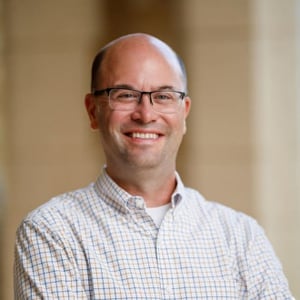
Paul J. Schierl Professor of Law, University of Notre Dame Law School
Professor Richard W. Garnett teaches and writes in the areas of constitutional law, criminal law, the First Amendment, and law and religion. He is a leading authority on questions and debates regarding religious freedom and church-state relations, and is the founding director of Notre Dame Law School’s Program on Church, State, and Society.
Garnett clerked for the late Chief Justice of the United States, William H. Rehnquist, and also for the late Chief Judge of the United States Court of Appeals for the Eighth Circuit, Richard S. Arnold. He earned his J.D. from Yale Law School in 1995 and his B.A., summa cum laude, from Duke University in 1990. He joined the faculty in 1999 after practicing law in Washington, D.C. with Miller, Cassidy, Larroca & Lewin.

Judge, United States Court of Appeals, Third Circuit
Judge Hardiman was appointed to the United States Court of Appeals for the Third Circuit on January 9, 2007 and was confirmed by the Senate (95-0) on March 15, 2007. Prior to becoming an appellate judge, Judge Hardiman served as a trial judge on the United States District Court for the Western District of Pennsylvania as of November 1, 2003. In 2008, Chief Justice John Roberts appointed Judge Hardiman to the Information Technology Committee of the Judicial Conference of the United States. Judge Hardiman was appointed Chairman of the IT Committee in 2013 and served in that capacity until September 2021. In 2021 he was appointed by the Director of the Administrative Office of the United States Courts to serve as Chair of the Judiciary IT Security Task Force, which completed its work in fall 2023. Chief Justice Roberts appointed Judge Hardiman to the Board of the Federal Judicial Center to serve from March 2020 until March 2024. As part of his work with the Center, Judge Hardiman now serves as Editor in Chief for the Manual for Complex Civil Litigation, Fifth.
Before entering judicial service, Judge Hardiman handled a wide variety of litigation matters in state and federal trial and appellate courts as a partner at Reed Smith LLP (1999-2003), a partner at Titus & McConomy LLP (1996-1999), and as an associate with its predecessor firm, Cindrich & Titus (1992-1996). Judge Hardiman began his legal career as an associate in the Washington, D.C. office of Skadden, Arps, Slate, Meagher & Flom (1990-1992).
A 1987 honors graduate of the University of Notre Dame, Judge Hardiman received his law degree in 1990 from the Georgetown University Law Center, where he served as a Notes and Comments Editor on the Georgetown Law Journal. In 2012, Judge Hardiman was elected as a member of the American Law Institute and was elected to its Council in 2019 and its Executive Committee in 2025. Judge Hardiman regularly teaches a seminar on Advanced Constitutional Law at Duquesne University School of Law and a one-week course entitled “Constitutional Law: the First and Second Amendments” at Georgetown University Law Center.
A native of Waltham, Massachusetts, Judge Hardiman has chambers in Pittsburgh, Pennsylvania. He and his wife Lori married in 1992 and have three children.
Professor of Constitutional Law, Pepperdine University School of Law
One of America's best known scholars and popular commentators on the law, Professor Douglas W. Kmiec holds the endowed chair in constitutional law at Pepperdine Law School. He came to this position after serving several years as dean and St. Thomas More Professor of Law at The Catholic University of America in Washington, D.C., and for nearly two decades, on the law faculty at the University of Notre Dame. As dean at Catholic University, Professor Kmiec did what many said would be impossible; he greatly increased academic quality and student selectivity at the same time he deepened the school's religious commitment. During his tenure, the law school moved into the upper tier of the U.S. News ranking from tier three. At Notre Dame, he was director of Notre Dame's Center on Law & Government, and the founder of its Journal of Law, Ethics & Public Policy. Beyond the university setting, Kmiec served Presidents Ronald Reagan and George Bush during 1985-89 as constitutional legal counsel (Assistant Attorney General, Office of Legal Counsel, U.S. Department of Justice).
A wide-ranging writer and engaging speaker, Professor Kmiec writes a syndicated column for the Catholic News Service, and for several years wrote a regular column in the Chicago Tribune. He is also a frequent contributor to the pages of the Los Angeles Times, Wall Street Journal, and other periodicals. He is the co-author (with legal historian Stephen Presser of Northwestern) of three books on the Constitution -- The American Constitutional Order; Individual Rights and the American Constitution and The History, Structure and Philosophy of the American Constitution. Another recent book, Cease-Fire on the Family (Crisis Books/Notre Dame) attracted scholarly and popular acclaim for proposing realistic ways for families to "end the culture war" by renewing personal virtue and civic responsibility within itself. He has also written The Attorney General's Lawyer (Praeger 1992), and several respected legal treatises.
Professor Kmiec's scholarly research spans legal and non-legal subjects, from the Constitution and the federal system, to land use and the organization of America society. He is a frequent guest on national news programs, such as Nightline, the Newshour, and NPR's Talk of the Nation, analyzing constitutional questions.
A White House Fellow (1982-83), Professor Kmiec is one of a few individuals who has received the Distinguished Service Award from two cabinet departments —the Department of Justice in 1987 and Housing and Urban Development in 1983. In 1988, he was awarded the Edmund J. Randolph Award by the attorney general. He has lectured on the U.S. Constitution in Asia as a Fulbright Distinguished Scholar.
An honors graduate of Northwestern, Professor Kmiec received his law degree from the University of Southern California, where he served on the Law Review and received the Legion Lex Commencement Prize for Legal Writing. He is a member of the bar of the U.S. Supreme Court and the state bars of Illinois and California.
B.A., with honors, Northwestern University, 1973
J.D., University of Southern California, 1976
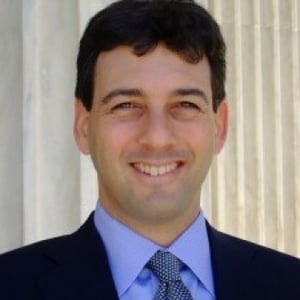
Vice President for Litigation, Institute for Free Speech
Alan joined the Institute for Free Speech as Vice President for Litigation in February 2021. In this role, Alan directs the Institute’s litigation and legal advocacy, leads our in-house legal team, and manages and works to expand our network of volunteer attorneys.
Prior to joining the Institute, Alan litigated complex federal matters for twenty years, in his own practice and as a partner in various Washington-area firms. He argued and won landmark constitutional cases in the United States Supreme Court and has appeared before numerous appellate and district courts throughout the country. Alan often speaks at law schools and continuing legal education seminars. He also teaches strategic/public interest litigation as an adjunct professor at the Georgetown University Law Center.
Alan began his career clerking for the Hon. Terrence W. Boyle, United States District Judge for the Eastern District of North Carolina. He has also served as a Deputy Attorney General for the State of California, a litigation associate at the Washington office of Sidley Austin, and as counsel to the United States Senate Judiciary Committee.
Alan earned his J.D. at Georgetown (1995) and his B.A. at Cornell University (1992). He is an active member in good standing of the Virginia, District of Columbia, and California bars, the Bar of the United States Supreme Court, and various federal appellate and district court bars.
Former United States Senator, Commonwealth of Pennsylvania
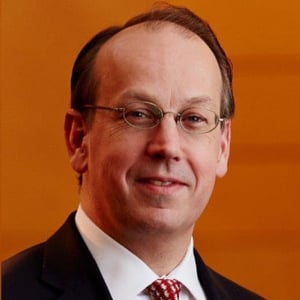
Partner, Clement & Murphy, PLLC
Paul served as the 43rd Solicitor General of the United States from June 2005 until June 2008. Before his confirmation as Solicitor General, he served as Acting Solicitor General for nearly a year and as Principal Deputy Solicitor General for over three years.
Paul has argued over 100 cases before the United States Supreme Court, including McConnell v. FEC, Tennessee v. Lane, United States v. Booker, MGM v. Grokster, Hobby Lobby v. Burwell, Epic Systems Corp. v. Lewis, Rucho v. Common Cause, Facebook v. Duguid, and TransUnion v. Ramirez. Paul has argued more Supreme Court cases since 2000 than any lawyer in or out of government. He has also argued many important cases in the lower courts, including Walker v. Cheney, United States v. Moussaoui and NFL v. Brady.
Paul’s practice focuses on appellate matters, constitutional litigation and strategic counseling. He represents a broad array of clients in the Supreme Court and in federal and state appellate courts. Last year, for example, he successfully argued Supreme Court cases involving significant issues of energy regulation, statutory interpretation, state sovereign immunity and Article III standing, and successfully argued a trademark appeal in the Fourth Circuit, and a constitutional appeal before the en banc Eleventh Circuit.
Paul focuses on high-stakes appeals. In recent years, he successfully defended a $1.2 billion jury verdict for clients in a Tenth Circuit case, while securing the reversal of an over $2 billion jury verdict for another client in the Seventh Circuit and the approval of a nearly $1 billion dollar class action settlement in the Third Circuit. He has initiated major administrative law challenges and constitutional litigation against the federal government, such as the successful challenge to the HHS drug-pricing rule and threatened challenges that led to the withdrawal of the Treasury Department’s proposed cryptocurrency regulations. He also counsels clients on a variety of strategic legal questions, whether arising from pending legislation, government inquiries or ongoing litigation.
Paul has undertaken substantial pro bono engagements in the Supreme Court, such as twice successfully representing the defendant in Bond v. United States and successfully representing the Omaha Tribe in Nebraska v. Parker, the guardian ad litem in Adoptive Couple v. Baby Girl, the defendant in Sekhar v. United States, a high school football coach in Kennedy v. Bremerton, and the Little Sisters of the Poor. Paul’s pro bono representation also precipitated the federal government’s confession of error in United States v. Rojas.
Following law school, Paul clerked for Judge Laurence H. Silberman of the U.S. Court of Appeals for the D.C. Circuit and for Associate Justice Antonin Scalia of the U.S. Supreme Court. After his clerkships, he went on to serve as Chief Counsel of the U.S. Senate Subcommittee on the Constitution, Federalism and Property Rights.
Paul is a Distinguished Lecturer in Law at the Georgetown University Law Center, where he has taught in various capacities since 1998. He also serves as a Senior Fellow of the Law Center’s Supreme Court Institute. He is the Justice Joseph Story Distinguished Practitioner in Residence at the Gray Center at Scalia Law School.
James A. Haynes is an attorney in Baltimore.
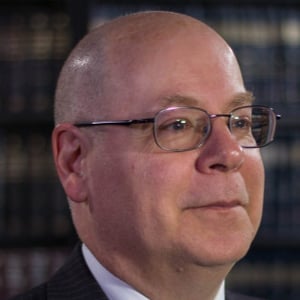
Staff Attorney, National Right To Work Legal Defense Foundation
Glenn Taubman is a Staff Attorney for the National Right to Work Legal Defense and Education Foundation (1982 to the present). He was a Law Clerk for Senior Circuit Judge Warren L. Jones, U.S. Court of Appeals for the Fifth and Eleventh Circuits, Jacksonville, Florida, from 1981-82, and a Staff Attorney for the U.S. District Court, Middle District of Florida, Jacksonville, Florida, from 1980-81. His Bar Admissions include: Georgia, 1980; New York, 1981; U.S. Supreme Court, 1983; District of Columbia, 1985. He regularly appears before the National Labor Relations Board and various federal courts, representing individual employees only.
He is the author of "'Neutrality Agreements' and the Destruction of Employees' Section 7 Rights" (2005) and co-author of "Union Discipline and Employee Rights," a monograph published by the National Right to Work Foundation.
A partial listing of his reported cases includes: Lucas v. NLRB, 333 F.3d 927 (9th Cir. 2003);Penrod v. NLRB, 203 F.3d 41 (D.C. Cir. 2000);Production Workers v. NLRB, 161 F.3d 1047 (7th Cir. 1998);Food & Commercial Workers Local 951 v. Mulder, 31 F.3d 365 (6th Cir. 1994);NLRB v. Office Employees Local 2, 902 F.2d 1164 (4th Cir. 1990);Tierney v. City of Toledo, 917 F.2d 927 (6th Cir. 1990);Lowary v. Lexington Local Board of Education, 902 F.2d 422 (6th Cir. 1990);Lowary v. Lexington Local Board of Education, 854 F.2d 131 (6th Cir. 1988);Tierney v. City of Toledo, 824 F.2d 1497 (6th Cir. 1987);Masiello v. US Airways, Inc., 113 F. Supp. 2d 870 (W.D.N.C. 2000);Jordan v. City of Bucyrus, 739 F. Supp. 1124 (1990),further proceedings, 754 F. Supp. 554 (N.D. Ohio 1991);Dana Corp., 341 N.L.R.B. No. 150, 2004 WL 1329345 (June 7, 2004);California Saw & Knife Works, 320 N.L.R.B. 224 (1995),enforced, 133 F.3d 1012 (7th Cir. 1998).
Deputy General Counsel, Local 32 BJ, Service Employees International Union
Brent Garren is a Deputy General Counsel of SEIU Local 32 BJ, the 145,000 member property services local in New York and the eastern seaboard. He worked for the International Ladies’ Garment Workers Union, then UNITE, UNITE HERE and Workers United prior to Local 32 BJ, including serving as General Counsel for UNITE HERE and later Workers United.
Mr. Garren’s career has focused on the National Labor Relations Act. He is an Editor-In-Chief of How to Take a Case Before the NLRB, the leading text on NLRB procedure. He is a member of and past union co-chair of the ABA’s subcommittee on Practice and Procedure under the NLRA, part of the Labor and Employment Law Section. He has spoken about and written on the NLRA, including on remedies, voluntary recognition and NLRB jurisdiction.
He has been involved in international labor solidarity activities, including representing U.S. labor to the International Labor Organization, dealing with protection of home workers and protection of contracted labor.
He was graduated by Wayne State School of Law, summa cum laude.
Publius comes from the pen name Alexander Hamilton, James Madison, and John Jay used when they wrote 85 publicly printed letters now known as the Federalist Papers. Hamilton chose “Publius” as a name that would represent friends of the newly proposed American republic - Publius Valeria Publicola was a Roman general who helped to found the Roman Republic. The Federalist Society continues the tradition of publishing things under the name Publius in celebration of our constitutional roots and recognition that author credit is not always necessary.

The 2008 Election and the Federal Courts
Pittsburgh, PennsylvaniaThe D.C. Handgun Ban: District of Columbia v. Heller
Pittsburgh, PennsylvaniaParental Law in the States: Maryland, Minnesota, Pennsylvania
James A. Haynes
This article reviews recent state court cases in the area of family law which concern...
A Conversation with Senator Arlen Specter
Pittsburgh, PennsylvaniaPreview of the Supreme Court's October 2007 Term
Employee Free Choice Act Debate
Glenn Taubman, Brent Garren
The U.S. House of Representatives has passed, the U.S. Senate will consider, and the Bush...
Florida Supreme Court Allows Assignment of Legal Malpractice Claim to Third Party Plaintiff
Publius
In Cowan Liebowitz & Latman, P.C., v. Kaplan,1 the Florida Supreme Court decided whether a...
The ABA and Criminal Justice Issues
INTRODUCTION In 1996, the Federalist Society for Law and Public Policy Studies launched fifteen legal...
Book Review: The Bankers: The Next Generation by Martin Mayer
John Pickering
The Bankers: The Next Generationby Martin MayerTruman Talley Books/Dutton 1997 (468 pages) It takes guts to...