
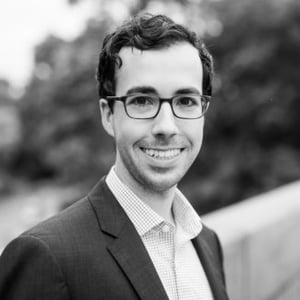
Senior Counsel, Becket Fund for Religious Liberty
Nick Reaves joined Becket in 2018. His practice centers on First Amendment appellate litigation. Nick has played a leading role in multiple religious freedom cases at the U.S. Supreme Court and has argued in federal appellate and trial courts across the country. He has represented individuals and organizations of many faith traditions—including Sikhs, Jews, Muslims, Hindus, Buddhists, and Christians—in their pursuit of the fundamental right to freely practice their religion.
In 2022, Nick was appointed as a Visiting Clinical Lecturer in Law at Yale Law School, where he co-directs Yale Law School’s Free Exercise Clinic. His scholarly work has been published in the Yale Law Journal Forum, the Harvard Journal of Law & Public Policy Per Curiam, the Virginia Journal of Social Policy & the Law, and the Notre Dame Law Review Reflection, among other leading legal journals. His writing has also been cited by the U.S. Supreme Court.
Recognized as a sought-after voice on religious freedom, Nick has spoken at institutions such as the University of Notre Dame, the University of Virginia, and Princeton Theological Seminary. He has also provided expert testimony before both the U.S. Commission on Civil Rights and the Equal Employment Opportunity Commission.
Before joining Becket, Nick practiced trial and appellate litigation as an associate at Jones Day and clerked for Chief Judge D. Brooks Smith on the U.S. Court of Appeals for the Third Circuit.
Nick earned his J.D. from the University of Virginia School of Law, where he served on the Managing Board of the Virginia Law Review and was elected to the Order of the Coif. He also graduated magna cum laude from the University of Notre Dame as a member of the Glynn Family Honors Program.
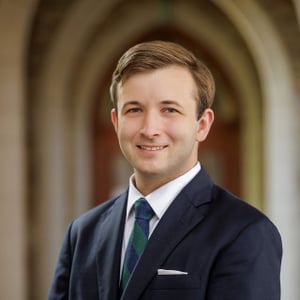
Paralegal, Becket
Matthew is a paralegal at the Becket Fund for Religious Liberty, where he's worked since 2022. He supports the attorney team with editing, legal research, and administrative duties.
Before Becket, Matthew’s legal experience included internships with the Federalist Society and the Champaign County Public Defender’s Office.
Matthew graduated from the University of Illinois Urbana-Champaign magna cum laude with a bachelor’s degree in Political Science with minors in Legal Studies and Philosophy. His senior honors thesis empirically evaluated the effects of state legislation on religious liberty litigation.
Outside of work, Matthew has continued studying philosophy, law, and policy. He is currently a Richard John Neuhaus Fellow with the Public Interest Fellowship. Previously, he participated in the Hertog Foundation’s The Supreme Court & American Politics cohort as a Fellow.
In his free time, Matthew enjoys volunteering at his parish, trips to the Library of Congress manuscript room, café hopping with a book in hand around the DMV, and training for the Chicago Marathon.
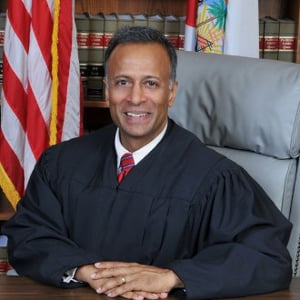
United States District Judge, United States District Court for the Southern District of Florida
On December 20, 2019, Raag Singhal received his judicial commission to serve on the United States District Court for the Southern District of Florida. Judge Singhal is the first Asian American in history to serve as an Article III judge in the jurisdiction of the Eleventh Circuit (Alabama, Georgia and Florida).
Immediately prior to becoming a federal judge, Judge Singhal spent eight years as a State Circuit Court Judge in Broward County, Florida, having been appointed by then-Governor Rick Scott in 2011. During that period of time, Singhal served, at times, in the Criminal, Civil and Mental Health divisions and was fortunate enough to sit as an Associate Judge on Florida’s Fourth District Court of Appeal on four occasions.
As a lawyer, Singhal gained experience at a civil litigation firm followed by three years as an Assistant State Attorney. After that, Singhal ran a successful criminal defense practice in Fort Lauderdale for eighteen years. During that time, he handled more than two hundred jury trials including thirty first-degree murder cases.
Judge Singhal has had leadership roles in many law-related groups. He is past-President of the Broward Association of Criminal Defense Lawyers and the Stephen H. Booher Chapter of the American Inns of Court. He was on the Board of Directors of the Broward County Bar Association, and is a frequent speaker at events for various local Bar groups such as the Asian Pacific American Bar Association and the Federalist Society. Singhal was also Associate Dean of the Florida College for Advanced Judicial Studies upon his elevation to the federal court system.
Judge Singhal received his law degree from Wake Forest University School of Law in 1989 where he was very active in Moot Court activities, and was on the winning team of the J. Braxton Craven National Moot Court Competition (4th Amendment). He received his undergraduate degree in Political Science from Rice University in 1986.
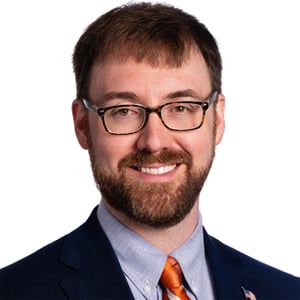
Senior Legal Fellow, Courts and the Constitution, Legal Policy Center, The Heritage Foundation
Zack is a Senior Legal Fellow of Courts and the Constitution at The Heritage Foundation.
He previously served for several years as an Assistant United States Attorney in the Northern District of Florida. Prior to that, he spent two years as an associate in the Washington, D.C. office of Cleary Gottlieb Steen & Hamilton, which he joined after clerking for the Hon. Emmett R. Cox on the United States Court of Appeals for the Eleventh Circuit.
Smith received his undergraduate, master’s, and law degrees from the University of Florida. During law school, Smith served as the Editor in Chief of the Florida Law Review and served on the executive boards of several student organizations, including the UF Chapter of the Federalist Society.
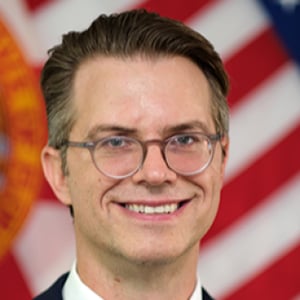
Solicitor General of Florida
Henry Whitaker became Florida’s Solicitor General in July 2021. He came to the position after four years of serving in the Office of Legal Counsel of the U.S. Department of Justice, including as Principal Deputy Assistant Attorney General, where he advised the White House Counsel’s Office, the Attorney General, and cabinet secretaries on a range of important and complex legal issues. Before that, Solicitor General Whitaker worked on the Appellate Staff of the Civil Division of the U.S. Department of Justice for almost nine years, arguing more than 40 appeals in the federal appellate courts. He clerked for Justice Clarence Thomas of the U.S. Supreme Court and for Judge David B. Sentelle of the U.S. Court of Appeals for the D.C. Circuit after graduating magna cum laude from both Harvard Law School and Yale College.
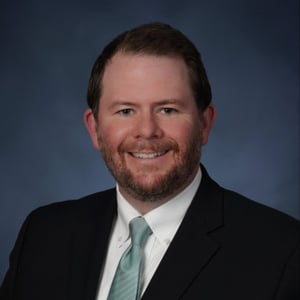
Partner, Kroger, Gardis & Regas, LLP
Séamus focuses his practice in education and public policy. He has the Martindale- Hubbell attorney rating of AV Preeminent for the highest level of professional excellence in law.
Séamus provides effective and efficient counsel, frequently advising clients on day-to-day issues and navigating clients through the Indiana Statehouse. While he often serves as general counsel, he tailors his services to best address client needs. He works with preferred service providers to offer advice as conflict counsel and internal investigations.
Séamus began his practice of law in 2006. In 2011, the Indianapolis Star featured Séamus as a “Rising Star” for his work as a lawyer, and the Indianapolis Business Journal’s Indiana Lawyer identified Séamus as an “Up & Coming Lawyer” for Indiana. Beginning in 2012, he has been recognized annually by the Super Lawyers publication as a Rising Star.
Séamus is a frequent presenter, writer and contributor for many organizations. He is active in the Indiana State Bar Association and the Indiana Bar Foundation (IBF) for which he provides counsel and has served on the governing boards for both organizations. He advised the Indiana Civic Education Task Force and received the IBF’s William G. Baker recognition for outstanding dedication to citizenship education, particularly the We the People civics education program. In addition, he helped start the State Bar’s Leadership Development Academy. He has served on the board of the national Council of School Attorneys (COSA) and continues to serve on COSA’s amicus committee. He is a founder and was the first chairman of the Indiana Council of School Attorneys (ICOSA).
Séamus attended the University of New Hampshire School of Law where he concurrently earned both a law degree and master’s degree in education law. He is an alumnus of Wabash College and is on the board of and serves as the Law Committee chairman of the Indianapolis Association of Wabash Men. While at Wabash, he became a member of the Sigma Chi Fraternity and Sphinx Club through which he reinstalled the College’s “Chapel Talk” speaker series. Séamus is on the board of OneZone Commerce and is chair of OneZone’s Advocacy Committee. He has served on the board for Janus Developmental Services. Prior to joining Kroger Gardis & Regas, he practiced law at Church, Church, Hittle & Antrim.
Séamus was born and raised in Indianapolis with his eight siblings. His wife, Erin, is a teacher focusing on literacy and special needs. He has three daughters (Lena, Nellie and Vera).
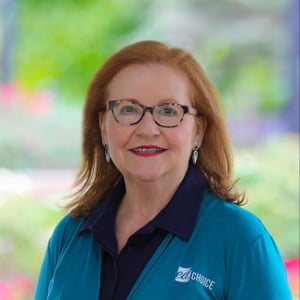
Vice President of Legal Affairs & Director of Legal Defense & Education Center, EdChoice
Leslie Hiner, Esq. is an advocate of educational freedom, a crusader fighting for the unencumbered opportunity of parents to decide how and where their children will be educated. She believes in the power of individuals to change the world, and believes personal liberty will be enhanced when our method of funding K–12 education is changed to empower parents and students before institutions.
As vice president of legal affairs at EdChoice, the nation’s leading educational choice organization, Leslie leads the EdChoice Legal Defense and Education Center for this nonpartisan, charitable nonprofit and engages with other national organizations to support school choice. She is a proven leader, advancing educational freedom and choice for all as a pathway to successful lives and a stronger society.
Hiner is an attorney with extensive state legislative and executive branch experience. In Indiana, she was the first woman chief of staff to the speaker of the house, counsel to the senate president pro tempore, and general counsel/elections deputy to the Secretary of State. She is also a former small business owner, and former litigator in private practice.
A founding board member of one of Indiana’s first charter schools, Leslie served as chairman of the board for the first several years, guiding the school’s growth from about 150 to over 1000 students. She was also directly involved in developing Indiana’s original charter school law, one of the best in the nation, and Indiana’s voucher law, the largest in the country to date.
Leslie is a member of the American Enterprise Institute Leadership Network, serves on the Schools That Can National Advisory Council, and is a Policy Advisor for The Heartland Institute. Leslie is a long-time member of the Federalist Society and a Lugar Series Excellence in Public Service alumna.
Hiner travels the country speaking on educational issues and testifying at public hearings. Recent engagements include the American Enterprise Institute With all deliberate speed: Brown v. Board of Education II 60 years later; Center for Urban Renewal and Education National Policy Summit, “Changing Policy to Change Lives”; National Conference of State Legislatures Summit debate, School Vouchers and Education Savings Accounts: Are They Constitutional; Network of Enlightened Women National Conference, Three Things You Need To Know About Education Policy; International Conference on School Choice and Reform, The Constitutionality of Educational Choice; 100 Black Men of Greater Dallas/Fort Worth, Project Soar’s Mobilizing the Village; Louisville Federalist Society Lawyers’ Chapter, Is School Choice Good Public Policy; American Conservative Union CPAC 2017.
She’s been cited in several publications, including the Wall Street Journal, New York Times, Chicago Tribune, Washington Times, Forbes, US News & World Report, The Hill, Real Clear Policy, Federalist Society DocketWatch, National Review, The Federalist, Zman Magazine, Watchdog, and has appeared on EWTN News Nightly, Wall Street Journal Video Opinion Journal podcasts, David Webb Show on Sirius/XM, ChoiceMediaTV, The Heartland Institute podcasts and school choice events, The Morning Blaze, Issues in Education and many state level broadcasts.
A native of Ohio, she earned her Juris Doctorate from the University of Akron School of Law, her Bachelor of Arts degree from the College of Wooster, and attended Rostad Teachers College as an exchange student in Sweden where she was a student teacher in grades 2 and 3. She and her husband reside in Indianapolis, and have two grown children.
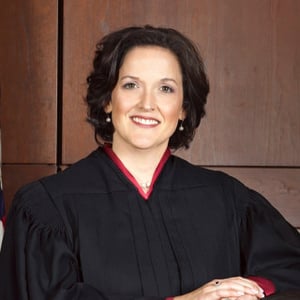
Judge, United States District Court, Eastern District of Missouri
Judge Pitlyk received her law degree from Yale Law School, after earning her undergraduate degree from Boston College and master’s degrees from Georgetown University and the Katholieke Universiteit Leuven in Belgium, where she studied as a Fulbright Scholar. Immediately before taking the bench, Judge Pitlyk served as Special Counsel for the Thomas More Society, a national public interest law firm. Before TMS, she spent several years at a small civil litigation boutique in St. Louis, MO, after starting her career at Covington & Burling in Washington, DC. From 2010 to 2011, she clerked for the Honorable Brett M. Kavanaugh, then a Circuit Judge on the United States Court of Appeals for the District of Columbia Circuit. Judge Pitlyk was sworn in as a District Judge for the Eastern District of Missouri on December 6, 2019.
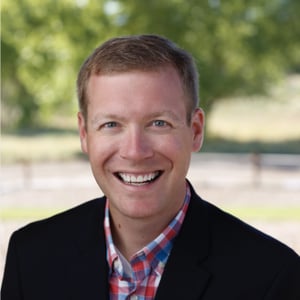
President, Center for American Rights
Daniel Suhr serves as president of the Center for American Rights, where he spends every day on the front lines of the fight to preserve our rights and liberties. The Center's mission is to advance free speech, free enterprise, and parental freedom in education through strategic, precedent-setting litigation.
Daniel formerly worked as policy director for Wisconsin Governor Scott Walker, as chief of staff for Wisconsin Lieutenant Governor Rebecca Kleefisch, and as a law clerk for Judge Diane Sykes of the U.S. Court of Appeals for the Seventh Circuit. He holds a B.A. and J.D. from Marquette University, and master’s degrees from Georgetown and the University of Missouri.
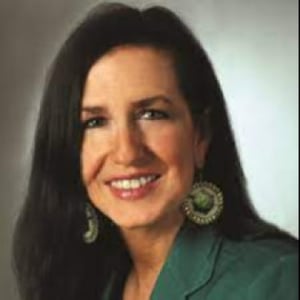
Shareholder, Greenberg Traurig
Jennifer Weddle is the Co-Chair of Greenberg Traurig's American Indian Law Practice and has wide-ranging experience in complex regulatory and jurisdictional issues, with a focus in Indian law, handling a variety of matters for tribal and non-tribal clients. She has a dynamic, inter-disciplinary practice that centers on providing strategies for resolving complex jurisdictional problems. Much of her practice focuses in the areas of tribal economic development and natural resources development. Jennifer also has U.S. Supreme Court experience, including serving as one of the attorneys for the respondent in Nevada v. Hicks (2001) and representing the petitioners in Ute Mountain Ute Tribe v. Padilla (2012) and Grand Canyon Skywalk Development, LLC v. Grand Canyon Resort Corporation (2013) and cert stage amici in Saginaw-Chippewa Tribe v. NLRB (2016) and United States v. Cooley (2020) and amici on the merits in Lewis v. Clarke (2017), U.S. v. Washington (2018), Carpenter v. Murphy (2018), McGirt v. Oklahoma (2020), and United States v. Cooley (2021).
Jennifer's work also includes negotiations for mineral leasing employment matters and representation before federal agencies. She has also been involved in civil litigation, working on numerous complex federal, state and tribal litigation matters, including class action tort litigation and large commercial disputes. Her transactional experience includes oil and gas renewables projects throughout the west, as well as Endangered Species Act work. Jennifer frequently assists tribes, banks and non-bank entities with financing and regulatory matters with Indian law components. Jennifer has wide-ranging project siting experience, including the application of NEPA, NHPA, and other environmental laws on tribal and public lands, including with respect to large linear multi-state energy and infrastructure projects. Jennifer has deep transactional, regulatory and litigation experience involving very complex matters with both legal and policy components.
Jennifer is past President of the National Native American Bar Association and past two-term Chair of the Federal Bar Association Indian Law Section. She currently serves as the Tenth Circuit Representative on the American Bar Association Standing Committee on the Federal Judiciary, a role she has held since 2018, spanning the evaluations for more than two dozen federal judicial nominees at every level of the federal courts. She is a ’00 graduate of Harvard Law School and a ’97 graduate of the University of Michigan (Classical Languages and Literature).
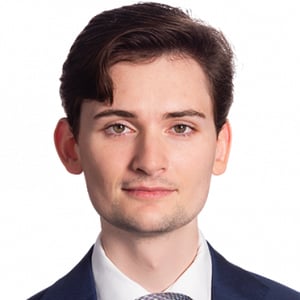
Principal Deputy Assistant Attorney General, Office of Legal Policy, United States Department of Justice
GianCarlo Canaparo serves as the Principal Deputy Assistant Attorney General in the Office of Legal Policy at the Department of Justice. He oversees the Office's regulatory work, assists the White House in the process of selecting nominees for federal judgeships and advises Department leadership on policy and legal matters.
Before joining the Department, Canaparo was a senior legal fellow at The Heritage Foundation’s Edwin Meese III Center for Legal and Judicial Studies where he researched constitutional law, administrative law, and civil rights.
Canaparo’s scholarship has appeared in various law reviews and periodicals. His research has been cited by Justice Neil Gorsuch and featured in the Wall Street Journal and Washington Post.
Canaparo co-hosted The Heritage Foundation’s SCOTUS 101 podcast, which followed the Supreme Court’s arguments and opinions and featured interviews with judges, advocates, and scholars.
After graduating Georgetown law, Canaparo spent three years at the law firm of Skadden, Arps, Slate, Meagher & Flom and two years as a federal law clerk. He earned his bachelor’s degree in economics from the University of California at Davis.
Canaparo is a classical pianist.
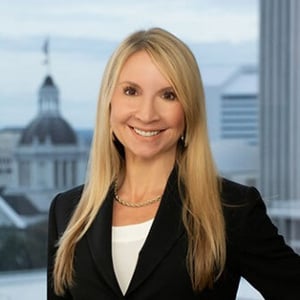
Clinical Professor and Director of the First Amendment Clinic, Florida State University College of Law
Denise Mayo Harle is a clinical professor and director of the First Amendment Clinic at FSU College of Law, where she leads student advocacy and litigation on free speech, religious liberty, and press freedom issues. Her teaching and scholarship focus on constitutional law, appellate practice, and First Amendment rights. Before entering academia, Professor Harle was a partner at Shutts & Bowen LLP in Tallahassee, where she was a member of the firm’s Appellate Practice Group and Constitutional Law Practice Area. Prior to that, she served as Deputy Solicitor General in the Office of the Florida Attorney General. Professor Harle has briefed and argued high-profile cases involving significant constitutional issues and questions of statutory interpretation in both state and federal courts, including the U.S. Supreme Court.
Professor Harle’s early career includes clerking for Justice Ricky L. Polston on the Florida Supreme Court and practicing appellate law in California. In 2022, she was selected as a finalist for a seat on the Florida Supreme Court. She was appointed by Governor Ron DeSantis to Florida’s Faith and Community Advisory Council and currently serves on the Judicial Nominating Commission for Florida’s Second Circuit. She was also selected for the prestigious U.S. Supreme Court Fellowship through the National Association of Attorneys General in 2017. She earned her J.D. cum laude from Duke University Law School and her B.A. and B.S. summa cum laude from Florida State University.
Professor Harle is active in the legal and academic communities. She is a member of the American Enterprise Institute’s Leadership Network and the Federalist Society’s Speakers Bureau. She has served on the board of Tallahassee Women Lawyers, the Florida Bar’s Client Security Fund Committee, and the First District Appellate American Inn of Court.
Before practicing law, Professor Harle completed doctoral coursework in Political Science at Stanford University as a Stanford Graduate Fellow, where she taught undergraduate courses on public policy, law, and American politics, and earned a Master’s degree. She continues to serve as a dissertation faculty advisor for Concordia University–St. Paul mentors doctoral students in research and writing.
A frequent speaker and media commentator on constitutional law, Professor Harle has been quoted in The Wall Street Journal, The Washington Post, and The New York Times, and has appeared on national outlets including C-SPAN and Fox News. She has also testified before the U.S. Senate on matters of constitutional significance.
General Counsel, Strive
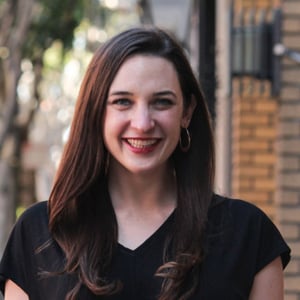
Before joining Strive, Alexandra served as the Director of Regulatory Affairs at River Financial, where she handled all regulatory and government matters and served as product counsel. Prior to her time at River, Alexandra worked at the U.S. Department of Treasury, first in the General Counsel’s office and then as the youngest-ever Executive Secretary, where she worked directly with Secretary Mnuchin. Alexandra previously worked as an associate in the Washington, D.C. office of Akin Gump. She clerked for then-Justice Allison Eid on the Colorado Supreme Court and Judge Jennifer Elrod on the U.S. Court of Appeals for the Fifth Circuit. She holds a J.D. from the University of Texas and a B.A. from The King’s College.
Retired
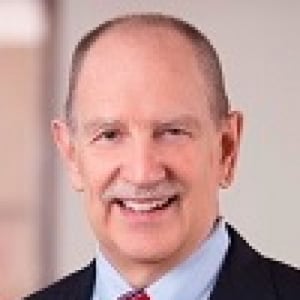
Tom Gede retired in 2023 as a principal in Morgan Lewis Consulting LLC and of counsel to the firm. He currently consults on a variety of legal and policy matters for both public and private clients. Tom has a national reputation and distinguished background in federal Indian law. Prior to retirement, he represented clients in complex governmental matters in litigation, administrative and regulatory proceedings, including high-profile matters involving state governments. A former senior deputy in the California Attorney General’s office, Tom was amicus coordinator and Supreme Court counsel, and argued cases in the US Supreme Court, the California Supreme Court, and numerous state and federal appellate courts.
Tom also served as executive director of the Conference of Western Attorneys General (CWAG), coordinating activities on key legal and policy issues, such as federal Indian law, energy, environmental, public lands, financial services, and telecommunications, for the attorneys general of 18 western states and territories. In 2016, Tom was elected as a Member of the American Law Institute (ALI), and served as an Adviser on the Restatement of the Law Third - The Law of American Indians. Tom also taught federal Indian law as an adjunct law professor at the University of the Pacific - McGeorge School of Law. He served as an assistant editor for and the author of the Indian gaming chapter in CWAG’s American Indian Law Deskbook (2d & 3d eds.). He has been engaged in Indian gaming and Indian law matters for more than three decades, having focused on the gaming compacts with Indian tribes, as well as complex civil and criminal jurisdiction, land, natural resources, water and law enforcement issues in Indian country. He has testified before Congress on American Indian and Native Alaskan issues. In 2012 he was appointed by Speaker John Boehner to serve on the United States Indian Law and Order Commission, where he examined criminal justice issues in Indian country and Alaska, resulting in the issuance of an important report to the President and Congress.
Partner, Lehotsky Cohn
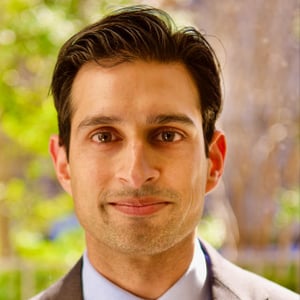
Mithun Mansinghani is an experienced appellate and trial litigator who has argued cases at all levels in state and federal court, including at the U.S. Supreme Court. His practice focuses on commercial litigation, regulatory issues, and appeals. Mr. Mansinghani has been ranked by Chambers & Partners both in Oklahoma and nationwide for his litigation work. He also has been recognized in Lawdragon’s 500X – The Next Generation list for his appellate expertise and Benchmark Litigation’s 40 and Under list for his commercial litigation.
From 2017 to 2022, Mr. Mansinghani served as Oklahoma Solicitor General, the state’s chief advocate on appellate matters, constitutional issues, and challenges to federal regulation. In that role, he also advised the Attorney General, the Governor, the Legislature, and other state leadership on critical and high-stakes legal issues. Mr. Mansinghani has argued more cases before the Justices of the Oklahoma Supreme Court than any other litigator in the last decade.
Mr. Mansinghani has been nationally recognized for amici briefs he authored at the U.S. Supreme Court. These amici briefs have been cited in Supreme Court opinions, referenced by the Justices at argument, and received a National Association of Attorneys General “Best Brief” award. He also provides commentary on U.S. Supreme Court cases for media outlets including NPR, The New York Times, SCOTUSblog, and Bloomberg.
In addition to appellate litigation, Mr. Mansinghani has first-chaired several bench trials to successful verdicts. He has conducted all stages of district court litigation, and has prevailed in numerous cases on summary judgment and motions to dismiss.
Mr. Mansinghani’s extensive experience includes federal and state constitutional law, litigating federal and state regulation, and work with state attorneys general. He has particular expertise in matters related to energy and the environment. Mr. Mansinghani also has significant experience negotiating with Native American tribes and has litigated some of the nation’s most important federal Indian law cases.
Prior to serving in the Oklahoma Attorney General’s Office, Mr. Mansinghani was a litigator with Gibson, Dunn and Crutcher in Washington, D.C. He served as a law clerk to the Hon. Jerry E. Smith on the U.S. Court of Appeals for the Fifth Circuit. Mr. Mansinghani graduated with honors from Harvard Law School, where he was as an editor of The Harvard Law Review.

Senior Fellow and Director of Constitutional Studies, Manhattan Institute
Ilya Shapiro is a senior fellow and director of constitutional studies at the Manhattan Institute and a contributing editor of City Journal. Previously he was executive director and senior lecturer at the Georgetown Center for the Constitution, and before that a vice president of the Cato Institute.
Shapiro is the author of Lawless: The Miseducation of America’s Elites (2025) and Supreme Disorder: Judicial Nominations and the Politics of America’s Highest Court (2020), coauthor of Religious Liberties for Corporations? (2014), and editor of 11 volumes of the Cato Supreme Court Review (2008-18). He has contributed to a variety of academic, popular, and professional publications, including the Wall Street Journal, Harvard Journal of Law & Public Policy, Washington Post, Los Angeles Times, USA Today, National Review, and Newsweek. He also regularly provides commentary for various media outlets, writes the Shapiro’s Gavel newsletter on Substack, and once appeared on the Colbert Report.
Shapiro has testified many times before Congress and state legislatures and has filed more than 500 amicus curiae “friend of the court” briefs in the Supreme Court. He lectures regularly on behalf of the Federalist Society, is a member of the board of fellows of the Jewish Policy Center, was an inaugural Washington Fellow at the National Review Institute, and has been an adjunct law professor at the George Washington University and University of Mississippi. He is also the chairman of the board of advisers of the Mississippi Justice Institute, a barrister in the Edward Coke Appellate Inn of Court, and a former member of the Virginia Advisory Committee to the U.S. Commission on Civil Rights.
Earlier in his career, Shapiro was a special assistant/adviser to the Multi-National Force in Iraq on rule-of-law issues and practiced at Patton Boggs and Cleary Gottlieb. Before entering private practice, he clerked for Judge E. Grady Jolly of the U.S. Court of Appeals for the Fifth Circuit. He holds an AB from Princeton University, an MSc from the London School of Economics, and a JD from the University of Chicago Law School.

Religious Liberty Pragmatism
Nick Reaves, Matthew Krauter
A review of Thomas C. Berg, Religious Liberty in a Polarized Age (Eerdmans 2023) In...
Panel II: U.S. Supreme Court Review
Raag Singhal, Zack Smith, Henry Charles Whitaker
Featuring: Zack Smith, Legal Fellow and Manager, Supreme Court and Appellate Advocacy Program, Meese Center, The...
Panel II: School Choice
Séamus Boyce, Leslie Davis Hiner, Sarah Pitlyk, Daniel Suhr
Policymaker interest in alternatives to traditional public schools has sharply increased post-pandemic, with some states...
10th Annual Supreme Court Roundup
Tulsa Lawyers Chapter
Tulsa, OKTopics
Religious Charter Schools: Another Brick in the Wall of Separation?
The idea that religion should be isolated from our civil institutions has overwhelmingly captured the...
Courthouse Steps Decision: Haaland v. Brackeen
Jennifer H. Weddle
On Thursday, June 15, 2023, the Supreme Court issued its decision in Haaland v. Brackeen....
Narrow Right to Abortion in State Constitution Divined and Reaffirmed by Oklahoma Supreme Court
GianCarlo Canaparo
In Dobbs v. Jackson Women’s Health Organization, the United States Supreme Court held that there...
Abortion Laws In Oklahoma Subject of Fractured Decision at State Supreme Court
Denise M. Harle
Immediately after the U.S. Supreme Court’s landmark decision in Dobbs v. Jackson Women’s Health Organization,[1]...
Crypto: The Wild West?| Bitcoin Cowboys
Alexandra Gaiser
In this episode of the FedSoc Films Podcast, we spoke with Alexandra Gaiser, Director of...
Lac du Flambeau Band of Lake Superior Chippewa Indians v. Coughlin - Post-Argument SCOTUScast
Thomas F. Gede
On April 24, 2023, the Supreme Court heard oral argument in Lac du Flambeau Band of...