
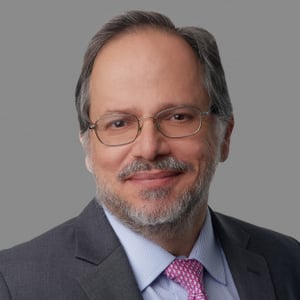
Director of Law & Policy, Environmental Integrity Project
Following Princeton and the University of Chicago Law School, David began practicing law at Paul, Weiss, Rifkind, Wharton & Garrison. Eventually tiring of litigation where the result was a wire transfer from Entity A to Entity B, in the early 1990’s David began his environmental law career at the Massachusetts Attorney General’s Office. Since then, he has litigated dozens of cases under all of the major environmental statutes including, as Sierra Club’s Chief Climate Counsel, initiating and managing Massachusetts v. EPA. Most recently, he has been busy challenging FERC’s permitting of natural gas pipelines and LNG export terminals. Apart from litigation, David has helped lead efforts on both greenhouse gas regulation and global warming legislation (and may be the only person ever invited to testify by both Barbara Boxer and James Inhofe).
He has drafted a range of federal climate legislation, advised states as to their greenhouse gas regulatory authority (and for many years has represented environmental groups defending state GHG regulations from dormant Commerce Clause challenges). David has designed and taught courses on “Environmental Litigation” at Georgetown University Law Center and “Environmental Law and Science” at the William and Mary Law School/Virginia Institute of Marine Science.
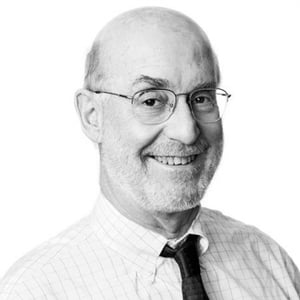
Director, Climate & Clean Air Program, Natural Resources Defense Council
David Doniger has been at the forefront of the battle against air pollution and global climate change since he joined NRDC in 1978. He helped formulate the Montreal Protocol, an international agreement designed to stop the depletion of the earth's ozone layer, as well as several essential amendments to the Clean Air Act. In 1993, he left NRDC to serve on the White House Council on Environmental Quality, followed by key posts at the U.S. Environmental Protection Agency. He rejoined NRDC in 2001 and has since been working to defend the Clean Air Act from assaults in Congress. He is based in Washington, D.C.
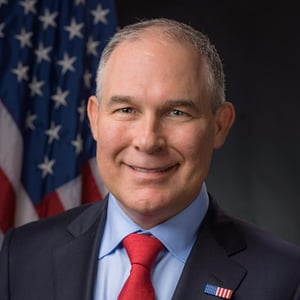
Former Administrator, U.S. Environmental Protection Agency
Scott Pruitt served as the 14th Administrator of the U.S. Environmental Protection Agency.
As Administrator, Mr. Pruitt’s overarching goal was to lead EPA in a way that our future generations inherit a better and healthier environment as he works with the thousands of dedicated public servants at EPA who have devoted their careers to helping realize this shared vision, while faithfully administering environmental laws.
Prior to the EPA, Pruitt served as the Attorney General for Oklahoma. Almost immediately upon taking office, he worked with his Democratic counterpart in Arkansas to reach agreement to study the water quality of the Illinois River, which crosses the border between the two states and has been enjoyed by generations of Oklahomans. The Statement of Joint Principles provides for a best science study using EPA-approved methods, with both states agreeing, for the first time, to be bound by the outcome.
Also during his tenure as Oklahoma’s Attorney General, Pruitt led an historic water rights settlement between Oklahoma, Oklahoma City and the Choctaw and Chickasaw Tribal Nations that preserved the ecosystems of scenic lakes and rivers on native lands. The agreement, which required Congressional approval, was enacted into Section 3608 of Public Law 114-322 and signed in December 2016. It provides a framework that fosters intergovernmental collaboration on significant water resource concerns with the settlement area, while at the same time protecting existing water rights and affirming the state’s role in water rights permitting and administration.
Water settlement cases can be lengthy, costly, divisive and disruptive; however under Pruitt’s forward-thinking leadership, the process was hailed by all parties as one of commitment, hard work, perseverance and cooperation.
Pruitt became a national leader through a career of advocating to keep power in the hands of hard-working Americans. He has a proven track record of working with others – including industry, farmers, ranchers, landowners and small business owners - who want to do the right thing by the environment.
He has dedicated his career to creating policy that serves the people. He strongly believes that environmental law, policy and progress are all based on cooperation between the states, cooperation between the states and EPA, and cooperation between regulators and the public. As Attorney General for Oklahoma, he led the state’s legal challenges against property rights intrusion, while protecting Oklahoma’s natural resources and environment.
He is recognized as a national leader in the cause to restore the proper balance between the states and federal government, and he established Oklahoma’s first federalism unit to combat unwarranted regulation and overreach by the federal government.
Before being elected attorney general, he served eight years in the Oklahoma State Senate where he was a leading voice for fiscal responsibility.
After earning his Bachelor’s Degree from Georgetown College and graduating from the University of Tulsa College of Law, Pruitt went into private legal practice, specializing in constitutional law.
In addition to his life as a civil servant, Pruitt is a successful entrepreneur. As a co-owner and managing general partner of Oklahoma City’s Triple-A minor league baseball affiliate, the Oklahoma City Redhawks, Mr. Pruitt took over the team’s marketing operations and helped the team become one of the minor league leaders in attendance and merchandise sales.
Pruitt is, first and foremost, a family man. He and Marlyn, his wife of 27 years, proudly raised their daughter, McKenna, and son, Cade, in Tulsa. Pruitt has made it a priority to pass on to his children the same principled family values with which he was raised.

Partner, Baker Hostetler LLP
David Rivkin is a member of the firm's litigation, international and environmental teams and is co-leader of the firm's national appellate practice. He has extensive experience in constitutional, administrative and international law litigation and has been involved in numerous high-profile cases. With his prior experience in the government sector, David draws on a wealth of knowledge when providing compliance advice to companies and handling enforcement proceedings before government agencies on issues arising out of multilateral and unilateral sanctions, the Foreign Corrupt Practices Act (FCPA), anti-boycott issues, bankruptcy and financial fraud matters, and environmental and energy issues.
David has developed and implemented legislative, regulatory and litigation initiatives for two presidential administrations. Over the years, he has published hundreds of articles, op-eds, book reviews and book chapters on a variety of international, legal, constitutional, defense, arms control, foreign policy, environmental and energy issues for various newspapers and magazines, including The Wall Street Journal, The Washington Post, The New York Times, USA Today and The Los Angeles Times, and has been a frequent commentator and guest on TV and radio shows including ABC, CBS, NBC, CNN, Fox News, NPR and PBS.

Laurence H. Silberman Chair in Constitutional Governance, American Enterprise Institute; Executive Director, Antonin Scalia Law School’s C. Boyden Gray Center for the Study of the Administrative State
Adam J. White is the Laurence H. Silberman Chair in Constitutional Governance and senior fellow at the American Enterprise Institute, where he focuses on the Supreme Court and the administrative state. He also directs the Antonin Scalia Law School’s C. Boyden Gray Center for the Study of the Administrative State.
He writes on regulation and constitutional government for a variety of publications. He practiced law in Washington, D.C., after clerking for the D.C. Circuit's Judge David Sentelle. He also has been chairman of the ABA's Administrative Law Section.
In 2021, he served on the Presidential Commission on the Supreme Court of the United States, where he criticized “Court packing” and other efforts to restructure the Supreme Court.
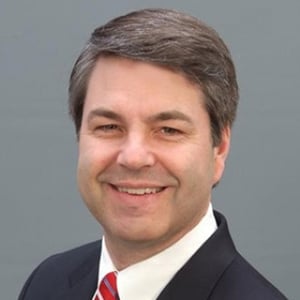
Partner and Co-Chair, Public Policy Group, Shook Hardy & Bacon LLP
Mark Behrens co-chairs Shook's Washington, DC-based Public Policy Practice Group and is a leading national expert on civil justice issues with over thirty years of experience. A substantial part of his practice is working to improve the civil litigation environment through state and federal legislation; in the courts through amicus curiae briefs; through legal scholarship and judicial education; and in the court of public opinion.
Mark is actively involved in civil justice reform efforts at the federal and state levels. He has testified before the U.S. Congress and most state legislatures on behalf of business and civil justice organizations. Mark also has an active amicus brief practice specializing in tort liability and civil justice issues. He has authored or co-authored over 150 amicus briefs in cases before the United States Supreme Court and federal and state appellate courts on behalf of business, civil justice, and defense lawyer organizations. In addition, Mark routinely files comments on behalf of business, civil justice, and defense lawyer organizations regarding potential changes to federal and state court rules. He chairs the International Association of Defense Counsel’s (IADC) Civil Justice Response Committee and serves on the Board of Directors of Lawyers for Civil Justice (LCJ).
Mark is a member of the American Law Institute (ALI). He received his J.D. in 1990 from Vanderbilt University Law School, where he was a member of the Vanderbilt Law Review. He received his B.A. in economics from the University of Wisconsin in 1987.
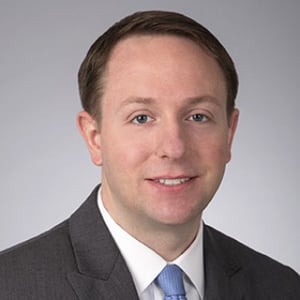
Of Counsel, Shook Hardy & Bacon LLP
Chris’ public policy work focuses on tort law and civil justice system reform. His work is generally divided among legislative efforts, appellate litigation, and liability counseling. Chris has drafted model legislation to be introduced on the state and federal level, testified on numerous legislative initiatives, and authored amicus briefs to state supreme courts and federal appellate courts, including the U.S. Supreme Court. He also serves as an adviser to various business groups and trade associations interested in tort liability issues and civil justice system reform.
In addition, Chris is an elected member of the American Law Institute (ALI), and has assisted in the development of a variety of ALI projects implicating liability law. He has also been a recurrent guest lecturer at the U.S. Department of Justice and Wake Forest University School of Law, as well as a speaker at numerous legal conferences and industry group meetings, on issues related to tort law. Chris has additionally produced significant scholarship in the area of liability law. He has authored more than 50 legal publications on a wide range of liability issues, including articles in the Harvard Journal of Law & Public Policy, UPenn Journal of Business Law, and Duke Journal of Constitutional Law & Public Policy, and has served as a contributor to tort casebooks.
Former Administrator, U.S. Environmental Protection Agency
Scott Pruitt served as the 14th Administrator of the U.S. Environmental Protection Agency.
As Administrator, Mr. Pruitt’s overarching goal was to lead EPA in a way that our future generations inherit a better and healthier environment as he works with the thousands of dedicated public servants at EPA who have devoted their careers to helping realize this shared vision, while faithfully administering environmental laws.
Prior to the EPA, Pruitt served as the Attorney General for Oklahoma. Almost immediately upon taking office, he worked with his Democratic counterpart in Arkansas to reach agreement to study the water quality of the Illinois River, which crosses the border between the two states and has been enjoyed by generations of Oklahomans. The Statement of Joint Principles provides for a best science study using EPA-approved methods, with both states agreeing, for the first time, to be bound by the outcome.
Also during his tenure as Oklahoma’s Attorney General, Pruitt led an historic water rights settlement between Oklahoma, Oklahoma City and the Choctaw and Chickasaw Tribal Nations that preserved the ecosystems of scenic lakes and rivers on native lands. The agreement, which required Congressional approval, was enacted into Section 3608 of Public Law 114-322 and signed in December 2016. It provides a framework that fosters intergovernmental collaboration on significant water resource concerns with the settlement area, while at the same time protecting existing water rights and affirming the state’s role in water rights permitting and administration.
Water settlement cases can be lengthy, costly, divisive and disruptive; however under Pruitt’s forward-thinking leadership, the process was hailed by all parties as one of commitment, hard work, perseverance and cooperation.
Pruitt became a national leader through a career of advocating to keep power in the hands of hard-working Americans. He has a proven track record of working with others – including industry, farmers, ranchers, landowners and small business owners - who want to do the right thing by the environment.
He has dedicated his career to creating policy that serves the people. He strongly believes that environmental law, policy and progress are all based on cooperation between the states, cooperation between the states and EPA, and cooperation between regulators and the public. As Attorney General for Oklahoma, he led the state’s legal challenges against property rights intrusion, while protecting Oklahoma’s natural resources and environment.
He is recognized as a national leader in the cause to restore the proper balance between the states and federal government, and he established Oklahoma’s first federalism unit to combat unwarranted regulation and overreach by the federal government.
Before being elected attorney general, he served eight years in the Oklahoma State Senate where he was a leading voice for fiscal responsibility.
After earning his Bachelor’s Degree from Georgetown College and graduating from the University of Tulsa College of Law, Pruitt went into private legal practice, specializing in constitutional law.
In addition to his life as a civil servant, Pruitt is a successful entrepreneur. As a co-owner and managing general partner of Oklahoma City’s Triple-A minor league baseball affiliate, the Oklahoma City Redhawks, Mr. Pruitt took over the team’s marketing operations and helped the team become one of the minor league leaders in attendance and merchandise sales.
Pruitt is, first and foremost, a family man. He and Marlyn, his wife of 27 years, proudly raised their daughter, McKenna, and son, Cade, in Tulsa. Pruitt has made it a priority to pass on to his children the same principled family values with which he was raised.

Professor Emeritus, Paul M. Hebert Law Center, Louisiana State University
In memoriam
Dr. John Baker is Professor Emeritus of Law, and previously the Dale E. Bennett Professor of Law, at Louisiana State University Law School. He is currently Visiting Professor at Peking University School of Transnational Law (via Zoom) and has been Visiting Professor at The Center for the Constitution, Georgetown Law School (2013-2020). He has also been a Visiting Fellow at Oriel College, the University of Oxford (2012-2014) and taught at Blackfriars Hall, Oxford in 2014. Dr. Baker has also been an adjunct Fellow at the Heritage Foundation (Spring, 2008) and a Distinguished Scholar at the Catholic University of America Law School (2011-12). He has taught at Tulane Law School, George Mason Law School, Pepperdine Law School, New York Law School, Hong Kong University, and the University of Dallas, School of Management and also taught and/or lectured in 17 foreign countries. Notable among his foreign visits are the
following: Visiting Professor at the University of Lyon III (France) (1999-2011); Visiting Professor at the Universidad de los Andes, Chile (2012), as a Fulbright Specialist (2006); and a Fulbright Scholar at various universities in the Philippines. Dr. Baker received his J.D., with honors, from the University of Michigan Law School and his B.A., magna cum laude, from the University of Dallas. He also earned a Ph.D. in Political Thought from the University of London. Baker has taught over a dozen different subjects, mostly courses in public law. His main areas of interest are Constitutional Law (particularly federalism and separation of powers), Criminal Law, Anti-Terrorism Law, International Law, Health Care Law, Mediation, and Comparative Law.
In addition to law review articles and book chapters, Dr. Baker’s academic publications include Hall's Criminal Law: Cases and Materials (with Benson, Force and George; 5th ed. Michie, 1993); An Introduction to the Law of the United States (ed. with Levasseur; University Press of America, 1992). He has also published on Forbes.com, FoxNews.com, in The Washington Times, and a number of times in The Wall Street Journal. He argues in federal court, including two oral arguments in the U.S. Supreme Court. For many years, he co-taught courses for the Federalist Society on separation of powers with the late Supreme Court Justice Antonin Scalia. In September 2016, he co-taught a Supreme Court seminar in China with Justice Samuel Alito. Following law school, he served as a law clerk in federal district court and as an assistant district attorney in New Orleans before joining LSU in 1975. While a professor, he has been as a consultant to USAID, USIA (since rolled into the State Department), the Justice Department, the U.S. Senate Judiciary Subcommittee on Separation of Powers, and the Office of Planning in the White House. He served on an ABA Task Force which issued the report, The Federalization of Crime (1998) and later as a consultant to the “Bi-Partisan Task Force on the Over- federalization of Crime” (2012-2014) created by the U.S. House Judiciary Subcommittee on Crime. Dr. Baker was a co-founder of the first iteration (1995) of Stratfor Inc., a global intelligence agency. He co-authored its first book: The Intelligence Edge (with Friedman, Friedman and Chapman; Crown Books/Random House 1997). In 2022, he began a short, weekly video podcast available on YouTube and Rumble, The Baker Brief.

Founding Partner, Boyden Gray & Associates
Ambassador C. Boyden Gray is the founding partner of Boyden Gray & Associates, a law and strategy firm in Washington, D.C., focused on constitutional and regulatory issues.
Mr. Gray worked in the White House for twelve years, first as counsel to the Vice President during the Reagan administration and then as White House Counsel to President George H.W. Bush. In the Reagan administration, he was Counsel to the Presidential Task Force on Regulatory Relief, for which he wrote the original Executive Order 12291 requiring cost-benefit analysis and White House review of regulations (later renumbered as current EO 12866). In the George H.W. Bush Administration, Mr. Gray was in charge of judicial selection and was also instrumental in the enactment of the Clean Air Act Amendments of 1990, the Energy Policy Act of 1992, and a cap-and-trade system for acid rain emissions. In 1993, he received the Presidential Citizens Medal. Under President George W. Bush, Mr. Gray was U.S. Ambassador to the European Union and U.S. Special Envoy to Europe for Eurasian Energy.
Mr. Gray practiced law for 25 years at the law firm of Wilmer, Cutler & Pickering and was chairman of the Administrative Law and Regulatory Practice Section of the American Bar Association from 2000 to 2002. Early in his career, Mr. Gray helped to develop the Business Roundtable and served as its first counsel. He is an adjunct professor at Antonin Scalia Law School and a former adjunct professor at NYU Law School (teaching energy and environmental law). Mr. Gray is on the Board of Directors of the Atlantic Council, the Federalist Society, Reason Foundation, and the Trust for the National Mall.
Mr. Gray earned his A.B. magna cum laude from Harvard, where he was an editor of the Crimson, and his J.D. with high honors from the University of North Carolina at Chapel Hill, where he was editor-in-chief of the Law Review. Mr. Gray served in the United States Marine Corps, and after law school, he clerked for Earl Warren, Chief Justice of the United States Supreme Court.
Former United States Senator, Oklahoma
Tom A. Coburn, M.D. was elected to the U.S. Senate on November 2, 2004. Dr. Coburn's priorities in the Senate included reducing wasteful spending, protecting your liberty, balancing the budget, improving health care access and affordability, protecting the sanctity of all human life - including the unborn - and representing traditional, Oklahoma values. As a citizen legislator, Dr. Coburn pledged to serve no more than two terms in the Senate and to continue to care for patients. He was a member of the Senate Judiciary Committee, Homeland Security and Governmental Affairs Committee, and the Committee on Finance.
As a Senator, Dr. Coburn offered more amendments than any of his colleagues. He offered amendments to eliminate funding for the "Bridge to Nowhere," the "Woodstock Museum" in New York and countless other special interests earmarks sponsored by members of both parties. Dr. Coburn also worked to make government more accountable and transparent. In 2006, he teamed up with then-Senator Barack Obama to create http://www.usaspending.gov/, an online database of all federal spending.
Prior to his election to the Senate, Dr. Coburn represented Oklahoma's Second Congressional District in the House of Representatives from 1995 through 2001. He was first elected in 1994, then re-elected in 1996 and 1998, becoming the first Republican to hold the seat for consecutive terms. Dr. Coburn retired from Congress in 2001, fulfilling his pledge to serve no more than three terms in the House.
In 1970, Dr. Coburn graduated with an accounting degree from Oklahoma State University. From 1970 to 1978, Dr. Coburn served as manufacturing manager at the Ophthalmic Division of Coburn Optical Industries in Colonial Heights, Virginia. Under his leadership, the Virginia division of Coburn Optical grew from 13 employees to more than 350 and captured 35 percent of the U.S. market.
After the family business was sold, Dr. Coburn changed the course of his life by returning to school to become a physician at the University of Oklahoma Medical School where he graduated in 1983. He then did his internship in general surgery at St. Anthony's Hospital in Oklahoma City and family practice residency at the University of Arkansas, Fort Smith.
Dr. Coburn returned to Muskogee where he specialized in family medicine, obstetrics and the treatment of allergies. Dr. Coburn personally delivered more than 4,000 babies.
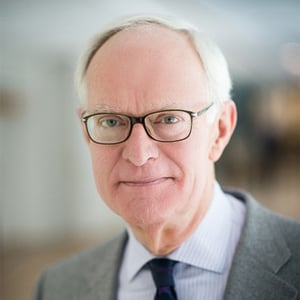
Distinguished Fellow, Hudson Institute
Christopher DeMuth is a distinguished fellow at Hudson Institute. He was president of the American Enterprise Institute for Public Policy Research (AEI) from 1986 to 2008 and was the D.C. Searle Senior Fellow at AEI from 2008 to 2011.
Mr. DeMuth was raised in Kenilworth, Illinois, and attended the Lawrenceville School (1964), Harvard College (A.B. 1968), and the University of Chicago Law School (J.D. 1973). He served as staff assistant to President Richard M. Nixon from 1969 to 1970, working first for Daniel P. Moynihan (then assistant to the President for Urban Affairs) on urban policy matters and then as chairman of the White House Task Force on Environmental Policy. Following law school, he practiced regulatory, antitrust, and general corporate law with Sidley & Austin in Chicago (1973-1976) and was associate general counsel of the Consolidated Rail Corporation (Conrail) in Philadelphia (1976-1977).
From 1977 to 1981, Mr. DeMuth was lecturer in public policy at the Kennedy School of Government at Harvard University, and director of the Harvard Faculty Project on Regulation. There he taught courses on law, economics, and regulatory policy and conducted and sponsored research on health, safety, environmental, and economic regulation.
Returning to Washington in 1981, Mr. DeMuth served as administrator for information and regulatory affairs in the U.S. Office of Management and Budget, and as executive director of the Presidential Task Force on Regulatory Relief during President Ronald Reagan’s first term of office. From 1984 to 1986, he was managing director of Lexecon Inc., a law-and-economics consulting firm; in 1986, he was also publisher and editor-in-chief of Regulation magazine. He was elected president of the American Enterprise Institute in December 1986.
Many of Mr. DeMuth’s articles, lectures, and occasional talks are posted on his website (https://www.ccdemuth.com).
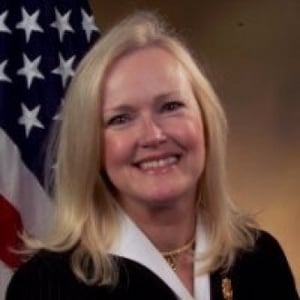
Founder, Law Office of Eileen J. O'Connor PLLC
After nearly 30 years as a national tax specialist with the IRS and major accounting firms, Eileen J. O’Connor, now an attorney in private practice, was Assistant Attorney General for the Justice Department’s Tax Division for six years during the administration of President George W. Bush and a member of then-President-elect Trump’s Treasury Department Transition Team. She focuses on federal administrative and tax law.

Judge, United States Court of Appeals, D.C. Circuit
Judge Randolph was confirmed by the Senate and appointed to the United States Court of Appeals for the District of Columbia Circuit by President George H. W. Bush in July 1990.
Judge Randolph received his B.S. degree in 1966 from Drexel University, majoring in economics and basic engineering. At Drexel, he was president of the debate society, vice president of the Student Senate, and a member of the varsity wrestling squad. In 1969, he received his J.D. from the University of Pennsylvania, summa cum laude. Judge Randolph ranked first in his law school class all three years and was managing editor of the Law Review.
After graduation, Judge Randolph served as a law clerk to Judge Henry J. Friendly of the United States Court of Appeals for the Second Circuit in New York.
Admitted to the California Bar in 1970 (and to the District of Columbia bar in 1973), Judge Randolph worked as Assistant to the Solicitor General, U.S. Department of Justice, in Washington, D.C., 1970-1973.
After two years in private practice, Judge Randolph was named Deputy Solicitor General of the United States, a position he held from 1975-1977.
In 1979, Judge Randolph was appointed Special Counsel to the Committee on Standards of Official Conduct (the Ethics Committee) of the United States House of Representatives, remaining in this position until 1980.
In the 1980s, Judge Randolph held a number of positions while in private practice, including Special Assistant Attorney General for the states of New Mexico (1985 90), Utah (1986-1990) and Montana (1983-1990). He also served as a Member of the Advisory Panel of the Federal Courts Study Committee.
From 1971-1990, Judge Randolph argued 23 times in the United States Supreme Court, winning 20 of his cases.
As an Adjunct Professor of Law at Georgetown University Law Center from 1974-1978 he taught courses in civil procedure and injunctions. In 1992 he taught a course in constitutional law. He is a Distinguished Adjunct Professor of Law at George Mason School of Law and for the past ten years has been teaching First Amendment law. He also serves on the Judicial Advisory Board of the George Mason University Law and Economics Center.
From 1993 through 1995 Judge Randolph was a member of the Committee on Codes of Conduct of the Judicial Conference of the United States, and from 1995 to 1998 served as the Committee's chairman. He also served as the judicial liaison to the American Bar Association’s Administrative Law Section.
Judge Randolph is a member of the Board of Visitors at Drexel University Law School and was named to the “Drexel One Hundred” as a leading alumnus. In 2002 he was presented the James Wilson Award by the University of Pennsylvania Law School. In November 2005 he delivered the Fifth Annual Barbara K. Olson Memorial Lecture at the Annual Lawyers Convention of the Federalist Society. He has published numerous articles, the most recent of which is in the June 2006 issue of the Harvard Journal of Law and Public Policy.
Judge Randolph is married to the Honorable Eileen J. O’Connor, formerly Assistant Attorney General, Tax Division, U.S. Department of Justice. His son John Trevor Randolph is an investment banker in New York. His daughter Cynthia Lee Randolph is an artist living in San Francisco.
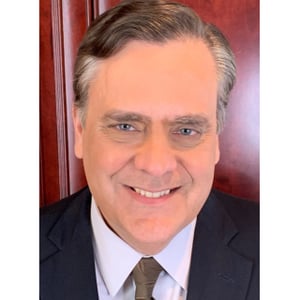
J.B. and Maurice C. Shapiro Professor of Public Interest Law; Director of the Environmental Law Advocacy Center; Executive Director, Project for Older Prisoners, The George Washington University Law School
Jonathan Turley is a nationally recognized legal scholar who has written extensively in areas ranging from constitutional law to legal theory to tort law. After a stint at Tulane Law School, Professor Turley joined the GW Law faculty in 1990, and in 1998, became the youngest chaired professor in the school’s history.
He is the founder and executive director of the Project for Older Prisoners (POPS). He has written more than three dozen academic articles that have appeared in a variety of leading law journals including those of Cornell, Duke, Georgetown, Harvard, and Northwestern Universities, among others. He most recently completed a three-part study of the historical and constitutional evolution of the military system.
Professor Turley has served as counsel in some of the most notable cases in the last two decades, including his representation of the Area 51 workers at a secret air base in Nevada; the nuclear couriers at Oak Ridge, Tennessee; the Rocky Flats grand jury in Colorado; Dr. Eric Foretich, the husband in the Elizabeth Morgan custody controversy; and four former U.S. Attorney Generals during the Clinton impeachment litigation. Professor Turley also has served as counsel in a variety of national security and terrorism cases, and has been ranked as one of the top 10 lawyers handling military cases.
He has served as a consultant on homeland security and constitutional issues, and is a frequent witness before the House and Senate on constitutional and statutory issues as well as tort reform legislation. He also is a nationally recognized legal commentator; he ranked 38th in the top 100 most cited ‘public intellectuals’ in a recent study by Judge Richard Posner and was found to be the second most cited law professor in the country.
He is a member of the USA Today board of contributors and the recipient of the “2005 Single Issue Advocate of the Year” – the annual opinion award for the Aspen Institute and The Week magazine. More than 400 of his articles on legal and policy issues regularly appear in national newspapers. He also has worked as the CBS and NBC legal analyst, respectively, during national controversies.
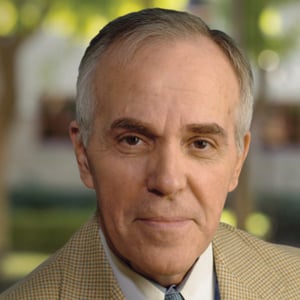
Professor of Government, Claremont Graduate University
Michael Uhlmann has been a professor in the Division of Politics & Economics at Claremont Graduate University since 2002. His research specializations include American presidency, executive–congressional relations, and the federal judiciary—namely, the federal administrative process and national security decision making. In addition to his regular coursework at CGU, Uhlmann teaches in and directs CGU’s Tribal Administration Certificate Program, made possible through a generous grant from the San Manuel Band of Mission Indians.
Uhlmann received his PhD in Government from Claremont Graduate University after receiving his BA in History from Yale University and his LLB from the University of Virginia Law School. Immediately prior to joining the CGU faculty, Uhlmann served as a senior vice president of the Lynde and Harry Bradley Foundation in Milwaukee, Wisconsin. Before that, he was a senior fellow at the Ethics and Public Policy Center in Washington, D.C. He had also served for many years as a partner in the Washington office of Pepper, Hamilton, & Scheetz, a large international law firm, where he specialized in federal antitrust and administrative law. Concurrently held alongside his position at CGU, Uhlmann is an adjunct professor at Claremont McKenna College, teaching a variety of courses in the Department of Government.
In addition to his academic career, private legal practice, and philanthropic work, Uhlmann has had a distinguished career in government, beginning with service as a staff and committee counsel in the U.S. Senate and as assistant general counsel of the Federal Trade Commission. In 1974, following Senate confirmation, he was appointed by President Gerald Ford to be assistant attorney general for Legislative Affairs in the Department of Justice. From 1981 to 1984, he served as special assistant to President Ronald Reagan and associate director of the White House Office of Policy Development. He directed legal and administrative policy for the Reagan presidential transition in 1980–1981 and chaired the Department of Justice transition team for President-Elect George H. W. Bush in 1988–1989.
Uhlmann has written for many leading newspapers and journals of opinion, including National Review, Weekly Standard, Philadelphia Inquirer, Los Angeles Times, Washington Post, First Things, and Claremont Review of Books.
Former United States Senator, Oklahoma
Tom A. Coburn, M.D. was elected to the U.S. Senate on November 2, 2004. Dr. Coburn's priorities in the Senate included reducing wasteful spending, protecting your liberty, balancing the budget, improving health care access and affordability, protecting the sanctity of all human life - including the unborn - and representing traditional, Oklahoma values. As a citizen legislator, Dr. Coburn pledged to serve no more than two terms in the Senate and to continue to care for patients. He was a member of the Senate Judiciary Committee, Homeland Security and Governmental Affairs Committee, and the Committee on Finance.
As a Senator, Dr. Coburn offered more amendments than any of his colleagues. He offered amendments to eliminate funding for the "Bridge to Nowhere," the "Woodstock Museum" in New York and countless other special interests earmarks sponsored by members of both parties. Dr. Coburn also worked to make government more accountable and transparent. In 2006, he teamed up with then-Senator Barack Obama to create http://www.usaspending.gov/, an online database of all federal spending.
Prior to his election to the Senate, Dr. Coburn represented Oklahoma's Second Congressional District in the House of Representatives from 1995 through 2001. He was first elected in 1994, then re-elected in 1996 and 1998, becoming the first Republican to hold the seat for consecutive terms. Dr. Coburn retired from Congress in 2001, fulfilling his pledge to serve no more than three terms in the House.
In 1970, Dr. Coburn graduated with an accounting degree from Oklahoma State University. From 1970 to 1978, Dr. Coburn served as manufacturing manager at the Ophthalmic Division of Coburn Optical Industries in Colonial Heights, Virginia. Under his leadership, the Virginia division of Coburn Optical grew from 13 employees to more than 350 and captured 35 percent of the U.S. market.
After the family business was sold, Dr. Coburn changed the course of his life by returning to school to become a physician at the University of Oklahoma Medical School where he graduated in 1983. He then did his internship in general surgery at St. Anthony's Hospital in Oklahoma City and family practice residency at the University of Arkansas, Fort Smith.
Dr. Coburn returned to Muskogee where he specialized in family medicine, obstetrics and the treatment of allergies. Dr. Coburn personally delivered more than 4,000 babies.
Distinguished Fellow, Hudson Institute
Christopher DeMuth is a distinguished fellow at Hudson Institute. He was president of the American Enterprise Institute for Public Policy Research (AEI) from 1986 to 2008 and was the D.C. Searle Senior Fellow at AEI from 2008 to 2011.
Mr. DeMuth was raised in Kenilworth, Illinois, and attended the Lawrenceville School (1964), Harvard College (A.B. 1968), and the University of Chicago Law School (J.D. 1973). He served as staff assistant to President Richard M. Nixon from 1969 to 1970, working first for Daniel P. Moynihan (then assistant to the President for Urban Affairs) on urban policy matters and then as chairman of the White House Task Force on Environmental Policy. Following law school, he practiced regulatory, antitrust, and general corporate law with Sidley & Austin in Chicago (1973-1976) and was associate general counsel of the Consolidated Rail Corporation (Conrail) in Philadelphia (1976-1977).
From 1977 to 1981, Mr. DeMuth was lecturer in public policy at the Kennedy School of Government at Harvard University, and director of the Harvard Faculty Project on Regulation. There he taught courses on law, economics, and regulatory policy and conducted and sponsored research on health, safety, environmental, and economic regulation.
Returning to Washington in 1981, Mr. DeMuth served as administrator for information and regulatory affairs in the U.S. Office of Management and Budget, and as executive director of the Presidential Task Force on Regulatory Relief during President Ronald Reagan’s first term of office. From 1984 to 1986, he was managing director of Lexecon Inc., a law-and-economics consulting firm; in 1986, he was also publisher and editor-in-chief of Regulation magazine. He was elected president of the American Enterprise Institute in December 1986.
Many of Mr. DeMuth’s articles, lectures, and occasional talks are posted on his website (https://www.ccdemuth.com).
Founder, Law Office of Eileen J. O'Connor PLLC
After nearly 30 years as a national tax specialist with the IRS and major accounting firms, Eileen J. O’Connor, now an attorney in private practice, was Assistant Attorney General for the Justice Department’s Tax Division for six years during the administration of President George W. Bush and a member of then-President-elect Trump’s Treasury Department Transition Team. She focuses on federal administrative and tax law.
Judge, United States Court of Appeals, D.C. Circuit
Judge Randolph was confirmed by the Senate and appointed to the United States Court of Appeals for the District of Columbia Circuit by President George H. W. Bush in July 1990.
Judge Randolph received his B.S. degree in 1966 from Drexel University, majoring in economics and basic engineering. At Drexel, he was president of the debate society, vice president of the Student Senate, and a member of the varsity wrestling squad. In 1969, he received his J.D. from the University of Pennsylvania, summa cum laude. Judge Randolph ranked first in his law school class all three years and was managing editor of the Law Review.
After graduation, Judge Randolph served as a law clerk to Judge Henry J. Friendly of the United States Court of Appeals for the Second Circuit in New York.
Admitted to the California Bar in 1970 (and to the District of Columbia bar in 1973), Judge Randolph worked as Assistant to the Solicitor General, U.S. Department of Justice, in Washington, D.C., 1970-1973.
After two years in private practice, Judge Randolph was named Deputy Solicitor General of the United States, a position he held from 1975-1977.
In 1979, Judge Randolph was appointed Special Counsel to the Committee on Standards of Official Conduct (the Ethics Committee) of the United States House of Representatives, remaining in this position until 1980.
In the 1980s, Judge Randolph held a number of positions while in private practice, including Special Assistant Attorney General for the states of New Mexico (1985 90), Utah (1986-1990) and Montana (1983-1990). He also served as a Member of the Advisory Panel of the Federal Courts Study Committee.
From 1971-1990, Judge Randolph argued 23 times in the United States Supreme Court, winning 20 of his cases.
As an Adjunct Professor of Law at Georgetown University Law Center from 1974-1978 he taught courses in civil procedure and injunctions. In 1992 he taught a course in constitutional law. He is a Distinguished Adjunct Professor of Law at George Mason School of Law and for the past ten years has been teaching First Amendment law. He also serves on the Judicial Advisory Board of the George Mason University Law and Economics Center.
From 1993 through 1995 Judge Randolph was a member of the Committee on Codes of Conduct of the Judicial Conference of the United States, and from 1995 to 1998 served as the Committee's chairman. He also served as the judicial liaison to the American Bar Association’s Administrative Law Section.
Judge Randolph is a member of the Board of Visitors at Drexel University Law School and was named to the “Drexel One Hundred” as a leading alumnus. In 2002 he was presented the James Wilson Award by the University of Pennsylvania Law School. In November 2005 he delivered the Fifth Annual Barbara K. Olson Memorial Lecture at the Annual Lawyers Convention of the Federalist Society. He has published numerous articles, the most recent of which is in the June 2006 issue of the Harvard Journal of Law and Public Policy.
Judge Randolph is married to the Honorable Eileen J. O’Connor, formerly Assistant Attorney General, Tax Division, U.S. Department of Justice. His son John Trevor Randolph is an investment banker in New York. His daughter Cynthia Lee Randolph is an artist living in San Francisco.
J.B. and Maurice C. Shapiro Professor of Public Interest Law; Director of the Environmental Law Advocacy Center; Executive Director, Project for Older Prisoners, The George Washington University Law School
Jonathan Turley is a nationally recognized legal scholar who has written extensively in areas ranging from constitutional law to legal theory to tort law. After a stint at Tulane Law School, Professor Turley joined the GW Law faculty in 1990, and in 1998, became the youngest chaired professor in the school’s history.
He is the founder and executive director of the Project for Older Prisoners (POPS). He has written more than three dozen academic articles that have appeared in a variety of leading law journals including those of Cornell, Duke, Georgetown, Harvard, and Northwestern Universities, among others. He most recently completed a three-part study of the historical and constitutional evolution of the military system.
Professor Turley has served as counsel in some of the most notable cases in the last two decades, including his representation of the Area 51 workers at a secret air base in Nevada; the nuclear couriers at Oak Ridge, Tennessee; the Rocky Flats grand jury in Colorado; Dr. Eric Foretich, the husband in the Elizabeth Morgan custody controversy; and four former U.S. Attorney Generals during the Clinton impeachment litigation. Professor Turley also has served as counsel in a variety of national security and terrorism cases, and has been ranked as one of the top 10 lawyers handling military cases.
He has served as a consultant on homeland security and constitutional issues, and is a frequent witness before the House and Senate on constitutional and statutory issues as well as tort reform legislation. He also is a nationally recognized legal commentator; he ranked 38th in the top 100 most cited ‘public intellectuals’ in a recent study by Judge Richard Posner and was found to be the second most cited law professor in the country.
He is a member of the USA Today board of contributors and the recipient of the “2005 Single Issue Advocate of the Year” – the annual opinion award for the Aspen Institute and The Week magazine. More than 400 of his articles on legal and policy issues regularly appear in national newspapers. He also has worked as the CBS and NBC legal analyst, respectively, during national controversies.
Professor of Government, Claremont Graduate University
Michael Uhlmann has been a professor in the Division of Politics & Economics at Claremont Graduate University since 2002. His research specializations include American presidency, executive–congressional relations, and the federal judiciary—namely, the federal administrative process and national security decision making. In addition to his regular coursework at CGU, Uhlmann teaches in and directs CGU’s Tribal Administration Certificate Program, made possible through a generous grant from the San Manuel Band of Mission Indians.
Uhlmann received his PhD in Government from Claremont Graduate University after receiving his BA in History from Yale University and his LLB from the University of Virginia Law School. Immediately prior to joining the CGU faculty, Uhlmann served as a senior vice president of the Lynde and Harry Bradley Foundation in Milwaukee, Wisconsin. Before that, he was a senior fellow at the Ethics and Public Policy Center in Washington, D.C. He had also served for many years as a partner in the Washington office of Pepper, Hamilton, & Scheetz, a large international law firm, where he specialized in federal antitrust and administrative law. Concurrently held alongside his position at CGU, Uhlmann is an adjunct professor at Claremont McKenna College, teaching a variety of courses in the Department of Government.
In addition to his academic career, private legal practice, and philanthropic work, Uhlmann has had a distinguished career in government, beginning with service as a staff and committee counsel in the U.S. Senate and as assistant general counsel of the Federal Trade Commission. In 1974, following Senate confirmation, he was appointed by President Gerald Ford to be assistant attorney general for Legislative Affairs in the Department of Justice. From 1981 to 1984, he served as special assistant to President Ronald Reagan and associate director of the White House Office of Policy Development. He directed legal and administrative policy for the Reagan presidential transition in 1980–1981 and chaired the Department of Justice transition team for President-Elect George H. W. Bush in 1988–1989.
Uhlmann has written for many leading newspapers and journals of opinion, including National Review, Weekly Standard, Philadelphia Inquirer, Los Angeles Times, Washington Post, First Things, and Claremont Review of Books.
Director of Law & Policy, Environmental Integrity Project
Following Princeton and the University of Chicago Law School, David began practicing law at Paul, Weiss, Rifkind, Wharton & Garrison. Eventually tiring of litigation where the result was a wire transfer from Entity A to Entity B, in the early 1990’s David began his environmental law career at the Massachusetts Attorney General’s Office. Since then, he has litigated dozens of cases under all of the major environmental statutes including, as Sierra Club’s Chief Climate Counsel, initiating and managing Massachusetts v. EPA. Most recently, he has been busy challenging FERC’s permitting of natural gas pipelines and LNG export terminals. Apart from litigation, David has helped lead efforts on both greenhouse gas regulation and global warming legislation (and may be the only person ever invited to testify by both Barbara Boxer and James Inhofe).
He has drafted a range of federal climate legislation, advised states as to their greenhouse gas regulatory authority (and for many years has represented environmental groups defending state GHG regulations from dormant Commerce Clause challenges). David has designed and taught courses on “Environmental Litigation” at Georgetown University Law Center and “Environmental Law and Science” at the William and Mary Law School/Virginia Institute of Marine Science.
Director, Climate & Clean Air Program, Natural Resources Defense Council
David Doniger has been at the forefront of the battle against air pollution and global climate change since he joined NRDC in 1978. He helped formulate the Montreal Protocol, an international agreement designed to stop the depletion of the earth's ozone layer, as well as several essential amendments to the Clean Air Act. In 1993, he left NRDC to serve on the White House Council on Environmental Quality, followed by key posts at the U.S. Environmental Protection Agency. He rejoined NRDC in 2001 and has since been working to defend the Clean Air Act from assaults in Congress. He is based in Washington, D.C.
Former Administrator, U.S. Environmental Protection Agency
Scott Pruitt served as the 14th Administrator of the U.S. Environmental Protection Agency.
As Administrator, Mr. Pruitt’s overarching goal was to lead EPA in a way that our future generations inherit a better and healthier environment as he works with the thousands of dedicated public servants at EPA who have devoted their careers to helping realize this shared vision, while faithfully administering environmental laws.
Prior to the EPA, Pruitt served as the Attorney General for Oklahoma. Almost immediately upon taking office, he worked with his Democratic counterpart in Arkansas to reach agreement to study the water quality of the Illinois River, which crosses the border between the two states and has been enjoyed by generations of Oklahomans. The Statement of Joint Principles provides for a best science study using EPA-approved methods, with both states agreeing, for the first time, to be bound by the outcome.
Also during his tenure as Oklahoma’s Attorney General, Pruitt led an historic water rights settlement between Oklahoma, Oklahoma City and the Choctaw and Chickasaw Tribal Nations that preserved the ecosystems of scenic lakes and rivers on native lands. The agreement, which required Congressional approval, was enacted into Section 3608 of Public Law 114-322 and signed in December 2016. It provides a framework that fosters intergovernmental collaboration on significant water resource concerns with the settlement area, while at the same time protecting existing water rights and affirming the state’s role in water rights permitting and administration.
Water settlement cases can be lengthy, costly, divisive and disruptive; however under Pruitt’s forward-thinking leadership, the process was hailed by all parties as one of commitment, hard work, perseverance and cooperation.
Pruitt became a national leader through a career of advocating to keep power in the hands of hard-working Americans. He has a proven track record of working with others – including industry, farmers, ranchers, landowners and small business owners - who want to do the right thing by the environment.
He has dedicated his career to creating policy that serves the people. He strongly believes that environmental law, policy and progress are all based on cooperation between the states, cooperation between the states and EPA, and cooperation between regulators and the public. As Attorney General for Oklahoma, he led the state’s legal challenges against property rights intrusion, while protecting Oklahoma’s natural resources and environment.
He is recognized as a national leader in the cause to restore the proper balance between the states and federal government, and he established Oklahoma’s first federalism unit to combat unwarranted regulation and overreach by the federal government.
Before being elected attorney general, he served eight years in the Oklahoma State Senate where he was a leading voice for fiscal responsibility.
After earning his Bachelor’s Degree from Georgetown College and graduating from the University of Tulsa College of Law, Pruitt went into private legal practice, specializing in constitutional law.
In addition to his life as a civil servant, Pruitt is a successful entrepreneur. As a co-owner and managing general partner of Oklahoma City’s Triple-A minor league baseball affiliate, the Oklahoma City Redhawks, Mr. Pruitt took over the team’s marketing operations and helped the team become one of the minor league leaders in attendance and merchandise sales.
Pruitt is, first and foremost, a family man. He and Marlyn, his wife of 27 years, proudly raised their daughter, McKenna, and son, Cade, in Tulsa. Pruitt has made it a priority to pass on to his children the same principled family values with which he was raised.
Partner, Baker Hostetler LLP
David Rivkin is a member of the firm's litigation, international and environmental teams and is co-leader of the firm's national appellate practice. He has extensive experience in constitutional, administrative and international law litigation and has been involved in numerous high-profile cases. With his prior experience in the government sector, David draws on a wealth of knowledge when providing compliance advice to companies and handling enforcement proceedings before government agencies on issues arising out of multilateral and unilateral sanctions, the Foreign Corrupt Practices Act (FCPA), anti-boycott issues, bankruptcy and financial fraud matters, and environmental and energy issues.
David has developed and implemented legislative, regulatory and litigation initiatives for two presidential administrations. Over the years, he has published hundreds of articles, op-eds, book reviews and book chapters on a variety of international, legal, constitutional, defense, arms control, foreign policy, environmental and energy issues for various newspapers and magazines, including The Wall Street Journal, The Washington Post, The New York Times, USA Today and The Los Angeles Times, and has been a frequent commentator and guest on TV and radio shows including ABC, CBS, NBC, CNN, Fox News, NPR and PBS.
Laurence H. Silberman Chair in Constitutional Governance, American Enterprise Institute; Executive Director, Antonin Scalia Law School’s C. Boyden Gray Center for the Study of the Administrative State
Adam J. White is the Laurence H. Silberman Chair in Constitutional Governance and senior fellow at the American Enterprise Institute, where he focuses on the Supreme Court and the administrative state. He also directs the Antonin Scalia Law School’s C. Boyden Gray Center for the Study of the Administrative State.
He writes on regulation and constitutional government for a variety of publications. He practiced law in Washington, D.C., after clerking for the D.C. Circuit's Judge David Sentelle. He also has been chairman of the ABA's Administrative Law Section.
In 2021, he served on the Presidential Commission on the Supreme Court of the United States, where he criticized “Court packing” and other efforts to restructure the Supreme Court.

Senior Fellow and Director of Constitutional Studies, Manhattan Institute
Ilya Shapiro is a senior fellow and director of constitutional studies at the Manhattan Institute and a contributing editor of City Journal. Previously he was executive director and senior lecturer at the Georgetown Center for the Constitution, and before that a vice president of the Cato Institute.
Shapiro is the author of Lawless: The Miseducation of America’s Elites (2025) and Supreme Disorder: Judicial Nominations and the Politics of America’s Highest Court (2020), coauthor of Religious Liberties for Corporations? (2014), and editor of 11 volumes of the Cato Supreme Court Review (2008-18). He has contributed to a variety of academic, popular, and professional publications, including the Wall Street Journal, Harvard Journal of Law & Public Policy, Washington Post, Los Angeles Times, USA Today, National Review, and Newsweek. He also regularly provides commentary for various media outlets, writes the Shapiro’s Gavel newsletter on Substack, and once appeared on the Colbert Report.
Shapiro has testified many times before Congress and state legislatures and has filed more than 500 amicus curiae “friend of the court” briefs in the Supreme Court. He lectures regularly on behalf of the Federalist Society, is a member of the board of fellows of the Jewish Policy Center, was an inaugural Washington Fellow at the National Review Institute, and has been an adjunct law professor at the George Washington University and University of Mississippi. He is also the chairman of the board of advisers of the Mississippi Justice Institute, a barrister in the Edward Coke Appellate Inn of Court, and a former member of the Virginia Advisory Committee to the U.S. Commission on Civil Rights.
Earlier in his career, Shapiro was a special assistant/adviser to the Multi-National Force in Iraq on rule-of-law issues and practiced at Patton Boggs and Cleary Gottlieb. Before entering private practice, he clerked for Judge E. Grady Jolly of the U.S. Court of Appeals for the Fifth Circuit. He holds an AB from Princeton University, an MSc from the London School of Economics, and a JD from the University of Chicago Law School.
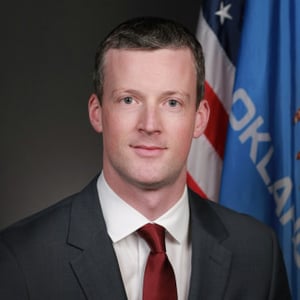
Judge, United States District Court, Western District of Oklahoma
Patrick Wyrick serves as a United States District Court Judge for the Western District of Oklahoma. He was nominated for that position by the President, and assumed duty on April 12, 2019. Before being appointed a federal judge, Wyrick served as Vice Chief Justice of the Oklahoma Supreme Court. Prior to his appointment to the Oklahoma Supreme Court, Wyrick served six years as Oklahoma's Solicitor General.
Associate, Williams and Connolly
James McDonald is an Associate at Williams and Connolly LLP.
Mr. McDonald also serves as a visiting professor at the University of Tulsa School of Law, where he has taught classes in constitutional law, foreign relations law, the federal court system, and the Supreme Court.
During the 2009 Supreme Court term, Mr. McDonald served as a law clerk for Chief Justice John G. Roberts, Jr., Supreme Court of the United States. Prior to that, Mr. McDonald served as Deputy Associate Counsel, Office of the White House Counsel, and in 2007-2008, he served as a law clerk for Judge Jeffrey S. Sutton, United States Court of Appeals for the Sixth Circuit.
Mr. McDonald earned his A.B., Cum Laude, in economics, from Harvard University in 2004 and his J.D. from the University of Virginia School of Law in 2007. While at the University of Virginia School of Law, he was the Articles Development Editor for the Virginia Law Review.
Senior Fellow and Director of Constitutional Studies, Manhattan Institute
Ilya Shapiro is a senior fellow and director of constitutional studies at the Manhattan Institute and a contributing editor of City Journal. Previously he was executive director and senior lecturer at the Georgetown Center for the Constitution, and before that a vice president of the Cato Institute.
Shapiro is the author of Lawless: The Miseducation of America’s Elites (2025) and Supreme Disorder: Judicial Nominations and the Politics of America’s Highest Court (2020), coauthor of Religious Liberties for Corporations? (2014), and editor of 11 volumes of the Cato Supreme Court Review (2008-18). He has contributed to a variety of academic, popular, and professional publications, including the Wall Street Journal, Harvard Journal of Law & Public Policy, Washington Post, Los Angeles Times, USA Today, National Review, and Newsweek. He also regularly provides commentary for various media outlets, writes the Shapiro’s Gavel newsletter on Substack, and once appeared on the Colbert Report.
Shapiro has testified many times before Congress and state legislatures and has filed more than 500 amicus curiae “friend of the court” briefs in the Supreme Court. He lectures regularly on behalf of the Federalist Society, is a member of the board of fellows of the Jewish Policy Center, was an inaugural Washington Fellow at the National Review Institute, and has been an adjunct law professor at the George Washington University and University of Mississippi. He is also the chairman of the board of advisers of the Mississippi Justice Institute, a barrister in the Edward Coke Appellate Inn of Court, and a former member of the Virginia Advisory Committee to the U.S. Commission on Civil Rights.
Earlier in his career, Shapiro was a special assistant/adviser to the Multi-National Force in Iraq on rule-of-law issues and practiced at Patton Boggs and Cleary Gottlieb. Before entering private practice, he clerked for Judge E. Grady Jolly of the U.S. Court of Appeals for the Fifth Circuit. He holds an AB from Princeton University, an MSc from the London School of Economics, and a JD from the University of Chicago Law School.
Judge, United States District Court, Western District of Oklahoma
Patrick Wyrick serves as a United States District Court Judge for the Western District of Oklahoma. He was nominated for that position by the President, and assumed duty on April 12, 2019. Before being appointed a federal judge, Wyrick served as Vice Chief Justice of the Oklahoma Supreme Court. Prior to his appointment to the Oklahoma Supreme Court, Wyrick served six years as Oklahoma's Solicitor General.
Professor Emeritus, Paul M. Hebert Law Center, Louisiana State University
In memoriam
Dr. John Baker is Professor Emeritus of Law, and previously the Dale E. Bennett Professor of Law, at Louisiana State University Law School. He is currently Visiting Professor at Peking University School of Transnational Law (via Zoom) and has been Visiting Professor at The Center for the Constitution, Georgetown Law School (2013-2020). He has also been a Visiting Fellow at Oriel College, the University of Oxford (2012-2014) and taught at Blackfriars Hall, Oxford in 2014. Dr. Baker has also been an adjunct Fellow at the Heritage Foundation (Spring, 2008) and a Distinguished Scholar at the Catholic University of America Law School (2011-12). He has taught at Tulane Law School, George Mason Law School, Pepperdine Law School, New York Law School, Hong Kong University, and the University of Dallas, School of Management and also taught and/or lectured in 17 foreign countries. Notable among his foreign visits are the
following: Visiting Professor at the University of Lyon III (France) (1999-2011); Visiting Professor at the Universidad de los Andes, Chile (2012), as a Fulbright Specialist (2006); and a Fulbright Scholar at various universities in the Philippines. Dr. Baker received his J.D., with honors, from the University of Michigan Law School and his B.A., magna cum laude, from the University of Dallas. He also earned a Ph.D. in Political Thought from the University of London. Baker has taught over a dozen different subjects, mostly courses in public law. His main areas of interest are Constitutional Law (particularly federalism and separation of powers), Criminal Law, Anti-Terrorism Law, International Law, Health Care Law, Mediation, and Comparative Law.
In addition to law review articles and book chapters, Dr. Baker’s academic publications include Hall's Criminal Law: Cases and Materials (with Benson, Force and George; 5th ed. Michie, 1993); An Introduction to the Law of the United States (ed. with Levasseur; University Press of America, 1992). He has also published on Forbes.com, FoxNews.com, in The Washington Times, and a number of times in The Wall Street Journal. He argues in federal court, including two oral arguments in the U.S. Supreme Court. For many years, he co-taught courses for the Federalist Society on separation of powers with the late Supreme Court Justice Antonin Scalia. In September 2016, he co-taught a Supreme Court seminar in China with Justice Samuel Alito. Following law school, he served as a law clerk in federal district court and as an assistant district attorney in New Orleans before joining LSU in 1975. While a professor, he has been as a consultant to USAID, USIA (since rolled into the State Department), the Justice Department, the U.S. Senate Judiciary Subcommittee on Separation of Powers, and the Office of Planning in the White House. He served on an ABA Task Force which issued the report, The Federalization of Crime (1998) and later as a consultant to the “Bi-Partisan Task Force on the Over- federalization of Crime” (2012-2014) created by the U.S. House Judiciary Subcommittee on Crime. Dr. Baker was a co-founder of the first iteration (1995) of Stratfor Inc., a global intelligence agency. He co-authored its first book: The Intelligence Edge (with Friedman, Friedman and Chapman; Crown Books/Random House 1997). In 2022, he began a short, weekly video podcast available on YouTube and Rumble, The Baker Brief.
Founding Partner, Boyden Gray & Associates
Ambassador C. Boyden Gray is the founding partner of Boyden Gray & Associates, a law and strategy firm in Washington, D.C., focused on constitutional and regulatory issues.
Mr. Gray worked in the White House for twelve years, first as counsel to the Vice President during the Reagan administration and then as White House Counsel to President George H.W. Bush. In the Reagan administration, he was Counsel to the Presidential Task Force on Regulatory Relief, for which he wrote the original Executive Order 12291 requiring cost-benefit analysis and White House review of regulations (later renumbered as current EO 12866). In the George H.W. Bush Administration, Mr. Gray was in charge of judicial selection and was also instrumental in the enactment of the Clean Air Act Amendments of 1990, the Energy Policy Act of 1992, and a cap-and-trade system for acid rain emissions. In 1993, he received the Presidential Citizens Medal. Under President George W. Bush, Mr. Gray was U.S. Ambassador to the European Union and U.S. Special Envoy to Europe for Eurasian Energy.
Mr. Gray practiced law for 25 years at the law firm of Wilmer, Cutler & Pickering and was chairman of the Administrative Law and Regulatory Practice Section of the American Bar Association from 2000 to 2002. Early in his career, Mr. Gray helped to develop the Business Roundtable and served as its first counsel. He is an adjunct professor at Antonin Scalia Law School and a former adjunct professor at NYU Law School (teaching energy and environmental law). Mr. Gray is on the Board of Directors of the Atlantic Council, the Federalist Society, Reason Foundation, and the Trust for the National Mall.
Mr. Gray earned his A.B. magna cum laude from Harvard, where he was an editor of the Crimson, and his J.D. with high honors from the University of North Carolina at Chapel Hill, where he was editor-in-chief of the Law Review. Mr. Gray served in the United States Marine Corps, and after law school, he clerked for Earl Warren, Chief Justice of the United States Supreme Court.
Former Administrator, U.S. Environmental Protection Agency
Scott Pruitt served as the 14th Administrator of the U.S. Environmental Protection Agency.
As Administrator, Mr. Pruitt’s overarching goal was to lead EPA in a way that our future generations inherit a better and healthier environment as he works with the thousands of dedicated public servants at EPA who have devoted their careers to helping realize this shared vision, while faithfully administering environmental laws.
Prior to the EPA, Pruitt served as the Attorney General for Oklahoma. Almost immediately upon taking office, he worked with his Democratic counterpart in Arkansas to reach agreement to study the water quality of the Illinois River, which crosses the border between the two states and has been enjoyed by generations of Oklahomans. The Statement of Joint Principles provides for a best science study using EPA-approved methods, with both states agreeing, for the first time, to be bound by the outcome.
Also during his tenure as Oklahoma’s Attorney General, Pruitt led an historic water rights settlement between Oklahoma, Oklahoma City and the Choctaw and Chickasaw Tribal Nations that preserved the ecosystems of scenic lakes and rivers on native lands. The agreement, which required Congressional approval, was enacted into Section 3608 of Public Law 114-322 and signed in December 2016. It provides a framework that fosters intergovernmental collaboration on significant water resource concerns with the settlement area, while at the same time protecting existing water rights and affirming the state’s role in water rights permitting and administration.
Water settlement cases can be lengthy, costly, divisive and disruptive; however under Pruitt’s forward-thinking leadership, the process was hailed by all parties as one of commitment, hard work, perseverance and cooperation.
Pruitt became a national leader through a career of advocating to keep power in the hands of hard-working Americans. He has a proven track record of working with others – including industry, farmers, ranchers, landowners and small business owners - who want to do the right thing by the environment.
He has dedicated his career to creating policy that serves the people. He strongly believes that environmental law, policy and progress are all based on cooperation between the states, cooperation between the states and EPA, and cooperation between regulators and the public. As Attorney General for Oklahoma, he led the state’s legal challenges against property rights intrusion, while protecting Oklahoma’s natural resources and environment.
He is recognized as a national leader in the cause to restore the proper balance between the states and federal government, and he established Oklahoma’s first federalism unit to combat unwarranted regulation and overreach by the federal government.
Before being elected attorney general, he served eight years in the Oklahoma State Senate where he was a leading voice for fiscal responsibility.
After earning his Bachelor’s Degree from Georgetown College and graduating from the University of Tulsa College of Law, Pruitt went into private legal practice, specializing in constitutional law.
In addition to his life as a civil servant, Pruitt is a successful entrepreneur. As a co-owner and managing general partner of Oklahoma City’s Triple-A minor league baseball affiliate, the Oklahoma City Redhawks, Mr. Pruitt took over the team’s marketing operations and helped the team become one of the minor league leaders in attendance and merchandise sales.
Pruitt is, first and foremost, a family man. He and Marlyn, his wife of 27 years, proudly raised their daughter, McKenna, and son, Cade, in Tulsa. Pruitt has made it a priority to pass on to his children the same principled family values with which he was raised.

The Clean Power Plan Goes to Court
David Bookbinder, David D. Doniger, Scott Pruitt, David B. Rivkin, Adam White
In August 2015 the President announced the Clean Power Plan, characterized by the Environmental Protection...
The Clean Power Plan Goes to Court
Environmental Law & Property Rights Practice Group
Washington, DC2015 Civil Justice Update
Mark A. Behrens, Christopher Appel
This paper recaps key civil justice reforms that occurred in 2015. Part I focuses on...
Supreme Court Round-Up
Oklahoma City, OklahomaSupreme Court Round Up (2015-2016)
Tulsa, OklahomaTopics
Author Response: Interpreting Peruta v. County of San Diego by Joseph Greenlee
Mr. Nichols, I appreciate your response, although I do believe it is misguided.I’ll address each...
Governmental Power versus Free Speech? - Podcast
Scott Pruitt, John S. Baker, C. Boyden Gray
Several state attorneys general have banded together to investigate what ExxonMobil did and did not...
Governmental Power versus Free Speech?
TeleforumAdministrative Law: Agency Rule: How Congress Can Reclaim its Legislative Authority
Tom A. Coburn, Christopher C. DeMuth, Eileen J. O'Connor, A. Raymond Randolph, Jonathan R. Turley, Michael Uhlmann
Lawmakers are quick to complain about government agencies exceeding their authority. While some complaint is...
Administrative Law: Agency Rule: How Congress Can Reclaim its Legislative Authority
Tom A. Coburn, Christopher C. DeMuth, Eileen J. O'Connor, A. Raymond Randolph, Jonathan R. Turley, Michael Uhlmann
Lawmakers are quick to complain about government agencies exceeding their authority. While some complaint is...