

Professor of Law, South Texas College of Law Houston
Josh Blackman is a national thought leader on constitutional law and the United States Supreme Court. Josh’s work was quoted during two presidential impeachment trials. He has testified before Congress and advises federal and state lawmakers. Josh regularly appears on TV, including NBC, CBS, ABC, Fox, and the BBC. Josh is also a frequent guest on NPR and other syndicated radio programs. He has published commentaries in the New York Times, Wall Street Journal, Washington Post, and leading national publications.
Since 2012, Josh has served as a professor at the South Texas College of Law Houston. He holds the Centennial Chair of Constitutional Law. Josh is an Adjunct Fellow at the Manhattan Institute. Josh has written more than seven dozen law review articles that have been cited more than a thousand times. Josh was selected as the Jurist of the Year by the Texas Journal of Law & Public Policy, received the inaugural Meese III Originalism Award, and was awarded the Inaugural Joseph Story Award. Josh was selected by Forbes Magazine for the “30 Under 30” in Law and Policy. Josh is the President of the Harlan Institute, and founded FantasySCOTUS, the Internet’s Premier Supreme Court Fantasy League. He blogs at the Volokh Conspiracyand posts@JoshMBlackman.
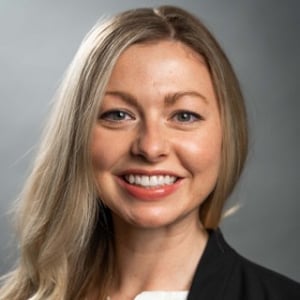
Assistant Solicitor General, Texas
Katie serves as an Assistant Solicitor General for the State of Texas. She previously practiced law at a firm in Washington, D.C. where she focused her legal practice on complex trial and appellate litigation, specializing in data privacy and biometric issues. Before that, Katie served as Chief Counsel to Senator Jeff Flake at the U.S. Senate Judiciary Committee and clerked for Judge Michael B. Brennan of the U.S. Court of Appeals for the Seventh Circuit. Katie graduated from Liberty University and the Antonin Scalia Law School at George Mason University. She is a member of The Federalist Society’s Litigation Practice Group Executive Committee.
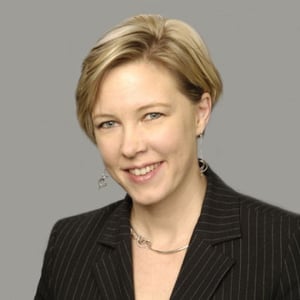
Clinical Professor and Senior Scholar and Senior Fellow for Copyright Research and Policy of C-IP2, Antonin Scalia Law School, George Mason University
Sandra Aistars is Senior Fellow for Copyright Research and Policy and a Senior Scholar at the Center for Intellectual Property x Innovation Policy (C-IP2). She also leads the law school’s Arts & Entertainment Advocacy Program. Professor Aistars has over twenty years of advocacy experience on behalf of copyright and other intellectual property owners. She has served on trade missions and been an industry advisor to the Department of Commerce on intellectual property implications for international trade negotiations; worked on legislative and regulatory matters worldwide; frequently testified before Congress and federal agencies regarding intellectual property matters; chaired cross-industry coalitions and technology standards efforts; and is regularly tapped by government agencies to lecture in U.S. government-sponsored study tours for visiting legislators, judges, prosecutors, and regulators.
Immediately prior to joining Scalia Law, Professor Aistars was the Chief Executive Officer of the Copyright Alliance – a nonprofit, public interest organization that represents the interests of artists and creators across the creative spectrum. While at Scalia Law, she continues to collaborate with the Copyright Alliance as a member of its Academic Advisory Board. Professor Aistars currently serves on the boards of the Washington Area Lawyers for the Arts (WALA) and the Howard Intellectual Property Program (HIPP), and she has previously served as trustee of the Copyright Society of the USA (CSUSA). Professor Aistars has also previously served as Vice President and Associate General Counsel at Time Warner Inc. She began her legal career in private practice at Weil, Gotshal and Manges LLP.

U.S. Court of Federal Claims and Jurist-In-Residence Professor of Law, The University of Akron School of Law
Judge Ryan T. Holte was sworn in as a judge on the United States Court of Federal Claims in July 2019. Prior to confirmation he served as the David L. Brennan Professor of Law and Director of the Center for Intellectual Property Law and Technology at The University of Akron School of Law (2017-2019) and an assistant professor of law at Southern Illinois University School of Law (2013-2017). Judge Holte has written and presented widely on patent law subjects and empirical legal studies of Federal Circuit and district court patent law cases. His most recent articles were published in the Iowa Law Review (2019), George Mason Law Review (2018), and Washington Law Review (2017).
In practice, Judge Holte served for six years as general counsel and partner of an electrical engineering technology company and is co-inventor of multiple patents related to Systems and Methods for Countering Satellite-Navigated Munitions. Prior to entering academia, Judge Holte practiced as a litigation attorney at the Federal Trade Commission and an associate in the Intellectual Property Practice Group at Jones Day. Prior to practice, he served as a law clerk to Judge Stanley F. Birch, Jr. on the United States Court of Appeals for the Eleventh Circuit and as a law clerk to Judge Loren A. Smith on the United States Court of Federal Claims.
Judge Holte received his JD from the University of California Davis School of Law and his BS, magna cum laude, in engineering from the California Maritime Academy where he was a First Class graduate of the Corps of Cadets Third Engineering Division and sailed as a U.S. Merchant Marine oiler.
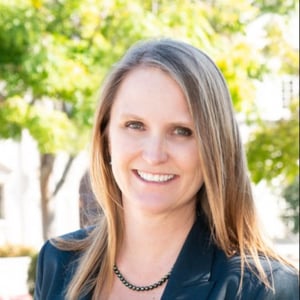
Professor of Law, University of San Diego School of Law
Lisa Ramsey is a Professor of Law at the University of San Diego School of Law, where she is a founding member of the Center for Intellectual Property Law and Markets. She teaches and writes in the intellectual property and international intellectual property law area and is an expert on trademark law. Professor Ramsey is an active member of the American Intellectual Property Law Association and has given presentations on trademark law to attorneys, professors, and students throughout the United States and around the world. Before joining the USD law faculty, she was an intellectual property litigator at Gray Cary Ware & Freidenrich and served as a judicial law clerk for the Honorable Rebecca Beach Smith in the United States District Court for the Eastern District of Virginia. Professor Ramsey’s scholarship focuses on potential conflicts between trademark laws and free speech rights, and explains how trademark protection of inherently valuable words, symbols, and product features can harm fair competition and freedom of expression.
Examples of Professor Ramsey’s publications include Protectable Trademark Subject Matter in Common Law Countries and the Problem with Flexibility in The Cambridge Handbook of International and Comparative Trademark Law (Irene Calboli & Jane Ginsburg eds., Cambridge University Press 2020); Using Failure to Function Doctrine to Protect Free Speech and Competition in Trademark Law in the Iowa Law Review Online (2020); Non-Traditional Trademarks and Inherently Valuable Expression in The Protection of Non-Traditional Trademarks (Irene Calboli & Martin Senftleben eds., Oxford University Press 2018); Free Speech Challenges to Trademark Law After Matal v. Tam in the Houston Law Review (2018); A Free Speech Right to Trademark Protection? in the Trademark Reporter (2016); and Free Speech and International Obligations to Protect Trademarks in the Yale Journal of International Law (2010). Her article Descriptive Trademarks and the First Amendment in the Tennessee Law Review (2003) was judged by the editor of the Intellectual Property Law Review to be one of the best intellectual property law articles of 2003.
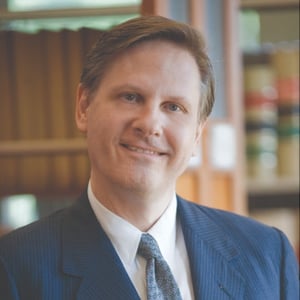
Associate Dean for Faculty Development & Chapman Distinguished Professor of Law, University of Tulsa College of Law
Robert Spoo is Chapman Distinguished Professor at The University of Tulsa College of Law, where he teaches copyright law, property, contracts, law and literature, and other subjects. He received his Ph.D. in English from Princeton University and his J.D. from the Yale Law School. After serving as a judicial clerk for the Honorable Sonia Sotomayor when she was a judge on the U.S. Court of Appeals for the Second Circuit, Spoo was an attorney with law firms in New York, San Francisco, and Tulsa.
Formerly, Spoo was, for more than a decade, editor of the James Joyce Quarterly and a tenured member of the English Department at the University of Tulsa. He has published extensively on modern authors, law and literature, copyrights, and the public domain. His recent articles have appeared in the Stanford Law Review, UCLA Law Review, Law & Literature, Cardozo Arts & Entertainment Law Journal, and Journal of Modern Literature. His book Without Copyrights: Piracy, Publishing, and the Public Domain (Oxford University Press, 2013)—an exploration of the problems faced by foreign authors during the nineteenth and early twentieth centuries when they lacked copyright protection in the United States—was enthusiastically reviewed in The Nation, London Times Literary Supplement, Paris Review Daily, American Historical Review, Critical Inquiry, and other venues. Spoo’s earlier books and editions, published with Oxford and Duke University Presses, focused on James Joyce, Ezra Pound, and H.D. (Hilda Doolittle).
Spoo is coeditor, with Simon Stern, of a Law & Literature series with Oxford University Press.
In 2016, Spoo was awarded a Guggenheim Foundation Fellowship in the Humanities—one of four legal scholars in the United States and Canada to receive a Guggenheim that year. His book Modernism and the Law, prepared during his Guggenheim year, was published in 2018 by Bloomsbury Academic.
In 2020-2021, Spoo was on leave with a Law and Public Affairs (LAPA) Fellowship from Princeton University, where his project for the LAPA year was “Lawful Piracy and Trade Courtesy in the American Copyright Vacuum.”
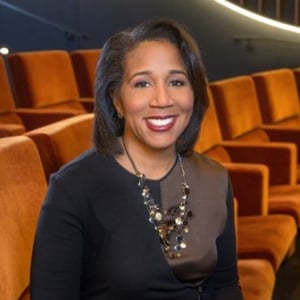
Senior Executive Vice President and Global General Counsel, Motion Picture Association
Karyn A. Temple is Senior Executive Vice President and Global General Counsel for the Motion Picture Association. One of the world’s leading authorities on copyright, Ms. Temple oversees all of the Association’s legal affairs and content protection efforts around the world.
Prior to joining the Motion Picture Association, Ms. Temple served more than eight years in the U.S. Copyright Office, most recently as the Register of Copyrights, where she led the 400-person agency and its eight divisions. Prior to leading the U.S. Copyright Office, Ms. Temple headed its Office of Policy and International Affairs, as well as served in policy and litigation roles at the U.S. Department of Justice; she most recently served in the Obama Administration as Senior Counsel to the Deputy Attorney General of the United States.
Ms. Temple received her J.D. from Columbia University School of Law and her B.A. in English from the University of Michigan.
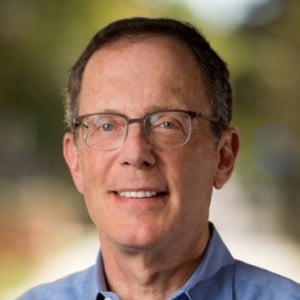
Professor of the Practice of Law, Stanford Law School
Doug Melamed practiced law for 43 years before spending the 2014-15 academic year at the Law School as the Herman Phleger Visiting Professor of Law. He was appointed Professor of the Practice of Law in 2015.
From 2009 until 2014, Professor Melamed was Senior Vice President and General Counsel of Intel Corporation and was responsible for overseeing Intel’s legal, government affairs and corporate affairs departments. Prior to joining Intel in 2009, he was a partner in the Washington, D.C., office of WilmerHale, a global law firm in which he served as a chair of the Antitrust and Competition Practice Group. His practice included appellate and trial court litigation, counseling, and representing clients in matters before government law enforcement and regulatory agencies. He joined WilmerHale’s predecessor in 1971. From 1996 to 2001, Professor Melamed served in the U.S. Department of Justice as Acting Assistant Attorney General in charge of the Antitrust Division and, before that, as Principal Deputy Assistant Attorney General.
Professor Melamed has received numerous professional awards and honors. He has been the Distinguished Visitor from Practice and an adjunct professor at the Georgetown University Law Center, and he has authored numerous articles on antitrust and on law and economics. He is a member of the boards of directors of the Nasdaq exchanges and the American Law Institute and a Contributing Editor of the Antitrust Law Journal. He was for many years a member of the Yale University Council and a member of the board of trustees of Sidwell Friends School in Washington, D.C. After graduating from law school, he clerked for Judge Charles M. Merrill of the U.S. Court of Appeals for the Ninth Circuit.
JD Candidate, Stanford Law School
Austin Peters is a J.D. candidate and a Ph.D. student in Political Science at Stanford University. He earned a B.A. in political science magna cum laude from U.C.S.D., where he also minored in economics. Following graduation, he worked as a Research Assistant for Dr. Arthur Brooks at the American Enterprise Institute. His research interests include state administrative law, empirical legal studies, and judicial politics. After completing his studies at Stanford, he will clerk for Judge Kevin Newsom on the 11th Circuit Court of Appeals.
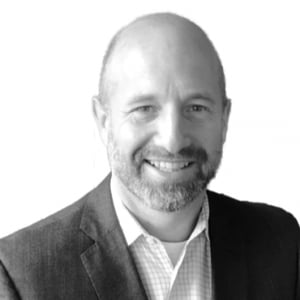
Managing Director, Econ One
Hal Singer is an expert in antitrust, consumer protection, and regulation. He has researched, published, and testified on competition-related issues in a wide variety of industries, including media, pharmaceuticals, sports, and finance. He has extensive experience providing expert economic and policy advice to regulatory agencies in the United States and Canada, as well as before congressional committees.
Dr. Singer is also a Senior Fellow at the George Washington Institute of Public Policy and an Adjunct Professor at Georgetown University, McDonough School of Business, where he teaches advanced pricing to MBA candidates. In 2018, the American Antitrust Institute honored Dr. Singer with an antitrust enforcement award for his work in the Lidoderm antitrust litigation.

Fellow, Thurman Arnold Project, Yale University
Dina Srinivasan is a researcher, lawyer, and entrepreneur. She’s also a Fellow with the Thurman Arnold Project at Yale University.
Most recently, Ms. Srinivasan’s research and economic analysis of new, tech markets provided the foundation for government enforcement of antitrust laws against two of the largest market cap companies in the world. Her 2020 research, "Why Google Dominates Advertising Markets: Competition Policy Should Lean on the Principles of Financial Market Regulation", explains how Google distorts electronically traded ad markets by engaging in conduct that lawmakers normally prohibit (e.g., conduct analogous to insider trading and front running). Her research instigated a shift in the House and Senate and a coalition of U.S. States subsequently filed suit against the company relying on the architecture of Ms. Srinivasan’s thinking. "The Antitrust Case Against Facebook", published in 2019, laid out the correlation between privacy and economics. Congress called on the U.S. Federal Trade Commission to open an investigation; and in 2020, the Federal Trade Commission and a coalition of 48 Attorneys General filed actions against Facebook. She’s been profiled by The New York Times and The Wall Street Journal. Her research and commentary on tech and competition are regularly covered in the domestic and global media.
Previously, Ms. Srinivasan founded an ad technology company whose technology was acquired by a division of WPP, Kantar Media SRDS (NASDAQ). She spent four years as an executive at WPP. In the late 1990s, she founded iMSGu, a text messaging platform that allowed users to send messages across different mobile spectrum networks (CDMA, TDMA, GSM); the company folded in 2002. Ms. Srinivasan holds a J.D. from Yale Law School, where she studied law & economics and was an Olin Fellow with the Kauffman Program in Law, Economics and Entrepreneurship. She lives in the Bay Area with her husband and their four children.
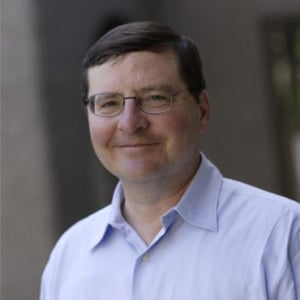
Professor of Law and Warren Christopher Professor in the Practice of International Law and Diplomacy, Stanford Law School
Alan O. Sykes is a leading expert on the application of economics to legal problems whose most recent scholarship is focused on international economic relations. His writing and teaching have encompassed international trade, torts, contracts, insurance, antitrust, international investment law and economic analysis of law. In 2010, he founded Stanford Law School’s LLM program in International Economic Law, Business and Policy (IELBP). Professor Sykes has been a member of the executive committee and the board of the American Law and Economics Association, and served as reporter for the American Law Institute Project on Principles of Trade Law: The World Trade Organization. He is on the Board of Editors for the Journal of International Economic Law, the World Trade Review, and a member of the editorial board of the American Journal of International Law. He formerly served as an editor of the Journal of Legal Studies and the Journal of Law and Economics. He is also a former National Science Foundation graduate fellow in the Department of Economics at Yale University.
Before joining the Stanford Law School faculty again in 2015 (he was on the faculty from 2005 – 2012), Professor Sykes was the Robert A. Kindler Professor of Law at NYU Law School and, prior to 2005, he was the Frank and Bernice J. Greenberg Professor of Law at the University of Chicago Law School, where he also served as faculty director of curriculum.
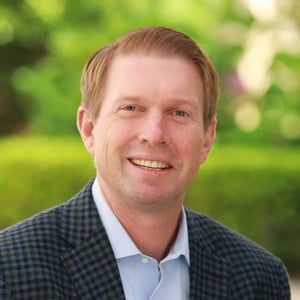
Executive Vice President and General Counsel, National Football League
Ted Ullyot serves as Executive Vice President and General Counsel for the National Football League and is the founder of Highway 50 Ventures, LLC, an investment and advisory firm. A lawyer by background, Ullyot was General Counsel of Facebook from 2008 to 2013. He served in the administration of President George W. Bush, including in the White House as an Associate Counsel and as Deputy Staff Secretary, and in the Justice Department as Chief of Staff to Attorney General Gonzales.
Ullyot began his career as a law clerk, first for Judge J. Michael Luttig of the U.S. Court of Appeals for the Fourth Circuit and then for U.S. Supreme Court Justice Antonin Scalia. He was a litigation partner in the Washington, D.C., office of Kirkland & Ellis LLP.
At other points in his career, Ullyot served as General Counsel of ESL Investments, Inc.; as General Counsel of AOL Time Warner Europe; as a board member at AutoZone Inc.; and as a partner in the venture capital firm Andreessen Horowitz.
He is a member of the board of visitors of the Federalist Society; a member of the University of Chicago Law School Council; and a board member of the U.S. Supreme Court Historical Society.
Ullyot graduated from the University of Chicago Law School, after doing his undergraduate work at Harvard. He and his family live in Northern California.

George Mason University Foundation Professor of Law, Antonin Scalia Law School, George Mason University
TODD J. ZYWICKI is George Mason University Foundation Professor of Law at Antonin Scalia Law School at George Mason University and Research Fellow of the George Mason Law and Economics Center. During the Fall 2023 semester he served as the Visiting Scholar in Conservative Thought and Policy for the Bruce Benson Center for the Study of Western Civilization at the University of Colorado-Boulder. From 2020-2021 he was Chair of the Consumer Financial Protection Bureau Taskforce on Federal Consumer Financial Law. In 2021 he was inducted to the American College of Consumer Financial Services Lawyers. He is also a Senior Fellow of the F.A. Hayek Program for the Advanced Study of Politics, Philosophy, and Economics at George Mason University and a former Senior Fellow of the Cato Institute. From 2015-2017 he was Executive Director of the George Mason Law and Economics Center. He served as Co-Editor of the Supreme Court Economic Review from 2006-2017. From 2003-2004, Professor Zywicki served as the Director of the Office of Policy Planning at the Federal Trade Commission. He has also taught at Vanderbilt University Law School, Georgetown University Law Center, Boston College Law School, Mississippi College School of Law, and China University of Political Science and Law.
Professor Zywicki clerked for Judge Jerry E. Smith of the U.S. Court of Appeals for the Fifth Circuit and worked as an associate at Alston & Bird in Atlanta, Georgia, where he practiced bankruptcy and commercial law. He received his J.D. from the University of Virginia, where he was executive editor of the Virginia Tax Review and John M. Olin Scholar in Law and Economics. Professor Zywicki also received an M.A. in Economics from Clemson University and an A.B. cum Laude with high honors in his major from Dartmouth College.
Professor Zywicki is also a Lone Mountain Fellow of the Property and Environment Research Center, a Fellow of the International Centre for Economic Research in Turin, Italy, and a former Senior Fellow of the Goldwater Institute. During the Fall 2008 Semester Professor Zywicki was the Searle Fellow of the George Mason University School of Law and was a 2008-09 W. Glenn Campbell and Rita Ricardo-Campbell National Fellow and the Arch W. Shaw National Fellow at the Hoover Institution on War, Revolution and Peace. He has lectured and consulted with government officials around the world, including Iceland, Italy, Japan, and Guatemala. In 2006 Professor Zywicki served as a Member of the United States Department of Justice Study Group on “Identifying Fraud, Abuse and Errors in the United States Bankruptcy System.”
Professor Zywicki is the author of more than 130 articles in leading law reviews and peer-reviewed economics journals. He is one of the Top 10 most-cited law professors in the field of Commercial Law and one of the Top 25 law professors on Twitter as measured by engagement levels. He is one of the Top 50 Most Downloaded Law Authors at the Social Science Research Network. He has testified multiple times before Congress on issues of consumer bankruptcy law and consumer credit and is a frequent commentator on legal issues in the print and broadcast media, including the Wall Street Journal, New York Times, The Washington Post, The Washington Times, Nightline, The Newshour with Jim Lehrer, Neil Cavuto Show, Fox & Friends, Smerconish, Fox News @ Night with Shannon Bream, Fox Business, CNN, CNBC, Bloomberg News, BBC, The Diane Rehm Show, Lou Dobbs Show, Jerry Doyle Show, and The Laura Ingraham Show.
Professor Zywicki is former Chairman and a current member of the Board of Directors of the Competitive Enterprise Institute, and is a member of the Board of Directors of the Institute for Humane Studies, Bill of Rights Institute, the Executive Committee for the Federalist Society's Financial Institutions and E-Commerce Practice Group, the Board of Trustees of the Foundation for Research on Economics and the Environment. He formerly served on the Governing Board and the Advisory Council for the Financial Services Research Program at George Washington University School of Business. He is currently the Chair of the Academic Advisory Council for the following organizations: The Bill of Rights Institute, the film “We the People in IMAX,” and the McCormick-Tribune Foundation “Freedom Museum” in Chicago, Illinois. He is a member of the Board of Visitors of Ralston College and was a member of the Board of Trustees of Yorktown University. From 2005-2009 he served as an elected Alumni Trustee of the Dartmouth College Board of Trustees.
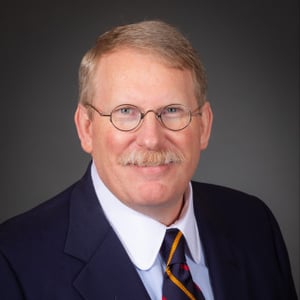
Co-Founder and President, Defense of Freedom Institute
Bob is a co-founder and President of DFI. He previously served as Senior Counselor to the Secretary of Education from 2017 through 2020 and Deputy General Counsel of the U.S. Department of Education from 2005 until 2009.
During his most recent tenure at the Department, Bob served on the Secretary’s Leadership Team as a strategic and legal adviser on higher education, civil rights, and congressional oversight matters. As the Department’s Regulatory Reform Officer, he also supervised the implementation of the Secretary’s regulatory agenda and was an architect of the Secretary’s reforms concerning Title IX and the Higher Education Act. As Deputy General Counsel, Bob advised on a wide variety of regulatory, legislative, and oversight matters.
Prior to joining the Department in 2017, Bob was vice president for regulatory compliance matters for several postsecondary institutions and practiced education and employment law in Washington, D.C. Before coming to the Department in 2005, he practiced law in New Orleans, litigating commercial, employment, and bankruptcy cases in Louisiana, Texas, and Mississippi.
Bob earned his A.B. in History from Georgetown University, studied British government and international politics at the London School of Economics and Political Science, and received his law degree from Tulane University Law School. His articles have been published by National Review, Real Clear Education, Washington Examiner, and other media outlets. Fox News has featured his work.
Bob is a member of the District of Columbia and Louisiana Bars and the Federalist Society for Law and Public Policy Studies.
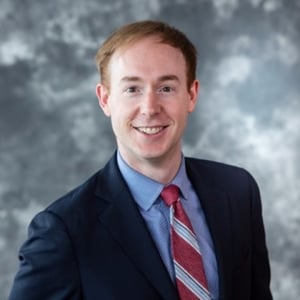
Attorney, Institute for Justice
Before joining Institute for Justice in 2021, Benjamin Field was a member of the appellate group at Hogan Lovells US LLP, where his practice focused on the U.S. Supreme Court and the federal courts of appeals. Before that, Ben clerked for Judge Diarmuid F. O’Scannlain of the U.S. Court of Appeals for the Ninth Circuit and Judge Kent A. Jordan of the U.S. Court of Appeals for the Third Circuit.
Ben received his law degree from Yale Law School in 2015, and an A.B. in economics from the University of Chicago in 2010.
Ben Field is a member of the New York and District of Columbia bars.
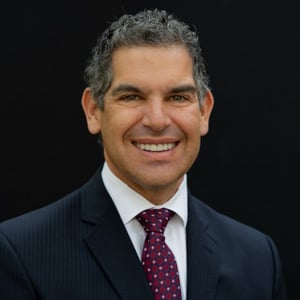
United States District Judge, Eastern District of Pennsylvania
Judge Wolson was nominated to the United States District Court for the Eastern District of Pennsylvania in May 2018 and was confirmed in May 2019. Judge Wolson earned his J.D., cum laude, from Harvard Law School, B.A., magna cum laude, from the University of Pennsylvania. After graduating from law school, he served as a law clerk for Hon. Jan E. DuBois of the U.S. District Court for the Eastern District of Pennsylvania. He then maintained a complex commercial litigation practice, first as an associate with Covington & Burling in Washington, D.C., and then as a partner with Dilworth Paxson in Philadelphia.
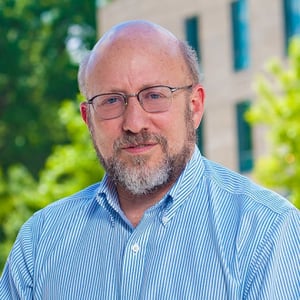
Professor of Law, American University; Washington College of Law
Robert Dinerstein is professor of law and director of the Disability Rights Law Clinic at American University Washington College of Law (AUWCL), where he has taught since 1983. His previous positions include serving as the law school's acting dean (2020-2021), associate dean for academic affairs from (1997-2004), associate dean for experiential education (2012-2018), and director of the clinical program (1988-96 and 2008-2018). He specializes in the fields of clinical education and disability law, especially mental disabilities law (including issues of consent/choice, capacity and supported decision-making and other alternatives to guardianship), the Americans with Disabilities Act, the UN Convention on the Rights of Persons with Disabilities, legal representation of clients with mental disabilities, and disability and international human rights.
Dinerstein has made numerous presentations on clinical legal education and disability law, among other topics, and has published a number of books, articles, chapters and other writing on these subjects.
He is the author/editor of two books. He is co-editor and co-author, with the late Stanley Herr and Joan O’Sullivan, of A Guide to Consent (AAMR, 1999). He is co-author, with the late Stephen Ellmann, Isabelle Gunning, Kate Kruse and Ann Shalleck, of Lawyers and Clients: Critical Issues in Interviewing and Counseling (Thomson West 2009) and the accompanying Teacher’s Manual.
Among Dinerstein’s recent publications in the disability law area, he is the author of:
In the area of legal education and lawyering, his recent articles include “New Wine and New Bottles (on experiential legal education),” 44 Syllabus 2 (Winter 2012-13), Publication of ABA Section on Legal Education and Admissions to the Bar; as co-author (with Margaret Barry, Phyllis Goldfarb, Peggy Maisel and Linda Morton) “Exploring the Meaning of Experiential Deaning,” 67(3) Journal of Legal Education 660 (2018); and ‘The Clinical Law Review at 25: What Hath We Wrought?, 26(1) Clinical Law Review 147 (2019) (25th Anniversary Symposium Issue). He has written extensively on issues of clinical pedagogy and lawyering, in particular, client-centered counseling [especially in his article, “Client-Centered Counseling: Reappraisal and Refinement,” 32 Arizona L. Rev. 501 (1990).] He has also written and presented on the US Department of Justice’s record of enforcement of the rights of persons with disabilities under several administrations.
Dinerstein was appointed by President Clinton in 1994 to serve on the President's Committee on Mental Retardation (now called the President’s Committee on People with Intellectual Disabilities), on which he served until 2001. From 2018-2021, he was a commissioner on the ABA Commission on Disability Rights, and from 2021-present serves as the ABA Section on Civil Rights and Social Justice’s liaison to the Commission. Internationally, he has consulted for the World Health Organization (Ghana and Malawi) and the Open Society Foundations (Ghana and Zambia) regarding the revision of mental health laws and was a signatory to the Montreal Declaration on Intellectual Disabilities, adopted in Montreal, Canada in October 2004. He also has consulted with the Open Society Foundations regarding disability rights clinics and disability rights curricula in Latin America and Southern Africa. Domestically, he has consulted for the Ford Foundation, Public Welfare Foundation and the US Department of Health and Human Services and the US Department of Education on issues related to legal services, disability law and poverty law. He is the principal investigator for the Disability and Human Rights Fellows program, which receives support from the Open Society Foundations.
Prior to joining AUWCL, Dinerstein worked as an attorney in the U.S. Department of Justice's Civil Rights Division, Special Litigation Section, where he handled federal court cases on the rights of people in institutions for people with psychosocial disabilities, people with intellectual disabilities and juveniles. In addition to the Disability Rights Law Clinic, which he founded (and which handles special education, supported decision making, advance mental health directives, Titles I-III of the ADA, and other cases), he teaches a seminar on law and disability and has taught interviewing and counseling, legal ethics, the supervised externship seminar, and the criminal justice clinic (which he directed from 1989-1996).
Dinerstein is actively involved in organizations related to legal education nationally. He was a member (elected) of the Council of the American Bar Association Section on Legal Education and Admissions to the Bar (2006-2011), and previously was on the section’s Standards Review Committee, where he was vice chair. He has been a member of 17 ABA-AALS joint site inspection teams, chairing four teams. Within the Association of American Law Schools, he was a member of the membership review committee and has, among other things, chaired the sections on clinical legal education, law and community, disability law and law and mental disability law, as well as the committees on clinical legal education, sections and the annual meeting, and the planning committee for the 2006 clinical teachers’ conference. He has been a member of a number of other planning committees, including for the AALS New Teachers’ Conference.
Dinerstein currently sits on the boards of directors of the Equal Rights Center (president), and the New Hope Community, Inc. and Foundation, and in the past has served on the boards of the Quality Trust for Individuals with Disabilities, Inc. (founding board member & president, 2001-2016), Washington Legal Clinic for the Homeless, Inc. (founding board member and long-term treasurer, 1986-2015), Advocates for Justice and Education (treasurer), the District of Columbia Bar Board of Governors (elected; 2002-05), Society of American Law Teachers (elected), Mental Disability Rights International (founding board member; now called Disability Rights International), Legal Counsel for the Elderly, and the Maryland Disability Law Center; and the steering committee for the Jacobus tenBroek annual disability law symposium sponsored by the National Federation of the Blind (founding member, and member until 2019).
Among his many awards and honors, Dinerstein has received the WCL Outstanding Service Award (2017-18); been named a Fellow of the American Association on Intellectual and Developmental Disabilities (2016) and received the Paul G. Hearne Award for Disability Rights (ABA, 2013); (with Ann Shalleck) the Egon Guttman Casebook Award (2011-12) for Lawyers and Clients; the William Pincus Award for his contributions to clinical legal education (2010); American University Awards for Scholar-Teacher of the Year (2013), Outstanding Teaching in a Full-Time Appointment (2009) and Faculty-Administrator Award for Outstanding Service to the University Community (2002); and the Pro Bono Service Award from the International Human Rights Law Group (1988).
He has an A.B. degree from Cornell University and a J.D. degree from Yale Law School. He is listed in Who's Who in America).

Founder, Chairman, and CEO, Louis D. Brandeis Center for Human Rights Under Law
Hon. Kenneth L. Marcus is an internationally recognized expert in civil and human rights, as well as a leader in the fight against anti-Semitism on and off university campuses. He is the Founder, Chairman, and CEO of The Louis D. Brandeis Center for Human Rights Under Law, the leading civil rights legal organization fighting against anti-Semitism. The New York Times has called him “The Man Who Helped Redefine Campus Anti-Semitism.” He been described, in that paper, as “the single most effective and respected force” to combat anti-Semitism.
During his public service career, Marcus served as Assistant U.S. Secretary of Education for Civil Rights; Staff Director at the U.S. Commission on Civil Rights; and General Deputy Assistant U.S. Secretary of Housing and Urban Development for Fair Housing and Equal Opportunity.
In academia, he serves as Professorial Lecturer in Law at George Washington University. He formerly held the Lillie and Nathan Ackerman Chair in Equality and Justice in America at the City University of New York’s Bernard M. Baruch College, served as Visiting Research Professor of Political Science at Yeshiva University, and was a Board of Visitors member George Mason University and Distinguished Senior Fellow at that university’s law school. He is a member of the editorial board of the Journal of Contemporary Antisemitism and previously served as Associate Editor of the Journal for the Study of Anti-Semitism.
Marcus is also author of The Definition of Anti-Semitism (Oxford University Press) and Jewish Identity and Civil Rights in America (Cambridge University Press). He has published widely in academic journals as well as in more popular venues such as The Wall Street Journal, Washington Post, Newsweek, USA Today, and Politico. He is a graduate of Williams College and the University of California at Berkeley School of Law.
Earlier in his career, he was a litigation partner in two major law firms, where he conducted complex commercial and constitutional litigation. He also serves as Chairman emeritus of the Executive Committee of the Federalist Society for Law & Public Policy Civil Rights Practice Group.
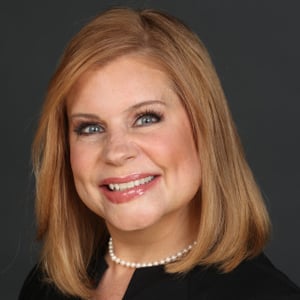
Vice President & Senior Legal Fellow, Defending Education
Sarah Parshall Perry is vice president and senior legal fellow at Defending Education.
Before coming to Defending Education, Sarah served as a Senior Legal Fellow for the Edwin Meese III Center for Legal and Judicial Studies, part of the Institute for Constitutional Government at Heritage, where her work centered on civil rights and the proper role of the courts.
Sarah joined Heritage after serving as Senior Counsel to the Assistant Secretary for Civil Rights at the U.S. Department of Education where she focused on policy reform, technical guidance, and the Office for Civil Rights’ (OCR) annual report to Congress. While at OCR, she was appointed by the Acting Assistant Secretary to co-chair the Employment Engagement, Diversity, & Inclusion Council and, in coordination with the Deputy Assistant Secretary for Enforcement oversee the hiring of dozens of attorneys for OCR’s 12 regional offices nationwide. Prior to her tenure at the Department of Education, she spent six years at the Family Research Council in Washington, D.C. where she was Senior Fellow for Education Reform and later, became the regular substitute host for the “Washington Watch” radio show. Her work at the Family Research Council also included the building and oversight of multiple policy coalitions geared toward the fight against antisemitism in academia, curbing tech censorship, and protecting religious liberty.
Before joining FRC, Sarah was in-house counsel and director of development for a Baltimore advertising agency, providing management of all new business transactions from pitch to contract execution for the multi-million-dollar enterprise. She began her practice at the litigation firm of Simms Showers, LLP where her work included Title VII employment discrimination, maritime/admiralty, and False Claims Act (“Qui Tam”) law. Sarah has a law degree from the University of Virginia School of Law, where she was an editor of the Virginia Journal of International Law, a recipient of the American Jurisprudence award, a Phi Delta Phi honor society member, and a student practitioner in the appellate litigation clinic where she argued before the 4th Circuit Court of Appeals. She holds a B.S. in Journalism with honors from Liberty University.
Her commentary and analysis have appeared in media outlets across the country, including the AP, BBC, Fox News, NPR, The Hill, Washington Post, Washington Times, and the New York Times. She is the mother of three children, and the author of just as many books on the trials and triumphs of parenting children on the autism spectrum. Sarah is a member of the Kirkpatrick Society at the American Enterprise Institute, and makes her home north of Baltimore, Maryland.
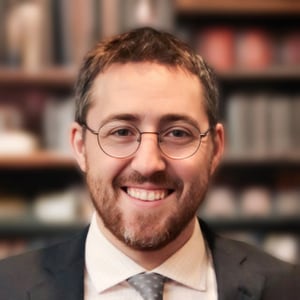
Senior Attorney, Institute for Free Speech
Brett Nolan is a Senior Attorney at the Institute for Free Speech, a public interest law firm that defends the First Amendment rights of those engaged in political speech and advocacy around the country.
Before joining the Institute, Brett served as the Principal Deputy Solicitor General of Kentucky, where he represented the Commonwealth in a wide variety of high-stakes litigation at every level of state and federal court. In that role, Brett led a successful challenge against the Department of Treasury over the constitutionality of a federal law limiting the ability of states to modify their tax codes, and he helped secure a U.S. Supreme Court victory that upheld a state’s constitutional right to defend its interests in federal court.
Prior to that, Brett served as the Deputy General Counsel to the former Governor of Kentucky, where he advised the governor and other executive branch officials on legal and policy issues and represented them in litigation. Brett clerked for Judge John Nalbandian of the U.S. Court of Appeals for the Sixth Circuit and Judge Karen K. Caldwell of the U.S. District Court for the Eastern District of Kentucky. Between clerkships, he worked in private practice. Brett received his law degree from the University of Chicago Law School, where he graduated with High Honors and was an editor of The University of Chicago Law Review.

Founder, Law Office of Eileen J. O'Connor PLLC
After nearly 30 years as a national tax specialist with the IRS and major accounting firms, Eileen J. O’Connor, now an attorney in private practice, was Assistant Attorney General for the Justice Department’s Tax Division for six years during the administration of President George W. Bush and a member of then-President-elect Trump’s Treasury Department Transition Team. She focuses on federal administrative and tax law.
Associate Professor, John Marshall Law School
Professor Schwinn earned his B.A. from Michigan State University and his J.D. from the American University Washington College of Law. He previously taught at the University of Maryland School of Law and George Washington University Law School. He practiced full time in the Office of the General Counsel at the Peace Corps.
Professor Schwinn is a frequent commenter on issues related to constitutional law and human rights. He is a co-founder and co-editor of the Constitutional Law Prof Blog and an occasional contributor to other blogs and publications. He regularly writes for the ABA Preview of United States Supreme Court Cases, and he directs the ABA Media Alerts project for the Seventh Circuit. His scholarship has appeared in a variety of law journals.
Professor Schwinn is also an active practitioner. He litigates cases pro bono in the federal courts, and he serves on the Board of Advisors for the Chicago Lawyer Chapter of the American Constitution Society.
Professor Schwinn teaches Constitutional Law, Comparative Constitutional Law and Human Rights, and Lawyering Skills I. He also coordinates the Constitutional Law in the Classroom program, in which JMLS students teach constitutional law lessons to students in the Chicago Public Schools and surrounding school districts, and he is the faculty supervisor for the African Human Rights Project.
Clinical Professor and Director of the First Amendment Clinic, Florida State University College of Law
Denise Mayo Harle is a clinical professor and director of the First Amendment Clinic at FSU College of Law, where she leads student advocacy and litigation on free speech, religious liberty, and press freedom issues. Her teaching and scholarship focus on constitutional law, appellate practice, and First Amendment rights. Before entering academia, Professor Harle was a partner at Shutts & Bowen LLP in Tallahassee, where she was a member of the firm’s Appellate Practice Group and Constitutional Law Practice Area. Prior to that, she served as Deputy Solicitor General in the Office of the Florida Attorney General. Professor Harle has briefed and argued high-profile cases involving significant constitutional issues and questions of statutory interpretation in both state and federal courts, including the U.S. Supreme Court.
Professor Harle’s early career includes clerking for Justice Ricky L. Polston on the Florida Supreme Court and practicing appellate law in California. In 2022, she was selected as a finalist for a seat on the Florida Supreme Court. She was appointed by Governor Ron DeSantis to Florida’s Faith and Community Advisory Council and currently serves on the Judicial Nominating Commission for Florida’s Second Circuit. She was also selected for the prestigious U.S. Supreme Court Fellowship through the National Association of Attorneys General in 2017. She earned her J.D. cum laude from Duke University Law School and her B.A. and B.S. summa cum laude from Florida State University.
Professor Harle is active in the legal and academic communities. She is a member of the American Enterprise Institute’s Leadership Network and the Federalist Society’s Speakers Bureau. She has served on the board of Tallahassee Women Lawyers, the Florida Bar’s Client Security Fund Committee, and the First District Appellate American Inn of Court.
Before practicing law, Professor Harle completed doctoral coursework in Political Science at Stanford University as a Stanford Graduate Fellow, where she taught undergraduate courses on public policy, law, and American politics, and earned a Master’s degree. She continues to serve as a dissertation faculty advisor for Concordia University–St. Paul mentors doctoral students in research and writing.
A frequent speaker and media commentator on constitutional law, Professor Harle has been quoted in The Wall Street Journal, The Washington Post, and The New York Times, and has appeared on national outlets including C-SPAN and Fox News. She has also testified before the U.S. Senate on matters of constitutional significance.

Topics
35 Naval Special Warfare Soldiers Obtain Preliminary Injunction Against Vaccine Mandate Under the Free Exercise Clause and Religious Freedom Restoration Act
On January 3, Judge Reed O’Connor of the Northern District of Texas preliminarily enjoined Navy...
Feddie Night Festivus: Blackman vs. Everybody!
Josh Blackman
The Federalist Society's Student Division &Columbus School of Law Student Chapter present Feddie Night Festivus:Blackman vs. Everybody! FeaturingUnprecedented...
State Court Docket Watch: Oklahoma ex rel. Hunter v. Johnson & Johnson
Kateland R. Jackson
In Oklahoma ex rel. Hunter v. Johnson & Johnson, the Oklahoma Supreme Court overturned a...
IP Law and Culture
Sandra Aistars, Ryan T. Holte, Lisa P. Ramsey, Robert Spoo, Karyn A. Temple
The 2021 National Lawyers Convention took place November 11-13, 2021 at the Mayflower Hotel in...
Panel II: Antitrust in the the Age of the Trillion-Dollar Company
A. Douglas Melamed, Austin Peters, Aaron Schur, Hal Singer, Dina Srinivasan, Alan O. Sykes, Theodore W. Ullyot
Featuring: A. Douglas Melamed, Professor, Stanford Law School, and ex-General Counsel, Intel Aaron Schur, Deputy General...
Government-Mandated Vaccine Requirements: OSHA, Jacobson, and the Legacy of Buck v. Bell
Todd J. Zywicki
Featuring: Todd J. Zywicki, George Mason University Foundation Professor of Law, Antonin Scalia Law School, George...
Panel Two: School Choice and Education Reforms During COVID-19
Robert S. Eitel, Benjamin A. Field, Joshua D. Wolson
The COVID-19 pandemic resulted in over a year of virtual public schooling in some parts...
Dobbs: Considering Dobbs, Oklahoma & Texas Abortion Laws, and How They Intersect
Oklahoma City Student Chapter
Oklahoma City, OKDiscussion: The OCR's Investigation of State Mask Mandate Bans
Robert Dinerstein, Kenneth L. Marcus, Sarah Parshall Perry
The U.S. Department of Education’s Office for Civil Rights has launched an investigation into the...
Can Congress Forbid A State from Cutting its Taxes?
Brett Nolan, Eileen J. O'Connor, Steven Schwinn
On March 11, 2021, President Biden signed into law the American Rescue Plan Act (the...