
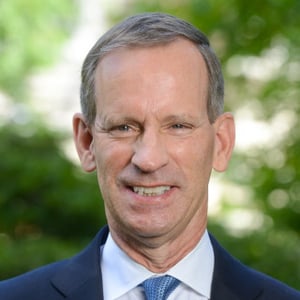
Professor of Law, Belmont University College of Law
Don Cochran teaches Evidence, Trial Advocacy and Criminal Law courses. Prior to joining Belmont’s faculty, he served as the Presidentially appointed, Senate confirmed United States Attorney for the Middle District of Tennessee from September 2017 to February 2021. Prior to becoming U.S. Attorney, he was a law professor at Belmont University College of Law and the Cumberland School of Law in Birmingham, Alabama where he taught courses in criminal procedure, evidence, criminal law, and trial advocacy. From 1998 to 2002 Professor Cochran was an Assistant United States Attorney in the Northern District of Alabama. During that time, Professor Cochran prosecuted criminal cases involving white collar crimes, public corruption, and violent crimes, including successful prosecution of the final defendant charged with the historic 1963 bombing of the Sixteenth Street Baptist Church in Birmingham, Alabama that killed four girls. Professor Cochran began his prosecutorial career in the District Attorney’s Office in Birmingham where he prosecuted homicides, sexual assaults, and other violent crimes. Professor Cochran clerked for Judge Julie E. Carnes of the United States District Court for the Northern District of Georgia and is a graduate of Vanderbilt University and Vanderbilt Law School.
Professor Cochran teaches Evidence Law, Trial Advocacy, and Criminal Law at Belmont Law.
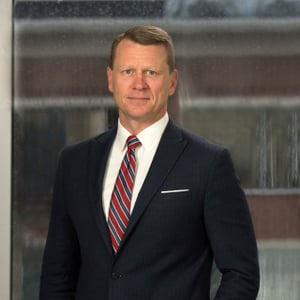
Partner, Phelps Dunbar LLP
Mike Hurst is a partner with Phelps Dunbar LLP where he optimizes his in-depth knowledge of the court system, investigative and prosecutorial agencies, the regulatory arena, and the public policy realm to help clients facing government investigations, enforcement actions, regulatory matters, general litigation and policy issues. Mike currently serves as the General Counsel of the Republican National Committee and as Chairman of the Mississippi Republican Party. He previously served as the U.S. Attorney for the Southern District of Mississippi from 2017-2021, and with over 20 years of experience before judges, juries and policy makers, handling some of the largest and most high-profile cases in Mississippi, he's known for untangling the most complex legal issues.
As U.S. Attorney, Mike was described as a “hard charger,” leading efforts to combat violent crime, human trafficking and public corruption, among many other issues, throughout Mississippi. He almost tripled prosecutions in the U.S. Attorney’s Office over a three-year period, resulting in the most indictments and federal defendants indicted in a one-year period in Mississippi history. He created innovative and national award-winning crime-fighting solutions, like “Project EJECT,” and he established the first statewide, multilevel and multidisciplinary human trafficking body, the Mississippi Human Trafficking Council, to comprehensively and holistically address this criminal scourge.
During his tenure as U.S. Attorney, Mike oversaw some of the biggest cases in Mississippi history: the largest health care fraud scheme (Wade Walters, et. al.), the largest Ponzi scheme (Lamar Adams), the largest False Claims Act health care fraud settlement (Region 8), and the largest nursing home False Claim Act settlement (Hyperion). In addition, as Chief Federal Law Enforcement Officer for the Southern District, Mike coordinated the largest single-state immigration worksite enforcement operation in our nation’s history, involving hundreds of federal law enforcement agents covering seven different locations operated by multiple companies.
Mike’s no show pony – he’s a work horse. Before his tenure as U.S. Attorney, Mike was an Assistant U.S. Attorney for the Southern District of Mississippi for more than eight years. He handled some of the most difficult and complex cases in that office, dealing with white collar crimes, public corruption and financial fraud, including numerous jury trials before almost every federal judge in the Southern District.
He also has experience in the private sector. He has practiced law in Washington, D.C., and has served as a litigator and general counsel for a conservative nonprofit. He also has extensive experience in public policy, having served as the Legislative Director to a U.S. Congressman and as Counsel to the House Judiciary Committee.
Mike has also testified before both the United States Senate and the U.S. House of Representatives on issues ranging from crime to Presidential pardons. He has worked on all sides of the legal, regulatory, investigative, prosecutorial and policy spectrum. The incredible insight gained from this varied experience enables him to find a path forward for clients, no matter how complicated the case.
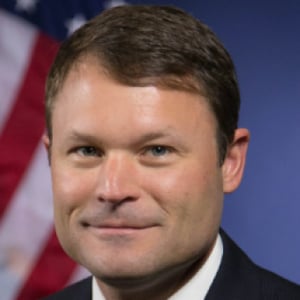
United States District Court Judge, Western District of Louisiana
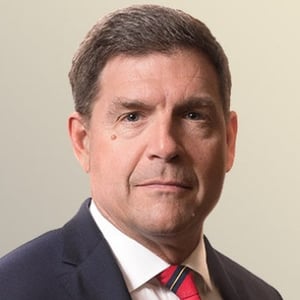
Partner, King & Spalding
John Richter is a trial and investigations partner in the Special Matters and Investigations Practice Group, and represents and defends companies, Boards of Directors, Board committees, and individuals facing a variety of white-collar criminal and regulatory enforcement matters, parallel civil litigation, and internal corporate investigations. John previously served as the Acting Assistant Attorney General in charge of the Criminal Division at the U.S. Department of Justice and as the U.S. Attorney for the Western District of Oklahoma, having been nominated by President George W. Bush and confirmed by unanimous consent of the U.S. Senate.
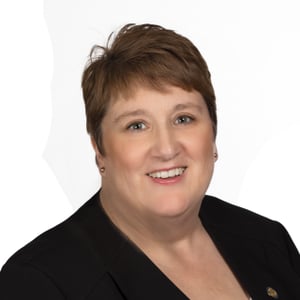
Senior Fellow, Platte Institute
Laura Ebke, Ph.D. is the Platte Institute’s Senior Fellow, assisting policymakers and the public as the Nebraska Legislature implements the new Occupational Board Reform Act. The Act is Nebraska’s first comprehensive review of the state’s job licensing laws, and is a law Laura sponsored as a Nebraska state senator.
Laura is a lifelong Nebraskan, growing up in Fairbury and graduating from the Class of 1980. She has resided in Crete for 26 years.
Laura holds a Ph.D. in Political Science from the University of Nebraska. In addition to serving as the chair of the Nebraska Legislature’s Judiciary Committee, she served for 12 years on the Crete Public Schools Board of Education.
As a lifetime member of the Girl Scouts, Laura has volunteered for the organization for over 20 years, including as a board member and Vice President of Homestead Council Girl Scouts. She is also a merit badge counselor for Cornhusker Council Boy Scouts.
She is married to her high school sweetheart, Russ Ebke, a U.S. Navy veteran and family physician in Crete. Laura and Russ have three children, Jennifer, Tasha, and Isaac, and one granddaughter, Tamzin.
The Ebke family pets include cats Molly and Daisy, and Pip the bearded dragon.
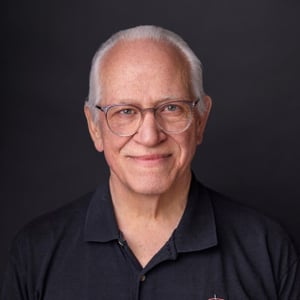
Chief Counsel, FIRE
Robert Corn-Revere joined FIRE from the law firm of Davis Wright Tremaine where he was a partner for 20 years specializing in freedom of expression and communications law. Before his time at DWT, he was a partner at Hogan & Hartson and served as legal advisor and later chief counsel to Federal Communications Commission Chairman James H. Quello.
Corn-Revere is a prominent writer, thinker, and advocate on free expression issues. In 2021, Cambridge University Press published his book, “The Mind of the Censor and the Eye of the Beholder: The First Amendment and the Censor’s Dilemma,” which explores how free expression became a part of America’s identity. He also co-authored the three-volume treatise, “Modern Communication Law,” published by West Group. In 2003, he successfully petitioned Governor George E. Pataki to grant the first posthumous pardon in New York history to the late comedian Lenny Bruce, who was convicted for “obscene” comedy routines.
Before joining FIRE full-time, Corn-Revere was a volunteer on FIRE’s Advisory Council. He also served as outside counsel for FIRE’s Stand Up For Speech Litigation Project, successfully litigating on behalf of college students and faculty whose First Amendment rights were violated.
He is regularly listed as a leading First Amendment and media law practitioner by The Best Lawyers in America, SuperLawyers Washington, D.C., and by Chambers USA. Best Lawyers in America named him as Washington, D.C.’s 2017 “Lawyer of the Year” in the areas of First Amendment Law and Litigation – First Amendment. He was again named as Best Lawyers’ “Lawyer of the Year” for First Amendment Law for 2019 and 2021, and in Media Law for 2022.
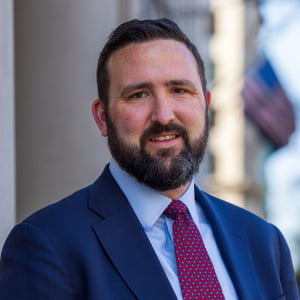
Partner, First & Fourteenth PLLC
Michael Francisco is a public and commercial litigator with extensive appellate experience who often serves as a strategic advisor to clients facing acute legal challenges. He has represented clients nationally for public impact litigation, bet-the-company lawsuits, and in defense of constitutional rights. Michael served as a law clerk to Supreme Court Justice Neil Gorsuch and Judge Timothy Tymkovich of the United States Court of Appeals for the Tenth Circuit.
Michael regularly takes on challenging matters where citizens must rely on the judiciary to vindicate their rights. His experience runs the gambit from successfully seeking injunctive relief, winning critical legal motions, defending judgments on appeal, overturning multi-million-dollar judgments, and obtaining discretionary high court review. He relishes the opportunity to develop a well-crafted legal strategy to solve the most novel and complex problems that may arise.
Michael has deep experience with political litigation representing candidates, voters, political parties, and advocacy organizations for ballot access, election administration, campaign finance, and for the unfortunate trend of criminalization of political activity.
After deciding to pursue a legal career to defend religious liberty, Michael has regularly engaged in constitutional litigation under the religion clauses and the free speech clause. He has been involved in many recent U.S. Supreme Court cases involving these core freedoms, including Groff v. DeJoy, 303 Creative v. Elenis, Masterpiece Cakeshop v. Colorado Civil Rights Commission, National Institute of Family & Life Advocates v. Becerra, Trinity Lutheran Church v. Pauley, and similar cases in lower courts on topics ranging from the ministerial exception, church property disputes, to religious land use disputes.
As an appellate advocate Michael frequently handles matters before the U.S. Supreme Court, federal courts of appeals, and Colorado appellate courts. He has argued four times before the Colorado Supreme Court and briefed 19 cases before the U.S. Supreme Court.
Michael also frequently advises clients on strategic public matters challenging federal government authority and overreach. He has regularly litigated business disputes, employment matters, as well as represented clients before state and federal administrative agencies or arbitration panels.
Prior to joining First & Fourteenth, Michael was a partner at McGuireWoods, LLP in Washington D.C., representing litigation, white collar, and government investigation clients.
At home Michael is married with four children and he enjoys many outdoor activities, ranging from competitive shooting to fixing his jeep.
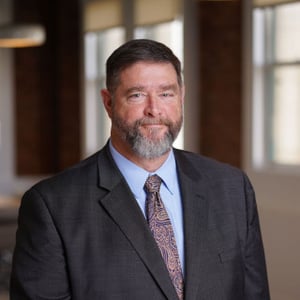
Partner, Briscoe Prows Kao Ivester & Bazel LLP
Tony Francois is experienced in Water and Real Property Law, Land Use and Zoning, Environmental Regulation, Natural Resources Development, Agricultural Law, and Constitutional Law. He has represented homeowners, builders, farmers and ranchers, trade associations, and water districts in administrative, civil, and criminal proceedings before state and federal administrative agencies and state and federal trial and appellate courts. He is a member of the California State Bar and the Northern, Eastern, and Central Districts of California and the Districts of New Mexico and North Dakota, and has litigated cases in federal courts in California, Oregon, Washington, Idaho, Montana, Nevada, Arizona, New Mexico, Colorado, North and South Dakota, Minnesota, Massachusetts, Maryland, South Carolina, and the District of Columbia, as well as the Sixth, Eighth, Ninth, and Tenth Circuit Courts of Appeals. He has appeared before the Supreme Courts of California, Idaho, Nevada, and the United States.
Prior to attending law school, he served as an infantry officer in the United States Army, and was stationed in the former West Germany during the fall of the Berlin Wall.
Tony was an Attorney at Pacific Legal Foundation from 2012 to 2021. He was a lobbyist for 10 years, first with California Farm Bureau Federation from 2003 to 2007, and then with KP Public Affairs from 2007 to 2012. He was an attorney at McQuaid, Bedford & Van Zandt in San Francisco from 1999 – 2003.

Associate, Covington & Burling LLP
Eli Nachmany is an associate at Covington & Burling LLP in the Washington, DC, office. He clerked for Judge Steven J. Menashi of the U.S. Court of Appeals for the Second Circuit. Eli graduated magna cum laude from Harvard Law School, where he was Editor-in-Chief of the Harvard Journal of Law & Public Policy. Prior to law school, Eli served as the speechwriter to the U.S. Secretary of the Interior and as a domestic policy aide in the White House Office of American Innovation. He graduated summa cum laude from New York University with a B.S. in Sports Management. Eli’s scholarship on administrative law and executive power has appeared in the BYU Law Review, George Mason Law Review, Wake Forest Law Review, and Yale Law Journal Forum.
Senior Attorney, Institute for Free Speech
Brett Nolan is a Senior Attorney at the Institute for Free Speech, a public interest law firm that defends the First Amendment rights of those engaged in political speech and advocacy around the country.
Before joining the Institute, Brett served as the Principal Deputy Solicitor General of Kentucky, where he represented the Commonwealth in a wide variety of high-stakes litigation at every level of state and federal court. In that role, Brett led a successful challenge against the Department of Treasury over the constitutionality of a federal law limiting the ability of states to modify their tax codes, and he helped secure a U.S. Supreme Court victory that upheld a state’s constitutional right to defend its interests in federal court.
Prior to that, Brett served as the Deputy General Counsel to the former Governor of Kentucky, where he advised the governor and other executive branch officials on legal and policy issues and represented them in litigation. Brett clerked for Judge John Nalbandian of the U.S. Court of Appeals for the Sixth Circuit and Judge Karen K. Caldwell of the U.S. District Court for the Eastern District of Kentucky. Between clerkships, he worked in private practice. Brett received his law degree from the University of Chicago Law School, where he graduated with High Honors and was an editor of The University of Chicago Law Review.
Shareholder, Greenberg Traurig
Jennifer Weddle is the Co-Chair of Greenberg Traurig's American Indian Law Practice and has wide-ranging experience in complex regulatory and jurisdictional issues, with a focus in Indian law, handling a variety of matters for tribal and non-tribal clients. She has a dynamic, inter-disciplinary practice that centers on providing strategies for resolving complex jurisdictional problems. Much of her practice focuses in the areas of tribal economic development and natural resources development. Jennifer also has U.S. Supreme Court experience, including serving as one of the attorneys for the respondent in Nevada v. Hicks (2001) and representing the petitioners in Ute Mountain Ute Tribe v. Padilla (2012) and Grand Canyon Skywalk Development, LLC v. Grand Canyon Resort Corporation (2013) and cert stage amici in Saginaw-Chippewa Tribe v. NLRB (2016) and United States v. Cooley (2020) and amici on the merits in Lewis v. Clarke (2017), U.S. v. Washington (2018), Carpenter v. Murphy (2018), McGirt v. Oklahoma (2020), and United States v. Cooley (2021).
Jennifer's work also includes negotiations for mineral leasing employment matters and representation before federal agencies. She has also been involved in civil litigation, working on numerous complex federal, state and tribal litigation matters, including class action tort litigation and large commercial disputes. Her transactional experience includes oil and gas renewables projects throughout the west, as well as Endangered Species Act work. Jennifer frequently assists tribes, banks and non-bank entities with financing and regulatory matters with Indian law components. Jennifer has wide-ranging project siting experience, including the application of NEPA, NHPA, and other environmental laws on tribal and public lands, including with respect to large linear multi-state energy and infrastructure projects. Jennifer has deep transactional, regulatory and litigation experience involving very complex matters with both legal and policy components.
Jennifer is past President of the National Native American Bar Association and past two-term Chair of the Federal Bar Association Indian Law Section. She currently serves as the Tenth Circuit Representative on the American Bar Association Standing Committee on the Federal Judiciary, a role she has held since 2018, spanning the evaluations for more than two dozen federal judicial nominees at every level of the federal courts. She is a ’00 graduate of Harvard Law School and a ’97 graduate of the University of Michigan (Classical Languages and Literature).
Senior Counsel, Director of Center for Academic Freedom, Alliance Defending Freedom
Tyson Langhofer serves as senior counsel and director of the Center for Academic Freedom with Alliance Defending Freedom.
Langhofer represents students and faculty at public high schools and colleges in defending their First Amendment rights. For example, in Denton v. Hecht, he successfully defended a Florida State University student after he was removed as Student Senate President simply for sharing his Catholic views in a private group chat. In Cross v. Loudoun County Public Schools, he successfully defended an elementary school gym teacher after the school suspended him for peacefully sharing his views on a proposed policy at a public school board meeting.
Langhofer has extensive experience in civil litigation and constitutional law. Before joining ADF, Langhofer was a partner with Stinson LLP, where he worked as a commercial litigation attorney from 2000 until he joined ADF in 2015.
Langhofer is Peer Review Rated AV® Preeminent in Martindale-Hubbell. He is a sought-after speaker on legal and cultural issues. He regularly comments on free speech issues in television, radio, and print media. He has appeared as a guest and written pieces for numerous major media outlets, including The Washington Post, The Washington Times, USA Today, Townhall, The Federalist, and The Daily Wire.
Langhofer earned his Juris Doctor from Regent University School of Law in 1999, graduating cum laude. Langhofer is admitted to practice in multiple states, the Supreme Court, and numerous federal district and appellate courts.
Amicus Attorney, The Foundation for Individual Rights and Expression
Abby joined FIRE after her tenure at the Becket Fund for Religious Liberty, where she litigated First Amendment student group cases from coast to coast. She also worked at a trial litigation boutique in southern California. Abby has filed briefs on the First Amendment in state and federal court at the trial and appellate court levels, including before the U.S. Supreme Court.
Abby received her B.S. in economics and her B.A. in Chinese language and literature from the University of Pittsburgh, where she graduated summa cum laude. During college, she also spent a year at Tsinghua University as a Boren Fellow. She later received her J.D. from the University of Chicago Law School, where she won the 2018 Hinton Moot Court Competition. After law school, Abby clerked for the Honorable Michael B. Brennan on the Seventh Circuit Court of Appeals in Milwaukee, Wisconsin. She is admitted to practice in New York and California, as well as several federal appellate courts and the U.S. Supreme Court.
Abby lives outside Dallas, Texas, with her husband and family. They enjoy reading together, volunteering with their local church, and continuing to fix their leaky pool.
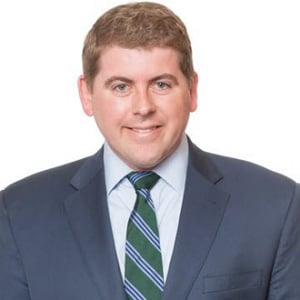
Partner, Dechert LLP
Michael H. McGinley, Global Co-Chair of the Securities and Complex Litigation practice group at Dechert, focuses his practice on high-stakes litigation, specifically appellate and complex commercial matters. Mr. McGinley has experience representing clients at every level of the federal judiciary, as well as in numerous federal agencies and state courts. In early 2025, he argued three cases before the United States Supreme Court in a span of four months.
He has litigated a wide range of issues, including federal jurisdiction, Chevron deference, federalism, preemption, antitrust, arbitration, labor law, tort law, antidumping and trade-remedy disputes, securities and corporate law, contract rights, voting rights, free speech, religious freedom and many other constitutional issues. Mr. McGinley also regularly advises individual, corporate and government clients on strategic, criminal defense, and regulatory matters.
Prior to joining Dechert, Mr. McGinley served as Associate Counsel and Special Assistant to the President in the White House Counsel's Office, where his primary responsibilities included the review of major legislative and regulatory actions and the confirmation of judicial nominees, including Justice Gorsuch. During his time in the White House, Mr. McGinley worked closely with the Department of Justice, the Office of Management and Budget, a number of federal agencies, and various congressional committees. He also previously served as a law clerk to Justice Samuel A. Alito, Jr. of the Supreme Court of the United States and to then-Judge Neil M. Gorsuch, of the United States Court of Appeals for the Tenth Circuit.
Mr. McGinley has been ranked by Chambers USA in Band 1 for appellate litigation in Pennsylvania and recognized by The Legal 500 for his expertise in financial services litigation, general commercial disputes, and international litigation. He was named an “Appellate MVP of the Year” for 2025 by Law360, and his appellate victories helped earn Dechert a place on the National Law Journal’s “Appellate Hot List” in 2025. Mr. McGinley is named among the Financial Times’ Top 10 “Most Innovative Legal Practitioners in North America” as part of the FT’s Innovative Lawyers Awards 2025 for North America.
Mr. McGinley is an elected member of the American Law Institute. He was appointed by the President to the governing Council of the Administrative Conference of the United States, which is an independent agency charged with convening experts from the public and private sectors to recommend improvements to administrative process and procedure. He also serves as the Co-Chair of the American Bar Association’s Administrative Rulemaking Committee.
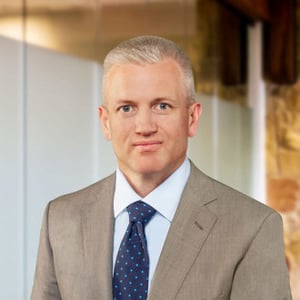
Executive General Counsel, First Liberty Institute
Hiram Sasser is Executive General Counsel for First Liberty Institute, where he oversees First Liberty’s litigation and media efforts. Sasser’s practice focuses on First Amendment and other constitutional and civil rights issues relating to religious liberty. Sasser served as co-counsel in seven victories before the United States Supreme Court, including Groff v. DeJoy (landmark case overturning the “de minimis cost” test for Title VII in place almost 50 years), Kennedy v. Bremerton (landmark case overturning 50 years of Establishment Clause precedent), Carson v. Makin (overturning 40 years of Maine’s discrimination against parents choosing faith-based schools), American Legion v. American Humanist Association (landmark case ending Establishment Clause attacks on veterans’ memorials with religious imagery), Klein v. Oregon Bureau of Labor and Industries (granted, vacated, and remanded (twice) in religious wedding service case), and Sause v. Bauer (summary reversal revoking qualified immunity for police who ordered a citizen not to pray in her own home).
In addition to his legal duties, Sasser develops, coordinates, and implements successful media strategies on behalf of his clients. This includes numerous appearances on ABC, NBC, CBS, Fox News, CNN, and the BBC as well as being heard on various radio stations throughout the United States, Asia, Africa, and Europe.
In 2016, Sasser took a leave of absence to serve a temporary assignment as the Chief of Staff for the Attorney General of Texas. He currently serves as an Adjunct Professor of Law at both The University of Texas at Austin School of Law (teaching Religious Liberty) and Oklahoma City University School of Law (teaching Civil Rights Procedure).
Partner, Dechert LLP
Michael H. McGinley, Global Co-Chair of the Securities and Complex Litigation practice group at Dechert, focuses his practice on high-stakes litigation, specifically appellate and complex commercial matters. Mr. McGinley has experience representing clients at every level of the federal judiciary, as well as in numerous federal agencies and state courts. In early 2025, he argued three cases before the United States Supreme Court in a span of four months.
He has litigated a wide range of issues, including federal jurisdiction, Chevron deference, federalism, preemption, antitrust, arbitration, labor law, tort law, antidumping and trade-remedy disputes, securities and corporate law, contract rights, voting rights, free speech, religious freedom and many other constitutional issues. Mr. McGinley also regularly advises individual, corporate and government clients on strategic, criminal defense, and regulatory matters.
Prior to joining Dechert, Mr. McGinley served as Associate Counsel and Special Assistant to the President in the White House Counsel's Office, where his primary responsibilities included the review of major legislative and regulatory actions and the confirmation of judicial nominees, including Justice Gorsuch. During his time in the White House, Mr. McGinley worked closely with the Department of Justice, the Office of Management and Budget, a number of federal agencies, and various congressional committees. He also previously served as a law clerk to Justice Samuel A. Alito, Jr. of the Supreme Court of the United States and to then-Judge Neil M. Gorsuch, of the United States Court of Appeals for the Tenth Circuit.
Mr. McGinley has been ranked by Chambers USA in Band 1 for appellate litigation in Pennsylvania and recognized by The Legal 500 for his expertise in financial services litigation, general commercial disputes, and international litigation. He was named an “Appellate MVP of the Year” for 2025 by Law360, and his appellate victories helped earn Dechert a place on the National Law Journal’s “Appellate Hot List” in 2025. Mr. McGinley is named among the Financial Times’ Top 10 “Most Innovative Legal Practitioners in North America” as part of the FT’s Innovative Lawyers Awards 2025 for North America.
Mr. McGinley is an elected member of the American Law Institute. He was appointed by the President to the governing Council of the Administrative Conference of the United States, which is an independent agency charged with convening experts from the public and private sectors to recommend improvements to administrative process and procedure. He also serves as the Co-Chair of the American Bar Association’s Administrative Rulemaking Committee.
Executive General Counsel, First Liberty Institute
Hiram Sasser is Executive General Counsel for First Liberty Institute, where he oversees First Liberty’s litigation and media efforts. Sasser’s practice focuses on First Amendment and other constitutional and civil rights issues relating to religious liberty. Sasser served as co-counsel in seven victories before the United States Supreme Court, including Groff v. DeJoy (landmark case overturning the “de minimis cost” test for Title VII in place almost 50 years), Kennedy v. Bremerton (landmark case overturning 50 years of Establishment Clause precedent), Carson v. Makin (overturning 40 years of Maine’s discrimination against parents choosing faith-based schools), American Legion v. American Humanist Association (landmark case ending Establishment Clause attacks on veterans’ memorials with religious imagery), Klein v. Oregon Bureau of Labor and Industries (granted, vacated, and remanded (twice) in religious wedding service case), and Sause v. Bauer (summary reversal revoking qualified immunity for police who ordered a citizen not to pray in her own home).
In addition to his legal duties, Sasser develops, coordinates, and implements successful media strategies on behalf of his clients. This includes numerous appearances on ABC, NBC, CBS, Fox News, CNN, and the BBC as well as being heard on various radio stations throughout the United States, Asia, Africa, and Europe.
In 2016, Sasser took a leave of absence to serve a temporary assignment as the Chief of Staff for the Attorney General of Texas. He currently serves as an Adjunct Professor of Law at both The University of Texas at Austin School of Law (teaching Religious Liberty) and Oklahoma City University School of Law (teaching Civil Rights Procedure).
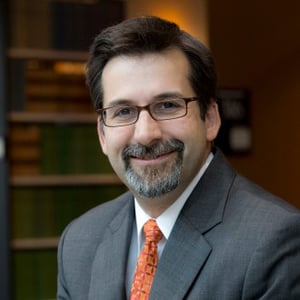
Dean and Anthony B. Buzbee Endowed Dean's Chair, Texas A&M University School of Law
A graduate of Princeton University's Woodrow Wilson School of Public and International Affairs and Yale Law School, Robert B. Ahdieh served as law clerk to Judge James R. Browning of the US Court of Appeals for the Ninth Circuit before his selection for the Honor's Program in the Civil Division of the US Department of Justice.
While still in law school, Ahdieh published what remains one of the seminal treatments of the constitutional transformation of post-Soviet Russia: "Russia's Constitutional Revolution—Legal Consciousness and the Transition to Democracy." Ahdieh's work has also appeared in the Boston University Law Review, Michigan Law Review, theMinnesota Law Review, the NYU Law Review, and the Southern California Law Review, among other journals.
Ahdieh’s scholarly interests revolve around questions of regulatory and institutional design, especially in the financial arena. His particular focus has been on various non-traditional regulatory structures and modes of regulation, including those grounded in dynamics of coordination. Though relatively less studied in the legal literature, the framework of coordination holds significant promise both in helping us theorize existing regulatory patterns and in defining new regulatory constructs for the future.
Ahdieh has explored regulatory and institutional design in a variety of transactional areas, including corporate and securities law, international trade and finance, and contracts. Within these, his work has emphasized two particular patterns of coordination. The first—intersystemic governance—draws on domestic regimes of federalism and transnational regimes of global governance and subsidiarity to highlight the potential benefits of complex systems of overlapping jurisdiction. The second draws on the dynamics at work in so-called “coordination games” to highlight distinct occasions for potential regulatory intervention, as well as various non-traditional regulatory forms, in our modern economic, social, and political order.
During the 2007–2008 academic year, Ahdieh was a visiting professor and the Microsoft/LAPA Fellow at Princeton University's Program in Law and Public Affairs. In Spring 2014, he served as Douglas McK. Brown Visiting Chair in Law, University of British Columbia. He has also visited at Columbia and Georgetown law schools, as well as numerous law schools overseas.
Texas Supreme Court
Justice Jimmy Blacklock was appointed to the Texas Supreme Court in January 2018 by Governor Greg Abbott. Before that, Jimmy served as Governor Abbott’s General Counsel and in the Attorney General’s Office under then-AG Abbott. While at the AG’s Office, he handled appeals and trials of constitutional cases in state and federal court involving matters such as federalism, religious liberty, and the separation of powers. As Deputy Attorney General for Legal Counsel, he oversaw the Open Records and Opinions divisions of the AG’s Office. Earlier in his career, Jimmy was appointed by President George W. Bush to serve in the Civil Rights Division of the U.S. Department of Justice, and he worked in private practice in Houston and Austin. He clerked for Judge Jerry Smith on the U.S. Court of Appeals for the 5th Circuit after graduating from U.T.-Austin (B.A., Plan II/History) and Yale Law School. He was born in Houston and now lives in Austin with his wife and three daughters.
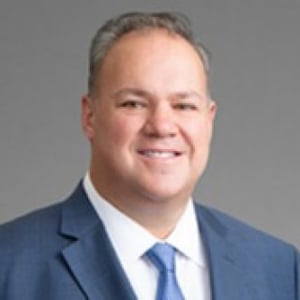
Costa is a partner in Gibson Dunn’s Houston office and co-chair of the firm’s Trials Practice Group. Mr. Costa offers clients a unique perspective as the only former federal trial and appellate judge trying cases and leading investigations. His broad experience—having handled complex civil and criminal matters, at trial and on appeal, as advocate and judge—allows him to offer invaluable skills and strategic insights.
Before joining Gibson Dunn, Mr. Costa served for more than ten years as a federal trial and appellate judge. He served on the U.S. Court of Appeals for the Fifth Circuit from 2014 to 2022. After his nomination by President Obama, the Senate confirmed him by a vote of 97-0. No federal appellate judge nominated since has received more votes. Mr. Costa first served as a district judge for the Southern District of Texas from 2012 to 2014. When appointed to the bench, he was the youngest-sitting federal judge at age 39. Mr. Costa presided over thirty federal trials in four different venues (he continued handling district court matters while serving on the court of appeals). He wrote precedential opinions in almost every area of the law, including antitrust, intellectual property, class actions, international arbitration, securities fraud, bankruptcy, conflicts of law, labor and employment, oil and gas, False Claims Act, administrative law, constitutional law, and criminal law. In press accounts of his tenure, he was described as an “exceptionally gifted jurist” with a “towering intellect” who was “respected by all sides.” The Federal Judicial Center invited Mr. Costa on multiple occasions to teach new federal district judges.
Before taking the bench, Mr. Costa was an Assistant U.S. Attorney in Houston from 2005 to 2012. As a prosecutor, he tried more than 15 jury trials, including serving as a lead prosecutor of Allen Stanford, the head of Stanford Financial Group, for orchestrating a multibillion-dollar international fraud scheme. Mr. Costa is featured in a documentary about the case, The Man Who Bought Cricket. A Reuters article about the trial quotes a victim who said that Mr. Costa’s closing argument “brought her to tears.” For his work on the Stanford case, Mr. Costa received the John Marshall Award for Trial of Litigation and the Assistant Attorney General’s Award for Exceptional Service. He also prosecuted cases involving kickbacks in the energy industry, public corruption, the Foreign Corrupt Practices Act, securities fraud, internet fraud, and counterfeit technology products. During his time as a federal prosecutor, Mr. Costa served as the Southern District of Texas’s Deputy International Affairs Coordinator, during which he assisted with investigations in more than a dozen countries.
Mr. Costa is a frequent speaker and author on legal topis, including writing for the ABA’s Litigation Journal on various trial-related issues. He also taught Federal Jurisdiction at the University of Houston Law Center, where he was named an Honorary Alumnus.
After college, Mr. Costa taught elementary school for two years in the Mississippi Delta through Teach for America. He has remained involved in the Delta and in education, launching a nonprofit in Mississippi, serving on the board of the Houston Urban Debate League, and helping teach Government at a Houston‑area charter school.
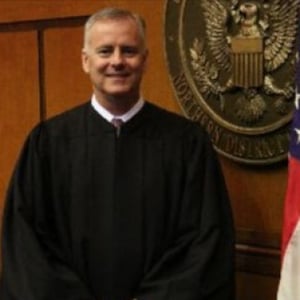
U.S. District Court for the Northern District of Texas
Reed Charles O'Connor is a federal judge on the United States District Court for the Northern District of Texas. He joined the court in 2007 after being nominated by President George W. Bush.
A native of Houston, Texas, O'Connor graduated from the University of Houston with his bachelor's degree in 1986 and from South Texas College of Law with his J.D. in 1989.
Executive General Counsel, First Liberty Institute
Hiram Sasser is Executive General Counsel for First Liberty Institute, where he oversees First Liberty’s litigation and media efforts. Sasser’s practice focuses on First Amendment and other constitutional and civil rights issues relating to religious liberty. Sasser served as co-counsel in seven victories before the United States Supreme Court, including Groff v. DeJoy (landmark case overturning the “de minimis cost” test for Title VII in place almost 50 years), Kennedy v. Bremerton (landmark case overturning 50 years of Establishment Clause precedent), Carson v. Makin (overturning 40 years of Maine’s discrimination against parents choosing faith-based schools), American Legion v. American Humanist Association (landmark case ending Establishment Clause attacks on veterans’ memorials with religious imagery), Klein v. Oregon Bureau of Labor and Industries (granted, vacated, and remanded (twice) in religious wedding service case), and Sause v. Bauer (summary reversal revoking qualified immunity for police who ordered a citizen not to pray in her own home).
In addition to his legal duties, Sasser develops, coordinates, and implements successful media strategies on behalf of his clients. This includes numerous appearances on ABC, NBC, CBS, Fox News, CNN, and the BBC as well as being heard on various radio stations throughout the United States, Asia, Africa, and Europe.
In 2016, Sasser took a leave of absence to serve a temporary assignment as the Chief of Staff for the Attorney General of Texas. He currently serves as an Adjunct Professor of Law at both The University of Texas at Austin School of Law (teaching Religious Liberty) and Oklahoma City University School of Law (teaching Civil Rights Procedure).
Regional Deputy General Counsel, North America and Lead Counsel, Treasury, Willis Towers Watson
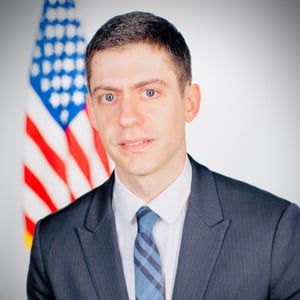
Partner, Quinn Emanuel
John F. Bash is an American attorney who served as the United States Attorney for the Western District of Texas from 2017 to 2020. After graduating from Harvard Law School, Mr. Bash clerked for Judge Kavanaugh during his first year on the bench and went on to clerk for Justice Antonin Scalia. He then served as an Assistant to the Solicitor General in the U.S. Department of Justice, where he argued ten cases in the United States Supreme Court. He also served briefly as Special Assistant to the President and Associate Counsel to the President before his appointment as United States Attorney.
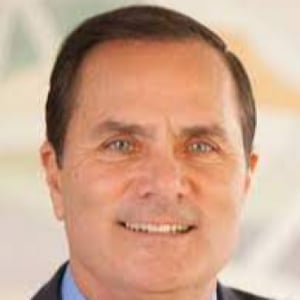
Federal Public Defender for the Southern District of Florida

Co-Director, Tsai Center for Law, Science and Innovation, Altshuler Distinguished Teaching Professor, and Professor of Law, Southern Methodist University Dedman School of Law, SMU Dedman School of Law
Meghan J. Ryan is an award-winning teacher and scholar working at the intersection of criminal law & procedure, torts, and law & science. Her current research focuses on the impact of evolving science, technology, and cultural values on criminal convictions and punishments, as well as on civil liability and remedies. This includes research on forensic science, wrongful convictions, sentencing, cruel & unusual punishments, and toxic torts.
Professor Ryan received her A.B., magna cum laude, in Chemistry from Harvard University. She earned her J.D., magna cum laude, from the University of Minnesota Law School, where she was a member of the Order of the Coif and received the American Law Institute-American Bar Association Scholarship and Leadership Award. She was also a member of both the Minnesota Law Review and the Minnesota Journal of Global Trade.
After graduation, Professor Ryan clerked for the Honorable Roger L. Wollman of the U.S. Court of Appeals for the Eighth Circuit. She also practiced law in the trial group at the Minneapolis-based law firm of Dorsey & Whitney LLP, where she focused her practice on commercial and intellectual property litigation, as well as on white collar defense and compliance. Additionally, Professor Ryan has conducted research in the areas of bioinorganic chemistry, molecular biology, and experimental therapeutics at the Mayo Clinic and the University of Minnesota. Prior to joining the SMU faculty, Professor Ryan was a Visiting Assistant Professor at the University of Minnesota Law School, where she taught Criminal Law, Criminal Process, and Sales.
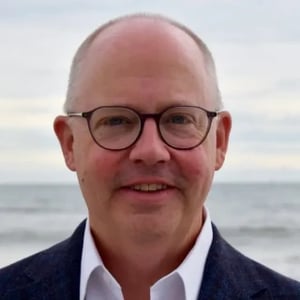
Edward Rood Eminent Scholar Chair, Professor of Law, and Senior Fellow, Hamilton Center for Classical and Civic Education, University of Florida Levin College of Law
Professor Stinneford researches, teaches, and consults about legal ethics, criminal law, criminal procedure, and constitutional law. His work has been cited by the United States Supreme Court, several state supreme courts and federal courts of appeal, and numerous scholars. It has been published in numerous scholarly journals including the Georgetown Law Journal, the Northwestern University Law Review, the Virginia Law Review, the Notre Dame Law Review, and the William & Mary Law Review. The Stanford-Yale Junior faculty forum selected one of his articles as the best paper in the category of Constitutional History, and the AALS Criminal Justice Section named another article as the best paper in its Junior Scholars Paper Competition. In the fall of 2015, he was a Visiting Scholar at the Georgetown Law Center, Center for the Constitution.
John Stinneford was the inaugural Director and serves as a Senior Fellow of the Hamilton Center for Classical and Civic Education at the University of Florida. The Hamilton Center is a new academic unit whose mission is to promote civic education and civic discourse and to foster intellectual diversity. Its core purpose is to help students develop the knowledge, habits of thought, analytical skills, and character to be citizens and leaders in a free society. It will do so through curriculum, public programming, and (in conjunction with the Florida Department of Education) teacher training. Its curriculum will focus primarily on the Western intellectual tradition and the American founding.
Before joining the Florida faculty in 2009, Stinneford clerked for the Hon. James Moran of the United States District Court for the Northern District of Illinois, served as an Assistant United States Attorney, and practiced law with Winston & Strawn in Chicago. Stinneford teaches first-year courses in Criminal Law and Constitutional Law, and upper-level courses in Professional Responsibility, Criminal Procedure, Federal Criminal Law, Law & Literature, and White Collar Crime.

Judge, United States Court of Appeals, Sixth Circuit
Amul R. Thapar serves as a judge on the United States Court of Appeals for the Sixth Circuit. His judicial career began in 2007 when President George W. Bush nominated him to serve on the Eastern District of Kentucky, making him the first South Asian Article III judge in American history. In 2017, he became President Donald J. Trump’s first appellate court nominee.
Before joining the bench, Judge Thapar served as the United States Attorney for the Eastern District of Kentucky. While United States Attorney, Judge Thapar worked on the Attorney General’s Advisory Committee (“AGAC”) and chaired the AGAC’s Controlled Substances and Asset Forfeiture subcommittee. He also served on the Terrorism and National Security subcommittee, the Violent Crime subcommittee, and the Child Exploitation working group.
Judge Thapar has worked in private practice, at Williams & Connolly in Washington, D.C., and Squire, Sanders & Dempsey in Cincinnati, Ohio. He also served as an Assistant United States Attorney in both the Southern District of Ohio and the District of Columbia.
Judge Thapar received his undergraduate degree from Boston College and his law degree from the University of California, Berkeley. After graduating, Judge Thapar worked as a law clerk to the Honorable S. Arthur Spiegel of the United States District Court for the Southern District of Ohio, and the Honorable Nathaniel R. Jones of the United States Court of Appeals for the Sixth Circuit.
Judge Thapar has also published in the Yale Law Journal, Michigan Law Review, and Catholic University Law Review. He teaches courses on originalism, the Federalists and Anti-Federalists, and legal writing at Notre Dame Law School, the University of Virginia School of Law, and Vanderbilt Law School.
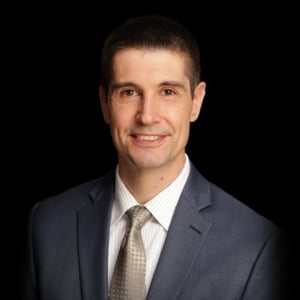
Partner, Cooper & Kirk, PLLC
Pete Patterson is a partner at Cooper & Kirk. His practice includes appellate litigation, constitutional litigation, commercial litigation, and administrative law. In addition, Mr. Patterson for a number of years taught an appellate litigation clinic at the University of Cincinnati College of Law. Mr. Patterson has argued in the U.S. Supreme Court and in nearly every regional federal circuit court of appeals.
Mr. Patterson has extensive experience in complex matters involving important questions of constitutional, statutory, and administrative law. He frequently has represented plaintiffs in cases alleging constitutional or statutory violations by federal, state, and local government officials. He also has represented plaintiffs in class action litigation against corporations and the federal government.
Mr. Patterson joined the firm in 2009. Prior to arriving at Cooper & Kirk, he served as a law clerk to Judge Jeffrey S. Sutton of the United States Court of Appeals for the Sixth Circuit. Mr. Patterson typically works from Cincinnati, Ohio.
Mr. Patterson received his J.D. from Stanford Law School in 2006, earning Order of the Coif honors for finishing in the top 10% of his class. There, he was a member of the Stanford Law Review, serving as an Articles Editor. He also participated in litigation before the United States Supreme Court through the Stanford Supreme Court Litigation Clinic.
Mr. Patterson graduated with University Honors from Carnegie Mellon University in 2000 with a B.S. in Information and Decision Systems. While at Carnegie Mellon, he wrote a regular column for the student newspaper and was a member of the football team.
Partner, Dechert LLP
Michael H. McGinley, Global Co-Chair of the Securities and Complex Litigation practice group at Dechert, focuses his practice on high-stakes litigation, specifically appellate and complex commercial matters. Mr. McGinley has experience representing clients at every level of the federal judiciary, as well as in numerous federal agencies and state courts. In early 2025, he argued three cases before the United States Supreme Court in a span of four months.
He has litigated a wide range of issues, including federal jurisdiction, Chevron deference, federalism, preemption, antitrust, arbitration, labor law, tort law, antidumping and trade-remedy disputes, securities and corporate law, contract rights, voting rights, free speech, religious freedom and many other constitutional issues. Mr. McGinley also regularly advises individual, corporate and government clients on strategic, criminal defense, and regulatory matters.
Prior to joining Dechert, Mr. McGinley served as Associate Counsel and Special Assistant to the President in the White House Counsel's Office, where his primary responsibilities included the review of major legislative and regulatory actions and the confirmation of judicial nominees, including Justice Gorsuch. During his time in the White House, Mr. McGinley worked closely with the Department of Justice, the Office of Management and Budget, a number of federal agencies, and various congressional committees. He also previously served as a law clerk to Justice Samuel A. Alito, Jr. of the Supreme Court of the United States and to then-Judge Neil M. Gorsuch, of the United States Court of Appeals for the Tenth Circuit.
Mr. McGinley has been ranked by Chambers USA in Band 1 for appellate litigation in Pennsylvania and recognized by The Legal 500 for his expertise in financial services litigation, general commercial disputes, and international litigation. He was named an “Appellate MVP of the Year” for 2025 by Law360, and his appellate victories helped earn Dechert a place on the National Law Journal’s “Appellate Hot List” in 2025. Mr. McGinley is named among the Financial Times’ Top 10 “Most Innovative Legal Practitioners in North America” as part of the FT’s Innovative Lawyers Awards 2025 for North America.
Mr. McGinley is an elected member of the American Law Institute. He was appointed by the President to the governing Council of the Administrative Conference of the United States, which is an independent agency charged with convening experts from the public and private sectors to recommend improvements to administrative process and procedure. He also serves as the Co-Chair of the American Bar Association’s Administrative Rulemaking Committee.
Executive General Counsel, First Liberty Institute
Hiram Sasser is Executive General Counsel for First Liberty Institute, where he oversees First Liberty’s litigation and media efforts. Sasser’s practice focuses on First Amendment and other constitutional and civil rights issues relating to religious liberty. Sasser served as co-counsel in seven victories before the United States Supreme Court, including Groff v. DeJoy (landmark case overturning the “de minimis cost” test for Title VII in place almost 50 years), Kennedy v. Bremerton (landmark case overturning 50 years of Establishment Clause precedent), Carson v. Makin (overturning 40 years of Maine’s discrimination against parents choosing faith-based schools), American Legion v. American Humanist Association (landmark case ending Establishment Clause attacks on veterans’ memorials with religious imagery), Klein v. Oregon Bureau of Labor and Industries (granted, vacated, and remanded (twice) in religious wedding service case), and Sause v. Bauer (summary reversal revoking qualified immunity for police who ordered a citizen not to pray in her own home).
In addition to his legal duties, Sasser develops, coordinates, and implements successful media strategies on behalf of his clients. This includes numerous appearances on ABC, NBC, CBS, Fox News, CNN, and the BBC as well as being heard on various radio stations throughout the United States, Asia, Africa, and Europe.
In 2016, Sasser took a leave of absence to serve a temporary assignment as the Chief of Staff for the Attorney General of Texas. He currently serves as an Adjunct Professor of Law at both The University of Texas at Austin School of Law (teaching Religious Liberty) and Oklahoma City University School of Law (teaching Civil Rights Procedure).

Cooperation Credit, Privileges, and Possible Landmines for Attorneys and Clients: Implications of US v. Coburn
Don Cochran, Mike Hurst, David C. Joseph, John C. Richter
In February 2022, a District of New Jersey court in United States v. Coburn compelled...
There Is No Place Like Nebraska [The FedSoc Films Podcast]
Laura Ebke
In this episode of the FedSoc Films Podcast, Laura Ebke, a Senior Fellow at the...
A Seat at the Sitting - March 2024
Robert Corn-Revere, Michael Francisco, Tony Francois, Eli Nachmany, Brett Nolan, Jennifer H. Weddle
Each month, a panel of constitutional experts convenes to discuss the Court’s upcoming docket sitting...
Litigation Update: Speech First, Inc. v. Sands
Tyson Langhofer, Abigail Smith
Speech First, Inc. v. Sands concerns a Virginia Polytechnic Institute and State University (Virginia Tech)...
Litigation Update: OKPLAC, Inc. v. Statewide Virtual Charter School Board
Michael McGinley, Hiram Sasser
After Carson v. Makin (2023) --a U.S. Supreme Court case holding that Maine may not...
Litigation Update: OKPLAC, Inc. v. Statewide Virtual Charter School Board
Michael McGinley, Hiram Sasser
After Carson v. Makin (2023) --a U.S. Supreme Court case holding that Maine may not...
Litigation Update: OKPLAC, Inc. v. Statewide Virtual Charter School Board
Panel Discussion: The Consequences of Disruption
Robert B. Ahdieh, James Davis Blacklock, Gregg Costa, Reed O'Connor, Hiram Sasser, J. Ammon Smartt
Collegiality and the presumption that opposing counsel work together in good faith are bedrocks of...
After Dobbs and Samia: The Potential Implications of Applying a Dobbs Lens to the Supreme Court’s Constitutional Criminal Jurisprudence
John F. Bash, Michael Caruso, Meghan J. Ryan, John F. Stinneford, Amul R. Thapar
Stare Decisis, a Latin term meaning “let it stand,” is a key element of how...
Litigation Update: Koons v. Platkin
Peter A. Patterson
Koons v. Platkin is a challenge to certain provisions of New Jersey Bill A4769/S3214 –...