
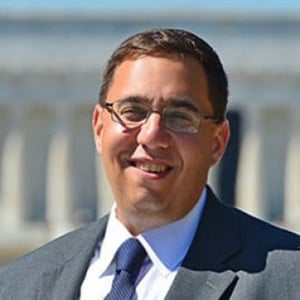
Partner, Consovoy McCarthy Park PLLC
Mr. Consovoy assists clients on a broad range of litigation and appellate issues primarily before the Supreme Court of the United States and federal appellate and district courts, as well as before federal agencies. Mr. Consovoy represents clients in cases involving constitutional issues, interpretation and enforcement of federal statutes, administrative law, civil rights disputes, and a variety of other civil litigation issues. Mr. Consovoy recently argued two cases—Spokeo v. Robbins and Evenwel v. Abbott—before the Supreme Court of the United States.
Mr. Consovoy is a former law clerk to Supreme Court Justice Clarence Thomas, Judge Edith H. Jones of the United States Court of Appeals for the Fifth Circuit, and the 17th Judicial Circuit of Virginia. Mr. Consovoy is a member of the Edward Coke Appellate Inn of Court and was named by Law360 as a “rising star” in appellate law for 2013. Since 2011, Mr. Consovoy has been the co-director of the Supreme Court Clinic at the Antonin Scalia Law School at George Mason University, where he also is the co-director of the Administrative Law Clinic.
Mr. Consovoy earned his B.A. from Monmouth University, and his J.D. magna cum laude from George Mason University School of Law. Mr. Consovoy is a member of the Virginia and District of Columbia bars.

Professor of Law, Stanford Law School
Orin S. Kerr is a Professor of Law at Stanford Law School, where he teaches and writes in the areas of criminal procedure and computer crime law. Kerr earned mechanical engineering degrees from Princeton University and Stanford University before graduating with a J.D. from Harvard Law School. He is a former law clerk to Justice Anthony M. Kennedy at the United States Supreme Court and Judge Leonard I. Garth of the U.S. Court of Appeals for the Third Circuit.
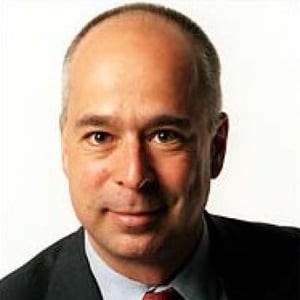
Supreme Court Correspondent, The New York Times
Adam Liptak covers the Supreme Court for The New York Times. Liptak’s column on legal affairs, “Sidebar,” appears every other Tuesday.
A graduate of Yale College and Yale Law School, Liptak practiced law at a large New York City law firm and in the legal department of The New York Times Company before joining the paper’s news staff in 2002.
Liptak was a finalist for the Pulitzer Prize in explanatory reporting in 2009 for “American Exception,” a series of articles examining ways in which the American legal system differs from those of other developed nations. He received the 2010 Scripps Howard Award for Washington reporting for a five-part series on the Roberts Court.
He is the author of “To Have and Uphold: The Supreme Court and the Battle for Same-Sex Marriage.”
His journalism has appeared in The New Yorker, Vanity Fair, Business Week and Rolling Stone, and he has published articles in The Arizona Law Review, The Michigan Law Review and The New York University Annual Survey of American Law.
Liptak has taught courses at Yale, Columbia, the University of Chicago, Washington University in St. Louis, the University of Southern California and U.C.L.A. He is a member of the American Academy of Arts and Sciences.
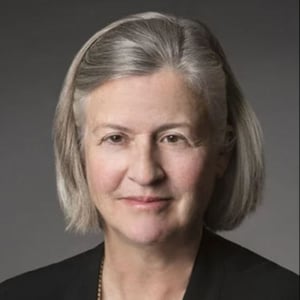
Partner, Sidley Austin LLP
Virginia Seitz is a partner in Sidley Austin’s Supreme Court and Appellate practice. On behalf of a wide range of clients, she has handled cases in the United States Supreme Court, in virtually all federal courts of appeals, and in state appellate courts. Virginia was counsel of record on the amicus brief on behalf of retired military officers in Grutter v. Bollinger, 539 U.S. 306 (2003), and Gratz v. Bollinger, 539 U.S. 244 (2003), which the Supreme Court cited at oral argument and in its opinion and which the New York Times piece noted “may have been the most influential amicus brief in the history of the Supreme Court.” She has handled an array of district court litigation involving important constitutional and federal law issues, including the Appropriations and Supremacy Clauses of the Constitution, the First Amendment, Title IX, Title VII, the Anti-Deficiency Act, ERISA, and federal labor laws.
Virginia returned to Sidley in 2014 after serving in the Senate-confirmed position of Assistant Attorney General for the Office of Legal Counsel in the Department of Justice. She was the first woman to be confirmed to that position. As the leader of that Office, Virginia was responsible for providing legal advice to the President and Executive Branch departments and agencies on issues of particular difficulty and importance. Virginia previously served as an appointee of the Chief Justice on the Advisory Committee on Civil Rules. In January 2017, she was elected to the American Law Institute. Earlier in her career, Virginia was confirmed by the Senate to the first Board of Directors of the Congressional Office of Compliance and served from May 1995 to 2000. Virginia has been recognized for her Appellate Law practice by Chambers USA, in The Legal 500 US in Litigation: Supreme Court and Appellate, and in The Best Lawyers in America.
Virginia clerked at the Supreme Court for Justice William J. Brennan, Jr., and before that for Judge Harry T. Edwards of the D.C. Circuit. She is a graduate of University at Buffalo Law School, received her M.A. from Oxford University where she was a Rhodes Scholar, and received her B.A. from Duke University, summa cum laude with distinction.

President, JCN
Carrie Campbell Severino is the president of the JCN, and co-author with Mollie Hemingway of the bestselling book Justice on Trial: The Kavanaugh Confirmation and the Future of the Court. As a go-to expert on the confirmation process, Mrs. Severino has been extensively quoted in the media. She regularly appears on television, including FOX, CNN, MSNBC, C-SPAN, and ABC’s This Week.
Severino writes and speaks on a wide range of judicial issues, including the constitutional limits on government, the federal nomination process, and state judicial selection. She has testified before Congress on constitutional questions and briefed Senators on judicial nominations, and regularly files briefs in high-profile Supreme Court cases. She was a law clerk to Supreme Court Justice Clarence Thomas and to Judge David B. Sentelle of the U.S. Court of Appeals for the D.C. Circuit, and is a graduate of Harvard Law School (J.D.), Duke University (B.A., Biology), and Michigan State University (M.A., Linguistics).

Laurence H. Silberman Chair in Constitutional Governance, American Enterprise Institute; Executive Director, Antonin Scalia Law School’s C. Boyden Gray Center for the Study of the Administrative State
Adam J. White is the Laurence H. Silberman Chair in Constitutional Governance and senior fellow at the American Enterprise Institute, where he focuses on the Supreme Court and the administrative state. He also directs the Antonin Scalia Law School’s C. Boyden Gray Center for the Study of the Administrative State.
He writes on regulation and constitutional government for a variety of publications. He practiced law in Washington, D.C., after clerking for the D.C. Circuit's Judge David Sentelle. He also has been chairman of the ABA's Administrative Law Section.
In 2021, he served on the Presidential Commission on the Supreme Court of the United States, where he criticized “Court packing” and other efforts to restructure the Supreme Court.
Associate Justice, North Carolina Supreme Court
Early Years
Personal Information
Married to Susan Awbrey Hunter. One son, Robert Neal Hunter III; two step-sons, Chris Awbrey Steele and Alan Baret Steel; two grandchildren; Member of First Presbyterian Church, Greensboro, North Carolina

Partner, Robinson & Lawing, LLP
When Mike Robinson was six years old, he wrote a brief essay in school about what he wanted to be when he grew up. While the other kids in his class wanted to be firemen, cowboys, ballerinas and football players, Mike knew he wanted to be a lawyer and one day a judge. Since that time, he never wavered from those goals. Today, Mike has a distinguished law career and recently announced his candidacy for the Supreme Court of North Carolina.
For over 33 years, Mike has practiced law in North Carolina. In 1997, he was one of nine lawyers who formed, Robinson & Lawing, LLP. For the past six years he has served as one of its managing partners. Mike has concentrated his practice on matters involving complex civil litigation, medical malpractice defense, insurance defense, intellectual property matters, and corporate litigation planning and loss prevention. Mike is admitted to practice in North Carolina State Courts, the three U.S. District Courts in North Carolina, the Fourth Circuit Court of Appeals and the U.S. Supreme Court.
In addition to his professional accomplishments, Mike has served in numerous volunteer capacities with a number of charitable and civic organizations within the community.
Mike is a conservative who believes that judges do not make laws, but rather should enforce them. If elected to the North Carolina Supreme Court, Mike will be tough but fair and will apply the law as written by the state legislature. He will work hard to examine every case that comes before him and take a level-headed approach to his work.
Mike received his undergraduate degree from Davidson College and his juris doctor degree with honors from the University of North Carolina at Chapel Hill.
Mike and his wife Wynn have lived in Winston-Salem for the past 33 years. They have four grown children (three sons and a daughter), two daughters-in-law and two granddaughters.
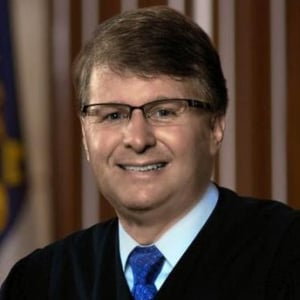
Founding Dean & Professor, Kenneth F. Kahn School of Law at High Point University
Hon. Mark Martin is the founding dean and professor of law at the Kenneth F. Kahn School of Law at High Point University.
Mark served as Chief Justice of the North Carolina Supreme Court from 2014-2019. He also served on that Court as an Associate Justice, on the North Carolina Court of Appeals, and on a North Carolina Superior Court.
The Chief Justice of the United States appointed Mark to the Committee on Federal-State Jurisdiction of the United States Judicial Conference. He also served on the board of directors of the Conference of Chief Justices.
Mark chairs the Thomson Reuters Judicial Advisory Council. He is a member of the American Law Institute, where he assists with the Third Restatement, Conflict of Laws, and serves on the Region 15 Advisory Committee.
Mark has served on the adjunct faculties of Duke University, North Carolina Central University, and the University of North Carolina law schools. Mark co-taught a course on the various modes of constitutional interpretation with Associate Justice Samuel A. Alito, Jr. of the United States Supreme Court from 2020-2022.
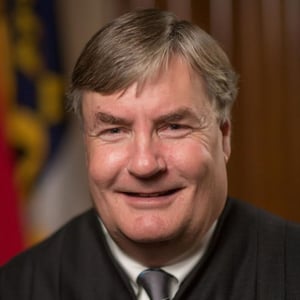
North Carolina Court of Appeals
Sam J. Ervin, IV, was born in Morganton, North Carolina, on November 18, 1955. He attended the public schools in Burke County, North Carolina, graduating from Freedom High School in 1974. In 1978, Judge Ervin was awarded an A.B., magna cum laude, from Davidson College. After graduating from Davidson, he attended Harvard Law School, from which he received a J.D., cum laude, in 1981.
From 1981 until 1999, Judge Ervin practiced law with the Morganton, North Carolina firm of Byrd, Byrd, Ervin, Whisnant, McMahon, P.A., and its predecessors. While in private practice, Judge Ervin handled a wide variety of civil, criminal, and administrative matters, including many appeals to the North Carolina Court of Appeals and the Supreme Court of North Carolina.
In 1999, Judge Ervin was nominated for a seat on the North Carolina Utilities Commission by Governor James B. Hunt, Jr. He was nominated for a second term on the Utilities Commission by Governor Michael F. Easley in 2007. Both appointments were confirmed by the General Assembly. The Utilities Commission is a quasi-judicial body that is responsible for regulating electric, natural gas, telecommunications, water and sewer, and certain types of transportation service provided to retail customers in North Carolina by privately-owned entities. During his service as a member of the Utilities Commission, Judge Ervin was involved in deciding many important regulatory matters, including, but not limited to, electric and natural gas rate proceedings, electric and natural gas business combination proceedings, proceedings involving applications by electric utilities for authority to construct new generation and transmission facilities, proceedings involving the approval of telecommunications price regulation plans, proceedings arbitrating or otherwise examining the terms and conditions under which competitive telecommunications providers were allowed to interconnect with incumbents, and proceedings addressing issues relating to the adequacy of water and sewer service in certain specific locations.
In addition, Judge Ervin was extensively involved in the activities of the National Association of Regulatory Utility Commissioners (NARUC), having served as Chairman of that organization's Subcommittee on Nuclear Issues and Waste Disposal from 2002 until 2005; as Chairman of that organization's Committee on Electricity from 2004 until 2007; and as a member of its Task Force on Climate Policy from 2007 through 2008. As part of his involvement in NARUC, Judge Ervin supervised its participation in the process that led to the implementation of the Energy Policy Act of 2005. While a member of the Utilities Commission, Judge Ervin testified on two different occasions before the Subcommittee on Energy and Air Quality of the Committee on Commerce of the United States House of Representatives. Judge Ervin was a regular speaker at energy-related conferences and seminars during his service as a Utilities Commissioner.
Judge Ervin has also been, at various times, involved in a wide variety of church-related, bar-related, and charitable activities. He is married to Mary Temple Ervin and has two children and two step-children.
Judge Ervin was elected to the North Carolina Court of Appeals at the November 4, 2008, general election. His term as a member of the Court of Appeals commenced on January 1, 2009, and extends until December 31, 2017.
Associate Justice, North Carolina Supreme Court
Early Years
Born in DeKalb County, Georgia in 1952, Robin E. Hudson moved to Greensboro, NC with her family in 1966.
Professional Background
Admitted to the North Carolina Bar in 1976 and practiced law in Raleigh and Durham until her election to the Court of Appeals in November 2000. She is the first North Carolina woman elected to the appellate court division without having been appointed first. She served on the NC Court of Appeals from January 2001 until December 2006. During that time, she helped organize and coordinate the Court of Appeals voluntary mediation program. She began her 8-year term on the Supreme Court in January 2007.
Except for 3 years as assistant appellant defender in the mid-1980's, she practiced law in the private sector and handled a variety of trials and appeals, but concentrated on workers' compensation and tort litigation, with particular emphasis on occupational diseases and products liability. She practiced extensively before the Industrial Commission, as well as in State and Federal courts. Since 1994, she has been certified to mediate cases from Superior Court and the Industrial Commission.
Graduate of Page Senior High School, Greensboro, 1969. Graduated from Yale University in 1973 with a BA degree in philosophy and psychology. Received J.D. from the University of North Carolina School of Law in 1976.
Seventh Division of the Superior Court, North Carolina
Judge Eric Levinson joined the District Attorney’s Office in Cabarrus and Rowan Counties, N.C. as a felony prosecutor following law school, and he prosecuted drug, property, sexual assault, and homicide offenders.
Judge Eric Levinson was elected to the N.C. judiciary in 1996 as a District and Family Court Judge in Charlotte, N.C. In this role, he was recognized for implementing best-practices in our criminal and child support enforcement courts and became a N.C. Certified Juvenile Court Judge.
Judge Eric Levinson was elected statewide in 2002 as one of fifteen members of the N.C. Court of Appeals in Raleigh, N.C., where he served as an Associate Judge and the Court’s youngest member. He authored hundreds of legal opinions in disputes and lawsuits concerning criminal, civil and administrative matters.
Judge Eric Levinson was appointed by the Bush Administration in 2007 as the Justice Attache to Iraq for the U.S. Department of Justice. As Justice Attache, Levinson managed the U.S. government’s diplomatic relationship with the Iraqi judiciary and its Chief Justice, Medhat al Mahmoud, and advanced the establishment of Major Crimes Courts where terrorists were prosecuted.
Judge Eric Levinson worked in Kabul, Afghanistan as a Rule of Law and Courts Advisor in 2008. In this role, he collaborated with members of the Supreme Court of Afghanistan and helped draft and advance guidelines to establish commercial courts to adjudicate business, contract and related civil conflicts.
Judge Eric Levinson was appointed to the N.C. Superior Court in 2009 after a bipartisan group of Republican and Democratic lawmakers, business professionals, attorneys and community stakeholders endorsed his appointment. Levinson presently holds court in counties all across western, central and eastern N.C. and presides over violent crimes against persons (homicide, sexual assault, armed robbery, serious assault) as well as civil conflicts (complex business disputes, class action, property).
Judge Eric Levinson gained his Juris Doctorate from the University of North Carolina at Chapel Hill School of Law where he was President of the Student Bar Association. He obtained a BBA in Finance,cum laude, at the University of Georgia, where he was an Honors Program student. Levinson also completed the Institute on Comparative Political and Economic Systems through the Fund for American Studies in Washington, D.C. and Georgetown University, and completed a program in International Finance hosted by the University of London, England. He is a certified Superior Court mediator, and is a N.C. Certified Juvenile Court Judge.
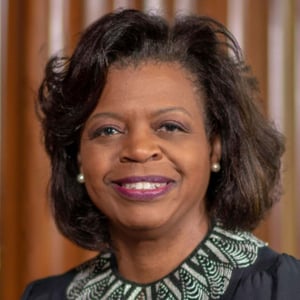
Fmr. Chief Justice, North Carolina Supreme Court
Chief Justice Cheri Beasley has spent more than 20 years dedicated to the rule of law. She began her judicial career as a district court judge in Cumberland County, where she served for a decade before being elected to the North Carolina Court of Appeals in 2008. She served as an associate justice on the Supreme Court of North Carolina for seven years before being appointed by Governor Roy Cooper to lead the Supreme Court and North Carolina's third branch of government, the Judicial Branch. She is the first African-American woman in the Supreme Court’s 200-year history to serve as Chief Justice.
Chief Justice Beasley has spent her entire career advocating for courts that are independent, fair, and accessible, and that serve every person with dignity and respect. As Chief Justice, she is advocating for a court system that not only solves legal disputes, but also helps people better their lives. By engaging local judges, educators and law enforcement, she is helping to reform discipline in our schools and keeping kids out of our courtrooms. She is committed to expanding specialized treatment courts that better serve the needs of North Carolina’s children and families. She is also working to leverage the power of technology to make sure our courts are efficient and accessible.
She has lectured extensively to promote the administration of justice, the importance of an independent judiciary, and fair judicial selection. She is active in her community through leadership in her church, First Baptist of Raleigh, her support of hunger relief efforts, and her mentoring of students from elementary school to law school. She is a graduate of Douglass College of Rutgers University, the University of Tennessee College of Law, and Duke University School of Law where she obtained her LL.M. She and her husband, Curtis Owens, are the proud parents of twin sons, Thomas and Matthew.
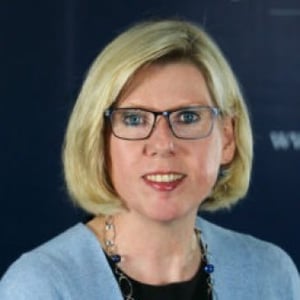
Vice President of Marketing and Communications, John Locke Foundation
As Vice President of Marketing and Communications, Donna shares the foundation’s message of freedom, free markets, and limited government across media platforms. She co-hosts Carolina Journal Radio, a weekly syndicated radio show produced by JLF and heard on more than a dozen stations across North Carolina. Donna came to JLF in 2003 after freelance writing for Carolina Journal and contributing to projects for the North Carolina Education Alliance. Her career has been spent in marketing, public relations, and broadcasting, and includes time at UNC-TV and The Arizona Republic, the daily newspaper serving metropolitan Phoenix. Donna is a graduate of Arizona State University and is married to Rick Martinez. She and Rick co-host “You Don’t Say,” a daily radio talk show heard on NewsRadio 680 WPTF in the Triangle.

Sr Corporate Counsel, Cisco Systems, Inc.
Professor of Law, Georgetown University Law Center
Sheryll Cashin, Professor of Law at Georgetown University, teaches Administrative Law, Constitutional Law, and Race and American Law among other subjects. She writes about race relations, government and inequality in America. Her new book, Place Not Race: A New Vision of Opportunity in America (Beacon Press, 2014), argues that affirmative action as currently practiced does little to help disadvantaged people and offers a new framework for true inclusion. Her book, The Failures of Integration (PublicAffairs, 2004) was an Editors' Choice in the New York Times Book Review. Cashin is also a two-time nominee for the Hurston/Wright Legacy Award for non-fiction (2005 and 2009). She has published widely in academic journals and written commentaries for several periodicals, including the L.A. Times, Washington Post, and Education Week.
Professor Cashin is an active member of the Poverty and Race Research Action Council (PRRAC) and Building ONE America, an emerging national network of state and regional coalitions promoting sustainable growth and social inclusion. She worked in the Clinton White House as an advisor on urban and economic policy, particularly concerning community development in inner-city neighborhoods. She was law clerk to U.S. Supreme Court Justice Thurgood Marshall and Judge Abner Mikva of the U.S. Court of Appeals for the District of Columbia Circuit. She graduated summa cum laude from Vanderbilt University with a bachelor's degree in electrical engineering. As a Marshall Scholar, she went on to receive a masters in English Law with honors from Oxford University and a J.D. with honors from Harvard Law School where she was a member of the Harvard Law Review. Cashin was born and raised in Huntsville, Alabama, where her parents were political activists. She is married to Marque Chambliss and the mother of twin boys, Logan and Langston.

Board Member, Center for Equal Opportunity
Roger Clegg is a Board Member at and former President and General Counsel of the Center for Equal Opportunity. He focuses on legal issues arising from civil rights laws--including the regulatory impact on business and the problems in higher education created by affirmative action. A former Deputy Assistant Attorney General in the Reagan and Bush administrations, Clegg held the second highest positions in both the Civil Rights Division (1987-91) and in the Environment and Natural Resources Division (1991-93). He has held several other positions at the U.S. Justice Department, including Assistant to the Solicitor General (1985-87), Associate Deputy Attorney General (1984-85), and Acting Assistant Attorney General in the Office of Legal Policy (1984). Clegg is a graduate of Yale University Law School (1981).

Partner, King & Spalding
Adam Conrad is a partner in the firm’s Intellectual Property Practice Group and its national appellate practice. Mr. Conrad joined the firm following a clerkship with United States Supreme Court Justice Clarence Thomas. He also clerked for Judge David B. Sentelle, U.S. Court of Appeals for the District of Columbia Circuit.
Mr. Conrad frequently briefs cases in the Courts of Appeals and the United States Supreme Court in areas ranging from patent law to constitutional issues. He has successfully argued before the Court of Appeals for the Federal Circuit. In addition, Mr. Conrad’s patent litigation experience includes analysis and strategy on critical issues, assisting with appellate preservation, drafting dispositive motions, and drafting post-trial motions.
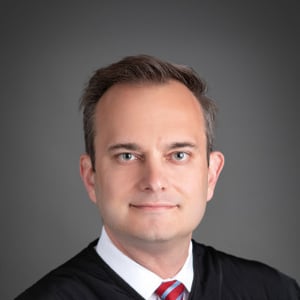
United States Magistrate Judge, Eastern District of North Carolina
Robert T. Numbers, II serves as a United States Magistrate Judge in the United States District Court for the Eastern District of North Carolina.
Judge Numbers received degrees in Political Science and Economics, with honors, from Wake Forest University. After completing his undergraduate work, Judge Numbers obtained his law degree from the University of Notre Dame where he served on the Notre Dame Law Review.
Upon his graduation from law school, Judge Numbers joined the Winston-Salem office of a large, regional law firm. From 2005 until 2010, Judge Numbers’ practice focused on civil rights claims against local municipalities and government contractors. In 2010, Judge Numbers joined the firm’s Raleigh office and concentrated his practice on complex business litigation in state and federal courts.
Counsel, King & Spalding
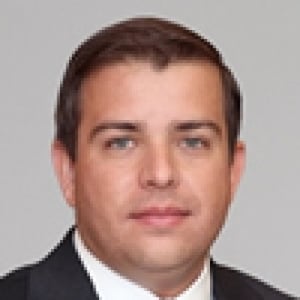
Bradley J. Lingo is a counsel in King & Spalding’s Charlotte office. He practices in the firm’s National Business Litigation Group.
Mr. Lingo has considerable experience guiding clients to successful resolutions of complex civil litigation matters. His work has encompassed a broad array of trial and appellate matters, but in recent years, much of it has focused on defending accounting firms against claims of malpractice and securities fraud. He has played a significant role in matters for three of the Big Four accounting firms. He also has experience representing clients facing regulatory investigations, including investigations by the Securities and Exchange Commission and the Department of Justice.
Mr. Lingo has maintained an active pro bono practice focusing on religious-liberties issues. Accounts of pro bono work spearheaded by Mr. Lingo have appeared on the front pages of the New York Times, Washington Post, and Wall Street Journal.
Prior to joining King & Spalding, Mr. Lingo practiced in the Washington, D.C., office of Gibson Dunn and served as a law clerk to the Hon. Morris Sheppard Arnold of the United States Court of Appeals for the Eighth Circuit. He received his law degree, cum laude, from Harvard Law School, where he was an executive editor of the Harvard Journal of Law and Public Policy. He graduated first in his class and summa cum laude from Grove City College. While there, he was elected student body vice-president and awarded the Calderwood Scholarship, which goes to the two rising seniors demonstrating outstanding scholarship, leadership, and service.
Mr. Lingo currently serves as Chairman of the Federalist Society's Charlotte Chapter. Super Lawyers named him one of North Carolina’s “Rising Stars” for 2014. He is admitted to practice in North Carolina and the District of Columbia.
Partner, King & Spalding
Adam Conrad is a partner in the firm’s Intellectual Property Practice Group and its national appellate practice. Mr. Conrad joined the firm following a clerkship with United States Supreme Court Justice Clarence Thomas. He also clerked for Judge David B. Sentelle, U.S. Court of Appeals for the District of Columbia Circuit.
Mr. Conrad frequently briefs cases in the Courts of Appeals and the United States Supreme Court in areas ranging from patent law to constitutional issues. He has successfully argued before the Court of Appeals for the Federal Circuit. In addition, Mr. Conrad’s patent litigation experience includes analysis and strategy on critical issues, assisting with appellate preservation, drafting dispositive motions, and drafting post-trial motions.
United States Magistrate Judge, Eastern District of North Carolina
Robert T. Numbers, II serves as a United States Magistrate Judge in the United States District Court for the Eastern District of North Carolina.
Judge Numbers received degrees in Political Science and Economics, with honors, from Wake Forest University. After completing his undergraduate work, Judge Numbers obtained his law degree from the University of Notre Dame where he served on the Notre Dame Law Review.
Upon his graduation from law school, Judge Numbers joined the Winston-Salem office of a large, regional law firm. From 2005 until 2010, Judge Numbers’ practice focused on civil rights claims against local municipalities and government contractors. In 2010, Judge Numbers joined the firm’s Raleigh office and concentrated his practice on complex business litigation in state and federal courts.
Counsel, King & Spalding
Bradley J. Lingo is a counsel in King & Spalding’s Charlotte office. He practices in the firm’s National Business Litigation Group.
Mr. Lingo has considerable experience guiding clients to successful resolutions of complex civil litigation matters. His work has encompassed a broad array of trial and appellate matters, but in recent years, much of it has focused on defending accounting firms against claims of malpractice and securities fraud. He has played a significant role in matters for three of the Big Four accounting firms. He also has experience representing clients facing regulatory investigations, including investigations by the Securities and Exchange Commission and the Department of Justice.
Mr. Lingo has maintained an active pro bono practice focusing on religious-liberties issues. Accounts of pro bono work spearheaded by Mr. Lingo have appeared on the front pages of the New York Times, Washington Post, and Wall Street Journal.
Prior to joining King & Spalding, Mr. Lingo practiced in the Washington, D.C., office of Gibson Dunn and served as a law clerk to the Hon. Morris Sheppard Arnold of the United States Court of Appeals for the Eighth Circuit. He received his law degree, cum laude, from Harvard Law School, where he was an executive editor of the Harvard Journal of Law and Public Policy. He graduated first in his class and summa cum laude from Grove City College. While there, he was elected student body vice-president and awarded the Calderwood Scholarship, which goes to the two rising seniors demonstrating outstanding scholarship, leadership, and service.
Mr. Lingo currently serves as Chairman of the Federalist Society's Charlotte Chapter. Super Lawyers named him one of North Carolina’s “Rising Stars” for 2014. He is admitted to practice in North Carolina and the District of Columbia.
Senior Political Analyst, Washington Examiner
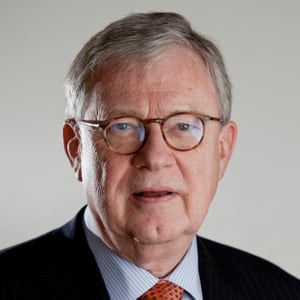
Michael Barone is a Senior Political Analyst for the Washington Examiner, where he writes a twice-weekly column and contributes to their Beltway Confidential blog. He is also a frequent contributor during Fox News Channel's election coverage.

Director of the Human Rights, Civil Rights, and Citizenship Prog, Constitutional Accountability Center
David joined CAC after serving as Program Director of Cardozo Law School's Floersheimer Center for Constitutional Democracy, and as an attorney with the Brennan Center for Justice at NYU School of Law, where he worked with Bert Neuborne on appellate briefs in constitutional cases involving the First Amendment and voting rights. Previously, David was an Acting Assistant Professor at NYU School of Law and practiced law at Emery Cuti Brinckerhoff & Abady, PC, where he litigated a wide range of constitutional and civil rights cases. David has also served as an attorney fellow for the Center for Reproductive Law and Policy and as a law clerk for the Hon. Rosemary Barkett on the U.S. Court of Appeals for the 11th Circuit. He is a graduate of Yale Law School, where he served as an editor on the Yale Law Review. His academic writings have appeared in the Yale Law Journal, the Boston University Law Review, the Emory Law Journal, the George Washington Law Review. Before receiving his law degree, David worked as a paralegal for the American Civil Liberties Union, where he helped Kathryn Kolbert prepare the briefs and argument in Planned Parenthood v. Casey. In 1993, David and Ms. Kolbert co-authored an article in the Temple Law Review titled "Responding to Planned Parenthood v. Casey: Establishing Neutrality Principles in State Constitutional Law." David received his undergraduate degree from Columbia University.

Senior Fellow and Director of Constitutional Studies, Manhattan Institute
Ilya Shapiro is a senior fellow and director of constitutional studies at the Manhattan Institute and a contributing editor of City Journal. Previously he was executive director and senior lecturer at the Georgetown Center for the Constitution, and before that a vice president of the Cato Institute.
Shapiro is the author of Lawless: The Miseducation of America’s Elites (2025) and Supreme Disorder: Judicial Nominations and the Politics of America’s Highest Court (2020), coauthor of Religious Liberties for Corporations? (2014), and editor of 11 volumes of the Cato Supreme Court Review (2008-18). He has contributed to a variety of academic, popular, and professional publications, including the Wall Street Journal, Harvard Journal of Law & Public Policy, Washington Post, Los Angeles Times, USA Today, National Review, and Newsweek. He also regularly provides commentary for various media outlets, writes the Shapiro’s Gavel newsletter on Substack, and once appeared on the Colbert Report.
Shapiro has testified many times before Congress and state legislatures and has filed more than 500 amicus curiae “friend of the court” briefs in the Supreme Court. He lectures regularly on behalf of the Federalist Society, is a member of the board of fellows of the Jewish Policy Center, was an inaugural Washington Fellow at the National Review Institute, and has been an adjunct law professor at the George Washington University and University of Mississippi. He is also the chairman of the board of advisers of the Mississippi Justice Institute, a barrister in the Edward Coke Appellate Inn of Court, and a former member of the Virginia Advisory Committee to the U.S. Commission on Civil Rights.
Earlier in his career, Shapiro was a special assistant/adviser to the Multi-National Force in Iraq on rule-of-law issues and practiced at Patton Boggs and Cleary Gottlieb. Before entering private practice, he clerked for Judge E. Grady Jolly of the U.S. Court of Appeals for the Fifth Circuit. He holds an AB from Princeton University, an MSc from the London School of Economics, and a JD from the University of Chicago Law School.

Senior Legal Fellow, Edwin Meese III Institute for the Rule of Law, Advancing American Freedom
Vice President for Legal Affairs, Cato Institute
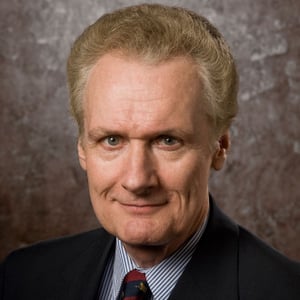
Roger Pilon is the Cato’s Institute’s vice president for legal affairs, the founding director of Cato’s Robert A. Levy Center for Constitutional Studies, the inaugural holder of Cato’s B. Kenneth Simon Chair in Constitutional Studies, and the founding publisher of the Cato Supreme Court Review.
Prior to joining Cato, Pilon held five senior posts in the Reagan administration, including at State and Justice, and was a national fellow at Stanford’s Hoover Institution. In 1989 the Bicentennial Commission presented him with its Benjamin Franklin Award for excellence in writing on the U.S. Constitution. In 2001 Columbia University’s School of General Studies awarded him its Alumni Medal of Distinction. Pilon lectures and debates at universities and law schools across the country and testifies often before Congress.
His writing has appeared in the Wall Street Journal, the Washington Post, the New York Times, the Los Angeles Times, Legal Times, National Law Journal, Harvard Journal of Law and Public Policy, Stanford Law and Policy Review, and elsewhere. He has appeared on ABC’s Nightline, CBS’s 60 Minutes II, Fox News Channel, NPR, CNN, MSNBC, CNBC, C-SPAN, and other media.
Pilon holds a BA from Columbia University, an MA and a PhD from the University of Chicago, and a JD from the George Washington University School of Law.
Carmack Waterhouse Professor of Constitutional Law, Georgetown Law
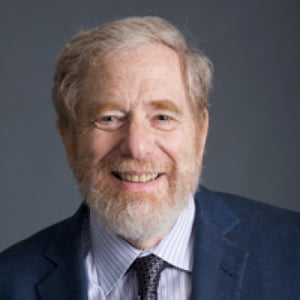
After graduating from Harvard Law School in 1971, Professor Seidman served as a law clerk for J. Skelly Wright of the D.C. Circuit and U.S. Supreme Court Justice Thurgood Marshall. He then was a staff attorney with the D.C. Public Defender Service until joining the Law Center faculty in 1976. He teaches a variety of courses in the fields of constitutional and criminal law. He is co-author of a constitutional law casebook and the author of many articles concerning criminal justice and constitutional law. His most recent books are Silence and Freedom (Stanford 2007), Our Unsettled Constitution: A New Defense of Constitutionalism and Judicial Review (Yale 2001) and Equal Protection of the Laws (Foundation 2002).
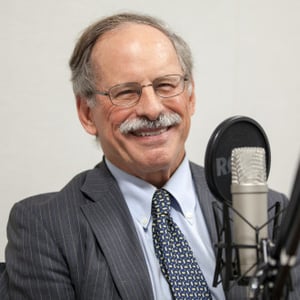
Freelance Journalist and Author
Stuart Taylor, Jr. is a Washington writer focusing on legal and policy issues and a National Journal contributing editor. He occasionally practices law.
Taylor has coauthored three books. All have been acclaimed by commentators across the ideological spectrum. In January 2017, KC Johnson and Taylor authored The Campus Rape Frenzy: The Attack on Due Process at America's Universities. In 2012, Richard Sander and Taylor authored Mismatch: How Affirmative Action Hurts Students It's Intended to Help, and Why Universities Won't Admit It. In 2007, Taylor and Johnson authored Until Proven Innocent: Political Correctness and the Shameful Injustices of the Duke Lacrosse Rape Fraud. Sander and Taylor have also filed amicus briefs in Supreme Court cases involving admissions preferences.
Since 1980, Taylor has done reporting and commentary about issues ranging from the biggest Supreme Court cases to race, voting rights, mindlessly excessive criminal penalties, guilt-presuming campus rape processes, journalistic bias, the death penalty, war powers, gerrymandering, guns, polarization, civil liberties, national security, torture, campaign finance, education, impeachment, and other issues. He has often been called one of the nation's best legal journalists and is known for challenging both liberal and conservative conventional wisdom.
Taylor was a reporter for The New York Times from 1980-1988, covering legal affairs and then the Supreme Court. He wrote commentaries and long features for The American Lawyer, Legal Times and their affiliates from 1989-1997, and for National Journal and Newsweek from 1998 through 2010. He has written (less often) on a freelance basis for numerous publications since 2010. He has written op-eds for The Washington Post, The New York Times, The Wall Street Journal, The Los Angeles Times, USA Today, and The New York Daily News and longer commentaries for RealClearPolitics, The Atlantic, The New Republic, the (late) Weekly Standard, National Review, Slate, The Daily Beast, Harper’s, Reader’s Digest, Time and other magazines. He has been interviewed on all major television and radio networks. He taught “Law and the News Media” at Stanford Law School in 2011 and 2012 and practices law on occasion.
Taylor graduated from Princeton University in 1970 with an A.B. in History. After working as a reporter for the Baltimore Evening Sun and Sun from 1971-1974, he moved to Harvard Law School, was a Harvard Law Review note editor, and graduated in 1977 at the top of his class, with high honors. He also won a Frederick Sheldon Traveling Fellowship and traveled around the world in 1977-1978 while studying freedom of the press in the United Kingdom and Kenya.
Taylor practiced law with Wilmer, Cutler & Pickering, in Washington, D.C., from 1977-1980 before returning to journalism in 1980 by joining the Washington Bureau of The New York Times.
Taylor's journalism honors include the 2009 Northern California Innocence Project Media Award for his work on the Duke lacrosse rape fraud; a 2002 National Headliner Award for best special magazine column on one subject; and a share of The American Lawyer’s National Magazine Award for a March 1990 special issue on the drug war. He was a National Magazine Award finalist in 1993 and 1997 and was nominated by The New York Times for a Pulitzer Prize in 1988.

Senior Attorney and Counsel for Special Projects, Competitive Enterprise Institute
CEI’s Counsel for Special Projects is Hans Bader. Coming to CEI in 2003, Hans’s prior casework has included suits involving the First Amendment, federalism, and civil rights issues. He graduated from the University of Virginia with a B.A. in economics and history, and later earned his J.D. from Harvard Law School. Just before joining CEI, Hans was Senior Counsel at the Center for Individual Rights.
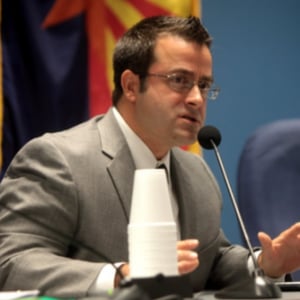
General Counsel, Prospera Group
Dranias serves as NeWay Capital LLC’s General Counsel, handling all corporate legal matters. Prior to this, he was Senior Litigation Counsel with the Government Accountability & Special Litigation Unit of the Arizona Attorney General. He also serves as Policy Advisor and Research Fellow with the Heartland Institute, as an expert and Speaker’s Bureau member with the Federalist Society, a Law and Civil Liberties Speaker for Students for Liberty, a Council of Scholars member with Compact for America Educational Foundation, as well as an Adjunct Instructor teaching Business Ethics and Law at Grand Canyon University.
Previously, Dranias served as President & Executive Director of Compact for America Educational Foundation where he led national efforts to organize the states to propose and ratify a federal Balanced Budget Amendment. Prior to that, Dranias was General Counsel, Policy Development Director and Constitutional Policy Director at the Goldwater Institute. Dranias led the Institute’s successful challenge to Arizona’s system of government campaign financing to the U.S. Supreme Court. Prior to that, he was an attorney with the Institute for Justice for three years and an attorney in private practice in Chicago for eight years, where he served as Young Lawyers Section co-editor of the Chicago Bar Association Record and earned the Oliver Wendell Holmes Award for his service.
Fmr. Chief Justice, North Carolina Supreme Court
Chief Justice Cheri Beasley has spent more than 20 years dedicated to the rule of law. She began her judicial career as a district court judge in Cumberland County, where she served for a decade before being elected to the North Carolina Court of Appeals in 2008. She served as an associate justice on the Supreme Court of North Carolina for seven years before being appointed by Governor Roy Cooper to lead the Supreme Court and North Carolina's third branch of government, the Judicial Branch. She is the first African-American woman in the Supreme Court’s 200-year history to serve as Chief Justice.
Chief Justice Beasley has spent her entire career advocating for courts that are independent, fair, and accessible, and that serve every person with dignity and respect. As Chief Justice, she is advocating for a court system that not only solves legal disputes, but also helps people better their lives. By engaging local judges, educators and law enforcement, she is helping to reform discipline in our schools and keeping kids out of our courtrooms. She is committed to expanding specialized treatment courts that better serve the needs of North Carolina’s children and families. She is also working to leverage the power of technology to make sure our courts are efficient and accessible.
She has lectured extensively to promote the administration of justice, the importance of an independent judiciary, and fair judicial selection. She is active in her community through leadership in her church, First Baptist of Raleigh, her support of hunger relief efforts, and her mentoring of students from elementary school to law school. She is a graduate of Douglass College of Rutgers University, the University of Tennessee College of Law, and Duke University School of Law where she obtained her LL.M. She and her husband, Curtis Owens, are the proud parents of twin sons, Thomas and Matthew.
North Carolina Court of Appeals
Sam J. Ervin, IV, was born in Morganton, North Carolina, on November 18, 1955. He attended the public schools in Burke County, North Carolina, graduating from Freedom High School in 1974. In 1978, Judge Ervin was awarded an A.B., magna cum laude, from Davidson College. After graduating from Davidson, he attended Harvard Law School, from which he received a J.D., cum laude, in 1981.
From 1981 until 1999, Judge Ervin practiced law with the Morganton, North Carolina firm of Byrd, Byrd, Ervin, Whisnant, McMahon, P.A., and its predecessors. While in private practice, Judge Ervin handled a wide variety of civil, criminal, and administrative matters, including many appeals to the North Carolina Court of Appeals and the Supreme Court of North Carolina.
In 1999, Judge Ervin was nominated for a seat on the North Carolina Utilities Commission by Governor James B. Hunt, Jr. He was nominated for a second term on the Utilities Commission by Governor Michael F. Easley in 2007. Both appointments were confirmed by the General Assembly. The Utilities Commission is a quasi-judicial body that is responsible for regulating electric, natural gas, telecommunications, water and sewer, and certain types of transportation service provided to retail customers in North Carolina by privately-owned entities. During his service as a member of the Utilities Commission, Judge Ervin was involved in deciding many important regulatory matters, including, but not limited to, electric and natural gas rate proceedings, electric and natural gas business combination proceedings, proceedings involving applications by electric utilities for authority to construct new generation and transmission facilities, proceedings involving the approval of telecommunications price regulation plans, proceedings arbitrating or otherwise examining the terms and conditions under which competitive telecommunications providers were allowed to interconnect with incumbents, and proceedings addressing issues relating to the adequacy of water and sewer service in certain specific locations.
In addition, Judge Ervin was extensively involved in the activities of the National Association of Regulatory Utility Commissioners (NARUC), having served as Chairman of that organization's Subcommittee on Nuclear Issues and Waste Disposal from 2002 until 2005; as Chairman of that organization's Committee on Electricity from 2004 until 2007; and as a member of its Task Force on Climate Policy from 2007 through 2008. As part of his involvement in NARUC, Judge Ervin supervised its participation in the process that led to the implementation of the Energy Policy Act of 2005. While a member of the Utilities Commission, Judge Ervin testified on two different occasions before the Subcommittee on Energy and Air Quality of the Committee on Commerce of the United States House of Representatives. Judge Ervin was a regular speaker at energy-related conferences and seminars during his service as a Utilities Commissioner.
Judge Ervin has also been, at various times, involved in a wide variety of church-related, bar-related, and charitable activities. He is married to Mary Temple Ervin and has two children and two step-children.
Judge Ervin was elected to the North Carolina Court of Appeals at the November 4, 2008, general election. His term as a member of the Court of Appeals commenced on January 1, 2009, and extends until December 31, 2017.
Sr Corporate Counsel, Cisco Systems, Inc.
Associate Justice, North Carolina Supreme Court
Early Years
Born in DeKalb County, Georgia in 1952, Robin E. Hudson moved to Greensboro, NC with her family in 1966.
Professional Background
Admitted to the North Carolina Bar in 1976 and practiced law in Raleigh and Durham until her election to the Court of Appeals in November 2000. She is the first North Carolina woman elected to the appellate court division without having been appointed first. She served on the NC Court of Appeals from January 2001 until December 2006. During that time, she helped organize and coordinate the Court of Appeals voluntary mediation program. She began her 8-year term on the Supreme Court in January 2007.
Except for 3 years as assistant appellant defender in the mid-1980's, she practiced law in the private sector and handled a variety of trials and appeals, but concentrated on workers' compensation and tort litigation, with particular emphasis on occupational diseases and products liability. She practiced extensively before the Industrial Commission, as well as in State and Federal courts. Since 1994, she has been certified to mediate cases from Superior Court and the Industrial Commission.
Graduate of Page Senior High School, Greensboro, 1969. Graduated from Yale University in 1973 with a BA degree in philosophy and psychology. Received J.D. from the University of North Carolina School of Law in 1976.
Associate Justice, North Carolina Supreme Court
Early Years
Personal Information
Married to Susan Awbrey Hunter. One son, Robert Neal Hunter III; two step-sons, Chris Awbrey Steele and Alan Baret Steel; two grandchildren; Member of First Presbyterian Church, Greensboro, North Carolina
Seventh Division of the Superior Court, North Carolina
Judge Eric Levinson joined the District Attorney’s Office in Cabarrus and Rowan Counties, N.C. as a felony prosecutor following law school, and he prosecuted drug, property, sexual assault, and homicide offenders.
Judge Eric Levinson was elected to the N.C. judiciary in 1996 as a District and Family Court Judge in Charlotte, N.C. In this role, he was recognized for implementing best-practices in our criminal and child support enforcement courts and became a N.C. Certified Juvenile Court Judge.
Judge Eric Levinson was elected statewide in 2002 as one of fifteen members of the N.C. Court of Appeals in Raleigh, N.C., where he served as an Associate Judge and the Court’s youngest member. He authored hundreds of legal opinions in disputes and lawsuits concerning criminal, civil and administrative matters.
Judge Eric Levinson was appointed by the Bush Administration in 2007 as the Justice Attache to Iraq for the U.S. Department of Justice. As Justice Attache, Levinson managed the U.S. government’s diplomatic relationship with the Iraqi judiciary and its Chief Justice, Medhat al Mahmoud, and advanced the establishment of Major Crimes Courts where terrorists were prosecuted.
Judge Eric Levinson worked in Kabul, Afghanistan as a Rule of Law and Courts Advisor in 2008. In this role, he collaborated with members of the Supreme Court of Afghanistan and helped draft and advance guidelines to establish commercial courts to adjudicate business, contract and related civil conflicts.
Judge Eric Levinson was appointed to the N.C. Superior Court in 2009 after a bipartisan group of Republican and Democratic lawmakers, business professionals, attorneys and community stakeholders endorsed his appointment. Levinson presently holds court in counties all across western, central and eastern N.C. and presides over violent crimes against persons (homicide, sexual assault, armed robbery, serious assault) as well as civil conflicts (complex business disputes, class action, property).
Judge Eric Levinson gained his Juris Doctorate from the University of North Carolina at Chapel Hill School of Law where he was President of the Student Bar Association. He obtained a BBA in Finance,cum laude, at the University of Georgia, where he was an Honors Program student. Levinson also completed the Institute on Comparative Political and Economic Systems through the Fund for American Studies in Washington, D.C. and Georgetown University, and completed a program in International Finance hosted by the University of London, England. He is a certified Superior Court mediator, and is a N.C. Certified Juvenile Court Judge.
Founding Dean & Professor, Kenneth F. Kahn School of Law at High Point University
Hon. Mark Martin is the founding dean and professor of law at the Kenneth F. Kahn School of Law at High Point University.
Mark served as Chief Justice of the North Carolina Supreme Court from 2014-2019. He also served on that Court as an Associate Justice, on the North Carolina Court of Appeals, and on a North Carolina Superior Court.
The Chief Justice of the United States appointed Mark to the Committee on Federal-State Jurisdiction of the United States Judicial Conference. He also served on the board of directors of the Conference of Chief Justices.
Mark chairs the Thomson Reuters Judicial Advisory Council. He is a member of the American Law Institute, where he assists with the Third Restatement, Conflict of Laws, and serves on the Region 15 Advisory Committee.
Mark has served on the adjunct faculties of Duke University, North Carolina Central University, and the University of North Carolina law schools. Mark co-taught a course on the various modes of constitutional interpretation with Associate Justice Samuel A. Alito, Jr. of the United States Supreme Court from 2020-2022.
Partner, Robinson & Lawing, LLP
When Mike Robinson was six years old, he wrote a brief essay in school about what he wanted to be when he grew up. While the other kids in his class wanted to be firemen, cowboys, ballerinas and football players, Mike knew he wanted to be a lawyer and one day a judge. Since that time, he never wavered from those goals. Today, Mike has a distinguished law career and recently announced his candidacy for the Supreme Court of North Carolina.
For over 33 years, Mike has practiced law in North Carolina. In 1997, he was one of nine lawyers who formed, Robinson & Lawing, LLP. For the past six years he has served as one of its managing partners. Mike has concentrated his practice on matters involving complex civil litigation, medical malpractice defense, insurance defense, intellectual property matters, and corporate litigation planning and loss prevention. Mike is admitted to practice in North Carolina State Courts, the three U.S. District Courts in North Carolina, the Fourth Circuit Court of Appeals and the U.S. Supreme Court.
In addition to his professional accomplishments, Mike has served in numerous volunteer capacities with a number of charitable and civic organizations within the community.
Mike is a conservative who believes that judges do not make laws, but rather should enforce them. If elected to the North Carolina Supreme Court, Mike will be tough but fair and will apply the law as written by the state legislature. He will work hard to examine every case that comes before him and take a level-headed approach to his work.
Mike received his undergraduate degree from Davidson College and his juris doctor degree with honors from the University of North Carolina at Chapel Hill.
Mike and his wife Wynn have lived in Winston-Salem for the past 33 years. They have four grown children (three sons and a daughter), two daughters-in-law and two granddaughters.

Supreme Court Preview: What Is in Store for October Term 2014?
William S. Consovoy, Orin S. Kerr, Adam Liptak, Virginia Seitz, Carrie Campbell Severino, Adam White
October 6th will mark the first day of the 2014 Supreme Court term. Thus far, the...
2014 North Carolina Supreme Court Candidate Forum - Event Videos
Robert N. Hunter, Michael L. Robinson, Mark D. Martin, Samuel J. Ervin, Robin Hudson, Eric Levinson, Cheri Beasley, Donna Martinez, Kevin Hales
In November, North Carolina voters will head to the polls to elect four of the...
2014 Supreme Court Candidate Forum
Raleigh, North CarolinaPlace, Not Race: A New Vision of Opportunity in America - Podcast
Sheryll D. Cashin, Roger B. Clegg
Race-based affirmative action had been declining as a factor in university admissions even before the...
Recent Decisions of the Supreme Court of North Carolina
Adam Conrad, Robert T. Numbers, Bradley Lingo, Wm Lambert
This paper aims to inform North Carolinians about some of the important cases decided in...
Recent Decisions of the Supreme Court of North Carolina
Adam Conrad, Robert T. Numbers, Bradley Lingo, Wm Lambert
This paper aims to inform North Carolinians about some of the important cases decided in...
Panel III: The Future of Voting Rights
Michael Barone, David H. Gans, Ilya Shapiro, Hans A. Von Spakovsky
The Supreme Court’s ruling in Shelby County v. Holder, which disabled Section 5 of the Voting...
Panel II: Racial Preferences and Promoting Diversity: Are These Policies Taking Us in the Right Direction?
Roger Pilon, Louis Michael Seidman, Stuart S. Taylor, Hans Frank Bader
The Obama administration is widely perceived to be an avid proponent of racial preferences. As...
Introducing “Article V 2.0”: The Compact for a Balanced Budget
Nicholas C. Dranias
This article discusses the use of interstate compacts to advance Article V amendments to the U.S....
Summer Social with Lieutenant Governor Dan Forest
Raleigh, North Carolina