

Legal Director & General Counsel, Criminal Justice Legal Foundation
Kent S. Scheidegger has been the Legal Director of the Criminal Justice Legal Foundation since December 1986. He also served as Chairman of the Criminal Law Practice Group of the Federalist Society 2003 to 2005. His articles on criminal and constitutional law have been published in law reviews, national legal publications, and congressional reports. Legal arguments authored by Mr. Scheidegger have been cited and incorporated in several precedent-setting United States Supreme Court decisions.
After receiving a degree in physics with honors from New Mexico State University in 1976, Mr. Scheidegger served for six years in the United States Air Force as a Nuclear Research Officer. He took his law degree with distinction from the University of the Pacific, McGeorge School of Law in 1982 and practiced civil law in Northern California. He was general counsel of California Cooler, Inc. from 1984 until 1986, when he joined the Foundation.
Global eDiscovery Counsel, UBS AG
Prior to working at UBS AG, Jamie Brown was the Assistant General Counsel & eDiscover Counsel at the Commodity Futures Trading Commission.
Interim Dean, Florida International University College of Law
Dan Epstein was Vice President at America First Legal and an Associate Professor of Law at St. Thomas University in Miami, Florida. He also advises individuals and small businesses in affirmative and defensive actions against government overreach. Previously, he advised startups on regulatory matters as Director at a venture capital firm. His federal service includes being a Special Assistant to and Senior Associate Counsel to the President and a counsel for the House of Representatives Committee on Oversight and Government Reform. Earlier in his career, Mr. Epstein founded and ran Cause of Action, where he represented clients in government investigations and litigated regulatory, constitutional, political, and public law matters.
He holds a Ph.D. from George Washington University in Political Economy, a J.D. from Emory University School of Law, and a B.A. from Kenyon College. He is active in the Palm Beach community as a member of the Fourth Court of Appeals Judicial Nominating Commission in Florida, a transition team member to Florida Attorney General James Uthmeier, and the Chairman and Trustee of Palm Beach State College.
Partner, Shook Hardy & Bacon LLP
Patrick is a partner in the firm’s General Litigation and Business Services Division where he leads the practice on e-compliance and digital investigations. He is one of the few e-discovery and compliance attorneys in the nation that possesses the tripartite experience of an in-house corporate counsel from a Fortune 16 organization; a senior attorney at a federal regulatory agency; and a partner in a large law firm.
Patrick has extensive experience advising on discovery and investigative matters involving commercial litigation, compliance, regulatory requests, antitrust matters, and personnel issues. Combined with a deep understanding of forensics and enterprise technology platforms, Patrick’s experience advising clients on responding to federal agency requests under the Electronic Communications Privacy Act (ECPA) is balanced by his broad-based skill in negotiating enterprise software license agreements for collaboration platforms, e-discovery software and enterprise level computer forensic tools.
Before joining Shook Hardy & Bacon, Patrick served as senior special counsel for electronic discovery in the Office of the General Counsel at the U.S. Securities and Exchange Commission (SEC). During his tenure at SEC, Patrick co-chaired of the agency’s cross-divisional Electronic Discovery Action Team and co-authored The SEC Electronic Discovery and Litigation Response Manual. He counseled SEC senior leadership and agency staff on best practices and guidance for discovery and litigation strategy and privilege protections and on strategically significant matters involving forensics, technology and ECPA interpretation for subpoena enforcement.
Patrick appeared twice as SEC’s 30(b)(6) deponent to defend the agency’s discovery practices with favorable outcomes to the agency. He successfully designed and implemented SEC’s preservation process as well as a federal government-wide educational program that includes participation of the federal judiciary.
Prior to serving at SEC, Patrick was an experienced in-house counsel leading Verizon’s electronic discovery practice as Director of Electronic Discovery and Senior Litigation Counsel. Patrick was one of the nation’s first in-house attorneys charged to create and deploy defensible policies, guidelines and procedures for litigation response.
While at Verizon, Patrick testified as the company’s Federal Rules of Civil Procedure 30(b)(6) witness, defending the same policies and guidelines that he helped design and implement. In 2006, he was nominated for the Verizon Excellence Award after playing a key role in the successful completion of Verizon’s response to the Department of Justice’s Second Request for Documents in its acquisition of MCI. As a result of his work, Inside Counsel magazine named Verizon’s e-discovery team as one of the ten most innovative legal groups of 2007, the group’s second year winning the title.
In 2007, Patrick appeared with U.S. Supreme Court Justice Stephen Breyer at Georgetown University Law Center’s Summit on Electronic Discovery. He has testified before the U.S. Judicial Conference’s Advisory Committee on the Federal Rules of Evidence where he presented his position on Proposed Rule of Evidence 502. The committee included in its draft to the Judicial Conference language incorporating his suggestions.
Outside of work, Patrick volunteers his time as a co-founder at The Electronic Discovery Institute, a non-profit organization that conducts studies of litigation processes for the benefit of the federal and state judiciary.
Patrick lectures regularly at educational events and legal conferences internationally. He has appeared on National Public Radio’s Morning Edition and was interviewed for the August 2008 edition of The Economist.
Legal Scholar and Solo Practitioner
Jack received his B.A. in History from the University of Virginia in 1977, graduating with Highest Distinction. After graduating Yale Law School in 1980, he served active duty in the U.S. Army's JAG Corps, rising to the rank of Major, where he represented the United States in more than 250 cases.
He practiced for a decade as an Associate for Bradley Arant in Birmingham, Alabama. He proudly served the State of Alabama in the Office of the Attorney General, both as Deputy and Assistant Attorney General, handling complex civil and criminal litigation cases for the people of Alabama. In 2000, he won the "Best Brief Award" from the National Association of Attorneys General for his brief in a case decided by the U.S. Supreme Court, James Alexander v. Martha Sandoval – a case he won. He was Special Assistant to the Inspector General for the Corporation for National and Community Service, Visiting Legal Fellow for the Center for Judicial and Legal Studies for the Heritage Foundation, Of Counsel at Strickland Brockington Lewis, a solo practitioner, and General Counsel for Indigo Energy.
Most recently, he "re-upped" for military service, volunteering his legal services to the Georgia State Defense Force where twice each month he provided legal services for National Guardsmen who were being deployed. He wore his military uniform for the last time in October 2024.
Jack Park passed away on March 16, 2026.
Managing Partner, Redgrave LLP
Victoria Redgrave brings to the Firm a unique combination of skills and experience as in-house litigation counsel for two major corporations, outside counsel at an AmLaw 100 firm, and as general counsel at a technology company. She is the Managing Partner of Redgrave LLP.
Vickie served as Vice President, Practice Development & General Counsel for Technology Concepts & Design, Inc. (TCDI). During her tenure with TCDI, she was responsible for providing legal advice and counsel to the corporation on all legal matters, including the negotiation and preparation of master services agreements and RFP responses. Her responsibilities also included providing senior leadership to product development activities and to service delivery teams regarding expectations and needs of in-house counsel to litigation management and discovery.
Before joining TCDI, Vickie was Managing Counsel–Litigation for a Fortune 40 chemical company. In this role, Vickie led the company’s Products Liability Group, supervising a team of attorneys and paralegals responsible for managing all product liability litigation matters in North America. Vickie’s experience also included managing the company’s Discovery Practice Group. Her responsibilities in this role included the global enterprise-wide assessment of the company’s capabilities and exposure regarding compliance with both federal and state procedural rules regarding discovery of electronically stored information, as well as development and implementation of a comprehensive litigation response plan for electronic discovery. Vickie led the selection and implementation of technologies for electronic discovery and matter/information management within the company. She also provided counsel to the company’s information systems team on issues related to email management, server security, and data privacy.
Vickie also worked previously in-house for a Fortune 500 engine design and manufacturing company as Senior Counsel–Litigation and was a Senior Associate at Barnes & Thornburg.
Vickie received a J.D. from the Indiana University School of Law at Indianapolis (summa cum laude) and a B.S. from the University of Indianapolis (magna cum laude). Vickie is admitted to practice in Michigan and the District of Columbia.

Judge, United States Court of Appeals, Fifth Circuit
Judge Smith was appointed U.S. Circuit Judge for the Fifth Circuit by President Reagan and entered on duty in January 1988. He attended public schools in Lubbock, Texas, and graduated from Yale University, receiving a B.A. in 1969 and a J.D. in 1972.
Judge Smith was a Law Clerk to U.S. District Judge Halbert Woodward, Northern District of Texas, 1972-1973; with the Houston law firm of Fulbright & Jaworski as an Associate, 1973-1981, and as Partner, 1981-1984; and as City Attorney, City of Houston, 1984-1988. He was Chairman, Civil Service Commission, City of Houston, 1982-1984; and a Director, Harris County Housing Authority, 1978-1980.
Judge Smith lives in Houston and is married to Mary Jane Smith and has four children: Ruth Ann, Clark, J.J., and Brandon. He formerly was Chair of the Advisory Committee on Federal Rules of Evidence of the Judicial Conference of the United States. He assists LexisNexis/Matthew Bender & Co. in periodic revisions of several chapters of Moore’s Federal Practice.

Tazewell Taylor Professor of Law and William H. Cabell Research Professor, William & Mary Law School
Jonathan H. Adler joined the William & Mary law faculty as the Tazwell Taylor Professor of Law and William H. Cabell Research Professor in 2025. Prior to joining the faculty, he was the inaugural Johan Verheij Memorial Professor of Law and the founding Director of the Coleman P. Burke Center for Environmental Law at the Case Western Reserve University School of Law.
Professor Adler is the author or editor of seven books, including Climate Liberalism: Perspectives on Liberty, Property and Pollution (Palgrave, 2023), Marijuana Federalism: Uncle Sam and Mary Jane (Brookings Institution Press, 2020), Business and the Roberts Court (Oxford University Press, 2016) and Rebuilding the Ark: New Perspectives on Endangered Species Act Reform (AEI Press, 2011).
His articles have appeared in publications ranging from the Harvard Environmental Law Review and Yale Journal on Regulation to the Wall Street Journal, New York Times, and Washington Post. He has testified before Congress a dozen times, and his work has been cited in the U.S. Supreme Court. A 2024 study identified Professor Adler as the seventh most cited legal academic in administrative and environmental law from 2019 to 2023.
Professor Adler is a contributing editor to Civitas Outlook and a regular contributor to the popular legal blog, The Volokh Conspiracy. A regular commentator on constitutional and regulatory issues, he has appeared on numerous radio and television programs, ranging from the PBS Newshour and National Public Radio to the Fox News Channel and Entertainment Tonight.
Professor Adler is a senior fellow at the Property & Environment Research Center in Bozeman, Montana. In 2018, Professor Adler was elected to membership in the American Law Institute and helped co-found the organization Checks and Balances. In 2024, Professor Adler was appointed a public member of the Administrative Conference of the United States.
Professor Adler clerked for the Honorable David B. Sentelle on the U.S. Court of Appeals for the District of Columbia Circuit.

Professor Emeritus, Paul M. Hebert Law Center, Louisiana State University
In memoriam
Dr. John Baker is Professor Emeritus of Law, and previously the Dale E. Bennett Professor of Law, at Louisiana State University Law School. He is currently Visiting Professor at Peking University School of Transnational Law (via Zoom) and has been Visiting Professor at The Center for the Constitution, Georgetown Law School (2013-2020). He has also been a Visiting Fellow at Oriel College, the University of Oxford (2012-2014) and taught at Blackfriars Hall, Oxford in 2014. Dr. Baker has also been an adjunct Fellow at the Heritage Foundation (Spring, 2008) and a Distinguished Scholar at the Catholic University of America Law School (2011-12). He has taught at Tulane Law School, George Mason Law School, Pepperdine Law School, New York Law School, Hong Kong University, and the University of Dallas, School of Management and also taught and/or lectured in 17 foreign countries. Notable among his foreign visits are the
following: Visiting Professor at the University of Lyon III (France) (1999-2011); Visiting Professor at the Universidad de los Andes, Chile (2012), as a Fulbright Specialist (2006); and a Fulbright Scholar at various universities in the Philippines. Dr. Baker received his J.D., with honors, from the University of Michigan Law School and his B.A., magna cum laude, from the University of Dallas. He also earned a Ph.D. in Political Thought from the University of London. Baker has taught over a dozen different subjects, mostly courses in public law. His main areas of interest are Constitutional Law (particularly federalism and separation of powers), Criminal Law, Anti-Terrorism Law, International Law, Health Care Law, Mediation, and Comparative Law.
In addition to law review articles and book chapters, Dr. Baker’s academic publications include Hall's Criminal Law: Cases and Materials (with Benson, Force and George; 5th ed. Michie, 1993); An Introduction to the Law of the United States (ed. with Levasseur; University Press of America, 1992). He has also published on Forbes.com, FoxNews.com, in The Washington Times, and a number of times in The Wall Street Journal. He argues in federal court, including two oral arguments in the U.S. Supreme Court. For many years, he co-taught courses for the Federalist Society on separation of powers with the late Supreme Court Justice Antonin Scalia. In September 2016, he co-taught a Supreme Court seminar in China with Justice Samuel Alito. Following law school, he served as a law clerk in federal district court and as an assistant district attorney in New Orleans before joining LSU in 1975. While a professor, he has been as a consultant to USAID, USIA (since rolled into the State Department), the Justice Department, the U.S. Senate Judiciary Subcommittee on Separation of Powers, and the Office of Planning in the White House. He served on an ABA Task Force which issued the report, The Federalization of Crime (1998) and later as a consultant to the “Bi-Partisan Task Force on the Over- federalization of Crime” (2012-2014) created by the U.S. House Judiciary Subcommittee on Crime. Dr. Baker was a co-founder of the first iteration (1995) of Stratfor Inc., a global intelligence agency. He co-authored its first book: The Intelligence Edge (with Friedman, Friedman and Chapman; Crown Books/Random House 1997). In 2022, he began a short, weekly video podcast available on YouTube and Rumble, The Baker Brief.
Since 1976, Milton L. Chappell has been a staff attorney with the National Right to Work Legal Defense Foundation, a non-profit legsl aid organization located in Springfield, Virginia. During his 38 years of practice, he has specialized in representing nonunion public employees and teachers in litigation before the United States Supreme Court, and other federal and state courts and administrative agencies, against the abuses of compulsory unionism. The litigation has resulted in the establishment of procedures and notices that assist nonunion teachers in reducing the amount of their compulsory union fees the public sector unions spend on political and other non-collective bargaining activities that his clients oppose. In addition to representing clients claiming a political objection to joining or financially supporting a labor union, he has also represented clients claiming a religious objection to unions, as well as defending against numerous union attacks on the Right to Work laws passed in Indiana and Michigan, and Wisconsin’s Act 10, which includes right to work protection for most public employees. Mr. Chappell is an expert in constitutional and labor law, especially the First Amendment. Mr. Chappell has represented clients in Arizona, California, Connecticut, Delaware, Florida, Hawaii, Illinois, Indiana, Kentucky, Maryland, Michigan, New York, Ohio, Oregon, Pennsylvania, Texas, and Virginia, Washington, Wisconsin, and the District of Columbia.
Mr. Chappell is a member of the following bars: Maryland, the District of Columbia, United States Supreme Court, United States Courts of Appeals for the 2nd, 3rd, 4th, 5th, 6th, 7th, 9th, 11th, and District of Columbia Circuits, and the United States District Courts for the Districts of Maryland, Northern California, Western Wisconsin, and the District of Columbia. He is the author of “From Abood to Tierney: The Protection on Nonunion Employees in an Agency Shop,” 15 Ohio Northern University Law Review 1 (1988) and “Seeking a New Foundation,” 16 Government Union Review 1 (1995). He is coauthor of “Protecting the Rights of State Employees Against Compulsory Unionism,” California Public Employee Relations 143 (August 2000).
Associate Professor, Indiana University Maurer School of Law
Professor Scott joined the Indiana University Maurer School of Law faculty in 2009. He teaches and writes on criminal law and procedure, statutory interpretation, and federal courts. Professor Scott's research examines structural and procedural interactions between the judicial branch and other branches of government, particularly in the criminal context. He has written on efforts to control the composition of the judiciary, including the judicial appointments process, legislative strategies for encouraging judicial retirements, and the semi-retirement program of senior judges. Professor Scott also studies efforts to influence judicial decision making directly by placing constraints on judicial discretion. His current project examines changes in inter-judge sentencing disparity under the United States Sentencing Guidelines, one of Congress's most ambitious efforts to restrict judges in the performance of a historically discretionary function.After graduating from law school, Professor Scott clerked for Judge Michael W. McConnell of the United States Court of Appeals for the Tenth Circuit. He then served as a Bristow Fellow in the Office of the Solicitor General of the United States. Before joining the faculty, he worked for two years as an associate in the Supreme Court and appellate practice at O'Melveny & Myers LLP in Washington, D.C.
Assistant Professor of Law, Vanderbilt Law School
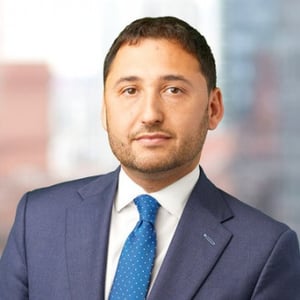
Partner, Troutman Pepper Locke LLP
Misha leads Troutman Peppers' national appellate and Supreme Court practice. Most recently, he successfully obtained orders from the Supreme Court blocking an unconstitutional restriction on places of worship, as well as overturning a lower court order that had blocked several state election laws. He has also argued and prevailed before the Supreme Court in Gill v. Whitford, one of the most significant redistricting cases in decades, as well as Murr v. Wisconsin, a high-stakes regulatory taking case.
Before joining Troutman, Misha served as Solicitor General of the State of Wisconsin. Misha previously served as a law clerk for the Honorable Anthony M. Kennedy of the Supreme Court, Janice Rogers Brown of the D.C. Circuit, and Alex Kozinski of the 9th Circuit. He graduated from Georgetown University Law Center, where he was President of the Federalist Society Chapter.
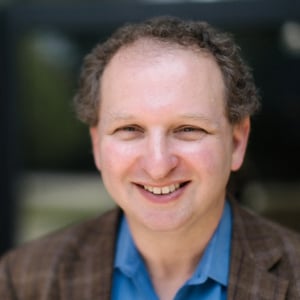
Assistant Professor of Law, Emory University School of Law
Alexander "Sasha" Volokh is an assistant professor of law, joining the Emory Law faculty in Fall 2009.
Professor Volokh earned his B.S. from UCLA and his J.D. and Ph.D. in economics from Harvard University. He clerked for Judge Alex Kozinski of the Ninth Circuit and for Supreme Court Justices Sandra Day O'Connor and Samuel Alito. Before coming to Emory, he was a visiting associate professor at Georgetown University Law Center and a visiting assistant professor at University of Houston Law Center.
His interests include law and economics, administrative law and the regulatory process, environmental law and policy, and legal history. His current research topics include the private management of government services, medieval law, judicial decisionmaking and statutory interpretation.
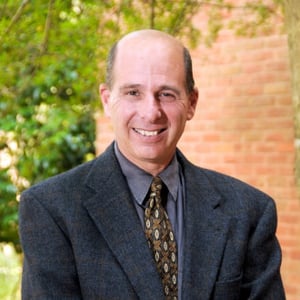
Sandra Day O'Connor Professor of Law & Professor of Government, William & Mary Law School
Neal Devins is the Sandra Day O’Connor Professor of Law and Professor of Government at the College of William and Mary. He is the author of several books and more than 100 articles and book chapters on courts, constitutional law, and law & politics. His books include The Company They Keep (Oxford 2019) (with Larry Baum), The Democratic Constitution (Oxford 2d ed. 2015) (with Louis Fisher), Political Dynamics of Constitutional Law (West 6th ed. 2019) (with Louis Fisher), and Shaping Constitutional Values: The Supreme Court, Elected Government, and the Abortion Dispute (Johns Hopkins University Press 1996). His articles have appeared in The Yale Law Journal, The Stanford Law Review, The Columbia Law Review, The Michigan Law Review, The California Law Review, The Virginia Law Review, The University of Pennsylvania Law Review, The University of Chicago Law Review, The New York University Law Review, and several other journals and magazines. Professor Devins is also the author of op-eds appearing in The Wall Street Journal, The New York Times, The Washington Post, The Los Angeles Times, Slate, and several other newspapers. He has testified before House and Senate committees on budget reform and the separation of powers. Professor Devins is a graduate of Georgetown University (A.B. 1978) and Vanderbilt Law School (J.D. 1982).

President, Committee for Justice
Curt Levey is President of the Committee For Justice, an organization devoted to advancing constitutionally limited government and individual liberty. He is a veteran of Supreme Court and other judicial confirmation battles and serves on the executive committee of the Federalist Society's Civil Rights Practice Group.
After graduating Harvard Law School with honors and clerking for the U.S. Court of Appeals for the Sixth Circuit, Mr. Levey served as Director of Legal & Public Affairs at the Center for Individual Rights (CIR). There he worked on landmark Supreme Court cases, including the University of Michigan affirmative action cases and the successful constitutional challenge to the Violence Against Women Act. After CIR, Mr. Levey headed the Title IX policy group at the U.S. Department of Education.
Before attending law school, Mr. Levey earned an M.S. and B.A. in computer science from Brown University and worked in the field of artificial intelligence (AI). He invented a new type of AI technology, for which he wrote a successful patent application.
Associate Justice, North Carolina Supreme Court
Early Years
Personal Information
Married to Susan Awbrey Hunter. One son, Robert Neal Hunter III; two step-sons, Chris Awbrey Steele and Alan Baret Steel; two grandchildren; Member of First Presbyterian Church, Greensboro, North Carolina
Partner, Robinson & Lawing, LLP
When Mike Robinson was six years old, he wrote a brief essay in school about what he wanted to be when he grew up. While the other kids in his class wanted to be firemen, cowboys, ballerinas and football players, Mike knew he wanted to be a lawyer and one day a judge. Since that time, he never wavered from those goals. Today, Mike has a distinguished law career and recently announced his candidacy for the Supreme Court of North Carolina.
For over 33 years, Mike has practiced law in North Carolina. In 1997, he was one of nine lawyers who formed, Robinson & Lawing, LLP. For the past six years he has served as one of its managing partners. Mike has concentrated his practice on matters involving complex civil litigation, medical malpractice defense, insurance defense, intellectual property matters, and corporate litigation planning and loss prevention. Mike is admitted to practice in North Carolina State Courts, the three U.S. District Courts in North Carolina, the Fourth Circuit Court of Appeals and the U.S. Supreme Court.
In addition to his professional accomplishments, Mike has served in numerous volunteer capacities with a number of charitable and civic organizations within the community.
Mike is a conservative who believes that judges do not make laws, but rather should enforce them. If elected to the North Carolina Supreme Court, Mike will be tough but fair and will apply the law as written by the state legislature. He will work hard to examine every case that comes before him and take a level-headed approach to his work.
Mike received his undergraduate degree from Davidson College and his juris doctor degree with honors from the University of North Carolina at Chapel Hill.
Mike and his wife Wynn have lived in Winston-Salem for the past 33 years. They have four grown children (three sons and a daughter), two daughters-in-law and two granddaughters.
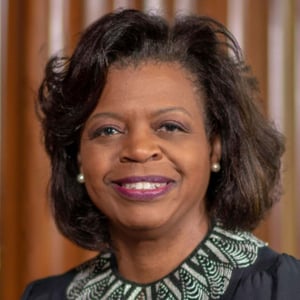
Fmr. Chief Justice, North Carolina Supreme Court
Chief Justice Cheri Beasley has spent more than 20 years dedicated to the rule of law. She began her judicial career as a district court judge in Cumberland County, where she served for a decade before being elected to the North Carolina Court of Appeals in 2008. She served as an associate justice on the Supreme Court of North Carolina for seven years before being appointed by Governor Roy Cooper to lead the Supreme Court and North Carolina's third branch of government, the Judicial Branch. She is the first African-American woman in the Supreme Court’s 200-year history to serve as Chief Justice.
Chief Justice Beasley has spent her entire career advocating for courts that are independent, fair, and accessible, and that serve every person with dignity and respect. As Chief Justice, she is advocating for a court system that not only solves legal disputes, but also helps people better their lives. By engaging local judges, educators and law enforcement, she is helping to reform discipline in our schools and keeping kids out of our courtrooms. She is committed to expanding specialized treatment courts that better serve the needs of North Carolina’s children and families. She is also working to leverage the power of technology to make sure our courts are efficient and accessible.
She has lectured extensively to promote the administration of justice, the importance of an independent judiciary, and fair judicial selection. She is active in her community through leadership in her church, First Baptist of Raleigh, her support of hunger relief efforts, and her mentoring of students from elementary school to law school. She is a graduate of Douglass College of Rutgers University, the University of Tennessee College of Law, and Duke University School of Law where she obtained her LL.M. She and her husband, Curtis Owens, are the proud parents of twin sons, Thomas and Matthew.
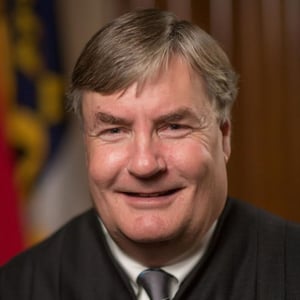
North Carolina Court of Appeals
Sam J. Ervin, IV, was born in Morganton, North Carolina, on November 18, 1955. He attended the public schools in Burke County, North Carolina, graduating from Freedom High School in 1974. In 1978, Judge Ervin was awarded an A.B., magna cum laude, from Davidson College. After graduating from Davidson, he attended Harvard Law School, from which he received a J.D., cum laude, in 1981.
From 1981 until 1999, Judge Ervin practiced law with the Morganton, North Carolina firm of Byrd, Byrd, Ervin, Whisnant, McMahon, P.A., and its predecessors. While in private practice, Judge Ervin handled a wide variety of civil, criminal, and administrative matters, including many appeals to the North Carolina Court of Appeals and the Supreme Court of North Carolina.
In 1999, Judge Ervin was nominated for a seat on the North Carolina Utilities Commission by Governor James B. Hunt, Jr. He was nominated for a second term on the Utilities Commission by Governor Michael F. Easley in 2007. Both appointments were confirmed by the General Assembly. The Utilities Commission is a quasi-judicial body that is responsible for regulating electric, natural gas, telecommunications, water and sewer, and certain types of transportation service provided to retail customers in North Carolina by privately-owned entities. During his service as a member of the Utilities Commission, Judge Ervin was involved in deciding many important regulatory matters, including, but not limited to, electric and natural gas rate proceedings, electric and natural gas business combination proceedings, proceedings involving applications by electric utilities for authority to construct new generation and transmission facilities, proceedings involving the approval of telecommunications price regulation plans, proceedings arbitrating or otherwise examining the terms and conditions under which competitive telecommunications providers were allowed to interconnect with incumbents, and proceedings addressing issues relating to the adequacy of water and sewer service in certain specific locations.
In addition, Judge Ervin was extensively involved in the activities of the National Association of Regulatory Utility Commissioners (NARUC), having served as Chairman of that organization's Subcommittee on Nuclear Issues and Waste Disposal from 2002 until 2005; as Chairman of that organization's Committee on Electricity from 2004 until 2007; and as a member of its Task Force on Climate Policy from 2007 through 2008. As part of his involvement in NARUC, Judge Ervin supervised its participation in the process that led to the implementation of the Energy Policy Act of 2005. While a member of the Utilities Commission, Judge Ervin testified on two different occasions before the Subcommittee on Energy and Air Quality of the Committee on Commerce of the United States House of Representatives. Judge Ervin was a regular speaker at energy-related conferences and seminars during his service as a Utilities Commissioner.
Judge Ervin has also been, at various times, involved in a wide variety of church-related, bar-related, and charitable activities. He is married to Mary Temple Ervin and has two children and two step-children.
Judge Ervin was elected to the North Carolina Court of Appeals at the November 4, 2008, general election. His term as a member of the Court of Appeals commenced on January 1, 2009, and extends until December 31, 2017.
Associate Justice, North Carolina Supreme Court
Early Years
Born in DeKalb County, Georgia in 1952, Robin E. Hudson moved to Greensboro, NC with her family in 1966.
Professional Background
Admitted to the North Carolina Bar in 1976 and practiced law in Raleigh and Durham until her election to the Court of Appeals in November 2000. She is the first North Carolina woman elected to the appellate court division without having been appointed first. She served on the NC Court of Appeals from January 2001 until December 2006. During that time, she helped organize and coordinate the Court of Appeals voluntary mediation program. She began her 8-year term on the Supreme Court in January 2007.
Except for 3 years as assistant appellant defender in the mid-1980's, she practiced law in the private sector and handled a variety of trials and appeals, but concentrated on workers' compensation and tort litigation, with particular emphasis on occupational diseases and products liability. She practiced extensively before the Industrial Commission, as well as in State and Federal courts. Since 1994, she has been certified to mediate cases from Superior Court and the Industrial Commission.
Graduate of Page Senior High School, Greensboro, 1969. Graduated from Yale University in 1973 with a BA degree in philosophy and psychology. Received J.D. from the University of North Carolina School of Law in 1976.
Seventh Division of the Superior Court, North Carolina
Judge Eric Levinson joined the District Attorney’s Office in Cabarrus and Rowan Counties, N.C. as a felony prosecutor following law school, and he prosecuted drug, property, sexual assault, and homicide offenders.
Judge Eric Levinson was elected to the N.C. judiciary in 1996 as a District and Family Court Judge in Charlotte, N.C. In this role, he was recognized for implementing best-practices in our criminal and child support enforcement courts and became a N.C. Certified Juvenile Court Judge.
Judge Eric Levinson was elected statewide in 2002 as one of fifteen members of the N.C. Court of Appeals in Raleigh, N.C., where he served as an Associate Judge and the Court’s youngest member. He authored hundreds of legal opinions in disputes and lawsuits concerning criminal, civil and administrative matters.
Judge Eric Levinson was appointed by the Bush Administration in 2007 as the Justice Attache to Iraq for the U.S. Department of Justice. As Justice Attache, Levinson managed the U.S. government’s diplomatic relationship with the Iraqi judiciary and its Chief Justice, Medhat al Mahmoud, and advanced the establishment of Major Crimes Courts where terrorists were prosecuted.
Judge Eric Levinson worked in Kabul, Afghanistan as a Rule of Law and Courts Advisor in 2008. In this role, he collaborated with members of the Supreme Court of Afghanistan and helped draft and advance guidelines to establish commercial courts to adjudicate business, contract and related civil conflicts.
Judge Eric Levinson was appointed to the N.C. Superior Court in 2009 after a bipartisan group of Republican and Democratic lawmakers, business professionals, attorneys and community stakeholders endorsed his appointment. Levinson presently holds court in counties all across western, central and eastern N.C. and presides over violent crimes against persons (homicide, sexual assault, armed robbery, serious assault) as well as civil conflicts (complex business disputes, class action, property).
Judge Eric Levinson gained his Juris Doctorate from the University of North Carolina at Chapel Hill School of Law where he was President of the Student Bar Association. He obtained a BBA in Finance,cum laude, at the University of Georgia, where he was an Honors Program student. Levinson also completed the Institute on Comparative Political and Economic Systems through the Fund for American Studies in Washington, D.C. and Georgetown University, and completed a program in International Finance hosted by the University of London, England. He is a certified Superior Court mediator, and is a N.C. Certified Juvenile Court Judge.
Fourth Division of the Superior Court, North Carolina
Judge Lewis graduated from Fayetteville State University in 1986 and received her Juris Doctorate from North Carolina Central University in 1990. Upon successfully passing the Bar in 1990, She served as a law clerk to the Honorable Speaker of the House, Dan Blue, in his firm of Thigpen, Blue, Stephens and Fellers in Raleigh. Hired as an Assistant District Attorney for the 13th Prosecutorial District (Brunswick, Bladen and Columbus counties) she went on to become the youngest and first female African-American Judge in Brunswick County. Judge Lewis is currently the Senior Resident Superior Court Judge for District 13 B.
Judge Lewis has created five Specialty Courts to serve the citizens of Brunswick County. Drug Treatment Court, a true night court program, Mental Health Therapeutic Court, DWI Therapeutic Court, Domestic Violence Therapeutic Court and the Sex Offender Accountability and Rehabilitation Court (SOAR).
Professional memberships and boards include the North Carolina State Bar, 13th Judicial District Bar Association, the Brunswick County Bar Association and the North Carolina Black Lawyers Bar Association. Achievements and honors include the Gubernatorial Awarded Old North State Award, General Federation of Women’s Club of North Carolina, Women of Achievement Award, Brunswick County Bar Association Hall of Fame Award, Trailblazer Award for the Brunswick Beacon, Fayetteville State University Chancellor’s Medallion, Lower Cape Fear YMCA Women of Achievement Award and Lawyer’s Weekly Women of Justice Award, 2013.
Community and Volunteer activities include Brunswick County Women in Philanthropy, North Carolina Plant Conservancy, Southport Oak Island Kiwanis Club.
Judge Lewis was born in Fayetteville North Carolina and grew up in Spring Lake where she attended William’s Chapel Free Will Baptist Church. Her father, Mose, served in the United States Army as a Command Sgt. Maj. where he served in Korea, three tours in Vietnam and a tour in the Dominican Republic. Upon his retirement Mose became an educator in Southport. He was Principal at South Brunswick High School and retired Assistant Superintendent of Schools of Brunswick County.
Judge Lewis’ mother, Doris, was a respected educator in the Harnett County school system. Mose and Doris shared their time between the home place in Spring Lake and Southport. Doris retired to take care of her beloved husband when he was diagnosed with Lou Gehrig’s disease in 1995. Mose passed in April of 2000.
Founding Dean & Professor, Kenneth F. Kahn School of Law at High Point University
Hon. Mark Martin is the founding dean and professor of law at the Kenneth F. Kahn School of Law at High Point University.
Mark served as Chief Justice of the North Carolina Supreme Court from 2014-2019. He also served on that Court as an Associate Justice, on the North Carolina Court of Appeals, and on a North Carolina Superior Court.
The Chief Justice of the United States appointed Mark to the Committee on Federal-State Jurisdiction of the United States Judicial Conference. He also served on the board of directors of the Conference of Chief Justices.
Mark chairs the Thomson Reuters Judicial Advisory Council. He is a member of the American Law Institute, where he assists with the Third Restatement, Conflict of Laws, and serves on the Region 15 Advisory Committee.
Mark has served on the adjunct faculties of Duke University, North Carolina Central University, and the University of North Carolina law schools. Mark co-taught a course on the various modes of constitutional interpretation with Associate Justice Samuel A. Alito, Jr. of the United States Supreme Court from 2020-2022.

Reporter, WSOC-TV
Reporter Jenna Deery joined Channel 9 Eyewitness News in October 2013. She came from Cox Media Group station WHIO, in Dayton, OH where she anchored the weekend newscasts for two years.
Jenna’s career in television began at Cox Media Group station WFTV in her hometown of Orlando, FL. While she was at WFTV, she worked behind the scenes in nearly every aspect of news production as an Associate Producer. From WFTV, Jenna went on to spend three years at WAKA in Montgomery, AL where she was a weekend anchor and reported during the week. She spent most of her time covering Alabama's capitol city politics which included in-depth reporting of a federal investigation involving a former attorney general resulting in a major overhaul of state ethics laws.
Jenna developed a love for TV news as a child. She would appear in segments of her stepmother’s morning show in Lynchburg, VA. Then, when she was a high school student, Jenna appeared on-camera with her stepmother to promote community outreach initiative campaigns for a Christian cable station in Orlando, FL.
Jenna is a graduate of Samford University in Birmingham, AL. She loves working on her fitness in Zumba class, volunteering at church and exploring the Queen City.
Dean & Professor of Law, Charlotte School of Law
Jay Conison has extensive experience in strategy, finance, business development, external affairs, and overall management of law schools. Most recently, he served as Dean of Valparaiso University Law School. Conison’s scholarly and professional work focuses on issues in legal education and the business of law schools. He is currently Reporter for the American Bar Association Task Force on the Future of Legal Education and has recently served as Chair of the Accreditation Committee of the ABA Section of Legal Education and Admissions to the Bar.
During his 15-year tenure at Valparaiso University Law School, Conison achieved sustainable diversity among students, staff and faculty; constructed a second law building devoted to clinical and skills education; upgraded the main law building to improve student services and student life; expanded the faculty and increased the national and international impact of faculty work; and created an effective organizational and management structure for the law school that ensured a high level of service to students, faculty, staff, and alumni.
In addition his other work in legal education, Conison regularly chairs or serves on ABA and AALS site inspection teams, and has held leadership positions on other committees and task forces at the national and state level. He writes and blogs on legal education and the business of law schools.
Conison earned his B.A. from Yale College and both his M.A. and J.D. from the University of Minnesota. Prior to joining the Valparaiso University Law School, he was at Oklahoma City University School of Law from 1990-1998, where he held positions of assistant professor, associate professor, professor, associate dean and interim dean. Dean Conison began his law career with Sonnenschein Nath & Rosenthal in Chicago, IL practicing business litigation with an emphasis on antitrust, franchising, and employee benefits.
Counsel, King & Spalding
Bradley J. Lingo is a counsel in King & Spalding’s Charlotte office. He practices in the firm’s National Business Litigation Group.
Mr. Lingo has considerable experience guiding clients to successful resolutions of complex civil litigation matters. His work has encompassed a broad array of trial and appellate matters, but in recent years, much of it has focused on defending accounting firms against claims of malpractice and securities fraud. He has played a significant role in matters for three of the Big Four accounting firms. He also has experience representing clients facing regulatory investigations, including investigations by the Securities and Exchange Commission and the Department of Justice.
Mr. Lingo has maintained an active pro bono practice focusing on religious-liberties issues. Accounts of pro bono work spearheaded by Mr. Lingo have appeared on the front pages of the New York Times, Washington Post, and Wall Street Journal.
Prior to joining King & Spalding, Mr. Lingo practiced in the Washington, D.C., office of Gibson Dunn and served as a law clerk to the Hon. Morris Sheppard Arnold of the United States Court of Appeals for the Eighth Circuit. He received his law degree, cum laude, from Harvard Law School, where he was an executive editor of the Harvard Journal of Law and Public Policy. He graduated first in his class and summa cum laude from Grove City College. While there, he was elected student body vice-president and awarded the Calderwood Scholarship, which goes to the two rising seniors demonstrating outstanding scholarship, leadership, and service.
Mr. Lingo currently serves as Chairman of the Federalist Society's Charlotte Chapter. Super Lawyers named him one of North Carolina’s “Rising Stars” for 2014. He is admitted to practice in North Carolina and the District of Columbia.
Partner, McGuireWoods LLP
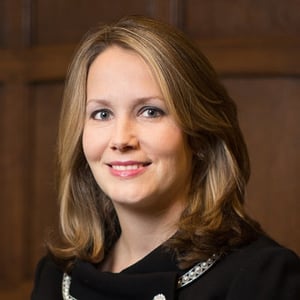
The Honorable Susan C. Rodriguez was sworn-in as a U.S. District Judge in the Western District of North Carolina on December 8, 2025. She previously served as a U.S. Magistrate Judge since April 2023. Prior to taking the bench, Judge Rodriguez was a partner at a national law firm, where she was the co-leader of the firm’s financial institutions industry team. Her private practice experience focused on government investigations and white-collar matters. She has represented clients in numerous government investigations by the U.S. Department of Justice, U.S. Department of Homeland Security, Consumer Financial Protection Bureau (CFPB), and the Federal Trade Commission (FTC), among others. She was recognized for her outstanding work for clients through Chambers rankings in both 2022 and 2023 for Litigation: White-Collar Crime & Government Investigations in North Carolina and nationally for Fintech Legal: Corporate, Securities & Financing. She also was named to “North Carolina Rising Stars,” Government Relations, Super Lawyers, 2017-2019.
Judge Rodriguez also served as a legal policy advisor at the Department of Homeland Security. She was a federal law clerk for the Honorable Frank D. Whitney, U.S. District Court Judge for the Western District of North Carolina, handling both civil and criminal matters. Prior to that, she was a presidential appointee, serving as a staffer in the White House Counsel’s office from 2005-2006, handling management of judicial nominations and assisting with responses to congressional investigations.
Assistant Professor of Law, Vanderbilt Law School
Partner, Troutman Pepper Locke LLP
Misha leads Troutman Peppers' national appellate and Supreme Court practice. Most recently, he successfully obtained orders from the Supreme Court blocking an unconstitutional restriction on places of worship, as well as overturning a lower court order that had blocked several state election laws. He has also argued and prevailed before the Supreme Court in Gill v. Whitford, one of the most significant redistricting cases in decades, as well as Murr v. Wisconsin, a high-stakes regulatory taking case.
Before joining Troutman, Misha served as Solicitor General of the State of Wisconsin. Misha previously served as a law clerk for the Honorable Anthony M. Kennedy of the Supreme Court, Janice Rogers Brown of the D.C. Circuit, and Alex Kozinski of the 9th Circuit. He graduated from Georgetown University Law Center, where he was President of the Federalist Society Chapter.

The Facebook Threat Case -- Elonis v. United States - Podcast
Kent Scheidegger
Anthony Douglas Elonis was convicted and sentenced to forty-four months in prison for a series...
“The Dog Ate My Emails!”: Document Retention Policies, Litigation Holds, and Legal Ethics
Jamie Brown, Daniel Z. Epstein, Patrick Oot, John J. Park, Victoria A. Redgrave, Julie Goldsmith Reiser, Jerry E. Smith
Once upon a time, corporations, government departments, and other entities made their own decisions about...
Supreme Court Cert Alert: Obamacare Case Granted, BP Case Pending - Podcast
Jonathan H. Adler, John S. Baker
On Friday, November 7, the U.S. Supreme Court granted a petition for cert in King...
Right to Work in the Midwest - Podcast
Milton L. Chappell
In 2012 and 2013, Indiana and Michigan, respectively, passed Right to Work laws covering both...
Heien v. North Carolina - Post-Argument SCOTUScast
Ryan Scott
On October 6, 2014, the Supreme Court heard oral argument in Heien v. North Carolina. The...
Regulating the Regulators: North Carolina Board of Dental Examiners v. Federal Trade Commission - Podcast
Rebecca Haw Allensworth, Misha Tseytlin
The North Carolina State Board of Dental Examiners is the state agency responsible for regulating...
North Carolina State Board of Dental Examiners v. Federal Trade Commission - Post-Argument SCOTUScast
Alexander Volokh
On October 14, 2014, the Supreme Court heard oral argument in North Carolina Board of...
Regulating the Regulators: North Carolina Board of Dental Examiners v. Federal Trade Commission
TeleforumTake Care Now: Stare Decisis and the President’s Duty to Defend Acts Of Congress - Podcast
Neal E. Devins, Curt Levey
The recent debate over President Obama’s enforcement of immigration laws and the Affordable Care Act...
2014 North Carolina Supreme Court Judicial Candidate Forum - Event Video
Robert N. Hunter, Michael L. Robinson, Cheri Beasley, Samuel J. Ervin, Robin Hudson, Eric Levinson, Ola Lewis, Mark D. Martin, Jenna Deery, Jay Conison, Bradley Lingo, Susan Courtwright Rodriguez
In November, North Carolina voters will head to the polls to elect four of the...