
Special Counsel, Wiley Rein LLP
Michael Showalter is a Special Counsel at Wiley Rein LLP. He received his J.D. from Yale Law School in 2016.

Partner, Lewis Brisbois
Sarah E. Lang is a partner in the New York office of Lewis Brisbois and a member of the Appellate Practice. Ms. Lang has represented clients at all levels of state and federal courts, including the New York State Appellate Division, the Second Circuit Court of Appeals, and the U.S. Supreme Court. The primary focus of her practice is drafting and arguing substantive motions and appeals before the federal courts and New York’s trial and appellate courts in substantive areas including general liability, New York Labor Law, medical malpractice, premises liability, and rideshare and transportation matters, among others. She also has extensive experience representing clients, including religious institutions, in matters arising under Title VII, the First Amendment, RLUIPA, New York’s City and State Human Rights Laws, New York’s Religious Corporations Law, and New York’s Real Property Tax Law. This includes federal jury trial experience and providing preventive advice and counseling. Prior to joining the firm, Ms. Lang clerked on the United States Court of Appeals for the Eighth Circuit, as well as the United States District Court for the Eastern District of North Carolina. She also previously served as an Attorney Advisor for the United States Department of Education.
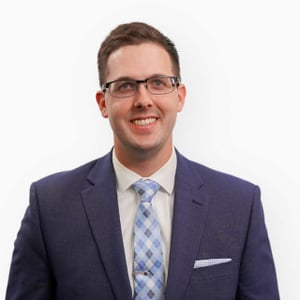
Attorney, Center for American Future
Christian Townsend is an attorney with the Center for the American Future. Prior to joining the Foundation, Christian was a legal associate with the Cato Institute’s Robert A. Levy Center for Constitutional Studies.
During law school, Christian interned in Washington, DC at the New Civil Liberties Alliance and the Cato Institute and in Cambodia at the law offices of Tilleke & Gibbins.
Christian received his JD from Indiana University Maurer School of Law, where he was the President of IU’s chapter of the Federalist Society and Executive Online Editor of the Indiana Law Journal. Christian attended undergrad at Cedarville University where he received BAs in political science and history. He is licensed to practice law in Texas and Maryland.
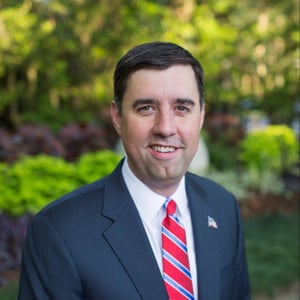
Associate Justice, Alabama Supreme Court
James L. “Jay” Mitchell was elected to the Alabama Supreme Court in 2018.
Prior to serving on the Supreme Court, Justice Mitchell was an accomplished litigation attorney with Maynard, Cooper & Gale, P.C. During his time in private practice, he tried a number of complex cases to verdict, successfully handled appeals, and obtained favorable settlements for clients. He was rated as one of the top litigators in the United States and Alabama, and received the highest possible rating for professional ethics. He also served on Maynard, Cooper & Gale’s executive committee, helping to lead strategic and growth initiatives for the firm.
Justice Mitchell was born in Mobile and grew up in South Alabama and in Homewood. He is a graduate of Homewood High School and received his Bachelor of Arts with honors from Birmingham-Southern College, where he graduated Phi Beta Kappa, served as president of the student body, and played forward on the school’s 1995 national championship basketball team. He holds a Master of Arts from University College in Dublin, Ireland, and received his law degree from the University of Virginia School of Law.
Justice Mitchell has long been active in organizations that benefit the community and enhance the legal profession. In addition to his service with other organizations, he is a member of the Rotary Club of Birmingham and serves on the board of directors at Cornerstone School, an inner city Christian school. He is also a member of the Federalist Society.
Justice Mitchell and his wife, Elizabeth, have been married for 20 years and have four children. They reside in Homewood and are longtime members of Church of the Highlands.
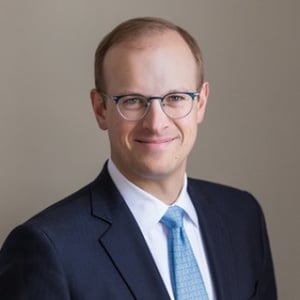
Partner, Consovoy McCarthy Park PLLC
Jeffrey Harris is an experienced litigator who focuses on constitutional, appellate, and regulatory matters. He is currently a partner at Consovoy McCarthy Park PLLC. In 2015, he was named to the Legal Times list of “D.C.’s Rising Stars,” which identified “some of the most accomplished young attorneys in the D.C. area.” Mr. Harris previously served as Associate Administrator of the Office of Information and Regulatory Affairs (OIRA). In that role, he was second in charge of the 50-person office within the Executive Office of the President that reviews all significant federal regulatory actions and coordinates regulatory policy across the federal government.
Before his government service, Mr. Harris was a partner at Bancroft PLLC and Kirkland & Ellis LLP, where his practice focused on Supreme Court, appellate, and complex litigation. Mr. Harris has extensive experience litigating before the U.S. Supreme Court. He has been the lead drafter of more than 100 merits briefs, amicus briefs, and certiorari-stage briefs, and he has contributed to 10 wins in cases before the Court.
Mr. Harris has also litigated numerous high-profile cases in the federal courts of appeals, federal and state trial courts, administrative agencies, and arbitral tribunals. He has successfully argued before the U.S. Courts of Appeals for the Sixth, Ninth, Eleventh, and D.C. Circuits, achieving wins on behalf of airlines, telecommunications providers, and pro bono clients. He has also argued numerous dispositive motions in federal district court and has participated in the trial of a significant voting rights case.
Mr. Harris served as a law clerk to Chief Justice John G. Roberts, Jr., of the U.S. Supreme Court, and Judges David Sentelle and Laurence Silberman of the U.S. Court of Appeals for the D.C. Circuit. He earned his J.D. magna cum laude from Harvard Law School and his A.B. magna cum laude from Georgetown University. He is a member of the District of Columbia and Virginia bars.
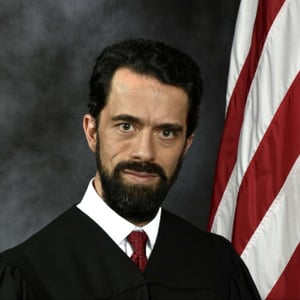
Judge, United States Court of Appeals, Third Circuit
Stephanos Bibas is a judge on the U.S. Court of Appeals for the Third Circuit. Judge Bibas was previously a professor of law and criminology at the University of Pennsylvania Law School. As director of the Penn Law Supreme Court Clinic, he argued six cases before the Supreme Court of the United States and filed briefs in dozens of others. He graduated summa cum laude and Phi Beta Kappa from Columbia University in 1989 with a B.A. in political theory and from Oxford University in 1991 with a B.A. in jurisprudence. He then earned his J.D. from Yale Law School in 1994.
After graduating from Yale Law, Judge Bibas clerked for Judge Patrick Higginbotham of the U.S. Court of Appeals for the Fifth Circuit and Justice Anthony Kennedy on the Supreme Court and was a litigation associate at Covington & Burling LLP in Washington, D.C. Thereafter, Judge Bibas served as an Assistant U.S. Attorney in the Southern District of New York, where he successfully prosecuted the world’s leading expert in Tiffany stained glass for hiring a grave robber to steal priceless Tiffany windows from cemeteries. Before his tenure at Penn Law, Judge Bibas taught at the University of Chicago Law School and the University of Iowa College of Law and was a research fellow at Yale Law School. He has published two books and seventy scholarly articles.
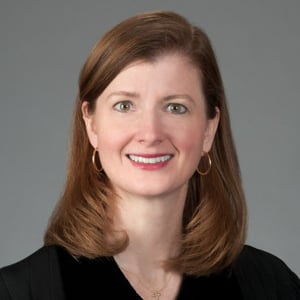
Judge, United States Court of Appeals, Eleventh Circuit
On March 20, 2018, Judge Elizabeth L. Branch (Lisa) was sworn in as a United States Circuit Judge for the Eleventh Circuit.
Judge Branch attended and graduated from Davidson College in North Carolina (B.A., cum laude, 1990), and Emory University School of Law (J.D., with distinction, 1994).
After graduating from law school, Judge Branch served as a federal law clerk to The Honorable J. Owen Forrester of the U.S. District Court for the Northern District of Georgia from 1994 to 1996. Following her clerkship, Judge Branch joined the litigation department of Smith, Gambrell & Russell, LLP in Atlanta as an associate and then a partner.
From 2004 to 2008, Judge Branch was a senior official in the Administration of President George W. Bush in Washington, D.C. She served first as the Associate General Counsel for Rules and Legislation at the U.S. Department of Homeland Security and then as the Counselor to the Administrator of the Office of Information and Regulatory Affairs at the U. S. Office of Management and Budget.
She returned to Smith Gambrell in 2008 as a litigation partner. Judge Branch then was appointed to the Court of Appeals of Georgia by Governor Nathan Deal, taking office on September 4, 2012, where she served until March 19, 2018.
Judge Branch is a member of the Board of Advisors of the Atlanta Lawyers Chapter for the Federalist Society for Law and Public Policy Studies.
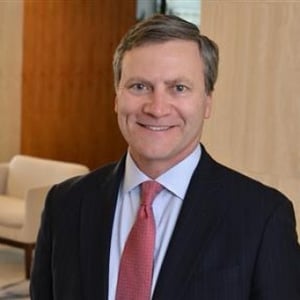
Shareholder, Brownstein, Hyatt, Farber, Shreck
With more than 20 years of experience both as a first-chair litigator and in public service, Greg Brower’s practice focuses on civil and criminal litigation, as well as regulatory and enforcement actions, corporate investigations, cybersecurity matters and federal and state government relations.
Most recently, Greg served as the assistant director for the Office of Congressional Affairs at the Federal Bureau of Investigation (FBI), serving as the FBI’s chief liaison to Congress on a wide range of critical oversight and investigative matters. He previously served as the FBI’s Deputy General Counsel, managing a diverse portfolio of legal matters, including litigation, privacy, procurement, compliance and ethics. During his time as a senior FBI executive, spanning two administrations, he worked closely with high-ranking officials in the U.S. Department of Justice (DOJ), the U.S. intelligence community and with key leaders on Capitol Hill. Greg is a regular commentator and contributor on national security, legal and cybersecurity issues, regularly appearing on CNN and MSNBC, and he is the featured contributor on white collar crime and corporate compliance for the Washington Legal Foundation’s Legal Pulse blog.
Greg has a long history of public service. At the federal level, he previously served as the U.S. Attorney for the District of Nevada, and as both General Counsel and Inspector General at the U.S. Government Publishing Office. Greg also served at DOJ as Legislative Counsel in the Executive Office for U.S. Attorneys. At the state level, he has served in a variety of public policy roles, including five terms in the Nevada Legislature, where he was chairman of the Senate Judiciary Committee. He has also served on the Nevada Gaming Policy Committee, the Nevada Advisory Commission on the Administration of Justice, the Nevada Sentencing Commission and the Nevada Juvenile Justice Commission.
Throughout his career, Greg has served the Nevada legal community as an adjunct professor of law at the William S. Boyd School of Law at the University of Nevada, Las Vegas, where he has taught courses in national security law and trial advocacy. Before attending law school, Greg served in the U.S. Navy as a Surface Warfare Officer.
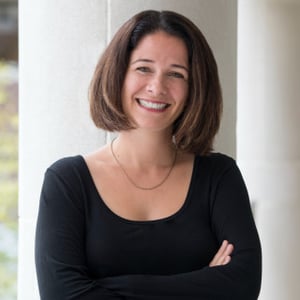
Anne Shea Ransdell and William Garland "Buck" Ransdell, Jr. Distinguished Professor of Law, University of North Carolina School of Law
Carissa Byrne Hessick joined the Carolina Law faculty in 2016. She serves as the Anne Shea Ransdell and William Garland “Buck” Ransdell, Jr. Distinguished Professor of Law and as the director of the Prosecutors and Politics Project. Her teaching and research interests include criminal law, the structure of the criminal justice system, criminal sentencing, and child pornography crimes. Hessick is the author of multiple law review articles, essays, and op eds on plea bargaining, the powers and selection of prosecutors, Sixth Amendment sentencing rights, and criminal statutes. Her work has appeared in the California Law Review, the Cornell Law Review, the L.A. Times, the UCLA Law Review, and the Virginia Law Review, among others. She founded the Prosecutors and Politics Project in 2018. And she currently serves as the Reporter for the ABA Criminal Justice Section’s Sentencing Standards Task Force.
Hessick attended Yale Law School, where she was an editor of the Yale Law Journal and winner of the Potter Stewart Prize for the Morris Tyler Moot Court of Appeals. After graduating from law school, she clerked for Judge Barbara S. Jones on the Southern District of New York and for Judge A. Raymond Randolph on the D.C. Circuit. She also worked as a litigation associate at Wachtell, Lipton, Rosen & Katz in New York City. Before joining the faculty at Carolina Law, Hessick taught on the faculties at Arizona State University’s Sandra Day O’Connor College of Law and the University of Utah’s S.J. Quinney College of Law. She also spent two years as a Climenko Fellow at Harvard Law School.

Senior Vice President for Legal Studies, Cato Institute
Clark Neily is senior vice president for legal studies at the Cato Institute. His areas of interest include constitutional law, overcriminalization, civil forfeiture, police accountability, and gun rights. Neily is the author of Terms of Engagement: How Our Courts Should Enforce the Constitution’s Promise of Limited Government. His writing has appeared in the Wall Street Journal, Forbes, and National Review Online, as well as various law reviews, including the Harvard Journal of Law and Public Policy, George Mason Law Review, Georgetown Journal of Law and Public Policy, NYU Journal of Law and Liberty, and Texas Review of Law and Politics. Neily is a frequent guest speaker and lecturer for the Federalist Society, Institute for Humane Studies, and American Constitution Society.
Before joining Cato in 2017, Neily was a senior attorney and constitutional litigator at the Institute for Justice and director of the Institute’s Center for Judicial Engagement. He is also an adjunct professor at the University of Texas School of Law, where he teaches constitutional litigation and public-interest law.
Neily served as co-counsel in District of Columbia v. Heller, the historic case in which the Supreme Court held for the first time that the Second Amendment protects an individual right to own a gun for self-defense.
Neily began his legal career as a law clerk to Judge Royce Lamberth on the U.S. District Court for the District of Columbia. After that he spent four years in the trial department of the Dallas-based firm Thompson & Knight. Neily received his undergraduate and law degrees from the University of Texas, where he was Chief Articles Editor of the Texas Law Review.

Topics
SCOTUS Clarifies Scope of RICO’s Civil Cause of Action in Medical Marijuana, Inc. v. Horn
In Medical Marijuana, Inc. v. Horn, the Supreme Court held that RICO’s civil cause of...
Corner Post and 28 U.S.C. § 2401(a): Not Much to Look At?
Michael J. Showalter
This term the U.S. Supreme Court will decide Corner Post, Inc. v. Board of Governors...
Groff v. DeJoy: The Death of the “De Minimis” Test Breathes Life Back into Religious Accommodation
Sarah E. Lang
In a unanimous decision last June, the Supreme Court in Groff v. DeJoy heightened the...
Texas Supreme Court Tackles Attorney-Client Privilege and the Texas Public Information Act
Christian Townsend
One of the bedrock principles of our legal system is confidentiality between attorneys and their...
Textualism in Alabama
Jay Mitchell
Textualism is alive and well in Alabama. This interpretive doctrine teaches that legal texts have...
Topics
Going Rogue: The EEOC Quietly Uses FOIA To Penalize Employers For Adopting Lawful Employment Arbitration Programs
Anecdotal reports from employers around the country indicate that regional offices of the United States...
Topics
Voting News: The 11th Circuit Holds That Postage to Mail Ballots Is Not an Unconstitutional Poll Tax
In the State of Georgia, voters must pay for postage when submitting mail-in and absentee...
Topics
Kisor on Remand: Raising the Bar to “Genuinely Ambiguous” at Auer Step Zero
A recent decision from the Federal Circuit may provide a roadmap for the future of...
An Unconstitutional Attempt to Address Affordable Housing
Jeffrey M. Harris
Note from the Editor: The Federalist Society takes no positions on particular legal and public...
The Pros and Cons of Plea Bargaining
2018 National Lawyers Convention
Washington, DC