
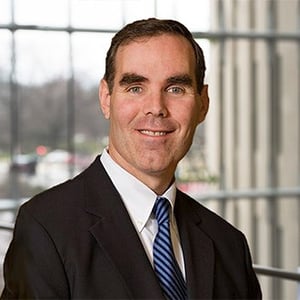
Partner, Jones Day
Eric Dreiband represents clients in investigations, litigation, and counseling in civil rights, employment discrimination, whistleblower, wage and hour, and other matters. Prior to rejoining Jones Day in 2021, Eric served as the 18th Assistant Attorney General for the Civil Rights Division at the U.S. Department of Justice (DOJ), and he also served as the 12th General Counsel of the U.S. Equal Employment Opportunity Commission (EEOC).
Under Eric's leadership, DOJ's Civil Rights Division set enforcement records for prosecutions of law enforcement officers and sexual harassment, religious liberty, and servicemember cases; charged the highest number of hate crimes cases in decades; significantly expanded resources for human trafficking prosecutions; prosecuted race and other forms of illegal discrimination in education, employment, housing, lending, and voting; reached historic disability rights settlements with several states; opposed unlawful COVID-19-related civil liberty restrictions; and successfully litigated to protect the Constitutional and civil rights of all people in the United States.
As EEOC general counsel, Eric led the Commission's litigation of the federal employment antidiscrimination laws, and he issued the Regional Attorneys' Manual, which established the policies of EEOC's litigation program. Eric also served at the Department of Labor (DOL) as deputy wage and hour administrator and directed DOL's enforcement of the Fair Labor Standards Act (FLSA), the Family and Medical Leave Act (FMLA), and other laws.
From 1997 to 2000, Eric served as a prosecutor in the Office of Independent Counsel Kenneth W. Starr.
Eric has spoken and written extensively about civil rights and other employment laws, and he has testified about these subjects before committees of the U.S. House of Representatives and the U.S. Senate.
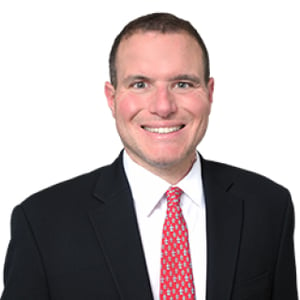
Shareholder, Littler
Bradford J. Kelley has a broad practice representing employers in employment anti-discrimination and wage and hour matters. He focuses on advising clients about emerging technologies, including artificial intelligence (AI), and their impact in the workplace.
Brad is an internationally recognized workplace AI authority. He advises clients on how to maximize the benefits of using AI in the workplace while minimizing potential legal and business risks. His deep background in this area provides employers with the tools and insights they need to develop, deploy, and monetize AI and other emerging technologies to bolster business operations and efficiency.
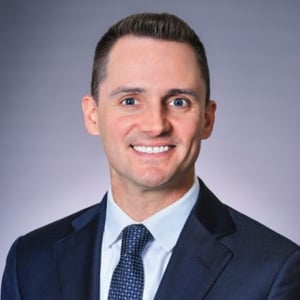
Associate Professor of Law, South Texas College of Law Houston
Ryan H. Nelson joined the faculty at South Texas College of Law Houston in 2021. His research focuses on leveraging the civil litigation and other dispute resolution systems to advance the rights of poor and other marginalized workers, most often with respect to discrimination, harassment, wages, leaves of absence, and accommodations. His scholarship has been published or is forthcoming in the Michigan Law Review, Fordham Law Review, BYU Law Review, Yale Law and Policy Review, and the online companions to the NYU Law Review, California Law Review, and Vanderbilt Law Review. He has advised state attorneys’ general offices and other administrative agencies on employment law reforms and helped to draft associated proposed legislation and regulations. Moreover, he has provided legal commentary for Fox 26 Houston, KPRC 2 News | Houston, and in periodicals like Slate, USA Today, the Texas Tribune, and the Houston Chronicle.
Before joining South Texas, Ryan completed a research fellowship with the Harvard Law School Project on Disability and taught on the adjunct faculty at Boston University School of Law, New England Law | Boston, and New York Law School. He also spent nearly a decade practicing labor and employment law, including as in-house employment law counsel for one of the world’s largest financial services companies and as an attorney with one of the top labor and employment law firms in the country where he specialized in workplace affirmative action law. He obtained his LL.M. from Harvard Law School where he was awarded the Irving Oberman Memorial Prize for Best Paper on Law and Social Change; his J.D., cum laude, from Benjamin N. Cardozo School of Law, Yeshiva University, where he served on the Editorial Board of the Moot Court Honor Society; and his B.S.B.A. with a major in economics from the University of Florida where he was a National Merit Scholar and became an avid fan of Florida Gators football.

Partner, Vinson & Elkins LLP
Fry Wernick is a Chambers-rated lawyer and former federal prosecutor who serves as a partner in the Government Investigations and White Collar Practice Group in the firm’s Washington, D.C. and Dallas offices.
As a former federal prosecutor and supervisor of the U.S. Department of Justice’s Criminal Fraud Section with experience as lead attorney in over 30 trials, Fry has a broad range of white collar enforcement and courtroom experience. Fry regularly conducts internal investigations and defends companies and individuals against government investigations into a broad range of conduct and he has specific experience prosecuting and defending cases involving the Foreign Corrupt Practices Act (FCPA), anti-money laundering (AML) statutes, the Bank Secrecy Act (BSA), the False Claims Act (FCA), sanctions, campaign finance laws, and other fraud, consumer protection and corruption-related offenses. Fry also has extensive experience representing clients and appearing before numerous alphabet agencies, including the Department of Justice (DOJ), the Securities and Exchange Commission (SEC), the Consumer Financial Protection Bureau (CFPB), the New York Department of Financial Services (DFS), the Federal Trade Commission (FTC), the Department of Treasury Office of Foreign Assets Control (OFAC), the Department of Commerce Bureau of Industry and Security (BIS), the Commodity Futures Trading Commission (CFTC), Department of Education (ED) and other regulators and investigative bodies. Fry also draws on his experience as a former counsel to the U.S. Senate Permanent Subcommittee on Investigations and the U.S. Senate Committee on the Judiciary to help prepare and defend companies and individuals facing inquiries and investigations by Congress.
An important part of Fry’s practice is advising publicly traded and privately held companies on transactional risk, particularly concerning business transactions in emerging markets, and he helps companies develop effective compliance programs. Fry also understands all aspects of crisis management, and he draws on his extensive experience to tailor and coordinate sophisticated responses to investigations and inquiries from governmental, legislative and media sources in order to minimize the potential for legal and reputational risk for his clients.
As a former supervisor in DOJ’s FCPA Unit, Fry is one of the few former federal prosecutors who has actually prosecuted violations of the FCPA, and he has keen insight into how the Department of Justice prioritizes and investigates cases involving alleged violations of the FCPA and other white collar crimes. At DOJ, Fry led and supervised dozens of the Department’s most high-profile cases, including six of the largest-ever FCPA corporate criminal resolutions and dozens of individual prosecutions. Fry has extensive experience negotiating corporate settlements. including DPAs, NPAs and declinations under the recent revisions to the Department’s Corporate Enforcement Policy. In addition, Fry has conducted multiple cross-border criminal investigations and coordinated resolutions with multiple foreign and domestic government authorities, and he has developed an advanced understanding of how foreign regulators enforce the U.K. Bribery Act, the French Sapin II, and other anti-bribery laws.
Fry is a thought leader on the FCPA and white collar matters and he is frequently published and quoted in the press, including recently by the Financial Times, Wall Street Journal, Bloomberg, Law 360, Global Investigations Review, The Anti-Corruption Report, The FCPA Professor, Energy Voice and other publications. Fry also has been recognized by Chambers USA, Legal 500, Lawdragon 500 and Who’s Who Legal for his investigations and white collar practice, and Law360 named Fry a “2021 Compliance MVP.”
In 2022, Fry took over as the firm’s Pro Bono Partner where he helps manage Vinson & Elkins’ firmwide pro bono program.

Partner, Jones Day
Brian Rabbitt is a litigator with extensive experience handling complex investigations, enforcement matters, civil litigation, and appellate matters at the highest levels of government. He represents clients in high-stakes matters involving the Department of Justice (DOJ), Securities and Exchange Commission (SEC), Commodity Futures Trading Commission (CFTC), Congress, and state attorneys general, as well as in internal investigations. Brian has been recognized as a leading white collar and investigations lawyer by Law360, The National Law Journal, and Chambers USA, which describes him as "smart, practical, and [having] great judgment."
Prior to joining Jones Day, Brian was the Acting Assistant Attorney General for the DOJ's Criminal Division, where he led hundreds of prosecutors responsible for investigating and prosecuting white collar cases (including securities, commodities, and health care fraud), Foreign Corrupt Practices Act (FCPA) violations, and money laundering (AML), public corruption, computer crime, intellectual property, and Bank Secrecy Act (BSA) matters. Under Brian's leadership, the Criminal Division resolved several of the most significant corporate criminal matters in DOJ history; prosecuted billions of dollars in health care fraud; and led the government's response to COVID-19-related stimulus fraud.
Before heading the Criminal Division, Brian served as Chief of Staff to the Attorney General at DOJ, in senior enforcement and policy roles at the SEC, and in the White House Counsel's Office, where he advised on investigations, congressional oversight, and financial regulatory policy. Brian began his career at a leading Washington law firm, where his practice focused on complex civil litigation and government investigations and enforcement matters.

Vice President, Edwin Meese III Institute for the Rule of Law, Advancing American Freedom
John G. Malcolm oversees Advancing American Freedom’s work to increase understanding of the Constitution and the rule of law as Vice President of the organization’s Edwin Meese III Institute for the Rule of Law. Malcolm brings to the challenge a wealth of legal expertise and experience in both the public and private sectors.
Prior to joining Advancing American Freedom in 2025, Malcolm was the Vice President of the Institute for Constitutional Government and the Director of the Meese Center for Legal and Judicial Studies at the Heritage Foundation. Prior to joining Heritage in 2012, Malcolm was general counsel at the U.S. Commission on International Religious Freedom, as well as a distinguished practitioner in residence at Pepperdine Law School. From 2004 to 2009, Malcolm was executive vice president and director of worldwide anti-piracy operations for the Motion Picture Association.
Malcolm served as a deputy assistant attorney general in the Department of Justice’s Criminal Division from 2001 to 2004, where he oversaw sections on computer crime and intellectual property, domestic security, child exploitation and obscenity, and special investigations. Immediately prior to that, he was a founding partner in the Atlanta law firm of Malcolm & Schroeder, LLP.
From 1990 to 1997, Malcolm was an assistant U.S. attorney in Atlanta, assigned to the fraud and public corruption section, and also an associate independent counsel, investigating fraud and abuse in the Department of Housing and Urban Development. He was honored with the Director’s Award for Superior Performance for his work in connection with the successful prosecution of Walter Leroy Moody Jr., who assassinated an 11th Circuit judge and the head of the Savannah chapter of the NAACP.
A graduate of Harvard Law School and Columbia College, Malcolm began his career as a law clerk to a federal district court judge and a federal appellate court judge, and as an associate at the Atlanta-based law firm of Sutherland, Asbill & Brennan (new Eversheds Sutherland).
Malcolm, who resides in Washington, D.C., serves on the Board of Trustees of the Washington National Opera and is a Senate-confirmed member of the Board of Directors of the Legal Services Corporation, the largest funder of civil legal aid in the United States.

Judge, United States Court of Appeals, Sixth Circuit
Judge Readler earned his undergraduate and law degrees from the University of Michigan. After graduating, he served as a law clerk to Judge Alan Norris of the United States Court of Appeals for the Sixth Circuit. Judge Readler then began practicing law in the Columbus office of the international law firm Jones Day, eventually spending ten years as a partner in the firm’s Issues and Appeals Practice Group. While at Jones Day, Judge Readler appeared in state and federal trial and appellate courts around the country, most frequently the Supreme Court of Ohio and the Sixth Circuit. Judge Readler also successfully argued before the United States Supreme Court in McQuiggin v. Perkins on behalf of an inmate claiming actual innocence. His other pro bono representations include representing capital defendants before the Tenth Circuit and the Supreme Court of Ohio, as well as representing defendants sentenced to life in prison before the Sixth Circuit. While at Jones Day, Judge Readler traveled to Nairobi with Lawyers Without Borders to train Kenyan lawyers in prosecuting domestic violence cases, and he was also a recipient of the American Marshall Memorial Fellowship awarded by the German Marshall Fund of the United States. Following his career in private practice, Judge Readler served as Acting Assistant Attorney General for the Civil Division of the United States Department of Justice from 2017 to 2019. In that role, Judge Readler led and supervised over 1,000 lawyers in the Department’s largest litigating division, briefing and arguing several cases on behalf of the United States in federal courts across the country, including high-profile cases significant to the Administration and the Department. In March 2019, Judge Readler was confirmed to serve as a Circuit Judge on the Sixth Circuit. He resides in Columbus.

Agnes Williams Sesquicentennial Professor of Federal Courts, Georgetown Law
Stephen I. Vladeck is a professor of law at the Georgetown University Law Center, and is a nationally recognized expert on the federal courts; the Supreme Court; national security law; and military justice.
Vladeck is author of the New York Times bestselling book, “The Shadow Docket: How the Supreme Court Uses Stealth Rulings to Amass Power and Undermine the Republic,” which won the 2023 Writers’ League of Texas Book Award for Non-Fiction and was a finalist for the 2024 ABA Silver Gavel Award for Media and the Arts. Vladeck is also a highly regarded appellate advocate, having argued three cases before the U.S. Supreme Court and over a dozen before various lower federal civilian and military courts. He has received numerous awards for his influential and widely cited legal scholarship, his prolific popular writing, his teaching, and his service to the legal profession—including the 2024 University of Texas President’s Research Impact Award and his selection by the Order of the Coif to serve as its Distinguished Visiting Professor for 2025.
Vladeck is CNN’s Supreme Court analyst and editor and author of “One First,” a popular weekly newsletter about the Supreme Court. Together with Bobby Chesney, Vladeck co-hosts the popular and award-winning “National Security Law Podcast.” He is also a co-author of Aspen Publishers’ leading national security law and counterterrorism law casebooks. And he is a member of the Board of Trustees of EarthJustice—the nation’s premier nonprofit public interest environmental law organization.
Vladeck graduated from Yale Law School in 2004—where he was executive editor of the Yale Law Journal and won the Harlan Fiske Stone Prize for outstanding moot court oralist and shared the Potter Stewart Prize for best moot court team performance. After law school, he clerked for the Honorable Marsha S. Berzon on the U.S. Court of Appeals for the Ninth Circuit and the Honorable Rosemary Barkett on the U.S. Court of Appeals for the Eleventh Circuit. He earned a B.A. summa cum laude with Highest Distinction in History and Mathematics from Amherst College in 2001—where he wrote his senior thesis on “Leipzig’s Shadow: The War Crimes Trials of the First World War and Their Implications from Nuremberg to the Present.” A native New Yorker and hopeless Mets fan, Vladeck lives in the District with his wife, Karen (Founder and Managing Partner of Risepoint Search Partners); their daughters, Madeleine and Sydney; and their eleven-year-old pug, Roxanna.
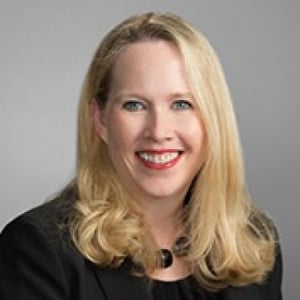
Partner and Co-Chair, Constitutional and Appellate Law Practice Group, Gibson, Dunn & Crutcher LLP
Allyson N. Ho is a partner in the Dallas office of Gibson, Dunn & Crutcher LLP and co‐chair of the Firm’s nationwide Appellate and Constitutional Law practice group.
Mrs. Ho is “undoubtedly one of the premier appellate lawyers in the United States” (Chambers). She has presented over 100 oral arguments in federal and state courts nationwide, including multiple high‐stakes cases on behalf of business before the U.S. Supreme Court.
Her most significant winning arguments include a U.S. Supreme Court reversal worth billions of dollars for unionized employers in the Sixth Circuit; a U.S. Supreme Court reversal limiting the power of federal regulators; a multi‐billion dollar environmental win in the Fifth Circuit; a multi‐billion dollar commercial victory for the founder of a technology company in the Appellate Division of the New York Supreme Court; a billion dollar environmental win in the Houston Court of Appeals; a nine‐figure commercial victory in the Corpus Christi Court of Appeals; and a nine‐figure arbitration win in the Fifth Circuit.
Among her numerous accolades, Mrs. Ho is one of only a small group of appellate lawyers nationwide, and the only one in Texas, to be nationally ranked by Chambers every year for the past ten years (2012‐21). She is also one of the few appellate lawyers nationwide to be named to the BTI Client Service All‐Stars List, an honor bestowed by the corporate counsel community for lawyers “who stand above all the others in delivering the absolute best in client service.” She is also routinely named as a leading appellate lawyer by Benchmark, The Best Lawyers in America®, The Legal 500, Texas Super Lawyers, and D Magazine.
Mrs. Ho has received the Gregory S. Coleman Outstanding Appellate Lawyer Award (Texas Bar Foundation, June 22, 2018), been named a “Distinguished Leader” (Texas Lawyer, Sep. 1, 2017) and “Appellate MVP” (Law360, Nov. 23, 2015), and been recognized on the “Appellate Hot List” (National Law Journal, Nov. 16, 2015). In addition, she has been profiled in “Texas Powerhouse” (Law360, Aug. 2, 2021), “Texas Appellate Power Couple” (Texas Lawbook, January 7, 2021), “Litigators of the Week” (The American Lawyer, May 8, 2020), “Litigation Powerhouse” (Law360, Aug. 10, 2016), “Supreme Court Insider” (National Law Journal, July 21, 2016), “Supreme Court Specialists, Mostly Male, Dominated Arguments This Term” (National Law Journal, May 11, 2016), “Attorney of the Year Finalist” (Texas Lawyer, Nov. 2, 2015), “Litigation Department of the Year” (Texas Lawyer, June 1, 2015), “Employment Group of the Year” (Law360, Jan. 13, 2015), “A Supreme Month: Lawyer Credits Preparedness in Ability to Argue Two U.S. High Court Cases in Three Weeks” (Texas Lawyer, Dec. 8, 2014), “High Court Debuts for Two Lawyers” (National Law Journal, Nov. 3, 2014), “Women in Business Awards” (Dallas Business Journal, Aug 29, 2014), “Litigation Departments of the Year” (Texas Lawyer, June 2, 2014), “Winning Women” (Texas Lawyer, Aug. 22, 2011), and “High court practitioners: increasingly diverse” (National Law Journal, June 6, 2011).
Federal and State Appellate Practice
Mrs. Ho has argued a series of high stakes, landmark cases on behalf of the business community before the U.S. Supreme Court. National Law Journal called her a “Veteran SCOTUS Advocate” in the “upper echelons of Supreme Court practice.” Law360 named her a “Supreme Court Star” and “one of the nation’s preeminent appellate lawyers.” And EmpiricalSCOTUS.com ranked her among “the most successful attorneys that currently practice before the Court.” Mrs. Ho once argued two significant business cases before the Court within the span of 21 days—including a “significant ruling for employers” that “paved a new path for companies paying millions of dollars in retiree health care benefits” (Law360), as well as a landmark administrative law dispute in which “several justices agreed with Ho’s contention that SCOTUS should revisit and overrule its own precedent” (Law360). She also prevailed against the EEOC in a case that the employment defense bar called “good news for employers across the country.” And in “the most important patent case in modern history” according to patent law experts, her argument before the Court was credited for “pick[ing] up two votes that pundits thought unreachable.”
She has appeared before every federal court of appeals in the country, including en banc arguments before the Fourth and Sixth Circuits. She has successfully represented business clients in every circuit, including the First (Pruco Life Insurance Company), Second (Swiss Federation; Rite Aid), Third (Johnson & Johnson), Fourth (Genex Services), Fifth (United Space Alliance LLC; Elliott Co.; MERSCORP; 24 Hour Fitness USA, Inc.; Stream Energy; Health Management Systems), Sixth (Deutsche Bank; American Airlines; M&G Polymers), Seventh (Expedia), Eighth (Cotter), Ninth (Boeing; JP Morgan Chase Bank), Tenth (Mitchell International), Eleventh (AstraZeneca), D.C. (FedEx), and Federal (Repros Therapeutics) Circuits.
In addition, Mrs. Ho regularly appears in state appellate courts across the country. She has argued numerous cases in the Texas Supreme Court, Texas appellate courts in Dallas, Houston, San Antonio, Corpus Christi, and Eastland, and state appellate courts in Arizona, Michigan, New York, Ohio, Oklahoma, and West Virginia, prevailing on behalf of Ford Motor Company, PepsiCo, International Paper, Tenet, GameStop, Deutsche Bank, and Unit.
Government and Public Service Experience
Mrs. Ho has a distinguished record of experience at the highest levels of the federal government. She served as Special Assistant to President George W. Bush, Counselor to Attorney General John Ashcroft, and law clerk to Justice Sandra Day O’Connor of the U.S. Supreme Court and Judge Jacques L. Wiener Jr. of the U.S. Court of Appeals for the Fifth Circuit.
Her record of public service also includes appointments to various boards and commissions. Among the most notable are her election as a member of the Administrative Conference of the United States, a trustee of the United States Supreme Court Historical Society, and a trustee of the Texas Supreme Court Historical Society. She is also vice chair of the Federal Judicial Evaluation Committee, appointed by U.S. Senators John Cornyn and Ted Cruz to evaluate potential appointments of all federal judges and U.S. Attorneys in Texas, and has previously served on the U.S. Magistrate Judge Merit Selection Panel for the Northern District of Texas.
Other Background Information
An active pro bono litigator, Mrs. Ho works most frequently with the First Liberty Institute and as amicus counsel for the State and Local Legal Center, the National Organization for Victim Assistance, and the National Crime Victim Law Institute. She is a frequent public speaker and active member of the Federalist Society, the American Law Institute, and the Washington Legal Foundation’s Legal Policy Advisory Board.
Mrs. Ho graduated from Duke University magna cum laude with a B.A. in English, Rice University with an M.A. and Ph.D. in English Literature, and the University of Chicago Law School with high honors. She was a member of the Law Review and Order of the Coif. She and her husband Jim, a federal judge, have a twin daughter and son.
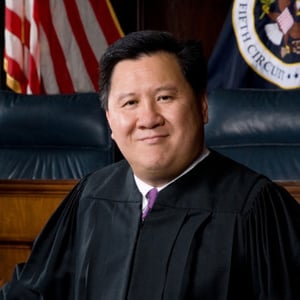
Judge, United States Court of Appeals, Fifth Circuit
James C. Ho is a Circuit Judge on the U.S. Court of Appeals for the Fifth Circuit. Before taking the bench on January 4, 2018, he was a partner and co-chair of the national Appellate and Constitutional Law practice group of Gibson, Dunn & Crutcher LLP.
As an appellate litigator for over a decade, including three years as the Solicitor General of Texas, Judge Ho presented 50 oral arguments in federal and state courts nationwide. He won numerous appeals, including three merits cases at the U.S. Supreme Court. He was routinely ranked among the nation’s leading lawyers by Benchmark, Chambers, Law360, The Legal 500, and The National Law Journal, among other publications. His work has been cited favorably by courts at every level of both the federal and state judiciaries. He won a Best Brief Award from the National Association of Attorneys General for every year that he served as solicitor general, and he is the only state solicitor general in history to be invited by the U.S. Supreme Court to express the views of a state.
Judge Ho has served in all three branches of the federal government. On the Senate Judiciary Committee, he served as chief counsel of the Subcommittees on the Constitution and Immigration under Senator John Cornyn. At the Justice Department, he served as Special Assistant to the Assistant Attorney General for Civil Rights and an attorney-advisor at the Office of Legal Counsel. He clerked for Judge Jerry E. Smith of the U.S. Court of Appeals for the Fifth Circuit and Justice Clarence Thomas of the U.S. Supreme Court.
His record of public service also includes appointments as vice chair of the Federal Judicial Evaluation Committee in Texas and co-chair of the National Asian Pacific American Bar Association Judiciary Committee, and as a member of the U.S. Magistrate Judge Merit Selection Panel for the Northern District of Texas, the U.S. delegation to the United Nations Committee on the Elimination of Racial Discrimination, and the Continuity of Government Commission.
In addition, Judge Ho has served as an Adjunct Professor of Law at the University of Texas School of Law, where he taught seminars on U.S. Supreme Court Litigation and Religious Liberty. He has authored numerous articles in respected law reviews nationwide, including an annual feature on exemplary judicial writing for The Green Bag Almanac & Reader. He previously served as senior editor of The Green Bag and as co-editor of Pub. L. Misc.
Judge Ho graduated from Stanford University with honors and a B.A. in Public Policy in 1995, and the University of Chicago Law School with high honors in 1999. Before law school, he was a legislative aide to California State Senator Quentin Kopp. He and his wife Allyson live in Dallas, Texas, with their twin daughter and son.

Symposium Co-Director, Michigan Student Chapter
Jeremy (‘25) is from Austin, Texas. He graduated summa cum laude from Liberty University in 2022 with a Bachelor of Science in Paralegal Studies and a minor in Biblical Theology. Prior to attending college, Jeremy helped plant three churches in the Austin area, served as a pastor and a worship leader, and taught classes on philosophy, theology, and Christian communications. He also spent 10 years as a musician. He is active in the foster care and adoptive systems, giving talks to raise awareness about the benefits of and need for foster parents. Jeremy and his wife, Ruthy, have fostered 16 children and adopted three. He served as a legal intern for the District Attorney’s Office of Travis County, TX, and returned to Austin to spend his 2L summer at O’Melveny and Myers.

Michigan Law School Chapter, President
Katherine (’25) was born and raised in Brazil to a Greek family. She moved to the U.S. in 2015 to pursue her undergraduate education at Michigan State University (“MSU”), where she graduated Phi Beta Kappa from James Madison College. At MSU, Katherine served as Student Body President and on the executive board of the Association of Big Ten Students (a conglomerate of all Big Ten student governments). Before law school, she worked as a policy analyst at a Department of Energy nuclear physics laboratory and later in the compliance team of a Fortune 500 financial services firm. At the University of Michigan Law School, Katherine served on the executive board of the Latinx Law Student Association at Michigan Law and the Federalist Society. As a 2L, Katherine externed at the U.S. District Court for the Western District of Michigan for Chief Judge Hala Y. Jarbou. She interned at Jones Day in Chicago for her 1L summer and returned to Jones Day for her 2L summer, where she will join as an associate in 2025.
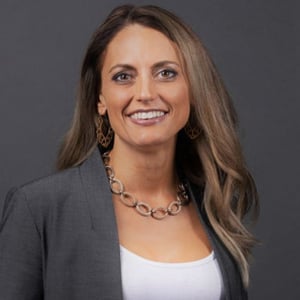
Judge, U.S. Court of Appeals for the Third Circuit
Hon. Jennifer Mascott served as Associate Professor of Law and Director of the Separation of Powers Institute at The Catholic University of America’s Columbus School of Law before her appointment to the federal bench. On July 16, 2025, President Donald J. Trump nominated her to the U.S. Court of Appeals for the Third Circuit (Delaware), and she was confirmed on October 9, 2025.
Prior to her confirmation, Judge Mascott wrote extensively in administrative and constitutional law, statutory interpretation, and the separation of powers. Her scholarship—published in leading journals including the Stanford Law Review, Notre Dame Law Review, and Supreme Court Review—was cited by the U.S. Supreme Court and multiple federal courts. She also contributed Supreme Court commentary for NBC Universal.
Before joining Catholic Law, she was an Assistant Professor and Co-Director of The C. Boyden Gray Center at George Mason University’s Antonin Scalia Law School. In 2022 she became co-author of Beermann, Cass & Diver’s Administrative Law: Cases and Materials (9th ed.). In 2023 she received the Justice Joseph Story Award for excellence in scholarship, teaching, and advancing the rule of law.
Judge Mascott also served as a Council Member of the ABA’s Administrative Law Section and as a Public Member of the Administrative Conference of the United States. She frequently testified before Congress on executive power, regulatory reform, and judicial jurisdiction, and participated in multiple Supreme Court confirmation hearings.
From 2019 to 2021, she took leave from academia to serve as Deputy Assistant Attorney General in the Department of Justice’s Office of Legal Counsel and later as Associate Deputy Attorney General, where she argued federal cases and assisted with Justice Amy Coney Barrett’s confirmation. Earlier in her career, she clerked for Justice Clarence Thomas and for then-Judge Brett M. Kavanaugh on the D.C. Circuit.
Judge Mascott earned her J.D. summa cum laude from the George Washington University Law School and her B.A. from the same institution.
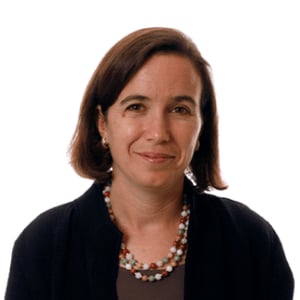
Joseph L. Sax Collegiate Professor of Law and Co-Director of the Environmental and Energy Law Program, University of Michigan Law School

Charles Evans Hughes Professor of Law, Columbia Law School
THOMAS W. MERRILL is the Charles Evans Hughes Professor of Law at Columbia Law School. He previously taught at Northwestern University School of Law and Yale Law School. He has undergraduate degrees from Grinnell College and Oxford University, where he studied as a Rhodes Scholar, and a law degree from the University of Chicago. He clerked on the D.C. Circuit (for Chief Judge David Bazelon) and the U.S. Supreme Court (for Justice Harry Blackmun). From 1987-1990 he served as Deputy Solicitor General, U.S. Department of Justice. Professor Merrill’s writings related to property include Property: Principles and Policies (Foundation Press Second Edition, 2012) (with Henry E. Smith); Property: The Oxford Introductions to U.S. Law (Oxford U. Press, 2010); Property: Takings (Foundation Press, 2002)(with David Dana); and numerous articles, including “The Economics of Public Use” (Cornell Law Review 1986); “The Landscape of Constitutional Property” (Virginia Law Review 2000); and “The Character of the Governmental Action” (Vermont Law Review 2012). He is a member of the American Academy of Arts and Sciences.
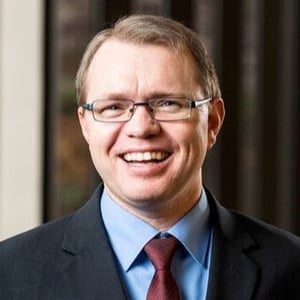
Charles I. Francis Professorship in Law, University of Texas at Austin School of Law
Professor Aaron Nielson lectures and writes in the areas of administrative law, civil procedure, and federal courts. Before joining the faculty, he served as Solicitor General of Texas and represented Texas before the U.S. Supreme Court and the Texas Supreme Court, as well as overseeing all appellate litigation for the State. Earlier in his career, he was a professor at Brigham Young University and an appellate and antitrust partner in the Washington, D.C. office of Kirkland & Ellis LLP. He also clerked for Justice Samuel A. Alito, Jr. of the U.S. Supreme Court, Judge Janice Rogers Brown of the U.S. Court of Appeals for the D.C. Circuit, and Judge Jerry E. Smith of the U.S. Court of Appeals for the Fifth Circuit.
As Solicitor General, Professor Nielson successfully defended against a First Amendment challenge Texas’s law requiring online pornographers to institute age verification. In 2020, the U.S. Supreme Court appointed him to defend the constitutionality of a federal agency. He currently serves as a Senior Fellow of the Administrative Conference of the United States after completing a six-year term as an appointed public member and chair of the Conference’s Administration & Management Committee.
Nielson’s research focuses on administrative law, federal litigation, and the separation of powers. He has published (or soon will publish) in the Harvard Law Review, Columbia Law Review, University of Chicago Law Review, University of Pennsylvania Law Review, Duke Law Journal, Georgetown Law Journal, Cornell Law Review, and Northwestern University Law Review, among others. Nielson has been recognized for teaching for teaching and scholarship and in 2021 received the Federalist Society’s Joseph Story Award, which recognizes a young academic for excellence in legal scholarship, a commitment to teaching, and a concern for students, and who has made a significant public impact in a manner that advances the rule of law in a free society. He is also an elected member of the American Law Institute.
Professor Nielson received his J.D. magna cum laude from Harvard Law School and an LL.M from the University of Cambridge, where he focused his studies on the institutions that regulate global competition and commerce. He received his undergraduate degree summa cum laude from the University of Pennsylvania, majoring in economics and political science.
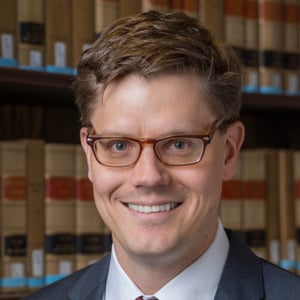
Associate Professor, University of Notre Dame Law School
Jeffrey Pojanowski joined the faculty and community of Notre Dame Law School in 2010. He teaches and writes in the areas of administrative law, jurisprudence, and torts. At present, his scholarship focuses on the legal theory of administrative action, as well as the philosophy and intellectual history of legal reasoning.
Prof. Pojanowski earned his A.B. in Public Policy with highest honors from Princeton University and graduated magna cum laude from Harvard Law School in 2004, where he was Articles Co-Chair for the Harvard Law Review. After law school, he served as a law clerk to then-Judge John Roberts on the United States Court of Appeals for the D.C. Circuit and then to Justice Anthony Kennedy on the Supreme Court of the United States. He then practiced law with Latham & Watkins in Washington, D.C., where he specialized in appellate litigation and administrative-law matters.
Judge, United States Court of Appeals, Sixth Circuit
Judge Readler earned his undergraduate and law degrees from the University of Michigan. After graduating, he served as a law clerk to Judge Alan Norris of the United States Court of Appeals for the Sixth Circuit. Judge Readler then began practicing law in the Columbus office of the international law firm Jones Day, eventually spending ten years as a partner in the firm’s Issues and Appeals Practice Group. While at Jones Day, Judge Readler appeared in state and federal trial and appellate courts around the country, most frequently the Supreme Court of Ohio and the Sixth Circuit. Judge Readler also successfully argued before the United States Supreme Court in McQuiggin v. Perkins on behalf of an inmate claiming actual innocence. His other pro bono representations include representing capital defendants before the Tenth Circuit and the Supreme Court of Ohio, as well as representing defendants sentenced to life in prison before the Sixth Circuit. While at Jones Day, Judge Readler traveled to Nairobi with Lawyers Without Borders to train Kenyan lawyers in prosecuting domestic violence cases, and he was also a recipient of the American Marshall Memorial Fellowship awarded by the German Marshall Fund of the United States. Following his career in private practice, Judge Readler served as Acting Assistant Attorney General for the Civil Division of the United States Department of Justice from 2017 to 2019. In that role, Judge Readler led and supervised over 1,000 lawyers in the Department’s largest litigating division, briefing and arguing several cases on behalf of the United States in federal courts across the country, including high-profile cases significant to the Administration and the Department. In March 2019, Judge Readler was confirmed to serve as a Circuit Judge on the Sixth Circuit. He resides in Columbus.
Partner, Jones Day
Eric Dreiband represents clients in investigations, litigation, and counseling in civil rights, employment discrimination, whistleblower, wage and hour, and other matters. Prior to rejoining Jones Day in 2021, Eric served as the 18th Assistant Attorney General for the Civil Rights Division at the U.S. Department of Justice (DOJ), and he also served as the 12th General Counsel of the U.S. Equal Employment Opportunity Commission (EEOC).
Under Eric's leadership, DOJ's Civil Rights Division set enforcement records for prosecutions of law enforcement officers and sexual harassment, religious liberty, and servicemember cases; charged the highest number of hate crimes cases in decades; significantly expanded resources for human trafficking prosecutions; prosecuted race and other forms of illegal discrimination in education, employment, housing, lending, and voting; reached historic disability rights settlements with several states; opposed unlawful COVID-19-related civil liberty restrictions; and successfully litigated to protect the Constitutional and civil rights of all people in the United States.
As EEOC general counsel, Eric led the Commission's litigation of the federal employment antidiscrimination laws, and he issued the Regional Attorneys' Manual, which established the policies of EEOC's litigation program. Eric also served at the Department of Labor (DOL) as deputy wage and hour administrator and directed DOL's enforcement of the Fair Labor Standards Act (FLSA), the Family and Medical Leave Act (FMLA), and other laws.
From 1997 to 2000, Eric served as a prosecutor in the Office of Independent Counsel Kenneth W. Starr.
Eric has spoken and written extensively about civil rights and other employment laws, and he has testified about these subjects before committees of the U.S. House of Representatives and the U.S. Senate.
Shareholder, Littler
Bradford J. Kelley has a broad practice representing employers in employment anti-discrimination and wage and hour matters. He focuses on advising clients about emerging technologies, including artificial intelligence (AI), and their impact in the workplace.
Brad is an internationally recognized workplace AI authority. He advises clients on how to maximize the benefits of using AI in the workplace while minimizing potential legal and business risks. His deep background in this area provides employers with the tools and insights they need to develop, deploy, and monetize AI and other emerging technologies to bolster business operations and efficiency.
Associate Professor of Law, South Texas College of Law Houston
Ryan H. Nelson joined the faculty at South Texas College of Law Houston in 2021. His research focuses on leveraging the civil litigation and other dispute resolution systems to advance the rights of poor and other marginalized workers, most often with respect to discrimination, harassment, wages, leaves of absence, and accommodations. His scholarship has been published or is forthcoming in the Michigan Law Review, Fordham Law Review, BYU Law Review, Yale Law and Policy Review, and the online companions to the NYU Law Review, California Law Review, and Vanderbilt Law Review. He has advised state attorneys’ general offices and other administrative agencies on employment law reforms and helped to draft associated proposed legislation and regulations. Moreover, he has provided legal commentary for Fox 26 Houston, KPRC 2 News | Houston, and in periodicals like Slate, USA Today, the Texas Tribune, and the Houston Chronicle.
Before joining South Texas, Ryan completed a research fellowship with the Harvard Law School Project on Disability and taught on the adjunct faculty at Boston University School of Law, New England Law | Boston, and New York Law School. He also spent nearly a decade practicing labor and employment law, including as in-house employment law counsel for one of the world’s largest financial services companies and as an attorney with one of the top labor and employment law firms in the country where he specialized in workplace affirmative action law. He obtained his LL.M. from Harvard Law School where he was awarded the Irving Oberman Memorial Prize for Best Paper on Law and Social Change; his J.D., cum laude, from Benjamin N. Cardozo School of Law, Yeshiva University, where he served on the Editorial Board of the Moot Court Honor Society; and his B.S.B.A. with a major in economics from the University of Florida where he was a National Merit Scholar and became an avid fan of Florida Gators football.
Partner, Vinson & Elkins LLP
Fry Wernick is a Chambers-rated lawyer and former federal prosecutor who serves as a partner in the Government Investigations and White Collar Practice Group in the firm’s Washington, D.C. and Dallas offices.
As a former federal prosecutor and supervisor of the U.S. Department of Justice’s Criminal Fraud Section with experience as lead attorney in over 30 trials, Fry has a broad range of white collar enforcement and courtroom experience. Fry regularly conducts internal investigations and defends companies and individuals against government investigations into a broad range of conduct and he has specific experience prosecuting and defending cases involving the Foreign Corrupt Practices Act (FCPA), anti-money laundering (AML) statutes, the Bank Secrecy Act (BSA), the False Claims Act (FCA), sanctions, campaign finance laws, and other fraud, consumer protection and corruption-related offenses. Fry also has extensive experience representing clients and appearing before numerous alphabet agencies, including the Department of Justice (DOJ), the Securities and Exchange Commission (SEC), the Consumer Financial Protection Bureau (CFPB), the New York Department of Financial Services (DFS), the Federal Trade Commission (FTC), the Department of Treasury Office of Foreign Assets Control (OFAC), the Department of Commerce Bureau of Industry and Security (BIS), the Commodity Futures Trading Commission (CFTC), Department of Education (ED) and other regulators and investigative bodies. Fry also draws on his experience as a former counsel to the U.S. Senate Permanent Subcommittee on Investigations and the U.S. Senate Committee on the Judiciary to help prepare and defend companies and individuals facing inquiries and investigations by Congress.
An important part of Fry’s practice is advising publicly traded and privately held companies on transactional risk, particularly concerning business transactions in emerging markets, and he helps companies develop effective compliance programs. Fry also understands all aspects of crisis management, and he draws on his extensive experience to tailor and coordinate sophisticated responses to investigations and inquiries from governmental, legislative and media sources in order to minimize the potential for legal and reputational risk for his clients.
As a former supervisor in DOJ’s FCPA Unit, Fry is one of the few former federal prosecutors who has actually prosecuted violations of the FCPA, and he has keen insight into how the Department of Justice prioritizes and investigates cases involving alleged violations of the FCPA and other white collar crimes. At DOJ, Fry led and supervised dozens of the Department’s most high-profile cases, including six of the largest-ever FCPA corporate criminal resolutions and dozens of individual prosecutions. Fry has extensive experience negotiating corporate settlements. including DPAs, NPAs and declinations under the recent revisions to the Department’s Corporate Enforcement Policy. In addition, Fry has conducted multiple cross-border criminal investigations and coordinated resolutions with multiple foreign and domestic government authorities, and he has developed an advanced understanding of how foreign regulators enforce the U.K. Bribery Act, the French Sapin II, and other anti-bribery laws.
Fry is a thought leader on the FCPA and white collar matters and he is frequently published and quoted in the press, including recently by the Financial Times, Wall Street Journal, Bloomberg, Law 360, Global Investigations Review, The Anti-Corruption Report, The FCPA Professor, Energy Voice and other publications. Fry also has been recognized by Chambers USA, Legal 500, Lawdragon 500 and Who’s Who Legal for his investigations and white collar practice, and Law360 named Fry a “2021 Compliance MVP.”
In 2022, Fry took over as the firm’s Pro Bono Partner where he helps manage Vinson & Elkins’ firmwide pro bono program.
Partner, Jones Day
Brian Rabbitt is a litigator with extensive experience handling complex investigations, enforcement matters, civil litigation, and appellate matters at the highest levels of government. He represents clients in high-stakes matters involving the Department of Justice (DOJ), Securities and Exchange Commission (SEC), Commodity Futures Trading Commission (CFTC), Congress, and state attorneys general, as well as in internal investigations. Brian has been recognized as a leading white collar and investigations lawyer by Law360, The National Law Journal, and Chambers USA, which describes him as "smart, practical, and [having] great judgment."
Prior to joining Jones Day, Brian was the Acting Assistant Attorney General for the DOJ's Criminal Division, where he led hundreds of prosecutors responsible for investigating and prosecuting white collar cases (including securities, commodities, and health care fraud), Foreign Corrupt Practices Act (FCPA) violations, and money laundering (AML), public corruption, computer crime, intellectual property, and Bank Secrecy Act (BSA) matters. Under Brian's leadership, the Criminal Division resolved several of the most significant corporate criminal matters in DOJ history; prosecuted billions of dollars in health care fraud; and led the government's response to COVID-19-related stimulus fraud.
Before heading the Criminal Division, Brian served as Chief of Staff to the Attorney General at DOJ, in senior enforcement and policy roles at the SEC, and in the White House Counsel's Office, where he advised on investigations, congressional oversight, and financial regulatory policy. Brian began his career at a leading Washington law firm, where his practice focused on complex civil litigation and government investigations and enforcement matters.

Solicitor General of Missouri
Lou Capozzi is the Solicitor General of Missouri. In that role, he oversees all appeals for the State of Missouri. He is also the Director of Special Litigation and litigates high-stakes cases at trial.
Lou previously worked at Jones Day, where he specialized in administrative and election law. At Jones Day, he helped lead a six-week bench trial in federal court, during which he cross-examined important expert and fact witnesses, delivered closing argument, asserted evidentiary objections, and argued several motions, including a motion for a directed verdict. He has also authored briefs at all phases of litigation--from evidentiary motions to dispositive motions and appeals.
Lou is also Lecturer in Law at the University of Pennsylvania Carey Law School and a Public Member of the Administrative Conference of the United States. He has published several academic articles focusing on administrative law.
Lou clerked for Justice Neil Gorsuch at the United States Supreme Court in the 2021 Term, as well as for Judges J. Harvie Wilkinson III of the United States Court of Appeals for the Fourth Circuit and Anthony Scirica of the United States Court of Appeals for the Third Circuit. He gradated as the valedictorian from the University of Pennsylvania Law School in 2019.
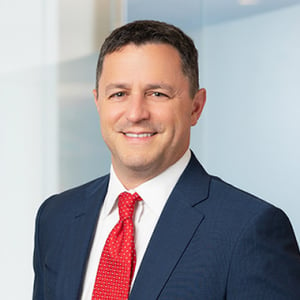
Partner, Dechert LLP
In a career spanning both private and public practice, Steven A. Engel is a leading litigator and counselor, acting as an advocate in high-profile trial and appellate matters and advising clients on their most sensitive and complex legal issues. Mr. Engel is the Chair of Dechert’s Appellate and Regulatory Litigation Group and has appeared in courts across the country, handling a wide range of civil litigation matters, including administrative law, commercial litigation, constitutional law and securities cases. He regularly counsels clients on challenges to agency regulations and in connection with government, congressional and internal investigations.
Until January 2021, Mr. Engel served as the Assistant Attorney General for the Department of Justice’s Office of Legal Counsel. As the head of the office, Mr. Engel served as the chief counsel to the Attorney General and the principal legal adviser to the Executive Branch, providing legal advice to the President and cabinet secretaries on the most critical constitutional and statutory questions, including matters pertaining to national security, administrative law, criminal law, congressional oversight, and executive orders. In December 2020, Mr. Engel was awarded the Department of Justice’s highest honor, the Edmund J. Randolph Award, for outstanding service to the Department.
Before his appointment as Assistant Attorney General in 2017, Mr. Engel had been a partner at Dechert since 2009 and previously served as Deputy Assistant Attorney General for the Department of Justice’s Office of Legal Counsel. Mr. Engel clerked on the U.S. Supreme Court for Associate Justice Anthony M. Kennedy and on the U.S. Court of Appeals for the Ninth Circuit for Judge Alex Kozinski.
Mr. Engel is a member of the Advisory Committee on Rules for the U.S. Court of Appeals for the District of Columbia Circuit and the Administrative Conference of the United States. He has been an Adjunct Professor at the Antonin Scalia School of Law at George Mason University and the Columbus School of Law at the Catholic University of America and was formerly the Chief Justice William H. Rehnquist Distinguished Practitioner in Residence at the C. Boyden Gray Center for the Study of the Administrative State. He has been nationally ranked as a leading lawyer in The Legal 500 USA and Benchmark Litigation. Mr. Engel has frequently commented on legal subjects in numerous publications, including The New York Times, The Washington Post, The Wall Street Journal and USA Today, and has appeared on national news programs as a legal analyst, including on MSNBC, CNN, Fox News Channel and the Fox Business Network. Mr. Engel has testified on several occasions before committees of the U.S. House of Representatives and the Senate.
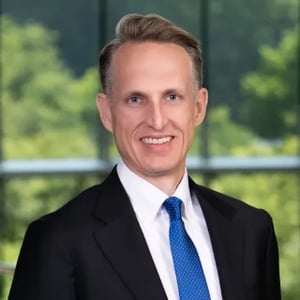
John Gore is a former U.S. Department of Justice (DOJ) senior official who delivers results for clients in high-stakes litigation and crisis matters. John's broad litigation experience includes arguing in the United States Supreme Court and first-chairing trials and appeals in federal and state courts across the country. He also represents clients facing Congressional oversight and government investigations.
John previously served as the Acting Assistant Attorney General for the Civil Rights Division at DOJ. As the head of one of DOJ's most significant litigating components, John led the Department's civil and criminal civil rights enforcement nationwide under such statutes as the Voting Rights Act (VRA), Title VII, 8 U.S.C. 1324b of the Immigration and Nationality Act, Title IX, the Americans with Disabilities Act (ADA), the Fair Housing Act, the Hate Crimes Prevention Act, and the Trafficking Victims Protection Act.
During his DOJ tenure, John launched several successful law enforcement initiatives, including a record-setting initiative to combat housing discrimination and initiatives to end employment discrimination, to protect religious liberty, and to uphold First Amendment freedoms. Moreover, under John's leadership, the Civil Rights Division prosecuted several high-profile hate crimes and contributed to DOJ's record-setting numbers of human trafficking prosecutions. John also testified twice before Congress on DOJ's civil rights enforcement efforts.

Judge, United States Court of Appeals, Third Circuit
Judge Hardiman was appointed to the United States Court of Appeals for the Third Circuit on January 9, 2007 and was confirmed by the Senate (95-0) on March 15, 2007. Prior to becoming an appellate judge, Judge Hardiman served as a trial judge on the United States District Court for the Western District of Pennsylvania as of November 1, 2003. In 2008, Chief Justice John Roberts appointed Judge Hardiman to the Information Technology Committee of the Judicial Conference of the United States. Judge Hardiman was appointed Chairman of the IT Committee in 2013 and served in that capacity until September 2021. In 2021 he was appointed by the Director of the Administrative Office of the United States Courts to serve as Chair of the Judiciary IT Security Task Force, which completed its work in fall 2023. Chief Justice Roberts appointed Judge Hardiman to the Board of the Federal Judicial Center to serve from March 2020 until March 2024. As part of his work with the Center, Judge Hardiman now serves as Editor in Chief for the Manual for Complex Civil Litigation, Fifth.
Before entering judicial service, Judge Hardiman handled a wide variety of litigation matters in state and federal trial and appellate courts as a partner at Reed Smith LLP (1999-2003), a partner at Titus & McConomy LLP (1996-1999), and as an associate with its predecessor firm, Cindrich & Titus (1992-1996). Judge Hardiman began his legal career as an associate in the Washington, D.C. office of Skadden, Arps, Slate, Meagher & Flom (1990-1992).
A 1987 honors graduate of the University of Notre Dame, Judge Hardiman received his law degree in 1990 from the Georgetown University Law Center, where he served as a Notes and Comments Editor on the Georgetown Law Journal. In 2012, Judge Hardiman was elected as a member of the American Law Institute and was elected to its Council in 2019 and its Executive Committee in 2025. Judge Hardiman regularly teaches a seminar on Advanced Constitutional Law at Duquesne University School of Law and a one-week course entitled “Constitutional Law: the First and Second Amendments” at Georgetown University Law Center.
A native of Waltham, Massachusetts, Judge Hardiman has chambers in Pittsburgh, Pennsylvania. He and his wife Lori married in 1992 and have three children.
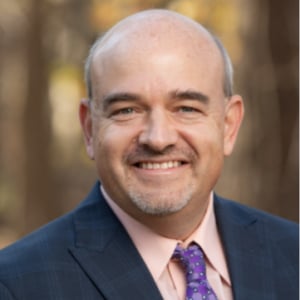
Newton D. Baker-Baker & Hostetler Chair in Law, Moritz College of Law, The Ohio State University
Professor Douglas A. Berman is Newton D. Baker-Baker & Hostetler Chair in Law and Executive Director of the Drug Enforcement and Policy Center, housed in the Moritz College of Law. Berman’s principal teaching and research focus is in the area of criminal law and criminal sentencing, though he also has teaching and practice experience in the fields of legislation and intellectual property. He has taught Criminal Law, Criminal Punishment and Sentencing, Criminal Procedure – Investigation, Marijuana Law, Policy & Reform Seminar, Federal and State Clemency Decision-making, The Death Penalty, Legislation, Introduction to Intellectual Property, Second Amendment Seminar, and the Legislation Clinic.
Professor Berman attended Princeton University and Harvard Law School. In law school, he was an editor and developments office chair of the Harvard Law Review and also served as a teaching assistant for a Harvard University philosophy course. After graduation from law school in 1993, Professor Berman served as a law clerk for Judge Jon O. Newman and then for Judge Guido Calabresi, both on the United States Court of Appeals for the Second Circuit. After clerking, Professor Berman was a litigation associate at the law firm of Paul, Weiss, Rifkind, Wharton, and Garrison in New York City.
Professor Berman is the co-author of two casebooks. Sentencing Law and Policy: Cases, Statutes and Guidelines, published by Aspen Publishers, is now in its fifth edition. Marijuana Law and Policy was released by Carolina Academic Press in 2020. In addition to authoring numerous articles on topics ranging from capital punishment to the federal sentencing guidelines, Professor Berman has served as a managing editor of the Federal Sentencing Reporter for more than twenty five years, and also serves as an editor of the Ohio State Journal of Criminal Law.
Professor Berman is the sole creator and author of the widely-read and widely-cited blog, Sentencing Law and Policy. The blog often receives nearly 50,000 page views per month (and had over 20,000 hits the day of the Supreme Court’s major sentencing decision in United States v. Booker). Professor Berman’s work on the Sentencing Law and Policy blog, which he describes as a form of “scholarship in action,” has been profiled or discussed at length in articles appearing in the Wall Street Journal, Legal Affairs magazine, Lawyers Weekly USA, Legal Times, Columbus Monthly, and in numerous other print and online publications.
In addition, Sentencing Law and Policy has the distinction of being the first blog cited by the U.S. Supreme Court (for a document appearing exclusively on the site), and substantive analysis in particular blog posts has been cited in numerous appellate and district court rulings, in many briefs submitted to federal and state courts around the country, and in hundreds of law review articles.
Professor Berman is a member of the Council on Criminal Justice and frequently is consulted by national and state policymakers, sentencing commissioners, and public policy groups concerning sentencing law and policy reforms. He has testified before the U.S. House of Representatives and before numerous sentencing commissions. He also is frequently contacted by national and local media concerning sentencing and marijuana reform developments.
Professor Berman has appeared on national television, radio and podcast news programs and has been extensively quoted in newspaper articles appearing in nearly every major national paper and many local papers, including The New York Times, The Washington Post, The Wall Street Journal, Legal Times, and in pieces from the Associated Press, Reuters, and Knight-Ridder news services.
Professor Berman sometimes serves as a consultant to lawyers working on important or interesting sentencing cases. In most instances, Professor Berman’s consulting has been on an ad hoc and pro bono basis, and it usually involves a quick review of draft briefs and other court filings and then providing general advice on litigation strategies. On some occasions, however, Professor Berman has been formally retained to play a more sustained role in certain cases, including being retained by law firms to provide consulting service on various cutting-edge federal sentencing issues.
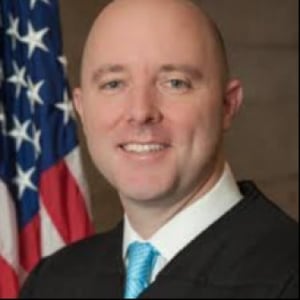
Judge, Franklin County Court
Hon. Daniel R. Hawkins is a judge for the Franklin County Court of Common Pleas (General Division) in Ohio. He was elected to the seat on November 6, 2018.
Prior to his election, Hawkins presided as a judge in the Environmental Division of the Franklin County Municipal Court, a position he had held since 2013.
He received a B.S. in criminal justice from Bowling Green State University in 1998. Hawkins went on to complete a J.D. at Ohio State University, Michael E. Moritz College of Law in 2001.
After graduating from law school, he began his legal career as an assistant prosecuting attorney with the Franklin County Prosecutor’s Office. During his tenure there, Hawkins was promoted to director of the Special Victims Unit in 2003. In that role, he prosecuted violent crimes involving women and children as victims, including homicides, sexual assaults, child abuse, human trafficking, and internet child exploitation. In addition, Hawkins was tasked with managing fellow prosecutors in the SVU and was credited with conducting several jury trials including six death penalty cases. He remained in that capacity until joining the Municipal Court bench in 2013.
His memberships have included the American Judges Association, the Ohio Judicial Conference, the Association of Municipal County Judges of Ohio, the Ohio State Bar Association, and the Columbus Bar Association.
Hawkins is a married father of three.
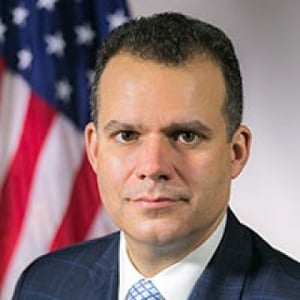
Partner, Jones Day
Justin Herdman, a former United States Attorney, is a trial lawyer who represents businesses and individuals involved in high-stakes government investigations, criminal litigation, and civil actions. Justin's practice is focused on obtaining favorable results in matters arising from alleged violations of state and federal laws, including fraud, the Foreign Corrupt Practices Act (FCPA), and the False Claims Act (FCA). He has successfully tried numerous cases in state and federal courts throughout his two decades in public service and private practice.
Prior to rejoining Jones Day in 2021, Justin served as the chief federal law enforcement officer for the Northern District of Ohio. Justin was nationally recognized for his effort in developing strategic responses to controlled substances, terrorism, and violent crime. While U.S. Attorney, Justin served as vice chair of the Attorney General's Advisory Committee (AGAC), where he provided national-level guidance on the management and operations of the Justice Department. Justin was also named co-chair of the Attorney General's Prescription Interdiction and Litigation Task Force and was chair of AGAC's Terrorism and National Security Subcommittee.
Justin also maintains an active pro bono practice. In 2022, his trial work with the Ohio Innocence Project led to the acquittal of a wrongfully convicted man who had spent 15 years in state prison.
Justin previously served as an Assistant U.S. Attorney prosecuting national security offenses, including terrorism, money laundering, and export control violations. He is a former assistant district attorney in New York City and currently serves as a judge advocate in the U.S. Air Force Reserve.
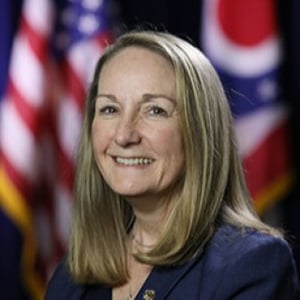
Deputy Attorney General for Law Enforcement, Ohio Attorney General's Office
Carol O’Brien oversees seven “sections” focused on law enforcement/criminal justice: the Bureau of Criminal Investigation, the Ohio Peace Officer Training Academy, Special Prosecutions, the Ohio Organized Crime Investigations Commission, Health Care Fraud, Crime Victims and Criminal Justice.
Before joining the Attorney General’s Office, O’Brien spent 12 years in the Delaware County Prosecutor’s Office, the last eight as the prosecutor and the previous four as assistant prosecutor. During that time, she also served as a special prosecutor in numerous criminal cases in counties throughout the state.
Earlier in her career, O’Brien served as an assistant attorney general in the Attorney General’s Office and as an assistant prosecutor in the Franklin County Prosecutor’s Office. Prior to those roles, she worked as a staff attorney for the clinical programs within the Ohio State University College of Law, for the Neighborhood Legal Assistance Program and for Advocates for Basic Legal Equality.
In 2016, O’Brien was recognized as Ohio’s Outstanding Prosecuting Attorney for her dedication to justice. She has been an active member of the Ohio Prosecuting Attorneys Association for nearly a decade, serving as president in 2019, and has given presentations on a wide range of prosecutorial matters and other legal topics.
O’Brien has a bachelor’s degree in political science from Northwestern University and a law degree from the University of Toledo. She is licensed to practice in Ohio, South Carolina, the Northern and Southern District Courts of Ohio, the District Court of South Carolina, and the 4th and 6th circuits of the U.S. Court of Appeals.
O’Brien and her husband, Bill, live in Delaware County.
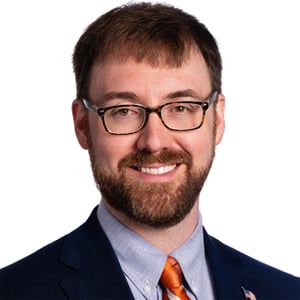
Senior Legal Fellow, Courts and the Constitution, Legal Policy Center, The Heritage Foundation
Zack is a Senior Legal Fellow of Courts and the Constitution at The Heritage Foundation.
He previously served for several years as an Assistant United States Attorney in the Northern District of Florida. Prior to that, he spent two years as an associate in the Washington, D.C. office of Cleary Gottlieb Steen & Hamilton, which he joined after clerking for the Hon. Emmett R. Cox on the United States Court of Appeals for the Eleventh Circuit.
Smith received his undergraduate, master’s, and law degrees from the University of Florida. During law school, Smith served as the Editor in Chief of the Florida Law Review and served on the executive boards of several student organizations, including the UF Chapter of the Federalist Society.
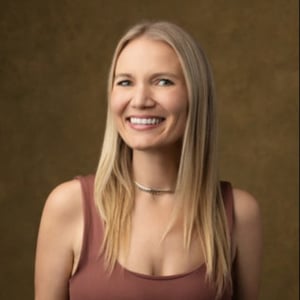
Constitutional Scholarship Director and Senior Legal Analyst, Pacific Legal Foundation
Anastasia Boden is Director of Constitutional Scholarship at Pacific Legal Foundation, where she leads the organization’s Supreme Court commentary and directs scholarly analysis in support of the firm’s litigation. She has represented entrepreneurs and small businesses nationwide in challenges to onerous licensing regimes, anti-competitive titling restrictions, Certificate of Need (“competitor’s veto”) laws, and other forms of unnecessary red tape that block economic opportunity.
Prior to this role, Anastasia developed nearly a dozen constitutional challenges to Certificate of Need laws across the country, helping spur legislative reform in Montana, Pennsylvania, and West Virginia. Her victories include a ruling invalidating Houston’s busking restrictions, multiple appellate decisions expanding access to the courts for civil rights plaintiffs, and the legislative repeal of Virginia’s happy-hour advertising ban.
Her writings on law and liberty have been featured in USA Today, The Washington Post, The Wall Street Journal, the Los Angeles Times, the Chicago Tribune, Forbes, and more, and she has appeared on Headline News, CBS News, Fox News, ReasonTV, Newsmax, and John Stossel. In 2020, she was featured on Libertarian Party presidential candidate Jo Jorgensen’s Supreme Court shortlist.
Anastasia earned her BA with dean’s honors from the University of California, Santa Barbara, and her JD from Georgetown University Law Center, where she was research assistant to Professor Randy E. Barnett—the “intellectual godfather” of the constitutional challenge to Obamacare. She is the co-creator of the podcast Dissed, about infamous Supreme Court dissents. She authors the biweekly newsletter SCOTUS Scoop and the column, “In Dissent” for SCOTUSblog.
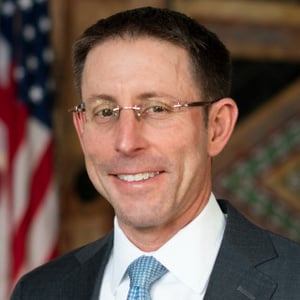
Judge, United States Court of Appeals, Ninth Circuit
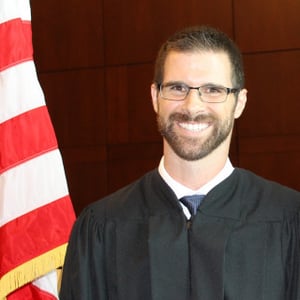
Judge, U.S. District Court, Eastern and Western Districts of Missouri
Josh Divine was most recently the Solicitor General of Missouri, where he oversaw the office's appellate and special litigation divisions. As Solicitor General, Mr. Divine led Missouri's trial and appellate teams to some of its most significant victories. Mr. Divine was lead counsel in blocking $700 billion in student loan bailouts attempted by the federal government. He was lead counsel in obtaining a $25 billion judgment against China for antitrust violations. And he was lead counsel in successfully defending the Missouri law that prohibits gender transition interventions in minors, making Missouri the only state in the nation to prevail at trial against an equal protection challenge to one of these laws. In addition, Mr. Divine's work at the trial court in Missouri v. Biden (restyled Murthy v. Missouri) helped expose systemic violations of the First Amendment by the federal government, which the trial court found was unconstitutionally pressuring social media companies to suppress millions of free speech posts.
Before serving as Solicitor General, Mr. Divine was Chief Counsel to U.S. Senator Josh Hawley, where he oversaw all legal issues, managed matters related to the Judiciary Committee, and developed tech policy. Mr. Divine clerked on the Supreme Court for Justice Thomas and on the Eleventh Circuit for Judge William Pryor. He received a J.D. from Yale Law School and a Bachelor of Science degree in mathematics from the University of Northern Colorado. His recent legal scholarship has appeared in the Virginia Law Review and the Hastings Law Journal.
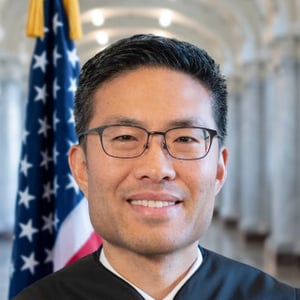
Judge, United States Court of Appeals for the Ninth Circuit
Judge Tung was nominated for the judgeship on July 15, 2025, and had his hearing before the U.S. Senate Judiciary Committee on July 30. His nomination was reported to the Senate floor on September 11.
Tung has been a partner at Jones Day in Los Angeles. He has clerked twice on the U.S. Supreme Court—for the Honorable Neil M. Gorsuch during October Term 2017 and for the Honorable Antonin G. Scalia during October Term 2012. Tung also served in the U.S. Department of Justice in several different roles: as counsel in the Office of Legal Policy in 2017, during which time he received the Attorney General’s Distinguished Service Award; as an assistant U.S. attorney in the Office of the U.S. Attorney for the Central District of California from 2016 to 2017; and as a Bristow Fellow in the Office of the Solicitor General from 2011 to 2012. Prior to his service in the executive branch, Tung was an attorney at Munger, Tolles & Olson LLP in Los Angeles, from 2014 to 2016, and clerked for then-Judge Gorsuch, of the U.S. Court of Appeals for the 10th Circuit, from 2010 to 2011.
Tung graduated with a Bachelor of Arts from Yale University in 2006 and earned his Juris Doctor, with high honors and Order of the Coif, in 2010 from The University of Chicago Law School, where he was managing editor of the Law Review

EEOC in the Trump Era
Eric Dreiband, Bradford J. Kelley, Ryan H. Nelson
Shortly after taking office, President Trump reportedly removed two Equal Employment Opportunity Commission (EEOC) commissioners...
EEOC in the Trump Era
A Regulatory Transparency Project Webinar
FCPA & The Trump Administration: What to Expect from an America First Approach to Enforcement of Foreign Bribery Laws
Ephraim (Fry) Wernick, Brian C. Rabbitt
The Foreign Corrupt Practices Act (FCPA) prohibits foreign bribery. The law is enforced by the...
FCPA & The Trump Administration: What to Expect from an America First Approach to Enforcement of Foreign Bribery Laws
Daniel Webster Debate Series: Do Nationwide Injunctions Undermine the President's Lawful Authority?
John G. Malcolm, Chad A. Readler, Stephen I. Vladeck
The Federalist Society's Georgetown Law Chapter'sDaniel Webster Debate Series presents Daniel Webster Debate Series:Do...
Session 1: President Trump and the Future of Presidential Power
2025 Third Circuit Chapters Conference
Philadelphia, PAClosing Banquet and Fireside Chat with Hon. James C. Ho and Allyson Newton Ho, and Presentation of the Annual Joseph Story Award and Feddie Awards
Allyson Newton Ho, James C. Ho, JJ Marshall, Katherine R. Slivensky
Overflow: Hutchins Hall Michigan Law School We are pleased to announce that the Honorable James...
Panel I: How We Got Here – The Supreme Court’s “Anti-Administrativist” Turn?
Jenn L. Mascott, Nina A. Mendelson, Thomas W. Merrill, Aaron Nielson, Jeffrey Pojanowski, Chad A. Readler
Featuring: Prof. Jeffrey Pojanowski, Biolchini Family Professor of Law, Notre Dame Law School Prof. Jennifer...
Panel 2: The Progressive Prosecution Problem
2025 Ohio Chapters Conference
Columbus, OHWelcome Remarks and Panel 1: Has the Right Lost the Argument for Small Government?
2025 Western Chapters Conference
Simi Valley, CA