
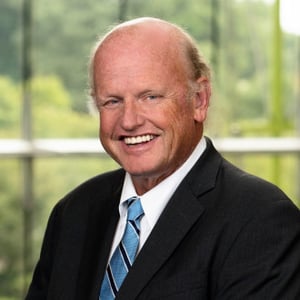
In his 35 years at the Justice Department and in private practice, Mike Carvin was one of the leading appellate and trial lawyers challenging state and federal regulations on constitutional and statutory grounds, with 10 Supreme Court arguments and numerous high-profile victories. In addition to his numerous cases in the United States Supreme Court, he argued in virtually every federal appeals court. His major cases include the recent constitutional challenge to the Affordable Care Act and the decisions invalidating Sarbanes-Oxley's accounting board, preventing the Justice Department from obtaining monetary relief against the tobacco industry under RICO, overturning the federal government's plan to statistically adjust the census, limiting the Justice Department's ability to create "majority-minority" districts, and upholding Proposition 209's ban on racial preferences in California.
Mike was one of the lead lawyers, and argued before the Florida Supreme Court, on behalf of George W. Bush in the 2000 presidential election Florida recount controversy. He also has represented state governments, financial institutions, telecommunications, and energy companies in "takings," First Amendment, civil rights, and statutory challenges to federal government actions.
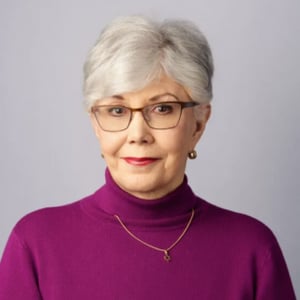
Chairman, Center for Equal Opportunity
Linda Chavez is Chairman of the Center for Equal Opportunity. She has published opinions and columns in newspapers across the country and appears regularly on cable news. Chavez is the author of the three books: Out of the Barrio: Toward a New Politics of Hispanic Assimilation, An Unlikely Conservative: The Transformation of an Ex-Liberal, and Betrayal: How Union Bosses Shake Down Their Members and Corrupt American Politics. She has been honored by the Library of Congress as a "Living Legend" and as nominee for Secretary of Labor by President George W. Bush.
Chavez has held many appointed positions and has served on numerous corporate and nonprofit boards. Among her appointed positions has been Chairman, National Commission on Migrant Education (1988-1992); White House Director of Public Liaison (1985); Staff Director of the U.S. Commission on Civil Rights (1983-1985); and member of the Administrative Conference of the United States (1984-1986). Chavez was also the Republican nominee for U.S. Senator from Maryland in 1986 and was elected by the United Nations' Human Rights Commission to serve a four-year term as U.S. Expert to the U.N. Sub-commission on the Prevention of Discrimination and Protection of Minorities.
Chavez earned her BA from the University of Colorado.
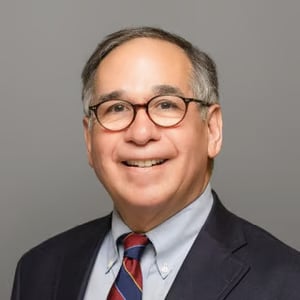
Adjunct Professor of Law; Director, N.Y. Census and Redistricting Institute, New York Law School
Jeff Wice is a Distinguished Adjunct Professor and Senior Fellow at New York Law School where he directs the New York Elections, Census & Redistricting Institute and teaches classes on redistricting, election law, and the census. He is now working on his sixth redistricting cycle. In past years, he served as a redistricting counsel to New York State Legislativbe Leaders and as counsel to three New York City Districting Commissions and to numerous counties and localities across New York and the nation.
During the 2000 census cycle, Professor Wice served as counsel to President Bill Clinton’s members of the U.S. Census Monitoring Board. He is the co-editor/author of the National Conference of State Legislatures' 2020 Redistricting Redbook, a comprehensive handbook on the census and redistricting.
‘’City & State NY’ recognized Professor Wice as one of New York’s “Top 50 Over 50” in 2022 and just last month as a "New York legal trailblazer" for his efforts promoting fair representation and the census. He is a graduate of the George Washington University and Antioch School of Law.
In his 35 years at the Justice Department and in private practice, Mike Carvin was one of the leading appellate and trial lawyers challenging state and federal regulations on constitutional and statutory grounds, with 10 Supreme Court arguments and numerous high-profile victories. In addition to his numerous cases in the United States Supreme Court, he argued in virtually every federal appeals court. His major cases include the recent constitutional challenge to the Affordable Care Act and the decisions invalidating Sarbanes-Oxley's accounting board, preventing the Justice Department from obtaining monetary relief against the tobacco industry under RICO, overturning the federal government's plan to statistically adjust the census, limiting the Justice Department's ability to create "majority-minority" districts, and upholding Proposition 209's ban on racial preferences in California.
Mike was one of the lead lawyers, and argued before the Florida Supreme Court, on behalf of George W. Bush in the 2000 presidential election Florida recount controversy. He also has represented state governments, financial institutions, telecommunications, and energy companies in "takings," First Amendment, civil rights, and statutory challenges to federal government actions.
Chairman, Center for Equal Opportunity
Linda Chavez is Chairman of the Center for Equal Opportunity. She has published opinions and columns in newspapers across the country and appears regularly on cable news. Chavez is the author of the three books: Out of the Barrio: Toward a New Politics of Hispanic Assimilation, An Unlikely Conservative: The Transformation of an Ex-Liberal, and Betrayal: How Union Bosses Shake Down Their Members and Corrupt American Politics. She has been honored by the Library of Congress as a "Living Legend" and as nominee for Secretary of Labor by President George W. Bush.
Chavez has held many appointed positions and has served on numerous corporate and nonprofit boards. Among her appointed positions has been Chairman, National Commission on Migrant Education (1988-1992); White House Director of Public Liaison (1985); Staff Director of the U.S. Commission on Civil Rights (1983-1985); and member of the Administrative Conference of the United States (1984-1986). Chavez was also the Republican nominee for U.S. Senator from Maryland in 1986 and was elected by the United Nations' Human Rights Commission to serve a four-year term as U.S. Expert to the U.N. Sub-commission on the Prevention of Discrimination and Protection of Minorities.
Chavez earned her BA from the University of Colorado.
Adjunct Professor of Law; Director, N.Y. Census and Redistricting Institute, New York Law School
Jeff Wice is a Distinguished Adjunct Professor and Senior Fellow at New York Law School where he directs the New York Elections, Census & Redistricting Institute and teaches classes on redistricting, election law, and the census. He is now working on his sixth redistricting cycle. In past years, he served as a redistricting counsel to New York State Legislativbe Leaders and as counsel to three New York City Districting Commissions and to numerous counties and localities across New York and the nation.
During the 2000 census cycle, Professor Wice served as counsel to President Bill Clinton’s members of the U.S. Census Monitoring Board. He is the co-editor/author of the National Conference of State Legislatures' 2020 Redistricting Redbook, a comprehensive handbook on the census and redistricting.
‘’City & State NY’ recognized Professor Wice as one of New York’s “Top 50 Over 50” in 2022 and just last month as a "New York legal trailblazer" for his efforts promoting fair representation and the census. He is a graduate of the George Washington University and Antioch School of Law.
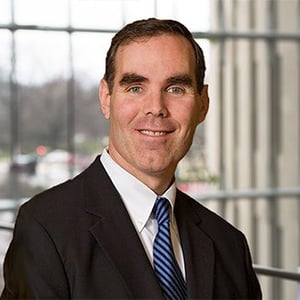
Partner, Jones Day
Eric Dreiband represents clients in investigations, litigation, and counseling in civil rights, employment discrimination, whistleblower, wage and hour, and other matters. Prior to rejoining Jones Day in 2021, Eric served as the 18th Assistant Attorney General for the Civil Rights Division at the U.S. Department of Justice (DOJ), and he also served as the 12th General Counsel of the U.S. Equal Employment Opportunity Commission (EEOC).
Under Eric's leadership, DOJ's Civil Rights Division set enforcement records for prosecutions of law enforcement officers and sexual harassment, religious liberty, and servicemember cases; charged the highest number of hate crimes cases in decades; significantly expanded resources for human trafficking prosecutions; prosecuted race and other forms of illegal discrimination in education, employment, housing, lending, and voting; reached historic disability rights settlements with several states; opposed unlawful COVID-19-related civil liberty restrictions; and successfully litigated to protect the Constitutional and civil rights of all people in the United States.
As EEOC general counsel, Eric led the Commission's litigation of the federal employment antidiscrimination laws, and he issued the Regional Attorneys' Manual, which established the policies of EEOC's litigation program. Eric also served at the Department of Labor (DOL) as deputy wage and hour administrator and directed DOL's enforcement of the Fair Labor Standards Act (FLSA), the Family and Medical Leave Act (FMLA), and other laws.
From 1997 to 2000, Eric served as a prosecutor in the Office of Independent Counsel Kenneth W. Starr.
Eric has spoken and written extensively about civil rights and other employment laws, and he has testified about these subjects before committees of the U.S. House of Representatives and the U.S. Senate.
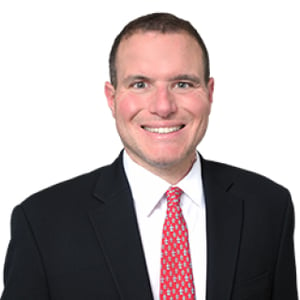
Shareholder, Littler
Bradford J. Kelley has a broad practice representing employers in employment anti-discrimination and wage and hour matters. He focuses on advising clients about emerging technologies, including artificial intelligence (AI), and their impact in the workplace.
Brad is an internationally recognized workplace AI authority. He advises clients on how to maximize the benefits of using AI in the workplace while minimizing potential legal and business risks. His deep background in this area provides employers with the tools and insights they need to develop, deploy, and monetize AI and other emerging technologies to bolster business operations and efficiency.
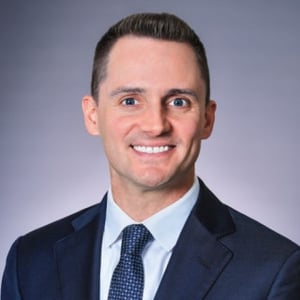
Associate Professor of Law, South Texas College of Law Houston
Ryan H. Nelson joined the faculty at South Texas College of Law Houston in 2021. His research focuses on leveraging the civil litigation and other dispute resolution systems to advance the rights of poor and other marginalized workers, most often with respect to discrimination, harassment, wages, leaves of absence, and accommodations. His scholarship has been published or is forthcoming in the Michigan Law Review, Fordham Law Review, BYU Law Review, Yale Law and Policy Review, and the online companions to the NYU Law Review, California Law Review, and Vanderbilt Law Review. He has advised state attorneys’ general offices and other administrative agencies on employment law reforms and helped to draft associated proposed legislation and regulations. Moreover, he has provided legal commentary for Fox 26 Houston, KPRC 2 News | Houston, and in periodicals like Slate, USA Today, the Texas Tribune, and the Houston Chronicle.
Before joining South Texas, Ryan completed a research fellowship with the Harvard Law School Project on Disability and taught on the adjunct faculty at Boston University School of Law, New England Law | Boston, and New York Law School. He also spent nearly a decade practicing labor and employment law, including as in-house employment law counsel for one of the world’s largest financial services companies and as an attorney with one of the top labor and employment law firms in the country where he specialized in workplace affirmative action law. He obtained his LL.M. from Harvard Law School where he was awarded the Irving Oberman Memorial Prize for Best Paper on Law and Social Change; his J.D., cum laude, from Benjamin N. Cardozo School of Law, Yeshiva University, where he served on the Editorial Board of the Moot Court Honor Society; and his B.S.B.A. with a major in economics from the University of Florida where he was a National Merit Scholar and became an avid fan of Florida Gators football.
In his 35 years at the Justice Department and in private practice, Mike Carvin was one of the leading appellate and trial lawyers challenging state and federal regulations on constitutional and statutory grounds, with 10 Supreme Court arguments and numerous high-profile victories. In addition to his numerous cases in the United States Supreme Court, he argued in virtually every federal appeals court. His major cases include the recent constitutional challenge to the Affordable Care Act and the decisions invalidating Sarbanes-Oxley's accounting board, preventing the Justice Department from obtaining monetary relief against the tobacco industry under RICO, overturning the federal government's plan to statistically adjust the census, limiting the Justice Department's ability to create "majority-minority" districts, and upholding Proposition 209's ban on racial preferences in California.
Mike was one of the lead lawyers, and argued before the Florida Supreme Court, on behalf of George W. Bush in the 2000 presidential election Florida recount controversy. He also has represented state governments, financial institutions, telecommunications, and energy companies in "takings," First Amendment, civil rights, and statutory challenges to federal government actions.
Chairman, Center for Equal Opportunity
Linda Chavez is Chairman of the Center for Equal Opportunity. She has published opinions and columns in newspapers across the country and appears regularly on cable news. Chavez is the author of the three books: Out of the Barrio: Toward a New Politics of Hispanic Assimilation, An Unlikely Conservative: The Transformation of an Ex-Liberal, and Betrayal: How Union Bosses Shake Down Their Members and Corrupt American Politics. She has been honored by the Library of Congress as a "Living Legend" and as nominee for Secretary of Labor by President George W. Bush.
Chavez has held many appointed positions and has served on numerous corporate and nonprofit boards. Among her appointed positions has been Chairman, National Commission on Migrant Education (1988-1992); White House Director of Public Liaison (1985); Staff Director of the U.S. Commission on Civil Rights (1983-1985); and member of the Administrative Conference of the United States (1984-1986). Chavez was also the Republican nominee for U.S. Senator from Maryland in 1986 and was elected by the United Nations' Human Rights Commission to serve a four-year term as U.S. Expert to the U.N. Sub-commission on the Prevention of Discrimination and Protection of Minorities.
Chavez earned her BA from the University of Colorado.
Adjunct Professor of Law; Director, N.Y. Census and Redistricting Institute, New York Law School
Jeff Wice is a Distinguished Adjunct Professor and Senior Fellow at New York Law School where he directs the New York Elections, Census & Redistricting Institute and teaches classes on redistricting, election law, and the census. He is now working on his sixth redistricting cycle. In past years, he served as a redistricting counsel to New York State Legislativbe Leaders and as counsel to three New York City Districting Commissions and to numerous counties and localities across New York and the nation.
During the 2000 census cycle, Professor Wice served as counsel to President Bill Clinton’s members of the U.S. Census Monitoring Board. He is the co-editor/author of the National Conference of State Legislatures' 2020 Redistricting Redbook, a comprehensive handbook on the census and redistricting.
‘’City & State NY’ recognized Professor Wice as one of New York’s “Top 50 Over 50” in 2022 and just last month as a "New York legal trailblazer" for his efforts promoting fair representation and the census. He is a graduate of the George Washington University and Antioch School of Law.
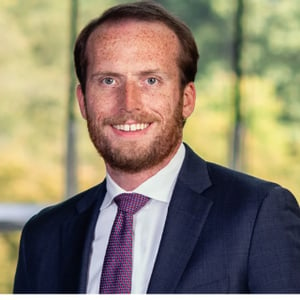
Associate, Jones Day
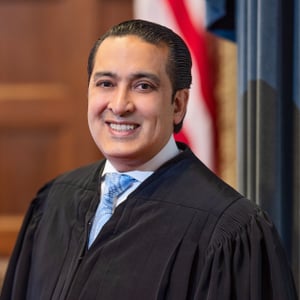
Judge, United States Court of Appeals, Sixth Circuit
John B. Nalbandian serves as a United States Circuit Judge from Kentucky on the U.S. Court of Appeals for the Sixth Circuit. He was nominated and confirmed to that position in 2018. Prior to that, Judge Nalbandian was a partner in the litigation practice group of Taft Stettinius & Hollister LLP in Cincinnati, where he served as the firm’s lead appellate lawyer and also practiced complex litigation in state and federal courts. Judge Nalbandian was board certified by the Ohio State Bar Association as a specialist in appellate law. Prior to joining Taft, Judge Nalbandian practiced for five years in the appellate section of Jones Day in Washington, DC. Upon graduation from law school, Judge Nalbandian clerked for the Honorable Jerry E. Smith of the U.S. Court of Appeals for the Fifth Circuit in Houston. While in private practice, he also served as a board member of the State Justice Institute, a nonprofit organization established by the federal government to improve the administration of justice in state courts. He served as President of the Cincinnati Lawyers Chapter of the Federalist Society. He has also been involved in his community as a board member of the Greater Cincinnati Minority Counsel Program, and as a board member of the Asian Pacific Bar Association of Southwest Ohio. Judge Nalbandian earned his B.S., magna cum laude, from the Wharton School at the University of Pennsylvania and his J.D. from the University of Virginia School of Law, where he was inducted into the Order of the Coif and served as managing editor of the Virginia Law Review.
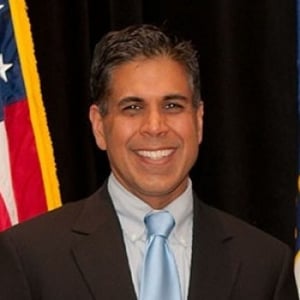
Judge, United States Court of Appeals, Sixth Circuit
Amul R. Thapar serves as a judge on the United States Court of Appeals for the Sixth Circuit. His judicial career began in 2007 when President George W. Bush nominated him to serve on the Eastern District of Kentucky, making him the first South Asian Article III judge in American history. In 2017, he became President Donald J. Trump’s first appellate court nominee.
Before joining the bench, Judge Thapar served as the United States Attorney for the Eastern District of Kentucky. While United States Attorney, Judge Thapar worked on the Attorney General’s Advisory Committee (“AGAC”) and chaired the AGAC’s Controlled Substances and Asset Forfeiture subcommittee. He also served on the Terrorism and National Security subcommittee, the Violent Crime subcommittee, and the Child Exploitation working group.
Judge Thapar has worked in private practice, at Williams & Connolly in Washington, D.C., and Squire, Sanders & Dempsey in Cincinnati, Ohio. He also served as an Assistant United States Attorney in both the Southern District of Ohio and the District of Columbia.
Judge Thapar received his undergraduate degree from Boston College and his law degree from the University of California, Berkeley. After graduating, Judge Thapar worked as a law clerk to the Honorable S. Arthur Spiegel of the United States District Court for the Southern District of Ohio, and the Honorable Nathaniel R. Jones of the United States Court of Appeals for the Sixth Circuit.
Judge Thapar has also published in the Yale Law Journal, Michigan Law Review, and Catholic University Law Review. He teaches courses on originalism, the Federalists and Anti-Federalists, and legal writing at Notre Dame Law School, the University of Virginia School of Law, and Vanderbilt Law School.

Judge, United States Court of Appeals, District of Columbia Circuit
Judge Katsas was appointed to the D.C. Circuit in December 2017. He graduated from Princeton University and Harvard Law School, where he was an executive editor on the Harvard Law Review. Between 1989 and 1992, he served as a law clerk to Judge Edward Becker on the Third Circuit, to then-Judge Clarence Thomas on the D.C. Circuit, and to Justice Thomas on the Supreme Court. Between 1992 and 2001, he was an associate and then partner in the Washington office of Jones Day, where he specialized in appellate and complex civil litigation. Between 2001 and 2009, he served in many senior positions in the Department of Justice, including as Assistant Attorney General for the Civil Division and as Acting Associate Attorney General. In 2009, he returned to Jones Day. From January to December 2017, he served as Deputy Assistant to the President and Deputy Counsel to the President.
Before joining the bench, Judge Katsas argued more than 75 appeals, including three cases in the Supreme Court, 13 cases in the D.C. Circuit, and cases in every other federal court of appeals. By appointment of the Chief Justice, he served on the Advisory Committee on Appellate Rules from 2013 to 2017. In 2016, he was elected to membership in the American Academy of Appellate Lawyers.
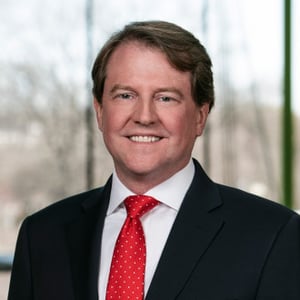
Partner, Jones Day
Don McGahn represents clients before government agencies, in enforcement matters, and in court disputes arising from government regulation or action. He handles litigation, crisis management, regulatory compliance, and political issues.
Prior to rejoining Jones Day in 2019, Don served as Counsel to the President of the United States, advising Donald J. Trump on all legal issues concerning the President and his administration, including constitutional and statutory authority, executive orders, international agreements, tariffs, trade, administrative law, and national security. Don also managed the judicial selection process for the President. During Don's tenure, a historic number of judges were appointed to the federal bench, including two Supreme Court justices. In addition, he spearheaded President Trump's deregulation efforts, which resulted in deregulation at record rates. Following Don's departure from the White House, the President appointed him to the Council of the Administrative Conference of the United States, a nonpartisan, independent agency dedicated to promoting improvement to administrative agency processes.
Don's accomplishments have been recognized at the highest levels of government. Senate Majority Leader Mitch McConnell stated that Don concluded his tenure "not only as the best White House Counsel I've seen on the job, but more broadly, as one of the most successful and consequential aides to any President in recent memory."
Don was nominated by President George W. Bush in 2008, and confirmed in the Senate by unanimous consent, to serve as a member of the Federal Election Commission. He also served as outside Counsel to the Committee on House Administration during the 113th and 114th Congresses and as general counsel to the National Republican Congressional Committee.

Senior Fellow, Law and Justice, America First Policy Institute
Chad Mizelle serves as a senior fellow for law and justice at AFPI. Mizelle most recently served as chief of staff and acting associate attorney general at the Department of Justice (DOJ). He previously served as acting general counsel at the Department of Homeland Security (DHS), where he managed more than 2,200 lawyers and directed all legal activities related to the agency's broad mission. Before that, he was chief of staff at DHS. Mizelle also served at the White House as associate counsel to the president and at the DOJ as counsel to the deputy attorney general.
Mizelle clerked for the Honorable David B. Sentelle of the D.C. Circuit. He received his J.D. from Cornell Law School and his B.A. from the University of Florida. He lives in Florida with his wife and children.
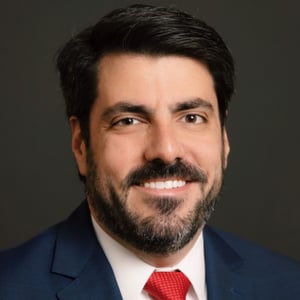
House Majority Leader, Georgia House of Representatives
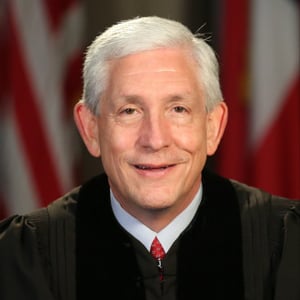
Chief Justice, Supreme Court of Georgia
Chief Justice David E. Nahmias (pronounced “NAH-mee-iss”) has served on the Georgia Supreme Court since his appointment by Governor Sonny Perdue in August 2009, winning election to six-year terms in 2010 and 2016. He became the Court’s Presiding Justice in September 2018 and its Chief Justice in July 2021. As Chief Justice, he leads the State’s judicial branch and chairs the Judicial Council of Georgia, the policy-making body for the judicial branch. Chief Justice Nahmias also chairs the Court’s Justice for Children Committee and the Chief Justice’s Commission on Professionalism. Before taking the bench, he was a federal prosecutor for almost 15 years, including service as a line prosecutor and as the United States Attorney in Atlanta, where he prosecuted and supervised many high-profile cases, and service as a senior Justice Department official in Washington, where he oversaw terrorism cases and other matters for three years after the 9/11 attacks.
Chief Justice Nahmias is a graduate of Briarcliff High School in DeKalb County, where he was the state’s STAR Student in 1982; Duke University, where he finished second in his class; and Harvard Law School, where he served on the Law Review with former President Barack Obama. He was a law clerk to U.S. Supreme Court Justice Antonin Scalia. Chief Justice Nahmias has received numerous local, state, and national awards and honors for his public service, and he has served on several committees and boards that work to improve the legal system and the community. Chief Justice Nahmias has two teenage sons. His wife, Catherine O’Neil, was a partner at King & Spalding before she passed away in 2017.
Miles Skedsvold is a litigator with Robbins Alloy Belinfante Littlefield in Atlanta, where he focuses on government and regulatory litigation. Building on his time with the Georgia Solicitor General's Office and as a law clerk for the Georgia Supreme Court, Miles studies Georgia Constitutional history and interpretation, representing clients and writing articles for law reviews and blogs. Miles also serves on the Board of the Atlanta Lawyers Chapter of the Federalist Society and helps lead the Association of Corporate Counsel (Georgia Chapter)'s Government Solutions member interest group.
Partner, Ashby Thelen Lowry LLP
Max began his legal career working on the other side of the federal bench, clerking for the Hon. Henry Coke Morgan, Jr., of the United States District Court for the Eastern District of Virginia and then for the Hon. Daniel A. Manion of the United States Court of Appeals for the Seventh Circuit.
After two years working for federal courts, Max landed a position at a large law firm in Atlanta, where he devoted his practice 100% to litigation of liability matters in defense. Max took responsibility for dozens of high-value cases, handling every aspect of fact and expert discovery, depositions, mediations, motions practice, and argument across the state of Georgia in state and federal courts. His clients ranged from small businesses to Fortune 100 corporations.
After a few years working in defense, Max joined the plaintiff’s side at an elite appellate litigation boutique. There, he honed the craft of protecting and defending victories from appellate risk, preparing arguments to overturn unjust results, and crafting creative solutions to improve results and avoid pitfalls in exceptionally high-stakes cases. Within his first year, he was embedded appellate counsel for a trial team which obtained a $9.6M jury verdict in a wrongful death case that many thought was unwinnable. His work ran the gamut from critical dispositive and Daubert motions, post-trial practice, to appeals with seven and eight figure awards on the line.
Now, at Ashby Thelen Lowry, Max brings the strategic benefit of his background in judicial service, defense experience, and appellate practice to bear in all of his catastrophic injury cases with the goal of obtaining excellent results for his clients by staying several moves ahead of the opposition. In his first trial with ATL, Max served as embedded appellate counsel in a boat defect case against Malibu Boats that resulted in a verdict that has already changed the industry forever.
Partner, Wiley Rein LLP
Caleb focuses on advising participants in the political process on compliance with all aspects of political law, including campaign finance, government ethics, and lobbying. His clients include Fortune 50 corporations, trade associations and other business organizations, non-profit and tax exempt 501(c) advocacy organizations, federal officeholders, political candidates and committees, and private individuals. He has particular experience with the Federal Election Campaign Act (FECA), the Lobbying Disclosure Act (LDA), the Foreign Agents Registration Act (FARA), as well as analogous state and local laws regulating campaign finance, government ethics, and lobbying. Caleb frequently represents clients subject to these laws in matters before the Federal Election Commission (FEC), other federal and state administrative agencies, and in federal and state courts.
Chambers USA ranks Caleb in Band 1 as one of the nation’s leading lawyers in Political Law and notes: “In a word, he is exceptional. Caleb is able to quickly distill issues to their essence, is a true expert as well as being creative and pragmatic to consistently provide reliable and ethical advice." In addition, Caleb has appeared as a nationally broadcast commentator on CBS, Fox News, and National Public Radio. He is regularly cited and quoted on political law topics in The New York Times, The Washington Post, ABC News, Bloomberg Government, Time, Politico, The Huffington Post, The Daily Beast, Yahoo News, Salon, Roll Call, The Hill, Law360, The Washington Times, Washington Business Journal, and Washington Examiner.
Partner, Torridon Law PLLC
Mike Fragoso is an experienced legal and policy strategist who represents clients before all three branches of the federal government. Most recently he served as chief counsel to the Senate Republican Leader, Mitch McConnell (R-KY). He has negotiated consequential legislation, managed successful congressional oversight, and prepared individuals for the most contentious Senate hearings.
As chief counsel to Leader McConnell, Mike was the Leader’s primary legal advisor and managed the “last mile” of any legislation touching on the Senate Judiciary Committee. He ran the 2024 reauthorization of FISA Section 702 and was involved at the highest levels of the appropriations and budget-reconciliation processes. Mike also repeatedly represented Leader McConnell as counsel of record at the Supreme Court. Leader McConnell said of Mike that he’s “equally at home in the high-minded philosophical discourse of the legal community and the urgent pragmatism of congressional dealmaking,” and that he “maintains a firm grasp on the realm of the possible” but “knows which screws to twist.” He observed that Mike “is so exceptionally competent that he often produces from his desk the work that would normally require, literally, teams of outside counsel.”
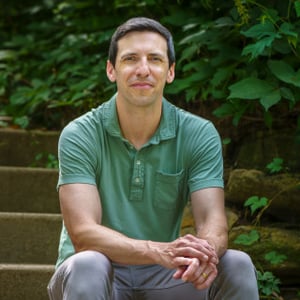
Former Cincinnati City Councilman
P.G. Sittenfeld is a writer based in Cincinnati, Ohio, where he lives with his wife, Sarah, an oncologist, and their three young sons. Sittenfeld’s writing has appeared in America Magazine, The New York Times, The Princeton Alumni Weekly, Slate, and Cincinnati Magazine. Sittenfeld also serves as a storytelling collaborator on narrative projects for CEOs, lawyers, doctors, startup founders, and school administrators. He is a graduate of Princeton University and Oxford University in England, where he was a Marshall Scholar.
Previously, Sittenfeld served for nearly a decade on Cincinnati’s City Council, where he became the city’s highest vote-getter through a record of fostering economic growth and innovation as well as supporting the community’s most marginalized members. He was widely expected to become the city’s next and youngest-ever mayor when he was prosecuted on public corruption charges in 2020, stemming from an FBI sting operation later likened in court to a “prosecutorial Truman Show.”
Following Sittenfeld’s acquittal on four counts and conviction on two counts, Jones Day’s Issues and Appeals group took on his entire appeal pro bono, calling it “the most extreme prosecution based on lawful campaign donations in U.S. history.” A nearly unprecedented bi-partisan group of top White House, DOJ, and Judicial officials spanning the past four decades submitted amicus briefs in support of Sittenfeld’s innocence.
For four-and-a-half months in 2024, Sittenfeld was Inmate Number 18085-509 at the Federal Correctional Institution in Ashland, Kentucky, before the U.S. Sixth Circuit Court of Appeals took the highly unusual step of ordering his early release pending the final outcome of his appeal. In May 2025, Sittenfeld and Jones Day were just days away from submitting a petition for writ of certiorari to the U.S. Supreme Court when Sittenfeld was granted a full and unconditional Presidential pardon.
Concerned about the far-reaching First Amendment implications of his prosecution and wanting to halt similarly misguided cases from being brought against other candidates or donors in the future, Sittenfeld and Jones Day decided to move forward with his appeal - marking the first known instance of an individual receiving a Presidential pardon and still being in a position to and choosing to move forward petitioning the Supreme Court. Sittenfeld regularly gives talks at law schools, faith forums, and in private sector settings on topics ranging from faith and resilience to American politics, personal liberties and government overreach, and the U.S. criminal justice system.
Partner, Jones Day
Don McGahn represents clients before government agencies, in enforcement matters, and in court disputes arising from government regulation or action. He handles litigation, crisis management, regulatory compliance, and political issues.
Prior to rejoining Jones Day in 2019, Don served as Counsel to the President of the United States, advising Donald J. Trump on all legal issues concerning the President and his administration, including constitutional and statutory authority, executive orders, international agreements, tariffs, trade, administrative law, and national security. Don also managed the judicial selection process for the President. During Don's tenure, a historic number of judges were appointed to the federal bench, including two Supreme Court justices. In addition, he spearheaded President Trump's deregulation efforts, which resulted in deregulation at record rates. Following Don's departure from the White House, the President appointed him to the Council of the Administrative Conference of the United States, a nonpartisan, independent agency dedicated to promoting improvement to administrative agency processes.
Don's accomplishments have been recognized at the highest levels of government. Senate Majority Leader Mitch McConnell stated that Don concluded his tenure "not only as the best White House Counsel I've seen on the job, but more broadly, as one of the most successful and consequential aides to any President in recent memory."
Don was nominated by President George W. Bush in 2008, and confirmed in the Senate by unanimous consent, to serve as a member of the Federal Election Commission. He also served as outside Counsel to the Committee on House Administration during the 113th and 114th Congresses and as general counsel to the National Republican Congressional Committee.

Downstream Effects of Louisiana v. Callais: Race, Redistricting, and Representation
Michael A. Carvin, Linda L. Chavez, Jeffrey M. Wice
In Louisiana v. Callais, a divided Supreme Court narrowed the circumstances in which states may use...
Downstream Effects of Louisiana v. Callais: Race, Redistricting, and Representation
Michael A. Carvin, Linda L. Chavez, Jeffrey M. Wice
In Louisiana v. Callais, a divided Supreme Court narrowed the circumstances in which states may use...
Downstream Effects of Louisiana v. Callais: Race, Redistricting, and Representation
The Judiciary in the Age of AI
Washington, DCAn Evening with Judge Greg Katsas and Don McGahn: A Rapid-Fire Roundtable
Tampa Bay Lawyer Chapter
Tampa, FLPanel 2 - Tort Reform
2025 Georgia Conference
Atlanta, GAThe Federalist Society Adds Four New Members To Board of Directors
The Federalist Society is pleased to welcome Thomas Bell, Stephen Sachs, Annie Talley, and Michael...
Campaign Contributions as Crimes? … Convicted, Pardoned, and Seeking Cert in Sittenfeld v. United States
DC Young Lawyers
Washington, DCAn Evening with Former White House Counsel Don McGahn
Wichita Lawyers Chapter
Wichita, KSEEOC in the Trump Era
Eric Dreiband, Bradford J. Kelley, Ryan H. Nelson
Shortly after taking office, President Trump reportedly removed two Equal Employment Opportunity Commission (EEOC) commissioners...