
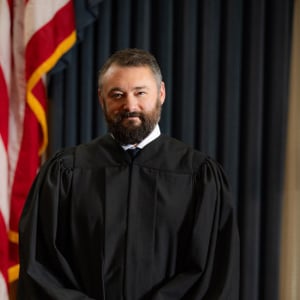
Judge, United States Court of Appeals for the Sixth Circuit
Ben Flowers is a judge on the United States Court of Appeals for the Sixth Circuit. President Donald J. Trump appointed Judge Flowers to the bench in 2026. At the time of his nomination, Flowers worked as a partner at Ashbrook Byrne Kresge Flowers, in Ohio. Before that, Judge Flowers served as Ohio’s Tenth Solicitor General. In that role he regularly represented the State of Ohio before the Supreme Court of the United States, the United States Court of Appeals for the Sixth Circuit, and the Supreme Court of Ohio.
Judge Flowers is a graduate of The Ohio State University and the University of Chicago Law School. He served as a law clerk for Sandra Ikuta of the U.S. Court of Appeals for the Ninth Circuit and for Justice Antonin Scalia of the Supreme Court of this United States.

Senior Fellow, Technology Policy, Cato Institute
Jennifer’s research focuses on the intersection of emerging technology and law with a particular interest in the interactions between technology and the administrative state. Her work covers topics including judicial deference, liability protection for Internet platforms, autonomous vehicles and other disruptive transportation technologies, the regulation of data privacy, and the benefits of technology and innovation. Her work has appeared in USA Today, the Chicago Tribune, the New York Daily News, the Sacramento Bee, the Washington Times, Real Clear Policy, and U.S. News and World Report. Jennifer has a JD from the University of Alabama School of Law and a BA in political science at Wellesley College.
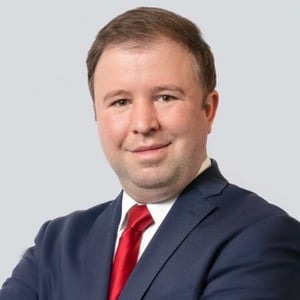
Partner, Wiley Rein LLP
Tom has over 15 years’ experience in private practice and public service at the federal and state levels representing clients in high-stakes appellate and regulatory litigation matters. Tom has argued appeals in the Fourth, Fifth, Ninth, D.C. and Federal Circuits, and the West Virginia Supreme Court of Appeals.
Prior to joining Wiley, Tom was the General Counsel at the Federal Communications Commission (FCC), where he served as the agency’s chief legal officer and briefed dozens of appeals – personally arguing two – in the federal courts of appeals in constitutional and administrative law challenges to the FCC’s orders. Tom managed a team of over 70 attorneys and staff and provided consultation and advice on a wide range of practice areas relating to the FCC’s work, including administrative law, appellate and trial litigation, bankruptcy, ethics, fiscal law, fraud, labor and employment, and public records requests. He has spent his career advising clients on all stages of federal agency rulemaking, adjudication, and litigation, in fields ranging from communications to environmental law to securities to labor and employment. He frequently speaks and writes on legal issues and his articles have appeared in the Wall Street Journal, Washington Post, National Review, Forbes, and Newark Star-Ledger.
U.S. District Court for the Northern District of Texas
Reed Charles O'Connor is a federal judge on the United States District Court for the Northern District of Texas. He joined the court in 2007 after being nominated by President George W. Bush.
A native of Houston, Texas, O'Connor graduated from the University of Houston with his bachelor's degree in 1986 and from South Texas College of Law with his J.D. in 1989.
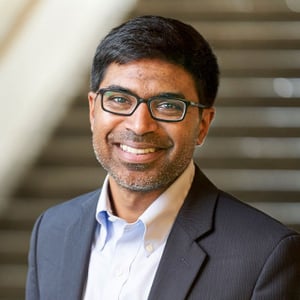
New York Alumni Chancellor's Chair in Law, Vanderbilt University Law School
Ganesh Sitaraman teaches and writes about constitutional law, the regulatory state, economic policy, democracy and foreign affairs. He joined the Vanderbilt Law faculty in 2011 and was named to the New York Alumni Chancellor's Chair in Law in 2021.
Sitaraman’s most recent book is The Great Democracy: How to Fix Our Politics, Unrig the Economy, and Unite America (Basic Books, 2019). He is also the co-author, with Anne Alstott, of The Public Option (Harvard Univ. Press, 2019), and the author of The Crisis of the Middle-Class Constitution: Why Economic Inequality Threatens Our Republic (Alfred A. Knopf, 2017), which was one of The New York Times’ 100 notable books of 2017, and The Counterinsurgent’s Constitution: Law in the Age of Small Wars (Oxford University Press, 2012), which won the 2013 Palmer Civil Liberties Prize.
Sitaraman is a public member of the Administrative Conference of the United States, a member of the American Law Institute, a senior fellow at the Center for American Progress, and a co-founder of the Great Democracy Initiative. He serves on the boards of The American Prospect, the American Constitution Society, and Foreign Policy for America. Sitaraman was also a longtime adviser to Elizabeth Warren, including serving as a senior adviser on her 2020 presidential campaign, her senior counsel in the Senate, and her policy director during her 2012 Senate campaign. He has been profiled in The New York Times and Politico for his work at the nexus of politics and ideas.
In 2018, Sitaraman was awarded an Andrew Carnegie Fellowship, and at Vanderbilt, he has been awarded a Chancellor’s Award for Research and a Chancellor’s Faculty Fellowship. In 2016, he was a visiting assistant professor at Yale Law School. Before joining Vanderbilt, Sitaraman was the Public Law Fellow and a lecturer at Harvard Law School, a research fellow at the Counterinsurgency Training Center – Afghanistan in Kabul, and a law clerk for Judge Stephen F. Williams on the U.S. Court of Appeals for the D.C. Circuit.
An Eagle Scout and a Truman Scholar, he earned his A.B. in government magna cum laude from Harvard College, a master’s degree in political thought from Emmanuel College, Cambridge, where he was the Lionel de Jersey Harvard Scholar, and his J.D. magna cum laude from Harvard Law School, where he was an editor of the Harvard Law Review.
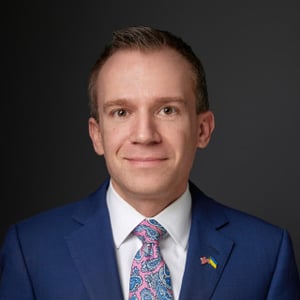
Supervising Senior Attorney, Foundation for Individual Rights and Expression (FIRE)
Conor Fitzpatrick comes to FIRE by way of Detroit, Michigan, where he was a principal at Miller, Canfield, Paddock and Stone. Conor has extensive litigation experience at the state and federal level. He has first-chaired multiple jury trials and briefed and argued several eight-figure cases on appeal.
Conor also comes to FIRE with a track record of supporting civil liberties and the First Amendment. Before joining FIRE, he taught First Amendment law as an adjunct professor at the University of Detroit Mercy School of Law. He has extensive experience litigating First Amendment cases pro bono on behalf of the incarcerated: His First Amendment work for inmates includes trying a First Amendment free exercise case to a federal jury, which resulted in a six-figure, mid-trial settlement following his cross examination of the key defendant. In another case, Conor secured a published decision from the Sixth Circuit denying qualified immunity to five prison employees, cementing his client’s First Amendment right to peacefully criticize government employees. Conor’s work on these and other cases earned him the 2018 Richard J. Seryak Award for Pro Bono Service.
When not thinking about the First Amendment, Conor enjoys reading, running, and eating sushi. He also avidly supports Detroit’s sports teams, but he rarely enjoys it.
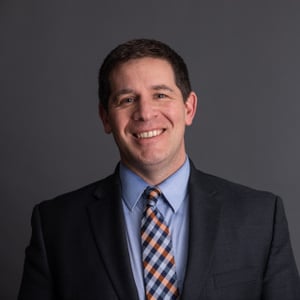
Vice President for Legal Strategy, Stand Together
Casey Mattox is Vice President for Legal Strategy at Stand Together and Senior Advisor at
Americans for Prosperity. In these roles he advocates for and creates strategies and
partnerships to ensure a constitutionally limited government that protects the civil liberties of all
Americans. Prior to joining Stand Together and AFP Casey’s legal career focused on defending
the First Amendment rights of students, faculty, healthcare workers and religious organizations.
Casey has a J.D. from Boston College School of Law and an undergraduate degree from the
University of Virginia. You can find him on Twitter at @CaseyMattox_ and on LinkedIn at
@Casey-Mattox-ST.

Senior Fellow and Director of Constitutional Studies, Manhattan Institute
Ilya Shapiro is a senior fellow and director of constitutional studies at the Manhattan Institute and a contributing editor of City Journal. Previously he was executive director and senior lecturer at the Georgetown Center for the Constitution, and before that a vice president of the Cato Institute.
Shapiro is the author of Lawless: The Miseducation of America’s Elites (2025) and Supreme Disorder: Judicial Nominations and the Politics of America’s Highest Court (2020), coauthor of Religious Liberties for Corporations? (2014), and editor of 11 volumes of the Cato Supreme Court Review (2008-18). He has contributed to a variety of academic, popular, and professional publications, including the Wall Street Journal, Harvard Journal of Law & Public Policy, Washington Post, Los Angeles Times, USA Today, National Review, and Newsweek. He also regularly provides commentary for various media outlets, writes the Shapiro’s Gavel newsletter on Substack, and once appeared on the Colbert Report.
Shapiro has testified many times before Congress and state legislatures and has filed more than 500 amicus curiae “friend of the court” briefs in the Supreme Court. He lectures regularly on behalf of the Federalist Society, is a member of the board of fellows of the Jewish Policy Center, was an inaugural Washington Fellow at the National Review Institute, and has been an adjunct law professor at the George Washington University and University of Mississippi. He is also the chairman of the board of advisers of the Mississippi Justice Institute, a barrister in the Edward Coke Appellate Inn of Court, and a former member of the Virginia Advisory Committee to the U.S. Commission on Civil Rights.
Earlier in his career, Shapiro was a special assistant/adviser to the Multi-National Force in Iraq on rule-of-law issues and practiced at Patton Boggs and Cleary Gottlieb. Before entering private practice, he clerked for Judge E. Grady Jolly of the U.S. Court of Appeals for the Fifth Circuit. He holds an AB from Princeton University, an MSc from the London School of Economics, and a JD from the University of Chicago Law School.
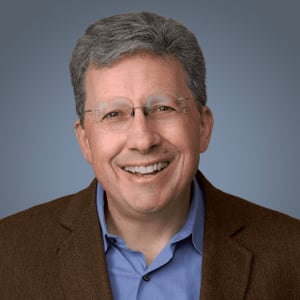
General Counsel, Competitive Enterprise Institute
Daniel Greenberg is the General Counsel at the Competitive Enterprise Institute. His research focuses on civil asset forfeiture and regulatory reform. He served as senior policy advisor at the U.S. Department of Labor from 2017-2021. From 2011-2017, he was president of the Advance Arkansas Institute, a nonprofit research and educational organization.
He has been an adjunct professor of law and political science at the University of Arkansas at Little Rock as well as senior counsel for the Center for Class Action Fairness. He served in the Arkansas House of Representatives from 2007-2011, and on the Pulaski County Quorum Court for four years prior to that. As a state legislator, he received National Review’s “2010 Challenge / Best Conservative Idea” award for his work on federalism issues as well as the Arkansas Press Association’s Freedom of Information Award for his work on First Amendment issues.
During the 1990s, he served as a congressional staffer for Congressman Jay Dickey and Tim Hutchinson before moving to the Heritage Foundation and then to the Cato Institute. He has published extensively on government and public policy in newspapers, magazines and academic journals, including the New York Times, National Review, the Monist, the John Marshall Law Review, and the Ohio State Law Journal. He holds degrees from Brown University, Bowling Green State University, and UALR’s Bowen School of Law.
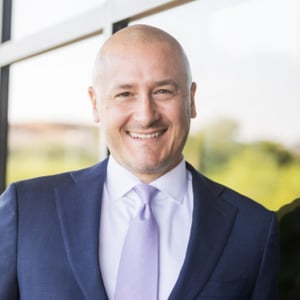
Managing Partner, Radix Law
Andy joined Radix following a decorated legal career in the public and private sectors. He began his career practicing complex business litigation for nearly a decade at a large law firm in Phoenix, then became a prosecutor at the Arizona Attorney General’s Office where he focused on high profile racketeering, securities fraud, and public corruption matters. Andy was then appointed Chief Counsel and Legal Division Director of the Arizona Corporation Commission, where he advised five elected commissioners on statewide public utility matters and led some of the most influential policies and judicial outcomes in the history of the Commission.
Following public service, Andy became General Counsel for a private family office, managing all national legal affairs for a portfolio of companies in the financial services, private equity, professional sports, and fintech space. He has tried cases in both civil and criminal courts, represented government agencies and private clients across the State of Arizona, and argued matters before the Arizona Court of Appeals and the Arizona Supreme Court. Andy is also one of the nation’s leading advisors on Arizona Alternative Business Structures and has successfully counseled many clients through the ABS formation and approval process.
Andy’s clients include high net worth individuals, established businesses, hyper-growth companies, and state agencies who rely on Andy as their outside general counsel. His combination of experience in litigation, criminal matters, appeals, government & regulatory affairs, crisis management, and private business provides one of a kind value, helping his clients achieve their goals while protecting against threats to their success.
In 2018, he was awarded Counsel of the Year by the Association of Corporate Counsel and is a Flinn-Brown Fellow through the Arizona Center for Civic Leadership.
Andy currently serves on the Arizona Supreme Court’s Committee on Alternative Business Structures and the Attorney Regulation Advisory Committee.
Senior Attorney, Institute for Justice
Paul Sherman is a senior attorney at the Institute for Justice.

Attorney, Pacific Legal Foundation
Caleb Trotter is an attorney at Pacific Legal Foundation, where he litigates on behalf of individuals and small businesses fighting for their constitutional rights to free speech, economic liberty, and equal protection under the law.
Caleb’s practice at PLF is primarily focused on free speech rights that allow people to pursue the profession of their choice in the manner they see fit. He successfully represented Peggy Fontenot in a challenge to an Oklahoma law that prevented her from truthfully marketing her art as American Indian-made.
Caleb also has taken the lead in fighting for students to participate in school athletics free from oppressive sex-based quotas. He has successfully represented Dmitri Moua, Zachary Greenwald, and Freddie Linden in challenging rules in Minnesota and South Dakota that prohibited them from participating on high school competitive dance teams.
Prior to PLF, Caleb clerked for the Institute for Justice and externed for the public defender’s office in Jefferson Parish, Louisiana. Before starting his legal career, he worked in real estate, banking, and investments.
Upon witnessing government screw-ups at every level following Hurricane Katrina, and due to absorbing the laissez-faire culture of New Orleans over many years, Caleb came to see the importance of individualism to human flourishing. He was inspired to dedicate his career to advancing liberty through the law after reading story after story in Reason magazine of organizations like PLF fighting to protect individual rights.
Caleb attended law school at Loyola University New Orleans, where he graduated cum laude and served as a member of the Loyola Law Review and moot court program. He also earned a BSM in finance and legal studies in business at Tulane University. He lives in Sacramento with his wife, Ashlee, and cat, Frank. Caleb loves traveling—he’s been to all 50 states—following his beloved Texas Rangers, photography, and Mardi Gras. If you’re ever in PLF’s Sacramento office, be sure to check out his bobblehead collection.

Justice, Supreme Court of Arizona
Clint Bolick was appointed by Governor Doug Ducey in January 2016 to serve on the Arizona Supreme Court and was retained by the voters in 2018 and 2024.
Prior to joining the Court, Justice Bolick litigated constitutional cases in state and federal courts from coast to coast, including the U.S. Supreme Court. Among other positions, he served as Vice President for Litigation at the Goldwater Institute and as Co-founder and Vice President for Litigation at the Institute for Justice. He has litigated in support of school choice, freedom of enterprise, private property rights, freedom of speech, and federalism, and against racial classifications and government subsidies.
Justice Bolick received his Juris Doctor degree from the University of California at Davis, where he has been recognized as a distinguished alumnus, and his Bachelor of Arts degree magna cum laude from Drew University. He serves as a research fellow with the Hoover Institution. Among other honors, he was named one of the 90 Greatest DC Lawyers in the Last 30 Years by Legal Times in 2008, received a Bradley Prize in 2006, and was recognized as one of the nation’s three lawyers of the year by American Lawyer in 2002 for his successful defense of school vouchers in Zelman v. Simmons-Harris.
Justice Bolick is a prolific author of a dozen books and hundreds of articles. Among his most recent books are Unshackled: Freeing America’s K-12 Education System: Immigration Wars: Forging an American Solution, co-authored with former Florida Governor Jeb Bush; and David’s Hammer: The Case for an Activist Judiciary. Bolick serves as an adjunct professor of constitutional law at Arizona State University’s Sandra Day O’Connor School of Law and has served as a lecturer at Harvard University’s John F. Kennedy School of Government.
Editor, Chalkbeat
Cara Fitzpatrick is an editor at Chalkbeat. She won the Pulitzer Prize for Local Reporting in 2016 for a series about school segregation. She was a New Arizona fellow in 2019 at New America and a Spencer fellow at Columbia University's Graduate School of Journalism in 2018. Fitzpatrick lives in New York with her husband and children.
Legal Director, The Center for the Rights of Abused Children
Tim Keller is a lawyer who works to ensure all abused and abandoned children are safe and have access to their constitutionally guaranteed rights.
As senior vice president and legal director at the Center for the Rights of Abused Children, Tim’s public interest legal work seeks to defend the constitutional rights of children to be safe from abuse, to prompt timely placement with permanent parents, and to assure a child’s representation by legal counsel. In addition to constitutional litigation, Tim oversees the lawyers in the Center for the Rights of Abused Children’s one-of-a-kind pro bono Children’s Law Clinic and guides its policy initiatives.
When he and his wife, Lisa, hosted a teenage exchange student from Brazil several years ago, they realized how much they enjoyed helping a child thrive. The two felt called to help more kids. Over the following years, Tim and Lisa would become foster parents. Today, they enjoy offering respite care for children in foster care.
Intensely motivated by his time fostering children who’d been abused and neglected, Tim sees his work to ensure children have a constitutional right to counsel as a matter of life and death. As such, he’s particularly proud that in 2021 the Center for the Rights of Abused Children secured the rights of all children in Arizona’s foster system to be represented by legal counsel.
Before joining the Center for the Rights of Abused Children, Tim worked for nearly 20 years at the Institute for Justice. He served as lead counsel in Arizona Christian School Tuition Organization v. Winn, a U.S. Supreme Court victory that protected Arizona’s pioneering school scholarship program. Tim also led the team that secured a U.S. Supreme Court victory in Espinoza v. Montana Department of Revenue, which prevents states from discriminating against religious families and schools in educational choice programs. He has also litigated economic liberty and property rights cases in state and federal courts.
Tim earned his bachelor’s and law degrees from Arizona State University. He clerked for Robert D. Myers, at the time the presiding judge of the Maricopa County Superior Court, and for Ann A. Scott Timmer on the Arizona Court of Appeals.
Tim and Lisa live in Chandler, Ariz., with their four sons, Daniel, Benjamin, Ethan and Noah, and a miniature schnauzer named Gus who has more than 12,000 Instagram followers. The Kellers have traveled to 49 of the 50 United States, and are always looking for recommendations for new card or board games for family game nights.

Policy Director, Next Generation Texas
Erin Davis Valdez is Policy Director for Next Generation Texas, an initiative of the Texas Public Policy Foundation. She has been passionate about the transformational power of education all her life, having been given the gift of being homeschooled. She taught for over a decade in Austin-area schools and served as an assistant principal at a charter school. These experiences have given her the opportunity to see first-hand how students can thrive when they have excellent options.
Valdez earned an M.A. in classics from the University of California, Santa Barbara and a B.A. in classical studies from Hillsdale College. She has been married to Jeremy Valdez since 2005.
Valdez enjoys reading, podcasts, and spending time with her family and friends (and her dog, Scoops).

Professor of Law, University of Michigan Law School
Christopher J. Walker is a Professor of Law at the University of Michigan. Prior to joining Michigan law faculty in 2022, he spent a decade teaching at The Ohio State University Moritz College of Law. He previously clerked for Justice Anthony Kennedy of the U.S. Supreme Court, worked on the Civil Appellate Staff at the U.S. Department of Justice, and served on the Senate Judiciary Committee staff for the Gorsuch Supreme Court confirmation. Professor Walker’s research focuses on administrative law, regulation, and law and policy at the agency level. Outside the law school, he chaired the American Bar Association’s Section of Administrative Law and Regulatory Practice in 2020-21 and served as one of forty Public Members of the Administrative Conference of the United States from 2016-2022, and he continues to serve in both organizations in various capacities. He also works of counsel at the U.S. Chamber Litigation Center. In 2022, he received the Federalist Society’s Joseph Story Award.
UC Foundation Assistant Professor, U.T. Chattanooga

Judge, United States District Court for the Eastern District of Tennessee
On December 23, 2020, Katherine A. Crytzer was sworn in as a United States District Judge for the Eastern District of Tennessee following confirmation by the United States Senate. Judge Crytzer sits in Knoxville, Tennessee. Prior to her confirmation, Judge Crytzer served as Principal Deputy Assistant Attorney General at the Department of Justice’s Office of Legal Policy in Washington, D.C., where she provided legal and policy advice to the Assistant Attorney General and Department of Justice Leadership. Before joining the Department of Justice’s Main Office, Judge Crytzer served as an Assistant United States Attorney in the United States Attorney’s Office for the Eastern District of Kentucky. In advance of entering public service, Judge Crytzer was a litigator at Kirkland & Ellis LLP. She began her legal career as a law clerk to The Honorable Raymond W. Gruender on the United States Court of Appeals for the Eighth Circuit. Judge Crytzer earned her Juris Doctor, magna cum laude, from George Mason University’s Antonin Scalia School of Law and her Bachelor of Science, summa cum laude, from Middle Tennessee State University.

Paul J. Schierl Professor of Law, University of Notre Dame Law School
Professor Richard W. Garnett teaches and writes in the areas of constitutional law, criminal law, the First Amendment, and law and religion. He is a leading authority on questions and debates regarding religious freedom and church-state relations, and is the founding director of Notre Dame Law School’s Program on Church, State, and Society.
Garnett clerked for the late Chief Justice of the United States, William H. Rehnquist, and also for the late Chief Judge of the United States Court of Appeals for the Eighth Circuit, Richard S. Arnold. He earned his J.D. from Yale Law School in 1995 and his B.A., summa cum laude, from Duke University in 1990. He joined the faculty in 1999 after practicing law in Washington, D.C. with Miller, Cassidy, Larroca & Lewin.
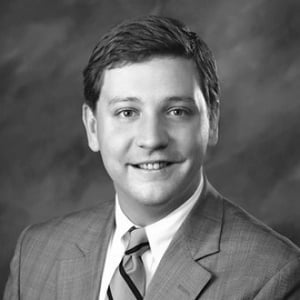
Shareholder, Spears, Moore, Rebman & Williams, PC
Alan Jackson practices in a variety of areas in state and federal courts. Prior to joining Spears, Moore, Rebman & Williams, P.C. in 2013, he served for two years as law clerk for the Honorable Walter E. Johnson of the United States District Court for the Northern District of Georgia.
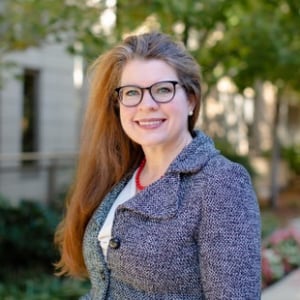
Vice President and Senior Counsel, The Becket Fund for Religious Liberty
Lori Windham is vice president and senior counsel at Becket, where she has represented clients on cutting-edge religious freedom issues since 2005. She has represented parties before the Supreme Court, arguing Becket’s unanimous victory on behalf of foster families in Fulton v. Philadelphia, as well as working with the Becket team on its Supreme Court victories in Hosanna-Tabor, Hobby Lobby, and Little Sisters of the Poor. She won a victory for the world’s largest religious media network in EWTN v. Azar, staving off millions of dollars in government fines under unlawful the HHS mandate. She has won more than a dozen victories in federal appellate courts, including successful defense of cities and school districts sued for accommodating religion, victories for houses of worship facing discrimination in the land use process, and overturning a multimillion-dollar judgment against a major evangelical ministry. She recently won a first-in-the-nation injunction for an adoption agency threatened with shutdown for its religious beliefs.
Recognized in Washington as an expert on religious freedom issues, Lori has testified in Congressional oversight hearings before the U.S. House of Representatives Judiciary Committee and before the U.S. Commission on Civil Rights. Outside Washington, Lori is sought-after speaker on First Amendment law, including appearances at Yale Law School, Harvard Law School, Stanford Law School, Georgetown University Law Center, Central European University, and many others.
In addition to these venues, Lori also defends her clients in the media, including television appearances on CBS This Morning, Hardball, CNN Tonight, On the Record, America’s Newsroom, Opinion Journal, and many others. Her work has been covered by the New York Times, Wall Street Journal, Washington Post, and dozens of other papers. She is also a regular guest on radio, with appearances on shows ranging from Sean Hannity to NPR.
Lori has successfully represented a wide array of clients, including a Santeria priest prohibited from making animal sacrifices, synagogues prohibited from building on their own land, and religious student organizations penalized for their religious speech. One of her most challenging cases involved travel to a remote farming community to ensure that members of the local Amish community were not jailed for using their traditional building methods.
Lori is a graduate of Harvard Law School and earned her B.A. summa cum laude at Abilene Christian University. She has served on the Board of Visitors of Abilene Christian University and received the ACU Young Alumnus of the Year award for her work at Becket. She sits on the board of Dominion Christian School and the visiting committee of the Fund for American Studies’ Summer Law Fellowship.

Associate Professor of Political Science, Public Policy and Public Administration, and International Affairs, George Washington University
Steven Balla is Associate Professor of Political Science, Public Policy and Public Administration, and International Affairs, and a Senior Scholar at the George Washington Regulatory Studies Center. He researches government consultation and public participation in policymaking in the United States and China. He has on two occasions served as a consultant to the Administrative Conference of the United States, drawing on his research on public commenting in the U.S. rulemaking process to make recommendations for how to improve regulatory policymaking. He has twice served as a Fulbright Scholar in China, at Peking University in Beijing and Nankai University in Tianjin. He is currently working on projects on congressional oversight of regulatory policymaking, polarization in public commenting on proposed rules, and the responsiveness of Chinese government officials to public feedback on draft laws and regulations.
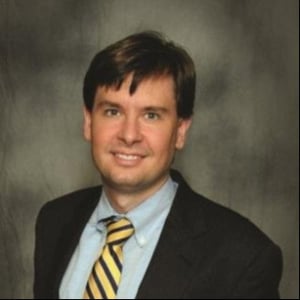
Policy Director, Fulcrum Foundation
Reeve T. Bull is the Policy Director of the Fulcrum Foundation. In this role, he promotes executive and legislative reforms designed to update and streamline the regulatory system. These reforms draw upon the work Mr. Bull undertook in his previous role as the Director of the Virginia Office of Regulatory Management (ORM). During his time at ORM, he led the Commonwealth's efforts related to regulatory streamlining and permitting transparency and the development and implementation of artificial intelligence policy.
Previously, Mr. Bull served as the Research Director of the Administrative Conference of the United States (ACUS). At ACUS, he worked on projects related to international regulatory cooperation, the use of science by administrative agencies, presidential review of agency rulemaking, cost-benefit analysis, government contractor ethics, and e-rulemaking, among other things. Mr. Bull has also served as an Adjunct Professor at the Antonin Scalia Law School and the George Washington University, teaching courses on Administrative Law. Mr. Bull has published numerous articles in highly regarded law journals, including the Administrative Law Review, George Washington Law Review, and Law and Contemporary Problems. Mr. Bull is an Elected Member of the American Law Institute and a Public Member of the Administrative Conference of the United States.
Earlier in his career, Mr. Bull worked in the private sector as an associate with the law firm Gibson, Dunn & Crutcher LLP and in government service as a law clerk to the Honorable Alvin A. Schall of the Federal Circuit Court of Appeals. During his time as an associate with Gibson Dunn, Mr. Bull worked on a variety of litigation and regulatory matters. He participated in cases appearing before the United States Supreme Court, several federal Courts of Appeals, and numerous federal district courts and state trial courts. His experience spanned a variety of practice areas, including administrative, constitutional, intellectual property, antitrust, environmental, securities, and white collar criminal law. During his clerkship for Judge Schall, Mr. Bull assisted with appeals in cases spanning a variety of areas, with particular emphasis on administrative and patent law.
Mr. Bull attended law school at Duke University, where he graduated with highest honors and was inducted into the Order of the Coif. He was one of two recipients of the Willis Smith Award for compiling the most outstanding academic record in the graduating class and the recipient of the James S. Bidlake Memorial Award for achieving the highest grade in his first year legal writing section. Mr. Bull also served as a Note Editor on the Duke Law Journal. Prior to law school, Mr. Bull attended the University of Oklahoma, where he graduated summa cum laude with a Bachelors in Chemistry and was inducted into Phi Beta Kappa.

Director, GW Regulatory Studies Center & Distinguished Professor of Practice, Trachtenberg School of Public Policy & Public Administration, The George Washington University
Susan Dudley is the Founder and Director of the George Washington University Regulatory Studies Center, established in 2009 to raise awareness of regulations’ effects and improve regulatory policy through research, education, and outreach. She is also a distinguished professor of practice in the Trachtenberg School of Public Policy and Public Administration. She is past-president of the Society for Benefit Cost Analysis, a senior fellow of the Administrative Conference of the United States, and on the Regulatory Transparency Project Regulatory Practice Working Group. Her book, Regulation: A Primer, with Jerry Brito, is available on Amazon.com.
From April 2007 through January 2009, Professor Dudley served as the Presidentially-appointed Administrator of the Office of Information and Regulatory Affairs in the U.S. Office of Management and Budget and was responsible for the review of draft executive branch regulations under Executive Order 12866, the collection of federal-government-wide information under the Paperwork Reduction Act, the development and implementation of government-wide policies in the areas of information policy, privacy, and statistical policy, and international regulatory cooperation efforts.
Prior to OIRA, she directed the Regulatory Studies Program at the Mercatus Center at George Mason University, and taught courses on regulation at the George Mason University School of Law. Earlier in her career, Professor Dudley served as an economist at OIRA, as well as the Environmental Protection Agency and the Commodity Futures Trading Commission. She was also a consultant to government and private clients at Economists Incorporated. She holds a Master of Science degree from the Sloan School of Management at MIT and a Bachelor of Science degree (summa cum laude) in Resource Economics from the University of Massachusetts, Amherst.
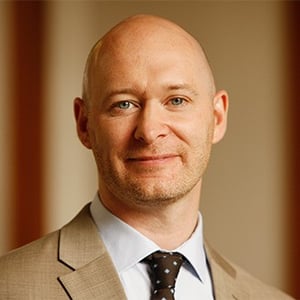
Edward F. Howrey Professor of Law, University of Virginia
Michael Livermore joined the faculty in 2013. He teaches environmental law, administrative law, regulatory law and policy, and advanced seminars on these topics. His research focuses on environmental law, regulation, bureaucratic oversight and the computational analysis of law. He frequently collaborates on interdisciplinary projects with researchers in other academic fields, including economics, computer science and neurology. His work has appeared in leading law journals, including the Yale Law Journal, University of Chicago Law Review, New York University Law Review, Georgetown Law Journal and Duke Law Journal. Livermore is a leading expert on the use of cost-benefit analysis to evaluate environmental regulation, and he is the co-author of Retaking Rationality: How Cost-Benefit Analysis Can Better Protect the Environment and Our Health (Oxford University Press, 2008) and co-editor of The Globalization of Cost-Benefit Analysis in Environmental Policy (Oxford University Press, 2013).
Prior to joining the faculty, Livermore was the founding executive director of the Institute for Policy Integrity at New York University School of Law, a think tank dedicated to improving the quality of government decision-making. In that capacity, he participated in dozens of regulatory proceedings on a diverse set of issues ranging from climate change to prison safety. He remains an active participant in environmental policy discussions. Livermore earned his J.D. magna cum laude from NYU Law, where he was a Furman Scholar, was elected to the Order of the Coif, and served as a managing editor of the Law Review. After law school, he spent a year as a fellow at NYU Law’s Center on Environmental and Land Use Law before clerking for Judge Harry T. Edwards on the U.S. Court of Appeals for the D.C. Circuit.
During the 2018-19 academic year, Livermore is leading an Online Workshop on the Computational Analysis of Law.

Supreme Court Correspondent, The Washington Post
Robert Barnes has been a Washington Post reporter and editor since 1987. He joined the paper to cover Maryland politics, and has served in various editing positions including metropolitan editor and national political editor . He has covered the Supreme Court since November 2006. He gave up law school plans for a life in newspapers after taking a journalism class in college. It did not occur to him, as it apparently did to others, that he could do both.

Professor of Law and Centennial Chair, South Texas College of Law Houston
Josh Blackman is a national thought leader on constitutional law and the United States Supreme Court. Josh’s work was quoted during two presidential impeachment trials. He has testified before Congress and advises federal and state lawmakers. Josh regularly appears on TV, including NBC, CBS, ABC, Fox, and the BBC. Josh is also a frequent guest on NPR and other syndicated radio programs. He has published commentaries in the New York Times, Wall Street Journal, Washington Post, and leading national publications.
Since 2012, Josh has served as a professor at the South Texas College of Law Houston. He holds the Centennial Chair of Constitutional Law. Josh is an Adjunct Fellow at the Manhattan Institute. Josh has written more than seven dozen law review articles that have been cited more than a thousand times. Josh was selected as the Jurist of the Year by the Texas Journal of Law & Public Policy, received the inaugural Meese III Originalism Award, and was awarded the Inaugural Joseph Story Award. Josh was selected by Forbes Magazine for the “30 Under 30” in Law and Policy. Josh is the President of the Harlan Institute, and founded FantasySCOTUS, the Internet’s Premier Supreme Court Fantasy League. He blogs at the Volokh Conspiracyand posts@JoshMBlackman.

Partner, Wiley Rein, LLP
Megan L. Brown is a partner at Wiley Rein LLP. She has significant litigation, appellate and regulatory experience before state and federal courts and agencies.
Ms. Brown helps businesses respond to federal, state and local regulation and investigations raising administrative law, statutory interpretation, and constitutional issues, including the First Amendment.

Harold Paul Green Research Professor of Law, George Washington University School of Law
Robert J. Cottrol joined the law school faculty in 1995 as a visiting professor of law of legal history. Previously, he taught at Rutgers University and Boston College, and had visited at the University of Virginia. As well as specializing in American legal history, Professor Cottrol has also taught torts and criminal law. His writings on law and history have appeared in the Yale Law Journal, Georgetown Law Journal, American Journal of Legal History, Law and Society Review, Slavery and Abolition: A Journal of Slave and Post-Slave Studies and American Quarterly, among others.
He is the author of The Afro-Yankees: Providence’s Black Community in the Antebellum Era (selected by Choice as an outstanding academic book for 1983), editor of Gun Control and the Constitution: Sources and Explorations on the Second Amendment (Book of the Month selection by the History Book Club), and From African to Yankee: Narratives of Slavery and Freedom in Antebellum New England (1998). Professor Cottrol’s book Brown v. Board of Education: Caste, Culture and the Constitution (2003) won the Langum Project Prize for Historical Literature in 2003 and was a “Book-of-the-Month” selection of the History Book Club. Most recently, he has authored The Long, Lingering Shadow: Slavery, Race, and Law in the American Hemisphere (2013).
He is currently doing research contrasting the role of law in the development of systems of slavery and racial hierarchy in the United States and Latin America. He has lectured on American law at the Federal Universities of Santa Catarina and Rio Grande do Sul in Brazil and the University of Buenos Aires and La Universidad del Museo Social in Argentina.

Reporter, SCOTUSblog
Amy Howe is the co-founder of SCOTUSblog, a news site devoted to coverage of the U.S. Supreme Court, and its primary reporter. She was part of the blog team that won a Peabody Award in 2013, as well as a National Press Club Journalism Award for Breaking News. Since the spring of 2025, she has also served as the Supreme Court analyst for the PBS NewsHour. In the fall of 2025, she is a fellow in Georgetown University's Institute of Politics.
Before turning to full-time journalism, Amy was a practicing lawyer and served as a lawyer in over two dozen cases at the Supreme Court, on issues ranging from international child custody to the death penalty, and argued two cases there. She has taught or co-taught courses on Supreme Court litigation at Vanderbilt Law School, Stanford Law School, and Harvard Law School. Amy is a graduate of the University of North Carolina at Chapel Hill and holds a master's in Arab Studies and a law degree from Georgetown University.

President, JCN
Carrie Campbell Severino is the president of the JCN, and co-author with Mollie Hemingway of the bestselling book Justice on Trial: The Kavanaugh Confirmation and the Future of the Court. As a go-to expert on the confirmation process, Mrs. Severino has been extensively quoted in the media. She regularly appears on television, including FOX, CNN, MSNBC, C-SPAN, and ABC’s This Week.
Severino writes and speaks on a wide range of judicial issues, including the constitutional limits on government, the federal nomination process, and state judicial selection. She has testified before Congress on constitutional questions and briefed Senators on judicial nominations, and regularly files briefs in high-profile Supreme Court cases. She was a law clerk to Supreme Court Justice Clarence Thomas and to Judge David B. Sentelle of the U.S. Court of Appeals for the D.C. Circuit, and is a graduate of Harvard Law School (J.D.), Duke University (B.A., Biology), and Michigan State University (M.A., Linguistics).
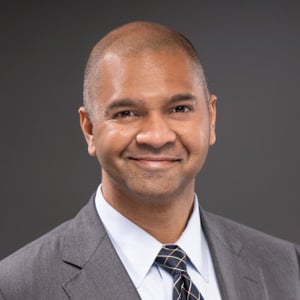
Senior Fellow, Stand Together Trust
Vikrant Reddy is a senior fellow at Stand Together Trust, specializing in the area of criminal justice reform. Reddy previously served as a senior policy analyst at the Texas Public Policy Foundation (TPPF), where he managed the launch of TPPF’s national Right on Crime initiative in 2010. He has worked as a research assistant at the Cato Institute, as a judicial clerk to the Hon. Gina M. Benavides in Texas, and as an attorney in private practice. He is a member of the State Bar of Texas, and he serves on the Executive Committee of the Criminal Law Practice Group of the Federalist Society. He is also an appointee to the U.S. Commission on Civil Rights Texas State Advisory Committee.
Reddy’s research and scholarly opinions have appeared in a range of national media outlets, including USA Today, National Review, The Federalist, and others.
Reddy earned his law degree from the Southern Methodist University School of Law. He received his undergraduate degree from the University of Texas at Austin.
Associate Professor of Political Science, Public Policy and Public Administration, and International Affairs, George Washington University
Steven Balla is Associate Professor of Political Science, Public Policy and Public Administration, and International Affairs, and a Senior Scholar at the George Washington Regulatory Studies Center. He researches government consultation and public participation in policymaking in the United States and China. He has on two occasions served as a consultant to the Administrative Conference of the United States, drawing on his research on public commenting in the U.S. rulemaking process to make recommendations for how to improve regulatory policymaking. He has twice served as a Fulbright Scholar in China, at Peking University in Beijing and Nankai University in Tianjin. He is currently working on projects on congressional oversight of regulatory policymaking, polarization in public commenting on proposed rules, and the responsiveness of Chinese government officials to public feedback on draft laws and regulations.
Policy Director, Fulcrum Foundation
Reeve T. Bull is the Policy Director of the Fulcrum Foundation. In this role, he promotes executive and legislative reforms designed to update and streamline the regulatory system. These reforms draw upon the work Mr. Bull undertook in his previous role as the Director of the Virginia Office of Regulatory Management (ORM). During his time at ORM, he led the Commonwealth's efforts related to regulatory streamlining and permitting transparency and the development and implementation of artificial intelligence policy.
Previously, Mr. Bull served as the Research Director of the Administrative Conference of the United States (ACUS). At ACUS, he worked on projects related to international regulatory cooperation, the use of science by administrative agencies, presidential review of agency rulemaking, cost-benefit analysis, government contractor ethics, and e-rulemaking, among other things. Mr. Bull has also served as an Adjunct Professor at the Antonin Scalia Law School and the George Washington University, teaching courses on Administrative Law. Mr. Bull has published numerous articles in highly regarded law journals, including the Administrative Law Review, George Washington Law Review, and Law and Contemporary Problems. Mr. Bull is an Elected Member of the American Law Institute and a Public Member of the Administrative Conference of the United States.
Earlier in his career, Mr. Bull worked in the private sector as an associate with the law firm Gibson, Dunn & Crutcher LLP and in government service as a law clerk to the Honorable Alvin A. Schall of the Federal Circuit Court of Appeals. During his time as an associate with Gibson Dunn, Mr. Bull worked on a variety of litigation and regulatory matters. He participated in cases appearing before the United States Supreme Court, several federal Courts of Appeals, and numerous federal district courts and state trial courts. His experience spanned a variety of practice areas, including administrative, constitutional, intellectual property, antitrust, environmental, securities, and white collar criminal law. During his clerkship for Judge Schall, Mr. Bull assisted with appeals in cases spanning a variety of areas, with particular emphasis on administrative and patent law.
Mr. Bull attended law school at Duke University, where he graduated with highest honors and was inducted into the Order of the Coif. He was one of two recipients of the Willis Smith Award for compiling the most outstanding academic record in the graduating class and the recipient of the James S. Bidlake Memorial Award for achieving the highest grade in his first year legal writing section. Mr. Bull also served as a Note Editor on the Duke Law Journal. Prior to law school, Mr. Bull attended the University of Oklahoma, where he graduated summa cum laude with a Bachelors in Chemistry and was inducted into Phi Beta Kappa.
Director, GW Regulatory Studies Center & Distinguished Professor of Practice, Trachtenberg School of Public Policy & Public Administration, The George Washington University
Susan Dudley is the Founder and Director of the George Washington University Regulatory Studies Center, established in 2009 to raise awareness of regulations’ effects and improve regulatory policy through research, education, and outreach. She is also a distinguished professor of practice in the Trachtenberg School of Public Policy and Public Administration. She is past-president of the Society for Benefit Cost Analysis, a senior fellow of the Administrative Conference of the United States, and on the Regulatory Transparency Project Regulatory Practice Working Group. Her book, Regulation: A Primer, with Jerry Brito, is available on Amazon.com.
From April 2007 through January 2009, Professor Dudley served as the Presidentially-appointed Administrator of the Office of Information and Regulatory Affairs in the U.S. Office of Management and Budget and was responsible for the review of draft executive branch regulations under Executive Order 12866, the collection of federal-government-wide information under the Paperwork Reduction Act, the development and implementation of government-wide policies in the areas of information policy, privacy, and statistical policy, and international regulatory cooperation efforts.
Prior to OIRA, she directed the Regulatory Studies Program at the Mercatus Center at George Mason University, and taught courses on regulation at the George Mason University School of Law. Earlier in her career, Professor Dudley served as an economist at OIRA, as well as the Environmental Protection Agency and the Commodity Futures Trading Commission. She was also a consultant to government and private clients at Economists Incorporated. She holds a Master of Science degree from the Sloan School of Management at MIT and a Bachelor of Science degree (summa cum laude) in Resource Economics from the University of Massachusetts, Amherst.
Edward F. Howrey Professor of Law, University of Virginia
Michael Livermore joined the faculty in 2013. He teaches environmental law, administrative law, regulatory law and policy, and advanced seminars on these topics. His research focuses on environmental law, regulation, bureaucratic oversight and the computational analysis of law. He frequently collaborates on interdisciplinary projects with researchers in other academic fields, including economics, computer science and neurology. His work has appeared in leading law journals, including the Yale Law Journal, University of Chicago Law Review, New York University Law Review, Georgetown Law Journal and Duke Law Journal. Livermore is a leading expert on the use of cost-benefit analysis to evaluate environmental regulation, and he is the co-author of Retaking Rationality: How Cost-Benefit Analysis Can Better Protect the Environment and Our Health (Oxford University Press, 2008) and co-editor of The Globalization of Cost-Benefit Analysis in Environmental Policy (Oxford University Press, 2013).
Prior to joining the faculty, Livermore was the founding executive director of the Institute for Policy Integrity at New York University School of Law, a think tank dedicated to improving the quality of government decision-making. In that capacity, he participated in dozens of regulatory proceedings on a diverse set of issues ranging from climate change to prison safety. He remains an active participant in environmental policy discussions. Livermore earned his J.D. magna cum laude from NYU Law, where he was a Furman Scholar, was elected to the Order of the Coif, and served as a managing editor of the Law Review. After law school, he spent a year as a fellow at NYU Law’s Center on Environmental and Land Use Law before clerking for Judge Harry T. Edwards on the U.S. Court of Appeals for the D.C. Circuit.
During the 2018-19 academic year, Livermore is leading an Online Workshop on the Computational Analysis of Law.

Platforms, Common Carriage, and the Future of Free Expression
Benjamin M. Flowers, Jennifer Huddleston, Thomas M. Johnson, Reed O'Connor, Ganesh Sitaraman
CLE credit for this event is available at On-Demand CLE. At the heart of the NetChoice...
The Case of Mahmoud Khalil: Free Speech or National Security?
Conor Fitzpatrick, Casey Mattox, Ilya Shapiro
Mahmoud Khalil, a Palestinian green card holder, was detained by ICE on March 8 and...
Panel II: Practical Challenges to Legal Licensing Reform
Daniel Greenberg, Andy Kvesic, Paul Sherman, Caleb Trotter
Featured: Paul Sherman, Senior Attorney, Institute for Justice Caleb Trotter, Attorney, Pacific Legal Foundation Andy...
Panel Three: School Choice and Trust in Education
Clint Bolick, Cara Fitzpatrick, Timothy Keller, Erin Valdez
Traditionally, education has been seen as instilling the common shared civic values that Americans have...
FedSoc Study Break: Administrative Law
Christopher J. Walker
The Federalist Society's Student Division & NYU School of Law Chapter present Administrative Law Featuring:...
From Employment Division v. Smith to Fulton v. City of Philadelphia: The Free Exercise Clause in 2021
Kody Cooper, Katherine Amber Crytzer, Richard W. Garnett, J. Alan Jackson, Lori Windham
On May 19, 2021 the Nashville and Chattanooga Lawyers Chapters co-hosted a discussion on the...
Deep Dive Episode 151 – Public Input in Agency Rulemaking
Steven Balla, Reeve T. Bull, Susan E. Dudley, Michael Livermore
When the FCC put forward its proposed repeal of the net neutrality rule, it received...
Deep Dive Episode 151 – Public Input in Agency Rulemaking
A Regulatory Transparency Project Teleforum
TeleforumSupreme Court Preview: What Is in Store for October Term 2019?
Robert Barnes, Josh Blackman, Megan L. Brown, Robert J. Cottrol, Amy Howe, Carrie Campbell Severino
On October 2, 2019, the Federalist Society hosted a panel discussing the current composition and...
Courthouse Steps Decision Teleforum: Timbs v. Indiana
Vikrant P. Reddy
In Timbs v. Indiana today, the Supreme Court held that the Eighth Amendment prohibition against...