

Director, International Legal Studies Program, Vanderbilt Law School
Michael Newton is an expert on terrorism, accountability, transnational justice, and conduct of hostilities issues. Over the course of his career, he has published more than 90 books, articles, op-eds and book chapters. He has been an expert witness in terrorism related trials and is admitted to the counsel list of the International Criminal Court, where, in 2018, he helped prepare the appeal of Jean-Pierre Bemba and participated in oral arguments in the Appeals Chamber. At Vanderbilt, he developed and teaches the innovative International Law Practice Lab, which provides expert assistance to judges, lawyers, legislatures, governments, and policy makers around the world. Professor Newton is most recently the editor of The United States Department of Defense Law of War Manual: Commentary and Critique, forthcoming from Cambridge University Press.
An authority on the law of armed conflict, Professor Newton served as the senior adviser to the Ambassador-at-Large for War Crimes Issues in the U.S. State Department from January 1999 to August 2002, during which he implemented a wide range of policy positions, including U.S. support to accountability mechanisms worldwide. He negotiated the “Elements of Crimes” for the International Criminal Court, and was the senior member of the team teaching international law to the first group of Iraqis who began to think about accountability mechanisms and a constitutional structure in November 2000. He shuttled to Baghdad repeatedly to aid international and Iraqi lawyers and jurists in drafting the Statute of the Iraqi High Tribunal while serving as the International Law Adviser to the Judicial Chambers from 2006 to 2008. He began assisting Iraqi officials, victims and civil society groups on legal issues associated with documentation and investigation of crimes committed by Da’esh on Iraqi soil days after Yazidi victims fled towards Mount Sinjar. He was the U.S. representative on the U.N. Planning Mission for the Sierra Leone Special Court and a founding member of its academic consortium. He is an elected member of the International Institute of Humanitarian Law and on the expert roster of Justice Rapid Response. In addition to teaching the Practice Lab, he develops and coordinates externships and educational opportunities for students interested in international legal issues, having supervised more than 150 such opportunities.
Professor Newton has served on the executive council of the American Society of International Law and as an invited expert for the Genocide Prevention Task Force established by the U.S. Holocaust Memorial Museum and the U.S. Institute of Peace. He is currently on the Advisory Board of the ABA International Criminal Court Project.
Professor Newton served in the U.S. Army more than 21 years, beginning with his commission from the U.S. Military Academy in May 1984 as an armor officer in the 4th Battalion, 68th Armor at Fort Carson, Colorado. After his selection for the Funded Legal Education Program, Newton served as chief of operational law with the Army Special Forces Command (Airborne) during Operation Desert Storm, and as the group judge advocate for the 7th Special Forces Group (Airborne). His deployments include Northern Iraq on Operation Provide Comfort to assist Kurdish civilians, and Haiti with 194th Armored Brigade (Separate), where he organized and led human rights and rules of engagement education for multinational forces, including police. He has taught international and operational law at the Judge Advocate General's School and Center in Charlottesville, Virginia, and taught international law at the United States Military Academy at West Point.

Professor Emeritus of Law, Antonin Scalia Law School, George Mason University
Jeremy A. Rabkin is a Professor Emeritus of Law at the Antonin Scalia Law School, George Mason University. Before joining the faculty in June 2007, he was for over two decades a professor in the Department of Government at Cornell University. Professor Rabkin serves on the board of directors of the Center for Individual Rights, a public interest law firm based in Washington, D.C. Previously he was a board member of the U.S. Institute of Peace and the board of academic advisors of the American Enterprise Institute.
Professor Rabkin’s books include Law Without Nations? (Princeton University Press, 2005). He authored “If You Need a Friend, Don’t Call a Cosmopolitan,” a chapter in Varieties of Sovereignty and Citizenship (Sigal R. Ben-Porath & Rogers M. Smith eds., University of Pennsylvania Press, 2012). His articles have appeared in major law reviews and political science journals and his journalistic contributions in a range of magazines and newspapers, including the Washington Post and the Wall Street Journal.
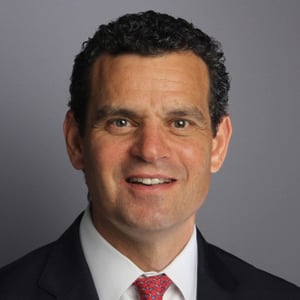
Partner, Wilmer Cutler Pickering Hale and Dorr LLP
David Cohen, who leads the firm's Financial and Business Integrity Group, provides clients with anti-money laundering, financial and trade sanctions advice; represents US and foreign-based clients in matters implicating national security, including CFIUS and cybersecurity; conducts internal investigations; and defends clients facing government investigations. His practice has a strong emphasis on disputes involving US and foreign regulators and enforcement agencies, often involving cross-border issues, as well as proceedings in US and foreign adjudicative venues.
Before rejoining the firm in 2017, Mr. Cohen served for eight years in senior presidentially appointed positions. From 2015–2017, Mr. Cohen was Deputy Director of the Central Intelligence Agency (CIA), where he helped manage the Agency's domestic and worldwide operations, oversee its strategic modernization, and lead foreign intelligence collection, all-source analysis, covert action, counter-intelligence and foreign liaison relationships. Mr. Cohen also directed special projects on the impact of new technologies on the Agency and on how best to work with US companies to advance the CIA's mission. At the conclusion of his tenure, Mr. Cohen was awarded the Distinguished Intelligence Medal, the CIA's highest honor.
Previously, Mr. Cohen served for four years in the US Department of the Treasury as Under Secretary for Terrorism and Financial Intelligence, where he managed the department's policy, regulatory, enforcement and intelligence functions aimed at combating illicit finance, including money laundering and other financial crime, and disrupting financial support to nations, organizations and individuals posing a threat to national security. He directly supervised the Office of Foreign Assets Control (OFAC), which implements financial and economic sanctions, and the Financial Crimes Enforcement Network (FinCEN), the anti-money laundering regulatory and enforcement agency. Mr. Cohen was instrumental in developing and implementing sanctions against Iran, Russia, North Korea, ISIS, al Qa'ida and other terrorist organizations, for which he was described as “President Obama's favorite combatant commander” and as the administration's “financial Batman.”
Mr. Cohen previously served for two years as Assistant Secretary of the Treasury for Terrorist Financing, overseeing policy development related to sanctions and money laundering. Earlier in his career, Mr. Cohen served in Treasury's general counsel's office, where he helped craft legislation that formed the basis of Title III of the USA PATRIOT Act, the post-9/11 legislation that provided new tools to prevent money laundering and the financing of terrorism.
Prior to his most recent government service, Mr. Cohen practiced law in Washington DC for nearly 20 years, including as a partner at WilmerHale. His practice at WilmerHale focused on complex civil litigation, white-collar criminal defense, internal investigations, and anti-money laundering and sanctions compliance advice.

Executive Vice President, Chief Legal Officer, Gates Corporation
Matthew R. A. Heiman joined the Company in May 2026 and has served as the Company’s Chief Legal Officer and Corporate Secretary since June 2026. As Chief Legal Officer, Mr. Heiman is responsible for all legal functions for Gates, including securities and corporate governance, M&A, litigation, commercial, regulatory, compliance, patents and trademarks, real estate, employment and labor, sustainability and environmental matters. Prior to joining Gates, Mr. Heiman held senior legal leadership roles at Waystar, where he served as Chief Legal & Administrative Officer from 2023 to 2025 and as General Counsel and Corporate Secretary from 2020 to 2023. Prior to that, he was with Johnson Controls, where he served as Vice President, Corporate Secretary, and Associate General Counsel. Mr. Heiman has been a Senior Fellow for the National Security Institute at George Mason University’s Antonin Scalia School of Law since 2018.
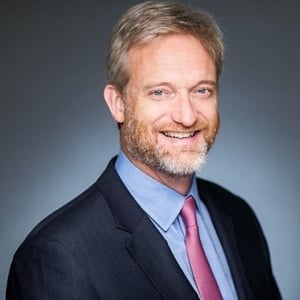
Principal in the International, BGR Group
Lester Munson is a Principal in the International at BGR Group, a leading government relations firm in Washington, D.C., where he consults with foreign governments, corporations and advocacy groups. He also serves as adjunct faculty at Johns Hopkins University and speaks regularly on the foreign policy role of Congress and on U.S. foreign assistance issues. He is a member of the Executive Committee of the Modernizing Foreign Assistance Network, a Visiting Fellow at George Mason’s National Security Institute and a commentator on Fox News Channel and the China Global Television Network.
Mr. Munson joined BGR Group in November 2015 after a 26-year career on Capitol Hill and in the Executive Branch. He was most recently Staff Director of the Senate Foreign Relations Committee, where he led policy, oversight, legislative and communications efforts for a staff of 25 and negotiated committee priorities with the White House, the State Department and Congressional leadership.
Previously, Mr. Munson was Chief of Staff for Senator Mark Kirk of Illinois. During his tenure, Senator Kirk became the leading Republican voice in the Senate on Iran and other national security issues.
During the Bush Administration, Mr. Munson served as Deputy Assistant Administrator at the U.S. Agency for International Development, where he focused on legislative affairs as well as global health issues. He led legislative efforts to develop and implement the President’s Emergency Plan for AIDS Relief (PEPFAR) and won an award for his contribution to the creation of the President’s Malaria Initiative.
Mr. Munson is a 1989 graduate of the University of Chicago and holds a Master’s degree from St. John’s College in Annapolis. He is married with two children.
Principal, BGR Government Affairs
Lester Munson joined BGR’s International practice after a 26-year career on Capitol Hill and in the Executive Branch. He most recently served as the Staff Director for Chairman Bob Corker of the Senate Foreign Relations Committee, where he led policy, oversight, legislative and communications efforts for a staff of 25 and negotiated committee priorities with the White House, the State Department and Congressional leadership.
In the past two and a half years, the committee has passed into law several bills regarding U.S. policy toward Ukraine and Russia, including major sanctions legislation, has engaged in efforts to fundamentally reform, reauthorize, or modify key foreign assistance programs, including food aid, PEPFAR, arms transfers, and has taken up legislation on the most important foreign policy and national security issues of the day, including the negotiations over the Iranian nuclear program, authorizations for the use of military force, and various international treaties and agreements.
Previously, Mr. Munson was Chief of Staff in Senator Mark Kirk’s (R-Ill.), Washington, DC office. During Lester’s tenure, Senator Kirk became the leading Republican voice in the Senate on Iran and other national security issues.
During the Bush Administration, Mr. Munson was a Deputy Assistant Administrator at the U.S. Agency for International Development, where he focused on legislative affairs as well as global health issues. He led legislative efforts to develop and implement the President’s Emergency Plan for AIDS Relief (PEPFAR) and won an award for his contribution to the creation of the President’s Malaria Initiative.
Prior to serving in the Bush Administration, at the Senate Foreign Relations Committee, Mr. Munson was the Republican Communications Director and oversaw foreign assistance oversight and legislation. At the House International Relations Committee, he was the Communications Director and Professional Staff Member for Asia-Pacific issues as well as African affairs.
Mr. Munson is a 1989 graduate of the University of Chicago and holds a Master’s degree from St. John’s College in Annapolis. He is married with two children.
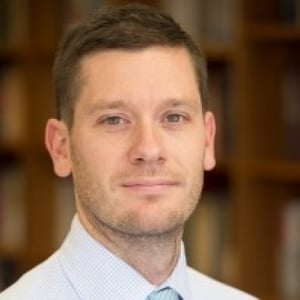
Henry A. Kissinger Distinguished Professor, Henry A. Kissinger Center for Global Affairs, John Hopkins School of Advanced International Studies
Managing Partner, Bigley Ranish, LLP
Sean M. Bigley is a national security attorney and managing partner of Bigley Ranish, LLP. Mr. Bigley’s practice primarily encompasses defending federal employees and contractors in security clearance denial cases. He also provides personnel security consulting to major international defense and aerospace corporations, and prosecutes intelligence community whistle-blower retaliation cases.
Since first opening his firm in 2013, Mr. Bigley has grown it from a solo practice to a five-attorney partnership with employees in three states. Bigley Ranish, LLP attorneys regularly appear before administrative tribunals at agencies ranging from the CIA to the Department of State, representing in excess of 200 American intelligence officers, diplomats, armed forces personnel, and other security clearance holders each year around the world. In 2016 alone, Mr. Bigley and his colleagues represented clients in roughly forty states and a dozen countries.
The idea for this unique practice was borne out of Mr. Bigley’s prior service as a federal background investigator. Prior to and during law school, Mr. Bigley was an investigator for the U.S. Office of Personnel Management, where he conducted some of that agency’s most sensitive security investigations in the Los Angeles metropolitan area. Mr. Bigley has also served on the faculty of Chapman University, teaching national security and criminal justice courses with an emphasis in U.S.-European security cooperation. Earlier in his career, Mr. Bigley worked for several years in the White House and Department of Homeland Security under President George W. Bush.
A recognized expert in national security law, Mr. Bigley’s commentary on the topic is frequently sought by major media outlets such as Fox News, The New York Times, and CNN. He is a contributing writer for Clearancejobs.com and GovExec.com.
Mr. Bigley earned his Juris Doctorate from Chapman University School of Law. He holds a Bachelor’s Degree from Washington D.C.’s American University and a Master’s Degree from Boston University.

Board Member, Center for Equal Opportunity
Roger Clegg is a Board Member at and former President and General Counsel of the Center for Equal Opportunity. He focuses on legal issues arising from civil rights laws--including the regulatory impact on business and the problems in higher education created by affirmative action. A former Deputy Assistant Attorney General in the Reagan and Bush administrations, Clegg held the second highest positions in both the Civil Rights Division (1987-91) and in the Environment and Natural Resources Division (1991-93). He has held several other positions at the U.S. Justice Department, including Assistant to the Solicitor General (1985-87), Associate Deputy Attorney General (1984-85), and Acting Assistant Attorney General in the Office of Legal Policy (1984). Clegg is a graduate of Yale University Law School (1981).
Angeles T. Arredondo E Pluribus Unum Senior Fellow, The Heritage Foundation
Mike Gonzalez, the Angeles T. Arredondo E Pluribus Unum Senior Fellow at The Heritage Foundation, writes on critical race theory, identity politics, diversity, multiculturalism, assimilation and nationalism, as well as foreign policy in general. He spent close to 20 years as a journalist, 15 of them reporting from Europe, Asia and Latin America. He left journalism to join the administration of President George W. Bush, where he was speechwriter for Securities and Exchange Commission Chairman Christopher Cox before moving on to the State Department’s European Bureau.
Gonzalez, who joined Heritage in March 2009, became a Senior Fellow in June 2014 and a chaired fellow in 2019. He is a widely experienced writer and public speaker. He has written for National Affairs, The American Interest, Foreign Policy, The Claremont Review of Books, City Journal, Quillette, The Wall Street Journal, The Washington Post, Time.com, The Hill, Forbes.com, USA Today, The Guardian, The National Interest, The Daily Signal, National Review and others. Gonzalez has appeared on Fox, MSNBC, PBS, the BBC, CNBC, NPR, C-SPAN, The Voice of America, Television Española, Canal Plus, as well as many other networks and stations in the United States, Europe, Asia and Latin America.
Gonzalez got his first regular reporting beat in 1981, covering high school sports for one summer for The Boston Herald. He went to work for Agence France-Presse in 1987, reporting from around the globe for the news agency for six years, including covering the war in Afghanistan, where he traveled with the Mujahedeen in the late 1980s. In his first foreign assignment, in Panama in 1987, he was arrested, jailed overnight and expelled by the dictator Manuel Antonio Noriega.
After taking off two years to earn a master's in Business Administration from Columbia Business School, he next logged 11 years with The Wall Street Journal, writing a column on the stock market in New York before being posted to Hong Kong in 1995 as Deputy Editor of the editorial pages of the newspaper’s Asia edition. Between 1998 and 2003, he served in the same capacity for the European edition in Brussels, before returning to Hong Kong as chief editorial page editor.
Gonzalez holds a bachelor’s degree in Communications from Boston’s Emerson College, and a master's in Business Administration from Columbia Business School.
Ella A. and Ernest H. Fisher Professor of Law, Ohio Northern University Claude W. Pettit College of Law
Professor Lewis joined the Ohio Northern faculty in August, 2006. Lewis flew F-14's for the United States Navy in Operation Desert Shield, conducted strike planning for Desert Storm and was deployed to the Persian Gulf to enforce the no-fly zone over Iraq. He was a Topgun graduate in 1992 and was featured in a NOVA documentary on Topgun and aircraft carriers.
After his naval service, Lewis graduated from Harvard Law School, cum laude, was a management consultant with McKinsey and Company, and served as a litigation associate with McGuireWoods, LLP, in Norfolk, Virginia.
Professor Lewis published more than a dozen articles and essays on various aspects of the law of war and the conflict between the US and al Qaeda. His work has been cited by the Seventh, Ninth and Eleventh Circuit Courts of Appeals. He has testified before Congress on the legality of drone strikes in Pakistan and Yemen and on the civil liberties tradeoffs associated with trying some Al Qaeda members or terrorist suspects before military commissions. His op-eds have appeared in numerous media outlets including the LA Times and the New York Post and he has appeared on Public Radio International to discuss the increasing use of armed drones in warfare. He delivered scores of presentations and panel presentations before military and law school audiences alike including presentations to the international Military Operations Law conference in Queensland, Australia, the US Army's JAG School in Charlottesville, VA and law school events at Stanford, Chicago, Columbia, Penn, Duke, Texas and Northwestern among others.
Professor Lewis received the Award for Excellence in Classroom Teaching for the 2007-08 academic year.
He taught Commercial Law, International Law, a Law of War Seminar and Torts. He also taught Corporate Finance and Accounting for Lawyers. His other teaching interests included Civil Procedure and Contracts.
Director, Speech, Privacy & Technology Project, American Civil Liberties Union
Ben Wizner is the Director of ACLU’s Speech, Privacy & Technology Project, which is dedicated to protecting and expanding the First Amendment freedoms of expression, association, and inquiry; expanding the right to privacy and increasing the control that individuals have over their personal information; and ensuring that civil liberties are enhanced rather than compromised by new advances in science and technology. He has litigated numerous cases involving post-9/11 civil liberties abuses, including challenges to airport security policies, government watchlists, extraordinary rendition, and torture. He has appeared regularly in the media, testified before Congress, and traveled several times to Guantánamo Bay to monitor military commission proceedings. Ben is a graduate of Harvard College and New York University School of Law and was a law clerk to the Hon. Stephen Reinhardt of the U.S. Court of Appeals for the 9th Circuit.

Executive Vice President, The Federalist Society
Dean Reuter is Executive Vice President at the Federalist Society for Law and Public Policy Studies. He has served in two federal government agency Offices of the Inspector General, as Counsel to the Inspector General and Deputy Inspector General, responsible for policing the use of federal funds granted and contracted through those agencies. As such, he helped conduct and oversee criminal investigations across the country. He is the principal author of the non-fiction book, The Hidden Nazi: The Untold Story of America's Deal with the Devil, and editor of Liberty’s Nemesis: The Unchecked Expansion of the State and Confronting Terror: 9/11 and the Future of American National Security. He was appointed by the President and served as Vice-Chairman of the Board of Directors of the Corporation for National and Community Service, and recently served as an appointee on the U.S. Commission on Presidential Scholars. He is a graduate of Hood College (BA with Honors) and the University of Maryland School of Law.

Clayton J. and Henry R. Barber Professor of Law, Northwestern University Pritzker School of Law and Co-Chairman, Board of Directors, The Federalist Society
STEVEN GOW CALABRESI is the Clayton J. & Henry R. Barber Professor at Northwestern Pritzker School of Law. He has also co-taught in the Fall semester at Yale Law School from 2013 to the present. Calabresi clerked for Justice Antonin Scalia and Judges Robert H. Bork and Ralph K. Winter. He was a Special Assistant to Attorney General Meese from 1985 to 1987 and worked with Ken Cribb as his deputy in 1987 on the second floor of the West Wing of the Reagan White House. Calabresi has written books on presidential power and comparative constitutional law and the origins of judicial review. He and Gary Lawson are the co-editors of a casebook on U.S. Constitutional Law, and Calabresi is also the co-editor of a casebook on comparative constitutional law. He has written over seventy law review articles since 1990.
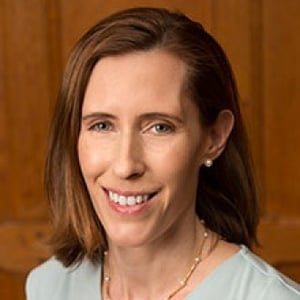
Gerard C. and Bernice Latrobe Smith Professor of International Law and Counselor to the Dean, Yale Law School
Oona A. Hathaway is the Gerard C. and Bernice Latrobe Smith Professor of International Law at Yale Law School, Professor of International Law and Area Studies at the Yale University MacMillan Center, Professor of the Yale University Department of Political Science, and Director of the Yale Law School Center for Global Legal Challenges. She is also Counselor to the Dean at Yale Law School. She has been a member of the Advisory Committee on International Law for the Legal Adviser at the United States Department of State since 2005. In 2014–15, she took leave to serve as Special Counsel to the General Counsel at the U.S. Department of Defense, where she was awarded the Office of the Secretary of Defense Award for Excellence. She is the Director of the annual Yale Cyber Leadership Forum. She has published more than 30 law review articles, and The Internationalists: How a Radical Plan to Outlaw War Remade the World (with Scott Shapiro, 2017).
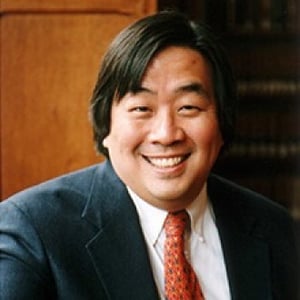
Sterling Professor of International Law, Yale Law School
Harold Hongju Koh is Sterling Professor of International Law at Yale Law School. He returned to Yale Law School in January 2013 after serving for nearly four years as the 22nd Legal Adviser of the U.S. Department of State.
Professor Koh is one of the country’s leading experts in public and private international law, national security law, and human rights. He first began teaching at Yale Law School in 1985 and served as its fifteenth Dean from 2004 until 2009. From 2009 to 2013, he took leave as the Martin R. Flug ’55 Professor of International Law to join the State Department as Legal Adviser, service for which he received the Secretary of State's Distinguished Service Award. From 1993 to 2009, he was the Gerard C. & Bernice Latrobe Smith Professor of International Law at Yale Law School, and from 1998 to 2001, he served as U.S. Assistant Secretary of State for Democracy, Human Rights and Labor.
Professor Koh has received seventeen honorary degrees and more than thirty awards for his human rights work, including awards from Columbia Law School and the American Bar Association for his lifetime achievements in international law. He has authored or co-authored eight books, published more than 200 articles, testified regularly before Congress, and litigated numerous cases involving international law issues in both U.S. and international tribunals. He is a Fellow of the American Philosophical Society and the American Academy of Arts and Sciences, an Honorary Fellow of Magdalen College, Oxford, and a member of the Council of the American Law Institute.
He holds a B.A. degree from Harvard College and B.A. and M.A. degrees from Oxford University, where he was a Marshall Scholar. He earned his J.D. from Harvard Law School, where he was Developments Editor of the Harvard Law Review. Before coming to Yale, he served as a law clerk for Justice Harry A. Blackmun of the United States Supreme Court and Judge Malcolm Richard Wilkey of the U.S. Court of Appeals for the D.C. Circuit, worked as an attorney in private practice in Washington, and served as an Attorney-Adviser for the Office of Legal Counsel, U.S. Department of Justice.
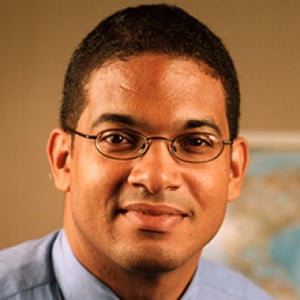
Benjamin Mazur Summer Research Professor of Law Affiliated Faculty, Ford Motor Company Center for Global Citizenship, Northwestern University School of Law
Jide Nzelibe joined Northwestern's faculty as an assistant professor in 2004 became a full Professor in 2008. He served as the Bigelow Teaching Fellow and Lecturer in Law at the University of Chicago before joining Northwestern Law. In addition to his JD from Yale Law School, he also holds an MPA in international relations from Princeton University, where he was awarded a fellowship from the Woodrow Wilson Foundation and a pre-doctoral fellowship from the Ford Foundation. His research and teaching interests include international trade, foreign relations law, public and private international law and contracts.

Dean and Jesse H. Choper Distinguished Professor of Law, UC Berkeley School of Law
Erwin Chemerinsky became the 13th Dean of Berkeley Law on July 1, 2017, when he joined the faculty as the Jesse H. Choper Distinguished Professor of Law.
Prior to assuming this position, from 2008-2017, he was the founding Dean and Distinguished Professor of Law, and Raymond Pryke Professor of First Amendment Law, at University of California, Irvine School of Law, with a joint appointment in Political Science. Before that he was the Alston and Bird Professor of Law and Political Science at Duke University from 2004-2008, and from 1983-2004 was a professor at the University of Southern California Law School, including as the Sydney M. Irmas Professor of Public Interest Law, Legal Ethics, and Political Science. He also has taught at DePaul College of Law and UCLA Law School.
He is the author of eleven books, including leading casebooks and treatises about constitutional law, criminal procedure, and federal jurisdiction. His most recent books are, We the People: A Progressive Reading of the Constitution for the Twenty-First Century (Picador Macmillan) published in November 2018, and two books published by Yale University Press in 2017, Closing the Courthouse Doors: How Your Constitutional Rights Became Unenforceable and Free Speech on Campus (with Howard Gillman).
He also is the author of more than 200 law review articles. He writes a regular column for the Sacramento Bee, monthly columns for the ABA Journal and the Daily Journal, and frequent op-eds in newspapers across the country. He frequently argues appellate cases, including in the United States Supreme Court.
In 2016, he was named a fellow of the American Academy of Arts and Sciences. In 2017, National Jurist magazine again named Dean Chemerinsky as the most influential person in legal education in the United States.
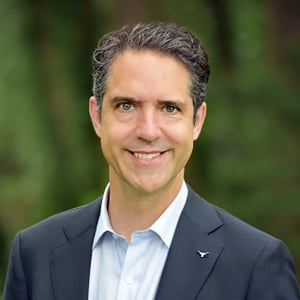
James A. Baker III Chair in the Rule of Law and World Affairs and Associate Dean for Academic Affairs, The University of Texas at Austin School of Law
Bobby Chesney holds the James Baker Chair and also serves as the Associate Dean for Academic Affairs at the University of Texas School of Law. In addition, he is the Director of the Robert S. Strauss Center for International Security and Law, a University-wide research unit bridging across disciplines to improve understanding of international security issues.
In 2009, Professor Chesney served in the Justice Department in connection with the Detention Policy Task Force created by Executive Order 13493. He also previously served the Intelligence Community as an associate member of the Intelligence Science Board and as a member of the Advanced Technology Board. In addition to his current positions at the University of Texas, he is a member of the American Law Institute, and a senior editor for the Journal of National Security Law & Policy, and a former non-resident Senior Fellow of the Brookings Institution.
Professor Chesney is a co-founder and contributor to www.lawfareblog.com, the leading source for analysis, commentary, and news relating to law and national security. In addition to his blogging at Lawfare, those interested in national security law should consider following Professor Chesney on Twitter (@bobbychesney) as well as subscribing to the National Security Law Podcast (which he co-hosts with his colleague Steve Vladeck). Professor Chesney's scholarship focuses on U.S. national security policies and institutions, encompassing both domestic and international law issues. His articles may be downloaded from SSRN here.
Professor Chesney is a magna cum laude graduate of both Texas Christian University and Harvard Law School. After law school he clerked for the Honorable Lewis A. Kaplan of the United States District Court for the Southern District of New York and the Honorable Robert D. Sack of the United States Court of Appeals for the Second Circuit. He then practiced with the firm Davis Polk & Wardwell in New York (litigation), before beginning his academic career with Wake Forest University School of Law. There he received a teacher of the year award from the student body in one year, and from the school's dean in another. In 2008 he came to the University of Texas School of Law as a visiting professor, and then joined UT on a permanent basis in 2009. He became the Associate Dean for Academic Affairs in 2011.
Professor Chesney teaches a variety of courses, including: Constitutional Law, National Security Law, Foundations of Cybersecurity: Law, Institutions, and Policy; Law of the Intelligence Community; History of U.S. Counterterrorism Law & Policy: 1970 to Present; Evidence, Civil Procedure, and an array of seminars. He is from San Antonio.
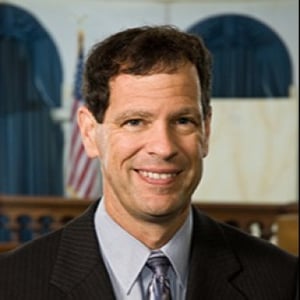
Warren Distinguished Professor of Law, University of San Diego School of Law
Michael D. Ramsey is Warren Distinguished Professor of Law at the University of San Diego School of Law, where he teaches and writes in the areas of Constitutional Law, Foreign Relations Law and International Law. He is the author of The Constitution’s Text in Foreign Affairs (Harvard University Press), co-editor of International Law in the U.S. Supreme Court: Continuity and Change (Cambridge University Press), and co-author of two casebooks, Transnational Law and Practice (2d ed., Aspen) and International Business Transactions: A Problem-Oriented Coursebook (14th ed., West). His scholarly articles have appeared in publications such as the Yale Law Journal, the University of Chicago Law Review, the Georgetown Law Journal and the American Journal of International Law. He received his B.A. magna cum laude from Dartmouth College and his J.D. summa cum laude from Stanford Law School. Prior to teaching, he served as a judicial clerk for Judge J. Clifford Wallace of the United States Court of Appeals for the Ninth Circuit and for Justice Antonin Scalia of the United States Supreme Court, and practiced law with the law firm of Latham & Watkins, where he specialized in international finance and investment. He has taught as a visiting professor at the University of California, San Diego, in the Department of Political Science and at the University of Paris – Sorbonne, in the Department of Comparative Law.
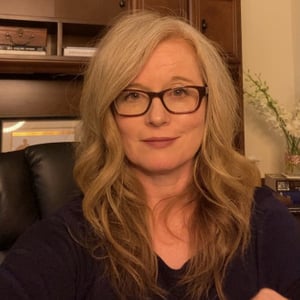
Executive Director of the Military Law and Policy Institute and AMVETS Legal Clinic
Professor Rotunda is regarded as a leading expert in military law and currently teaches Law of War and a Family Violence Clinic. She is the author of Honor Bound: Inside the Guantanamo Trials, published by Carolina Academic Press (2008). She directed the Clinic for Legal Assistance to Service Members at George Mason School of Law, where she and her students successfully represented military families in various legal disputes, including Physical Evaluation Boards and Traumatic Service Group Life Insurance Appeals. Rotunda has recovered hundreds of thousands of dollars for disabled troops.
Professor Rotunda began her career in the US Army JAG Corps and has since been recruited by the National Veterans Legal Services Program (NVLSP) to produce a series of instructional DVDs about military law. She has also authored a coordinating outline and co-authored NVLSP's forthcoming book regarding military administrative/disability proceedings, to be published by Lexis Nexis. She remains in the Army Reserves and holds the rank of Major. Rotunda has served in several missions related to the Global War on Terror: she served in Guantanamo Bay, was the legal advisor to a team of investigators pursuing leads in the war on terror, served as a prosecutor at the Office of Military Commissions, represented wounded troops at Walter Reed Army Medical Center, and was the lawyer assigned to Jessica Lynch after Lynch's rescue.
Professor Rotunda is an avid writer and advocate for soldiers. She has written op-eds for The Christian Science Monitor, The Wall Street Journal, The Chicago Tribune, and The Washington Times. She is a regular television and radio commentator regarding military law and the ongoing trials in Guantanamo Bay. She has appeared on more than 20 nationally-syndicated radio shows, including The Michael Reagan Show, The Dennis Miller Show, and the Jim Bohannon Show. Rotunda has also appeared on national and international television news programs, including Hannity's America, the Brit Hume Report, and Al Jazeera.
B.A., University of Wyoming; J.D., University of Wyoming College of Law

Agnes Williams Sesquicentennial Professor of Federal Courts, Georgetown Law
Stephen I. Vladeck is a professor of law at the Georgetown University Law Center, and is a nationally recognized expert on the federal courts; the Supreme Court; national security law; and military justice.
Vladeck is author of the New York Times bestselling book, “The Shadow Docket: How the Supreme Court Uses Stealth Rulings to Amass Power and Undermine the Republic,” which won the 2023 Writers’ League of Texas Book Award for Non-Fiction and was a finalist for the 2024 ABA Silver Gavel Award for Media and the Arts. Vladeck is also a highly regarded appellate advocate, having argued three cases before the U.S. Supreme Court and over a dozen before various lower federal civilian and military courts. He has received numerous awards for his influential and widely cited legal scholarship, his prolific popular writing, his teaching, and his service to the legal profession—including the 2024 University of Texas President’s Research Impact Award and his selection by the Order of the Coif to serve as its Distinguished Visiting Professor for 2025.
Vladeck is CNN’s Supreme Court analyst and editor and author of “One First,” a popular weekly newsletter about the Supreme Court. Together with Bobby Chesney, Vladeck co-hosts the popular and award-winning “National Security Law Podcast.” He is also a co-author of Aspen Publishers’ leading national security law and counterterrorism law casebooks. And he is a member of the Board of Trustees of EarthJustice—the nation’s premier nonprofit public interest environmental law organization.
Vladeck graduated from Yale Law School in 2004—where he was executive editor of the Yale Law Journal and won the Harlan Fiske Stone Prize for outstanding moot court oralist and shared the Potter Stewart Prize for best moot court team performance. After law school, he clerked for the Honorable Marsha S. Berzon on the U.S. Court of Appeals for the Ninth Circuit and the Honorable Rosemary Barkett on the U.S. Court of Appeals for the Eleventh Circuit. He earned a B.A. summa cum laude with Highest Distinction in History and Mathematics from Amherst College in 2001—where he wrote his senior thesis on “Leipzig’s Shadow: The War Crimes Trials of the First World War and Their Implications from Nuremberg to the Present.” A native New Yorker and hopeless Mets fan, Vladeck lives in the District with his wife, Karen (Founder and Managing Partner of Risepoint Search Partners); their daughters, Madeleine and Sydney; and their eleven-year-old pug, Roxanna.

Laurence A. Tisch Professor of Law and Director, Classical Liberal Institute, New York University School of Law; Senior Fellow, The Civitas Institute, University of Texas at Austin
Richard A. Epstein is the inaugural Laurence A. Tisch Professor of Law at NYU School of Law. Prior to his joining the faculty, he was a visiting law professor at NYU from 2007 through 2009. He served as the Peter and Kirstin Bedford Senior Fellow at the Hoover Institution from 2000 to 2024. Since 2024 to the present he is a senior lecturer at the Civitas Institute at the University of Texas—Austin. Epstein is also the James Parker Hall Distinguished Service Professor of Law Emeritus and a senior lecturer at the University of Chicago. His initial law school appointment was at the University of Southern California from 1968 to 1972. Epstein received an LL.D., h.c. from the University of Ghent, 2003. He has been a member of the American Academy of Arts and Sciences since 1985 and was a Senior Fellow of the Center for Clinical Medical Ethics at the University of Chicago Division of Biological Sciences, also from 1983. to 2022 He served as editor of the Journal of Legal Studies from 1981 to 1991, and of the Journal of Law and Economics from 1991-2001. From 2001 to 2010 he was a director of the John M. Olin Program in Law and Economics at the University of Chicago.
His newest book, The Myth of Birthright Citizenship: What the Fourteenth Amendment Really Says was published in 2026 (Encounter Books). Prior to that he has published many books including, The Dubious Morality of the Modern Administrative State (Roman & Littlefield 2020).Earlier he published th Classical Liberal Constitution: The Uncertain Quest for Limited Government (Harvard 2014) iHis previous books include Design for Liberty: Private Property, Public Administration and the Rule of Law (Harvard 2011); The Case Against the Employee Free Choice Act (Hoover 2009); Supreme Neglect: How to Revive the Constitutional Protection of Property Rights (Oxford 2008); Antitrust Decrees in Theory and Practice: Why Less is More (AEI 2007); Overdose: How Excessive Government Regulation Stifles Pharmaceutical Innovation (Yale University Press. 2006); How Progressives Rewrote the Constitution (Cato 2006); Cases and Materials on Torts (Aspen Law & Business; 8th ed. 2004); Skepticism and Freedom: A Modern Case for Classical Liberalism (University of Chicago, 2003); Torts (Aspen Law & Business 1999); Principles for a Free Society: Reconciling Individual Liberty with the Common Good (Perseus Books, 1998): Mortal Peril: Our Inalienable Rights to Health Care (Addison-Wesley, 1997); Simple Rules for a Complex World (Harvard, 1995); Bargaining With the State (Princeton, 1993); Forbidden Grounds: The Case Against Employment Discrimination Laws (Harvard , 1992); Takings: Private Property and the Power of Eminent Domain (Harvard, 1985); and Modern Products Liability Law (Greenwood Press, 1980). He has also edited(with Catherine M. Sharkey) Cases and Materials on the Law of Torts (10th edition 2012).
Professor Epstein has written numerous articles on a wide range of legal and interdisciplinary subjects. He has taught courses in administrative law, antitrust law, civil procedure, communications, constitutional law, contracts, corporations, criminal law, employment discrimination law, environmental law, food and drug law health law and policy, legal history, labor law, property, real estate development and finance, jurisprudence, labor law; land use planning, patents, individual, estate and corporate taxation, Roman Law; torts, and workers' compensation.
Professor Epstein also writes a regular column for Civitas Institute, which also sponsors his podcast, The Libertarian with Charles C.W. Cooke, and Law Talk, with Cooke and John Yoo. He also does a podcast with John Batchelor. And appears regularly on the Freedom File with Judge Andrew Napolitano.
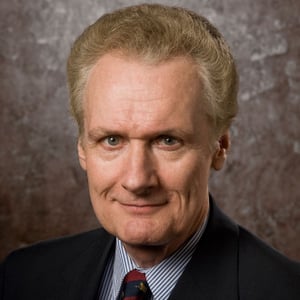
Vice President for Legal Affairs, Cato Institute
Roger Pilon is the Cato’s Institute’s vice president for legal affairs, the founding director of Cato’s Robert A. Levy Center for Constitutional Studies, the inaugural holder of Cato’s B. Kenneth Simon Chair in Constitutional Studies, and the founding publisher of the Cato Supreme Court Review.
Prior to joining Cato, Pilon held five senior posts in the Reagan administration, including at State and Justice, and was a national fellow at Stanford’s Hoover Institution. In 1989 the Bicentennial Commission presented him with its Benjamin Franklin Award for excellence in writing on the U.S. Constitution. In 2001 Columbia University’s School of General Studies awarded him its Alumni Medal of Distinction. Pilon lectures and debates at universities and law schools across the country and testifies often before Congress.
His writing has appeared in the Wall Street Journal, the Washington Post, the New York Times, the Los Angeles Times, Legal Times, National Law Journal, Harvard Journal of Law and Public Policy, Stanford Law and Policy Review, and elsewhere. He has appeared on ABC’s Nightline, CBS’s 60 Minutes II, Fox News Channel, NPR, CNN, MSNBC, CNBC, C-SPAN, and other media.
Pilon holds a BA from Columbia University, an MA and a PhD from the University of Chicago, and a JD from the George Washington University School of Law.

Chief Judge, United States Court of Appeals, Eleventh Circuit
William H. Pryor Jr. serves as Chief Circuit Judge on the United States Court of Appeals for the Eleventh Circuit.
In 2013–18, he served on the United States Sentencing Commission and, in 2017–18, served as Acting Chair.
He has taught as a visiting professor at the University of Alabama School of Law and previously taught as an adjunct professor at the Cumberland School of Law of Samford University.
He served as the 45th Attorney General of Alabama from 1997 to 2004. When he took office, he was the youngest attorney general in the nation. In his reelection, he received the highest percentage of votes of any statewide candidate.
He graduated magna cum laude from Tulane Law School where he finished first in the common-law curriculum and was editor in chief of the Tulane Law Review. He then served as a law clerk for Judge John Minor Wisdom of the U.S. Court of Appeals for the Fifth Circuit.
He is a member of The American Law Institute and an Adviser for the RESTATEMENT OF THE LAW THIRD, CONFLICT OF LAWS. He is a coauthor with Bryan Garner, Justices Gorsuch and Kavanaugh, and several other judges of a treatise, THE LAW OF JUDICIAL PRECEDENT. He has published in the Yale Law Journal, Columbia Law Review, Virginia Law Review, Notre Dame Law Review, Harvard Journal of Law & Public Policy, Yale Law & Policy Review, George Mason Law Review, Florida Law Review, Alabama Law Review, Case Western Reserve Law Review, and Tulane Law Review. He has published op-eds in The Wall Street Journal, The New York Times, National Review, and USA Today. He has debated at National Lawyers’ Conventions of the Federalist Society (including on National Public Radio) and at the Oxford Union in the United Kingdom. And he is listed among several “widely admired judicial writers” in Bryan Garner’s The Redbook: A Manual on Legal Style.
He is a member of the Tulane Law School Hall of Fame and has received the Defender of the Constitution Award from the Heritage Foundation, the Jurist of the Year Award from the Texas Review of Law & Politics, and the St. Thomas More Award from the St. Thomas More Society of Atlanta. Judge Pryor is also a proud member of the National Society of the Sons of the American Revolution.
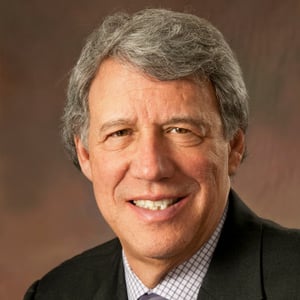
Edward H. Levi Distinguished Service Professor of Law, University of Chicago Law School
Geoffrey R. Stone is the Edward H. Levi Distinguished Service Professor at the University of Chicago. Mr. Stone joined the faculty in 1973, after serving as a law clerk to Supreme Court Justice William J. Brennan, Jr. He later served as Dean of the Law School (1987-1994) and Provost of the University of Chicago (1994-2002).
Stone is the author of many books on constitutional law, including Sex and the Constitution: Sex, Religion and Law from America’s Origins to the Twenty-First Century (2017); Speaking Out: Reflections of Law, Liberty and Justice (2010 & 2016); Top Secret: When Our Government Keeps Us in the Dark (2007), War and Liberty: An American Dilemma (2007), Perilous Times: Free Speech in Wartime (2004), and Eternally Vigilant: Free Speech in the Modern Era(Chicago 2002). He is also an editor of two leading casebooks, Constitutional Law (7th ed. 2013) and The First Amendment (5th ed. 2016). Stone is an editor of The Supreme Court Reviewand chief editor of a twenty-volume series, Inalienable Rights, which is being published by the Oxford University Press.
Stone was appointed by President Obama to serve on the President’s Review Group on Intelligence and Communications Technologies, which evaluated the government’s foreign intelligence surveillance programs in the wake of Edward Snowden’s leaks. He is a Fellow of the American Academy of Arts and Sciences, a member of the America Law Institute, the National Advisory Council of the American Civil Liberties Union, a member of the American Philosophical Society, and a member of the Board of Advisors of the Council for Democracy and Technology. He has served as Chair of the Board of the American Constitution Society and Chair of the Board of the Chicago Children’s Choir.
Stone has also written amicus briefs for constitutional scholars in a number of Supreme Court cases, including Obergefell v. Hodges, Whole Woman’s Heath v. Hellerstadt, Lawrence v. Texas, United States v. Windsor, United States v. Stevens, and Rasul v. Bush. He was also one of the lawyers who represented President Bill Clinton in the Supreme Court in Clinton v. Jones.

Emanuel S. Heller Professor of Law, University of California at Berkeley; Thomas Smith Senior Research Fellow, The Civitas Institute, University of Texas at Austin
John Yoo is the Emanuel Heller Professor of Law at the University of California at Berkeley. He is also the Thomas Smith Senior Research Fellow, Civitas Institute, at the University of Texas at Austin. He is also a Nonresident Senior Fellow at the American Enterprise Institute.
His most recent book, The Politically Incorrect Guide to the Supreme Court, co-authored with Robert Delahunty, was published in 2023. Professor Yoo’s other books include Defender-in-Chief: Trump’s Fight for Presidential Power; Striking Power: How Cyber, Robots, and Space Weapons Change the Rules for War; Point of Attack: Preventive War, International Law, and Global Welfare; and Crisis and Command: A History of Executive Power from George Washington to George Bush.
He is a co-author of volumes 1 and 2 of R. Rossum, G. Tarr, V. Munoz & J. Yoo American Constitution Law (Routledge, 2026), and a co-editor of the eight-volume series on the 250th anniversary of the American Revolution, We Hold These Truths, with Yuval Levin and Adam White of the American Enterprise Institute.
Professor Yoo has published more than 100 articles in academic journals on subjects including national security, constitutional law, international law, and the Supreme Court. He also regularly contributes to the editorial pages of the Wall Street Journal, New York Times, Washington Post, Los Angeles Times, and National Review, among others.
Professor Yoo has served in all three branches of government. He was an official in the U.S. Department of Justice, where he worked on national security and terrorism issues after the 9/11 attacks. He served as general counsel of the U.S. Senate Judiciary Committee. He has been a law clerk for Supreme Court Justice Clarence Thomas and federal appeals Judge Laurence Silberman. He has been a visiting professor at the University of Texas at Austin’s School of Civic Leadership, Seoul National University, the Interdisciplinary Center Herzliya, Keio University, Trento University, the University of Chicago, and the Free University of Amsterdam.
Professor Yoo supervises the Public Law and Policy Program and the California Constitution Center. He also serves on the boards of Founding Forward, the Washington Legal Foundation, the Pacific Legal Foundation, the Ulysses Grant Institute, the Federalist Society’s Separation of Powers and Federalism Division, the Universidad Cientifica del Sur Law School, and the Asia-Pacific Law Institute at Seoul National University. He is a winner of the Federalist Society’s Paul Bator award and the Heritage Foundation’s Edwin Meese III Originalism Lectureship.
Professor Yoo graduated from Yale Law School and summa cum laude from Harvard College.

The Annual Mike Lewis Memorial Teleforum: The Identity Crisis at the International Criminal Court
Michael A. Newton, Jeremy A. Rabkin
We are pleased to present the annual Mike Lewis Memorial teleforum. Professor Lewis was a...
The JCPOA Withdrawal
David S. Cohen, Matthew R. A. Heiman, Lester Munson
In 2015, the United States, along with China, France, Germany, Russia, the United Kingdom, and...
American Grand Strategy in the Age of Trump
Lester Munson, Hal Brands
American foreign policy is in a state of upheaval. The rise of Donald Trump and...
Presidential Nominees and Foreign Influence: Mitigating National Security Risks
Sean M. Bigley
Note from the Editor: This article describes the procedures involved in determining whether to grant...
Eleventh Hour Changes to the Census: Newly Proposed Racial Categorizations - Podcast
Roger B. Clegg, Mike Gonzalez
On September 30, the Office of Management and Budget (OMB) proposed a new rule on...
Predator Drones and Targeted Killings
Michael W. Lewis, Ben Wizner, Dean Reuter
In this Practice Groups Podcast, Professor Michael W. Lewis and ACLU National Security Project Litigation...
Panel I: Is the Separation of Powers Principle Exportable?
Jose A. Cabranes, Steven G. Calabresi, Oona A. Hathaway, Harold Hongju Koh, Juan Linz, Jide Okechuku Nzelibe, Rebekah Perry
The Federalist Society's Student Division presented this panel at the 2009 Annual Student Symposium on...
Panel: Guantanamo Bay: the Problem of Judicial Review Post-Boumediene
Erwin Chemerinsky, Robert Chesney, Michael D. Ramsey, Kyndra Kaye Rotunda, Stephen I. Vladeck
Dean Erwin Chemerinsky, University of California, Irvine School of Law Prof. Michael Ramsey, University of...
Executive Power in Wartime
Richard A. Epstein, Roger Pilon, William H. Pryor, Geoffrey R. Stone, John C. Yoo
The Federalist Society's Federalism & Separation of Powers Practice Group presented this panel discussion at...