
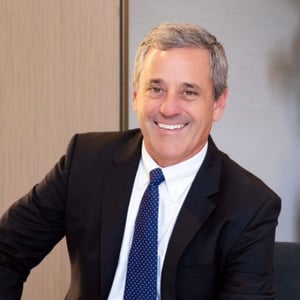
Partner, Friedland Cianfrani LLP
Mike has three decades of IP enforcement experience. He has represented clients in more than 270 intellectual property cases in state and federal courts in California and 23 other states and before the Trademark Trials and Appeals Board.
Mike’s practice includes patent, trademark, trade secret, and copyright cases. His cases have spanned a wide range of industries and technologies, including consumer products, semiconductors, tactical products, medical devices, computer software, apparel, restaurants, and financial services. He has represented brand-name companies including Oakley, Luxottica, Tesla, 5.11 Tactical, ITT, Makita, Pacific Life Insurance Company, Carl’s Jr., Microsemi, NASCAR, Daytona International Speedway, Game Show Network, Razor, Volcom, Specialized Bicycle, Mexicana Airlines, and SRS Labs, among others.
Mike was a partner at Knobbe Martens for more than two decades. At Knobbe, Mike served as co-chair of the Litigation Department. He had previously served as co-chair of the Trademark/Brand Protection group and the Consumer Products practice group.
World Trademark Review 1000 has several times named Mike a “Leading Trademark Lawyer." In the 2022 edition, WTR 1000 commended him for his “advanced state of preparedness,” and included a client remark that, “there’s nothing he hasn’t seen.”
In the 2021 edition, WTR described him as a “backbone of [his former firm's] litigation practice,” and noted his ability to litigate “cases associated with all categories of IP rights.”
In the 2020 edition, WTR described him as having been “on the cutting edge of enforcement for three decades.” In that edition, a client said he was “a sophisticated and thoughtful professional who understands how to get things done.”
In 2023, Legal 500 named Mike to its list of preeminent patent litigators. Thompson/Reuters has regularly named him a “Southern California Super Lawyer” in the category of IP litigation since 2004.
He frequently speaks on intellectual property litigation subjects, including to the AIPLA, OCBA, OCIPLA, LAIPLA, ABA, ACC, INTA, Harvard Law School Association, Harvard Business School Association, MIT Alumni Association, and the Federalist Society. Mike’s articles on IP subjects have been featured in publications including American Marketer, Luxury Roundtable, IP Watchdog, Law 360, IP 360, The Trademark Lawyer, The Los Angeles Daily Journal, The Recorder, ABA Landslide, Orange County Business Journal, Engage, and Stanford Technology Review.
Mike has taught as an adjunct professor at Whittier School of Law and served as a JAG with the California State Military Reserve. For 16 years, he served as a Reserve Deputy with the Orange County Sheriff’s Department, retiring as a Lieutenant.
Mike serves on the Harvard Law School Association’s Senior Advisory Committee, is a board member of the Federal Bar Association of Orange County, and the vice-chair of the Executive Committee of the Federalist Society's Intellectual Property Practice Group. He is a former member of Law360's Intellectual Property Editorial Board, a former member and former Secretary of the Harvard Law School Association's Executive Committee, and a former president of the Harvard Law School Association of Orange County.
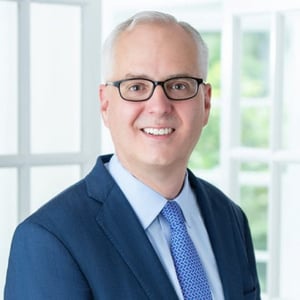
Principal, Clear IP, LLC
Joseph Matal is the Principal at Clear IP, LLC.
Joe has served as both the U.S. Patent and Trademark’s Acting Director and Acting Solicitor. As Acting Solicitor, he defended the agency in intellectual property cases before the U.S. Court of Appeals for the Federal Circuit and U.S. Supreme Court. In his role in the Solicitor’s Office, he participated in briefing almost every major case involving PTAB trials that has come before the Federal Circuit, including cases that have defined the Board’s powers and the evidence that it may consider, the content of final decisions, and the burdens and scope of motions to amend. Recent cases include Uniloc v. Hulu, Thryv v. Click-to-Call, and Aqua Products v. Matal. Previously, Joe served in senior legal roles for more than a decade for the U.S. Senate Judiciary Committee. In that capacity, he negotiated and drafted many of the key provisions of the America Invents Act.
In his roles at the USPTO, Joe briefed and argued numerous appeals of patent and trademark decisions before the Federal Circuit; oversaw the management of the USPTO and its 13,000 employees; and advised the U.S. Solicitor General’s Office in key IP cases before the Supreme Court.

Associate Dean for Academic Affairs, Austin E. Owen Research Scholar & Professor of Law, The University of Richmond School of Law
Dean Kristen Jakobsen Osenga teaches and writes in the areas of patent law, antitrust, and legislation and regulation. Some of her recent scholarship focuses on standard development organizations, patent eligible subject matter, patent licensing firms, litigation and remedies for patent infringement, and patent law reform. She has written numerous law review articles on these and other topics, as well as book chapters and op eds on various aspects of patent law. Additionally, she has spoken on these issues at many academic conferences and bar events. Dean Osenga is Chief Policy Counselor for the Inventors Defense Alliance, as well as an active member of the Federal Circuit Bar Association and the American Intellectual Property Law Association.
Dean Osenga received a B.S. degree in Biomedical Engineering from the University of Iowa, an M.S. degree in Electrical Engineering from Southern Illinois University – Carbondale, and a J.D. from the University of Illinois College of Law, where she graduated magna cum laude. After law school, she practiced at the law firm of Finnegan, Henderson, Farabow, Garrett, & Dunner LLP, (now Finnegan) where she did patent prosecution and litigation. She then clerked for the Judge Richard Linn of the U.S. Court of Appeals for the Federal Circuit. After clerking, she entered academia, teaching first at Chicago-Kent College of Law and then at the University of Richmond, where she has been since 2006. She has also been a Visiting Professor at Emory University School of Law and at William & Mary School of Law.
Chief Judge (ret.), U.S. Court of Appeals for the Federal Circuit, and Honorary Professor, Tsinghua University
Randall R. Rader was appointed to the United States Court of Appeals for the Federal Circuit by President George H. W. Bush in 1990 and served as Chief Judge from June 2010 to June 2014. He was appointed to the United States Claims Court (now the U. S. Court of Federal Claims) by President Ronald W. Reagan in 1988. Judge Rader's most prized title may well be "Professor Rader."
As Professor, Judge Rader has taught courses on patent law and other advanced intellectual property courses at The George Washington University Law School,University of Virginia School of Law, Georgetown University Law Center, the Munich Intellectual Property Law Center, and other university programs in Tokyo, Taipei, New Delhi, and Beijing. Due to the size and diversity of his classes, Judge Rader may have taught patent law to more students than anyone else. Judge Rader has also co-authored several texts including the most widely used textbook on U. S. patent law, "Cases and Materials on Patent Law," (St. Paul, Minn.: Thomson/West 3d ed. 2009) and "Patent Law in a Nutshell," (St. Paul, Minn.: Thomson/West 2007) (translated into Chinese and Japanese). Judge Rader has won acclaim for leading dozens of government and educational delegations to every continent (except Antarctica), teaching rule of law and intellectual property law principles.
Judge Rader has received many awards, including the Sedona Lifetime Achievement Award for Intellectual Property Law, 2009; Distinguished Teaching Awards from George Washington University Law School, 2003 and 2008 (by election of the students); the Jefferson Medal from the New Jersey Intellectual Property Law Association, 2003; the Distinguished Service Award from the Berkeley Center for Law and Technology, 2003; the J. William Fulbright Award for Distinguished Public Service from George Washington University Law School, 2000; and the Younger Federal Lawyer Award from the Federal Bar Association, 1983. Before appointment to the Court of Federal Claims, Judge Rader served as Minority and Majority Chief Counsel to Subcommittees of the U.S. Senate Committee on the Judiciary. From 1975 to 1980, he served as Counsel in the House of Representatives for representatives serving on the Interior, Appropriations, and Ways and Means Committees. He received a B.A. in English from Brigham Young University in 1974 and a J.D. from George Washington University Law School in 1978.

Partner, Steptoe & Johnson LLP
Stewart Baker is a partner in the law firm of Steptoe & Johnson in Washington, D.C. From 2005 to 2009, he was the first Assistant Secretary for Policy at the Department of Homeland Security. His law practice covers cybersecurity, data protection, homeland security, and travel and foreign investment regulation; he has been awarded one patent.
Mr. Baker has been General Counsel of the National Security Agency and General Counsel of the commission that investigated WMD intelligence failures prior to the Iraq war. He is the author of Skating on Stilts, a book on terrorism, cybersecurity, and other technology issues; he also hosts the weekly Cyberlaw Podcast.
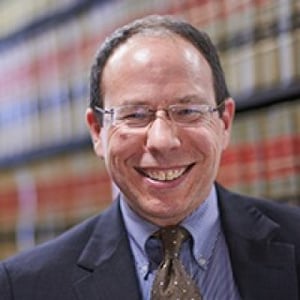
Professor of Law, Michigan State University (currently serving as FCC General Counsel)
Professor Candeub joined the MSU Law faculty in fall 2004. He is also a Fellow with MSU's Institute of Public Utilities. Prior to joining MSU, he served as an advisor at the Federal Communications Commission (FCC). From 1998 to 2000, Professor Candeub was a litigation associate for the Washington D.C. firm of Jones, Day, Reavis & Pogue and also has served as a corporate associate with Cleary, Gottlieb, Steen & Hamilton, also in Washington, D.C. Immediately following law school, he clerked for Chief Judge J. Clifford Wallace, U.S. Court of Appeals for the Ninth Circuit. While in law school, Professor Candeub was an articles editor for the University of Pennsylvania Law Review.
Professor Candeub's scholarly interests focus on the law and regulation of communications, internet, technology. His numerous law review articles and scholarly papers have placed him at the center of legal and policy controversies, and he often writes for popular outlets such as the Wall Street Journal and US News. Federal courts, including the U.S. Supreme Court, have cited and relied upon his work.
He joined the Trump administration in 2019 as Deputy Assistant Secretary of Commerce for Telecommunications and Information and assumed the role of Acting Assistant Secretary. He later joined the Department of Justice as Deputy Associate Attorney General.
Professor Candeub is a senior fellow at the D.C.-based Center of Renewing America.
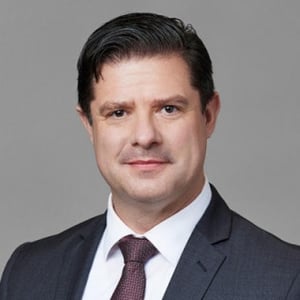
Partner, Stris & Maher LLP, Fellow, Constitutional Law Center, Stanford Law School
Matthew A. Seligman is a lawyer and legal scholar based in Los Angeles, California and Washington, D.C. His academic research focuses on election law, with a particular emphasis on disputed presidential elections. He is a partner at Stris & Maher LLP and a fellow at the Constitutional Law Center at Stanford Law School. His broader research interests span constitutional law, federal courts, contracts, and private law theory.
His scholarship has appeared in the Stanford Law Review, the Michigan Law Review, the Vanderbilt Law Review, Philosophy and Public Affairs, and elsewhere. His work on disputed presidential elections has received extensive coverage in the New York Times, the Washington Post, and dozens of other venues. He is a frequent commentator on election law issues, including numerous appearances on CNN, MSNBC, and other news channels.
He was previously a Climenko Fellow and Lecturer on Law at Harvard Law School, a Fellow at the Center for Private Law at Yale Law School, and a Visiting Assistant Professor at the Benjamin N. Cardozo School of Law.
Prior to his academic appointments, he practiced Supreme Court litigation at a boutique litigation firm in Washington, D.C. He clerked for the Honorable Douglas H. Ginsburg on the United States Court of Appeals for the District of Columbia Circuit.
He received a J.D. from Stanford Law School; a Ph.D. in philosophy from New York University, focusing on political and moral philosophy; an M.A. in philosophy from Stanford, and dual undergraduate degrees in mathematics and philosophy from Stanford.
Partner, Steptoe & Johnson LLP
Stewart Baker is a partner in the law firm of Steptoe & Johnson in Washington, D.C. From 2005 to 2009, he was the first Assistant Secretary for Policy at the Department of Homeland Security. His law practice covers cybersecurity, data protection, homeland security, and travel and foreign investment regulation; he has been awarded one patent.
Mr. Baker has been General Counsel of the National Security Agency and General Counsel of the commission that investigated WMD intelligence failures prior to the Iraq war. He is the author of Skating on Stilts, a book on terrorism, cybersecurity, and other technology issues; he also hosts the weekly Cyberlaw Podcast.
Professor of Law, Michigan State University (currently serving as FCC General Counsel)
Professor Candeub joined the MSU Law faculty in fall 2004. He is also a Fellow with MSU's Institute of Public Utilities. Prior to joining MSU, he served as an advisor at the Federal Communications Commission (FCC). From 1998 to 2000, Professor Candeub was a litigation associate for the Washington D.C. firm of Jones, Day, Reavis & Pogue and also has served as a corporate associate with Cleary, Gottlieb, Steen & Hamilton, also in Washington, D.C. Immediately following law school, he clerked for Chief Judge J. Clifford Wallace, U.S. Court of Appeals for the Ninth Circuit. While in law school, Professor Candeub was an articles editor for the University of Pennsylvania Law Review.
Professor Candeub's scholarly interests focus on the law and regulation of communications, internet, technology. His numerous law review articles and scholarly papers have placed him at the center of legal and policy controversies, and he often writes for popular outlets such as the Wall Street Journal and US News. Federal courts, including the U.S. Supreme Court, have cited and relied upon his work.
He joined the Trump administration in 2019 as Deputy Assistant Secretary of Commerce for Telecommunications and Information and assumed the role of Acting Assistant Secretary. He later joined the Department of Justice as Deputy Associate Attorney General.
Professor Candeub is a senior fellow at the D.C.-based Center of Renewing America.
Partner, Stris & Maher LLP, Fellow, Constitutional Law Center, Stanford Law School
Matthew A. Seligman is a lawyer and legal scholar based in Los Angeles, California and Washington, D.C. His academic research focuses on election law, with a particular emphasis on disputed presidential elections. He is a partner at Stris & Maher LLP and a fellow at the Constitutional Law Center at Stanford Law School. His broader research interests span constitutional law, federal courts, contracts, and private law theory.
His scholarship has appeared in the Stanford Law Review, the Michigan Law Review, the Vanderbilt Law Review, Philosophy and Public Affairs, and elsewhere. His work on disputed presidential elections has received extensive coverage in the New York Times, the Washington Post, and dozens of other venues. He is a frequent commentator on election law issues, including numerous appearances on CNN, MSNBC, and other news channels.
He was previously a Climenko Fellow and Lecturer on Law at Harvard Law School, a Fellow at the Center for Private Law at Yale Law School, and a Visiting Assistant Professor at the Benjamin N. Cardozo School of Law.
Prior to his academic appointments, he practiced Supreme Court litigation at a boutique litigation firm in Washington, D.C. He clerked for the Honorable Douglas H. Ginsburg on the United States Court of Appeals for the District of Columbia Circuit.
He received a J.D. from Stanford Law School; a Ph.D. in philosophy from New York University, focusing on political and moral philosophy; an M.A. in philosophy from Stanford, and dual undergraduate degrees in mathematics and philosophy from Stanford.

Assistant Professor of Law, American University Washington College of Law
Charles Duan is an assistant professor at American University Washington College of Law. His research focuses on how intellectual property and technology law interact with public policy and the public interest. He has written about patent law and drug pricing, copyright protection in legal texts, government use of patents, consumer interests in technology, and conflicts between regulation and intellectual property.
Duan previously was a postdoctoral fellow at Cornell Tech and a research fellow at Colorado Law School, working on National Science Foundation–funded Internet law research. He was also the director of technology and innovation policy at the R Street Institute, the director of the patent reform project at Public Knowledge, and a patent attorney at the law firm Knobbe Martens. In addition to his academic publications, he has authored over two hundred amicus curiae briefs, policy papers, administrative comments, and media articles, which have been cited in the Supreme Court and federal courts of appeals. He received an A.B. degree in Computer Science from Harvard College, and his J.D. from Harvard Law School.

Of-Counsel, Holland & Knight
John Moran is a litigation attorney in Holland & Knight's Washington, D.C. office. Mr. Moran focuses his practice on intellectual property matters.
Mr. Moran has experience litigating many patent, trademark and trade secret cases in federal district court and argues appeals at the U.S. Court of Appeals for the Federal Circuit and U.S. Court of Appeals for the Fourth Circuit. He also has experience representing clients in Section 337 investigations before the International Trade Commission. His significant knowledge has led him to be called upon to testify as an expert witness on patent issues.
Mr. Moran has prosecuted or directly supervised the prosecution of hundreds of patent applications in many different technologies, including telecommunications systems and equipment, robotics, artificial intelligence (AI), imaging technology, nuclear reactor instrumentation, semiconductor devices and manufacturing processes and medical devices.
Prior to entering private practice, Mr. Moran worked as an electrical engineer for six years in the fields of semiconductor design, microprocessor design and software, microprocessor-controlled products, process control and telecommunications. His engineering career included four years with RCA at its solid state division and at its David Sarnoff Research Center.

Associate Professor, UNH Franklin Pierce School of Law
Zvi S. Rosen is an Associate Professor at UNH Franklin Pierce School of Law and the Faculty Director of the Franklin Pierce Society for Intellectual Property. He has served as a Assistant Professor at the Southern Illinois University School of Law, as a Visiting Assistant Professor at the Maurice A. Deane School of Law at Hofstra University, and as a Visiting Scholar and Professorial Lecturer in Law at George Washington University School of Law.
In 2015-2016, he was the Abraham L. Kaminstein Scholar in Residence at the U.S. Copyright Office. Mr. Rosen received his J.D. from Northwestern University School of Law in 2005 and LLM in Intellectual Property in 2006 from the George Washington University Law School. He has practiced at Fried, Frank, Harris, Shriver & Jacobson LLP as well as smaller firms and his own practice, and clerked for the Hon. Thomas B. Bennett of the U.S. Bankruptcy Court for the Northern District of Alabama. He has written extensively on the development of modern copyright and trademark law, as well as on bankruptcy law.
CoFounder, RightsClick
Steven’s extensive background in IP law and policy began as an attorney for the U.S. Senate Judiciary Committee, after which, he served as senior counsel for Policy and International Affairs at the U.S. Copyright Office and then as Chief Intellectual Property Counsel for the Global Intellectual Property Center of the U.S. Chamber of Commerce. Before co-founding RightsClick, he started the IP consultancy Sentinel Worldwide, and teaches copyright law at George Washington University Law School.
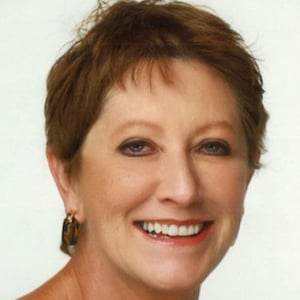
Former Chief Judge, U.S. Court of Federal Claims
Judge Braden was appointed to the United States Court of Federal Claims on July 14, 2003, by President George W. Bush, after being confirmed by unanimous consent of the United States Senate. She was sworn into office by Senator Jeff Sessions. Her investiture was conducted on October 24, 2003 by Justice Sandra Day O’Connor and Justice Ruth Bader Ginsburg.
On January 28, 2015, Judge Braden was appointed by the American Law Institute as one of seven Judicial Advisors to the Restatement of the Law on Copyright. In 2013, Judge Braden was appointed to the Judges Special Committee of the American Intellectual Property Law Association and was named as Chair of the Intellectual Property Committee of the Advisory Council of the United States Court of Federal Claims. On March 23, 2012, Judge Braden received the Linn Inn Alliance Distinguished Service Medal at the New York Intellectual Property Lawyers Association Annual Dinner for her work with the American Inns of Court, dedicated to intellectual property law. On February 7, 2012, Judge Braden was appointed as Chair of the American Bar Association’s Section of Intellectual Property Law Task Force to consider how to more efficiently adjudicate "small" patent infringement cases. During 2010-2011, Judge Braden served as President of the Giles S. Rich American Inn of Court, which is affiliated with the United States Court of Appeals for the Federal Circuit. She was recognized at a ceremony in the United States Supreme Court in November 2011, when she received the American Inns of Court’s Platinum Distinction Award. Judge Braden also served as a Member of the Editorial Board of the American Intellectual Property Law Association.
In July 2009, Judge Braden was appointed as a Member of the Standing Committee on Ethics and Professional Responsibility-Judges Advisory Committee to the American Bar Association, on which she served until 2012. On February 14, 2007, Judge Braden was elected as a Member of the American Law Institute and was active in drafting Restatement of Law Third, Restitution and Unjust Enrichment. On October 22, 2004, she was inducted as a Senior Fellow of the ABA’s Administrative Law and Regulatory Section by Justice O’Connor at a ceremony held at the United States Supreme Court.
Prior to joining the bench, Judge Braden litigated complex federal and administrative law cases in private practice in trial and appellate courts. In particular, her work in the intellectual property area received favorable notice in the Wall Street Journal, New York Times, National Law Journal, and the Journal of the American Bar Association, and was featured in Interfaces on Trial: Intellectual Property and Interoperability In The Global Software Industry. In 1996, Judge Braden was honored by the Computer Law Association for winning multiple decisions in the Eastern District of New York, the Eastern District of Texas, the Second Circuit, and a certified question to the Supreme Court of Texas in Computer Assocs. Int’l, Inc. v. Altai Inc., a landmark case that changed the application of copyright law to computer software. In 1998, she also won a companion case brought in France before the Cour de Appel de Paris.
In private practice, Judge Braden represented a wide variety of client interests before almost every major department and federal agency, testified before the United States Congress on a variety of matters, and was a principal lobbyist for the Emergency Oil and Steel Loan Guarantee Act of 1999, that established a $1 billion federal loan guarantee program to assist bankrupt and troubled steel mills and small oil companies.
Judge Braden received a B.A. degree (1970) and J. D. degree (1973) from Case Western Reserve University in Cleveland, Ohio. She also attended post graduate courses at the Harvard Law School in the summer of 1978.
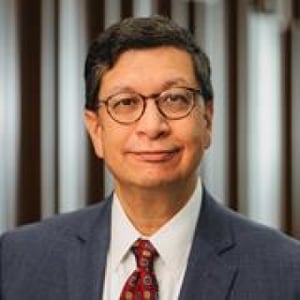
James T. Jensen Endowed Professor for Transactional Law & Director of the Program on Intellectual Property and Technology Law, University of Utah S.J. Quinney College of Law
Jorge L. Contreras is a Distinguished University Professor, the James T. Jensen Endowed Professor for Transactional Law and Director of the Program on Intellectual Property and Technology Law. He teaches and researches in the areas of intellectual property, property law, technical standardization, antitrust and science policy. In 2020 he received the University of Utah's Distinguished Research Award and is an elected member of the American Law Institute. He has testified before the U.S. Senate and House Subcommittees on Intellectual Property, and was awarded the Rossman Memorial Award by the Patent & Trademark Office Society in 2022.
Professor Contreras has written or edited fourteen books and published more than 150 scholarly articles and chapters. His book, The Genome Defense: Inside the Epic Legal Battle to Determine Who Owns Your DNA (NY: Hachette/Algonquin, 2021), has been praised by the NY Times, Wall St. Journal, Nature and numerous other outlets, and was named "Best Patent Law Book of the Year" by the international IPKat blog. His scholarly articles have appeared in leading scientific, legal and policy journals including Science, Nature, NYU Law Review, Georgetown Law Journal, Iowa Law Review and Antitrust Law Journal. He has been quoted by media outlets around the world including the New York Times, Wall Street Journal, Economist, Bloomberg, Washington Post, Korea Times and has been featured on C-SPAN, NPR, PRI and BBC shows and a range of podcasts and online news programs.
Professor Contreras currently serves Co-Chair of the Interdisciplinary Division of the ABA's Section of Science & Technology Law and a member of the Advisory Board of the American Antitrust Institute. He has previously served as Co-Chair of the National Conference of Lawyers and Scientists, a member of the National Academy of Sciences (NAS) Committee on Intellectual Property Management in Standard-Setting Processes, the National Institutes of Health (NIH) Council of Councils, the Advisory Council of NIH's National Center for the Advancement of Translational Sciences (NCATS), the National Advisory Council for Human Genome Research, and the Intellectual Property Rights Policy Committee of the American National Standards Institute (ANSI). In 2021 he served as Chair of the Art Law Section of the Association of American Law Schools (AALS) and currently serves as Chair of the AALS Remedies Section.
Professor Contreras has previously taught at American University Washington College of Law and Washington University in St. Louis. Prior to entering academia he was a partner at the international law firm Wilmer Cutler Pickering Hale and Dorr LLP, where he practiced transactional and intellectual property law in Boston, London and Washington DC. He is a cum laude graduate of Harvard Law School (JD) and Rice University (BA, BSEE) and clerked for Chief Justice Thomas R. Philips of the Texas Supreme Court.
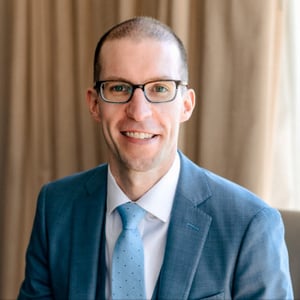
Vice President of Domestic Policy, National Association of Manufacturers
Charles Crain is the Vice President of Domestic Policy at the National Association of Manufacturers. In this role, he leads the association’s policy development and advocacy work on economic policy issues critical to the success of manufacturing in the United States, including tax, corporate governance, technology, health care, regulatory reform, and immigration. Prior to taking on the VP role, Charles led the NAM’s corporate finance policy portfolio, focused primarily on engagement with the Securities and Exchange Commission. He previously worked on Capitol Hill for members of the Senate Finance and House Financial Services Committees and was the Director of Tax and Financial Services Policy at the Biotechnology Innovation Organization.
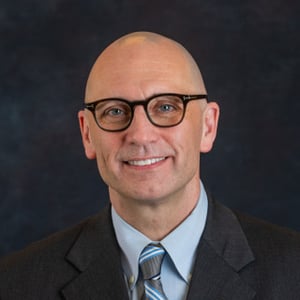
Senior Counsel for Law and Policy, Committee for Justice
Jeff is a registered patent attorney and an intellectual property and innovation policy professional with a unique combination of training and real-world experience. Jeff is also currently a PhD candidate at the University of Pittsburgh Graduate School of Public and International Affairs (GSPIA). His dissertation is entitled “An Inquiry into the Nature and Causes of American Innovation: An Austrian Economics Perspective.”
Jeff maintains an active intellectual property law practice in the life sciences space. While counseling clients and working on his dissertation and other scholarship, Jeff remains active in the policy analysis and advocacy space. He currently serves as the President of the Association for American Innovation and a member and former Chair of the Public Policy Legal Task Force (PPLTF) for the Association of University of Technology Managers (AUTM).
Jeff has a bachelor’s degree chemical and biomedical engineering with concentrations in molecular biology and fermentation technology and from Carnegie Mellon. He also has a master’s degree in industrial administration (business) from Carnegie Mellon where he concentrated on international management, marketing and finance. He earned his law degree from the Duquesne University School of Law with a focus on intellectual property law.

Senior Partner, ACG Advocacy
Chris Israel is a Senior Partner at ACG Advocacy and is also the co-lead of the firm’s technology and intellectual property group.
He joined ACG in 2010, after serving in the George W. Bush Administration as Deputy Chief of
Staff to the Secretary of Commerce and later becoming the first U.S. International Intellectual
Property Enforcement Coordinator.
At ACG Advocacy, Chris works with a diverse range of clients including some of the largest and
most innovative companies in the world to support their efforts to build a policy environment in the U.S. that promotes and protects their investments in intellectual property. He has also
developed a unique focus leading a coalition of top venture capitalists and innovative startups to pursue a policy agenda that has led to improvements in tax policy, investments in R&D, and
strengthening patent protection.
Chris maintains a leadership profile working on IP and innovation issues and has been a frequent public speaker and has testified before Congress multiple times both as an Administration official and since he left public service. He was previously named one of the 50 “Most Influential People on IP” by Managing Intellectual Property magazine.
His international experience in government, particularly in working with China, has enabled him to successfully engage clients on global trade and technology matters ranging from the
negotiations of trade agreements, tariff policy, and engaging international organizations. His
client relationships have included automakers, global manufacturing companies, shipping
companies, and Chinese e-commerce and social media platforms seeking to better understand the U.S. market.
Chris’ experience leading coalitions has also included serving as Executive Director of the
musicFIRST Coalition during the lead-up to the passage of the landmark Music Modernization
Act. During this time he was named to Medium’s inaugural “Power 10” list of music policy
leaders.
Within ACG Advocacy, he provides guidance on the firm’s day-to-day interaction with all its
clients and helps lead ACG’s extensive policy research team. He has also launched the firm’s
podcast focused on policy trends and developments in Washington.
Earlier in his career, Chris worked on international policy issues at Time Warner where he was
part of a team that supported then-CEO, Gerald Levin, to develop the Global Business Dialogue on E-Commerce a ground-breaking global organization of CEOs from the U.S., EU, and Asia that developed industry best practices on matters such as online privacy, cross border data flows, and online taxation.
Prior to Time Warner, he served on Capitol Hill as a legislative aide to U.S. Representatives Jan
Meyers (R-KS) and Todd Tiahrt (R-KS).
Chris received his B.A. from the University of Kansas and an M.B.A. from The George
Washington University.
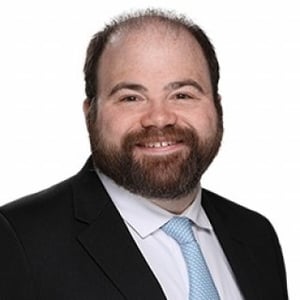
Partner, Horvitz & Levy
Leading businesses, public entities, and employers rely on Scott Dixler’s capabilities in matters involving complex business disputes, class actions, discrimination claims, and torts.
Scott has presented more than twenty oral arguments in state and federal appellate courts. Recognizing Scott’s capabilities as an oral advocate, clients have retained Scott to argue appeals briefed by other counsel. Scott serves on the Amicus Committee of the Association of Southern California Defense Counsel. He is also on the Executive Board of the American Bar Association Judicial Division’s Council of Appellate Lawyers and formally served on the Board of the Los Angeles Lawyers' Chapter of the Federalist Society.
Prior to joining the firm, Scott gained experience as a litigation associate at Cravath, Swaine & Moore LLP in New York.

Samuel H. McCoy II Professor of Law, University of Virginia School of Law
John F. Duffy is the Samuel H. McCoy II Professor of Law and Class of 1966 Research Professor of Law at the University of Virginia School of Law, where he teaches administrative law, torts and intellectual property. Professor Duffy has published articles on a wide range of administrative law and regulatory issues in journals such as University of Chicago Law Review, Yale Law Journal, Stanford Law Review, Virginia Law Review, Columbia Law Review, Texas Law Review, Northwestern University Law Review, NYU Law Review, University of Pennsylvania Law Review and the Supreme Court Review. His 1998 article Administrative Common Law in Judicial Review, 77 Tex. L. Rev. 113 (1998), was one of the first articles to criticize the Chevron doctrine as being irreconcilable with § 706 of the APA; it won the American Bar Association’s Scholarship Award in Administrative Law. His 2008 article “Are Administrative Patent Judges Unconstitutional?” was covered on National Public Radio), in the New York Times (Adam Liptak, In One Flaw, Questions on Validity of 46 Judges, May 6, 2008), and in the Wall Street Journal (Dan Slater, Patently Unconstitutional, May 6, 2008). The NYT and WSJ agreed that he was “a different kind of law professor,” “one of the lucky few” whose “writings actually wind up changing the law.”
As an attorney in the courts, Duffy has twice successfully convinced the Supreme Court to overturn lower court doctrines that had been applied in many cases over decades but that were unanimously held to be irreconcilable with Supreme Court precedents. See TC Heartland v. Kraft Foods Group Brands, 581 U.S. 258 (2017); KSR v. Teleflex, 550 U.S. 398 (2007).
Prior to entering legal academics, Duffy clerked on the D.C. Circuit for Stephen Williams and on the Supreme Court for Antonin Scalia. While clerking, he became known as Justice Scalia’s “hapless law clerk,” who had been tasked with unearthing three-quarters of a century of legislative history that made “no difference” to the outcome in an otherwise forgettable case. See Conroy v. Aniskoff, 507 U.S. 511, 527-28 (1993) (Scalia, J., concurring in the judgment).
In earlier days, Duffy enjoyed being a professional blackjack player unwelcome in all Atlantic City casinos and a semi-professional road runner (best marathon time 2:24:33). He holds an A.B. in physics from Harvard and a J.D. from the University of Chicago.
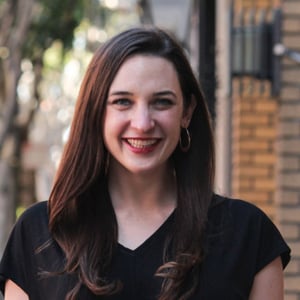
General Counsel, Strive
Before joining Strive, Alexandra served as the Director of Regulatory Affairs at River Financial, where she handled all regulatory and government matters and served as product counsel. Prior to her time at River, Alexandra worked at the U.S. Department of Treasury, first in the General Counsel’s office and then as the youngest-ever Executive Secretary, where she worked directly with Secretary Mnuchin. Alexandra previously worked as an associate in the Washington, D.C. office of Akin Gump. She clerked for then-Justice Allison Eid on the Colorado Supreme Court and Judge Jennifer Elrod on the U.S. Court of Appeals for the Fifth Circuit. She holds a J.D. from the University of Texas and a B.A. from The King’s College.
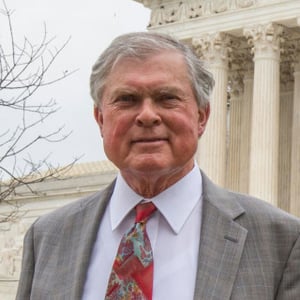
Senior Fellow, Independent Institute
Dr. Stephen P. Halbrook is a Senior Fellow at the Independent Institute. He has taught legal and political philosophy at George Mason University, Howard University, and Tuskegee Institute, and he received his J.D. from the Georgetown University Law Center and Ph.D. in social philosophy from Florida State University.
The winner of three cases before the U.S. Supreme Court (Printz v. United States, United States v. Thompson/Center Arms Company, and Castillo v. United States), he has testified before the Subcommittee on the Constitution of the Senate Judiciary Committee, Senate Subcommittee on the Constitution, Subcommittee on Crime of the House Judiciary Committee, Senate Governmental Affairs Committee, and House Committee on the District of Columbia.
A contributor to numerous scholarly volumes, he is the author of the books, Gun Control in Nazi-Occupied France: Tyranny and Resistance; Gun Control in the Third Reich: Disarming the Jews and “Enemies of the State”; The Founders’ Second Amendment: Origins of the Right to Bear Arms; That Every Man Be Armed: Evolution of a Constitutional Right; A Right to Bear Arms; Firearms Law Deskbook: Federal and State Criminal Practice; Securing Civil Rights: Freedmen, the Fourteenth Amendment, and the Right to Bear Arms; State and Federal Bills of Rights and Constitutional Guarantees; and Target Switzerland: Swiss Armed Neutrality in World War II. Dr. Halbrook’s scholarly articles have appeared in such journals as the Arizona Journal of International and Comparative Law, Drug Law Report, George Mason University Law Review, Journal of Air Law and Commerce, Journal of Law and Policy, Law & Contemporary Problems, National Law Journal, Northern Kentucky Law Review, St. John’s Journal of Legal Commentary; Seton Hall Constitutional Law Journal, Tennessee Law Review, University of Dayton Law Review, Valparaiso University Law Review, Vermont Law Review, and William & Mary Bill of Rights Journal.
Dr. Halbrook's popular articles have appeared in such publications as the Wall Street Journal, Newsday, San Francisco Chronicle, National Review, Investor’s Business Daily, Kansas City Star, Washington Examiner, Shreveport Times, Sacramento Bee, Providence Journal, Tampa Tribune, Pittsburgh Tribune-Review, History News Network, San Antonio Express-News, The Daily Caller, Detroit News, Honolulu Star Advertiser, Birmingham News, Environmental Forum, USA Today, and Washington Times. He has also appeared on numerous national TV/radio programs on CNN, Fox News Channel, Fox Business Network, Court TV, NewsMax TV, CBN, Voice of America, and C-SPAN.
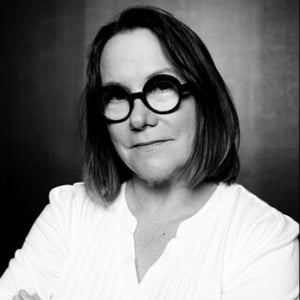
Independent Analyst, None
Allison Hayward most recently served as the Head of Case Selection at the Oversight Board. Previously, she was a Commissioner at the California Fair Political Practices Commission, a Board Member at the Office of Congressional Ethics, and an Assistant Professor of Law at George Mason University School of Law. She also previously worked as Chief of Staff and Counsel in the office of Federal Election Commission Commissioner Bradley A. Smith and practiced election law in California and in Washington DC.
In 1994-1995, Professor Hayward was a judicial clerk for the Honorable Danny J. Boggs, United States Court of Appeal for the Sixth Circuit.
She is a member of the State Bar of California and the District of Columbia Bar.
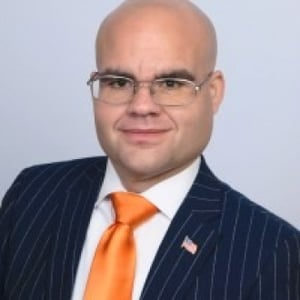
Counsel, Keller Postman LLC
John Masslon is a Counsel at Keller Postman LLC, where he works on a broad range of disputes, including products liability and consumer protections suits. He helps develop legal strategies, writes briefs, and presents argument on legal questions. Before joining Keller Postman, John was senior litigation counsel at Washington Legal Foundation. There, he wrote about 100 amicus briefs supporting free enterprise in courts across the country. He filed the first amicus brief in the Supreme Court supporting the challenge to OSHA’s vaccine mandate. He also filed a brief supporting ending the in-house proceedings at the Securities and Exchange Commission. Previously, John served as assistant solicitor general in a state attorney general’s office. There, he was first chair in a federal trial challenging a state election law that was ultimately upheld. He also wrote the briefs that convinced the state supreme court to uphold the State’s right-to-work statute.
John obtained his B.S. in economics with a minor in mathematical sciences from Clemson University. He then received his J.D. and LL.M. in Taxation from Georgetown University Law Center. After law school, John worked for Judge Arthur J. Schwab of the United States District Court for the Western District of Pennsylvania and clerked for Judge Judith Ference Olson of the Superior Court of Pennsylvania.
Partner, Horvitz & Levy
Leading businesses, public entities, and employers rely on Scott Dixler’s capabilities in matters involving complex business disputes, class actions, discrimination claims, and torts.
Scott has presented more than twenty oral arguments in state and federal appellate courts. Recognizing Scott’s capabilities as an oral advocate, clients have retained Scott to argue appeals briefed by other counsel. Scott serves on the Amicus Committee of the Association of Southern California Defense Counsel. He is also on the Executive Board of the American Bar Association Judicial Division’s Council of Appellate Lawyers and formally served on the Board of the Los Angeles Lawyers' Chapter of the Federalist Society.
Prior to joining the firm, Scott gained experience as a litigation associate at Cravath, Swaine & Moore LLP in New York.
Samuel H. McCoy II Professor of Law, University of Virginia School of Law
John F. Duffy is the Samuel H. McCoy II Professor of Law and Class of 1966 Research Professor of Law at the University of Virginia School of Law, where he teaches administrative law, torts and intellectual property. Professor Duffy has published articles on a wide range of administrative law and regulatory issues in journals such as University of Chicago Law Review, Yale Law Journal, Stanford Law Review, Virginia Law Review, Columbia Law Review, Texas Law Review, Northwestern University Law Review, NYU Law Review, University of Pennsylvania Law Review and the Supreme Court Review. His 1998 article Administrative Common Law in Judicial Review, 77 Tex. L. Rev. 113 (1998), was one of the first articles to criticize the Chevron doctrine as being irreconcilable with § 706 of the APA; it won the American Bar Association’s Scholarship Award in Administrative Law. His 2008 article “Are Administrative Patent Judges Unconstitutional?” was covered on National Public Radio), in the New York Times (Adam Liptak, In One Flaw, Questions on Validity of 46 Judges, May 6, 2008), and in the Wall Street Journal (Dan Slater, Patently Unconstitutional, May 6, 2008). The NYT and WSJ agreed that he was “a different kind of law professor,” “one of the lucky few” whose “writings actually wind up changing the law.”
As an attorney in the courts, Duffy has twice successfully convinced the Supreme Court to overturn lower court doctrines that had been applied in many cases over decades but that were unanimously held to be irreconcilable with Supreme Court precedents. See TC Heartland v. Kraft Foods Group Brands, 581 U.S. 258 (2017); KSR v. Teleflex, 550 U.S. 398 (2007).
Prior to entering legal academics, Duffy clerked on the D.C. Circuit for Stephen Williams and on the Supreme Court for Antonin Scalia. While clerking, he became known as Justice Scalia’s “hapless law clerk,” who had been tasked with unearthing three-quarters of a century of legislative history that made “no difference” to the outcome in an otherwise forgettable case. See Conroy v. Aniskoff, 507 U.S. 511, 527-28 (1993) (Scalia, J., concurring in the judgment).
In earlier days, Duffy enjoyed being a professional blackjack player unwelcome in all Atlantic City casinos and a semi-professional road runner (best marathon time 2:24:33). He holds an A.B. in physics from Harvard and a J.D. from the University of Chicago.
General Counsel, Strive
Before joining Strive, Alexandra served as the Director of Regulatory Affairs at River Financial, where she handled all regulatory and government matters and served as product counsel. Prior to her time at River, Alexandra worked at the U.S. Department of Treasury, first in the General Counsel’s office and then as the youngest-ever Executive Secretary, where she worked directly with Secretary Mnuchin. Alexandra previously worked as an associate in the Washington, D.C. office of Akin Gump. She clerked for then-Justice Allison Eid on the Colorado Supreme Court and Judge Jennifer Elrod on the U.S. Court of Appeals for the Fifth Circuit. She holds a J.D. from the University of Texas and a B.A. from The King’s College.
Senior Fellow, Independent Institute
Dr. Stephen P. Halbrook is a Senior Fellow at the Independent Institute. He has taught legal and political philosophy at George Mason University, Howard University, and Tuskegee Institute, and he received his J.D. from the Georgetown University Law Center and Ph.D. in social philosophy from Florida State University.
The winner of three cases before the U.S. Supreme Court (Printz v. United States, United States v. Thompson/Center Arms Company, and Castillo v. United States), he has testified before the Subcommittee on the Constitution of the Senate Judiciary Committee, Senate Subcommittee on the Constitution, Subcommittee on Crime of the House Judiciary Committee, Senate Governmental Affairs Committee, and House Committee on the District of Columbia.
A contributor to numerous scholarly volumes, he is the author of the books, Gun Control in Nazi-Occupied France: Tyranny and Resistance; Gun Control in the Third Reich: Disarming the Jews and “Enemies of the State”; The Founders’ Second Amendment: Origins of the Right to Bear Arms; That Every Man Be Armed: Evolution of a Constitutional Right; A Right to Bear Arms; Firearms Law Deskbook: Federal and State Criminal Practice; Securing Civil Rights: Freedmen, the Fourteenth Amendment, and the Right to Bear Arms; State and Federal Bills of Rights and Constitutional Guarantees; and Target Switzerland: Swiss Armed Neutrality in World War II. Dr. Halbrook’s scholarly articles have appeared in such journals as the Arizona Journal of International and Comparative Law, Drug Law Report, George Mason University Law Review, Journal of Air Law and Commerce, Journal of Law and Policy, Law & Contemporary Problems, National Law Journal, Northern Kentucky Law Review, St. John’s Journal of Legal Commentary; Seton Hall Constitutional Law Journal, Tennessee Law Review, University of Dayton Law Review, Valparaiso University Law Review, Vermont Law Review, and William & Mary Bill of Rights Journal.
Dr. Halbrook's popular articles have appeared in such publications as the Wall Street Journal, Newsday, San Francisco Chronicle, National Review, Investor’s Business Daily, Kansas City Star, Washington Examiner, Shreveport Times, Sacramento Bee, Providence Journal, Tampa Tribune, Pittsburgh Tribune-Review, History News Network, San Antonio Express-News, The Daily Caller, Detroit News, Honolulu Star Advertiser, Birmingham News, Environmental Forum, USA Today, and Washington Times. He has also appeared on numerous national TV/radio programs on CNN, Fox News Channel, Fox Business Network, Court TV, NewsMax TV, CBN, Voice of America, and C-SPAN.
Independent Analyst, None
Allison Hayward most recently served as the Head of Case Selection at the Oversight Board. Previously, she was a Commissioner at the California Fair Political Practices Commission, a Board Member at the Office of Congressional Ethics, and an Assistant Professor of Law at George Mason University School of Law. She also previously worked as Chief of Staff and Counsel in the office of Federal Election Commission Commissioner Bradley A. Smith and practiced election law in California and in Washington DC.
In 1994-1995, Professor Hayward was a judicial clerk for the Honorable Danny J. Boggs, United States Court of Appeal for the Sixth Circuit.
She is a member of the State Bar of California and the District of Columbia Bar.
Counsel, Keller Postman LLC
John Masslon is a Counsel at Keller Postman LLC, where he works on a broad range of disputes, including products liability and consumer protections suits. He helps develop legal strategies, writes briefs, and presents argument on legal questions. Before joining Keller Postman, John was senior litigation counsel at Washington Legal Foundation. There, he wrote about 100 amicus briefs supporting free enterprise in courts across the country. He filed the first amicus brief in the Supreme Court supporting the challenge to OSHA’s vaccine mandate. He also filed a brief supporting ending the in-house proceedings at the Securities and Exchange Commission. Previously, John served as assistant solicitor general in a state attorney general’s office. There, he was first chair in a federal trial challenging a state election law that was ultimately upheld. He also wrote the briefs that convinced the state supreme court to uphold the State’s right-to-work statute.
John obtained his B.S. in economics with a minor in mathematical sciences from Clemson University. He then received his J.D. and LL.M. in Taxation from Georgetown University Law Center. After law school, John worked for Judge Arthur J. Schwab of the United States District Court for the Western District of Pennsylvania and clerked for Judge Judith Ference Olson of the Superior Court of Pennsylvania.
Partner, Steptoe & Johnson LLP
Stewart Baker is a partner in the law firm of Steptoe & Johnson in Washington, D.C. From 2005 to 2009, he was the first Assistant Secretary for Policy at the Department of Homeland Security. His law practice covers cybersecurity, data protection, homeland security, and travel and foreign investment regulation; he has been awarded one patent.
Mr. Baker has been General Counsel of the National Security Agency and General Counsel of the commission that investigated WMD intelligence failures prior to the Iraq war. He is the author of Skating on Stilts, a book on terrorism, cybersecurity, and other technology issues; he also hosts the weekly Cyberlaw Podcast.
Professor of Law, Michigan State University (currently serving as FCC General Counsel)
Professor Candeub joined the MSU Law faculty in fall 2004. He is also a Fellow with MSU's Institute of Public Utilities. Prior to joining MSU, he served as an advisor at the Federal Communications Commission (FCC). From 1998 to 2000, Professor Candeub was a litigation associate for the Washington D.C. firm of Jones, Day, Reavis & Pogue and also has served as a corporate associate with Cleary, Gottlieb, Steen & Hamilton, also in Washington, D.C. Immediately following law school, he clerked for Chief Judge J. Clifford Wallace, U.S. Court of Appeals for the Ninth Circuit. While in law school, Professor Candeub was an articles editor for the University of Pennsylvania Law Review.
Professor Candeub's scholarly interests focus on the law and regulation of communications, internet, technology. His numerous law review articles and scholarly papers have placed him at the center of legal and policy controversies, and he often writes for popular outlets such as the Wall Street Journal and US News. Federal courts, including the U.S. Supreme Court, have cited and relied upon his work.
He joined the Trump administration in 2019 as Deputy Assistant Secretary of Commerce for Telecommunications and Information and assumed the role of Acting Assistant Secretary. He later joined the Department of Justice as Deputy Associate Attorney General.
Professor Candeub is a senior fellow at the D.C.-based Center of Renewing America.
Partner, Stris & Maher LLP, Fellow, Constitutional Law Center, Stanford Law School
Matthew A. Seligman is a lawyer and legal scholar based in Los Angeles, California and Washington, D.C. His academic research focuses on election law, with a particular emphasis on disputed presidential elections. He is a partner at Stris & Maher LLP and a fellow at the Constitutional Law Center at Stanford Law School. His broader research interests span constitutional law, federal courts, contracts, and private law theory.
His scholarship has appeared in the Stanford Law Review, the Michigan Law Review, the Vanderbilt Law Review, Philosophy and Public Affairs, and elsewhere. His work on disputed presidential elections has received extensive coverage in the New York Times, the Washington Post, and dozens of other venues. He is a frequent commentator on election law issues, including numerous appearances on CNN, MSNBC, and other news channels.
He was previously a Climenko Fellow and Lecturer on Law at Harvard Law School, a Fellow at the Center for Private Law at Yale Law School, and a Visiting Assistant Professor at the Benjamin N. Cardozo School of Law.
Prior to his academic appointments, he practiced Supreme Court litigation at a boutique litigation firm in Washington, D.C. He clerked for the Honorable Douglas H. Ginsburg on the United States Court of Appeals for the District of Columbia Circuit.
He received a J.D. from Stanford Law School; a Ph.D. in philosophy from New York University, focusing on political and moral philosophy; an M.A. in philosophy from Stanford, and dual undergraduate degrees in mathematics and philosophy from Stanford.
Partner, Horvitz & Levy
Leading businesses, public entities, and employers rely on Scott Dixler’s capabilities in matters involving complex business disputes, class actions, discrimination claims, and torts.
Scott has presented more than twenty oral arguments in state and federal appellate courts. Recognizing Scott’s capabilities as an oral advocate, clients have retained Scott to argue appeals briefed by other counsel. Scott serves on the Amicus Committee of the Association of Southern California Defense Counsel. He is also on the Executive Board of the American Bar Association Judicial Division’s Council of Appellate Lawyers and formally served on the Board of the Los Angeles Lawyers' Chapter of the Federalist Society.
Prior to joining the firm, Scott gained experience as a litigation associate at Cravath, Swaine & Moore LLP in New York.
Samuel H. McCoy II Professor of Law, University of Virginia School of Law
John F. Duffy is the Samuel H. McCoy II Professor of Law and Class of 1966 Research Professor of Law at the University of Virginia School of Law, where he teaches administrative law, torts and intellectual property. Professor Duffy has published articles on a wide range of administrative law and regulatory issues in journals such as University of Chicago Law Review, Yale Law Journal, Stanford Law Review, Virginia Law Review, Columbia Law Review, Texas Law Review, Northwestern University Law Review, NYU Law Review, University of Pennsylvania Law Review and the Supreme Court Review. His 1998 article Administrative Common Law in Judicial Review, 77 Tex. L. Rev. 113 (1998), was one of the first articles to criticize the Chevron doctrine as being irreconcilable with § 706 of the APA; it won the American Bar Association’s Scholarship Award in Administrative Law. His 2008 article “Are Administrative Patent Judges Unconstitutional?” was covered on National Public Radio), in the New York Times (Adam Liptak, In One Flaw, Questions on Validity of 46 Judges, May 6, 2008), and in the Wall Street Journal (Dan Slater, Patently Unconstitutional, May 6, 2008). The NYT and WSJ agreed that he was “a different kind of law professor,” “one of the lucky few” whose “writings actually wind up changing the law.”
As an attorney in the courts, Duffy has twice successfully convinced the Supreme Court to overturn lower court doctrines that had been applied in many cases over decades but that were unanimously held to be irreconcilable with Supreme Court precedents. See TC Heartland v. Kraft Foods Group Brands, 581 U.S. 258 (2017); KSR v. Teleflex, 550 U.S. 398 (2007).
Prior to entering legal academics, Duffy clerked on the D.C. Circuit for Stephen Williams and on the Supreme Court for Antonin Scalia. While clerking, he became known as Justice Scalia’s “hapless law clerk,” who had been tasked with unearthing three-quarters of a century of legislative history that made “no difference” to the outcome in an otherwise forgettable case. See Conroy v. Aniskoff, 507 U.S. 511, 527-28 (1993) (Scalia, J., concurring in the judgment).
In earlier days, Duffy enjoyed being a professional blackjack player unwelcome in all Atlantic City casinos and a semi-professional road runner (best marathon time 2:24:33). He holds an A.B. in physics from Harvard and a J.D. from the University of Chicago.
General Counsel, Strive
Before joining Strive, Alexandra served as the Director of Regulatory Affairs at River Financial, where she handled all regulatory and government matters and served as product counsel. Prior to her time at River, Alexandra worked at the U.S. Department of Treasury, first in the General Counsel’s office and then as the youngest-ever Executive Secretary, where she worked directly with Secretary Mnuchin. Alexandra previously worked as an associate in the Washington, D.C. office of Akin Gump. She clerked for then-Justice Allison Eid on the Colorado Supreme Court and Judge Jennifer Elrod on the U.S. Court of Appeals for the Fifth Circuit. She holds a J.D. from the University of Texas and a B.A. from The King’s College.
Senior Fellow, Independent Institute
Dr. Stephen P. Halbrook is a Senior Fellow at the Independent Institute. He has taught legal and political philosophy at George Mason University, Howard University, and Tuskegee Institute, and he received his J.D. from the Georgetown University Law Center and Ph.D. in social philosophy from Florida State University.
The winner of three cases before the U.S. Supreme Court (Printz v. United States, United States v. Thompson/Center Arms Company, and Castillo v. United States), he has testified before the Subcommittee on the Constitution of the Senate Judiciary Committee, Senate Subcommittee on the Constitution, Subcommittee on Crime of the House Judiciary Committee, Senate Governmental Affairs Committee, and House Committee on the District of Columbia.
A contributor to numerous scholarly volumes, he is the author of the books, Gun Control in Nazi-Occupied France: Tyranny and Resistance; Gun Control in the Third Reich: Disarming the Jews and “Enemies of the State”; The Founders’ Second Amendment: Origins of the Right to Bear Arms; That Every Man Be Armed: Evolution of a Constitutional Right; A Right to Bear Arms; Firearms Law Deskbook: Federal and State Criminal Practice; Securing Civil Rights: Freedmen, the Fourteenth Amendment, and the Right to Bear Arms; State and Federal Bills of Rights and Constitutional Guarantees; and Target Switzerland: Swiss Armed Neutrality in World War II. Dr. Halbrook’s scholarly articles have appeared in such journals as the Arizona Journal of International and Comparative Law, Drug Law Report, George Mason University Law Review, Journal of Air Law and Commerce, Journal of Law and Policy, Law & Contemporary Problems, National Law Journal, Northern Kentucky Law Review, St. John’s Journal of Legal Commentary; Seton Hall Constitutional Law Journal, Tennessee Law Review, University of Dayton Law Review, Valparaiso University Law Review, Vermont Law Review, and William & Mary Bill of Rights Journal.
Dr. Halbrook's popular articles have appeared in such publications as the Wall Street Journal, Newsday, San Francisco Chronicle, National Review, Investor’s Business Daily, Kansas City Star, Washington Examiner, Shreveport Times, Sacramento Bee, Providence Journal, Tampa Tribune, Pittsburgh Tribune-Review, History News Network, San Antonio Express-News, The Daily Caller, Detroit News, Honolulu Star Advertiser, Birmingham News, Environmental Forum, USA Today, and Washington Times. He has also appeared on numerous national TV/radio programs on CNN, Fox News Channel, Fox Business Network, Court TV, NewsMax TV, CBN, Voice of America, and C-SPAN.
Independent Analyst, None
Allison Hayward most recently served as the Head of Case Selection at the Oversight Board. Previously, she was a Commissioner at the California Fair Political Practices Commission, a Board Member at the Office of Congressional Ethics, and an Assistant Professor of Law at George Mason University School of Law. She also previously worked as Chief of Staff and Counsel in the office of Federal Election Commission Commissioner Bradley A. Smith and practiced election law in California and in Washington DC.
In 1994-1995, Professor Hayward was a judicial clerk for the Honorable Danny J. Boggs, United States Court of Appeal for the Sixth Circuit.
She is a member of the State Bar of California and the District of Columbia Bar.
Counsel, Keller Postman LLC
John Masslon is a Counsel at Keller Postman LLC, where he works on a broad range of disputes, including products liability and consumer protections suits. He helps develop legal strategies, writes briefs, and presents argument on legal questions. Before joining Keller Postman, John was senior litigation counsel at Washington Legal Foundation. There, he wrote about 100 amicus briefs supporting free enterprise in courts across the country. He filed the first amicus brief in the Supreme Court supporting the challenge to OSHA’s vaccine mandate. He also filed a brief supporting ending the in-house proceedings at the Securities and Exchange Commission. Previously, John served as assistant solicitor general in a state attorney general’s office. There, he was first chair in a federal trial challenging a state election law that was ultimately upheld. He also wrote the briefs that convinced the state supreme court to uphold the State’s right-to-work statute.
John obtained his B.S. in economics with a minor in mathematical sciences from Clemson University. He then received his J.D. and LL.M. in Taxation from Georgetown University Law Center. After law school, John worked for Judge Arthur J. Schwab of the United States District Court for the Western District of Pennsylvania and clerked for Judge Judith Ference Olson of the Superior Court of Pennsylvania.

Is Patent Eligibility Doctrine in Need of Reform?
Michael K. Friedland, Joseph Matal, Kristen Osenga, Randall R. Rader
Between 2010-2014, the Supreme Court handed down four decisions resulting in the Mayo-Alice two-step test...
Topics
Congress Explores AI and Copyright Law
Interest in artificial intelligence (AI) has surged in the 118th Congress. There have been several hearings...
Courthouse Steps Oral Argument: Murthy v. Missouri
Stewart A. Baker, Adam Candeub, Matthew Seligman
Murthy v. Missouri, originally filed as Missouri v. Biden, concerns whether federal government officials had...
Courthouse Steps Oral Argument: Murthy v. Missouri
Stewart A. Baker, Adam Candeub, Matthew Seligman
Murthy v. Missouri, originally filed as Missouri v. Biden, concerns whether federal government officials had...
Courthouse Steps Oral Argument: Murthy v. Missouri
AI Meets Copyright: Understanding New York Times v. OpenAI
Charles Duan, John P. Moran, Zvi Rosen, Steven M. Tepp
Artificial intelligence is the most important technological tool being developed today, but the use of...
NIST’s Proposed Framework for a New Approach to Bayh-Dole March-in: What You Need to Know
Susan G. Braden, Jorge L. Contreras, Charles Crain, Jeffrey E. Depp, Chris Israel
The National Institute of Standards and Technology (NIST) seeks comments on the Draft Interagency Guidance...
A Seat at the Sitting - February 2024
The February Docket in 90 Minutes or Less
A Seat at the Sitting - February 2024
Scott P. Dixler, John F. Duffy, Alexandra Gaiser, Stephen P. Halbrook, Allison R. Hayward, John Masslon
Each month, a panel of constitutional experts convenes to discuss the Court’s upcoming docket sitting...
A Seat at the Sitting - February 2024
Scott P. Dixler, John F. Duffy, Alexandra Gaiser, Stephen P. Halbrook, Allison R. Hayward, John Masslon
Each month, a panel of constitutional experts convenes to discuss the Court’s upcoming docket sitting...