

Vice President of Legal Affairs, Beacon Center of Tennessee
Wen Fa is the Vice President of Legal Affairs at the Beacon Center of Tennessee. He also serves on Beacon’s senior leadership team. Wen leads Beacon’s legal department in its efforts to protect the constitutional rights of property owners, entrepreneurs, and other Americans in courts across the United States. Having immigrated to America from Beijing, Wen believes that property rights, economic liberty, and equality under the law are essential to a free society and strives to advance those principles through his work.
Before joining Beacon, Wen was a senior attorney with Pacific Legal Foundation, where he litigated numerous cases involving equality under the law, free speech, economic liberty, and property rights. Wen litigated two Supreme Court cases: Minnesota Voters Alliance v. Mansky, which vindicated the free speech rights of voters, and Cedar Point Nursery v. Hassid, which secured the property rights of agricultural businesses. Wen has also secured important victories for farmers standing up against a racially discriminatory federal farm loan forgiveness program and small business owners who fought back against racial preferences in small business grants.
In addition to litigation, Wen promotes liberty through speeches, debates, and op-eds. Wen testified before Congress in 2021 and has published numerous op-eds in newspapers such as the Wall Street Journal, the Hill, and San Francisco Chronicle. He has spoken about his work in podcasts, on television, and in speeches to students at Georgetown, Duke, and law schools around the country.
Wen graduated with a bachelor’s degree in finance from the University of Texas-Dallas, a master’s degree in political theory from the London School of Economics, where he studied under libertarian scholar Chandran Kukathas, and a law degree from the University of Michigan. Wen is licensed to practice law in California, Texas, and several federal courts, including the Supreme Court of the United States.
Vice President of Legal Affairs, Beacon Center of Tennessee
Wen Fa is the Vice President of Legal Affairs at the Beacon Center of Tennessee. He also serves on Beacon’s senior leadership team. Wen leads Beacon’s legal department in its efforts to protect the constitutional rights of property owners, entrepreneurs, and other Americans in courts across the United States. Having immigrated to America from Beijing, Wen believes that property rights, economic liberty, and equality under the law are essential to a free society and strives to advance those principles through his work.
Before joining Beacon, Wen was a senior attorney with Pacific Legal Foundation, where he litigated numerous cases involving equality under the law, free speech, economic liberty, and property rights. Wen litigated two Supreme Court cases: Minnesota Voters Alliance v. Mansky, which vindicated the free speech rights of voters, and Cedar Point Nursery v. Hassid, which secured the property rights of agricultural businesses. Wen has also secured important victories for farmers standing up against a racially discriminatory federal farm loan forgiveness program and small business owners who fought back against racial preferences in small business grants.
In addition to litigation, Wen promotes liberty through speeches, debates, and op-eds. Wen testified before Congress in 2021 and has published numerous op-eds in newspapers such as the Wall Street Journal, the Hill, and San Francisco Chronicle. He has spoken about his work in podcasts, on television, and in speeches to students at Georgetown, Duke, and law schools around the country.
Wen graduated with a bachelor’s degree in finance from the University of Texas-Dallas, a master’s degree in political theory from the London School of Economics, where he studied under libertarian scholar Chandran Kukathas, and a law degree from the University of Michigan. Wen is licensed to practice law in California, Texas, and several federal courts, including the Supreme Court of the United States.
Clerk, U.S. Court of Appeals for the Third Circuit
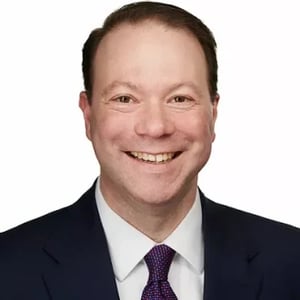
Member, Swansburg & Smith, PLLC
J. Brooken Smith is a founding member of Swansburg & Smith, PLLC. Licensed to practice in Kentucky, his practice focuses on representing businesses and employers in litigation and employment matters. Mr. Smith previously practiced with a large regional law firm for more than five years, representing businesses in a variety of legal disputes and defending employers in discrimination and other claims. Mr. Smith practices in state and federal courts throughout Kentucky.
Throughout his career, Mr. Smith has gained extensive experience in public service at the state and federal level. Before entering the private practice of law, Mr. Smith served as a law clerk for the Honorable Gregory F. Van Tatenhove, United States District Court Judge for the Eastern District of Kentucky. He served as the chief of staff for the Kentucky Labor Cabinet and, later, the Education and Workforce Development Cabinet. Mr. Smith also served as the ex officio chair of the Unemployment Insurance Commission, a three-member executive branch agency that hears administrative appeals of unemployment insurance claims.
Mr. Smith graduated from the University of Kentucky College of Law and earned a bachelor of arts in government from Georgetown University in Washington, D.C.
Vice President of Legal Affairs, Beacon Center of Tennessee
Wen Fa is the Vice President of Legal Affairs at the Beacon Center of Tennessee. He also serves on Beacon’s senior leadership team. Wen leads Beacon’s legal department in its efforts to protect the constitutional rights of property owners, entrepreneurs, and other Americans in courts across the United States. Having immigrated to America from Beijing, Wen believes that property rights, economic liberty, and equality under the law are essential to a free society and strives to advance those principles through his work.
Before joining Beacon, Wen was a senior attorney with Pacific Legal Foundation, where he litigated numerous cases involving equality under the law, free speech, economic liberty, and property rights. Wen litigated two Supreme Court cases: Minnesota Voters Alliance v. Mansky, which vindicated the free speech rights of voters, and Cedar Point Nursery v. Hassid, which secured the property rights of agricultural businesses. Wen has also secured important victories for farmers standing up against a racially discriminatory federal farm loan forgiveness program and small business owners who fought back against racial preferences in small business grants.
In addition to litigation, Wen promotes liberty through speeches, debates, and op-eds. Wen testified before Congress in 2021 and has published numerous op-eds in newspapers such as the Wall Street Journal, the Hill, and San Francisco Chronicle. He has spoken about his work in podcasts, on television, and in speeches to students at Georgetown, Duke, and law schools around the country.
Wen graduated with a bachelor’s degree in finance from the University of Texas-Dallas, a master’s degree in political theory from the London School of Economics, where he studied under libertarian scholar Chandran Kukathas, and a law degree from the University of Michigan. Wen is licensed to practice law in California, Texas, and several federal courts, including the Supreme Court of the United States.

Deep Dive Episode 212 – Litigation Update: Roberts v. Bassett: NY Racial Preferences in Allocating COVID Treatments
Wencong Fa
Faced with a limited supply of recently-approved COVID-19 treatments, both the State and City of...
Litigation Update: Roberts v. Bassett: NY Racial Preferences in Allocating COVID Treatments
Wencong Fa
Faced with a limited supply of recently approved COVID-19 treatments, both the State and City...
Litigation Update: Roberts v. Bassett: NY Racial Preferences in Allocating COVID Treatments
A Regulatory Transparency Project Webinar
TeleforumTopics
On Oysters, Property, John Locke, and the Court of Federal Claims: Campo v. United States
Oyster farming is hard work. The often-muddy estuary bottoms must be prepared with rocks to...
Topics
35 Naval Special Warfare Soldiers Obtain Preliminary Injunction Against Vaccine Mandate Under the Free Exercise Clause and Religious Freedom Restoration Act
On January 3, Judge Reed O’Connor of the Northern District of Texas preliminarily enjoined Navy...
In Bruen, New York’s Scrutiny Analysis Gets It Exactly Backwards
Heller famously concluded that the “inherent right of self-defense [is] central to the Second Amendment...
Topics
ACLU v. Clearview AI: The First Amendment Fight over Scrutiny and Governmental Interests in the Digital Privacy Space
In August, an Illinois court denied Clearview AI’s motion to dismiss the lawsuit, entitled ACLU...
Topics
Academic Freedom and Public Employee Speech in Florida
The University of Florida sparked an ongoing First Amendment controversy by trying to prevent three...
An Academic Freedom Exception to Government Control of Employee Speech
Nick Cordova
Public employee speech cases often arise as Section 1983 actions in which a public employee...
State Court Docket Watch: Cameron v. Beshear
J. Brooken Smith
As society grapples with the evolving nature of the COVID-19 pandemic, public policy disagreements about...