

Laurence A. Tisch Professor of Law and Director, Classical Liberal Institute, New York University School of Law; Director, Classical Liberal Institute, Civitas Institute University of Texas at Austin
Richard A. Epstein is the inaugural Laurence A. Tisch Professor of Law at NYU School of Law. Prior to his joining the faculty, he was a visiting law professor at NYU from 2007 through 2009. He served as the Peter and Kirstin Bedford Senior Fellow at the Hoover Institution from 2000 to 2024. Since 2024 to the present he is a senior lecturer at the Civitas Institute at the University of Texas—Austin. Epstein is also the James Parker Hall Distinguished Service Professor of Law Emeritus and a senior lecturer at the University of Chicago. His initial law school appointment was at the University of Southern California from 1968 to 1972. Epstein received an LL.D., h.c. from the University of Ghent, 2003. He has been a member of the American Academy of Arts and Sciences since 1985 and was a Senior Fellow of the Center for Clinical Medical Ethics at the University of Chicago Division of Biological Sciences, also from 1983. to 2022 He served as editor of the Journal of Legal Studies from 1981 to 1991, and of the Journal of Law and Economics from 1991-2001. From 2001 to 2010 he was a director of the John M. Olin Program in Law and Economics at the University of Chicago.
His newest book, The Myth of Birthright Citizenship: What the Fourteenth Amendment Really Says was published in 2026 (Encounter Books). Prior to that he has published many books including, The Dubious Morality of the Modern Administrative State (Roman & Littlefield 2020).Earlier he published th Classical Liberal Constitution: The Uncertain Quest for Limited Government (Harvard 2014) iHis previous books include Design for Liberty: Private Property, Public Administration and the Rule of Law (Harvard 2011); The Case Against the Employee Free Choice Act (Hoover 2009); Supreme Neglect: How to Revive the Constitutional Protection of Property Rights (Oxford 2008); Antitrust Decrees in Theory and Practice: Why Less is More (AEI 2007); Overdose: How Excessive Government Regulation Stifles Pharmaceutical Innovation (Yale University Press. 2006); How Progressives Rewrote the Constitution (Cato 2006); Cases and Materials on Torts (Aspen Law & Business; 8th ed. 2004); Skepticism and Freedom: A Modern Case for Classical Liberalism (University of Chicago, 2003); Torts (Aspen Law & Business 1999); Principles for a Free Society: Reconciling Individual Liberty with the Common Good (Perseus Books, 1998): Mortal Peril: Our Inalienable Rights to Health Care (Addison-Wesley, 1997); Simple Rules for a Complex World (Harvard, 1995); Bargaining With the State (Princeton, 1993); Forbidden Grounds: The Case Against Employment Discrimination Laws (Harvard , 1992); Takings: Private Property and the Power of Eminent Domain (Harvard, 1985); and Modern Products Liability Law (Greenwood Press, 1980). He has also edited(with Catherine M. Sharkey) Cases and Materials on the Law of Torts (10th edition 2012).
Professor Epstein has written numerous articles on a wide range of legal and interdisciplinary subjects. He has taught courses in administrative law, antitrust law, civil procedure, communications, constitutional law, contracts, corporations, criminal law, employment discrimination law, environmental law, food and drug law health law and policy, legal history, labor law, property, real estate development and finance, jurisprudence, labor law; land use planning, patents, individual, estate and corporate taxation, Roman Law; torts, and workers' compensation.
Professor Epstein also writes a regular column for Civitas Institute, which also sponsors his podcast, The Libertarian with Charles C.W. Cooke, and Law Talk, with Cooke and John Yoo. He also does a podcast with John Batchelor. And appears regularly on the Freedom File with Judge Andrew Napolitano.
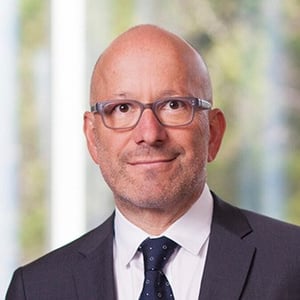
Partner, Vinson & Elkins LLP
Eric Groten is an accomplished Clean Air Act practitioner with nearly 35 years of experience navigating state and federal air quality laws. His work covers the full array of legal work generated by air quality laws, including defending enforcement actions, applying for the permits they require, transacting emissions rights, counseling clients on compliance and lobbying to change rules and the laws themselves. He has represented upstream, midstream and petrochemical facilities, power generators, and extractive industries in enforcement actions brought by EPA, by state agencies and by citizen groups.
Chambers USA described Eric as “a highly experienced air emissions lawyer, distinguished in the market by the sizable volume of contested air permitting work he undertakes,” and “creative in thinking through how to find an interpretation that’s going to get you the result you need” (2019). Indeed, Eric relishes the opportunity to help a client that’s willing to actively defend itself when it believes it has operated within the law. And to find a way through permitting disputes that stand in the way of capital projects that modernize our industrial base.
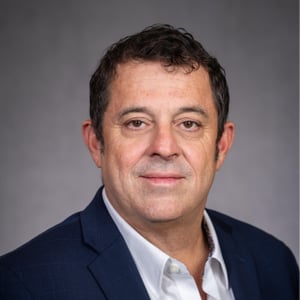
Senior Fellow for Law, Economics, and Technology, The Heritage Foundation; Professor, Florida International University
Mario Loyola is a Senior Fellow for Law, Economics, and Technology at The Heritage Foundation.
Loyola served in the Trump Administration as Associate Director for Regulatory Reform at the White House Council on Environmental Quality. In that role, he was one of the principal drafters of the One Federal Decision policy, which helped to streamline the permitting and environmental review of large infrastructure projects. While at CEQ, he was a member of the U.S. delegation to the USMCA free trade negotiations with Mexico and Canada, as well as the United Nations conference on biodiversity on the high seas. Loyola initially joined the White House in February 2017 as a Presidential Speechwriter, employing his expertise in many areas of foreign and domestic policy.
After beginning his career in M&A and corporate finance law, Loyola served in the Bush 43 Administration as a special assistant to the Undersecretary of Defense for Policy. He left that position to start writing on national defense issues in magazines such as National Review and The Weekly Standard, reporting from the front lines of the war on terrorism in Lebanon, Israel, and Iraq. He finished the Bush Administration as Foreign and Defense Counsel to the U.S. Senate Republican Policy Committee, then under the chairmanship of Senator Kay Bailey Hutchison of Texas. He subsequently moved to Texas and joined the Texas Public Policy Foundation, where he specialized in energy, environment, and federalism.
Loyola is a frequent contributor to The Wall Street Journal, National Review, and The Atlantic, among others. He teaches environmental and administrative law at Florida International University, where he is Founding Director of the Environmental Finance and Risk Management program in FIU’s prestigious Institute of Environment. He received a bachelor’s degree in European history from the University of Wisconsin–Madison and a J.D. from Washington University School of Law.
Professor Emeritus of Law and C. William Trout Senior Fellow in Public Interest Law, Shepard Broad College of Law, Nova Southeastern University
Joel Mintz has been a faculty member at Nova Southeastern University Shepard Broad College of Law since 1982. He teaches courses in Environmental Law, Torts, and Environmental Enforcement, and he has taught courses and seminars in Land Use Planning, State and Local Government Law, and Comparative Environmental Law.
Professor Mintz’s scholarship focuses primarily on environmental law and policy, environmental enforcement, sustainable development, regulation of hazardous wastes, and state and local taxation and finance. Mintz is the author of a well-received monograph, Enforcement at the EPA: High Stakes and Hard Choices (University of Texas Press, 1995) (revised edition, 2012), and a treatise on the federal environmental liabilities of state and local governments; and he has co-authored two casebooks, a “law-in-a-nutshell” work, and a handbook for attorneys on municipal finance. His law review articles have appeared in numerous journals and his articles and book contributions have been widely cited, quoted, and excerpted in texts, scholarly books, and articles. He has also published op-ed articles, perspective pieces, book reviews, and other works.
Prior to joining the College of Law faculty, Professor Mintz was an attorney and chief attorney with the U.S. Environmental Protection Agency in Chicago and Washington, D.C. He is an elected member of the American Law Institute, a Fellow of the American Bar Foundation, a member scholar of the Center for Progressive Reform and the President of the Board of Directors of the Everglades Law Center, a not-for-profit environmental public interest law firm.
Mintz received his B.A. from Columbia University, his J.D. from N.Y.U. School of Law, and his LL.M. and J.S.D. from Columbia Law School. He serves as the newsletter editor of the Association of American Law School’s Section on State and Local Government Law, and he is an elected member of both the Commission on Environmental Law of the International Union for the Conservation of Nature and the International Council of Environmental Law. He is also a member of the bar of the State of New York and of several federal courts.
Professor Mintz’s outside interests include spending time with his family, canoeing, bicycling, reading, and attending concerts, films, and sporting events.
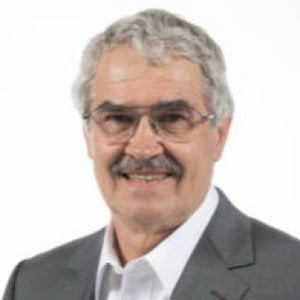
R. B. Price and Isabelle Wade & Paul C. Lyda Professor Emeritus of Law, University of Missouri School of Law
Carl H. Esbeck is R.B. Price Professor and Isabelle Wade & Paul C. Lyda Professor of Law emeritus at the University of Missouri. After attending Cornell University School of Law where he served as an editor on the Cornell Law Review, he held a judicial clerkship with the Honorable Howard C. Bratton, chief judge of the U.S. District Court in New Mexico.
Professor Esbeck publishes widely in the area of religious liberty and church-state relations. He is recognized as the progenitor of "Charitable Choice," an integral part of the 1996 Federal Welfare Reform Act, later made a part of the faith-based initiative and equal-treatment regulations under presidents George W. Bush and Barack Obama. In addition, he has taken the lead in recognizing that the modern Supreme Court has applied the Establishment Clause not as a personal right, but as a structural limit on the government's authority in disputes involving church governance. While on leave from 1999 to 2002, Professor Esbeck directed the Center for Law & Religious Freedom (CLRF) and later served as Senior Counsel to the Deputy Attorney General at the U.S. Department of Justice. While directing the CLRF, Professor Esbeck was a central part of the congressional advocacy behind the Religious Land Use and Institutionalized Persons Act of 2000 (RLUIPA). While at the Department of Justice one of his duties was to direct a task force to remove barriers to the equal-treatment of faith-based organizations applying for social service grants. He is the author of Disestablishment and Religious Dissent: Church-State Relations in the New American States, 1776 - 1833 (U. of MO Press, 2019).
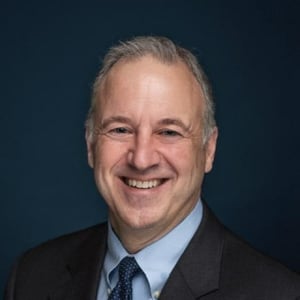
Senior Counsel, Litigation, Defense of Freedom Institute
Don Daugherty is Senior Counsel, Litigation, at the Defense of Freedom Institute for Policy Studies. He previously served as a Senior Counsel at the Institute for Free Speech and the Wisconsin Institute for Law & Liberty. Before that, he was a partner at three of Wisconsin’s largest firms, with nearly 30 years of trial and appellate litigation experience. He has been consistently recognized as among the “Best Lawyers in America,” as well as Wisconsin’s “Super Lawyers.” He received his B.A. from the University of Virginia and his J.D. from Northwestern University Law School. After law school, he served as a clerk to the Honorable Roger J. Miner of the United States Court of Appeals for the Second Circuit.
Don is on the Board of Advisors for the Milwaukee Lawyers’ Chapter of the Federalist Society, and on the Executive Committee of the Federalist Society’s Litigation Practice Group.
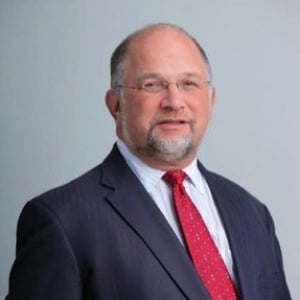
Stu Bassin has been a leading figure in the federal tax arena for the past two decades. He founded the Bassin Law Firm following a long career as one of the U.S. Department of Justice’s top tax litigators and a stint as the national leader of the civil tax litigation practice of an AmLaw 100 law firm.
The U.S. Justice Department has recognized his skills by naming him an Outstanding Attorney on six different occasions. His work for private clients was recognized by U.S. News and World Report, which named his prior firm as one of the country’s top 15 tax litigation firms. During 2019, he was elected to the American College of Tax Counsel, an honorary society reserved for those at the top of the profession. He is recognized as a thought leader in the profession, frequently speaking at bar association events and publishing in leading professional journals.
Stu handles a wide variety of tax matters, particularly involving disputes with the IRS. He is one of the leading tax litigators in the country and has tried many of the most prominent cases of the past decade. He also has broad expertise in civil litigation, particularly complex cases and matters involving electronic discovery questions. Often, he advises small businesses on an array of general corporate and business issues.
He lives in Bethesda, Maryland with his wife, daughter, and dog. In his free time, he served on the board of his local high school crew club and is involved in other community affairs. He is admitted to practice in Maryland, the District of Columbia, and many federal courts.
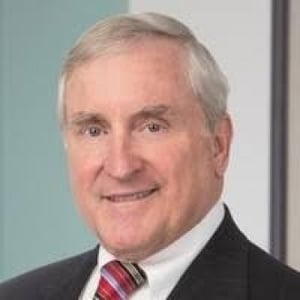
Senior Counsel, Caplin & Drysdale; Adjunct Professor of Law, Georgetown Law
Professor Carney is a Senior Counsel with Caplin & Drysdale, Cht’d. in Washington, D.C. He served as a Trial Attorney for the Tax Division of the U.S. Department of Justice for six years, and was in private (law firm) tax practice for many years, specializing in IRS administrative practice, tax controversies (audit and IRS Appeals Office), and tax litigation. He also advised clients in a similar capacity as a partner in the National Tax Office of Ernst & Young LLP in Washington. He is a member of the District of Columbia bar, as well as the bars of the U.S. Tax Court, U.S. Court of Federal Claims, U.S. District Court for the District of Columbia, and the U.S. Courts of Appeals for the Federal Circuit, D.C Circuit, and Eleventh Circuit.
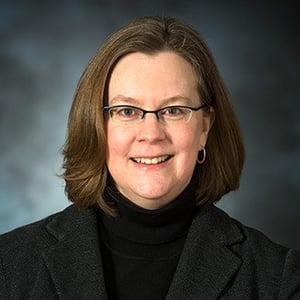
Associate Dean for Research and Intellectual Life, McKnight Presidential Professor in Law, Distinguished McKnight University Professor, Harlan Albert Rogers Professor in Law, Associate Director, Corporate Institute, University of Minnesota Law School
Professor Kristin E. Hickman is the McKnight Presidential Professor in Law, a Distinguished McKnight University Professor, and Harlan Albert Rogers Professor in Law at the University of Minnesota Law School. She also has taught at Harvard Law School and Northwestern University School of Law. Professor Hickman teaches and writes primarily in the areas of administrative law, tax administration, and statutory interpretation. Her articles on these topics have appeared in the Columbia Law Review, Cornell Law Review, Virginia Law Review, Duke Law Journal, and other publications. She also co-authors the Administrative Law Treatise with Richard J. Pierce, Jr., and a casebook on federal administrative law with Pierce and Christopher J. Walker. Her scholarly work has been cited several times in opinions of the United States Supreme Court as well as regularly in lower court judicial opinions and court briefs.
In 2018-19, Professor Hickman served as Special Adviser to the Administrator of the Office of Information and Regulatory Affairs in Washington, D.C. She presently serves as a Senior Fellow, and previously served as a public member and chair of the judicial review committee, for the Administrative Conference of the United States. She also is a Fellow of the American College of Tax Counsel.
Professor Hickman received her B.S. degree in business administration with a concentration in accounting and a secondary major in history from Trinity University in San Antonio, Texas. After practicing for several years as a certified public accountant, Professor Hickman earned her J.D. degree, magna cum laude, from Northwestern University School of Law, where she was awarded the Raoul Berger Prize and the Lowden Wigmore Prize for her scholarly writings. Following law school, Professor Hickman clerked for The Honorable David B. Sentelle of the United States Court of Appeals for the District of Columbia Circuit and practiced law as an associate with the Chicago office of Skadden, Arps, Slate, Meagher & Flom, concentrating on corporate and international tax transactions and matters.
Laurence A. Tisch Professor of Law and Director, Classical Liberal Institute, New York University School of Law; Director, Classical Liberal Institute, Civitas Institute University of Texas at Austin
Richard A. Epstein is the inaugural Laurence A. Tisch Professor of Law at NYU School of Law. Prior to his joining the faculty, he was a visiting law professor at NYU from 2007 through 2009. He served as the Peter and Kirstin Bedford Senior Fellow at the Hoover Institution from 2000 to 2024. Since 2024 to the present he is a senior lecturer at the Civitas Institute at the University of Texas—Austin. Epstein is also the James Parker Hall Distinguished Service Professor of Law Emeritus and a senior lecturer at the University of Chicago. His initial law school appointment was at the University of Southern California from 1968 to 1972. Epstein received an LL.D., h.c. from the University of Ghent, 2003. He has been a member of the American Academy of Arts and Sciences since 1985 and was a Senior Fellow of the Center for Clinical Medical Ethics at the University of Chicago Division of Biological Sciences, also from 1983. to 2022 He served as editor of the Journal of Legal Studies from 1981 to 1991, and of the Journal of Law and Economics from 1991-2001. From 2001 to 2010 he was a director of the John M. Olin Program in Law and Economics at the University of Chicago.
His newest book, The Myth of Birthright Citizenship: What the Fourteenth Amendment Really Says was published in 2026 (Encounter Books). Prior to that he has published many books including, The Dubious Morality of the Modern Administrative State (Roman & Littlefield 2020).Earlier he published th Classical Liberal Constitution: The Uncertain Quest for Limited Government (Harvard 2014) iHis previous books include Design for Liberty: Private Property, Public Administration and the Rule of Law (Harvard 2011); The Case Against the Employee Free Choice Act (Hoover 2009); Supreme Neglect: How to Revive the Constitutional Protection of Property Rights (Oxford 2008); Antitrust Decrees in Theory and Practice: Why Less is More (AEI 2007); Overdose: How Excessive Government Regulation Stifles Pharmaceutical Innovation (Yale University Press. 2006); How Progressives Rewrote the Constitution (Cato 2006); Cases and Materials on Torts (Aspen Law & Business; 8th ed. 2004); Skepticism and Freedom: A Modern Case for Classical Liberalism (University of Chicago, 2003); Torts (Aspen Law & Business 1999); Principles for a Free Society: Reconciling Individual Liberty with the Common Good (Perseus Books, 1998): Mortal Peril: Our Inalienable Rights to Health Care (Addison-Wesley, 1997); Simple Rules for a Complex World (Harvard, 1995); Bargaining With the State (Princeton, 1993); Forbidden Grounds: The Case Against Employment Discrimination Laws (Harvard , 1992); Takings: Private Property and the Power of Eminent Domain (Harvard, 1985); and Modern Products Liability Law (Greenwood Press, 1980). He has also edited(with Catherine M. Sharkey) Cases and Materials on the Law of Torts (10th edition 2012).
Professor Epstein has written numerous articles on a wide range of legal and interdisciplinary subjects. He has taught courses in administrative law, antitrust law, civil procedure, communications, constitutional law, contracts, corporations, criminal law, employment discrimination law, environmental law, food and drug law health law and policy, legal history, labor law, property, real estate development and finance, jurisprudence, labor law; land use planning, patents, individual, estate and corporate taxation, Roman Law; torts, and workers' compensation.
Professor Epstein also writes a regular column for Civitas Institute, which also sponsors his podcast, The Libertarian with Charles C.W. Cooke, and Law Talk, with Cooke and John Yoo. He also does a podcast with John Batchelor. And appears regularly on the Freedom File with Judge Andrew Napolitano.
Partner, Vinson & Elkins LLP
Eric Groten is an accomplished Clean Air Act practitioner with nearly 35 years of experience navigating state and federal air quality laws. His work covers the full array of legal work generated by air quality laws, including defending enforcement actions, applying for the permits they require, transacting emissions rights, counseling clients on compliance and lobbying to change rules and the laws themselves. He has represented upstream, midstream and petrochemical facilities, power generators, and extractive industries in enforcement actions brought by EPA, by state agencies and by citizen groups.
Chambers USA described Eric as “a highly experienced air emissions lawyer, distinguished in the market by the sizable volume of contested air permitting work he undertakes,” and “creative in thinking through how to find an interpretation that’s going to get you the result you need” (2019). Indeed, Eric relishes the opportunity to help a client that’s willing to actively defend itself when it believes it has operated within the law. And to find a way through permitting disputes that stand in the way of capital projects that modernize our industrial base.
Senior Fellow for Law, Economics, and Technology, The Heritage Foundation; Professor, Florida International University
Mario Loyola is a Senior Fellow for Law, Economics, and Technology at The Heritage Foundation.
Loyola served in the Trump Administration as Associate Director for Regulatory Reform at the White House Council on Environmental Quality. In that role, he was one of the principal drafters of the One Federal Decision policy, which helped to streamline the permitting and environmental review of large infrastructure projects. While at CEQ, he was a member of the U.S. delegation to the USMCA free trade negotiations with Mexico and Canada, as well as the United Nations conference on biodiversity on the high seas. Loyola initially joined the White House in February 2017 as a Presidential Speechwriter, employing his expertise in many areas of foreign and domestic policy.
After beginning his career in M&A and corporate finance law, Loyola served in the Bush 43 Administration as a special assistant to the Undersecretary of Defense for Policy. He left that position to start writing on national defense issues in magazines such as National Review and The Weekly Standard, reporting from the front lines of the war on terrorism in Lebanon, Israel, and Iraq. He finished the Bush Administration as Foreign and Defense Counsel to the U.S. Senate Republican Policy Committee, then under the chairmanship of Senator Kay Bailey Hutchison of Texas. He subsequently moved to Texas and joined the Texas Public Policy Foundation, where he specialized in energy, environment, and federalism.
Loyola is a frequent contributor to The Wall Street Journal, National Review, and The Atlantic, among others. He teaches environmental and administrative law at Florida International University, where he is Founding Director of the Environmental Finance and Risk Management program in FIU’s prestigious Institute of Environment. He received a bachelor’s degree in European history from the University of Wisconsin–Madison and a J.D. from Washington University School of Law.
Professor Emeritus of Law and C. William Trout Senior Fellow in Public Interest Law, Shepard Broad College of Law, Nova Southeastern University
Joel Mintz has been a faculty member at Nova Southeastern University Shepard Broad College of Law since 1982. He teaches courses in Environmental Law, Torts, and Environmental Enforcement, and he has taught courses and seminars in Land Use Planning, State and Local Government Law, and Comparative Environmental Law.
Professor Mintz’s scholarship focuses primarily on environmental law and policy, environmental enforcement, sustainable development, regulation of hazardous wastes, and state and local taxation and finance. Mintz is the author of a well-received monograph, Enforcement at the EPA: High Stakes and Hard Choices (University of Texas Press, 1995) (revised edition, 2012), and a treatise on the federal environmental liabilities of state and local governments; and he has co-authored two casebooks, a “law-in-a-nutshell” work, and a handbook for attorneys on municipal finance. His law review articles have appeared in numerous journals and his articles and book contributions have been widely cited, quoted, and excerpted in texts, scholarly books, and articles. He has also published op-ed articles, perspective pieces, book reviews, and other works.
Prior to joining the College of Law faculty, Professor Mintz was an attorney and chief attorney with the U.S. Environmental Protection Agency in Chicago and Washington, D.C. He is an elected member of the American Law Institute, a Fellow of the American Bar Foundation, a member scholar of the Center for Progressive Reform and the President of the Board of Directors of the Everglades Law Center, a not-for-profit environmental public interest law firm.
Mintz received his B.A. from Columbia University, his J.D. from N.Y.U. School of Law, and his LL.M. and J.S.D. from Columbia Law School. He serves as the newsletter editor of the Association of American Law School’s Section on State and Local Government Law, and he is an elected member of both the Commission on Environmental Law of the International Union for the Conservation of Nature and the International Council of Environmental Law. He is also a member of the bar of the State of New York and of several federal courts.
Professor Mintz’s outside interests include spending time with his family, canoeing, bicycling, reading, and attending concerts, films, and sporting events.
Stu Bassin has been a leading figure in the federal tax arena for the past two decades. He founded the Bassin Law Firm following a long career as one of the U.S. Department of Justice’s top tax litigators and a stint as the national leader of the civil tax litigation practice of an AmLaw 100 law firm.
The U.S. Justice Department has recognized his skills by naming him an Outstanding Attorney on six different occasions. His work for private clients was recognized by U.S. News and World Report, which named his prior firm as one of the country’s top 15 tax litigation firms. During 2019, he was elected to the American College of Tax Counsel, an honorary society reserved for those at the top of the profession. He is recognized as a thought leader in the profession, frequently speaking at bar association events and publishing in leading professional journals.
Stu handles a wide variety of tax matters, particularly involving disputes with the IRS. He is one of the leading tax litigators in the country and has tried many of the most prominent cases of the past decade. He also has broad expertise in civil litigation, particularly complex cases and matters involving electronic discovery questions. Often, he advises small businesses on an array of general corporate and business issues.
He lives in Bethesda, Maryland with his wife, daughter, and dog. In his free time, he served on the board of his local high school crew club and is involved in other community affairs. He is admitted to practice in Maryland, the District of Columbia, and many federal courts.
Senior Counsel, Caplin & Drysdale; Adjunct Professor of Law, Georgetown Law
Professor Carney is a Senior Counsel with Caplin & Drysdale, Cht’d. in Washington, D.C. He served as a Trial Attorney for the Tax Division of the U.S. Department of Justice for six years, and was in private (law firm) tax practice for many years, specializing in IRS administrative practice, tax controversies (audit and IRS Appeals Office), and tax litigation. He also advised clients in a similar capacity as a partner in the National Tax Office of Ernst & Young LLP in Washington. He is a member of the District of Columbia bar, as well as the bars of the U.S. Tax Court, U.S. Court of Federal Claims, U.S. District Court for the District of Columbia, and the U.S. Courts of Appeals for the Federal Circuit, D.C Circuit, and Eleventh Circuit.
Associate Dean for Research and Intellectual Life, McKnight Presidential Professor in Law, Distinguished McKnight University Professor, Harlan Albert Rogers Professor in Law, Associate Director, Corporate Institute, University of Minnesota Law School
Professor Kristin E. Hickman is the McKnight Presidential Professor in Law, a Distinguished McKnight University Professor, and Harlan Albert Rogers Professor in Law at the University of Minnesota Law School. She also has taught at Harvard Law School and Northwestern University School of Law. Professor Hickman teaches and writes primarily in the areas of administrative law, tax administration, and statutory interpretation. Her articles on these topics have appeared in the Columbia Law Review, Cornell Law Review, Virginia Law Review, Duke Law Journal, and other publications. She also co-authors the Administrative Law Treatise with Richard J. Pierce, Jr., and a casebook on federal administrative law with Pierce and Christopher J. Walker. Her scholarly work has been cited several times in opinions of the United States Supreme Court as well as regularly in lower court judicial opinions and court briefs.
In 2018-19, Professor Hickman served as Special Adviser to the Administrator of the Office of Information and Regulatory Affairs in Washington, D.C. She presently serves as a Senior Fellow, and previously served as a public member and chair of the judicial review committee, for the Administrative Conference of the United States. She also is a Fellow of the American College of Tax Counsel.
Professor Hickman received her B.S. degree in business administration with a concentration in accounting and a secondary major in history from Trinity University in San Antonio, Texas. After practicing for several years as a certified public accountant, Professor Hickman earned her J.D. degree, magna cum laude, from Northwestern University School of Law, where she was awarded the Raoul Berger Prize and the Lowden Wigmore Prize for her scholarly writings. Following law school, Professor Hickman clerked for The Honorable David B. Sentelle of the United States Court of Appeals for the District of Columbia Circuit and practiced law as an associate with the Chicago office of Skadden, Arps, Slate, Meagher & Flom, concentrating on corporate and international tax transactions and matters.

Deep Dive Episode 129 – Environmental Citizen Suits and SEPs: Do Constitutional and Nondelegation Concerns Outweigh Environmental Benefits?
Richard A. Epstein, Eric Groten, Mario Loyola, Joel Mintz
Environmental laws such as the Clean Air Act allow private plaintiffs and environmental advocacy groups...
Deep Dive Episode 129 – Environmental Citizen Suits and SEPs: Do Constitutional and Nondelegation Concerns Outweigh Environmental Benefits?
A Regulatory Transparency Project Teleforum
TeleforumTopics
A Second Amendment Grade for President Trump So Far
In his most recent State of the Union address, President Donald Trump promised the American...
After Espinoza, What’s Left of the Establishment Clause?
Carl H. Esbeck
Note from the Editor: The Federalist Society takes no positions on particular legal and public...
The Federal Government Shifts its Focus to Skills, and Away from Degrees, In Hiring Decisions
President Trump last week signed an Executive Order entitled “Modernizing and Reforming the Assessment and...
Topics
Making China Pay For Coronavirus Wrongs
The costs and harms that accrue daily from China’s negligence -- framed generously -- in...
An Imagined Bloc and Other Figments
Donald A. Daugherty
A review of American Justice 2019: The Roberts Court Arrives, by Mark Joseph Stern (University...
Topics
Five Things to Watch For In The Supreme Court’s Case of USAID v. Alliance for Open Society International, Inc., No. 19-177
On Tuesday, May 5, 2020, the Supreme Court will hear remote arguments in an...
The Changing Environment for APA Challenges to Tax Regulations
Stuart Bassin, Robert T. Carney, Kristin E. Hickman
Until recently, the Internal Revenue Service and Treasury Department typically issued regulations involving the tax...
The Changing Environment for APA Challenges to Tax Regulations
Administrative Law Practice Group Teleforum
Teleforum