
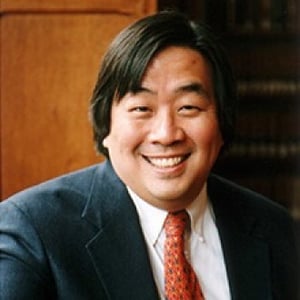
Sterling Professor of International Law, Yale Law School
Harold Hongju Koh is Sterling Professor of International Law at Yale Law School. He returned to Yale Law School in January 2013 after serving for nearly four years as the 22nd Legal Adviser of the U.S. Department of State.
Professor Koh is one of the country’s leading experts in public and private international law, national security law, and human rights. He first began teaching at Yale Law School in 1985 and served as its fifteenth Dean from 2004 until 2009. From 2009 to 2013, he took leave as the Martin R. Flug ’55 Professor of International Law to join the State Department as Legal Adviser, service for which he received the Secretary of State's Distinguished Service Award. From 1993 to 2009, he was the Gerard C. & Bernice Latrobe Smith Professor of International Law at Yale Law School, and from 1998 to 2001, he served as U.S. Assistant Secretary of State for Democracy, Human Rights and Labor.
Professor Koh has received seventeen honorary degrees and more than thirty awards for his human rights work, including awards from Columbia Law School and the American Bar Association for his lifetime achievements in international law. He has authored or co-authored eight books, published more than 200 articles, testified regularly before Congress, and litigated numerous cases involving international law issues in both U.S. and international tribunals. He is a Fellow of the American Philosophical Society and the American Academy of Arts and Sciences, an Honorary Fellow of Magdalen College, Oxford, and a member of the Council of the American Law Institute.
He holds a B.A. degree from Harvard College and B.A. and M.A. degrees from Oxford University, where he was a Marshall Scholar. He earned his J.D. from Harvard Law School, where he was Developments Editor of the Harvard Law Review. Before coming to Yale, he served as a law clerk for Justice Harry A. Blackmun of the United States Supreme Court and Judge Malcolm Richard Wilkey of the U.S. Court of Appeals for the D.C. Circuit, worked as an attorney in private practice in Washington, and served as an Attorney-Adviser for the Office of Legal Counsel, U.S. Department of Justice.
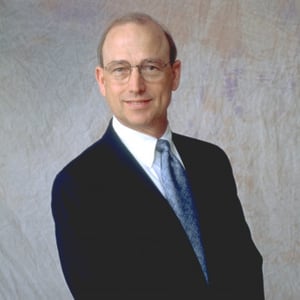
David C. Baum Professor Emeritus, University of Illinois College of Law
John Nowak graduated from College of Law in 1971, with the highest grade point average in the graduating class. During his third year at the College of Law, he served as the editor-in-chief of the University of Illinois Law Forum [now renamed as the University of Illinois Law Review]. Following graduation, John clerked for Justice Walter Schaefer of the Illinois Supreme Court. Professor Nowak joined the University of Illinois College of Law faculty in 1972; for thirty years he was what academics euphemistically call “a full-time professor.” He was the David C. Baum Professor at the College of Law from 1993 until his retirement in 2002; he received the “outstanding professor award” from three graduating classes of the College. As an emeritus professor, John taught courses at the College of Law from 2002 to 2008.
In 2008, Professor Nowak was the first professor appointed to the Raymond and Mary Simon Chair in Constitutional Law at Loyola University Chicago. He served in that position at Loyola from 2008-2014; he was awarded the “outstanding professor award” by the Loyola graduating class of 2011. In 2014, illness once again led Professor Nowak to retire. The Loyola University Chicago Board of Trustees awarded Professor Nowak the title of Professor and Raymond and Mary Simon Chair in Constitutional Law Emeritus.
Professor Nowak is the author, or coauthor, of more than a score of law review articles, including articles in the California, Columbia, Georgetown, Michigan, Northwestern, U.C.L.A., and Virginia Law Reviews, and the Supreme Court Review (published by the University of Chicago Press). With Jenner Professor Emeritus Professor Ronald D. Rotunda, Professor Nowak has coauthored: Concise Hornbook on Constitutional Law (4th edition, Thomson-West 2010); Constitutional Law (8th edition, Thomson-West 2010); and the six-volume Treatise on Constitutional Law: Substance and Procedure (5th ed., 2012-2013, West & Thomson-Reuters-Westlaw). Their multi-volume Treatise, which has annual supplements, also serves as the “conlaw” database on Westlaw. A chapter of Constitutional Law was translated into Korean by Professor Lee Boo-Ha, Yeungnam University College of Law and Political Science, and published in Korea as Nowak & Rotunda, Freedom of Speech and the American Constitution. Professors Nowak and Rotunda are also the editors of Story’s Commentaries on the Constitution (1987, Carolina Academic Press).
Professor Nowak has been a scholar in residence at the University of Arizona; a visiting professor at the University of Michigan; the Lee Distinguished Visiting Professor at the College of William and Mary, and the Williams Visiting Professor at the University of Richmond. He has presented lectures at several law schools; the National Conference of Law Reviews annual meeting; and at a variety of Federal Judicial Center programs. Professor Nowak served as Reporter for the National Center for State Courts’ Task Force on Courts in the American System of Government; Reporter for the Illinois Supreme Court’s Committee on Jury Instructions in Criminal Cases; Reporter for the United States District Courts for the Central and Southern Districts of Illinois Speedy Trial Act Planning Groups; and as a member of the Rules Committee of the United States District Court for the Northern District of Illinois.
Professor Nowak is a member of the American Bar Foundation, and a “life member” of the American Law Institute. He has served as a member of the Order of the Coif Triennial Book Award Committee; and as a member or a chairperson of the several committees of the Association of American Law Schools. Twice, Professor Nowak was elected to serve as the chairperson of the AALS Section on Constitutional Law. He served as the University of Illinois Faculty Athletic Representative to the Big Ten Conference and NCAA from 1981 through 1989; and a member of the NCAA’s Committee on Infractions from 1987 to 1990. Professor Nowak served as the “Interim Deputy Chancellor for Intercollegiate Athletics,” during the time when the University of Illinois Division of Intercollegiate Athletics replaced the University’s “Athletic Association,” and the campus did not have an Athletics Director.

Former General Counsel of the U.S. Immigration and Naturalization, Former United States Ambassador to East Timor
Grover Joseph Rees is a Louisiana native whose family has lived in the Breaux Bridge/Lafayette area since the 1700s.
His first job after college was as an assistant to Congressman Dave Treen (R-LA3), who had just been elected as the first Republican Congressman from Louisiana since Reconstruction.
Rees graduated with honors from LSU Law School, where he served as Editor-in-Chief of the Louisiana Law Review. While in law school he worked on Ronald Reagan’s 1976 presidential campaign and was a Reagan delegate from Louisiana to the Republican National Convention. He also served as a member of the Lafayette Parish Republican Executive Committee and as a board member of Acadiana Right to Life.
In 1979, when Congressman Treen ran successfully for Governor, he asked Rees to write his authorized biography. The book, Dave Treen of Louisiana, was read and discussed widely during the campaign and after Treen’s election.
In 1985-86 Rees served as Special Counsel for Judicial Selection in President Reagan’s Justice Department, working closely with Attorney General Ed Meese to reorganize the judicial selection process to make it more philosophically oriented. These efforts resulted in the appointment of over 100 federal judges and were widely credited with transforming the federal judiciary.
From 1986 through 1991 Rees served as Chief Justice of the High Court of American Samoa, an Article I federal judicial position.
From 1991 through 1993 he was General Counsel of the U.S. Immigration and Naturalization Service.
In 1995 Rees went to work for the new Republican Congress as staff director and chief counsel of the Subcommittee on International Operations and Human Rights. He worked with subcommittee chairman Chris Smith (R.-N.J.) to cut U.S. funding for the International Planned Parenthood Federation and other organizations that perform and promote abortions overseas. Rees also worked on the drafting and enactment of the International Religious Freedom Act, the Trafficking Victims Protection Act, and other legislation that has helped to bring U.S. foreign policy into closer alignment not only with our national interests but also with our values.
In 2001-2002 Rees worked for Congressman Henry Hyde (R.-Ill.), who was then serving as Chairman of the House International Relations Committee.
From 2002 until 2006 Rees served as the first United States Ambassador to newly independent East Timor.
From 2006 until 2009 Ambassador Rees was the United States Special Representative for Social Issues, responsible for representing the United States on issues relating to vulnerable persons and the family within the United Nations system.
Ambassador Rees retired from government service in January 2009 and returned to Lafayette. He is married to Lan Dai Nguyen Rees and is a member of St. Genevieve’s Catholic parish in Lafayette. He was recently elected to serve as a member of the Louisiana Republican State Central Committee.
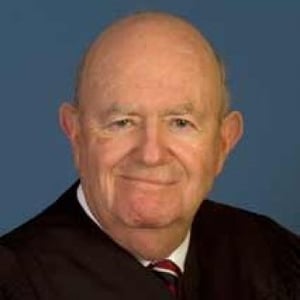
Judge, United States Court of Appeals, District of Columbia Circuit
LAURENCE HIRSCH SILBERMAN, senior circuit judge; recipient of the Presidential Medal of Freedom, June 19, 2008; born in York, PA, October 12, 1935; son of William Silberman and Anna (Hirsch); married to Rosalie G. Gaull on April 28, 1957 (deceased), married Patricia Winn on January 5, 2008; children: Robert Steven Silberman, Katherine DeBoer Fischer, and Anne Gaull Otis; B.A., Dartmouth College, 1957; LL.B., Harvard Law School, 1961; admitted to Hawaii Bar, 1962; District of Columbia Bar, 1973; associate, Moore, Torkildson and Rice, 1961–64; partner (Moore, Silberman and Schulze), Honolulu, 1964–67; attorney, National Labor Relations Board, Office of General Counsel, Appellate Division, 1967–69; Solicitor, Department of Labor, 1969–70; Under Secretary of Labor, 1970–73; partner, Steptoe and Johnson, 1973–74; Deputy Attorney General of the United States, 1974–75; Ambassador to Yugoslavia, 1975–77; President’s Special Envoy on ILO Affairs, 1976; senior fellow, American Enterprise Institute, 1977–78; visiting fellow, 1978–85; managing partner, Morrison and Foerster, 1978–79 and 1983–85; executive vice president, Crocker National Bank, 1979–83; lecturer, University of Hawaii, 1962–63; board of directors, Commission on Present Danger, 1978–85, Institute for Educational Affairs, New York, NY, 1981–85, member: General Advisory Committee on Arms Control and Disarmament, 1981–85; Defense Policy Board, 1981–85; vice chairman, State Department’s Commission on Security and Economic Assistance, 1983–84; American Bar Association (Labor Law Committee, 1965–72, Corporations and Banking Committee, 1973, Law and National Security Advisory Committee, 1981–85); Hawaii Bar Association Ethics Committee, 1965–67; Council on Foreign Relations, 1977–present; Judicial Conference Committee on Court Administration and Case Management, 1994; member, U.S. Foreign Intelligence Surveillance Act Court of Review, 1996–2003; Adjunct Professor of Law (Administrative Law and Labor Law) Georgetown Law Center, 1987–94; 1997; Adjunct Professor of Law, Harvard Law School, 1994-95, Adjunct Professor of Law, New York University Law School, 1995–96; Distinguished Visitor from the Judiciary, Georgetown Law Center, 2003–2019; co-chairman of the President’s Commission on The Intelligence Capabilities of the United States Regarding Weapons of Mass Destruction, 2004–05; appointed to the U.S. Court of Appeals for the District of Columbia Circuit by President Reagan on October 28, 1985.
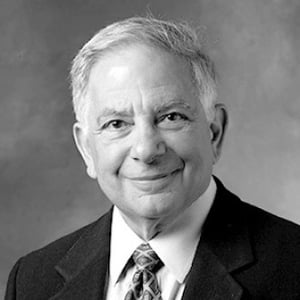
George P. Shultz Senior Fellow in Foreign Policy and National Security Affairs, Emeritus, Hoover Institution
Abraham D. Sofaer was appointed the first George P. Shultz Distinguished Scholar and Senior Fellow at the Hoover Institution in 1994. Named in honor of former US secretary of state George P. Shultz, the appointment is awarded to a senior scholar whose broad vision, knowledge, and skill will be brought to bear on the problems presented by a radically transformed global environment.
Sofaer's work focuses on the power over war within the US government and on issues related to international law, terrorism, diplomacy, and national security. His most recent books are Taking on Iran: Strength, Diplomacy, and the Iranian Threat(Hoover Institution Press, 2013) and The Best Defense?: Legitimacy and Preventive Force (Hoover Institution Press, 2010).
From 1985 to 1990, he served as a legal adviser to the US Department of State, where he resolved several interstate matters, including the dispute between Egypt and Israel over Taba, the claim against Iraq for its attack on the USS Stark, and the claims against Chile for the assassination of Orlando Letelier. He received the Distinguished Service Award in 1989, the highest state department award given to a non–civil servant.
From 1979 to 1985, Sofaer served as a US district judge in the Southern District of New York. From 1969 to 1979, he was a professor of law at Columbia University School of Law and wrote War, Foreign Affairs, and Constitutional Power: The Origins.From 1967 to 1969, he was an assistant US attorney in the Southern District of New York, after clerking for Judge J. Skelly Wright on the US Court of Appeals in Washington, DC, and the Honorable William J. Brennan Jr. on the US Supreme Court. He practiced law at Hughes, Hubbard and Reed from 1990 to 1994.
A veteran of the US Air Force, Sofaer received an LLB degree from New York University School of Law in 1965, where he was editor in chief of the law review. He holds a BA in history from Yeshiva College (1962). Sofaer is a founding trustee of the National Museum of Jazz in Harlem and a member of the board of the Koret Foundation.
His research papers are available at the Hoover Institution Archives.
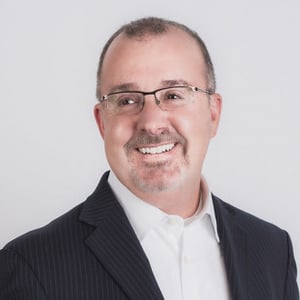
Chair, International Trade & National Security Practice Group, Buchanan Ingersoll & Rooney
Mr. Pickard counsels U.S. and international clients on the laws and regulations governing international trade, with particular emphasis on import remedy, anti-bribery, national security, and export control issues. He represents and advises clients in matters related to trade remedy investigations (including antidumping, countervailing duty, and safeguard cases), U.S. economic sanctions, export controls, anti-boycott measures, and the Foreign Corrupt Practices Act (FCPA). Mr. Pickard provides comprehensive international trade law compliance guidance, including assessing and resolving sensitive national security matters; developing corporate compliance programs; establishing compliance with the National Industrial Security Program (NISP) and mitigating Foreign Ownership, Control, or Influence (FOCI) issues; conducting internal investigations relating to potential violations; and appearing before the relevant agencies in connection with investigations, licensing, and enforcement actions. He also teams with the firm’s Election Law & Government Ethics Group to provide guidance pertaining to the Foreign Agents Registration Act (FARA).
Mr. Pickard represents clients before the U.S. International Trade Commission (ITC), the U.S. Department of the Treasury’s Office of Foreign Assets Control (OFAC), the U.S. Department of Justice (DOJ), the U.S. Department of State’s Directorate of Defense Trade Controls (DDTC), the U.S. Department of Commerce’s Bureau of Industry and Security (BIS) and International Trade Administration (ITA), the U.S. Department of Defense’s Defense Security Service (DSS), the Committee on Foreign Investment in the United States (CFIUS), the U.S. Court of International Trade, and the U.S. Court of Appeals for the Federal Circuit.
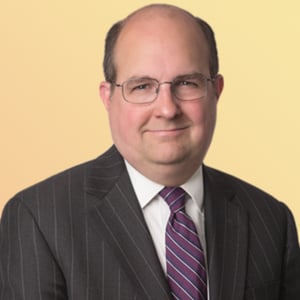
Partner, International Trade, King & Spalding LLP
Stephen P. Vaughn is a Partner in the International Trade Team of King & Spalding who works primarily on international trade litigation and policy matters. In April 2019, Stephen completed more than two years of service as the General Counsel for the Office of the United States Trade Representative (USTR). In that position, he managed a team of government attorneys representing U.S. interests in both trade negotiations and trade litigation. During two months in early 2017, Stephen also served as the acting U.S. Trade Representative. He is widely regarded as one of the world’s foremost authorities on current U.S. trade policy, as well as one of the most talented U.S. trade remedy litigators.
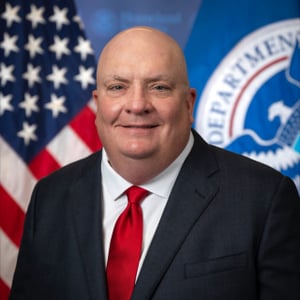
Acting Assistant Commissioner of Customs and Border Protection, Office of Professional Responsibility, U.S. Department of Homeland Security
Brian M. Fish is currently the Senior Advisor to the General Counsel at the Department of Homeland Security where he works on immigration and law enforcement issues. Previously, he was a trial attorney with the United States Immigration and Customs Enforcement, where he represented the Department of Homeland Security in removal hearings before the U.S. Immigration Court. Additionally, he was a Special Assistant United States Attorney and a Baltimore City homicide prosecutor. He is a member of the Federalist Society's Criminal Law & Procedure Practice Group Executive Committee and the President of its Baltimore Lawyers Chapter. He earned his B.A. from LaSalle University in 1992 and his J.D. from Loyola University New Orleans School of Law in 1998.

Sterling Professor of Law and Political Science, Yale Law School
Akhil Reed Amar is Sterling Professor of Law and Political Science at Yale University, where he teaches constitutional law in both Yale College and Yale Law School. After graduating from Yale College, summa cum laude, in 1980 and from Yale Law School in 1984, and clerking for Judge (later Justice) Stephen Breyer, Amar joined the Yale faculty in 1985 at the age of 26. He is Yale’s only living professor to have won the University’s unofficial triple crown — the Sterling Chair for scholarship, the DeVane Medal for teaching, and the Lamar Award for alumni service.
Amar’s work has won awards from both the American Bar Association and the Federalist Society, and he has been cited by Supreme Court justices across the spectrum in more than 50 cases — tops among scholars under age 70. According to both Fred Shapiro’s landmark 2021 study of lifetime scholarly citations and Heinonline’s most recent tabulation of lifetime law-review citations, Amar is America’s second most-cited legal scholar still under age 70. He is a member of the American Academy of Arts and Sciences and has written widely for popular publications, including The New York Times, The Washington Post, The Wall Street Journal, Time, and The Atlantic. He was an informal consultant to the popular TV show The West Wing and his scholarship has been showcased on many broadcasts, including The Colbert Report, Morning Joe, AC360, Velshi, Fox News @ Night with Shannon Bream, Fareed Zakaria GPS, Erin Burnett Outfront, and Constitution USA with Peter Sagal.
He is the author of more than a hundred law review articles and several books, including The Bill of Rights (1998 — winner of the Yale University Press Governors’ Award), America’s Constitution (2005 — winner of the ABA’s Silver Gavel Award), America’s Unwritten Constitution (2012 — named one of the year’s 100 best nonfiction books by The Washington Post), and The Constitution Today (2016 — named one of the year’s top ten nonfiction books by Time magazine). The first volume of his ambitious trilogy on American constitutional history from the Founding to the present, The Words That Made Us: America’s Constitutional Conversation, 1760-1840, came out in May 2021. The second volume, Born Equal: Remaking America’s Constitution, 1840-1920, will be published in September 2025 and is already available for pre-order. All together, his nonfiction books have won two starred reviews from Publishers Weekly and three starred reviews from Kirkus—tops, it is believed, among legal scholars under age 70. Together with Vikram David Amar (YLS ’88), he has a bi-weekly column on the Supreme Court on the distinguished website SCOTUSblog. Along with Andy Lipka, he co-hosts a popular and free weekly podcast, Amarica’s Constitution, whose listeners are eligible for CLE credit in most American jurisdictions. A wide assortment of his articles and op-eds and video links to many of his public lectures and free online courses may be found at akhilamar.com.

U.S. Court of Appeals, Seventh Circuit
Frank H. Easterbrook is a judge of the United States Court of Appeals for the Seventh Circuit and a Senior Lecturer at the Law School of the University of Chicago. He was Chief Judge from 2006–2013. Before joining the court in 1985, he was the Lee andBrena Freeman Professor of Law at the University of Chicago, where he taught and wrote in antitrust, securities, corporate law, jurisprudence, and criminal procedure. He has published The Economic Structure of Corporate Law (with Daniel R. Fischel) and about 100 scholarly articles. He served as Co-Editor of the Journal of Law and Economics from 1982 to 1991 and as a member of the Judicial Conference’s Standing Committee on Rules of Practice and Procedure from 1991 to 1997. Before joining the faculty of the Law School in 1979, Judge Easterbrook was Deputy Solicitor General of the United States. He holds degrees from Swarthmore College (B.A. with high honors, 1970) and the University of Chicago (J.D. cum laude, 1973), and is a member of the American Academy of Arts and Sciences, the American Law Institute, the Mont Pelerin Society, Phi Beta Kappa, and the Order of the Coif.
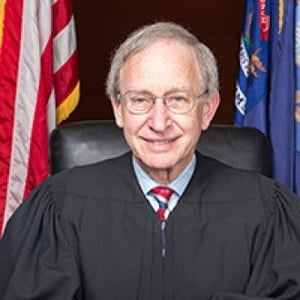
Justice, Michigan Supreme Court
Stephen Markman was appointed Justice of the Michigan Supreme Court on October 1, 1999. He served as the Chief Justice from 2017-2019. Before his appointment, he served as Judge on the Michigan Court of Appeals from 1995-1999. Prior to this, he practiced law with the firm of Miller, Canfield, Paddock & Stone in Detroit.
From 1989-1993, Justice Markman served as United States Attorney, or federal prosecutor, in Michigan, after having been nominated by President George H. W. Bush and confirmed by the United States Senate. From 1985-1989, he served as Assistant Attorney General of the United States, after having been nominated by President Ronald Reagan and confirmed by the United States Senate. In that position, he headed the Department of Justice’s Office of Legal Policy, which served as the principal policy development office within the Department, and which coordinated the federal judicial selection process. Prior to this, he served for seven years as Chief Counsel of the United States Senate Subcommittee on the Constitution, and as Deputy Chief Counsel of the United States Senate Judiciary Committee.
Justice Markman has authored articles for such publications as the University of Michigan Journal of Law Reform, the Detroit College of Law Review, the Stanford Law Review, the University of Chicago Law Review, the American Criminal Justice Law Review, the Barrister’s Law Journal, the Harvard Journal of Law & Public Policy, and the American University Law Review. He has also served as a contributing editor of National Review magazine, and has authored chapters in such books as “In the Name of Justice: The Aims of the Criminal Law,” “Still the Law of the Land,” and “Originalism: A Quarter Century of Debate.”
Justice Markman has taught constitutional law at Hillsdale College since 1993. He has served on the Board of Directors of the Western Michigan University Thomas M. Cooley Law School. He traveled to Ukraine on two occasions on behalf of the State Department, to provide assistance in the development of that nation’s post-Soviet constitution. He is a Fellow of the Michigan Bar Foundation, a Master of the Bench of the Inns of Court, and a member of the One Hundred Club. He has spoken before hundreds of youth, civic, charitable, and legal groups throughout Michigan and nationally, and has coached Little League baseball and basketball. He lives with his wife Mary Kathleen in Mason, and has two sons, James and Charles.
Justice Markman was re-elected to the Supreme Court in 2000, 2004, and 2012. His present term expires January 1, 2021.
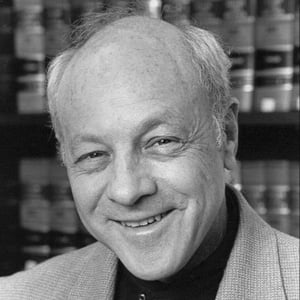
Herbert W. Armstrong Professor of Constitutional Law, Emeritus, University of San Diego Gould School of Law
Larry Simon joined the USC Law faculty in 1975. Specializing in constitutional law and theory, he taught Constitutional Law, Legal Profession and Insurance.
Simon is the author of “The Supreme Court’s Independence: Accountability, Majoritarianism, and Justification; Comments on Seidman” (Symposium: Judicial Election, Selection, and Accountability, Southern California Law Review, 1988), “The New Republicanism: Generosity of Spirit in Search of Something to Say” (William and Mary Law Review, 1987) and “Access to Higher Education and the Law” in Access Policy and Procedures and the Law in U.S. Higher Education (Interbook, Inc., 1978).
A summa cum laude graduate of Hobart College, Simon earned his LLB from Yale Law School, where he was an editor of the Yale Law Journal. His graduate study was at University of Rochester. Simon clerked for Judge Edward Weinfeld, U.S. District Judge, Southern District, New York, and Chief Justice Earl Warren, U.S. Supreme Court. He taught at Yale Law School, where he was associate dean from 1990-95, prior to joining USC Gould.

Professor of Law, Michigan State University (currently serving as FCC General Counsel)
Professor Candeub joined the MSU Law faculty in fall 2004. He is also a Fellow with MSU's Institute of Public Utilities. Prior to joining MSU, he served as an advisor at the Federal Communications Commission (FCC). From 1998 to 2000, Professor Candeub was a litigation associate for the Washington D.C. firm of Jones, Day, Reavis & Pogue and also has served as a corporate associate with Cleary, Gottlieb, Steen & Hamilton, also in Washington, D.C. Immediately following law school, he clerked for Chief Judge J. Clifford Wallace, U.S. Court of Appeals for the Ninth Circuit. While in law school, Professor Candeub was an articles editor for the University of Pennsylvania Law Review.
Professor Candeub's scholarly interests focus on the law and regulation of communications, internet, technology. His numerous law review articles and scholarly papers have placed him at the center of legal and policy controversies, and he often writes for popular outlets such as the Wall Street Journal and US News. Federal courts, including the U.S. Supreme Court, have cited and relied upon his work.
He joined the Trump administration in 2019 as Deputy Assistant Secretary of Commerce for Telecommunications and Information and assumed the role of Acting Assistant Secretary. He later joined the Department of Justice as Deputy Associate Attorney General.
Professor Candeub is a senior fellow at the D.C.-based Center of Renewing America.

Head of AI Policy, Abundance Institute
Neil Chilson is the Head of AI Policy at the Abundance Institute. Prior to this position, he served as a Senior Research Fellow at the Center for Growth and Opportunity. Chilson is a lawyer, computer scientist, and author of the book “Getting Out of Control: Emergent Leadership in a Complex World.”
Chilson was previously the senior research fellow for Technology and Innovation at Stand Together, where he guided efforts to understand and promote the legal and cultural paradigms that best enable people to discover, innovate, and improve all our lives.
Before Stand Together, Chilson was the Chief Technologist at the Federal Trade Commission, where he focused on the economics of privacy and blockchain-related issues. Previously, he was an attorney advisor to Acting FTC Chairman Maureen K. Ohlhausen. In both roles he advised Chairman Ohlhausen and worked with staff on nearly every major technology-related case, report, workshop, or other FTC proceeding since January 2014. Neil joined the FTC from telecom firm Wilkinson Barker Knauer. Neil is frequently quoted by the press and his work has appeared in numerous news outlets, including The Wall Street Journal, The Washington Post, USAToday, and Newsweek. Neil has a J.D. from The George Washington Law School, a M.S. in computer science from University of Illinois, Urbana-Champaign, and a B.S. in computer science from Harding University.
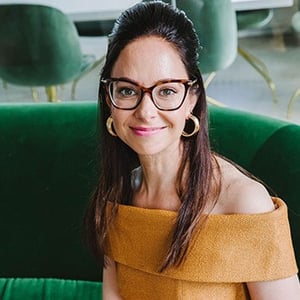
Founder, C. A. Goldberg PLLC
Carrie Goldberg is a victims’ rights attorney who has built a team that provides cutting edge legal help for clients under attack by pervs, assholes, psychos, and trolls. Her book Nobody’s Victim was published in August 2019.
Carrie’s work includes:
Carrie is admitted to practice law in New York State, 1st Appellate Department and the Eastern and Southern New York Districts of United States District Court. She is also admitted to The Supreme Court of the United States, US Court of Appeals for the Second Circuit, Eastern District of New York, Southern District of New York and has been admitted pro hac vice in California, Florida, and Massachusetts. She is also a member of the bar in New York State.
She is the recipient of 2017’s Privacy Champion Award from Electronic Privacy Information Center.
Education:
Background:
Prior to opening her firm in 2014, Carrie was the Associate Director of Legal Services at The Vera Institute of Justice, Inc. Guardianship Project and was a case manager for Nazi victims and Holocaust survivors with Selfhelp Community Services in Manhattan.
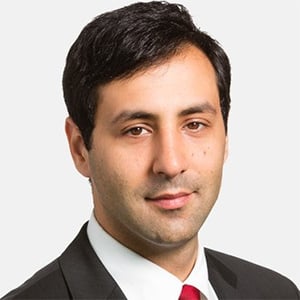
The Heritage Foundation, Associate Director and Research Fellow, B. Kenneth Simon Center for American Studies
Arthur Milikh conducts research on America’s founding principles. As associate director of The Heritage Foundation’s B. Kenneth Simon Center for American Studies, he oversees the center’s research portfolio and gives talks on the tenets of the American political tradition to policymakers, political leaders, and the public.
Before joining Heritage in 2014, Milikh worked for the House Armed Services Committee and at the Hudson Institute, a conservative think tank. He has published articles in a variety of outlets.
He received a bachelor of arts degree in political science and philosophy from Emory University and a master’s degree in political theory from University of Chicago. He is a doctoral candidate at the Catholic University of America.
Milikh currently resides in Washington with his wife.

John Marshall Harlan II Professor of Law Emerita, New York Law School; Former President, American Civil Liberties Union
Nadine Strossen, New York Law School Professor Emerita and Senior Fellow at FIRE (the Foundation for Individual Rights and Expression), was national President of the American Civil Liberties Union from 1991 to 2008. An internationally acclaimed free speech scholar and advocate, who regularly addresses diverse audiences and provides media commentary around the world, Strossen is also the Host and Project Consultant for Free To Speak, a 3-hour documentary film series distributed on public television in 2023. Her books about free speech include: Free Speech: What Everyone Needs to Know® (Oxford University Press 2023); HATE: Why We Should Resist It with Free Speech, Not Censorship (Oxford University Press 2018); and Defending Pornography: Free Speech, Sex, and the Fight for Women’s Rights (Scribner 1995), which was republished with a new Preface in 2024 as part of the NYU Classics Series. Her many honors and awards include the National Coalition Against Censorship’s Judy Blume Lifetime Achievement Award for Free Speech. She serves on the Advisory Boards of several organizations that do free speech work, including: ACLU, Academic Freedom Alliance, Foundation Against Intolerance and Racism (FAIR), Heterodox Academy, National Coalition Against Censorship, and the University of Austin.
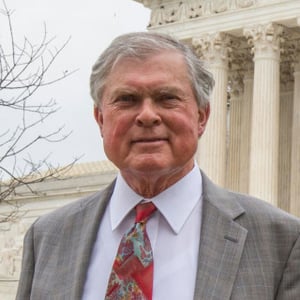
Senior Fellow, Independent Institute
Dr. Stephen P. Halbrook is a Senior Fellow at the Independent Institute. He has taught legal and political philosophy at George Mason University, Howard University, and Tuskegee Institute, and he received his J.D. from the Georgetown University Law Center and Ph.D. in social philosophy from Florida State University.
The winner of three cases before the U.S. Supreme Court (Printz v. United States, United States v. Thompson/Center Arms Company, and Castillo v. United States), he has testified before the Subcommittee on the Constitution of the Senate Judiciary Committee, Senate Subcommittee on the Constitution, Subcommittee on Crime of the House Judiciary Committee, Senate Governmental Affairs Committee, and House Committee on the District of Columbia.
A contributor to numerous scholarly volumes, he is the author of the books, Gun Control in Nazi-Occupied France: Tyranny and Resistance; Gun Control in the Third Reich: Disarming the Jews and “Enemies of the State”; The Founders’ Second Amendment: Origins of the Right to Bear Arms; That Every Man Be Armed: Evolution of a Constitutional Right; A Right to Bear Arms; Firearms Law Deskbook: Federal and State Criminal Practice; Securing Civil Rights: Freedmen, the Fourteenth Amendment, and the Right to Bear Arms; State and Federal Bills of Rights and Constitutional Guarantees; and Target Switzerland: Swiss Armed Neutrality in World War II. Dr. Halbrook’s scholarly articles have appeared in such journals as the Arizona Journal of International and Comparative Law, Drug Law Report, George Mason University Law Review, Journal of Air Law and Commerce, Journal of Law and Policy, Law & Contemporary Problems, National Law Journal, Northern Kentucky Law Review, St. John’s Journal of Legal Commentary; Seton Hall Constitutional Law Journal, Tennessee Law Review, University of Dayton Law Review, Valparaiso University Law Review, Vermont Law Review, and William & Mary Bill of Rights Journal.
Dr. Halbrook's popular articles have appeared in such publications as the Wall Street Journal, Newsday, San Francisco Chronicle, National Review, Investor’s Business Daily, Kansas City Star, Washington Examiner, Shreveport Times, Sacramento Bee, Providence Journal, Tampa Tribune, Pittsburgh Tribune-Review, History News Network, San Antonio Express-News, The Daily Caller, Detroit News, Honolulu Star Advertiser, Birmingham News, Environmental Forum, USA Today, and Washington Times. He has also appeared on numerous national TV/radio programs on CNN, Fox News Channel, Fox Business Network, Court TV, NewsMax TV, CBN, Voice of America, and C-SPAN.
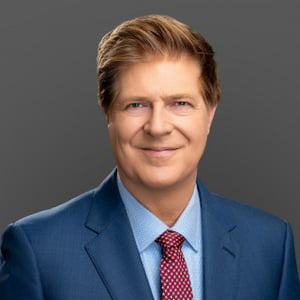
Senior Fellow, Ave Maria School of Law and Host of the Four Boxes Diner Second Amendment Channel
Mark W. Smith is a visiting member of the Senior Common Room, New College, Oxford University and a Visiting Fellow in Pharmaceutical Public Policy and Law in the Department of Pharmacology, Oxford University. Mark is also a Distinguished Scholar and Senior Fellow of Law and Public Policy at the Ave Maria School of Law. He hosts the Four Boxes Diner YouTube Channel (youtube.com/TheFourBoxesDiner), which addresses Second Amendment scholarship, cases, history and related issues, and whose videos have received almost 90 million views. Mark's scholarship has been cited by federal courts and by parties before the United States Supreme Court in Viramontes v. Cook County, New York State Rifle & Pistol Ass’n v. Bruen and in United States v. Rahimi. He is a graduate of the NYU School of Law. Mark is also a New York Times bestselling author who appears frequently in the national media including on the Fox News Channel.

Tazewell Taylor Professor of Law and William H. Cabell Research Professor, William & Mary Law School
Jonathan H. Adler joined the William & Mary law faculty as the Tazwell Taylor Professor of Law and William H. Cabell Research Professor in 2025. Prior to joining the faculty, he was the inaugural Johan Verheij Memorial Professor of Law and the founding Director of the Coleman P. Burke Center for Environmental Law at the Case Western Reserve University School of Law.
Professor Adler is the author or editor of seven books, including Climate Liberalism: Perspectives on Liberty, Property and Pollution (Palgrave, 2023), Marijuana Federalism: Uncle Sam and Mary Jane (Brookings Institution Press, 2020), Business and the Roberts Court (Oxford University Press, 2016) and Rebuilding the Ark: New Perspectives on Endangered Species Act Reform (AEI Press, 2011).
His articles have appeared in publications ranging from the Harvard Environmental Law Review and Yale Journal on Regulation to the Wall Street Journal, New York Times, and Washington Post. He has testified before Congress a dozen times, and his work has been cited in the U.S. Supreme Court. A 2024 study identified Professor Adler as the seventh most cited legal academic in administrative and environmental law from 2019 to 2023.
Professor Adler is a contributing editor to Civitas Outlook and a regular contributor to the popular legal blog, The Volokh Conspiracy. A regular commentator on constitutional and regulatory issues, he has appeared on numerous radio and television programs, ranging from the PBS Newshour and National Public Radio to the Fox News Channel and Entertainment Tonight.
Professor Adler is a senior fellow at the Property & Environment Research Center in Bozeman, Montana. In 2018, Professor Adler was elected to membership in the American Law Institute and helped co-found the organization Checks and Balances. In 2024, Professor Adler was appointed a public member of the Administrative Conference of the United States.
Professor Adler clerked for the Honorable David B. Sentelle on the U.S. Court of Appeals for the District of Columbia Circuit.

Professor of Law, Antonin Scalia Law School, George Mason University
Professor of Law Michael S. Greve joined the faculty of the Antonin Scalia Law School, George Mason University in fall 2012 after having served as John G. Searle Scholar at the American Enterprise Institute (AEI), where he specialized in constitutional law, courts, and business regulation and served as chairman of the Competitive Enterprise Institute. Prior to joining AEI, Greve was founder and co-director of the Center for Individual Rights, a public interest law firm specializing in constitutional litigation.
Greve has served previously as an adjunct professor at a number of universities, including Cornell and Johns Hopkins Universities, and has been a visiting professor at Boston College since 2004. He was awarded a PhD and an MA in government by Cornell University. Greve also earned a Diploma from the University of Hamburg in Germany.
A prolific writer, Greve is the author of nine books and a multitude of articles appearing in scholarly publications, as well as numerous editorials, short articles, and book reviews. He is a frequent speaker for professional and scholarly organizations and has made many appearances on radio and television.
In addition Greve has provided congressional and state legislative testimony, has lobbied and consulted in federal agency proceedings, and has provided litigation services and management in over 30 cases, including matters before the U.S. Supreme Court.
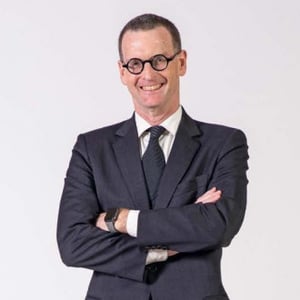
William T. Comfort, III Professor of Law, New York University School of Law
Roderick Hills teaches and writes in public law areas, including constitutional law, local government law, land-use regulation, administrative law, and statutory interpretation. His focus in each area is on the rules and policies governing division of powers between central and subcentral governments. He holds bachelor’s and law degrees from Yale University. Following law school, he served as a law clerk for Judge Patrick Higginbotham of the US Court of Appeals for the Fifth Circuit and practiced law in Colorado. Hills previously taught at the University of Michigan Law School from 1994 to 2006. He is a member of the state bar of New York and the U.S. Supreme Court.

Former President & CEO, The Federalist Society for Law and Public Policy Studies
Eugene B. Meyer, former President and CEO of the Federalist Society, has served as Executive Director, CEO, and/or President of the organization for more than 40 years. He is responsible for shepherding the organization from a small group of law students to a community of 90,000 lawyers, law students, academics, judges, and others interested in the rule of law. The Society now includes a Student Chapter at nearly every ABA-accredited law school in the country and Lawyers Chapters in 220 major cities across the nation. Gene earned his B.A. in history at Yale in 1975 and his M.A. in political science from the London School of Economics in 1976. Gene currently serves on the boards of the U.S. Chess Center, the Holman Foundation, the Sarah Scaife Foundation, and the advisory board of the Adam Smith Society. He holds the title of International Chess Master.
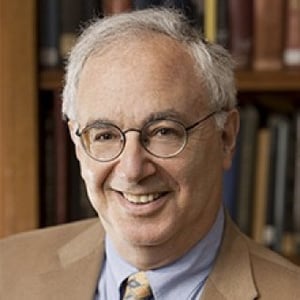
Sterling Professor of Law and Political Science, Yale Law School
Bruce Ackerman is Sterling Professor of Law and Political Science at Yale, and the author of nineteen books in political philosophy, constitutional law, and public policy. He is a Commander of the French Order of Merit, a member of the American Law Institute and the American Academy of Arts and Sciences. The American Philosophical Society has awarded him the Henry Phillips Prize for lifetime achievement in Jurisprudence, especially noting his exploration of the great turning points in American constitutional history in his three volume series, We the People. His award-winning early work, Social Justice in the Liberal State, continues to provoke contemporary controversy.
His scholarship has had a global impact. He has been named a Leading Global Thinker by Foreign Policy magazine, and has been awarded an Honorary Doctorate from the University of Trieste, Italy, for his contributions to comparative constitutional law. Before the Next Attack (2006) served as a basis for the reform of the French constitution dealing with emergency powers. The Stakeholder Society (with Anne Alstott) has served as the basis for reform initiatives in Brazil, Britain, and elsewhere that guarantee every person a fair share of the nation’s wealth by providing them with a “citizen stake” consisting of a substantial cash grant as they reach maturity.
His most recent book, Revolutionary Constitutions, puts the world-wide constitutional crisis in historical perspective by comparing the post-war experience of countries as different as France, India, Iran, Italy, Israel, Poland, South Africa, and the United States — and demonstrating that these nations have a good deal to learn from one another in confronting the current assault on checks-and-balances.
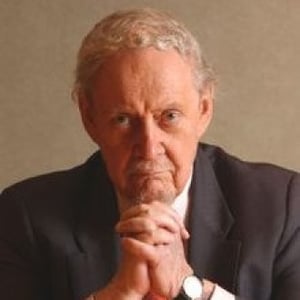
Former Judge, U.S. Court of Appeals, DC Circuit
Robert Heron Bork served as Solicitor General, acting Attorney General, and judge for the United States Court of Appeals for the District of Columbia Circuit. Judge Bork passed away in December 2012.
Tribute to Judge Robert Bork by John McGinnis - Event Audio/Video
Celebration of the Life of Robert Heron Bork 1927-2012
Judge Robert H. Bork: His Life and Legacy - Practice Group Podcast
A Conference Discussing the Contributions of Judge Robert H. Bork - June 26, 2007
Former United States Deputy Attorney General
Arnold Irwin Burns served as the United States Deputy Attorney General from 1986 to 1988 under President Ronald Reagan and U.S. Attorney General Edwin Meese.
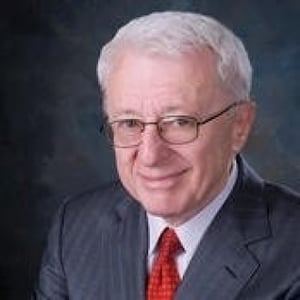
Director, Project for International Religious Liberty, Hudson Institute
Michael J. Horowitz is director of Hudson Institute's Project for Civil Justice Reform and Project for International Religious Liberty. He served as general counsel for the Office of Management and Budget (OMB) under the Reagan Administration, and has taught law at the University of Mississippi and Georgetown. He has also practiced private law as a partner at national law firms. Horowitz joined Hudson Institute as a Senior Fellow where he has put together left-right coalitions on a wide variety of foreign and domestic issues. He has written frequently and is regularly called to testify and consult with Congress.
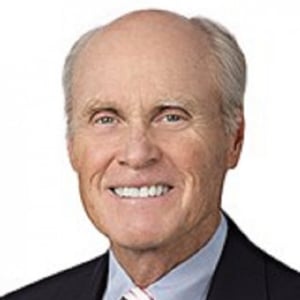
Former United States Assistant Attorney General, Civil Rights Division, United States Department of Justice
William Bradford served as the United States Assistant Attorney General for the Civil Rights Division from 1981 to 1988.
Reynolds was Senior Counsel in BakerBotts Antitrust and Competition division. He graduated with a LL.B. from Vanderbilt University Law School in 1967 where he was Order of the Coif and Editor-in-Chief of the Vanderbilt Law Review. In 1964, he received a B.A. from Yale University.
Reynolds passed away on September 14, 2019, in Seabrook Island, South Carolina at age 77.
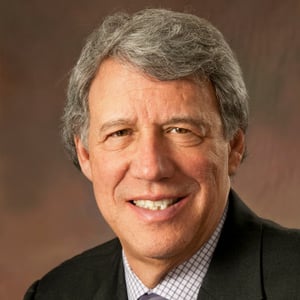
Edward H. Levi Distinguished Service Professor of Law, University of Chicago Law School
Geoffrey R. Stone is the Edward H. Levi Distinguished Service Professor at the University of Chicago. Mr. Stone joined the faculty in 1973, after serving as a law clerk to Supreme Court Justice William J. Brennan, Jr. He later served as Dean of the Law School (1987-1994) and Provost of the University of Chicago (1994-2002).
Stone is the author of many books on constitutional law, including Sex and the Constitution: Sex, Religion and Law from America’s Origins to the Twenty-First Century (2017); Speaking Out: Reflections of Law, Liberty and Justice (2010 & 2016); Top Secret: When Our Government Keeps Us in the Dark (2007), War and Liberty: An American Dilemma (2007), Perilous Times: Free Speech in Wartime (2004), and Eternally Vigilant: Free Speech in the Modern Era(Chicago 2002). He is also an editor of two leading casebooks, Constitutional Law (7th ed. 2013) and The First Amendment (5th ed. 2016). Stone is an editor of The Supreme Court Reviewand chief editor of a twenty-volume series, Inalienable Rights, which is being published by the Oxford University Press.
Stone was appointed by President Obama to serve on the President’s Review Group on Intelligence and Communications Technologies, which evaluated the government’s foreign intelligence surveillance programs in the wake of Edward Snowden’s leaks. He is a Fellow of the American Academy of Arts and Sciences, a member of the America Law Institute, the National Advisory Council of the American Civil Liberties Union, a member of the American Philosophical Society, and a member of the Board of Advisors of the Council for Democracy and Technology. He has served as Chair of the Board of the American Constitution Society and Chair of the Board of the Chicago Children’s Choir.
Stone has also written amicus briefs for constitutional scholars in a number of Supreme Court cases, including Obergefell v. Hodges, Whole Woman’s Heath v. Hellerstadt, Lawrence v. Texas, United States v. Windsor, United States v. Stevens, and Rasul v. Bush. He was also one of the lawyers who represented President Bill Clinton in the Supreme Court in Clinton v. Jones.
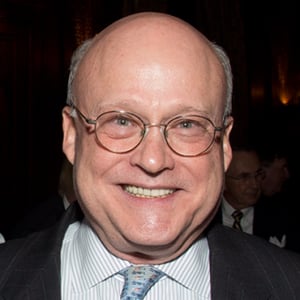
President Emeritus, Intercollegiate Studies Institute
T. Kenneth Cribb Jr. is the former president of the Intercollegiate Studies Institute. Mr. Cribb was Assistant to the President for Domestic Affairs in the Reagan administration, serving as President Reagan’s top adviser on domestic matters. Earlier in the administration he held the position of Counselor to the Attorney General. He also served as Vice Chairman of the Fulbright Foreign Scholarship Board from 1989 to 1992.

Ronald Reagan Distinguished Fellow Emeritus, The Heritage Foundation
Edwin Meese III, the prominent conservative leader, thinker and elder statesman, continues a quarter-century formal association with The Heritage Foundation as the leading think tank’s Ronald Reagan Distinguished Fellow Emeritus.
In that capacity, Meese oversees special projects and acts as an ambassador for Heritage within the conservative movement.
Meese was chairman of Heritage’s Center for Legal and Judicial Studies from its founding in 2001 until what he calls his “semi-retirement” on Feb. 1, 2013.
He joined Heritage in 1988 as the think tank's first Ronald Reagan Distinguished Fellow -- the only policy chair in the country to be officially named for the 40th president. His work focused on keeping President Reagan’s legacy of conservative principles alive in public debate and discourse.
The legal center now bears his name, in recognition of Meese’s contributions to the rule of law and the nation’s understanding of constitutional law. Its mission is to educate government officials, the media and the public about the Constitution and legal principles -- and how they affect public policy.
Perhaps best known as U.S. attorney general during Reagan’s second term, Meese’s service to the conservative icon stretched from the California governor’s mansion in 1966 to the White House in 1981 before he went to the Department of Justice four years later.
His Heritage “hats” kept Meese among the major conservative voices in national policy debates at an age when most men and women enjoyed quiet retirements.
In 2006, for example, Meese was named to the Iraq Study Group, a special presidential commission dedicated to examining the best resolutions for America's involvement in Iraq. In the past few years he wrote and spoke about constitutional topics ranging from religious liberty to the responsibility of Supreme Court justices.
Immediately after Reagan's death in 2004, and in the years since, Meese often agreed to major media appearances to discuss the lasting impact of his old friend, mentor and boss. He has summarized the Reagan legacy in three accomplishments: Reagan cut taxes and kept them low. He worked to defeat and end the Soviet Union and its worldwide push for communism. And he restored America's faith in itself after years of failure and "malaise."
"I admired him as a leader and cherish his friendship," Meese wrote in a 2004 essay for Heritage members and supporters. "Ronald Reagan had strong convictions. He was committed to the principles that had led to the founding of our nation. And he had the courage to follow his convictions against all odds." <[>Edwin Meese III was born Dec. 2, 1931, to Edwin Jr. and Leone Meese in Oakland, Calif. He graduated from Yale University in 1953 and holds a law degree from the University of California-Berkeley.
Meese spent much of his adult life working for Reagan, first after the former actor, sports announcer and athlete was elected as California’s governor in 1966 and then when he sought and won the presidency in 1980.
Reagan never forgot Meese's loyalty and hard work. During a press conference at which reporters questioned Meese's actions at the Justice Department, Reagan replied: "If Ed Meese is not a good man, there are no good men."
During the Reagan governorship, Meese served as executive assistant and chief of staff from 1969 through 1974 and as legal affairs secretary from 1967 through 1968. He previously was deputy district attorney in Alameda County, Calif.
From January 1981 to February 1985, Meese held the position of counsellor to the president -- the senior job on the White House staff -- and functioned as Reagan's chief policy adviser. In 1985, he received Government Executive magazine's annual award for excellence in management.
Meese served as the 75th attorney general of the United States from February 1985 to August 1988. As the nation's chief law enforcement officer, he directed the Justice Department and led international efforts to combat terrorism, drug trafficking and organized crime.
Meese’s relationship with Heritage began when he met with senior management to discuss the think tank's landmark policy guide, Mandate for Leadership, prepared for the incoming administration. Meese later recalled that Reagan personally handed out copies of the 1,093-page book to members of his Cabinet and asked them to read it. Nearly two-thirds of Mandate's 2,000 recommendations would be adopted or attempted by the Reagan administration.
More than a decade after joining Heritage, Meese assumed the chairmanship of its Center for Legal and Judicial Studies. Under his guidance, the center counseled White House staffers, Justice Department officials and Senate Judiciary Committee members on the importance of filling judicial vacancies with qualified men and women who are committed to interpreting the Constitution according to the founding document's original meaning.
The center became known for hosting "moot court" practice sessions to sharpen the arguments of attorneys slated to bring important cases before the Supreme Court. Those cases addressed constitutional issues ranging from property rights to racial preferences in primary and secondary schools to restrictions on free speech in campaign finance law.
Meese headed the legal center's Advisory Board for the writing and editing of the best-selling book, The Heritage Guide to the Constitution (Regnery, 2005). In it, 109 experts walked readers through a clause-by-clause analysis of the Constitution. Sen. Tom Coburn (R-Okla.) was among those keeping the reference work handy during Judiciary Committee hearings on Supreme Court nominees.
Meese's other books include “Leadership, Ethics and Policing” (Prentice Hall, 2004); “Making America Safer” (Heritage, 1997); and “With Reagan: The Inside Story” (Regnery Gateway, 1992).He wrote the Introduction to a well-received 2010 book on the “overcriminalization” trend, “One Nation Under Arrest,” by Heritage veterans Paul Rosenzweig and Brian W. Walsh.
He also is a distinguished visiting fellow at the Hoover Institution at Stanford University in California and lectures, writes and consults throughout the United States on a variety of subjects.
As both attorney general and counsellor to Reagan, Meese was a member of the Cabinet and the National Security Council. He served as chairman of the Domestic Policy Council and the National Drug Policy Board. After Reagan won the White House in the 1980 election, Meese headed the transition team. During the campaign, he was the Reagan-Bush Committee's senior official.
Meese had a career outside government and politics. From 1977 to 1981, he was a law professor at the University of San Diego, where he also directed the Center for Criminal Justice Policy and Management.
He was an executive in the aerospace and transportation industry as vice president for administration of Rohr Industries Inc. in Chula Vista, Calif. He left Rohr to return to the practice of law, doing corporate and general work in San Diego County.
A retired colonel in the Army Reserve, Meese remains active in numerous civic and educational organizations.
He and his wife, Ursula, have two grown children and reside in McLean, Va.
Former United States Assistant Attorney General, Civil Rights Division, United States Department of Justice
William Bradford served as the United States Assistant Attorney General for the Civil Rights Division from 1981 to 1988.
Reynolds was Senior Counsel in BakerBotts Antitrust and Competition division. He graduated with a LL.B. from Vanderbilt University Law School in 1967 where he was Order of the Coif and Editor-in-Chief of the Vanderbilt Law Review. In 1964, he received a B.A. from Yale University.
Reynolds passed away on September 14, 2019, in Seabrook Island, South Carolina at age 77.
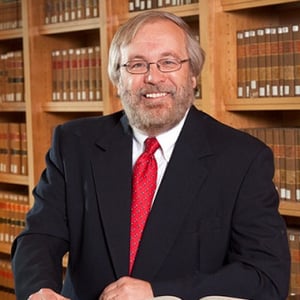
Welpton & Wise Professor of Law, University of Nebraska College of Law
Professor Rick Duncan is the Welpton & Wise Professor of Law at the University Of Nebraska College Of Law. He is a graduate of the Cornell Law School and served as an editor of the Cornell Law Review. He teaches Constitutional Law with a special emphasis on the law of religious freedom, free speech, and federalism. Duncan has written numerous books, articles, and commentaries on a wide variety of legal topics. His recent publications include an article on Justice Scalia’s legacy, another on Kermit Gosnell and Roe v. Wade, a piece on the Electoral College and Federalism, a 2019 piece on Masterpiece Cakeshop and the First Amendment, and three recent articles on the “no compelled speech” doctrine as a First Amendment defense against authoritarianism and tyranny. His most recent article, on School Choice and the First Amendment, will be published in 2023 in Case Western Law Review. He is also the co-author of a book on Secured Transactions under Article 9 of the UCC. He served as Chairman of the Nebraska Advisory Committee to the U.S. Commission on Civil Rights during the Reagan Administration. He also loves to speak at Federalist Society meetings around the country on life, liberty, and the pursuit of federalism.
Duncan has five children, five grandchildren, and a wonderful wife who help him pursue happiness. He loves lifting weights (particularly going heavy on the incline bench press), attending Broadway musicals and plays, including Hamilton: An American Musical which he has seen 12 times (possibly a Nebraska record). He regularly reads both the Bible and the New York Times because it is important to keep up with what both sides have to say. He loves following major league baseball, especially the San Diego Padres. And his favorite legal aphorism is “first come rights then comes government to secure those rights.”

Panel III: The Treaty Power [Archive Collection]
Harold Hongju Koh, John E. Nowak, Grover Joseph Rees, Laurence H. Silberman, Abraham D. Sofaer
On November 6-7, 1987, The Federalist Society held a symposium at the Grand Hyatt Hotel...
The U.S. and the World Trade Organization (WTO): Predictions for What Comes Next – A Virtual Conversation with Stephen Vaughn
Daniel B. Pickard, Stephen P. Vaughn
The World Trade Organization (WTO) was intended to be the principal forum for setting the...
Courthouse Steps Decision Teleforum: United States v. Sineneng-Smith
Brian M. Fish
Today the Supreme Court released the decision in United States v. Sineneng-Smith. By a vote of 9-0,...
Panel V: The Role and Relevance of the Amendment Process [Archive Collection]
Akhil Reed Amar, Frank H. Easterbrook, Steve J. Markman, Larry Simon
On March 4-5, 1988, The Federalist Society's University of Virginia student chapter hosted the National...
Should Big Tech Platforms Be Viewpoint Neutral? Should the Government Care?
Adam Candeub, Neil Chilson, Carrie Goldberg, Arthur Milikh, Nadine Strossen
On March 4, 2020, the Regulatory Transparency Project sponsored a symposium with the University of...
The Right to Bear Arms
Stephen P. Halbrook, Mark W. Smith
Does the Second Amendment “right of the people” to “bear arms” protect an individual right...
Panel I: The Compact Clause
Jonathan H. Adler, Michael S. Greve, Roderick M. Hills, Eugene B. Meyer
On March 14, 2020, the Federalist Society held its 39th National Student Symposium. The Symposium...
CANCELLED: Why Progressives Hate (and why Federalists should love) the Electoral College and the Senate
Texas A&M Student Chapter
Fort Worth, TXPanel III: Precedent, The Amendment Process, and Evolution in Constitutional Doctrine [Archive Collection]
Bruce Ackerman, Robert H. Bork, Arnold Burns, Michael J. Horowitz, Wm. Bradford Reynolds, Geoffrey R. Stone
On January 30-31, 1987, the Federalist Society hosted its annual National Lawyers Convention at the...
Banquet Speech by Attorney General Edwin Meese III [Archive Collection]
T. Kenneth Cribb, Edwin Meese, Wm. Bradford Reynolds
On January 30, 1987, the Federalist Society hosted its annual National Lawyers Convention at the...