

Vice President, Edwin Meese III Institute for the Rule of Law, Advancing American Freedom
John G. Malcolm oversees Advancing American Freedom’s work to increase understanding of the Constitution and the rule of law as Vice President of the organization’s Edwin Meese III Institute for the Rule of Law. Malcolm brings to the challenge a wealth of legal expertise and experience in both the public and private sectors.
Prior to joining Advancing American Freedom in 2025, Malcolm was the Vice President of the Institute for Constitutional Government and the Director of the Meese Center for Legal and Judicial Studies at the Heritage Foundation. Prior to joining Heritage in 2012, Malcolm was general counsel at the U.S. Commission on International Religious Freedom, as well as a distinguished practitioner in residence at Pepperdine Law School. From 2004 to 2009, Malcolm was executive vice president and director of worldwide anti-piracy operations for the Motion Picture Association.
Malcolm served as a deputy assistant attorney general in the Department of Justice’s Criminal Division from 2001 to 2004, where he oversaw sections on computer crime and intellectual property, domestic security, child exploitation and obscenity, and special investigations. Immediately prior to that, he was a founding partner in the Atlanta law firm of Malcolm & Schroeder, LLP.
From 1990 to 1997, Malcolm was an assistant U.S. attorney in Atlanta, assigned to the fraud and public corruption section, and also an associate independent counsel, investigating fraud and abuse in the Department of Housing and Urban Development. He was honored with the Director’s Award for Superior Performance for his work in connection with the successful prosecution of Walter Leroy Moody Jr., who assassinated an 11th Circuit judge and the head of the Savannah chapter of the NAACP.
A graduate of Harvard Law School and Columbia College, Malcolm began his career as a law clerk to a federal district court judge and a federal appellate court judge, and as an associate at the Atlanta-based law firm of Sutherland, Asbill & Brennan (new Eversheds Sutherland).
Malcolm, who resides in Washington, D.C., serves on the Board of Trustees of the Washington National Opera and is a Senate-confirmed member of the Board of Directors of the Legal Services Corporation, the largest funder of civil legal aid in the United States.
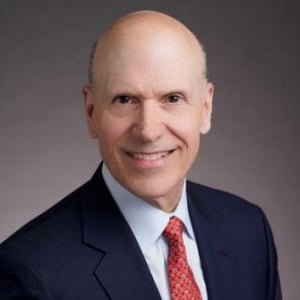
Director, Government Relations, Northrop Grumman Corp.
Maj. Gen. Jim Armor, USAF (Ret.) is a Director, Government Relations for Northrop Grumman Corp. in Falls Church, VA. Preceding this position he was the Staff VP for Washington Operations, Orbital ATK where he coordinated, policy, and licensing of space and launch systems with government departments and agencies. Prior to that, he was the VP for Strategy and Business Development at ATK, Space Systems Division, Beltsville, MD, where he was responsible for market development of small, responsive satellites, satellite components and related engineering services. There he helped to establish an entirely new commercial space market in on-orbit satellite servicing, as well as engineering systems supporting NASA and DARPA space robotics. Before joining ATK, he was the Founder and CEO of The Armor Group, LLC, which provided consulting support to government and industry space programs. He currently is appointed by the Secretary of Transportation as a member of the Commercial Space Transportation Advisory Committee (COMSTAC) advising the FAA Commercial Space Office on space launch policies and regulations. He is also the Chairman of the Commercial Space Committee of the Aerospace Industry Association (AIA), and was elected to the Board of Directors of Women in Aerospace (WIA). He now serves on the Board of Directors of NAVSYS Corp, a small, woman owned navigation R&D Company in Colorado Springs, CO. Gen Armor served 34 years in the Air Force in a variety of space leadership and staff positions including Director of the NAVSTAR GPS Joint Program Office, Director of Acquisition and Operations for Signals Intelligence at the National Reconnaissance Office (NRO), and as a military payload specialist for the Space Shuttle. He served as the Director of the National Security Space Office (NSSO) in the Office of the Under Secretary of the Air Force at the Pentagon, where he was responsible for coordinating all defense and intelligence space activities, before retiring in January 2008. He previously served on the Board of Advisors to the Secure World Foundation advocating international sustainable space policies, and has been a member of several National Research Council Studies including the NASA Technology Roadmap Review; Rationale & Goals for US Civil Space Program; and AF Scientific, Technical, Engineering and Math (STEM) Workforce Needs. He is an associate fellow of AIAA, and is the winner of the Satellite Industry Association 2007 Satellite Leadership in Government Award, the National Space Society 2008 Space Pioneer Award for Space Development, and the AIAA 2012 Von Braun Award for Space Program Leadership.
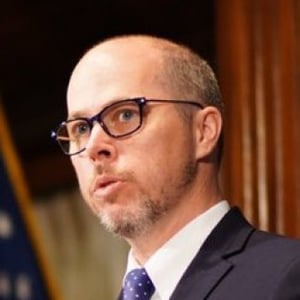
Senior Policy Advisor, National Space Council

Senior Vice President of Regulatory Affairs, EchoStar Corporation/Hughes Network Systems LLC
Jennifer A. Manner is Senior Vice President of Regulatory Affairs at EchoStar Corporation/Hughes Network Systems LLC where she is responsible for the company’s domestic and international regulatory and policy issues, including spectrum allocation and market access. Prior to this, Ms. Manner was Deputy Chief of the Office and Engineering and Technology and before that Deputy Chief of the FCC's Public Safety and Homeland Security Bureau where she has had a focus on broadband and other related issues. Ms. Manner previously worked as a Principal at ZComm Strategies LLC.
Before that, Ms. Manner was Vice President of Regulatory Affairs at SkyTerra Communications, LLC, where she handled the company's domestic and international regulatory and policy issues. Before joining SkyTerra, Ms. Manner served as Senior Counsel to FCC Commissioner Kathleen Abernathy with responsibility for wireless, international and new technology issues. Ms. Manner joined the Commissioner's office after working at MCI Communications Corporation, later WorldCom, Inc., as Associate Counsel for Foreign Market Access and then as International Wireless Services and Director of International Alliances.
Prior to this position, Ms. Manner was an associate in the Communications Group at Akin, Gump, Strauss, Hauer and Feld, L.P. Before joining Akin, Gump, Ms. Manner was an Attorney-Advisor at the FCC.
Ms. Manner currently serves as an adjunct professor at Georgetown University Law Center and previously served as an adjunct professor of the Washington College of Law at American University. Ms. Manner has published several books on telecommunications issues including on spectrum and foreign market access, and has written numerous law review and magazine articles. Ms. Manner holds and has held key leadership roles including in Satellite Industry Association the US ITU Association, the EMEA Satellite Operators Association, in study groups at the International Telecommunications Union including ITU-R Task Group 5/1, as well as serving in leadership roles in federal advisory committees, including as Chair of Working Group 4B on Network Timing Alternative on the Communications Security, Reliability and Interoperability Committee and Chair of Working Group 4, Regulatory Issues of the World Radiocommunication Advisory Committee, as well as Vice Chair of the International Trade Advisory Committee and the International Telecommunications Advisory Committee 8. Ms. Manner is also a member of the Advisory Board of Geeks Without Frontiers. Ms. Manner also has served on numerous U.S. delegations to international treaty negotiations.
Ms. Manner received her B.A. from the State University of New York at Albany, from where she serves as Co-Chair of the Alumni Board of the Rockefeller College of Public Affairs and was awarded the Outstanding Alumni in Political Science Award. She received her J.D. cum laude from New York Law School and LL.M. with distinction from Georgetown University Law Center. Ms. Manner is admitted to practice in Washington, D.C., New York and Connecticut.
Ms. Manner has also been named as one of the top 2017 100 broadband and media attorneys by CableFax, and was awarded the EchoStar 2013 Most Valuable Player Award, the 2012 FCC Public Safety and Homeland Security Bureau’s Chief’s Meritorious Service Award, the 2012 Distinguished Alumni Award in Political Science from the Rockefeller College, State University of New York at Albany and the 2011 Wireless Communications Association International’s Government Service Award.
Ms. Manner, a film-maker, was a finalist for her movie at the 2018 Cannes Film Festival and has under production her latest film, When Wire Was King, The Transformation of Telecommunications, expected for release in 2020.

Legal Advisor, Wireless, Public Safety and International, Federal Communications Commission
Ms. McGrath has worked at the Commission since March 2000. Most recently, she was Legal Advisor to Commissioner Robert M. McDowell focusing primarily on media issues. Prior to joining Commissioner McDowell’s staff, she was an Assistant Division Chief in the Wireless Telecommunications Bureau’s Mobility Division. During this time, she engaged in numerous rulemaking proceedings, reviewed several major wireless and media transactions, and managed post-auction licensing matters. She also served as interim Legal Advisor to Commissioner Meredith A. Baker for wireless, international, and public safety issues. Ms. McGrath received her J.D. from the Benjamin N. Cardozo School of Law and her B.A. from the University of Pennsylvania.

Vice President, Public Policy, Iridium Satellite, LLC
Maureen McLaughlin is the Vice President, Public Policy, at Iridium Satellite, LLC. She is the Chief Regulatory and Public Policy Counsel for all U.S. domestic policy and international global public policy for Iridium.
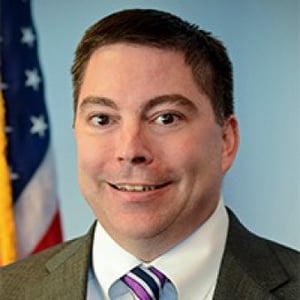
Visiting Fellow, Hudson Institute
Michael O’Rielly is a visiting fellow with Hudson Institute’s Center for the Economics of the Internet.
Comm. O'Rielly was nominated for a seat on the Federal Communications Commission by President Barack Obama on August 1, 2013 and was confirmed unanimously by the United States Senate on October 29, 2013. He was sworn into office on November 4, 2013. On January 29, 2015, he was sworn into office for a new term, following his re-nomination by the President and confirmation by the United States Senate and served through December 11, 2020.
Prior to joining the agency Commissioner O’Rielly served as a Policy Advisor in the Office of the Senate Republican Whip, led by U.S. Senator John Cornyn, since January 2013. He worked in the Republican Whip’s Office since 2010, as an Advisor from 2010 to 2012 and Deputy Chief of Staff and Policy Director from 2012 to 2013 for U.S. Senator Jon Kyl.
He previously worked for the Republican Policy Committee in the U.S. Senate as a Policy Analyst for Banking, Technology, Transportation, Trade, and Commerce issues from 2009 to 2010. Prior to this, Commissioner O’Rielly worked in the Office of U.S. Senator John Sununu, as Legislative Director from 2007 to 2009, and Senior Legislative Assistant from 2003 to 2007. Before his tenure as a Senate staffer, he served as a Professional Staff Member on the Committee on Energy and Commerce in the United States House of Representatives from 1998 to 2003, and Telecommunications Policy Analyst from 1995 to 1998.
He began his career as a Legislative Assistant to U.S. Congressman Tom Bliley from 1994 to 1995.
Commissioner O’Rielly received his B.A. from the University of Rochester.
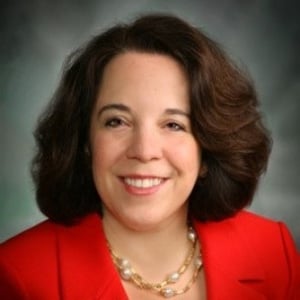
Vice President, Technology Policy & Regulation, Lockheed Martin Government Affairs
Jennifer A. Warren is currently Vice President, Global Regulatory Affairs & Public Policy for Lockheed Martin Corporation. In this capacity, she is responsible for leading the corporate team’s engagement and strategy across the Executive Branch, Independent Agencies and Intergovernmental Bodies across a broad business, regulatory and public policy portfolio.
Her responsibilities also include leading corporate relationships with Intergovernmental Bodies, such as ITU, CITEL, ICAO, UN Office of Outer Space Affairs, and major trade associations; Ms. Warren is the former Chair (twice) of the Satellite Industry Association (SIA), and currently serves on the Boards of the SIA, US ITU Association, and the Professional Services Corporation, and as the co-chair of the U.S. Chamber of Commerce’s Telecommunications and E-Commerce Committee. She also participates on the ITI Space Enterprise Council and the US Chamber Space Council.
Ms. Warren has broad private sector engagement across government, having been a member of the Department of Commerce Spectrum Management Advisory Committee (CSMAC), FAA Commercial Space Transportation Advisory Committee, Department of State International Telecommunications Advisory Committee (now International Digital Economy & Telecommunications Advisory Committee), and NASA Advisory Committee/Regulatory Policy Committee, as well as served on the FCC’s WRC Advisory Committee.
From 1991-1996, Ms. Warren held several senior roles in the U.S. Federal Communications Commission, including as Assistant Chief in the Wireless Telecommunications Bureau and Senior Legal Advisor in the International Bureau. In 1991, she graduated from Georgetown University Law Center (J.D.), where she subsequently served as an Adjunct Professor in International Communications Regulation and Policy for close to 20 years. She is also a graduate of Georgetown University (B.S. in Languages), and a member of the Illinois State and D.C. Bars, the Federal Communications Bar Association, and American Bar Association. Her civic activities include the Boards of the George Washington Legacy Foundation and Gadsby Tavern Museum Society in Old Town Alexandria, and the Foundation of the National Archives & Records Administration.
Ms. Warren lives in Old Town Alexandria, Virginia, with her husband Ed, and their puppy - Madison.
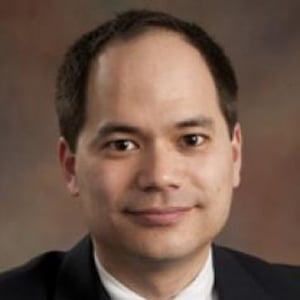
Professor of Law, University of Chicago Law School
William H. J. Hubbard received his JD with high honors from the Law School in 2000, where he was executive editor of the Law Review. He clerked for the Hon. Patrick E. Higginbotham of the US Court of Appeals for the Fifth Circuit. From 2001 to 2006, he practiced law as a litigation associate at Mayer Brown LLP in Chicago, where he specialized in commercial litigation, electronic discovery, and appellate practice. From 2006 to 2011, he completed the PhD program in Economics at the University of Chicago. Before joining the faculty in 2011, he was a Kauffman Legal Research Fellow and Lecturer in Law at the Law School.
Mr. Hubbard currently serves as an editor of the Journal of Legal Studies. He teaches courses in civil procedure and has been an organizer for the Law and Economics Workshop. His current research primarily involves economic analysis of litigation, courts, and civil procedure. Other research interests include family, education, and labor economics.
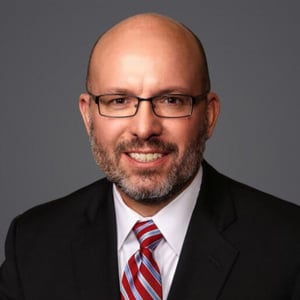
Shareholder, Ogletree, Deakins, Nash, Smoak & Stewart
Chris Murray is Co-Chair of the firm’s Arbitration and Alternative Dispute Resolution Practice Group. In this role, he assists attorneys throughout the firm and clients nationwide to create, roll out, and enforce effective employment arbitration agreements and other ADR programs. Mr. Murray has extensive experience with class/collective action waivers in employment arbitration. Mr. Murray was part of the Ogletree team that successfully defended the use of such waivers in the Fifth Circuit’s landmark decision in D.R. Horton, Inc. v. N.L.R.B. Since then, he has successfully defended the enforceability of class action waivers in numerous subsequent cases and submitted an amicus brief on the subject on behalf of several major employers’ associations in the Supreme Court’s Murphy Oil case. Mr. Murray assists clients and the Firm’s attorneys to draft or revise arbitration programs focused on a client’s specific needs and goals and in light of changing law and evolving best practices.
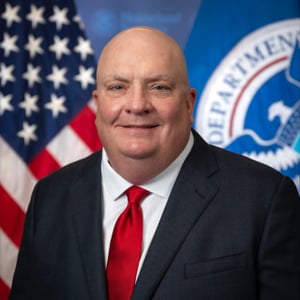
Acting Assistant Commissioner of Customs and Border Protection, Office of Professional Responsibility, U.S. Department of Homeland Security
Brian M. Fish is currently the Senior Advisor to the General Counsel at the Department of Homeland Security where he works on immigration and law enforcement issues. Previously, he was a trial attorney with the United States Immigration and Customs Enforcement, where he represented the Department of Homeland Security in removal hearings before the U.S. Immigration Court. Additionally, he was a Special Assistant United States Attorney and a Baltimore City homicide prosecutor. He is a member of the Federalist Society's Criminal Law & Procedure Practice Group Executive Committee and the President of its Baltimore Lawyers Chapter. He earned his B.A. from LaSalle University in 1992 and his J.D. from Loyola University New Orleans School of Law in 1998.
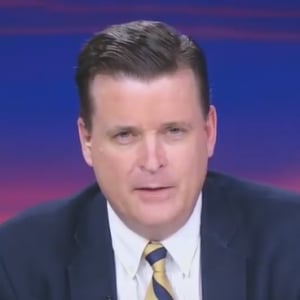
Director of Litigation, Immigration Reform Law Institute
Mr. Hajec joined the Immigration Reform Law Institute (IRLI) in 2017 as its Director of Litigation, and is responsible for overseeing IRLI’s public interest litigation. Previously, he has focused his career on constitutional and other civil rights law in the public interest, and has had an abiding concern about the many adverse effects of illegal and excessive legal immigration on American jobs and communities.
At IRLI, in addition to representing plaintiffs in immigration-related civil lawsuits, he has overseen the drafting and filing of nearly 100 briefs, mostly amicus curiae briefs in defense of the Trump administration’s immigration initiatives, which have been subjected to an unprecedented degree of legal assault by well-funded interest groups.
Prior to joining IRLI, Mr. Hajec was an attorney at the Center for Individual Rights (CIR), where he litigated a string of high-profile cases, including the defense of videographer James O’Keefe in suits brought by former ACORN employees, a class action suit on behalf of Asian American students discriminated against by the New York City public schools, and a case that resulted in the U.S. Court of Appeals for the Fifth Circuit’s striking down Texas’s psychologists licensing statute as an overbroad restriction on free speech.
Before CIR, Mr. Hajec was an officer in the Navy Judge Advocate General’s Corps, where he served as a defense counsel before courts-martial and then as Appellate Government Counsel, arguing over 100 appeals before the Navy-Marine Corps Court of Criminal Appeals and the Court of Appeals for the Armed Forces. He received the Navy Commendation Medal for his legal work, and also because of his poor handling of an emergency during a hurricane.
He received his law degree from the University of Pennsylvania Law School and his undergraduate degree, cum laude, from the University of Michigan. He has a Ph.D. in philosophy from the University of Miami, and studied philosophy and sociology at Oxford University.
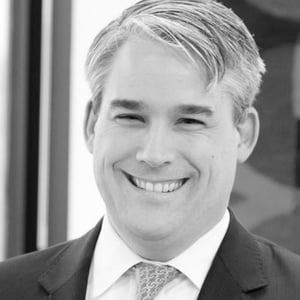
Partner, Klasko Immigration Law Partners, LLP
William A. Stock (Bill) is one of the country’s leading immigration lawyers. A founding member of Klasko Immigration Law Partners, LLP, he has practiced immigration law exclusively for over twenty years. His clients include small businesses, medium sized companies, and multinational corporations and their employees, as well as individual clients, investors and researchers.
Bill leads a team of thirty-two attorneys, senior and junior paralegals in obtaining employment-based immigration benefits for clients, such as nonimmigrant visa classification (H-1B, L-1, E-1 and E-2, TN and O-1); permanent residence or “green card” status through Labor Certification or as immigrants of Exceptional or Extraordinary Ability (EB-1, EB-2 and EB-3); investment-based immigration (EB-5); and unusual or complicated matters such as physician J-1 waivers, visas for entrepreneurs, and mandamus or APA review actions brought in federal court.
Bill served as President of the American Immigration Lawyers Association (AILA), the 16,000 member national organization of immigration lawyers in 2017. He has long been active in the association on both a national and state level and has served several terms on the Association’s Board of Governors. In 2000, he received the Association’s Joseph Minsky Award for outstanding accomplishments in immigration law.
Bill is a Senior Editor of AILA’s annual Immigration & Nationality Law Handbook, and is the co-author of the “J Visa Guidebook” from Lexis Publishing. He was an Adjunct Professor at the Villanova University School of Law. He has been included since 2004 in Best Lawyers in America (Woodward/ White Inc.); since 2006 in Chambers Global: The World’s Leading Lawyers for Business (Chambers and Partners), Who’s Who in American Law, and The International Who’s Who of Business Lawyers. Bill is also featured as a 20 top practitioner in the area of Immigration Law by Lawdragon.
A summa cum laude graduate of the University of St. Thomas (St. Paul, MN), (B.A.1990), he received his law degree from the University of Minnesota (J.D., magna cum laude, 1993) where he was a member of the Order of the Coif.
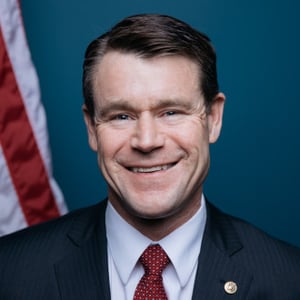
Senator from Indiana, United States Senate
Senator Todd Young represents the state of Indiana. He currently serves on the Senate Committees on Foreign Relations; Health, Education, Labor & Pensions; Commerce, Science & Transportation; and Small Business and Entrepreneurship. Previously, in the House, he served on the House Armed Services Committee, the House Budget Committee, and most recently the House Ways and Means Committee.
Assistant U.S. Attorney, U.S. Attorney's Office
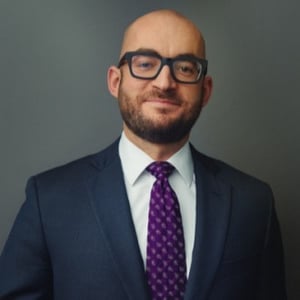
Partner, Eimer Stahl LLP
Ryan is a partner at Eimer Stahl LLP and is based in the firm’s Madison office. He focuses his practice on appellate and complex litigation in a wide variety of areas, including antitrust, constitutional law, corporate law, environmental, ERISA, products liability, and white collar. As part of his practice, Ryan devotes significant time to matters of legal strategy and the art of written and oral advocacy.
Ryan previously served as Chief Deputy Solicitor General of Wisconsin, securing numerous wins in the Supreme Court of the United States, in three federal courts of appeal, and in the state supreme court. Ryan built national, bipartisan coalitions of attorneys general and agencies in support of several lawsuits and briefing efforts, including a Wisconsin-led, 12-state coalition whose suit against the Federal Communications Commission prompted that agency to reverse a major new rule. When he left government, Ryan had a perfect win record in all of his cases to have reached final judgment.
Earlier in his career, Ryan worked in Washington D.C. as an associate in the appellate group of one of the world’s largest law firms.
Ryan also served as a law clerk on the U.S. Supreme Court for the Honorable Antonin Scalia and on the U.S. Court of Appeals for the Ninth Circuit for the Honorable Diarmuid F. O’Scannlain.
Ryan was named to Forbes’ “30 Under 30: Law and Policy” list in 2017. His briefing has won awards from the National Association of Attorneys General and the International Municipal Lawyers Association. He has also won a “best brief” accolade from the State Bar of Wisconsin in the civil category for his written work defending Wisconsin’s right-to-work law.

Capital Punishment: A One-Sided Contribution to a Complex Debate
John G. Malcolm
A review of: End of Its Rope: How Killing the Death Penalty Can Revive Criminal Justice, by...
Antitrust Regulation of the Use of Intellectual Property
Intellectual property and antitrust law have had an uneasy relationship for decades, with antitrust scrutiny...
An Update from Washington
Indianapolis Lawyers Chapter
Indianapolis, INModernizing American Space Policy
Jim Armor, Michael Beavin, Jennifer Manner, Erin McGrath, Maureen McLaughlin, Michael O'Rielly, Jennifer Warren
Last June, President Donald Trump reinstituted the National Space Council by Executive Order, chaired by...
Arbitration in the #MeToo Era
William H.J. Hubbard, Christopher C. Murray
Employers are increasingly turning to arbitration to reduce the costs and burdens of employment-related litigation....
The Judge Kavanaugh I Know
Madison Lawyers Chapter
Madison, WISanctuary Cities
Brian M. Fish, Christopher Hajec, William A. Stock
In 2015, 32-year old Kate Steinle was shot in San Francisco by an Illegal Immigrant....
Topics
Liberty Month Revisited: The Tweeter Laureate of Texas Discusses Judges' Use of Social Media
This month we are sharing a selection of pieces from The Federalist Society's Liberty Month...
Topics
Liberty Month Revisited: Campaign Finance Reform Can’t Punish Free Speech
This month we are sharing a selection of paired pieces from The Federalist Society's Liberty...
Topics
Liberty Month Revisited: It's Buckley Not Citizens United that Created Massive Spending
This month we are sharing a selection of paired pieces from The Federalist Society's Liberty...