
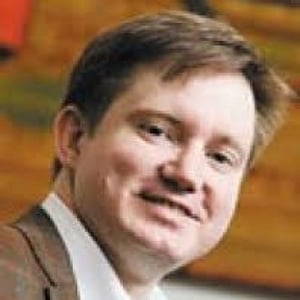
Professor of Law and the Vice Dean for Academic Affairs, University at Buffalo School of Law
Professor S. Todd Brown is a Professor of Law and the Vice Dean for Academic Affairs. Prior to joining the law school, Professor Brown was the managing partner of a small business, an attorney with WilmerHale in Washington, D.C., and Jones Day in Washington and Cleveland, and a Freedman Fellow at Temple University. He teaches bankruptcy, contracts, corporations, torts, mass torts, and related courses at the School of Law.
Brown is a frequent author and lecturer on bankruptcy trusts, chapter 11, complex litigation and mass torts. His scholarship has been cited in a variety of state and federal opinions, and he has testified concerning these issues before the U.S. House Judiciary Committee, state legislatures, the ABA Task Force on Asbestos and the Bankruptcy Trusts, and the American Bankruptcy Institute's Commission to Reform Chapter 11. His current research focuses on legal rules concerning corruption, fraud and abuse.
Brown received his J.D. in 1999 from Columbia Law School, where he served as articles editor of the Columbia Business Law Review, and an LL.M. in 2009 from the Beasley School of Law at Temple University. Prior to law school, he received his B.A. in philosophy, summa cum laude, from Loyola University in New Orleans.
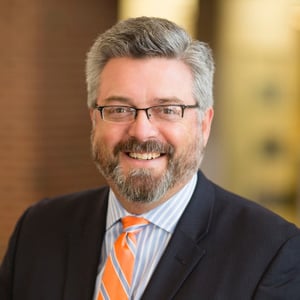
Carl L. Vacketta Professor of Law, University of Illinois College of Law
Considered one of the leading bankruptcy scholars of his generation, Professor Brubaker is the Carl L. Vacketta Professor of Law. He served as Interim Dean of the College of Law in 2008-09 after serving as Associate Dean for Academic Affairs for the previous two years. Professor Brubaker rejoined the Illinois faculty in 2004, returning to his alma mater after serving as a member of the faculty at the Emory University School of Law in Atlanta, Georgia for 10 years, where he was also the faculty adviser to the Emory Bankruptcy Developments Journal.
After earning an undergraduate degree with Bronze Tablet distinction at Illinois, Professor Brubaker passed the CPA exam before pursuing a dual JD/MBA degree. Professor Brubaker received his JD summa cum laude from the College of Law, where he was a member of the Order of the Coif, a Harno Fellow, and recipient of Rickert Awards for Excellence in Academic Achievement and in Legal Writing. He also served as articles editor for the University of Illinois Law Review.
Following graduation, Professor Brubaker clerked for Judge James K. Logan of the United States Court of Appeals for the Tenth Circuit. Later, he practiced in the bankruptcy and corporate reorganization group of Squire, Sanders & Dempsey (now Squire Patton Boggs) in Cleveland, Ohio, where he gained extensive experience in large- and medium-sized Chapter 11 bankruptcy reorganization proceedings, including prepackaged, leveraged buy-out, and mass-tort bankruptcies.
Professor Brubaker began teaching at the College of Law, later joining the Emory faculty in 1995. He is co-author of Bankruptcy Law: Principles, Policies, and Practice (with Charles J. Tabb) and has written dozens of journal articles and essays exploring all facets of federal bankruptcy law, particularly Chapter 11 corporate reorganizations and the complex jurisdictional and procedural aspects of federal bankruptcy proceedings. He was awarded the 2003 Editors’ Prize from The American Bankruptcy Law Journal for his article, “Of State Sovereign Immunity and Prospective Remedies: The Bankruptcy Discharge as Statutory Ex parte Young Relief,” 76 American Bankruptcy Law Journal 461 (2002).
Professor Brubaker is the editor-in-chief and a contributing author for West’s Bankruptcy Law Letter, and he has served on the editorial advisory boards of The American Bankruptcy Law Journal and the American Bankruptcy Institute Law Review. He is a member of the American Law Institute and a Fellow of the American College of Bankruptcy, for which he currently serves as the Scholar-in-Residence. Professor Brubaker has been a member of the executive committee of the board of directors for the American Bankruptcy Institute, and he was a member of the advisory committee on 363 sales for the ABI’s 2014 Commission to Study the Reform of Chapter 11.
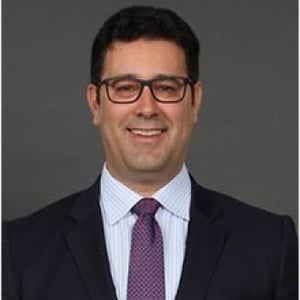
Partner, DLA Piper Global Law Firm
Dan Prieto focuses his practices on representing high-profile companies in successful chapter 11 reorganizations, including by assisting numerous companies in achieving permanent resolutions of mass asbestos tort liabilities through section 524(g) plans of reorganization. He also represents clients in out-of-court restructurings and distressed M&A transactions.
Prieto represented Bondex, Kaiser Aluminum and USG Corporation in their respective section 524(g) chapter 11 reorganizations that fully resolved their asbestos liabilities, and RadioShack in its successful chapter 11 reorganization, including in connection with a going concern sale of a substantial portion of RadioShack's business. Recently, he represented the owners of the Vogtle nuclear plant in connection with Westinghouse's chapter 11 case and a guarantee provided by Toshiba. He is also represented Hanson Permanente Cement and Kaiser Gypsum in chapter 11 cases they filed to resolve their asbestos and environmental liabilities. Other significant engagements include representing Turnbridge Capital Partners in its separate acquisitions of substantially all the assets of Diverse Energy and Abutec Industries and representing Highbrook Investment Management as the largest creditor in the chapter 11 cases of certain single asset real estate subsidiaries of American Spectrum Realty, Inc.

Partner, Arnold & Porter LLP
John Bellinger heads the firm's Global Law and Public Policy practice. He joined the firm in 2009, after holding several senior Presidential appointments in the US government, including as the Senate-confirmed Legal Adviser to the Department of State and Senior Associate Counsel to the President and Legal Adviser to the National Security Council (NSC) at the White House in the George W. Bush Administration.
Mr. Bellinger represents individuals, corporations, and sovereign governments in litigation in US courts and before international institutions. He has extensive experience in US foreign relations litigation involving the Alien Tort Statute, the Foreign Sovereign Immunities Act, the Anti-Terrorism Act, and the diplomatic and official immunities of foreign governments and government officials. He advises clients on other public international law matters, including treaties and international agreements as well as international humanitarian law and human rights law. He also counsels US and foreign clients on national security legal and policy issues, including US and multilateral financial sanctions and asset controls, the extraterritorial application of US criminal and civil laws, and transactions reviewed by the Committee on Foreign Investment in the United States (CFIUS).
Chambers Global ranks Mr. Bellinger among the best international lawyers in the world, reporting that he has "second-to-none experience in public international law, international litigation and foreign sovereign immunity" and that his "experience at the highest levels of the Executive branch...gives him a distinct and important vantage point on legal issues." Chambers adds: "For any cross border work he's just extraordinary, he knows the area inside-out."
Mr. Bellinger was the State Department Legal Adviser–the most senior international lawyer in the US Government–from 2005 to 2009, serving under Secretary of State Condoleezza Rice. He directed more than 170 lawyers on domestic and international law matters affecting US foreign relations. Before joining the State Department, Mr. Bellinger managed Secretary Rice's Senate confirmation process and co-directed her State Department transition team. In 2009, Mr. Bellinger received the Secretary of State's Distinguished Service Award.
Mr. Bellinger has argued cases before the International Court of Justice (Mexico v. United States–(Medellin)) and the Iran-United States Claims Tribunal in The Hague. He has appeared on numerous briefs in US federal courts, including the Supreme Court, in litigation involving international law issues.
As Legal Adviser to the NSC from 2001 to 2005, Mr. Bellinger advised President Bush, Cabinet officials, National Security Advisor Rice, and NSC staff on a wide range of national security and international law issues, including counterterrorism issues after the 9-11 attacks. He was one of the principal drafters of the legislation that created the Director of National Intelligence.
Prior to his service in the Bush Administration, Mr. Bellinger served as Counsel for National Security Matters in the Criminal Division at the US Department of Justice (1997-2001); Of Counsel to the Senate Select Committee on Intelligence (1996); General Counsel of the Commission on the Roles and Capabilities of the US Intelligence Community (1995-1996); and Special Assistant to Director of Central Intelligence William Webster (1988-1991). Mr. Bellinger is an Adjunct Senior Fellow in International and National Security Law at the Council on Foreign Relations. He has testified before Congress on numerous occasions, is quoted regularly in the media on international and national security law matters, and has lectured at numerous US and foreign universities and law schools. He is the author of many law review articles and op-eds on international law, including op-eds in The Washington Post, The New York Times, and The Wall Street Journal. Mr. Bellinger is a senior contributor to the Lawfare blog.
Mr. Bellinger is a member of the Secretary of State's Advisory Committee on International Law. He served from 2005-2019 as one of four US Members of the Permanent Court of Arbitration in The Hague and a member of the US "National Group", which nominates judges to the International Court of Justice. He is also a member of the Council on Foreign Relations and the American Society of International Law. He is a member of the Council of the American Law Institute; the boards of directors of the American Ditchley Foundation, the Salzburg Global Seminar, and the Stimson Center; and the advisory committee of Foreign Affairs magazine.
Mr. Bellinger is a graduate of Princeton University's Woodrow Wilson School of Public and International Affairs, and he holds an MA in Foreign Affairs from the University of Virginia and a JD from Harvard Law School, where he was an editor of the Harvard International Law Journal.

Emanuel S. Heller Professor of Law, University of California at Berkeley; Senior Research Fellow, School of Civic Leadership, Civitas Institute, University of Texas at Austin; Nonresident Senior Fellow, American Enterprise Institute
John Yoo is the Emanuel Heller Professor of Law. He is also Distinguished Visiting Scholar, School of Civic Leadership and Senior Research Fellow, Civitas Institute, at the University of Texas at Austin. He is also a Nonresident Senior Fellow at the American Enterprise Institute.
His most recent book, The Politically Incorrect Guide to the Supreme Court, co-authored with Robert Delahunty, was published in 2023. Professor Yoo’s other books include Defender-in-Chief: Trump’s Fight for Presidential Power; Striking Power: How Cyber, Robots, and Space Weapons Change the Rules for War, Point of Attack: Preventive War, International Law, and Global Welfare, and Crisis and Command: A History of Executive Power from George Washington to George Bush.
Professor Yoo has published more than 100 articles in academic journals on subjects including national security, constitutional law, international law, and the Supreme Court. He also regularly contributes to the editorial pages of the Wall Street Journal, New York Times, Washington Post, Los Angeles Times, and National Review, among others.
Professor Yoo has served in all three branches of government. He was an official in the U.S. Department of Justice, where he worked on national security and terrorism issues after the 9/11 attacks. He served as general counsel of the U.S. Senate Judiciary Committee. He has been a law clerk for Supreme Court Justice Clarence Thomas and federal appeals Judge Laurence Silberman. He has been a visiting professor at Seoul National University in South Korea, the Interdisciplinary Center in Israel, Keio University in Japan, Trento University in Italy, the University of Chicago, and the Free University of Amsterdam.
Professor Yoo supervises the Public Law and Policy Program and the California Constitution Center. He also serves on the boards of the Pacific Legal Foundation, the Federalist Society’s Separation of Powers and Federalism Division, the Universidad Cientifica del Sur Law School, and the Asia-Pacific Law Institute at Seoul National University. He is a winner of the Federalist Society’s Paul Bator award and been the Edwin Meese III Originalism Lecturer at the Heritage Foundation.
Professor Yoo graduated from Yale Law School and summa cum laude from Harvard College.
Partner, Arnold & Porter LLP
John Bellinger heads the firm's Global Law and Public Policy practice. He joined the firm in 2009, after holding several senior Presidential appointments in the US government, including as the Senate-confirmed Legal Adviser to the Department of State and Senior Associate Counsel to the President and Legal Adviser to the National Security Council (NSC) at the White House in the George W. Bush Administration.
Mr. Bellinger represents individuals, corporations, and sovereign governments in litigation in US courts and before international institutions. He has extensive experience in US foreign relations litigation involving the Alien Tort Statute, the Foreign Sovereign Immunities Act, the Anti-Terrorism Act, and the diplomatic and official immunities of foreign governments and government officials. He advises clients on other public international law matters, including treaties and international agreements as well as international humanitarian law and human rights law. He also counsels US and foreign clients on national security legal and policy issues, including US and multilateral financial sanctions and asset controls, the extraterritorial application of US criminal and civil laws, and transactions reviewed by the Committee on Foreign Investment in the United States (CFIUS).
Chambers Global ranks Mr. Bellinger among the best international lawyers in the world, reporting that he has "second-to-none experience in public international law, international litigation and foreign sovereign immunity" and that his "experience at the highest levels of the Executive branch...gives him a distinct and important vantage point on legal issues." Chambers adds: "For any cross border work he's just extraordinary, he knows the area inside-out."
Mr. Bellinger was the State Department Legal Adviser–the most senior international lawyer in the US Government–from 2005 to 2009, serving under Secretary of State Condoleezza Rice. He directed more than 170 lawyers on domestic and international law matters affecting US foreign relations. Before joining the State Department, Mr. Bellinger managed Secretary Rice's Senate confirmation process and co-directed her State Department transition team. In 2009, Mr. Bellinger received the Secretary of State's Distinguished Service Award.
Mr. Bellinger has argued cases before the International Court of Justice (Mexico v. United States–(Medellin)) and the Iran-United States Claims Tribunal in The Hague. He has appeared on numerous briefs in US federal courts, including the Supreme Court, in litigation involving international law issues.
As Legal Adviser to the NSC from 2001 to 2005, Mr. Bellinger advised President Bush, Cabinet officials, National Security Advisor Rice, and NSC staff on a wide range of national security and international law issues, including counterterrorism issues after the 9-11 attacks. He was one of the principal drafters of the legislation that created the Director of National Intelligence.
Prior to his service in the Bush Administration, Mr. Bellinger served as Counsel for National Security Matters in the Criminal Division at the US Department of Justice (1997-2001); Of Counsel to the Senate Select Committee on Intelligence (1996); General Counsel of the Commission on the Roles and Capabilities of the US Intelligence Community (1995-1996); and Special Assistant to Director of Central Intelligence William Webster (1988-1991). Mr. Bellinger is an Adjunct Senior Fellow in International and National Security Law at the Council on Foreign Relations. He has testified before Congress on numerous occasions, is quoted regularly in the media on international and national security law matters, and has lectured at numerous US and foreign universities and law schools. He is the author of many law review articles and op-eds on international law, including op-eds in The Washington Post, The New York Times, and The Wall Street Journal. Mr. Bellinger is a senior contributor to the Lawfare blog.
Mr. Bellinger is a member of the Secretary of State's Advisory Committee on International Law. He served from 2005-2019 as one of four US Members of the Permanent Court of Arbitration in The Hague and a member of the US "National Group", which nominates judges to the International Court of Justice. He is also a member of the Council on Foreign Relations and the American Society of International Law. He is a member of the Council of the American Law Institute; the boards of directors of the American Ditchley Foundation, the Salzburg Global Seminar, and the Stimson Center; and the advisory committee of Foreign Affairs magazine.
Mr. Bellinger is a graduate of Princeton University's Woodrow Wilson School of Public and International Affairs, and he holds an MA in Foreign Affairs from the University of Virginia and a JD from Harvard Law School, where he was an editor of the Harvard International Law Journal.
Emanuel S. Heller Professor of Law, University of California at Berkeley; Senior Research Fellow, School of Civic Leadership, Civitas Institute, University of Texas at Austin; Nonresident Senior Fellow, American Enterprise Institute
John Yoo is the Emanuel Heller Professor of Law. He is also Distinguished Visiting Scholar, School of Civic Leadership and Senior Research Fellow, Civitas Institute, at the University of Texas at Austin. He is also a Nonresident Senior Fellow at the American Enterprise Institute.
His most recent book, The Politically Incorrect Guide to the Supreme Court, co-authored with Robert Delahunty, was published in 2023. Professor Yoo’s other books include Defender-in-Chief: Trump’s Fight for Presidential Power; Striking Power: How Cyber, Robots, and Space Weapons Change the Rules for War, Point of Attack: Preventive War, International Law, and Global Welfare, and Crisis and Command: A History of Executive Power from George Washington to George Bush.
Professor Yoo has published more than 100 articles in academic journals on subjects including national security, constitutional law, international law, and the Supreme Court. He also regularly contributes to the editorial pages of the Wall Street Journal, New York Times, Washington Post, Los Angeles Times, and National Review, among others.
Professor Yoo has served in all three branches of government. He was an official in the U.S. Department of Justice, where he worked on national security and terrorism issues after the 9/11 attacks. He served as general counsel of the U.S. Senate Judiciary Committee. He has been a law clerk for Supreme Court Justice Clarence Thomas and federal appeals Judge Laurence Silberman. He has been a visiting professor at Seoul National University in South Korea, the Interdisciplinary Center in Israel, Keio University in Japan, Trento University in Italy, the University of Chicago, and the Free University of Amsterdam.
Professor Yoo supervises the Public Law and Policy Program and the California Constitution Center. He also serves on the boards of the Pacific Legal Foundation, the Federalist Society’s Separation of Powers and Federalism Division, the Universidad Cientifica del Sur Law School, and the Asia-Pacific Law Institute at Seoul National University. He is a winner of the Federalist Society’s Paul Bator award and been the Edwin Meese III Originalism Lecturer at the Heritage Foundation.
Professor Yoo graduated from Yale Law School and summa cum laude from Harvard College.
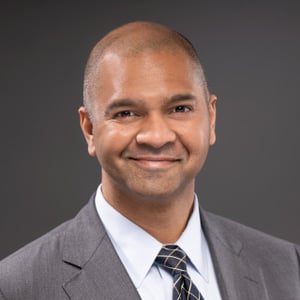
Senior Fellow, Stand Together Trust
Vikrant Reddy is a senior fellow at Stand Together Trust, specializing in the area of criminal justice reform. Reddy previously served as a senior policy analyst at the Texas Public Policy Foundation (TPPF), where he managed the launch of TPPF’s national Right on Crime initiative in 2010. He has worked as a research assistant at the Cato Institute, as a judicial clerk to the Hon. Gina M. Benavides in Texas, and as an attorney in private practice. He is a member of the State Bar of Texas, and he serves on the Executive Committee of the Criminal Law Practice Group of the Federalist Society. He is also an appointee to the U.S. Commission on Civil Rights Texas State Advisory Committee.
Reddy’s research and scholarly opinions have appeared in a range of national media outlets, including USA Today, National Review, The Federalist, and others.
Reddy earned his law degree from the Southern Methodist University School of Law. He received his undergraduate degree from the University of Texas at Austin.
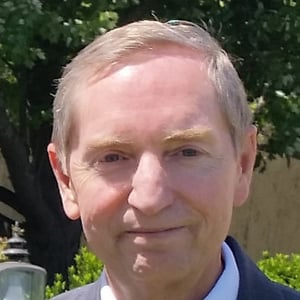
Legal Director & General Counsel, Criminal Justice Legal Foundation
Kent S. Scheidegger has been the Legal Director of the Criminal Justice Legal Foundation since December 1986. He also served as Chairman of the Criminal Law Practice Group of the Federalist Society 2003 to 2005. His articles on criminal and constitutional law have been published in law reviews, national legal publications, and congressional reports. Legal arguments authored by Mr. Scheidegger have been cited and incorporated in several precedent-setting United States Supreme Court decisions.
After receiving a degree in physics with honors from New Mexico State University in 1976, Mr. Scheidegger served for six years in the United States Air Force as a Nuclear Research Officer. He took his law degree with distinction from the University of the Pacific, McGeorge School of Law in 1982 and practiced civil law in Northern California. He was general counsel of California Cooler, Inc. from 1984 until 1986, when he joined the Foundation.
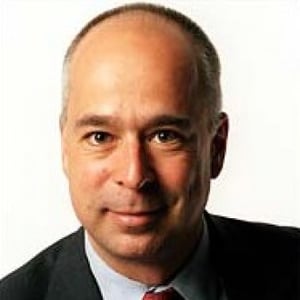
Supreme Court Correspondent, The New York Times
Adam Liptak covers the Supreme Court for The New York Times. Liptak’s column on legal affairs, “Sidebar,” appears every other Tuesday.
A graduate of Yale College and Yale Law School, Liptak practiced law at a large New York City law firm and in the legal department of The New York Times Company before joining the paper’s news staff in 2002.
Liptak was a finalist for the Pulitzer Prize in explanatory reporting in 2009 for “American Exception,” a series of articles examining ways in which the American legal system differs from those of other developed nations. He received the 2010 Scripps Howard Award for Washington reporting for a five-part series on the Roberts Court.
He is the author of “To Have and Uphold: The Supreme Court and the Battle for Same-Sex Marriage.”
His journalism has appeared in The New Yorker, Vanity Fair, Business Week and Rolling Stone, and he has published articles in The Arizona Law Review, The Michigan Law Review and The New York University Annual Survey of American Law.
Liptak has taught courses at Yale, Columbia, the University of Chicago, Washington University in St. Louis, the University of Southern California and U.C.L.A. He is a member of the American Academy of Arts and Sciences.
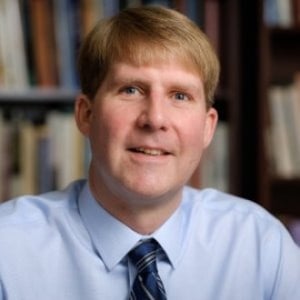
Professor of Politics, Wake Forest University
John Dinan, author of "State Constitutional Politics: Governing by Amendment in the American States," can comment on mid-term elections and the state constitutional amendments appearing on the ballot. From voter identification to redistricting, Dinan can place particular amendments in nationwide and historical perspective. Based on his research, he can also address the arguments and issues that routinely surface in campaigns supporting and opposing various amendments. He is also prepared to comment on federal and state policies in areas ranging from the Affordable Care Act to legislative redistricting to voter-registration rules. Dinan closely follows U.S. and North Carolina political races, including gubernatorial and congressional races. Dinan teaches courses on campaigns and elections, state politics and congress and policymaking. He frequently provides commentary for news outlets across the country and his research was cited by the U.S. Supreme Court in Arizona State Legislature v. Arizona Independent Redistricting Commission (2015). He is also the author of "The American State Constitutional Tradition" and an annual review of state constitutional developments in the 50 states, as well as numerous articles on state and federal politics.
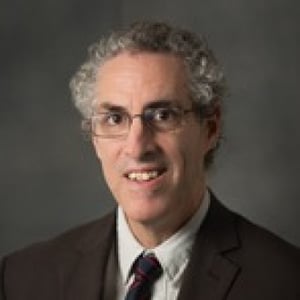
Regents Professor, University System of Maryland
Professor Graber held a faculty position in the Department of Government and Politics at the University of Maryland, College Park from 1993-2007 and taught at the University of Maryland School of Law as an adjunct professor beginning in the fall of 2002. In 2004, he was appointed Professor of Government and Law at the School of Law, a title he held until May 1, 2015 at which time he received an appointment as the Jacob A. France Professor of Constitutionalism. In 2016, he was named Regents Professor, one of only seven Regents Professors in the history of the University System of Maryland and the only Regents Professor on the UMB campus. He served as associate dean for research and faculty development from 2010 to 2013. He has also been one of the organizers of the annual Constitutional Law "Schmooze", which attracts scholars from across the country to the law school.
He is the author of A New Introduction to American Constitutionalism, forthcoming in 2013 from Oxford University Press, and co-editor (with Keith Whittington and Howard Gillman) of American Constitutionalism: Structures and Powers and American Constitutionalism: Rights and Powers, both also from Oxford University Press. He is presently working on Forged in Failure, a book that will examine how much constitutional change in the United States has been caused by the failure of constitutional practices to function as expected.
Professor Graber is also the author of scores of articles, including "The Non-Majoritarian Problem: Legislative Deference to the Judiciary" in Studies in American Political Development, "Naked Land Transfers and American Constitutional Development", published in the Vanderbilt Law Review and "Resolving Political Questions into Judicial Questions: Tocqueville’s Aphorism Revisited", published by Constitutional Commentary.
During fall 2013, he was a visiting faculty member at the University of Virginia School of Law.
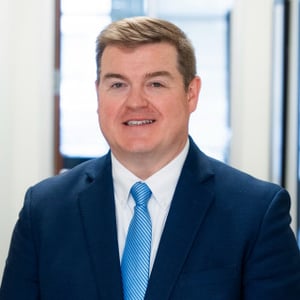
Vice President, Networks, The Federalist Society for Law and Public Policy Studies
Nathan Kaczmarek is Vice President for Networks at the Federalist Society. He began his legal career in Detroit representing nationwide clients in all phases of healthcare litigation and complex medical malpractice claims. He has since served as a Senior Legal and Policy Advisor in the U.S. House of Representatives and as Counsel for the Subcommittee on Regulatory Affairs and Federal Management in the U.S. Senate. Prior to overseeing the Networks, he was Director of the Practice Groups, the Regulatory Transparency Project, and the Article I Initiative for the Federalist Society.
Nathan holds degrees from Hillsdale College and Thomas M. Cooley Law School. He is a Liaison Representative for The Administrative Conference of the United States. He also serves as Vice President of the Associates of St. John Bosco, a Virginia based non-profit dedicated to Catholic high school and college students.

Executive Director, The Constitutional Sources Project
Julie Silverbrook is Executive Director of The Constitutional Sources Project (www.ConSource.org), a non-partisan, not-for-profit organization devoted to increasing understanding, facilitating research, and encouraging discussion of the U.S. Constitution by connecting individuals with the documentary history of its creation, ratification, and amendment. ConSource educates lawyers, judges, teachers, and students about United States Constitutional History. Prior to leading ConSource, Ms. Silverbrook was the Founding Director of an award-winning constitutional literacy program called Constitutional Conversations, in collaboration with the Institute of Bill of Rights Law at William & Mary Law School, the Colonial Williamsburg Foundation, and the Williamsburg Regional Library System. Ms. Silverbrook has given lectures and presentations on the Constitution at a number of colleges and universities, as well as at historical societies, presidential homes, state bar associations and social studies associations.
Ms. Silverbrook holds a J.D. from the William & Mary Law chool, where she received the National Association of Women Lawyers Award and the Thurgood Marshall Award and served as a Senior Articles Editor on the William & Mary Bill of Rights Journal. She graduated Summa Cum Laude, Phi Beta Kappa (elected as Junior) from The George Washington University with a B.A. in Political Science. Upon graduation, she was awarded the GW Columbian College of Arts and Sciences Distinguished Scholar Award, the highest academic award given to a student in the arts and sciences college. Ms. Silverbrook was also awarded the John C. Morgan Prize by the Department of Political Science–an award given annually to an outstanding graduate pursuing a law degree after graduation. In 2013, she was awarded a GW Political Science Department 100th Anniversary Alumni Award.
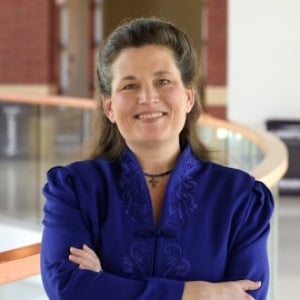
Lecturer, University of Virginia, University of Richmond
Lynn Uzzell received her B.A. in speech communications at Black Hills State University and her M.A. and Ph.D. in politics at the University of Dallas. She has taught extensively on political philosophy, rhetoric, the United States Constitution, and American political thought at Baylor University, the University of Virginia, and the University of Richmond. She specializes in the Constitutional Convention of 1787. For four years she was also the scholar in residence at the Center for the Constitution at James Madison’s Montpelier.
Professor of Politics, Wake Forest University
John Dinan, author of "State Constitutional Politics: Governing by Amendment in the American States," can comment on mid-term elections and the state constitutional amendments appearing on the ballot. From voter identification to redistricting, Dinan can place particular amendments in nationwide and historical perspective. Based on his research, he can also address the arguments and issues that routinely surface in campaigns supporting and opposing various amendments. He is also prepared to comment on federal and state policies in areas ranging from the Affordable Care Act to legislative redistricting to voter-registration rules. Dinan closely follows U.S. and North Carolina political races, including gubernatorial and congressional races. Dinan teaches courses on campaigns and elections, state politics and congress and policymaking. He frequently provides commentary for news outlets across the country and his research was cited by the U.S. Supreme Court in Arizona State Legislature v. Arizona Independent Redistricting Commission (2015). He is also the author of "The American State Constitutional Tradition" and an annual review of state constitutional developments in the 50 states, as well as numerous articles on state and federal politics.
Regents Professor, University System of Maryland
Professor Graber held a faculty position in the Department of Government and Politics at the University of Maryland, College Park from 1993-2007 and taught at the University of Maryland School of Law as an adjunct professor beginning in the fall of 2002. In 2004, he was appointed Professor of Government and Law at the School of Law, a title he held until May 1, 2015 at which time he received an appointment as the Jacob A. France Professor of Constitutionalism. In 2016, he was named Regents Professor, one of only seven Regents Professors in the history of the University System of Maryland and the only Regents Professor on the UMB campus. He served as associate dean for research and faculty development from 2010 to 2013. He has also been one of the organizers of the annual Constitutional Law "Schmooze", which attracts scholars from across the country to the law school.
He is the author of A New Introduction to American Constitutionalism, forthcoming in 2013 from Oxford University Press, and co-editor (with Keith Whittington and Howard Gillman) of American Constitutionalism: Structures and Powers and American Constitutionalism: Rights and Powers, both also from Oxford University Press. He is presently working on Forged in Failure, a book that will examine how much constitutional change in the United States has been caused by the failure of constitutional practices to function as expected.
Professor Graber is also the author of scores of articles, including "The Non-Majoritarian Problem: Legislative Deference to the Judiciary" in Studies in American Political Development, "Naked Land Transfers and American Constitutional Development", published in the Vanderbilt Law Review and "Resolving Political Questions into Judicial Questions: Tocqueville’s Aphorism Revisited", published by Constitutional Commentary.
During fall 2013, he was a visiting faculty member at the University of Virginia School of Law.
Vice President, Networks, The Federalist Society for Law and Public Policy Studies
Nathan Kaczmarek is Vice President for Networks at the Federalist Society. He began his legal career in Detroit representing nationwide clients in all phases of healthcare litigation and complex medical malpractice claims. He has since served as a Senior Legal and Policy Advisor in the U.S. House of Representatives and as Counsel for the Subcommittee on Regulatory Affairs and Federal Management in the U.S. Senate. Prior to overseeing the Networks, he was Director of the Practice Groups, the Regulatory Transparency Project, and the Article I Initiative for the Federalist Society.
Nathan holds degrees from Hillsdale College and Thomas M. Cooley Law School. He is a Liaison Representative for The Administrative Conference of the United States. He also serves as Vice President of the Associates of St. John Bosco, a Virginia based non-profit dedicated to Catholic high school and college students.
Executive Director, The Constitutional Sources Project
Julie Silverbrook is Executive Director of The Constitutional Sources Project (www.ConSource.org), a non-partisan, not-for-profit organization devoted to increasing understanding, facilitating research, and encouraging discussion of the U.S. Constitution by connecting individuals with the documentary history of its creation, ratification, and amendment. ConSource educates lawyers, judges, teachers, and students about United States Constitutional History. Prior to leading ConSource, Ms. Silverbrook was the Founding Director of an award-winning constitutional literacy program called Constitutional Conversations, in collaboration with the Institute of Bill of Rights Law at William & Mary Law School, the Colonial Williamsburg Foundation, and the Williamsburg Regional Library System. Ms. Silverbrook has given lectures and presentations on the Constitution at a number of colleges and universities, as well as at historical societies, presidential homes, state bar associations and social studies associations.
Ms. Silverbrook holds a J.D. from the William & Mary Law chool, where she received the National Association of Women Lawyers Award and the Thurgood Marshall Award and served as a Senior Articles Editor on the William & Mary Bill of Rights Journal. She graduated Summa Cum Laude, Phi Beta Kappa (elected as Junior) from The George Washington University with a B.A. in Political Science. Upon graduation, she was awarded the GW Columbian College of Arts and Sciences Distinguished Scholar Award, the highest academic award given to a student in the arts and sciences college. Ms. Silverbrook was also awarded the John C. Morgan Prize by the Department of Political Science–an award given annually to an outstanding graduate pursuing a law degree after graduation. In 2013, she was awarded a GW Political Science Department 100th Anniversary Alumni Award.
Lecturer, University of Virginia, University of Richmond
Lynn Uzzell received her B.A. in speech communications at Black Hills State University and her M.A. and Ph.D. in politics at the University of Dallas. She has taught extensively on political philosophy, rhetoric, the United States Constitution, and American political thought at Baylor University, the University of Virginia, and the University of Richmond. She specializes in the Constitutional Convention of 1787. For four years she was also the scholar in residence at the Center for the Constitution at James Madison’s Montpelier.
Professor of Law and the Vice Dean for Academic Affairs, University at Buffalo School of Law
Professor S. Todd Brown is a Professor of Law and the Vice Dean for Academic Affairs. Prior to joining the law school, Professor Brown was the managing partner of a small business, an attorney with WilmerHale in Washington, D.C., and Jones Day in Washington and Cleveland, and a Freedman Fellow at Temple University. He teaches bankruptcy, contracts, corporations, torts, mass torts, and related courses at the School of Law.
Brown is a frequent author and lecturer on bankruptcy trusts, chapter 11, complex litigation and mass torts. His scholarship has been cited in a variety of state and federal opinions, and he has testified concerning these issues before the U.S. House Judiciary Committee, state legislatures, the ABA Task Force on Asbestos and the Bankruptcy Trusts, and the American Bankruptcy Institute's Commission to Reform Chapter 11. His current research focuses on legal rules concerning corruption, fraud and abuse.
Brown received his J.D. in 1999 from Columbia Law School, where he served as articles editor of the Columbia Business Law Review, and an LL.M. in 2009 from the Beasley School of Law at Temple University. Prior to law school, he received his B.A. in philosophy, summa cum laude, from Loyola University in New Orleans.
Carl L. Vacketta Professor of Law, University of Illinois College of Law
Considered one of the leading bankruptcy scholars of his generation, Professor Brubaker is the Carl L. Vacketta Professor of Law. He served as Interim Dean of the College of Law in 2008-09 after serving as Associate Dean for Academic Affairs for the previous two years. Professor Brubaker rejoined the Illinois faculty in 2004, returning to his alma mater after serving as a member of the faculty at the Emory University School of Law in Atlanta, Georgia for 10 years, where he was also the faculty adviser to the Emory Bankruptcy Developments Journal.
After earning an undergraduate degree with Bronze Tablet distinction at Illinois, Professor Brubaker passed the CPA exam before pursuing a dual JD/MBA degree. Professor Brubaker received his JD summa cum laude from the College of Law, where he was a member of the Order of the Coif, a Harno Fellow, and recipient of Rickert Awards for Excellence in Academic Achievement and in Legal Writing. He also served as articles editor for the University of Illinois Law Review.
Following graduation, Professor Brubaker clerked for Judge James K. Logan of the United States Court of Appeals for the Tenth Circuit. Later, he practiced in the bankruptcy and corporate reorganization group of Squire, Sanders & Dempsey (now Squire Patton Boggs) in Cleveland, Ohio, where he gained extensive experience in large- and medium-sized Chapter 11 bankruptcy reorganization proceedings, including prepackaged, leveraged buy-out, and mass-tort bankruptcies.
Professor Brubaker began teaching at the College of Law, later joining the Emory faculty in 1995. He is co-author of Bankruptcy Law: Principles, Policies, and Practice (with Charles J. Tabb) and has written dozens of journal articles and essays exploring all facets of federal bankruptcy law, particularly Chapter 11 corporate reorganizations and the complex jurisdictional and procedural aspects of federal bankruptcy proceedings. He was awarded the 2003 Editors’ Prize from The American Bankruptcy Law Journal for his article, “Of State Sovereign Immunity and Prospective Remedies: The Bankruptcy Discharge as Statutory Ex parte Young Relief,” 76 American Bankruptcy Law Journal 461 (2002).
Professor Brubaker is the editor-in-chief and a contributing author for West’s Bankruptcy Law Letter, and he has served on the editorial advisory boards of The American Bankruptcy Law Journal and the American Bankruptcy Institute Law Review. He is a member of the American Law Institute and a Fellow of the American College of Bankruptcy, for which he currently serves as the Scholar-in-Residence. Professor Brubaker has been a member of the executive committee of the board of directors for the American Bankruptcy Institute, and he was a member of the advisory committee on 363 sales for the ABI’s 2014 Commission to Study the Reform of Chapter 11.
Partner, DLA Piper Global Law Firm
Dan Prieto focuses his practices on representing high-profile companies in successful chapter 11 reorganizations, including by assisting numerous companies in achieving permanent resolutions of mass asbestos tort liabilities through section 524(g) plans of reorganization. He also represents clients in out-of-court restructurings and distressed M&A transactions.
Prieto represented Bondex, Kaiser Aluminum and USG Corporation in their respective section 524(g) chapter 11 reorganizations that fully resolved their asbestos liabilities, and RadioShack in its successful chapter 11 reorganization, including in connection with a going concern sale of a substantial portion of RadioShack's business. Recently, he represented the owners of the Vogtle nuclear plant in connection with Westinghouse's chapter 11 case and a guarantee provided by Toshiba. He is also represented Hanson Permanente Cement and Kaiser Gypsum in chapter 11 cases they filed to resolve their asbestos and environmental liabilities. Other significant engagements include representing Turnbridge Capital Partners in its separate acquisitions of substantially all the assets of Diverse Energy and Abutec Industries and representing Highbrook Investment Management as the largest creditor in the chapter 11 cases of certain single asset real estate subsidiaries of American Spectrum Realty, Inc.
Partner, Arnold & Porter LLP
John Bellinger heads the firm's Global Law and Public Policy practice. He joined the firm in 2009, after holding several senior Presidential appointments in the US government, including as the Senate-confirmed Legal Adviser to the Department of State and Senior Associate Counsel to the President and Legal Adviser to the National Security Council (NSC) at the White House in the George W. Bush Administration.
Mr. Bellinger represents individuals, corporations, and sovereign governments in litigation in US courts and before international institutions. He has extensive experience in US foreign relations litigation involving the Alien Tort Statute, the Foreign Sovereign Immunities Act, the Anti-Terrorism Act, and the diplomatic and official immunities of foreign governments and government officials. He advises clients on other public international law matters, including treaties and international agreements as well as international humanitarian law and human rights law. He also counsels US and foreign clients on national security legal and policy issues, including US and multilateral financial sanctions and asset controls, the extraterritorial application of US criminal and civil laws, and transactions reviewed by the Committee on Foreign Investment in the United States (CFIUS).
Chambers Global ranks Mr. Bellinger among the best international lawyers in the world, reporting that he has "second-to-none experience in public international law, international litigation and foreign sovereign immunity" and that his "experience at the highest levels of the Executive branch...gives him a distinct and important vantage point on legal issues." Chambers adds: "For any cross border work he's just extraordinary, he knows the area inside-out."
Mr. Bellinger was the State Department Legal Adviser–the most senior international lawyer in the US Government–from 2005 to 2009, serving under Secretary of State Condoleezza Rice. He directed more than 170 lawyers on domestic and international law matters affecting US foreign relations. Before joining the State Department, Mr. Bellinger managed Secretary Rice's Senate confirmation process and co-directed her State Department transition team. In 2009, Mr. Bellinger received the Secretary of State's Distinguished Service Award.
Mr. Bellinger has argued cases before the International Court of Justice (Mexico v. United States–(Medellin)) and the Iran-United States Claims Tribunal in The Hague. He has appeared on numerous briefs in US federal courts, including the Supreme Court, in litigation involving international law issues.
As Legal Adviser to the NSC from 2001 to 2005, Mr. Bellinger advised President Bush, Cabinet officials, National Security Advisor Rice, and NSC staff on a wide range of national security and international law issues, including counterterrorism issues after the 9-11 attacks. He was one of the principal drafters of the legislation that created the Director of National Intelligence.
Prior to his service in the Bush Administration, Mr. Bellinger served as Counsel for National Security Matters in the Criminal Division at the US Department of Justice (1997-2001); Of Counsel to the Senate Select Committee on Intelligence (1996); General Counsel of the Commission on the Roles and Capabilities of the US Intelligence Community (1995-1996); and Special Assistant to Director of Central Intelligence William Webster (1988-1991). Mr. Bellinger is an Adjunct Senior Fellow in International and National Security Law at the Council on Foreign Relations. He has testified before Congress on numerous occasions, is quoted regularly in the media on international and national security law matters, and has lectured at numerous US and foreign universities and law schools. He is the author of many law review articles and op-eds on international law, including op-eds in The Washington Post, The New York Times, and The Wall Street Journal. Mr. Bellinger is a senior contributor to the Lawfare blog.
Mr. Bellinger is a member of the Secretary of State's Advisory Committee on International Law. He served from 2005-2019 as one of four US Members of the Permanent Court of Arbitration in The Hague and a member of the US "National Group", which nominates judges to the International Court of Justice. He is also a member of the Council on Foreign Relations and the American Society of International Law. He is a member of the Council of the American Law Institute; the boards of directors of the American Ditchley Foundation, the Salzburg Global Seminar, and the Stimson Center; and the advisory committee of Foreign Affairs magazine.
Mr. Bellinger is a graduate of Princeton University's Woodrow Wilson School of Public and International Affairs, and he holds an MA in Foreign Affairs from the University of Virginia and a JD from Harvard Law School, where he was an editor of the Harvard International Law Journal.
Emanuel S. Heller Professor of Law, University of California at Berkeley; Senior Research Fellow, School of Civic Leadership, Civitas Institute, University of Texas at Austin; Nonresident Senior Fellow, American Enterprise Institute
John Yoo is the Emanuel Heller Professor of Law. He is also Distinguished Visiting Scholar, School of Civic Leadership and Senior Research Fellow, Civitas Institute, at the University of Texas at Austin. He is also a Nonresident Senior Fellow at the American Enterprise Institute.
His most recent book, The Politically Incorrect Guide to the Supreme Court, co-authored with Robert Delahunty, was published in 2023. Professor Yoo’s other books include Defender-in-Chief: Trump’s Fight for Presidential Power; Striking Power: How Cyber, Robots, and Space Weapons Change the Rules for War, Point of Attack: Preventive War, International Law, and Global Welfare, and Crisis and Command: A History of Executive Power from George Washington to George Bush.
Professor Yoo has published more than 100 articles in academic journals on subjects including national security, constitutional law, international law, and the Supreme Court. He also regularly contributes to the editorial pages of the Wall Street Journal, New York Times, Washington Post, Los Angeles Times, and National Review, among others.
Professor Yoo has served in all three branches of government. He was an official in the U.S. Department of Justice, where he worked on national security and terrorism issues after the 9/11 attacks. He served as general counsel of the U.S. Senate Judiciary Committee. He has been a law clerk for Supreme Court Justice Clarence Thomas and federal appeals Judge Laurence Silberman. He has been a visiting professor at Seoul National University in South Korea, the Interdisciplinary Center in Israel, Keio University in Japan, Trento University in Italy, the University of Chicago, and the Free University of Amsterdam.
Professor Yoo supervises the Public Law and Policy Program and the California Constitution Center. He also serves on the boards of the Pacific Legal Foundation, the Federalist Society’s Separation of Powers and Federalism Division, the Universidad Cientifica del Sur Law School, and the Asia-Pacific Law Institute at Seoul National University. He is a winner of the Federalist Society’s Paul Bator award and been the Edwin Meese III Originalism Lecturer at the Heritage Foundation.
Professor Yoo graduated from Yale Law School and summa cum laude from Harvard College.
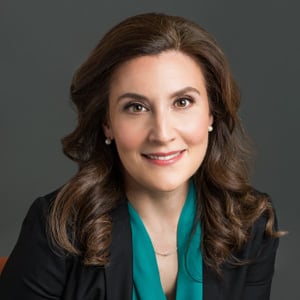
Board Member, U.S. Privacy and Civil Liberties Oversight Board
Beth A. Williams is a Board Member of the United States Privacy and Civil Liberties Oversight Board, an agency whose mission is to ensure that the federal government's efforts to prevent terrorism are balanced with the need to protect privacy and civil liberties.
Prior to her Board service, Ms. Williams was the Assistant Attorney General for the Office of Legal Policy at the United States Department of Justice from August 2017 to December 2020. In that role, she served as the primary policy advisor to the Attorney General and the Deputy Attorney General, and as the Chief Regulatory Officer for the Department. Ms. Williams also led the judicial nomination process for the Department, assisting in the selection and confirmation of more than 230 Article III judges to the bench.
Prior to becoming Assistant Attorney General, Ms. Williams was a litigation and appellate partner at a national law firm, where her practice focused on complex commercial, securities, appellate, and First Amendment litigation. From 2005-2006, Ms. Williams served as Special Counsel to the United States Senate Committee on the Judiciary, where she assisted with the confirmation of Chief Justice John G. Roberts, Jr. and Associate Justice Samuel A. Alito, Jr. to the United States Supreme Court.
Ms. Williams clerked for the Hon. Richard C. Wesley on the United State Court of Appeals for the Second Circuit. She graduated from Harvard College magna cum laude, with a degree in History and Literature, and she earned her law degree from Harvard Law School, where she served as Executive Editor of the Harvard Journal of Law and Public Policy.

Mass Tort Bankruptcy Cases
Steven Todd Brown, Ralph Brubaker, Dan Prieto
Companies are increasingly resorting to the bankruptcy system to resolve mass tort litigation. Recent examples...
The Authorization for Use of Military Force (AUMF)
John B. Bellinger, John C. Yoo
Nearly 18 years after its overwhelming enactment by Congress, the 2001 Authorization to Use Military...
The Authorization for Use of Military Force (AUMF)
John B. Bellinger, John C. Yoo
Nearly 18 years after its overwhelming enactment by Congress, the 2001 Authorization to Use Military...
Mass Tort Bankruptcy Cases
TeleforumTwo Views on Criminal Justice Reform: The Author and a Critic on Locked In
Vikrant P. Reddy, Kent Scheidegger
A Debate About: Locked In: The True Causes of Mass Incarceration—and How to Achieve Real...
The Authorization for Use of Military Force (AUMF)
TeleforumAre Federal Courts Overcharging for Digital Records? [POLICYbrief]
Adam Liptak
Access to the pages of paper records from federal courts is free, but access to...
Laboratories of Democracy - Part I: Early State Constitutions and Their Influence on the Legislative Branch
John Dinan, Mark Graber, Nathan Kaczmarek, Julie Silverbrook, Lynn Uzzell
On July 19, 2019, the Federalist Society's Article I Initiative cosponsored a two-part panel with...
Laboratories of Democracy - Part I: Early State Constitutions and Their Influence on the Legislative Branch
John Dinan, Mark Graber, Nathan Kaczmarek, Julie Silverbrook, Lynn Uzzell
On July 19, 2019, the Federalist Society's Article I Initiative cosponsored a two-part panel with...
2019 Harvard Alumni Reception
Washington, DC