
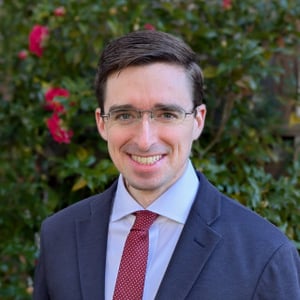
Solicitor General, Alabama Office of the Attorney General
Barrett Bowdre serves as solicitor general in the Alabama Attorney General’s Office, where he oversees the state’s appellate docket and helps defend the state’s interests in courts throughout the country. He previously served as principal deputy solicitor general and, before that, deputy solicitor general. He is a former law clerk to Judge Paul J. Kelly, Jr., of the U.S. Court of Appeals for the Tenth Circuit, then-Chief Judge W. Keith Watkins of the U.S. District Court for the Middle District of Alabama, and then-Chief Judge Ed Carnes of the U.S. Court of Appeals for the Eleventh Circuit. He holds a J.D., summa cum laude, from the University of Alabama School of Law and a B.A., cum laude, from Furman University. Before attending law school, he worked as a research assistant at the American Enterprise Institute, where he researched civic education initiatives and helped compile literary anthologies exploring the American character.
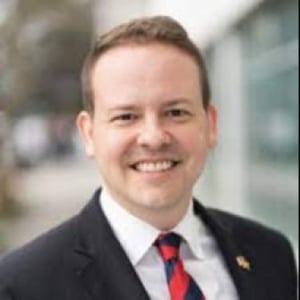
General Counsel, Department of Veterans Affairs
James Baehr was confirmed as General Counsel for the Department of Veterans Affairs in October, 2025.
Previously, Baehr was a Constitutional litigator and a founder of the Pelican Center for Justice. Before that, served as a Special Assistant to the President in the Domestic Policy Council in the White House. He coordinated and oversaw DPC’s policy portfolio across a number of agencies, including the Department of Veteran’s Affairs and the Department of Justice.
Baehr serves as a Major in the Marine Corps Reserves as the Reserve Regional Defense Counsel-East Coast. In 2018, he activated and deployed to the Middle East for Operation Inherent Resolve, where he worked on the Command Staff and earned the Defense Meritorious Service Medal.
In his civilian career, Baehr was a federal prosecutor at the U.S. Attorney’s Office in New Orleans, prosecuting over 100 defendants for felony-level violations in the Eastern District of Louisiana including narcotics, fraud, murder, and corruption. He previously clerked for Judge Edith Clement of the United States Fifth Circuit Court of Appeals.
Baehr’s first job after law school was as an active-duty Marine judge advocate defense counsel. He defended over 200 Marines in trials, presentencing trials, and administrative boards.
Baehr received his J.D. and a Masters in History from the University of Virginia in 2008. He graduated from Dartmouth College with honors in History and Government in 2005.
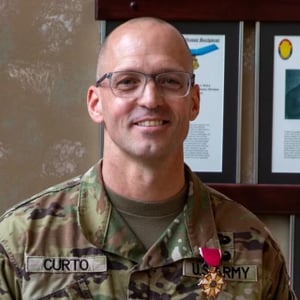
Colonel, U.S. Army
Colonel Toby Curto serves as a Staff Judge Advocate for the US Army 18th Airborne Corps at Fort Bragg. He received his JD from Maurice A. Deane School of Law at Hofstra University, his LLM in Military Law from The Judge Advocate General's Legal Center & School, and a Master of Strategic Studies from the US Army War College.
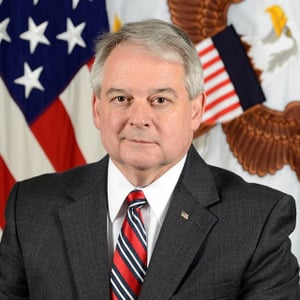
Partner, Bradley Arant Boult Cummings LLP; Former General Counsel of the Department of Defense
Paul Ney is a partner at Bradley Arant Boult Cummings LLP practicing in with the Defense & National Security and Government Enforcement and Investigations teams. Before joining Bradley, he served as the Legal Advisor to the National Security Council. Previously, he was Chief Legal Officer and Corporate Secretary at Momentus Inc., a space infrastructure company. Ney has nearly four decades of public service and private law practice experience.
Before joining Momentus, he was presidentially appointed and confirmed by the U.S. Senate to serve as the General Counsel of the Department of Defense. In this position, he was the Department’s chief legal officer leading a team of over 12,000 lawyers that served the Department’s more than 2.8 million military and civilian personnel, and he served as the Designated Agency Ethics Official overseeing the Department’s Standards of Conduct Office. During his tenure in the Department of Defense, the U.S. Space Force and the U.S. Space Command were established.
In earlier government roles, Ney was the Principal Deputy and the acting General Counsel of the United States Department of the Navy and Chief Deputy Attorney General for the State of Tennessee. He also served as Director of the Nashville Davidson County Mayor's Office of Economic and Community Development.
Ney has been a partner in two Nashville law firms. He is a registered patent attorney and he has more than 25 years of experience in private practice engaged in commercial litigation, administrative and regulatory law, and intellectual property law.

Founding Partner, The Sander Group, PLLC; Former General Counsel, U.S. Department of the Navy
Bob is the Founding Partner of The Sander Group, PLLC, which is a National Security and Government Contracts Boutique Law Firm located in Alexandria, VA. Bob previously served as the 23rd General Counsel of the Department of the Navy after his unanimous confirmation by the U.S. Senate on December 19, 2019. As General Counsel, Bob served as the Department of the Navy’s (DON) Chief Legal Officer and head of the Office of the General Counsel (OGC) where he led a team of over 1,100 civilian and uniformed attorneys and professional support staff in 140 offices worldwide. During this time, Bob provided legal advice to the Secretary of the Navy, the Under Secretary of the Navy, the Assistant Secretaries of the Navy and their staffs, and the multiple components of the Department, including the Navy and the Marine Corps.
Previously, in July 2018, Bob became the Principal Deputy General Counsel of the Department of the Army. He then became the Chief Legal Officer for the Army serving as The Senior Official Performing the Duties of the General Counsel of the Army in June 2019. During his time with the Army Office of General Counsel, Bob’s duties included providing legal and policy advice to the Secretary of the Army, the Army Secretariat, and other Senior Army leaders.
Prior to becoming Principal Deputy General Counsel of the Army, Bob performed a detail to the Office of the Director of National Intelligence Office of General Counsel. From 2010 to 2019, Bob worked as a Federal Prosecutor in the U.S. Department of Justice, National Security Division, Counterterrorism Section. Previously, Bob served as the Chief of the Economic Crimes Unit and the Captain of the Narcotics Enforcement Team in the Montgomery County, Pennsylvania, District Attorney’s Office. Bob also served as a Special Assistant United States Attorney for the Eastern District of Pennsylvania. As a state and federal prosecutor, Bob has handled thousands of cases, which includes trying dozens of jury trials to verdict.
In his military capacity, Bob is a Colonel in the U.S. Army Reserve Judge Advocate General’s Corps, where he serves as the Senior Legal Advisor/Staff Judge Advocate (IMA) for the Network Enterprise Technology Command and the U.S. Army Intelligence Center of Excellence at Fort Huachuca, AZ. Bob previously served as the Chief of the Procurement Fraud/Business Integrity Section for the Defense Logistics Agency at Fort Belvoir, VA and has performed duties as an Adjunct Professor at the National Intelligence University in Bethesda, Maryland. Bob previously deployed to Djibouti, Africa for 13 months as the Acting/Deputy Staff Judge Advocate for the Combined Joint Task Force-Horn of Africa, and was deployed for six months in support of Operations Enduring and Iraqi Freedom, where he served as Trial Counsel for V Corps in Darmstadt, Germany.
Bob received his Juris Doctor Degree from the Widener University School of Law, where he was a member of Law Review for the Delaware Journal of Corporate Law and a member of the Student Bar Association. Bob also has a Master of Science of Strategic Intelligence Degree from the National Intelligence University and a Bachelor of Business Administration Degree in Finance from Temple University. Bob holds an active Top Secret/Sensitive Compartmented Information (TS-SCI) Security Clearance.
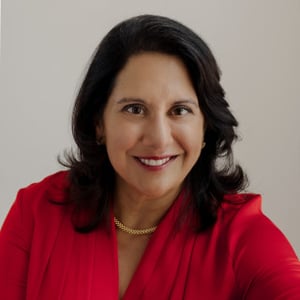
Judge, United States Court of Appeals, District of Columbia Circuit
Judge Rao was appointed to the United States Court of Appeals for the District of Columbia Circuit in March 2019. She graduated from Yale College in 1995 and the University of Chicago Law School in 1999. Following graduation, she served as a law clerk to Judge J. Harvie Wilkinson III of the U.S. Court of Appeals for the Fourth Circuit and, in the 2001 October Term, as law clerk to Justice Clarence Thomas of the U.S. Supreme Court. Between her clerkships, Judge Rao served as counsel for nominations and constitutional law to the U.S. Senate Committee on the Judiciary. In 2002, she joined the international arbitration group of Clifford Chance LLP in London, England. From 2005-2006, she served as Special Assistant and Associate White House Counsel to President George W. Bush. From 2006 to 2017, Judge Rao was a professor at the Antonin Scalia Law School at George Mason University, where she taught constitutional law, legislation and statutory interpretation, and the history and foundations of the administrative state. In 2014, she founded the Center for the Study of the Administrative State, a non-profit Center that promotes academic scholarship and public policy debates about administrative law. In July 2017, she was appointed to serve as the Administrator of the Office of Information and Regulatory Affairs in the Office of Management Budget. She served in this position until her appointment to the D.C. Circuit.
General Counsel, Department of Veterans Affairs
James Baehr was confirmed as General Counsel for the Department of Veterans Affairs in October, 2025.
Previously, Baehr was a Constitutional litigator and a founder of the Pelican Center for Justice. Before that, served as a Special Assistant to the President in the Domestic Policy Council in the White House. He coordinated and oversaw DPC’s policy portfolio across a number of agencies, including the Department of Veteran’s Affairs and the Department of Justice.
Baehr serves as a Major in the Marine Corps Reserves as the Reserve Regional Defense Counsel-East Coast. In 2018, he activated and deployed to the Middle East for Operation Inherent Resolve, where he worked on the Command Staff and earned the Defense Meritorious Service Medal.
In his civilian career, Baehr was a federal prosecutor at the U.S. Attorney’s Office in New Orleans, prosecuting over 100 defendants for felony-level violations in the Eastern District of Louisiana including narcotics, fraud, murder, and corruption. He previously clerked for Judge Edith Clement of the United States Fifth Circuit Court of Appeals.
Baehr’s first job after law school was as an active-duty Marine judge advocate defense counsel. He defended over 200 Marines in trials, presentencing trials, and administrative boards.
Baehr received his J.D. and a Masters in History from the University of Virginia in 2008. He graduated from Dartmouth College with honors in History and Government in 2005.
Colonel, U.S. Army
Colonel Toby Curto serves as a Staff Judge Advocate for the US Army 18th Airborne Corps at Fort Bragg. He received his JD from Maurice A. Deane School of Law at Hofstra University, his LLM in Military Law from The Judge Advocate General's Legal Center & School, and a Master of Strategic Studies from the US Army War College.
Partner, Bradley Arant Boult Cummings LLP; Former General Counsel of the Department of Defense
Paul Ney is a partner at Bradley Arant Boult Cummings LLP practicing in with the Defense & National Security and Government Enforcement and Investigations teams. Before joining Bradley, he served as the Legal Advisor to the National Security Council. Previously, he was Chief Legal Officer and Corporate Secretary at Momentus Inc., a space infrastructure company. Ney has nearly four decades of public service and private law practice experience.
Before joining Momentus, he was presidentially appointed and confirmed by the U.S. Senate to serve as the General Counsel of the Department of Defense. In this position, he was the Department’s chief legal officer leading a team of over 12,000 lawyers that served the Department’s more than 2.8 million military and civilian personnel, and he served as the Designated Agency Ethics Official overseeing the Department’s Standards of Conduct Office. During his tenure in the Department of Defense, the U.S. Space Force and the U.S. Space Command were established.
In earlier government roles, Ney was the Principal Deputy and the acting General Counsel of the United States Department of the Navy and Chief Deputy Attorney General for the State of Tennessee. He also served as Director of the Nashville Davidson County Mayor's Office of Economic and Community Development.
Ney has been a partner in two Nashville law firms. He is a registered patent attorney and he has more than 25 years of experience in private practice engaged in commercial litigation, administrative and regulatory law, and intellectual property law.
Founding Partner, The Sander Group, PLLC; Former General Counsel, U.S. Department of the Navy
Bob is the Founding Partner of The Sander Group, PLLC, which is a National Security and Government Contracts Boutique Law Firm located in Alexandria, VA. Bob previously served as the 23rd General Counsel of the Department of the Navy after his unanimous confirmation by the U.S. Senate on December 19, 2019. As General Counsel, Bob served as the Department of the Navy’s (DON) Chief Legal Officer and head of the Office of the General Counsel (OGC) where he led a team of over 1,100 civilian and uniformed attorneys and professional support staff in 140 offices worldwide. During this time, Bob provided legal advice to the Secretary of the Navy, the Under Secretary of the Navy, the Assistant Secretaries of the Navy and their staffs, and the multiple components of the Department, including the Navy and the Marine Corps.
Previously, in July 2018, Bob became the Principal Deputy General Counsel of the Department of the Army. He then became the Chief Legal Officer for the Army serving as The Senior Official Performing the Duties of the General Counsel of the Army in June 2019. During his time with the Army Office of General Counsel, Bob’s duties included providing legal and policy advice to the Secretary of the Army, the Army Secretariat, and other Senior Army leaders.
Prior to becoming Principal Deputy General Counsel of the Army, Bob performed a detail to the Office of the Director of National Intelligence Office of General Counsel. From 2010 to 2019, Bob worked as a Federal Prosecutor in the U.S. Department of Justice, National Security Division, Counterterrorism Section. Previously, Bob served as the Chief of the Economic Crimes Unit and the Captain of the Narcotics Enforcement Team in the Montgomery County, Pennsylvania, District Attorney’s Office. Bob also served as a Special Assistant United States Attorney for the Eastern District of Pennsylvania. As a state and federal prosecutor, Bob has handled thousands of cases, which includes trying dozens of jury trials to verdict.
In his military capacity, Bob is a Colonel in the U.S. Army Reserve Judge Advocate General’s Corps, where he serves as the Senior Legal Advisor/Staff Judge Advocate (IMA) for the Network Enterprise Technology Command and the U.S. Army Intelligence Center of Excellence at Fort Huachuca, AZ. Bob previously served as the Chief of the Procurement Fraud/Business Integrity Section for the Defense Logistics Agency at Fort Belvoir, VA and has performed duties as an Adjunct Professor at the National Intelligence University in Bethesda, Maryland. Bob previously deployed to Djibouti, Africa for 13 months as the Acting/Deputy Staff Judge Advocate for the Combined Joint Task Force-Horn of Africa, and was deployed for six months in support of Operations Enduring and Iraqi Freedom, where he served as Trial Counsel for V Corps in Darmstadt, Germany.
Bob received his Juris Doctor Degree from the Widener University School of Law, where he was a member of Law Review for the Delaware Journal of Corporate Law and a member of the Student Bar Association. Bob also has a Master of Science of Strategic Intelligence Degree from the National Intelligence University and a Bachelor of Business Administration Degree in Finance from Temple University. Bob holds an active Top Secret/Sensitive Compartmented Information (TS-SCI) Security Clearance.
General Counsel, Department of Veterans Affairs
James Baehr was confirmed as General Counsel for the Department of Veterans Affairs in October, 2025.
Previously, Baehr was a Constitutional litigator and a founder of the Pelican Center for Justice. Before that, served as a Special Assistant to the President in the Domestic Policy Council in the White House. He coordinated and oversaw DPC’s policy portfolio across a number of agencies, including the Department of Veteran’s Affairs and the Department of Justice.
Baehr serves as a Major in the Marine Corps Reserves as the Reserve Regional Defense Counsel-East Coast. In 2018, he activated and deployed to the Middle East for Operation Inherent Resolve, where he worked on the Command Staff and earned the Defense Meritorious Service Medal.
In his civilian career, Baehr was a federal prosecutor at the U.S. Attorney’s Office in New Orleans, prosecuting over 100 defendants for felony-level violations in the Eastern District of Louisiana including narcotics, fraud, murder, and corruption. He previously clerked for Judge Edith Clement of the United States Fifth Circuit Court of Appeals.
Baehr’s first job after law school was as an active-duty Marine judge advocate defense counsel. He defended over 200 Marines in trials, presentencing trials, and administrative boards.
Baehr received his J.D. and a Masters in History from the University of Virginia in 2008. He graduated from Dartmouth College with honors in History and Government in 2005.
Colonel, U.S. Army
Colonel Toby Curto serves as a Staff Judge Advocate for the US Army 18th Airborne Corps at Fort Bragg. He received his JD from Maurice A. Deane School of Law at Hofstra University, his LLM in Military Law from The Judge Advocate General's Legal Center & School, and a Master of Strategic Studies from the US Army War College.
Partner, Bradley Arant Boult Cummings LLP; Former General Counsel of the Department of Defense
Paul Ney is a partner at Bradley Arant Boult Cummings LLP practicing in with the Defense & National Security and Government Enforcement and Investigations teams. Before joining Bradley, he served as the Legal Advisor to the National Security Council. Previously, he was Chief Legal Officer and Corporate Secretary at Momentus Inc., a space infrastructure company. Ney has nearly four decades of public service and private law practice experience.
Before joining Momentus, he was presidentially appointed and confirmed by the U.S. Senate to serve as the General Counsel of the Department of Defense. In this position, he was the Department’s chief legal officer leading a team of over 12,000 lawyers that served the Department’s more than 2.8 million military and civilian personnel, and he served as the Designated Agency Ethics Official overseeing the Department’s Standards of Conduct Office. During his tenure in the Department of Defense, the U.S. Space Force and the U.S. Space Command were established.
In earlier government roles, Ney was the Principal Deputy and the acting General Counsel of the United States Department of the Navy and Chief Deputy Attorney General for the State of Tennessee. He also served as Director of the Nashville Davidson County Mayor's Office of Economic and Community Development.
Ney has been a partner in two Nashville law firms. He is a registered patent attorney and he has more than 25 years of experience in private practice engaged in commercial litigation, administrative and regulatory law, and intellectual property law.
Founding Partner, The Sander Group, PLLC; Former General Counsel, U.S. Department of the Navy
Bob is the Founding Partner of The Sander Group, PLLC, which is a National Security and Government Contracts Boutique Law Firm located in Alexandria, VA. Bob previously served as the 23rd General Counsel of the Department of the Navy after his unanimous confirmation by the U.S. Senate on December 19, 2019. As General Counsel, Bob served as the Department of the Navy’s (DON) Chief Legal Officer and head of the Office of the General Counsel (OGC) where he led a team of over 1,100 civilian and uniformed attorneys and professional support staff in 140 offices worldwide. During this time, Bob provided legal advice to the Secretary of the Navy, the Under Secretary of the Navy, the Assistant Secretaries of the Navy and their staffs, and the multiple components of the Department, including the Navy and the Marine Corps.
Previously, in July 2018, Bob became the Principal Deputy General Counsel of the Department of the Army. He then became the Chief Legal Officer for the Army serving as The Senior Official Performing the Duties of the General Counsel of the Army in June 2019. During his time with the Army Office of General Counsel, Bob’s duties included providing legal and policy advice to the Secretary of the Army, the Army Secretariat, and other Senior Army leaders.
Prior to becoming Principal Deputy General Counsel of the Army, Bob performed a detail to the Office of the Director of National Intelligence Office of General Counsel. From 2010 to 2019, Bob worked as a Federal Prosecutor in the U.S. Department of Justice, National Security Division, Counterterrorism Section. Previously, Bob served as the Chief of the Economic Crimes Unit and the Captain of the Narcotics Enforcement Team in the Montgomery County, Pennsylvania, District Attorney’s Office. Bob also served as a Special Assistant United States Attorney for the Eastern District of Pennsylvania. As a state and federal prosecutor, Bob has handled thousands of cases, which includes trying dozens of jury trials to verdict.
In his military capacity, Bob is a Colonel in the U.S. Army Reserve Judge Advocate General’s Corps, where he serves as the Senior Legal Advisor/Staff Judge Advocate (IMA) for the Network Enterprise Technology Command and the U.S. Army Intelligence Center of Excellence at Fort Huachuca, AZ. Bob previously served as the Chief of the Procurement Fraud/Business Integrity Section for the Defense Logistics Agency at Fort Belvoir, VA and has performed duties as an Adjunct Professor at the National Intelligence University in Bethesda, Maryland. Bob previously deployed to Djibouti, Africa for 13 months as the Acting/Deputy Staff Judge Advocate for the Combined Joint Task Force-Horn of Africa, and was deployed for six months in support of Operations Enduring and Iraqi Freedom, where he served as Trial Counsel for V Corps in Darmstadt, Germany.
Bob received his Juris Doctor Degree from the Widener University School of Law, where he was a member of Law Review for the Delaware Journal of Corporate Law and a member of the Student Bar Association. Bob also has a Master of Science of Strategic Intelligence Degree from the National Intelligence University and a Bachelor of Business Administration Degree in Finance from Temple University. Bob holds an active Top Secret/Sensitive Compartmented Information (TS-SCI) Security Clearance.
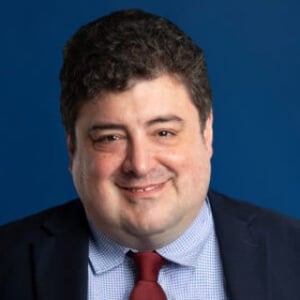
Senior Fellow and Director of Finance Policy, Competitive Enterprise Institute
John Berlau is a senior fellow and Director of Finance Policy at the Competitive Enterprise Institute. His work focuses on how public policy affects access to capital, entrepreneurship, and investments made by the public and business community alike. In recent years, he has studied the consequences of financial reform efforts passed by Congress like the Sarbanes-Oxley Act, the government’s response to the 2008 financial crisis including the Dodd-Frank Act, the placement of Fannie Mae and Freddie Mac into conservatorship, and the rise of cryptocurrency.
He is also the author of the book George Washington: Entrepreneur: How Our Founding Father’s Private Business Pursuits Changed America and the World. The book received rave reviews in the Wall Street Journal and other forums, and was endorsed by eminent historians and scholars such as Richard Brookhiser, Amity Shlaes, and Craig Shirley.
Berlau is a contributing writer for Forbes. His work has been published and cited in The Wall Street Journal, The New York Times, The Washington Post, Financial Times, Bloomberg News, The Atlantic, Politico, Daily Caller, Washington Examiner, Investor’s Business Daily, National Journal, National Review, American Spectator, Reason Magazine, and more. He is a frequent guest on radio and television programs, including CNBC’s “The Call,” “Power Lunch” and “Closing Bell,” Fox News’ “Fox & Friends” and “Your World with Neil Cavuto,” and Fox Business’ “Cavuto.”
He has testified on the impact of financial regulation before the House Committee on Financial Services and the House Committee on Energy and Commerce. A recognized expert on the phenomenon of crowdfunding, Berlau has spoken at prominent conferences such as South by Southwest Interactive in Austin, Money 20/20 in Las Vegas, the FinTech Global Expo in San Diego, the CFGE Crowdfund Banking and Lending Summit in San Francisco and the Crowdfund Intermediary Regulatory Advocates (CFIRA) Summit in Washington, D.C. He is also author of the widely cited paper “Declaration of Crowdfunding Independence: Finance of the People, by the People, and for the People.”
Berlau is an award-winning financial and political journalist. He served as Washington correspondent for Investor’s Business Daily and as a staff writer for Insight magazine, published by The Washington Times. In 2002, he received the Sandy Hume Memorial Award for Excellence in Political Journalism from Washington’s National Press Club. He was a media fellow at the Hoover Institution in 2003. He graduated from the University of Missouri-Columbia in 1994 with degrees in journalism and economics.

Executive Vice President & Co-Head of Regulatory Affairs, Bank Policy Institute
Tabitha Edgens is Executive Vice President & Co-Head of Regulatory Affairs, for the Bank Policy Institute.
Ms. Edgens was previously Counselor to the Deputy Chief Counsels and Special Counsel at the Office of the Comptroller of the Currency. In that role, she advised OCC senior leadership on critical bank regulatory issues including national bank digital asset activities, licensing decisions and supervisory matters. She played a leading role in drafting OCC interpretations on the permissibility of national bank digital asset activities as well as the 2019 and 2020 interagency revisions to the Volcker rule. From 2020-2021, Tabitha was detailed to the U.S. Department of the Treasury’s Office of the General Counsel, Banking and Finance, where she advised policymakers on small business pandemic relief programs. Prior to the OCC, Ms. Edgens was an associate at Cleary Gottlieb Steen and Hamilton where she focused on bank regulatory matters. Before her legal career, Tabitha served as an aide to U.S. Senator Mary L. Landrieu.
Tabitha is a graduate of Yale Law School and Tulane University and is a member of the bar in New York and Washington D.C.
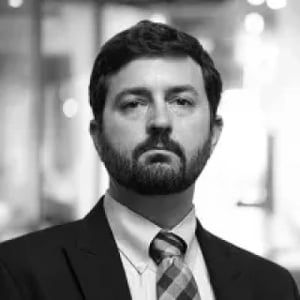
Washington Bureau Chief, American Banker
John Heltman is the Washington Bureau Chief for American Banker, leading coverage of federal bank regulators, monetary policy and Capitol Hill.
John, a Washington native living in Baltimore, joined American Banker as a Federal Reserve and Treasury reporter in 2014, launching longform narrative podcast Bankshot in 2019 and running American Banker Magazine from 2021 until 2022. He has received numerous professional awards from the Society for the Advancement of Business Editor and Writers, the American Society of Business Publication Editors and the Jesse H. Neal awards. John won the Grand Neal in 2019 for his podcast "Nobody's Home," which examined the causes and effects of concentrated vacant housing.
John joined American Banker from Argus Media, where he covered the Commodity Futures Trading Commission as the agency was implementing its Dodd-Frank reforms to the commodity and derivatives markets. Prior to that, John covered environmental policy for Inside Washington Publishers from 2008 until 2012.
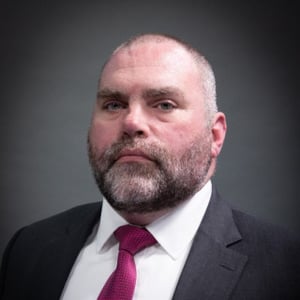
Senior Counsel, Corporate Engagement Team, Alliance Defending Freedom
Brian Knight serves as senior counsel on the Corporate Engagement Team. His work focuses on issues of financial access, debanking, and preventing the power of the private sector from being weaponized against people of faith by both public and private actors.
Prior to joining ADF, Knight spent almost nine years at the Mercatus Center at George Mason University, as both a senior research fellow and as a program director. In addition to managing a team of scholars, Knight’s research focused on financial regulation and the politicization of financial services. His research helped inform legislation and regulation at the federal and state level. He was also the lead author for two amicus briefs submitted to the U.S. Supreme Court in the case of National Rifle Association v. Vullo.
Before joining Mercatus, Knight worked at the Milken Institute, where he focused on financial technology. He was also an entrepreneur, co-founding a firm focused on compliance for crowdfunding.
Knight earned a Juris Doctor from the University of Virginia School of Law and a Bachelor of Arts from the College of William and Mary.
Senior Fellow and Director of Finance Policy, Competitive Enterprise Institute
John Berlau is a senior fellow and Director of Finance Policy at the Competitive Enterprise Institute. His work focuses on how public policy affects access to capital, entrepreneurship, and investments made by the public and business community alike. In recent years, he has studied the consequences of financial reform efforts passed by Congress like the Sarbanes-Oxley Act, the government’s response to the 2008 financial crisis including the Dodd-Frank Act, the placement of Fannie Mae and Freddie Mac into conservatorship, and the rise of cryptocurrency.
He is also the author of the book George Washington: Entrepreneur: How Our Founding Father’s Private Business Pursuits Changed America and the World. The book received rave reviews in the Wall Street Journal and other forums, and was endorsed by eminent historians and scholars such as Richard Brookhiser, Amity Shlaes, and Craig Shirley.
Berlau is a contributing writer for Forbes. His work has been published and cited in The Wall Street Journal, The New York Times, The Washington Post, Financial Times, Bloomberg News, The Atlantic, Politico, Daily Caller, Washington Examiner, Investor’s Business Daily, National Journal, National Review, American Spectator, Reason Magazine, and more. He is a frequent guest on radio and television programs, including CNBC’s “The Call,” “Power Lunch” and “Closing Bell,” Fox News’ “Fox & Friends” and “Your World with Neil Cavuto,” and Fox Business’ “Cavuto.”
He has testified on the impact of financial regulation before the House Committee on Financial Services and the House Committee on Energy and Commerce. A recognized expert on the phenomenon of crowdfunding, Berlau has spoken at prominent conferences such as South by Southwest Interactive in Austin, Money 20/20 in Las Vegas, the FinTech Global Expo in San Diego, the CFGE Crowdfund Banking and Lending Summit in San Francisco and the Crowdfund Intermediary Regulatory Advocates (CFIRA) Summit in Washington, D.C. He is also author of the widely cited paper “Declaration of Crowdfunding Independence: Finance of the People, by the People, and for the People.”
Berlau is an award-winning financial and political journalist. He served as Washington correspondent for Investor’s Business Daily and as a staff writer for Insight magazine, published by The Washington Times. In 2002, he received the Sandy Hume Memorial Award for Excellence in Political Journalism from Washington’s National Press Club. He was a media fellow at the Hoover Institution in 2003. He graduated from the University of Missouri-Columbia in 1994 with degrees in journalism and economics.
Executive Vice President & Co-Head of Regulatory Affairs, Bank Policy Institute
Tabitha Edgens is Executive Vice President & Co-Head of Regulatory Affairs, for the Bank Policy Institute.
Ms. Edgens was previously Counselor to the Deputy Chief Counsels and Special Counsel at the Office of the Comptroller of the Currency. In that role, she advised OCC senior leadership on critical bank regulatory issues including national bank digital asset activities, licensing decisions and supervisory matters. She played a leading role in drafting OCC interpretations on the permissibility of national bank digital asset activities as well as the 2019 and 2020 interagency revisions to the Volcker rule. From 2020-2021, Tabitha was detailed to the U.S. Department of the Treasury’s Office of the General Counsel, Banking and Finance, where she advised policymakers on small business pandemic relief programs. Prior to the OCC, Ms. Edgens was an associate at Cleary Gottlieb Steen and Hamilton where she focused on bank regulatory matters. Before her legal career, Tabitha served as an aide to U.S. Senator Mary L. Landrieu.
Tabitha is a graduate of Yale Law School and Tulane University and is a member of the bar in New York and Washington D.C.
Washington Bureau Chief, American Banker
John Heltman is the Washington Bureau Chief for American Banker, leading coverage of federal bank regulators, monetary policy and Capitol Hill.
John, a Washington native living in Baltimore, joined American Banker as a Federal Reserve and Treasury reporter in 2014, launching longform narrative podcast Bankshot in 2019 and running American Banker Magazine from 2021 until 2022. He has received numerous professional awards from the Society for the Advancement of Business Editor and Writers, the American Society of Business Publication Editors and the Jesse H. Neal awards. John won the Grand Neal in 2019 for his podcast "Nobody's Home," which examined the causes and effects of concentrated vacant housing.
John joined American Banker from Argus Media, where he covered the Commodity Futures Trading Commission as the agency was implementing its Dodd-Frank reforms to the commodity and derivatives markets. Prior to that, John covered environmental policy for Inside Washington Publishers from 2008 until 2012.
Senior Counsel, Corporate Engagement Team, Alliance Defending Freedom
Brian Knight serves as senior counsel on the Corporate Engagement Team. His work focuses on issues of financial access, debanking, and preventing the power of the private sector from being weaponized against people of faith by both public and private actors.
Prior to joining ADF, Knight spent almost nine years at the Mercatus Center at George Mason University, as both a senior research fellow and as a program director. In addition to managing a team of scholars, Knight’s research focused on financial regulation and the politicization of financial services. His research helped inform legislation and regulation at the federal and state level. He was also the lead author for two amicus briefs submitted to the U.S. Supreme Court in the case of National Rifle Association v. Vullo.
Before joining Mercatus, Knight worked at the Milken Institute, where he focused on financial technology. He was also an entrepreneur, co-founding a firm focused on compliance for crowdfunding.
Knight earned a Juris Doctor from the University of Virginia School of Law and a Bachelor of Arts from the College of William and Mary.

New England Consortium Networking Night
Boston, MASex, Gender Identity, and the Courts
Montgomery Lawyer Chapter
Montgomery, ALMilitary Law in Practice: Perspectives from Current and Former General Counsels
James Baehr, Toby Curto, Paul C. Ney, Robert J. Sander
CLE credit for this event will be available at On-Demand CLE. This webinar brings together...
Military Law in Practice: Perspectives from Current and Former General Counsels
James Baehr, Toby Curto, Paul C. Ney, Robert J. Sander
CLE credit for this event will be available at On-Demand CLE. This webinar brings together...
Military Law in Practice: Perspectives from Current and Former General Counsels
Federalist Society and Runnymede Society Present: Executive Overreach: A Case Study from Canada - The Emergency Act and the Truckers Convoy
New York City Lawyer Chapter
New York, NY2026 Florida Chapters Conference
Lake Buena Vista, FLA Conversation with Judge Rao - Nashville
Nashville Lawyer Chapter
Nashville, TNRegulation and Fair Access to Banking
John Berlau, Tabitha Edgens, John Heltman, Brian Knight
Allegations of politically motivated “debanking” have intensified debate over how federal regulation, supervisory practices, and...
Regulation and Fair Access to Banking
John Berlau, Tabitha Edgens, John Heltman, Brian Knight
Allegations of politically motivated “debanking” have intensified debate over how federal regulation, supervisory practices, and...