From the Courthouse Steps: Exxon Mobil & Cisco Systems

Event Video




In Cisco Systems, Inc. v. Doe, the Supreme Court held that courts may not create new causes of action for violations of international norms under the Alien Tort Statute (ATS) and that aiding-and-abetting liability exists under neither the ATS nor the Torture Victim Protection Act of 1991. The decision limits the use of U.S. courts to pursue transnational human-rights claims absent clear congressional authorization.
In Exxon Mobil Corp. v. Corporación CIMEX, S.A. (Cuba), the Court held that the Helms-Burton Act removes sovereign immunity for Cuban agencies and instrumentalities sued for trafficking in property confiscated by the Cuban government. Plaintiffs suing those entities under the Act, therefore, do not need to separately satisfy one of the Foreign Sovereign Immunities Act’s enumerated exceptions.
Join us for a discussion of these decisions, their implications, and what they reveal about the Court’s approach to statutory interpretation and separation of powers.
Featuring:
- Prof. Julian Ku, Faculty Director of International Programs and Maurice A. Deane Distinguished Professor of Constitutional Law, Hofstra University
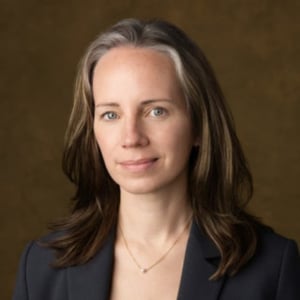
- Molly Nixon, Senior Fellow in Executive Power, Cato Institute
*******
As always, the Federalist Society takes no position on particular legal or public policy issues; all expressions of opinion are those of the speaker.