Public Lands at the Founding
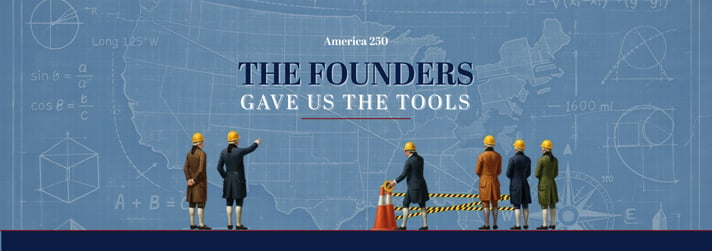
The Founders Gave Us the Tools Series
Event Video




In this Federalist Society America 250 series, experts analyze modern legal and policy debates through the lens of the Founding generation. The Founders gave us the tools to answer many contemporary questions; join us as we explore those answers.
From the Articles of Confederation's earliest days, the states disagreed about how to handle the budding nation’s westernmost territories. At the 1787 Philadelphia Convention, the Framers partially addressed these issues by providing the Property Clause in Article IV, Section 3. This granted Congress the “Power to dispose of and make all needful Rules and Regulations respecting the Territory or other Property belonging to the United States[.]” Since then, the United States has acquired and retained hundreds of millions of acres of land, leaving large swaths of it unappropriated and in the hands of unelected federal administrators.
Though the Supreme Court has interpreted Article I’s Necessary and Proper Clause to allow the federal government to hold property while furthering its enumerated powers, experts disagree over whether federal agencies violate the vertical separation of power by holding land within a state’s borders and exerting vast delegated powers over it.
Join our panel of the foremost scholars and litigators of public lands as they explore the text, history, and purpose of the Property Clause, and whether the Supreme Court’s interpretation of Article IV, Section 3 has wreaked havoc on the Constitution’s otherwise narrow allowance for federal control of public lands.
Featuring:
- Ethan Blevins, Senior Legal Fellow, Pacific Legal Foundation
- Tony Francois, Partner, Briscoe Prows Kao Ivester & Bazel LLP
- Prof. Richard Samuelson, Associate Professor of Government, Hillsdale College, Washington, D.C. Campus
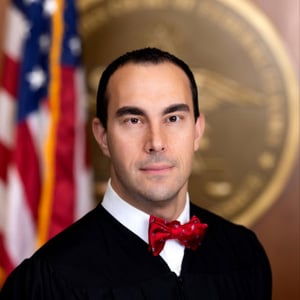
- (Moderator) Hon. Ryan T. Holte, Judge, United States Court of Federal Claims; Distinguished Jurist-in-Residence Professor of Law, The University of Akron School of Law
*******
As always, the Federalist Society takes no position on particular legal or public policy issues; all expressions of opinion are those of the speaker.