
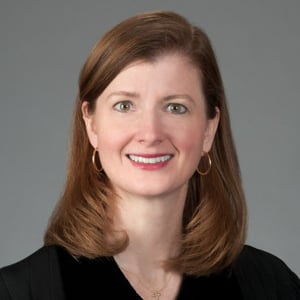
Judge, United States Court of Appeals, Eleventh Circuit
On March 20, 2018, Judge Elizabeth L. Branch (Lisa) was sworn in as a United States Circuit Judge for the Eleventh Circuit.
Judge Branch attended and graduated from Davidson College in North Carolina (B.A., cum laude, 1990), and Emory University School of Law (J.D., with distinction, 1994).
After graduating from law school, Judge Branch served as a federal law clerk to The Honorable J. Owen Forrester of the U.S. District Court for the Northern District of Georgia from 1994 to 1996. Following her clerkship, Judge Branch joined the litigation department of Smith, Gambrell & Russell, LLP in Atlanta as an associate and then a partner.
From 2004 to 2008, Judge Branch was a senior official in the Administration of President George W. Bush in Washington, D.C. She served first as the Associate General Counsel for Rules and Legislation at the U.S. Department of Homeland Security and then as the Counselor to the Administrator of the Office of Information and Regulatory Affairs at the U. S. Office of Management and Budget.
She returned to Smith Gambrell in 2008 as a litigation partner. Judge Branch then was appointed to the Court of Appeals of Georgia by Governor Nathan Deal, taking office on September 4, 2012, where she served until March 19, 2018.
Judge Branch is a member of the Board of Advisors of the Atlanta Lawyers Chapter for the Federalist Society for Law and Public Policy Studies.
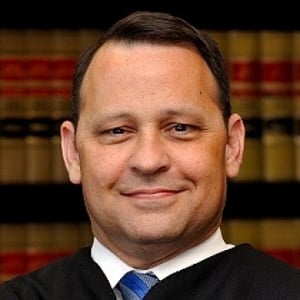
Arizona Supreme Court
Justice John Lopez IV serves on the Arizona Supreme Court. Before his appointment to the Supreme Court, Justice Lopez served as Arizona’s Solicitor General. Before that, he served in the U.S. Attorney’s Office as Executive assistant U.S. attorney; Chief assistant, U.S. Attorney's office in Phoenix; Chief of the Financial Crimes and Public Integrity Section; and Deputy appellate chief. Previous to that, Lopez worked as a legal advisor in the Regime Crimes Liaison Office of the Department of Justice, as an attorney with Bryan Cave, and a law clerk to Justice Charles Jones of the Arizona Supreme Court.
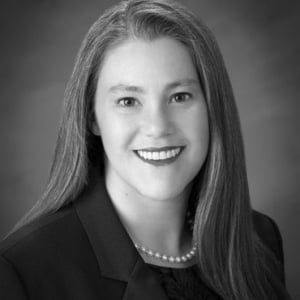
Judge, Arizona Court of Appeals, Division One
The Honorable Jennifer M. Perkins began service on the Arizona Court of Appeals, Division One, on October 30, 2017. At the time of her appointment by Governor Douglas Ducey, Judge Perkins was Assistant Solicitor General for the State of Arizona.
Judge Perkins was born in Portales, New Mexico, and primarily raised in Albuquerque. She attended the prestigious Albuquerque Academy from 1988-1995, before moving to Washington D.C. to attend the Elliott School of International Affairs at the George Washington University as a National Merit Scholar. Therafter, she relocated again to Dallas, Texas, and earned her juris doctor from the SMU Dedman School of Law, graduating cum laude in 2002.
Judge Perkins started her career at the law firm of Browning & Peifer (now Peifer, Hanson, Mullins, and Baker) in Albuquerque, New Mexico. While there, she litigated complex commercial matters including class action plaintiff and defense work, and assisted with employment and contract litigation. In 2003, the judge accompanied the Honorable James O. Browning in transitioning to the federal district court bench, serving as his first law clerk.
After her clerkship, Judge Perkins moved to Arizona to work for the Institute for Justice, Arizona Chapter, a public interest law firm. She spent five years with IJ-AZ litigating civil rights cases in Arizona and across the country. In 2009, the judge became Disciplinary Counsel for the Arizona Commission on Judicial Conduct, where she reviewed and prosecuted ethics complaints against state court judges throughout Arizona. After five years serving the state in this capacity, Judge Perkins entered private practice by joining an appellate law firm in Phoenix. While there, she worked on state and federal appeals involving a wide range of legal subjects, including complex business disputes, property rights, judicial ethics, and personal injury matters.
In January 2015, Judge Perkins joined the Office of the Arizona Attorney General to serve as the first Assistant Solicitor General; in that capacity, she was responsible for oversight of Attorney General Opinions and served as ethics counsel to the entire office. In addition to these two primary roles, the judge assisted on a variety of matters including trial and appellate litigation of election-related matters; federal appellate litigation with the Federalism Unit; state criminal appeals; and drafting amicus briefs on behalf of Arizona in state and federal courts.

Senior Fellow, Civitas Institute, University of Texas, Austin
Linda Denno is a senior fellow at the Civitas Institute. She is also Associate Dean of the University of Arizona, College of Applied Science and Technology headquartered at the branch campus in Sierra Vista, Arizona. Dr. Denno’s strategic vision and commitment to academic excellence is demonstrated by the fact that two of the College’s academic programs—Cyber Operations and Intelligence & Information Operations—have been designated as National Centers of Academic Excellence.
Dr. Denno has earned numerous awards for teaching and for university and community service in her more than 35 years in higher education, including multiple outstanding teaching awards. She was awarded the Silver Rose for Outstanding Contributions to the US Army Military Intelligence Corps; and the Meritorious Public Service Medal, the highest civilian award given by the US Army.

Deputy Editor-in-Chief, Harvard Journal of Law & Public Policy
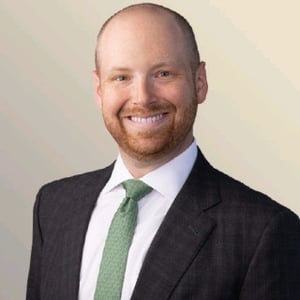
Solicitor General, Iowa Office of the Attorney General
Eric Wessan serves as Iowa’s Solicitor General in the Iowa Attorney General’s Office. In that role, Wessan leads Iowa’s litigation before State and federal appellate courts, including the Iowa and U.S. Supreme Courts. Before that role, Wessan worked on complex commercial litigation at two large law firms in Chicago. Wessan also served as a law clerk for the Honorable James C. Ho on the U.S. Court of Appeals for the Fifth Circuit and for the Honorable John F. Kness on the U.S. District Court for the Northern District of Illinois. Wessan is a graduate of the University of Chicago Law School, with honors, and of the University of Chicago.
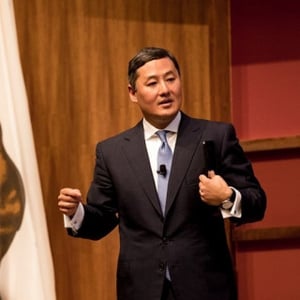
Emanuel S. Heller Professor of Law, University of California at Berkeley; Thomas Smith Senior Research Fellow, Civitas Institute, University of Texas at Austin
John Yoo is the Emanuel Heller Professor of Law at the University of California at Berkeley. He is also the Thomas Smith Senior Research Fellow, Civitas Institute, at the University of Texas at Austin. He is also a Nonresident Senior Fellow at the American Enterprise Institute.
His most recent book, The Politically Incorrect Guide to the Supreme Court, co-authored with Robert Delahunty, was published in 2023. Professor Yoo’s other books include Defender-in-Chief: Trump’s Fight for Presidential Power; Striking Power: How Cyber, Robots, and Space Weapons Change the Rules for War; Point of Attack: Preventive War, International Law, and Global Welfare; and Crisis and Command: A History of Executive Power from George Washington to George Bush.
He is a co-author of volumes 1 and 2 of R. Rossum, G. Tarr, V. Munoz & J. Yoo American Constitution Law (Routledge, 2026), and a co-editor of the eight-volume series on the 250th anniversary of the American Revolution, We Hold These Truths, with Yuval Levin and Adam White of the American Enterprise Institute.
Professor Yoo has published more than 100 articles in academic journals on subjects including national security, constitutional law, international law, and the Supreme Court. He also regularly contributes to the editorial pages of the Wall Street Journal, New York Times, Washington Post, Los Angeles Times, and National Review, among others.
Professor Yoo has served in all three branches of government. He was an official in the U.S. Department of Justice, where he worked on national security and terrorism issues after the 9/11 attacks. He served as general counsel of the U.S. Senate Judiciary Committee. He has been a law clerk for Supreme Court Justice Clarence Thomas and federal appeals Judge Laurence Silberman. He has been a visiting professor at the University of Texas at Austin’s School of Civic Leadership, Seoul National University, the Interdisciplinary Center Herzliya, Keio University, Trento University, the University of Chicago, and the Free University of Amsterdam.
Professor Yoo supervises the Public Law and Policy Program and the California Constitution Center. He also serves on the boards of Founding Forward, the Washington Legal Foundation, the Pacific Legal Foundation, the Ulysses Grant Institute, the Federalist Society’s Separation of Powers and Federalism Division, the Universidad Cientifica del Sur Law School, and the Asia-Pacific Law Institute at Seoul National University. He is a winner of the Federalist Society’s Paul Bator award and the Heritage Foundation’s Edwin Meese III Originalism Lectureship.
Professor Yoo graduated from Yale Law School and summa cum laude from Harvard College.
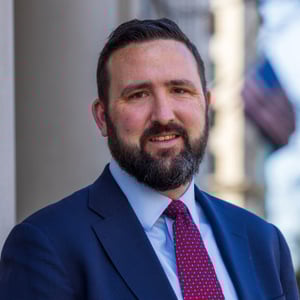
Partner, First & Fourteenth PLLC
Michael Francisco is a public and commercial litigator with extensive appellate experience who often serves as a strategic advisor to clients facing acute legal challenges. He has represented clients nationally for public impact litigation, bet-the-company lawsuits, and in defense of constitutional rights. Michael served as a law clerk to Supreme Court Justice Neil Gorsuch and Judge Timothy Tymkovich of the United States Court of Appeals for the Tenth Circuit.
Michael regularly takes on challenging matters where citizens must rely on the judiciary to vindicate their rights. His experience runs the gambit from successfully seeking injunctive relief, winning critical legal motions, defending judgments on appeal, overturning multi-million-dollar judgments, and obtaining discretionary high court review. He relishes the opportunity to develop a well-crafted legal strategy to solve the most novel and complex problems that may arise.
Michael has deep experience with political litigation representing candidates, voters, political parties, and advocacy organizations for ballot access, election administration, campaign finance, and for the unfortunate trend of criminalization of political activity.
After deciding to pursue a legal career to defend religious liberty, Michael has regularly engaged in constitutional litigation under the religion clauses and the free speech clause. He has been involved in many recent U.S. Supreme Court cases involving these core freedoms, including Groff v. DeJoy, 303 Creative v. Elenis, Masterpiece Cakeshop v. Colorado Civil Rights Commission, National Institute of Family & Life Advocates v. Becerra, Trinity Lutheran Church v. Pauley, and similar cases in lower courts on topics ranging from the ministerial exception, church property disputes, to religious land use disputes.
As an appellate advocate Michael frequently handles matters before the U.S. Supreme Court, federal courts of appeals, and Colorado appellate courts. He has argued four times before the Colorado Supreme Court and briefed 19 cases before the U.S. Supreme Court.
Michael also frequently advises clients on strategic public matters challenging federal government authority and overreach. He has regularly litigated business disputes, employment matters, as well as represented clients before state and federal administrative agencies or arbitration panels.
Prior to joining First & Fourteenth, Michael was a partner at McGuireWoods, LLP in Washington D.C., representing litigation, white collar, and government investigation clients.
At home Michael is married with four children and he enjoys many outdoor activities, ranging from competitive shooting to fixing his jeep.
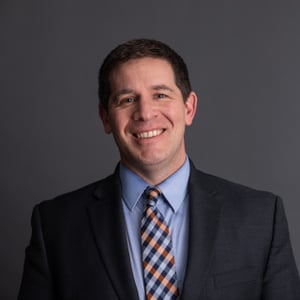
Vice President for Legal Strategy, Stand Together
Casey Mattox is Vice President for Legal Strategy at Stand Together and Senior Advisor at
Americans for Prosperity. In these roles he advocates for and creates strategies and
partnerships to ensure a constitutionally limited government that protects the civil liberties of all
Americans. Prior to joining Stand Together and AFP Casey’s legal career focused on defending
the First Amendment rights of students, faculty, healthcare workers and religious organizations.
Casey has a J.D. from Boston College School of Law and an undergraduate degree from the
University of Virginia. You can find him on Twitter at @CaseyMattox_ and on LinkedIn at
@Casey-Mattox-ST.
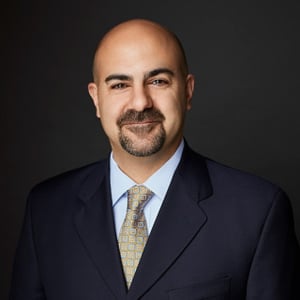
Special Counsel, Campus Advocacy, Foundation for Individual Rights and Expression (FIRE)
One of FIRE’s longest-serving employees, Robert Shibley began at FIRE straight out of Duke Law School in 2003, with the intention of doing nonprofit work for a couple of years before finding a permanent job. This lasted 19 years, including six as FIRE’s executive director. During his time at FIRE, Robert launched FIRE’s first major litigation initiative, traveled to dozens of campuses to speak about the First Amendment and Title IX issues on campus, and oversaw FIRE’s expansion into off-campus issues before a stint representing students and faculty members in private practice at the firm of Allen Harris PLLC.
Having realized things on campus were even worse than he had believed, Robert returned to FIRE as Special Counsel for Campus Advocacy in order to finish the job he started: restoring free speech and due process to America’s college campuses. Robert is the author of Twisting Title IX, from Encounter Books. His writing has appeared everywhere from The Wall Street Journal to The Washington Post, USA Today, and TIME, and he has appeared on national and international broadcasts including the BBC and NPR, The O’Reilly Factor, CNN Tonight, Tucker Carlson Tonight, and (perhaps most famously) Dr. Phil.
Partner, First & Fourteenth PLLC
Michael Francisco is a public and commercial litigator with extensive appellate experience who often serves as a strategic advisor to clients facing acute legal challenges. He has represented clients nationally for public impact litigation, bet-the-company lawsuits, and in defense of constitutional rights. Michael served as a law clerk to Supreme Court Justice Neil Gorsuch and Judge Timothy Tymkovich of the United States Court of Appeals for the Tenth Circuit.
Michael regularly takes on challenging matters where citizens must rely on the judiciary to vindicate their rights. His experience runs the gambit from successfully seeking injunctive relief, winning critical legal motions, defending judgments on appeal, overturning multi-million-dollar judgments, and obtaining discretionary high court review. He relishes the opportunity to develop a well-crafted legal strategy to solve the most novel and complex problems that may arise.
Michael has deep experience with political litigation representing candidates, voters, political parties, and advocacy organizations for ballot access, election administration, campaign finance, and for the unfortunate trend of criminalization of political activity.
After deciding to pursue a legal career to defend religious liberty, Michael has regularly engaged in constitutional litigation under the religion clauses and the free speech clause. He has been involved in many recent U.S. Supreme Court cases involving these core freedoms, including Groff v. DeJoy, 303 Creative v. Elenis, Masterpiece Cakeshop v. Colorado Civil Rights Commission, National Institute of Family & Life Advocates v. Becerra, Trinity Lutheran Church v. Pauley, and similar cases in lower courts on topics ranging from the ministerial exception, church property disputes, to religious land use disputes.
As an appellate advocate Michael frequently handles matters before the U.S. Supreme Court, federal courts of appeals, and Colorado appellate courts. He has argued four times before the Colorado Supreme Court and briefed 19 cases before the U.S. Supreme Court.
Michael also frequently advises clients on strategic public matters challenging federal government authority and overreach. He has regularly litigated business disputes, employment matters, as well as represented clients before state and federal administrative agencies or arbitration panels.
Prior to joining First & Fourteenth, Michael was a partner at McGuireWoods, LLP in Washington D.C., representing litigation, white collar, and government investigation clients.
At home Michael is married with four children and he enjoys many outdoor activities, ranging from competitive shooting to fixing his jeep.
Vice President for Legal Strategy, Stand Together
Casey Mattox is Vice President for Legal Strategy at Stand Together and Senior Advisor at
Americans for Prosperity. In these roles he advocates for and creates strategies and
partnerships to ensure a constitutionally limited government that protects the civil liberties of all
Americans. Prior to joining Stand Together and AFP Casey’s legal career focused on defending
the First Amendment rights of students, faculty, healthcare workers and religious organizations.
Casey has a J.D. from Boston College School of Law and an undergraduate degree from the
University of Virginia. You can find him on Twitter at @CaseyMattox_ and on LinkedIn at
@Casey-Mattox-ST.
Special Counsel, Campus Advocacy, Foundation for Individual Rights and Expression (FIRE)
One of FIRE’s longest-serving employees, Robert Shibley began at FIRE straight out of Duke Law School in 2003, with the intention of doing nonprofit work for a couple of years before finding a permanent job. This lasted 19 years, including six as FIRE’s executive director. During his time at FIRE, Robert launched FIRE’s first major litigation initiative, traveled to dozens of campuses to speak about the First Amendment and Title IX issues on campus, and oversaw FIRE’s expansion into off-campus issues before a stint representing students and faculty members in private practice at the firm of Allen Harris PLLC.
Having realized things on campus were even worse than he had believed, Robert returned to FIRE as Special Counsel for Campus Advocacy in order to finish the job he started: restoring free speech and due process to America’s college campuses. Robert is the author of Twisting Title IX, from Encounter Books. His writing has appeared everywhere from The Wall Street Journal to The Washington Post, USA Today, and TIME, and he has appeared on national and international broadcasts including the BBC and NPR, The O’Reilly Factor, CNN Tonight, Tucker Carlson Tonight, and (perhaps most famously) Dr. Phil.
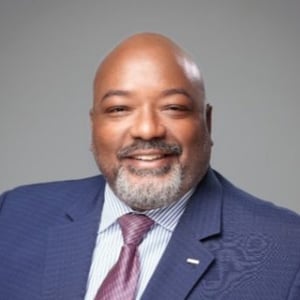
Senior Strategic and Global Intelligence Advisor, Lexpat Global Services
Darrell M. Blocker is the Senior Strategic and Global Intelligence Advisor at Lexpat Global Services. Among other things, Darrell is a globally-recognized subject matter expert on North Korea, the Islamic Republic of Iran, and counterterrorism, and serves as a strategic advisor to high net worth individuals and businesses operating in the defense, national security and international affairs sectors. He is active in the entertainment and nonprofit industries and as a creative consultant, keynote speaker, and ABC News contributor. He is also the founder of DMB Consulting Services, a strategic crisis management and executive advisory firm.
In his 32-year career in public service, Darrell served across six consecutive Presidential Administrations (from Reagan to Trump), including four years in the U.S. Air Force, followed by 28 years as a Central Intelligence Agency operative within their Clandestine Service. His traditional overseas assignments include the Republic of Korea (with the USAF), and Niger, Senegal, Morocco, Nigeria, Uganda, and Switzerland (with the CIA). His war zone assignments were to Panama (USAF), and then Somalia in the aftermath of Blackhawk Down, Burundi after the Hutu-Tutsi massacres, and Pakistan after 9/11 (CIA).
During his storied career, Darrell rose to the civilian rank equivalent to a 3-Star general (Lieutenant General/Vice Admiral). Along the way, his contributions to national security earned him several awards, including the Distinguished Career Intelligence Medal, the George H.W. Bush Award for Excellence in Counterterrorism, the Iraqi Campaign Citation for contributions to Operation Iraqi Freedom, the USAF Commendation Medal for Korea and the Expeditionary Campaign Medal for Panama. It has been widely reported that he later was on President Biden’s shortlist to become the Director of the CIA.
Darrell is a prolific speaker and contributor to public discourse on international security and effective operations. His speaking engagements include the Jewish Federation of Toronto, the Jewish Federation of Greater Los Angeles, the International Spy Museum in Washington DC., the CIA’s CulperCon 2022, and numerous international conferences on intelligence and security matters. His TEDx talk delivered in April 2022 entitled “LISTEN MORE, SPEAK LESS: LESSONS IN KINDNESS FROM A CIA OPERATIVE can be found here. Stories about Darrell have been featured in press and news articles by ABC News, the Wall Street Journal, the Jewish Telegraphic Agency, Fox News, CNN, the New York Times, the Daily Beast, and the DailyMail.
Darrell volunteers with and serves on the board of Peace4Kids.org, a non-profit advocacy group for youth in foster care, and cofounded SME/Creatives, a creative and collaborative storytelling consulting firm operating in the entertainment space. He is also the Vice Chairman of the GreenMet Board of Directors, a nonresident fellow at the University of Georgia’s School of Public and International Affairs Center for International Trade and Security and a 2024 Council of Advisors Leadership Council member for Black Professionals in International Affairs.
Darrell is an avid crossword puzzle enthusiast and music was his first true love. He sang in the UGA’s Men’s Glee Club for four years and in bands in Senegal and Uganda. He spent his formative years in Okinawa, Japan, but his dream of becoming a ninja never materialized. Even so, being an intelligence officer brought all his passions into a singular and meaningful career that took him to 27 addresses and homes in eleven foreign countries over the past 60 years.

Former Chief Counsel to the DCI Counterterrorist Center, Central Intelligence Agency
Jonathan Fredman is a Non-Resident Fellow at the School of Public and International Affairs at Princeton University. He held numerous leadership positions at the Central Intelligence Agency during a 36-year career, including Chief Counsel, Director of Central Intelligence (DCI) Counterterrorist Center; Chief Counsel, DCI Counterintelligence Center; Counsel for Operations, CIA Directorate of Science and Technology; and Chief Counsel for several additional CIA divisions and mission centers. He also served as Assistant Deputy Director of National Intelligence for Special Programs at the Office of the Director of National Intelligence, and as Special Assistant to the Director of Central Intelligence, and taught national security and foreign intelligence at the University of Pennsylvania Law School.
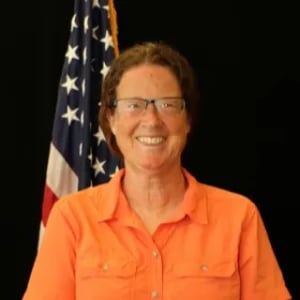
Adjunct Professor of History and Strategic Intelligence, Patrick Henry College
Mary Habeck is a strategic planner and an expert on military matters, Russia, Great Power
Competition, and extremism. She teaches on these issues at Johns Hopkins School of Advanced
International Studies (SAIS), Georgetown, American University, and Patrick Henry College, and
is a consultant for various parts of the federal government. From 2005-2013 she was an
Associate Professor in Strategic Studies at SAIS, teaching courses on extremism, military history,
and strategic thought. Before moving to SAIS, Dr. Habeck taught American and European
military history in Yale’s history department, 1994-2005. She received her PhD in history from
Yale in 1996, an MA in international relations from Yale in 1989, and a BA in international
studies, Russian, and Spanish from Ohio State in 1987.
Dr Habeck was appointed by President Bush to the Council on the Humanities at the National
Endowment for the Humanities (2006-2013), and in 2008-2009 she was the Special Advisor for
Strategic Planning on the National Security Council staff, where she worked on extremism.
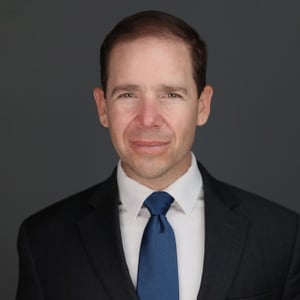
Founder and CEO, Lexpat Global Services
Adam Pearlman is the Founder and Chief Executive Officer of Lexpat Global Services. He is a National Security Law expert and a proven senior leader with experience across the U.S. Departments of Justice, Defense, and State, in the White House, and with the U.S. Federal Judiciary.
Before founding Lexpat, Mr. Pearlman served as the Senior Advisor for Legal Policy in the State Department’s Bureau of Counterterrorism. There, he counseled senior officials on matters covering the entire spectrum of programs and operations to counter terrorism and violent extremism. While participating in sensitive diplomatic engagements and helping to coordinate military operations, he also advised in the development of sanctions policy and initiatives to build legal and operational capacity in partner nations. Mr. Pearlman also managed the Bureau’s participation in federal litigation and led U.S. delegations in multilateral forums concerning criminal justice and rule of law. Separately, Mr. Pearlman supported the State Department’s Bureau of International Narcotics and Law Enforcement Affairs (INL) as the contracted Senior Justice and Rule of Law Advisor in Cabo Verde, Africa. There he was the chief implementer of a Foreign Assistance program that grew eight-fold during his tenure, building host nation capacity across the law enforcement, justice sector, rule of law, anti-money laundering, and corrections disciplines.
A former Associate Deputy General Counsel of the Department of Defense, Mr. Pearlman was agency counsel for complex civil and criminal national security matters in federal and military courts. He also led the Supreme Court and appellate unit of the team dedicated to litigating classified counterterrorism cases. His earlier service in the Department of Justice spanned four litigating divisions and the Office of the Deputy Attorney General. His diverse experience included reviewing complex international transactions and mergers, and advising on immigration removal proceedings, human rights abuses, and terrorist financing investigations. Mr. Pearlman also served with distinction in Iraq as an early advisor to the Iraqi High Tribunal’s prosecution of Saddam Hussein. He was a law clerk for The Honorable Royce C. Lamberth of the U.S. District Court for the District of Columbia, and during law school interned in the White House Counsel’s Office.
Mr. Pearlman is a Senior Fellow at the National Security Institute at George Mason University’s Antonin Scalia Law School, a member of the American Bar Association’s Advisory Committee on Law and National Security, and the Editor-in-Chief of the U.S. Intelligence Community Law Sourcebook. Previously, he has been a Term Member of the Council on Foreign Relations, National Security Fellow at the Foundation for Defense of Democracies, member of the ABA’s Africa Law Initiative Council and of the Center for Strategic & International Studies’ (CSIS) Project on Nuclear Issues, vice chairman of the ABA Section of International Law’s committees on national security, and aerospace and defense, and a liaison to the Board of Directors of the ABA’s Rule of Law Initiative. He has published articles in the Harvard National Security Journal, Stanford Law & Policy Review, Intelligence & National Security, The Foreign Service Journal, Lawfare, and many other outlets.
Mr. Pearlman earned his B.A., with honors, from UCLA, and his J.D., with honors, from The George Washington University Law School, where he was a member of the International Law Review. He also earned a Master of Science of Strategic Intelligence degree from the National Intelligence University, where he was the inaugural recipient of the Kornblum Award for national security law and ethics. Mr. Pearlman is a Certified Financial Crime Specialist and holds certificates in international human rights law from the University of Oxford and in anti-corruption law from American University’s Washington College of Law. He is admitted to the State Bars of California and Virginia, as well as to the Bar of the United States Supreme Court. He speaks and reads Portuguese at the intermediate level.
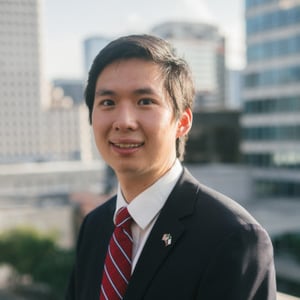
State District Judge, Austin, Texas
Cory Liu is a state district judge in Austin, Texas. He previously served as assistant general counsel to Texas Governor Greg Abbott. Mr. Liu clerked for Judge Andrew Oldham on the U.S. Court of Appeals for the Fifth Circuit and Judge Danny Boggs on the U.S. Court of Appeals for the Sixth Circuit. He was Editor-in-Chief of the Harvard Journal of Law & Public Policy and is a graduate of Harvard Law School and the University of Chicago.
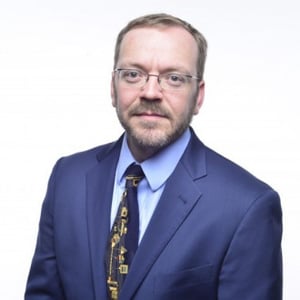
Vice President for Legal Affairs, Goldwater Institute
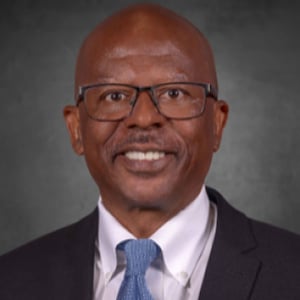
Fred Gray Endowed Chair for Civil Rights and Constitutional Law, Texas Tech University School of Law
Professor Kenneth Williams is a graduate of the University of Virginia School of Law and currently the Fred Gray Endowed Chair for Civil Rights and Constitutional Law at Texas Tech University School of Law where he teaches Race, Racism and the Law, Civil Rights, Constitutional Law and Capital Punishment, Professor Williams is also a national expert on Capital Punishment. He is the author of a book on the death penalty, “Most Deserving of Death?” Professor Williams is also a co-author of a Criminal Law textbook published by the Carolina Academic Press, Criminal Law: Concepts, Crimes and Defenses. He has also authored numerous law review articles on issues related to Criminal Law Constitutional Law and the Death Penalty. Professor Williams was selected as a Fulbright Specialist and during the summer of 2013 where he taught a course on the American Legal System at the Federal University of Bahia in Brazil. Professor Williams has continued his relationship with this institution as a visiting professor. Professor Williams has also taught in summer abroad programs in Argentina, Chile and Canada. In addition to his teaching responsibilities, Professor Williams has represented several death row inmates during their federal habeas corpus proceedings. In 2017, the U.S. Supreme Court granted a writ of certiorari that Professor Williams prepared on behalf of his death sentenced client. He has also been successful before both the United States Court of Appeals for the Fifth Circuit and the United States District Court for the Southern District of Texas in obtaining relief for inmates who were sentenced to death in violation of their constitutional rights. Professor Williams has also made numerous media appearances discussing issues related to criminal law and capital punishment. He has been quoted in the New York Times, Washington Post, Houston Chronicle, Charlotte Observer, NBC news, USA Today, Beaumont Enterprise, Daily Beast, Virginia Pilot, Texas Tribune and Associated Press. Professor Williams has also been interviewed on News nation, Al Jazeera, and local ABC, CBS, NBC and Fox affiliates. He has also been interviewed on numerous radio programs including National Public Radio.
State District Judge, Austin, Texas
Cory Liu is a state district judge in Austin, Texas. He previously served as assistant general counsel to Texas Governor Greg Abbott. Mr. Liu clerked for Judge Andrew Oldham on the U.S. Court of Appeals for the Fifth Circuit and Judge Danny Boggs on the U.S. Court of Appeals for the Sixth Circuit. He was Editor-in-Chief of the Harvard Journal of Law & Public Policy and is a graduate of Harvard Law School and the University of Chicago.
Vice President for Legal Affairs, Goldwater Institute
Fred Gray Endowed Chair for Civil Rights and Constitutional Law, Texas Tech University School of Law
Professor Kenneth Williams is a graduate of the University of Virginia School of Law and currently the Fred Gray Endowed Chair for Civil Rights and Constitutional Law at Texas Tech University School of Law where he teaches Race, Racism and the Law, Civil Rights, Constitutional Law and Capital Punishment, Professor Williams is also a national expert on Capital Punishment. He is the author of a book on the death penalty, “Most Deserving of Death?” Professor Williams is also a co-author of a Criminal Law textbook published by the Carolina Academic Press, Criminal Law: Concepts, Crimes and Defenses. He has also authored numerous law review articles on issues related to Criminal Law Constitutional Law and the Death Penalty. Professor Williams was selected as a Fulbright Specialist and during the summer of 2013 where he taught a course on the American Legal System at the Federal University of Bahia in Brazil. Professor Williams has continued his relationship with this institution as a visiting professor. Professor Williams has also taught in summer abroad programs in Argentina, Chile and Canada. In addition to his teaching responsibilities, Professor Williams has represented several death row inmates during their federal habeas corpus proceedings. In 2017, the U.S. Supreme Court granted a writ of certiorari that Professor Williams prepared on behalf of his death sentenced client. He has also been successful before both the United States Court of Appeals for the Fifth Circuit and the United States District Court for the Southern District of Texas in obtaining relief for inmates who were sentenced to death in violation of their constitutional rights. Professor Williams has also made numerous media appearances discussing issues related to criminal law and capital punishment. He has been quoted in the New York Times, Washington Post, Houston Chronicle, Charlotte Observer, NBC news, USA Today, Beaumont Enterprise, Daily Beast, Virginia Pilot, Texas Tribune and Associated Press. Professor Williams has also been interviewed on News nation, Al Jazeera, and local ABC, CBS, NBC and Fox affiliates. He has also been interviewed on numerous radio programs including National Public Radio.
State District Judge, Austin, Texas
Cory Liu is a state district judge in Austin, Texas. He previously served as assistant general counsel to Texas Governor Greg Abbott. Mr. Liu clerked for Judge Andrew Oldham on the U.S. Court of Appeals for the Fifth Circuit and Judge Danny Boggs on the U.S. Court of Appeals for the Sixth Circuit. He was Editor-in-Chief of the Harvard Journal of Law & Public Policy and is a graduate of Harvard Law School and the University of Chicago.
Vice President for Legal Affairs, Goldwater Institute
Fred Gray Endowed Chair for Civil Rights and Constitutional Law, Texas Tech University School of Law
Professor Kenneth Williams is a graduate of the University of Virginia School of Law and currently the Fred Gray Endowed Chair for Civil Rights and Constitutional Law at Texas Tech University School of Law where he teaches Race, Racism and the Law, Civil Rights, Constitutional Law and Capital Punishment, Professor Williams is also a national expert on Capital Punishment. He is the author of a book on the death penalty, “Most Deserving of Death?” Professor Williams is also a co-author of a Criminal Law textbook published by the Carolina Academic Press, Criminal Law: Concepts, Crimes and Defenses. He has also authored numerous law review articles on issues related to Criminal Law Constitutional Law and the Death Penalty. Professor Williams was selected as a Fulbright Specialist and during the summer of 2013 where he taught a course on the American Legal System at the Federal University of Bahia in Brazil. Professor Williams has continued his relationship with this institution as a visiting professor. Professor Williams has also taught in summer abroad programs in Argentina, Chile and Canada. In addition to his teaching responsibilities, Professor Williams has represented several death row inmates during their federal habeas corpus proceedings. In 2017, the U.S. Supreme Court granted a writ of certiorari that Professor Williams prepared on behalf of his death sentenced client. He has also been successful before both the United States Court of Appeals for the Fifth Circuit and the United States District Court for the Southern District of Texas in obtaining relief for inmates who were sentenced to death in violation of their constitutional rights. Professor Williams has also made numerous media appearances discussing issues related to criminal law and capital punishment. He has been quoted in the New York Times, Washington Post, Houston Chronicle, Charlotte Observer, NBC news, USA Today, Beaumont Enterprise, Daily Beast, Virginia Pilot, Texas Tribune and Associated Press. Professor Williams has also been interviewed on News nation, Al Jazeera, and local ABC, CBS, NBC and Fox affiliates. He has also been interviewed on numerous radio programs including National Public Radio.
State District Judge, Austin, Texas
Cory Liu is a state district judge in Austin, Texas. He previously served as assistant general counsel to Texas Governor Greg Abbott. Mr. Liu clerked for Judge Andrew Oldham on the U.S. Court of Appeals for the Fifth Circuit and Judge Danny Boggs on the U.S. Court of Appeals for the Sixth Circuit. He was Editor-in-Chief of the Harvard Journal of Law & Public Policy and is a graduate of Harvard Law School and the University of Chicago.
Vice President for Legal Affairs, Goldwater Institute
Fred Gray Endowed Chair for Civil Rights and Constitutional Law, Texas Tech University School of Law
Professor Kenneth Williams is a graduate of the University of Virginia School of Law and currently the Fred Gray Endowed Chair for Civil Rights and Constitutional Law at Texas Tech University School of Law where he teaches Race, Racism and the Law, Civil Rights, Constitutional Law and Capital Punishment, Professor Williams is also a national expert on Capital Punishment. He is the author of a book on the death penalty, “Most Deserving of Death?” Professor Williams is also a co-author of a Criminal Law textbook published by the Carolina Academic Press, Criminal Law: Concepts, Crimes and Defenses. He has also authored numerous law review articles on issues related to Criminal Law Constitutional Law and the Death Penalty. Professor Williams was selected as a Fulbright Specialist and during the summer of 2013 where he taught a course on the American Legal System at the Federal University of Bahia in Brazil. Professor Williams has continued his relationship with this institution as a visiting professor. Professor Williams has also taught in summer abroad programs in Argentina, Chile and Canada. In addition to his teaching responsibilities, Professor Williams has represented several death row inmates during their federal habeas corpus proceedings. In 2017, the U.S. Supreme Court granted a writ of certiorari that Professor Williams prepared on behalf of his death sentenced client. He has also been successful before both the United States Court of Appeals for the Fifth Circuit and the United States District Court for the Southern District of Texas in obtaining relief for inmates who were sentenced to death in violation of their constitutional rights. Professor Williams has also made numerous media appearances discussing issues related to criminal law and capital punishment. He has been quoted in the New York Times, Washington Post, Houston Chronicle, Charlotte Observer, NBC news, USA Today, Beaumont Enterprise, Daily Beast, Virginia Pilot, Texas Tribune and Associated Press. Professor Williams has also been interviewed on News nation, Al Jazeera, and local ABC, CBS, NBC and Fox affiliates. He has also been interviewed on numerous radio programs including National Public Radio.
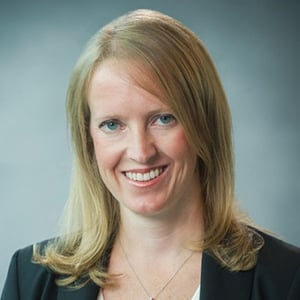
Partner, Clement & Murphy, PLLC
Erin Murphy is founding partner of Clement & Murphy, PLLC. She is widely recognized as one of the nation’s leading Supreme Court and appellate advocates. She has argued dozens of cases in appellate and trial courts throughout the country, including the Supreme Court and nearly all of the federal courts of appeals. Erin has long been ranked by Chambers & Partners rankings as a leading appellate practitioner, and the National Law Journal has named her one of the nation’s “Outstanding Women Lawyers.” Erin also has an active pro bono practice, through which she has successfully represented many religious organizations and adherents, criminal defendants, asylum applicants, adoptive parents, and more.
Erin is an adjunct professor at her alma mater the Georgetown University Law Center, a member and former officer of the Edward Coke Appellate Inn of Court, and a frequent speaker on topics relating to the Supreme Court and appellate advocacy. In her spare time, Erin serves on the board of directors of Street Law.
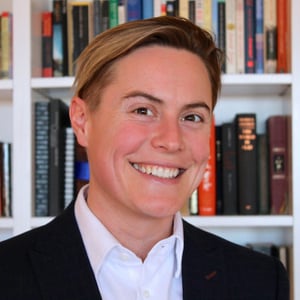
Associate Professor of Legal Studies & Business Ethics, The University of Pennsylvania Wharton School of Business
Amanda Shanor is an Assistant Professor at the University of Pennsylvania Wharton School, where her scholarship focuses on constitutional and administrative law, and in particular the First Amendment.
Shanor is a graduate of Yale Law School and Yale College, and a PhD candidate in law at Yale University. She served as a law clerk to Judges Cornelia T.L. Pillard and Judith W. Rogers on the D.C. Circuit, and Judge Robert W. Sweet in the Southern District of New York. She has taught at both Yale and Georgetown law schools and has published in the New York University Law Review, the Harvard Law Review Forum, and the Yale Law Journal Forum, among others. She is a contributor to Take Care and the co-author of a textbook on counterterrorism law.
Prior to joining the academy, Amanda worked in the National Legal Department of the American Civil Liberties Union on the organization’s Supreme Court litigation, including Masterpiece Cakeshop. Previously, she litigated a number of constitutional and national security cases with Professor David Cole, including Humanitarian Law Project v. Holder, while a fellow at Georgetown.
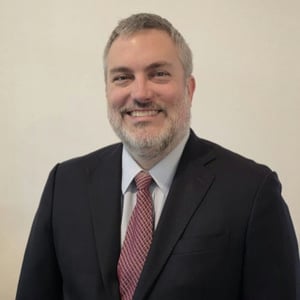
Host, The Prosecutors Podcast; Partner, Culper Law
Brett J. Talley is former a federal prosecutor (appellate chief in the Middle District of Alabama) and host of the true crime podcast "The Prosecutors." Brett has served as nominations chief and deputy assistant attorney general at the US Department of Justice, Advisor to the White House Counsel, speechwriter to Senator Rob Portman, a political and legal communications professional, deputy state solicitor general, staff writer for a presidential campaign, award-nominated horror fiction author (possibly related to the previous items on the list), US District and 11th Circuit judicial clerk, and adjunct law school professor. He is currently a partner ar Culper Law. Along the way, Brett has been involved at some level in the confirmation of a full majority of the sitting justices on the U.S. Supreme Court and scores of U.S. district and appellate court judges. A native Alabamian, Brett earned his undergraduate degree in History and Philosophy from the University of Alabama and JD from Harvard Law School. He lives in Montgomery with his wife Annie and their three small kids.
Solicitor General, Iowa Office of the Attorney General
Eric Wessan serves as Iowa’s Solicitor General in the Iowa Attorney General’s Office. In that role, Wessan leads Iowa’s litigation before State and federal appellate courts, including the Iowa and U.S. Supreme Courts. Before that role, Wessan worked on complex commercial litigation at two large law firms in Chicago. Wessan also served as a law clerk for the Honorable James C. Ho on the U.S. Court of Appeals for the Fifth Circuit and for the Honorable John F. Kness on the U.S. District Court for the Northern District of Illinois. Wessan is a graduate of the University of Chicago Law School, with honors, and of the University of Chicago.
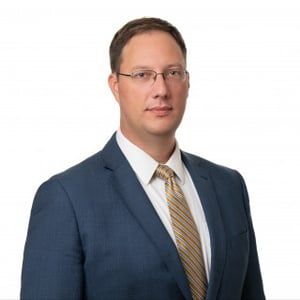
Laurence H. Silberman Chair in Constitutional Governance, American Enterprise Institute; Executive Director, Antonin Scalia Law School’s C. Boyden Gray Center for the Study of the Administrative State
Adam J. White is the Laurence H. Silberman Chair in Constitutional Governance and senior fellow at the American Enterprise Institute, where he focuses on the Supreme Court and the administrative state. He also directs the Antonin Scalia Law School’s C. Boyden Gray Center for the Study of the Administrative State.
He writes on regulation and constitutional government for a variety of publications. He practiced law in Washington, D.C., after clerking for the D.C. Circuit's Judge David Sentelle. He also has been chairman of the ABA's Administrative Law Section.
In 2021, he served on the Presidential Commission on the Supreme Court of the United States, where he criticized “Court packing” and other efforts to restructure the Supreme Court.

2026 Annual Arizona Dinner - Promises of 1776: Perspectives from the Bench
Phoenix, AZThe Future of Birthright Citizenship: What’s Next After Trump v. Barbara (Part Two)
Linda Denno, Will Randolph, Eric Wessan, John C. Yoo
On June 30, the Supreme Court held in Trump v. Barbara that nearly all children...
The First Amendment and White House Press Access
Michael Francisco, Casey Mattox, Robert Shibley
On September 18, President Trump announced that he was "banning" CNN, MS NOW, and Politico...
The First Amendment and White House Press Access
Michael Francisco, Casey Mattox, Robert Shibley
On September 18, President Trump announced that he was "banning" CNN, MS NOW, and Politico...
25 of 250 - The Echoes of 9/11 in Law, Policy, and Security Today
Darrell Blocker, Jonathan Fredman, Mary Habeck, Adam R. Pearlman
As America celebrates its 250th birthday, it also remembers the 25th anniversary of the September...
Did the Constitution Lay the Groundwork for Abolition?
Cory R. Liu, Timothy Sandefur, Kenneth Williams
As the nation marked the 250th anniversary of the Declaration of Independence, renewed attention has...
Did the Constitution Lay the Groundwork for Abolition?
Cory R. Liu, Timothy Sandefur, Kenneth Williams
As the nation marked the 250th anniversary of the Declaration of Independence, renewed attention has...
Did the Constitution Lay the Groundwork for Abolition?
Cory R. Liu, Timothy Sandefur, Kenneth Williams
As the nation marked the 250th anniversary of the Declaration of Independence, renewed attention has...
Did the Constitution Lay the Groundwork for Abolition?
Cory R. Liu, Timothy Sandefur, Kenneth Williams
As the nation marked the 250th anniversary of the Declaration of Independence, renewed attention has...
Supreme Court Preview: What Is in Store for October Term 2026?
Erin E. Murphy, Amanda Shanor, Brett J. Talley, Eric Wessan, Adam White
Registration is now closed No registration is needed to view the live stream, which will be...