
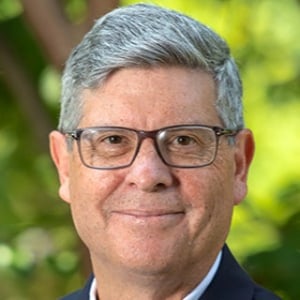
E. Claiborne Robins Distinguished Chair in Law, University of Richmond School of Law
Professor Kurt Lash teaches and writes about constitutional law. Founder and director of the Richmond Program on the American Constitution, Professor Lash has published widely on the subjects of constitutional law and constitutional history, including The Fourteenth Amendment and the Privileges or Immunities of American Citizenship (Cambridge University Press, 2014), The Lost History of the Ninth Amendment (Oxford University Press, 2009), and The American First Amendment in the Twenty-first Century: Cases and Materials(with William W. Van Alstyne) (5th ed., Foundation Press, 2014). An elected member of the American Law Institute, Professor Lash’s work has appeared in numerous legal journals including the Stanford Law Journal, Georgetown Law Journal, Virginia Law Review, andNotre Dame Law Review. He has been a visiting professor at Northwestern University School of Law and is the former director of the University of Illinois College of Law Program in Constitutional Theory, History, and Law.

Solicitor General, Iowa Office of the Attorney General
Eric Wessan serves as Iowa’s Solicitor General in the Iowa Attorney General’s Office. In that role, Wessan leads Iowa’s litigation before State and federal appellate courts, including the Iowa and U.S. Supreme Courts. Before that role, Wessan worked on complex commercial litigation at two large law firms in Chicago. Wessan also served as a law clerk for the Honorable James C. Ho on the U.S. Court of Appeals for the Fifth Circuit and for the Honorable John F. Kness on the U.S. District Court for the Northern District of Illinois. Wessan is a graduate of the University of Chicago Law School, with honors, and of the University of Chicago.

Julius E. Davis Professor of Law, University of Minnesota Law School
Ilan Wurman is the Julius E. Davis Professor of Law at the University of Minnesota, where he teaches administrative law and constitutional law. He previously taught at Arizona State University. He writes primarily on the Fourteenth Amendment, administrative law, separation of powers, and constitutionalism. His academic writing has appeared in the Yale Law Journal, the Stanford Law Review, the University of Chicago Law Review, the University of Pennsylvania Law Review, the Virginia Law Review, the Duke Law Journal, the Minnesota Law Review, the Notre Dame Law Review, and the Texas Law Review among other journals.
Professor Wurman is the author of the new book The Constitution of 1789: A New Introduction (Cambridge 2026). His previous books include A Debt Against the Living: An Introduction to Originalism (Cambridge 2017), and The Second Founding: An Introduction to the Fourteenth Amendment (Cambridge 2020). He is also the author of the casebook, Administrative Law Theory and Fundamentals: An Integrated Approach (Foundation Press 3d ed. 2025).
Professor Wurman practices law with the firm Tully Bailey. He has litigated a variety of administrative law and constitutional law cases, including cases involving COVID-19 restrictions, transmission lines, and Appointments Clause challenges. He also devised winning public nuisance theories to force city governments to address the increasingly challenging public camping crises throughout the country.

Vice President for Legal Affairs, Goldwater Institute

Executive Director, Salmon P. Chase Center for Civics, Culture, and Society, The Ohio State University
Professor Lee J. Strang serves as the inaugural executive director of the Salmon P. Chase Center for Civics, Culture, and Society at The Ohio State University.
Initiated in 2023 by the state of Ohio, the Chase Center will be an academic home at Ohio State for teaching, research, and programing on the foundations of the American constitutional order and its impact on society. As executive director, Professor Strang is responsible for organizing the center, overseeing the hiring and appointment of the center’s faculty, developing curriculum, and delivering student and academic programming. He also holds a faculty appointment in the Moritz College of Law at Ohio State.
Professor Strang is a nationally recognized legal scholar who has published dozens of articles in leading journals in the fields of constitutional law and interpretation, property law, and religion and the First Amendment. He co-edits the textbook Federal Constitutional Law, and his most recent book, Originalism’s Promise: A Natural Law Account of the American Constitution is the first book-length, natural law justification for originalism. He currently is writing on civic thought and leadership, and he is finalizing a book on the history of American Catholic legal education (with John M. Breen).
Before joining Ohio State, Professor Strang served as the inaugural director of the University of Toledo’s Institute of American Constitutional Thought & Leadership. He joined the Toledo College of Law faculty in 2008, was granted tenure in 2010, and was named John W. Stoepler Professor of Law & Values in 2015. The University of Toledo awarded Professor Strang its Outstanding Faculty Research and Scholarship Award in 2017. Before that, he was a visiting professor at Michigan State University College of Law. A graduate of the University of Iowa, where he was articles editor of the Iowa Law Review and Order of the Coif, Professor Strang holds an LL.M. degree from Harvard Law School.
Professor Strang has been a visiting scholar at the Georgetown Center for the Constitution and a visiting fellow at the James Madison Program at Princeton University. In 2016, he was appointed to the Ohio Advisory Committee of the U.S. Commission on Civil Rights and reappointed as chair in 2023.
Prior to teaching, Professor Strang served as a judicial clerk for Judge Alice M. Batchelder of the U.S. Court of Appeals for the Sixth Circuit. He was also an associate for Jenner & Block LLP in Chicago, where he practiced in general and appellate litigation.
Professor Strang is a frequent presenter at scholarly conferences. He is the president of the Board of Trustees of Northwest Ohio Classical Academy, Ohio’s first classical charter school. He is also a regular participant in debates at law schools across the country, a contributor to the media, and a speaker to political, civic, and religious groups.
Vice President for Legal Affairs, Goldwater Institute
Executive Director, Salmon P. Chase Center for Civics, Culture, and Society, The Ohio State University
Professor Lee J. Strang serves as the inaugural executive director of the Salmon P. Chase Center for Civics, Culture, and Society at The Ohio State University.
Initiated in 2023 by the state of Ohio, the Chase Center will be an academic home at Ohio State for teaching, research, and programing on the foundations of the American constitutional order and its impact on society. As executive director, Professor Strang is responsible for organizing the center, overseeing the hiring and appointment of the center’s faculty, developing curriculum, and delivering student and academic programming. He also holds a faculty appointment in the Moritz College of Law at Ohio State.
Professor Strang is a nationally recognized legal scholar who has published dozens of articles in leading journals in the fields of constitutional law and interpretation, property law, and religion and the First Amendment. He co-edits the textbook Federal Constitutional Law, and his most recent book, Originalism’s Promise: A Natural Law Account of the American Constitution is the first book-length, natural law justification for originalism. He currently is writing on civic thought and leadership, and he is finalizing a book on the history of American Catholic legal education (with John M. Breen).
Before joining Ohio State, Professor Strang served as the inaugural director of the University of Toledo’s Institute of American Constitutional Thought & Leadership. He joined the Toledo College of Law faculty in 2008, was granted tenure in 2010, and was named John W. Stoepler Professor of Law & Values in 2015. The University of Toledo awarded Professor Strang its Outstanding Faculty Research and Scholarship Award in 2017. Before that, he was a visiting professor at Michigan State University College of Law. A graduate of the University of Iowa, where he was articles editor of the Iowa Law Review and Order of the Coif, Professor Strang holds an LL.M. degree from Harvard Law School.
Professor Strang has been a visiting scholar at the Georgetown Center for the Constitution and a visiting fellow at the James Madison Program at Princeton University. In 2016, he was appointed to the Ohio Advisory Committee of the U.S. Commission on Civil Rights and reappointed as chair in 2023.
Prior to teaching, Professor Strang served as a judicial clerk for Judge Alice M. Batchelder of the U.S. Court of Appeals for the Sixth Circuit. He was also an associate for Jenner & Block LLP in Chicago, where he practiced in general and appellate litigation.
Professor Strang is a frequent presenter at scholarly conferences. He is the president of the Board of Trustees of Northwest Ohio Classical Academy, Ohio’s first classical charter school. He is also a regular participant in debates at law schools across the country, a contributor to the media, and a speaker to political, civic, and religious groups.

Judge, United States Court of Appeals, Second Circuit
Judge Menashi was appointed to the U.S. Court of Appeals for the Second Circuit on November 14, 2019. Previously, he served as special assistant and associate counsel to the President in the White House and as acting general counsel at the U.S. Department of Education. He was assistant professor of law at Scalia Law School, George Mason University, where he taught administrative law and civil procedure, and a research fellow at New York University School of Law and Georgetown University Law Center. He was also a partner at Kirkland & Ellis LLP in New York, where he practiced appellate and commercial litigation, and served as a law clerk to Justice Samuel Alito on the Supreme Court of the United States and to Judge Douglas Ginsburg on the U.S. Court of Appeals for the District of Columbia Circuit. He graduated from Stanford Law School, where he was elected to Order of the Coif and served as senior articles editor of the Stanford Law Review, and from Dartmouth College, where he was elected to Phi Beta Kappa.
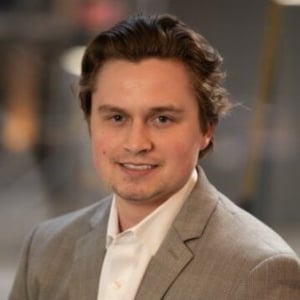
Editor-in-Chief, The Harvard Journal of Law and Public Policy
Sean Pigeon is a third-year law student from Texas, who graduated with honors from Yale in 2021. Before law school, he worked for the Manhattan Institute and National Review. He spent his last two summers at Vartabedian, Hester & Haynes, where he will return after clerking for the Texas Supreme Court and the Fifth Circuit Court of Appeals.

David Boies Professor of Law, Yale Law School
Julius E. Davis Professor of Law, University of Minnesota Law School
Ilan Wurman is the Julius E. Davis Professor of Law at the University of Minnesota, where he teaches administrative law and constitutional law. He previously taught at Arizona State University. He writes primarily on the Fourteenth Amendment, administrative law, separation of powers, and constitutionalism. His academic writing has appeared in the Yale Law Journal, the Stanford Law Review, the University of Chicago Law Review, the University of Pennsylvania Law Review, the Virginia Law Review, the Duke Law Journal, the Minnesota Law Review, the Notre Dame Law Review, and the Texas Law Review among other journals.
Professor Wurman is the author of the new book The Constitution of 1789: A New Introduction (Cambridge 2026). His previous books include A Debt Against the Living: An Introduction to Originalism (Cambridge 2017), and The Second Founding: An Introduction to the Fourteenth Amendment (Cambridge 2020). He is also the author of the casebook, Administrative Law Theory and Fundamentals: An Integrated Approach (Foundation Press 3d ed. 2025).
Professor Wurman practices law with the firm Tully Bailey. He has litigated a variety of administrative law and constitutional law cases, including cases involving COVID-19 restrictions, transmission lines, and Appointments Clause challenges. He also devised winning public nuisance theories to force city governments to address the increasingly challenging public camping crises throughout the country.
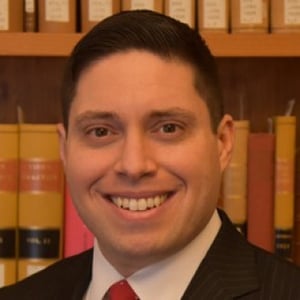
Professor, Associate Dean for Faculty Research, Catholic University of America, Columbus School of Law
José Joel Alicea is the inaugural St. Robert Bellarmine Professor of Law, Associate Dean for Faculty Research, and Director of the Law School’s Center for the Constitution and the Catholic Intellectual Tradition. He has also served as a Visiting Professor at Duke Law School and Notre Dame Law School. Prior to joining the Catholic Law faculty, Professor Alicea practiced law for several years at the law firm of Cooper & Kirk, PLLC, where he specialized in constitutional litigation. He previously served as a law clerk for Justice Samuel A. Alito Jr., on the United States Supreme Court and for Judge Diarmuid F. O'Scannlain on the United States Court of Appeals for the Ninth Circuit.
Professor Alicea’s scholarship has focused on constitutional theory. His scholarship has appeared, or is forthcoming, in the Yale Law Journal, the University of Pennsylvania Law Review, the Virginia Law Review, and the Notre Dame Law Review, among other publications. He has also been active in public debates about constitutional law, testifying before Congress and publishing essays in places like The New York Times, City Journal, and National Affairs.
Professor Alicea is a Fellow at the Columbus School of Law's Center for Religious Liberty and a Nonresident Fellow at The American Enterprise Institute. He is the recipient of several research and teaching awards, including the student-selected Professor of the Year teaching award.
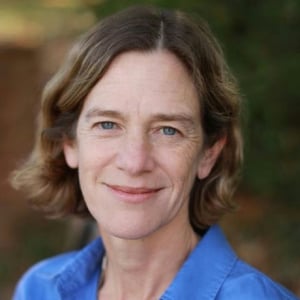
David Lurton Massee, Jr., Professor of Law, Director, Immigration, Migration and Human Rights Program, The University of Virginia School of Law
Amanda Frost is the David Lurton Massee, Jr., Professor of Law and Co-Director of the Immigration, Migration and Human Rights Program at the University of Virginia School of Law. Professor Frost specializes in immigration and citizenship law, federal courts and jurisdiction, and judicial ethics. Professor Frost is the author of the book You Are Not American: Citizenship Stripping from Dred Scott and the Dreamers, which was shortlisted for the Mark Lynton History Prize and was named a "New & Noteworthy" book by the NY Times Book Review. Her scholarship has been cited by state and federal courts, and she has been invited to testify before the House and Senate Judiciary Committees. She has published essays and op-eds in the New York Times, The Atlantic, The New Republic, Slate, USA Today, and The American Prospect.
E. Claiborne Robins Distinguished Chair in Law, University of Richmond School of Law
Professor Kurt Lash teaches and writes about constitutional law. Founder and director of the Richmond Program on the American Constitution, Professor Lash has published widely on the subjects of constitutional law and constitutional history, including The Fourteenth Amendment and the Privileges or Immunities of American Citizenship (Cambridge University Press, 2014), The Lost History of the Ninth Amendment (Oxford University Press, 2009), and The American First Amendment in the Twenty-first Century: Cases and Materials(with William W. Van Alstyne) (5th ed., Foundation Press, 2014). An elected member of the American Law Institute, Professor Lash’s work has appeared in numerous legal journals including the Stanford Law Journal, Georgetown Law Journal, Virginia Law Review, andNotre Dame Law Review. He has been a visiting professor at Northwestern University School of Law and is the former director of the University of Illinois College of Law Program in Constitutional Theory, History, and Law.
David Boies Professor of Law, Yale Law School
Julius E. Davis Professor of Law, University of Minnesota Law School
Ilan Wurman is the Julius E. Davis Professor of Law at the University of Minnesota, where he teaches administrative law and constitutional law. He previously taught at Arizona State University. He writes primarily on the Fourteenth Amendment, administrative law, separation of powers, and constitutionalism. His academic writing has appeared in the Yale Law Journal, the Stanford Law Review, the University of Chicago Law Review, the University of Pennsylvania Law Review, the Virginia Law Review, the Duke Law Journal, the Minnesota Law Review, the Notre Dame Law Review, and the Texas Law Review among other journals.
Professor Wurman is the author of the new book The Constitution of 1789: A New Introduction (Cambridge 2026). His previous books include A Debt Against the Living: An Introduction to Originalism (Cambridge 2017), and The Second Founding: An Introduction to the Fourteenth Amendment (Cambridge 2020). He is also the author of the casebook, Administrative Law Theory and Fundamentals: An Integrated Approach (Foundation Press 3d ed. 2025).
Professor Wurman practices law with the firm Tully Bailey. He has litigated a variety of administrative law and constitutional law cases, including cases involving COVID-19 restrictions, transmission lines, and Appointments Clause challenges. He also devised winning public nuisance theories to force city governments to address the increasingly challenging public camping crises throughout the country.
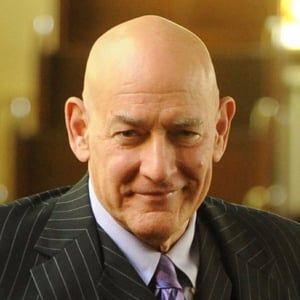
Raoul Berger Professor of Legal History at Northwestern University School of Law
Stephen Presser is a leading American legal historian and expert on shareholder liability for corporate debts. He is frequently an invited witness before committees of the U.S. Senate and House of Representatives on issues of constitutional law. He holds a joint appointment with the J. L. Kellogg Graduate School of Management and also teaches in Northwestern's history department.
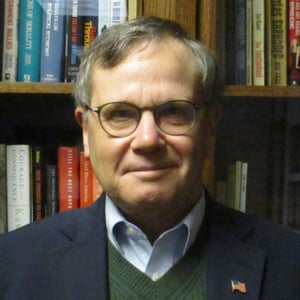
Senior Fellow in Constitutional Jurisprudence, Independence Institute
Professor Robert G. Natelson is a constitutional scholar and author.
Rob’s constitutional scholarship has been cited repeatedly by justices and parties at the U.S. Supreme Court—as well as by federal appeals courts, and at least 18 state supreme courts.
Rob’s research into the Constitution’s original meaning has carried him to libraries throughout the United States and in Britain, including four months at Oxford University. His books and articles span many different parts of the Constitution, including groundbreaking studies of the Necessary and Proper Clause, the Indian Commerce Clause, federalism, Founding-Era interpretation, regulation of elections, and the amendment process of Article V. He created the first-ever online bibliography for 18th century materials used in constitutional research. He is a contributing author to the Encyclopedia of the Supreme Court of the United States (on Magna Carta). He contributed eight essays to the third edition of the Heritage Guide to the Constitution: five on the amendment procedure and one each on the Guarantee Clause, the Postal Clause, and the Recess Appointments Clause.
U.S. Supreme Court justices have relied explicitly on Rob’s research in 41 citations in 13 separate cases.
Vice President for Legal Affairs, Goldwater Institute
Executive Director, Salmon P. Chase Center for Civics, Culture, and Society, The Ohio State University
Professor Lee J. Strang serves as the inaugural executive director of the Salmon P. Chase Center for Civics, Culture, and Society at The Ohio State University.
Initiated in 2023 by the state of Ohio, the Chase Center will be an academic home at Ohio State for teaching, research, and programing on the foundations of the American constitutional order and its impact on society. As executive director, Professor Strang is responsible for organizing the center, overseeing the hiring and appointment of the center’s faculty, developing curriculum, and delivering student and academic programming. He also holds a faculty appointment in the Moritz College of Law at Ohio State.
Professor Strang is a nationally recognized legal scholar who has published dozens of articles in leading journals in the fields of constitutional law and interpretation, property law, and religion and the First Amendment. He co-edits the textbook Federal Constitutional Law, and his most recent book, Originalism’s Promise: A Natural Law Account of the American Constitution is the first book-length, natural law justification for originalism. He currently is writing on civic thought and leadership, and he is finalizing a book on the history of American Catholic legal education (with John M. Breen).
Before joining Ohio State, Professor Strang served as the inaugural director of the University of Toledo’s Institute of American Constitutional Thought & Leadership. He joined the Toledo College of Law faculty in 2008, was granted tenure in 2010, and was named John W. Stoepler Professor of Law & Values in 2015. The University of Toledo awarded Professor Strang its Outstanding Faculty Research and Scholarship Award in 2017. Before that, he was a visiting professor at Michigan State University College of Law. A graduate of the University of Iowa, where he was articles editor of the Iowa Law Review and Order of the Coif, Professor Strang holds an LL.M. degree from Harvard Law School.
Professor Strang has been a visiting scholar at the Georgetown Center for the Constitution and a visiting fellow at the James Madison Program at Princeton University. In 2016, he was appointed to the Ohio Advisory Committee of the U.S. Commission on Civil Rights and reappointed as chair in 2023.
Prior to teaching, Professor Strang served as a judicial clerk for Judge Alice M. Batchelder of the U.S. Court of Appeals for the Sixth Circuit. He was also an associate for Jenner & Block LLP in Chicago, where he practiced in general and appellate litigation.
Professor Strang is a frequent presenter at scholarly conferences. He is the president of the Board of Trustees of Northwest Ohio Classical Academy, Ohio’s first classical charter school. He is also a regular participant in debates at law schools across the country, a contributor to the media, and a speaker to political, civic, and religious groups.

From the Courthouse Steps: Trump v. Barbara
Kurt T. Lash, Eric Wessan, Ilan Wurman
In Trump v. Barbara, the U.S. Supreme Court held that the Fourteenth Amendment's Citizenship Clause...
Proclaiming Liberty with Tim Sandefur
Timothy Sandefur, Lee J. Strang
As America celebrates the 250th anniversary of the Declaration of Independence, Proclaiming Liberty by Timothy...
Proclaiming Liberty with Tim Sandefur
Timothy Sandefur, Lee J. Strang
As America celebrates the 250th anniversary of the Declaration of Independence, Proclaiming Liberty by Timothy...
Proclaiming Liberty with Tim Sandefur
Birthright Citizenship in Context: Law, History, and Contemporary Debate
Steven J. Menashi, Sean-Michael Pigeon, Keith E. Whittington, Ilan Wurman
As debates over birthright citizenship intensify in legal and public spheres, this webinar will explore...
Panel: Originalism, Birthright Citizenship and the 14th Amendment
J. Joel Alicea, Amanda Frost, Kurt T. Lash, Keith E. Whittington, Ilan Wurman
Prof. Amanda Frost, David Lurton Massee, Jr., Professor of Law, Director, Immigration, Migration and Human Rights...
The Past Is Not a Foreign Country: How a Historical Critique of Originalism Misses That the Past Is Prologue
Stephen B. Presser
A review of Jonathan Gienapp, Against Constitutional Originalism: A Historical Critique (2024) This review is...
Applying the Founders' Originalism
Robert G. Natelson
The 1787 Federal Convention drafted, and the ratifiers approved, the United States Constitution under the...
Topics
The Lasting Importance of the Case of Proclamations
There are many milestones on the road that traces the centuries-long work of the people...
Topics
The Concern for Human Flourishing at the Core of Antitrust Law
Antitrust law did not start in 1890. Though judges, scholars, and government officials often describe...