
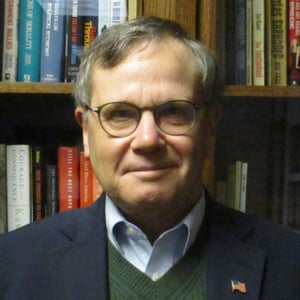
Senior Fellow in Constitutional Jurisprudence, Independence Institute
Professor Robert G. Natelson is a constitutional scholar and author.
Rob’s constitutional scholarship has been cited repeatedly by justices and parties at the U.S. Supreme Court—as well as by federal appeals courts, and at least 18 state supreme courts.
Rob’s research into the Constitution’s original meaning has carried him to libraries throughout the United States and in Britain, including four months at Oxford University. His books and articles span many different parts of the Constitution, including groundbreaking studies of the Necessary and Proper Clause, the Indian Commerce Clause, federalism, Founding-Era interpretation, regulation of elections, and the amendment process of Article V. He created the first-ever online bibliography for 18th century materials used in constitutional research. He is a contributing author to the Encyclopedia of the Supreme Court of the United States (on Magna Carta). He contributed eight essays to the third edition of the Heritage Guide to the Constitution: five on the amendment procedure and one each on the Guarantee Clause, the Postal Clause, and the Recess Appointments Clause.
U.S. Supreme Court justices have relied explicitly on Rob’s research in 41 citations in 13 separate cases.

Senior Judge, United States Court of Appeals, District of Columbia Circuit
Circuit Judge Douglas H. Ginsburg was appointed to the United States Court of Appeals for the District of Columbia in 1986. After receiving his B.S. from Cornell University in 1970, and his J.D. from the University of Chicago Law School in 1973, he clerked on the D.C. Circuit and for Justice Thurgood Marshall on the United States Supreme Court. Thereafter, Judge Ginsburg was a professor at the Harvard Law School, the Deputy Assistant and then Assistant Attorney General for the Antitrust Division of the Department of Justice, as well as the Administrator of the Office of Information and Regulatory Affairs in the Office of Management and Budget. Concurrent with his service as a federal judge, Judge Ginsburg has taught at the University of Chicago Law School and the New York University School of Law. Judge Ginsburg is currently a Professor of Law at the George Mason University and a visiting professor at University College London, Faculty of Laws.
Judge Ginsburg is the Chairman of the International Advisory Board of the Global Antitrust Institute at the Law and Economics Center of the George Mason University School of Law. He also serves on the Advisory Boards of: Competition Policy International; the Harvard Journal of Law and Public Policy; the Journal of Competition Law and Economics; the Journal of Law, Economics & Policy; the Supreme Court Economic Review; the University of Chicago Law Review; the New York University Journal of Law and Liberty; and, at University College London, both the Centre for Law, Economics and Society and the Jevons Institute for Competition Law and Economics.
In 2020, Judge Ginsburg was the 11th recipient of the John Sherman Award, presented by the Antitrust Division of the Department of Justice in recognition of the awardee’s Lifetime Contributions to Antitrust Law and Policy.
In 2014, Judge Ginsburg received the Lifetime Achievement Award given annually by the Global Competition Review.
He is the author or co-author of several books and more than 100 articles on competition and regulation, including, most recently, Growing Convergence: The Limited Role of Antitrust in Standard Essential Patent Disputes, in CPI Antitrust Chronicle, Summer 2021, Vol. 1, No. 2.

Director of Research, American Economic Liberties Project
Matt Stoller is a public intellectual who writes about the American anti-monopoly
tradition. He is the author of the Simon and Schuster book Goliath: The Hundred Year
War Between Monopoly Power and Democracy. Stoller is the Director of Research at
the American Economic Liberties Project. He publishes an email newsletter called BIG.
Stoller is a former policy advisor to the Senate Budget Committee, and worked in the House of Representatives on the Dodd–Frank Wall Street Reform Act.
He has lectured on competition policy and media at Columbia University, Harvard Law, Duke Law, Bertelsmann Foundation, Vrije Universiteit Brussel, West Point and the National Communications Commission of Taiwan. His writing has appeared in the Washington Post, the New York Times, Fast Company, Foreign Policy, the Guardian, Vice, The American Conservative, and the Baffler.
He has also produced for MSNBC and starred in a short-lived television show on FX called Brand X with Russell Brand.
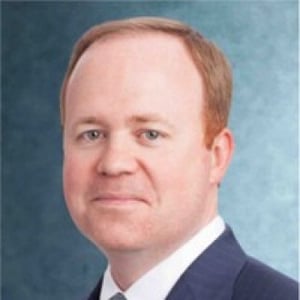
Partner, Gibson Dunn
Jeff Wall is Co-Chair of the Appellate and Constitutional Law Practice Group at Gibson Dunn and a former Acting Solicitor General of the United States. He has argued more than 30 cases before the U.S. Supreme Court and is widely regarded as one of the nation’s leading appellate advocates. Last year, he was named Appellate Attorney of the Year by The National Law Journal. He has been honored as The American Lawyer’s “Litigator of the Week” three times since 2024, for securing the elimination of a $650 million award against several national pharmacy chains; persuading the Delaware Supreme Court to reinstate Tesla CEO Elon Musk’s $60 billion incentive-compensation plan; and delivering what was described as a “knockout blow” to the Federal Communications Commission’s net neutrality rules in the Sixth Circuit after more than a decade of regulatory uncertainty.
A Fellow of the American Academy of Appellate Lawyers, Jeff is widely regarded for his ability to distill complex legal issues into clear, persuasive arguments. He is ranked Band 1 by Chambers USA, which has praised his “formidable reputation,” describing him as a “sophisticated” and “brilliant advocate” with an “impressive track record before the Supreme Court.” He is also a three-time Law360 Appellate MVP, most recently earning back-to-back honors in 2024 and 2025.
Jeff is a member of the American Law Institute, President of the Edward Coke Appellate Inn of Court, trustee of the Supreme Court Historical Society, and former member of the Advisory Committee on Procedures for the U.S. Court of Appeals for the D.C. Circuit. Before his service in the Solicitor General’s Office and time in private practice, Jeff clerked for Justice Clarence Thomas of the U.S. Supreme Court and Judge J. Harvie Wilkinson III of the U.S. Court of Appeals for the Fourth Circuit. Jeff has a robust pro bono practice and role in his community, serving on the board of the St. Albans School and its School of Public Service.

Judge, United States Court of Appeals, Sixth Circuit
Raymond M. Kethledge is a Circuit Judge on the United States Court of Appeals for the Sixth Circuit, to which he was appointed on July 8, 2008. He received his BA in history from the University of Michigan in 1989, and his JD from the University of Michigan Law School in 1993. He clerked for Justice Anthony Kennedy of the United States Supreme Court and Judge Ralph B. Guy, Jr. of the United States Court of Appeals for the Sixth Circuit. He also worked in the United States Senate and later, with two partners, founded a boutique litigation firm, now known as Bush Seyferth PLLC, in Troy, Michigan. His practice there included a broad mix of trial-court, appellate, and class-action litigation.

Robert Walmsley University Professor, Harvard Law School
Cass R. Sunstein is currently the Robert Walmsley University Professor at Harvard. He is the founder and director of the Program on Behavioral Economics and Public Policy at Harvard Law School. In 2018, he received the Holberg Prize from the government of Norway, sometimes described as the equivalent of the Nobel Prize for law and the humanities. From 2009 to 2012, he was Administrator of the White House Office of Information and Regulatory Affairs, and after that, he served on the President's Review Board on Intelligence and Communications Technologies and on the Pentagon's Defense Innovation Board. Mr. Sunstein has testified before congressional committees on many subjects, and he has advised officials at the United Nations, the European Commission, the World Bank, and many nations on issues of law and public policy. He serves as an adviser to the Behavioural Insights Team in the United Kingdom.
Mr. Sunstein is author of hundreds of articles and dozens of books, including Nudge: Improving Decisions about Health, Wealth, and Happiness (with Richard H. Thaler, 2008), Simpler: The Future of Government (2013), The Ethics of Influence (2015), #Republic (2017), Impeachment: A Citizen's Guide (2017), The Cost-Benefit Revolution (2018), On Freedom (2019), Conformity (2019), How Change Happens (2019), and Too Much Information (2020). He is now working on a variety of projects involving the regulatory state, "sludge" (defined to include paperwork and similar burdens), fake news, and freedom of speech.
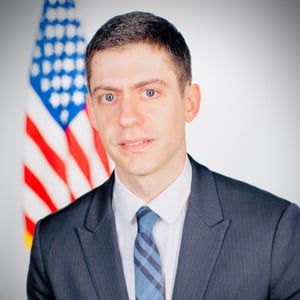
Partner, Quinn Emanuel
John F. Bash is an American attorney who served as the United States Attorney for the Western District of Texas from 2017 to 2020. After graduating from Harvard Law School, Mr. Bash clerked for Judge Kavanaugh during his first year on the bench and went on to clerk for Justice Antonin Scalia. He then served as an Assistant to the Solicitor General in the U.S. Department of Justice, where he argued ten cases in the United States Supreme Court. He also served briefly as Special Assistant to the President and Associate Counsel to the President before his appointment as United States Attorney.
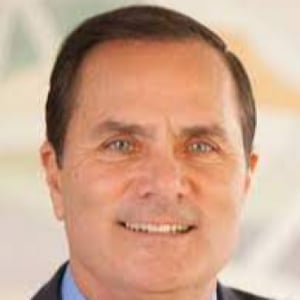
Federal Public Defender for the Southern District of Florida

Co-Director, Tsai Center for Law, Science and Innovation, Altshuler Distinguished Teaching Professor, and Professor of Law, Southern Methodist University Dedman School of Law, SMU Dedman School of Law
Meghan J. Ryan is an award-winning teacher and scholar working at the intersection of criminal law & procedure, torts, and law & science. Her current research focuses on the impact of evolving science, technology, and cultural values on criminal convictions and punishments, as well as on civil liability and remedies. This includes research on forensic science, wrongful convictions, sentencing, cruel & unusual punishments, and toxic torts.
Professor Ryan received her A.B., magna cum laude, in Chemistry from Harvard University. She earned her J.D., magna cum laude, from the University of Minnesota Law School, where she was a member of the Order of the Coif and received the American Law Institute-American Bar Association Scholarship and Leadership Award. She was also a member of both the Minnesota Law Review and the Minnesota Journal of Global Trade.
After graduation, Professor Ryan clerked for the Honorable Roger L. Wollman of the U.S. Court of Appeals for the Eighth Circuit. She also practiced law in the trial group at the Minneapolis-based law firm of Dorsey & Whitney LLP, where she focused her practice on commercial and intellectual property litigation, as well as on white collar defense and compliance. Additionally, Professor Ryan has conducted research in the areas of bioinorganic chemistry, molecular biology, and experimental therapeutics at the Mayo Clinic and the University of Minnesota. Prior to joining the SMU faculty, Professor Ryan was a Visiting Assistant Professor at the University of Minnesota Law School, where she taught Criminal Law, Criminal Process, and Sales.
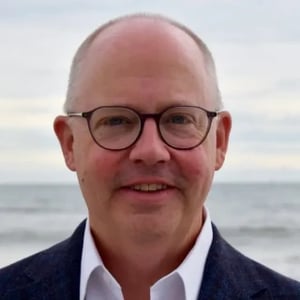
Edward Rood Eminent Scholar Chair, Professor of Law, and Senior Fellow, Hamilton Center for Classical and Civic Education, University of Florida Levin College of Law
Professor Stinneford researches, teaches, and consults about legal ethics, criminal law, criminal procedure, and constitutional law. His work has been cited by the United States Supreme Court, several state supreme courts and federal courts of appeal, and numerous scholars. It has been published in numerous scholarly journals including the Georgetown Law Journal, the Northwestern University Law Review, the Virginia Law Review, the Notre Dame Law Review, and the William & Mary Law Review. The Stanford-Yale Junior faculty forum selected one of his articles as the best paper in the category of Constitutional History, and the AALS Criminal Justice Section named another article as the best paper in its Junior Scholars Paper Competition. In the fall of 2015, he was a Visiting Scholar at the Georgetown Law Center, Center for the Constitution.
John Stinneford was the inaugural Director and serves as a Senior Fellow of the Hamilton Center for Classical and Civic Education at the University of Florida. The Hamilton Center is a new academic unit whose mission is to promote civic education and civic discourse and to foster intellectual diversity. Its core purpose is to help students develop the knowledge, habits of thought, analytical skills, and character to be citizens and leaders in a free society. It will do so through curriculum, public programming, and (in conjunction with the Florida Department of Education) teacher training. Its curriculum will focus primarily on the Western intellectual tradition and the American founding.
Before joining the Florida faculty in 2009, Stinneford clerked for the Hon. James Moran of the United States District Court for the Northern District of Illinois, served as an Assistant United States Attorney, and practiced law with Winston & Strawn in Chicago. Stinneford teaches first-year courses in Criminal Law and Constitutional Law, and upper-level courses in Professional Responsibility, Criminal Procedure, Federal Criminal Law, Law & Literature, and White Collar Crime.

Judge, United States Court of Appeals, Sixth Circuit
Amul R. Thapar serves as a judge on the United States Court of Appeals for the Sixth Circuit. His judicial career began in 2007 when President George W. Bush nominated him to serve on the Eastern District of Kentucky, making him the first South Asian Article III judge in American history. In 2017, he became President Donald J. Trump’s first appellate court nominee.
Before joining the bench, Judge Thapar served as the United States Attorney for the Eastern District of Kentucky. While United States Attorney, Judge Thapar worked on the Attorney General’s Advisory Committee (“AGAC”) and chaired the AGAC’s Controlled Substances and Asset Forfeiture subcommittee. He also served on the Terrorism and National Security subcommittee, the Violent Crime subcommittee, and the Child Exploitation working group.
Judge Thapar has worked in private practice, at Williams & Connolly in Washington, D.C., and Squire, Sanders & Dempsey in Cincinnati, Ohio. He also served as an Assistant United States Attorney in both the Southern District of Ohio and the District of Columbia.
Judge Thapar received his undergraduate degree from Boston College and his law degree from the University of California, Berkeley. After graduating, Judge Thapar worked as a law clerk to the Honorable S. Arthur Spiegel of the United States District Court for the Southern District of Ohio, and the Honorable Nathaniel R. Jones of the United States Court of Appeals for the Sixth Circuit.
Judge Thapar has also published in the Yale Law Journal, Michigan Law Review, and Catholic University Law Review. He teaches courses on originalism, the Federalists and Anti-Federalists, and legal writing at Notre Dame Law School, the University of Virginia School of Law, and Vanderbilt Law School.
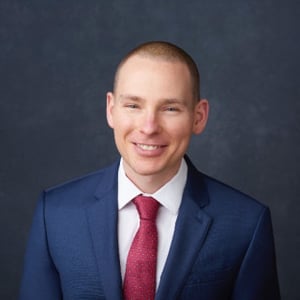
Shareholder & Co-Chair of the Workplace Policy Institute, Littler Mendelson P.C.
Alexander T. MacDonald advises employers on all aspects of the employment and labor landscape, focusing on emerging legislation and regulation. He has extensive experience advising businesses on worker classification, arbitration, the administrative and regulatory process, and the future of work. He frequently writes, publishes, and speaks on these subjects. His work has been cited by scholars and appellate courts. He is a recognized voice for the management perspective.
Alexander is a co-chair of the Workplace Policy Institute (WPI) team. With WPI, he advises employers on legislative, administrative, and regulatory developments at the state and federal level. He advocates for employers in the regulatory and administrative process. He also helps employers protect their businesses by understanding and anticipating cutting-edge legal developments.
Alexander also has extensive experience in traditional labor law. He represents management in all aspects of labor-management relations, including unfair labor practice charges, grievance arbitrations, representation elections, contract negotiations, and related litigation, including litigation in the U.S. courts of appeals.
Before joining Littler, Alexander served as the director, future of work, for a major technology company. He also worked in a national labor and employment law firm and a major public-sector general counsel’s office. He was a law clerk to the senior judges in the District of Columbia Court of Appeals.
He is also a veteran of the U.S. Air Force. He served in Operations Enduring Freedom and Iraqi Freedom. In law school, he graduated first in his class
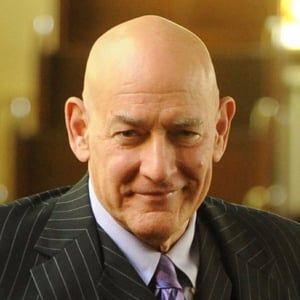
Raoul Berger Professor of Legal History at Northwestern University School of Law
Stephen Presser is a leading American legal historian and expert on shareholder liability for corporate debts. He is frequently an invited witness before committees of the U.S. Senate and House of Representatives on issues of constitutional law. He holds a joint appointment with the J. L. Kellogg Graduate School of Management and also teaches in Northwestern's history department.
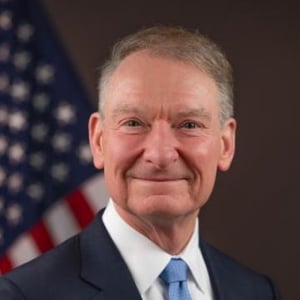
Chairman of the Securities and Exchange Commission
Paul S. Atkins was sworn into office as the 34th Chairman of the Securities and Exchange Commission on April 21, 2025, after being nominated by President Donald J. Trump on January 20, 2025, and confirmed by the U.S. Senate on April 9, 2025.
Prior to returning to the SEC, Chairman Atkins was most recently chief executive of Patomak Global Partners, a company he founded in 2009. Chairman Atkins helped lead efforts to develop best practices for the digital asset sector. He served as an independent director and non-executive chairman of the board of BATS Global Markets, Inc. from 2012 to 2015.
Chairman Atkins was appointed by President George W. Bush to serve as a Commissioner of the SEC from 2002 to 2008. During his tenure, he advocated for transparency, consistency, and the use of cost-benefit analysis at the agency. Chairman Atkins also represented the SEC at meetings of the President’s Working Group on Financial Markets and the U.S.-EU Transatlantic Economic Council. From 2009 to 2010, he was appointed a member of the Congressional Oversight Panel for the Troubled Asset Relief Program.
Before serving as an SEC Commissioner, Chairman Atkins was a consultant on securities and investment management industry matters, especially regarding issues of strategy, regulatory compliance, risk management, new product development, and organizational control.
From 1990 to 1994, Chairman Atkins served on the staff of two chairmen of the SEC, Richard C. Breeden and Arthur Levitt, ultimately as chief of staff and counselor, respectively. He received the SEC’s 1992 Law and Policy Award for work regarding corporate governance matters.
Chairman Atkins began his career as a lawyer in New York, focusing on a wide range of corporate transactions for U.S. and foreign clients, including public and private securities offerings and mergers and acquisitions. He was resident for 2½ years in his firm's Paris office and admitted as conseil juridique in France.
A member of the New York and Florida bars, Chairman Atkins received his J.D. from Vanderbilt University School of Law in 1983 and was Senior Student Writing Editor of the Vanderbilt Law Review. He received his A.B., Phi Beta Kappa, from Wofford College in 1980.
Originally from Lillington, North Carolina, Chairman Atkins grew up in Tampa, Florida. He and his wife Sarah have three sons.
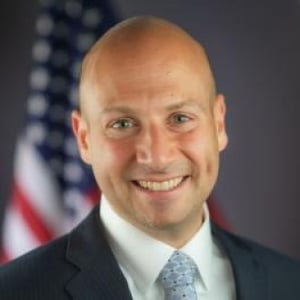
Commissioner, U.S. Securities and Exchange Commission
Elad L. Roisman was appointed by President Donald J. Trump to the U.S. Securities and Exchange Commission and was sworn into office on September 11, 2018. Mr. Roisman was designated Acting Chairman of the Commission by President Trump on December 23, 2020, effective December 24, 2020.
Commissioner Roisman joined the SEC from the U.S. Senate Committee on Banking, Housing, and Urban Affairs, where he served as Chief Counsel. In that role, and as Securities Counsel on the Committee, he advised multiple Committee Chairmen as well as members of the Committee, on securities, financial regulation, and international financial matters. Commissioner Roisman worked on drafting several pieces of legislation that became law and played an integral role in the drafting and negotiation of the Economic Growth, Regulatory Relief, and Consumer Protection Act.
Before working in the Senate, he served as Counsel to SEC Commissioner Daniel M. Gallagher, focusing on enforcement and policy relating to the U.S. equity and fixed income markets, the asset management industry, and international regulation of capital markets. Prior to joining the SEC, he held positions as a Chief Counsel at NYSE Euronext and as an associate at the law firm of Milbank, Tweed, Hadley & McCloy LLP in New York.
Commissioner Roisman earned his bachelor’s degree in History at Cornell University and his juris doctorate at the Boston University School of Law.
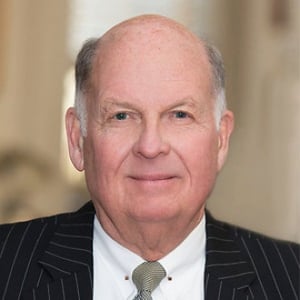
Former Chief Justice, Delaware Supreme Court; Of Counsel, Potter Anderson
Myron T. Steele is of counsel in the firm's Corporate Litigation Group. He is the former Chief Justice of the Supreme Court of Delaware.
Previously, he served as a Judge of the Superior Court and a Vice Chancellor of the Delaware Court of Chancery after eighteen years in private litigation practice. He has presided over major corporate litigation and LLC and limited partner governance disputes, and writes frequently on issues of corporate document interpretation and corporate governance.
Chief Justice Steele has published over 400 opinions resolving disputes among members of limited liability companies, and limited partnerships, and between shareholders and management of both publicly traded and close corporations. He speaks and writes frequently on issues of corporate document interpretation and corporate governance. His thesis for the LL.M. degree, Judicial Scrutiny of Fiduciary Duties in Delaware Limited Partnerships and Limited Liability Companies, focused on the application of common law fiduciary duties within the contractual framework of alternative business organizations. It was published in the Delaware Journal of Corporate Law (32 Del. J. Corp. L. 1 (2007)). The November 2005 issue of The Business Lawyer included an article he co-authored with Sean J. Griffith entitled On Corporate Law Federalism: Threatening the Thaumatrope (61 Bus. Law. 1 (2005)). He co-authored an article with J.W. Verret entitled Delaware’s Guidance: Ensuring Equity for the Modern Witenagemot published in the Fall 2007 issue of the Virginia Law & Business Review (2 Va. L. & Bus. Rev. 188 (2007)). That article formed the basis for a keynote speech to the Business Law Section at the 2007 ABA Annual Meeting.
For the last ten years he served as judicial advisor to the Mergers and Acquisitions Committee of the ABA Business Law Section. He also co-authored an article entitled “Freedom of Contract and Default Contractual Duties in Delaware Limited Partnerships and Limited Liability Companies” (46 Am. Bus. L.J. 221 (Summer 2009)) and an essay entitled “The Moral Underpinning of Delaware’s Modern Corporate Fiduciary Duties” (26 Notre Dame J.L. Ethics & Pub. Pol’y 3 (2012)).
Chief Justice Steele served as Adjunct Professor of Law at University of Pennsylvania Law School from 2009–2013; University of Virginia Law School 2010–2017; and Pepperdine University Law School 2010–2014.

Applying the Founders' Originalism
Robert G. Natelson
The 1787 Federal Convention drafted, and the ratifiers approved, the United States Constitution under the...
Daniel Webster Debate Series: Should the United States Ban Noncompete Agreements?
Douglas H. Ginsburg, Matt Stoller, Jeffrey B. Wall
The Federalist Society's Georgetown Law Chapter'sDaniel Webster Debate Series presents Daniel Webster Debate Series:Should the...
Topics
The Lasting Importance of the Case of Proclamations
There are many milestones on the road that traces the centuries-long work of the people...
Topics
The Concern for Human Flourishing at the Core of Antitrust Law
Antitrust law did not start in 1890. Though judges, scholars, and government officials often describe...
Topics
Let Us Remember Sir Edward Coke, And Give Thanks
June 7 marked an important milestone in the ages-long development of constitutional government and the...
Fireside Chat: “Why Separate Powers?” A Conceptual Introduction
Raymond Kethledge, Cass Sunstein
Professor Cass Sunstein and Judge Raymond Kethledge will open the symposium with a fireside chat...
After Dobbs and Samia: The Potential Implications of Applying a Dobbs Lens to the Supreme Court’s Constitutional Criminal Jurisprudence
John F. Bash, Michael Caruso, Meghan J. Ryan, John F. Stinneford, Amul R. Thapar
Stare Decisis, a Latin term meaning “let it stand,” is a key element of how...
The Labor Law Enigma: Article III, Judicial Power, and the National Labor Relations Board
Alexander T. MacDonald
Axon Enterprises v. FTC[1] wasn’t supposed to be about labor law. In fact, it wasn’t...
Should the “Hollow Core” of Constitutional Theory Be Filled with the Framers’ Intentions?
Stephen B. Presser
A Review of The Hollow Core of Constitutional Theory: Why We Need the Framers, by...
Law and Corporate Social Responsibility
Paul S. Atkins, Elad Roisman, Myron T. Steele
On February 25, 2021, The Federalist Society's Practice Groups and In-House Counsel Working Group hosted...