
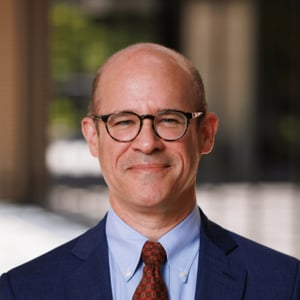
Professor of Law, Stanford Law School
Orin S. Kerr is a Professor of Law at Stanford Law School, where he teaches and writes in the areas of criminal procedure and computer crime law. Kerr earned mechanical engineering degrees from Princeton University and Stanford University before graduating with a J.D. from Harvard Law School. He is a former law clerk to Justice Anthony M. Kennedy at the United States Supreme Court and Judge Leonard I. Garth of the U.S. Court of Appeals for the Third Circuit.

Co-Founder, Trustee, and Legal Advisor, Reason Foundation and Ge, Individual Rights Foundation
Manuel "Manny" Klausner was one of the founding partners in Reason Enterprises, which began publishing Reason magazine in 1971, three years after the publication's creation. He became editor in the summer of 1972 and a senior editor in June 1978. In 1978 he co-founded the Reason Foundation with Tibor Machan and Bob Poole. He remains on the board of the Reason Foundation today, is a stalwart supporter of the Federalist Society, and a libertarian lawyer extraordinaire.

Executive Director, Society for the Rule of Law

Partner, Norton Rose Fulbright US LLP
Samuel Romero Ramer, who has served at the highest levels of the Executive and Legislative Branches of the United States Government and held many positions relevant to federal investigations of businesses, is a partner in Norton Rose Fulbright's regulations, investigations, securities, compliance and white collar crime teams in Washington, DC. Mr. Ramer guides clients through all aspects of criminal and civil investigations and congressional inquiries. He also represents individuals facing criminal investigation.
Mr. Ramer's government experience includes, most recently, serving as Senior Associate Counsel to the President of the United States. In that capacity, he provided advice to senior White House policymakers on the most important issues facing the Nation and guided them through congressional and other inquiries. He also led one of the Department of Justice's 12 major divisions as Acting Assistant Attorney General. Among his responsibilities was serving as the Department's principal liaison with Congress, guiding the most senior officials in the Department through the Senate confirmation process, and consulting with the Attorney General and Deputy Attorney General on the Department's policy positions and enforcement priorities.
From 2011 to 2014, Mr. Ramer served as Senior Majority Counsel to the Judiciary Committee of the House of Representatives. In that position, he was responsible for oversight of all matters regarding the Department of Justice and led several of the Committee's most important legal reform initiatives. Previously, he served as counsel to the Senate Judiciary Committee, where he also played a key role in oversight of the Department of Justice.
Prior to his time serving in the Legislative Branch, Mr. Ramer was an accomplished prosecutor. As an assistant United States attorney in Washington, DC and an assistant district attorney in the Bronx and Manhattan, he tried dozens of cases to jury verdict, and conducted a large number of complex investigations.
Mr. Ramer's in-house industry experience includes being the General Counsel and VP of Government Relations at Symplicity, a cutting-edge software company. During his tenure, he successfully guided the company through debarment proceedings, multiple investigations, and a government monitor program. As part of the management team, he directed the development of a best-in-class compliance program, culminating in the successful sale of the company to a large private investment fund.
Ramer is an active member of the Hispanic Bar Association of the District of Columbia, and a member of the prestigious Edward Bennett Williams American Inn of Court. He is licensed in New York and the District of Columbia.

Partner, Horvitz & Levy LLP
Jeremy Rosen is nationally renowned for his proficiency in numerous issues arising under the First Amendment and California’s anti-SLAPP law. Using that knowledge, Jeremy has helped a wide variety of clients – including churches, private businesses, and individuals – defeat lawsuits that seek to impose liability on clients for exercising their rights of petition, free speech, and free exercise of religion. He has also handled hundreds of appeals in numerous appellate courts, including the Ninth Circuit Court of Appeals, the California Supreme Court, and California’s intermediate appellate courts. In addition to First Amendment and anti-SLAPP cases, his cases have involved numerous important issues regarding anti-trust, class actions, wage and hour law, employment law, breach of contract, California’s Unfair Competition Law, CEQA, the enforceability of arbitration clauses, hospital peer review, the scope of public employee whistleblower protection, and the application of the primary assumption of risk doctrine.
Jeremy is a partner at the firm, which he joined in 2001. He is a California State Bar Certified Appellate Specialist and a member of the California Academy of Appellate Lawyers.
Jeremy directed the Pepperdine University School of Law Ninth Circuit Appellate Advocacy Clinic for 6 years. The Clinic represents individuals in the Ninth Circuit who are identified by the court as needing pro bono counsel. Jeremy also previously served a three-year term where he was appointed by the Ninth Circuit to serve as one of 18 appellate lawyer representatives to the court.
Jeremy is a member of the National Chamber Litigation Center’s California Litigation Advisory Committee. Before joining the firm, Jeremy was a Litigation Associate with Munger, Tolles & Olson.
Professor of Law, Stanford Law School
Orin S. Kerr is a Professor of Law at Stanford Law School, where he teaches and writes in the areas of criminal procedure and computer crime law. Kerr earned mechanical engineering degrees from Princeton University and Stanford University before graduating with a J.D. from Harvard Law School. He is a former law clerk to Justice Anthony M. Kennedy at the United States Supreme Court and Judge Leonard I. Garth of the U.S. Court of Appeals for the Third Circuit.
Co-Founder, Trustee, and Legal Advisor, Reason Foundation and Ge, Individual Rights Foundation
Manuel "Manny" Klausner was one of the founding partners in Reason Enterprises, which began publishing Reason magazine in 1971, three years after the publication's creation. He became editor in the summer of 1972 and a senior editor in June 1978. In 1978 he co-founded the Reason Foundation with Tibor Machan and Bob Poole. He remains on the board of the Reason Foundation today, is a stalwart supporter of the Federalist Society, and a libertarian lawyer extraordinaire.
Executive Director, Society for the Rule of Law
Partner, Norton Rose Fulbright US LLP
Samuel Romero Ramer, who has served at the highest levels of the Executive and Legislative Branches of the United States Government and held many positions relevant to federal investigations of businesses, is a partner in Norton Rose Fulbright's regulations, investigations, securities, compliance and white collar crime teams in Washington, DC. Mr. Ramer guides clients through all aspects of criminal and civil investigations and congressional inquiries. He also represents individuals facing criminal investigation.
Mr. Ramer's government experience includes, most recently, serving as Senior Associate Counsel to the President of the United States. In that capacity, he provided advice to senior White House policymakers on the most important issues facing the Nation and guided them through congressional and other inquiries. He also led one of the Department of Justice's 12 major divisions as Acting Assistant Attorney General. Among his responsibilities was serving as the Department's principal liaison with Congress, guiding the most senior officials in the Department through the Senate confirmation process, and consulting with the Attorney General and Deputy Attorney General on the Department's policy positions and enforcement priorities.
From 2011 to 2014, Mr. Ramer served as Senior Majority Counsel to the Judiciary Committee of the House of Representatives. In that position, he was responsible for oversight of all matters regarding the Department of Justice and led several of the Committee's most important legal reform initiatives. Previously, he served as counsel to the Senate Judiciary Committee, where he also played a key role in oversight of the Department of Justice.
Prior to his time serving in the Legislative Branch, Mr. Ramer was an accomplished prosecutor. As an assistant United States attorney in Washington, DC and an assistant district attorney in the Bronx and Manhattan, he tried dozens of cases to jury verdict, and conducted a large number of complex investigations.
Mr. Ramer's in-house industry experience includes being the General Counsel and VP of Government Relations at Symplicity, a cutting-edge software company. During his tenure, he successfully guided the company through debarment proceedings, multiple investigations, and a government monitor program. As part of the management team, he directed the development of a best-in-class compliance program, culminating in the successful sale of the company to a large private investment fund.
Ramer is an active member of the Hispanic Bar Association of the District of Columbia, and a member of the prestigious Edward Bennett Williams American Inn of Court. He is licensed in New York and the District of Columbia.
Partner, Horvitz & Levy LLP
Jeremy Rosen is nationally renowned for his proficiency in numerous issues arising under the First Amendment and California’s anti-SLAPP law. Using that knowledge, Jeremy has helped a wide variety of clients – including churches, private businesses, and individuals – defeat lawsuits that seek to impose liability on clients for exercising their rights of petition, free speech, and free exercise of religion. He has also handled hundreds of appeals in numerous appellate courts, including the Ninth Circuit Court of Appeals, the California Supreme Court, and California’s intermediate appellate courts. In addition to First Amendment and anti-SLAPP cases, his cases have involved numerous important issues regarding anti-trust, class actions, wage and hour law, employment law, breach of contract, California’s Unfair Competition Law, CEQA, the enforceability of arbitration clauses, hospital peer review, the scope of public employee whistleblower protection, and the application of the primary assumption of risk doctrine.
Jeremy is a partner at the firm, which he joined in 2001. He is a California State Bar Certified Appellate Specialist and a member of the California Academy of Appellate Lawyers.
Jeremy directed the Pepperdine University School of Law Ninth Circuit Appellate Advocacy Clinic for 6 years. The Clinic represents individuals in the Ninth Circuit who are identified by the court as needing pro bono counsel. Jeremy also previously served a three-year term where he was appointed by the Ninth Circuit to serve as one of 18 appellate lawyer representatives to the court.
Jeremy is a member of the National Chamber Litigation Center’s California Litigation Advisory Committee. Before joining the firm, Jeremy was a Litigation Associate with Munger, Tolles & Olson.
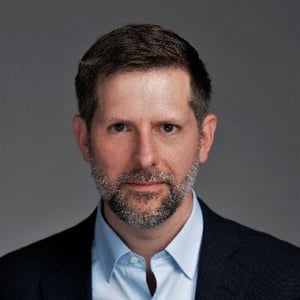
Head of AI Policy, Abundance Institute
Neil Chilson is the Head of AI Policy at the Abundance Institute. Prior to this position, he served as a Senior Research Fellow at the Center for Growth and Opportunity. Chilson is a lawyer, computer scientist, and author of the book “Getting Out of Control: Emergent Leadership in a Complex World.”
Chilson was previously the senior research fellow for Technology and Innovation at Stand Together, where he guided efforts to understand and promote the legal and cultural paradigms that best enable people to discover, innovate, and improve all our lives.
Before Stand Together, Chilson was the Chief Technologist at the Federal Trade Commission, where he focused on the economics of privacy and blockchain-related issues. Previously, he was an attorney advisor to Acting FTC Chairman Maureen K. Ohlhausen. In both roles he advised Chairman Ohlhausen and worked with staff on nearly every major technology-related case, report, workshop, or other FTC proceeding since January 2014. Neil joined the FTC from telecom firm Wilkinson Barker Knauer. Neil is frequently quoted by the press and his work has appeared in numerous news outlets, including The Wall Street Journal, The Washington Post, USAToday, and Newsweek. Neil has a J.D. from The George Washington Law School, a M.S. in computer science from University of Illinois, Urbana-Champaign, and a B.S. in computer science from Harding University.
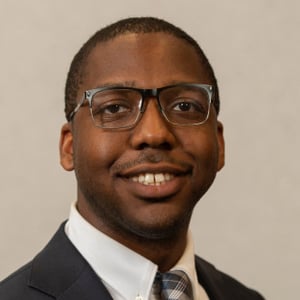
Senior Policy Analyst for Technology and Innovation, Americans for Prosperity
Billy Easley is Americans for Prosperity’s Senior Policy Analyst for technology and innovation. In this role, he reviews state and federal policy on digital free speech, privacy, government surveillance, autonomous vehicles and related policies. Previously he served as a legislative specialist for the United States Sentencing Commission where he authored a paper on the relationship between age and recidivism among federal prisoners. Billy started his career working for the Senate Homeland Security and Governmental Affairs Committee and as Senator Rand Paul’s legal counsel for technology and criminal justice policy.

Partner, Steptoe & Johnson LLP
Stewart Baker is a partner in the law firm of Steptoe & Johnson in Washington, D.C. From 2005 to 2009, he was the first Assistant Secretary for Policy at the Department of Homeland Security. His law practice covers cybersecurity, data protection, homeland security, and travel and foreign investment regulation; he has been awarded one patent.
Mr. Baker has been General Counsel of the National Security Agency and General Counsel of the commission that investigated WMD intelligence failures prior to the Iraq war. He is the author of Skating on Stilts, a book on terrorism, cybersecurity, and other technology issues; he also hosts the weekly Cyberlaw Podcast.

Laurence A. Tisch Professor of Law and Director, Classical Liberal Institute, New York University School of Law; Director, Classical Liberal Institute, Civitas Institute University of Texas at Austin
Richard A. Epstein is the inaugural Laurence A. Tisch Professor of Law at NYU School of Law. Prior to his joining the faculty, he was a visiting law professor at NYU from 2007 through 2009. He served as the Peter and Kirstin Bedford Senior Fellow at the Hoover Institution from 2000 to 2024. Since 2024 to the present he is a senior lecturer at the Civitas Institute at the University of Texas—Austin. Epstein is also the James Parker Hall Distinguished Service Professor of Law Emeritus and a senior lecturer at the University of Chicago. His initial law school appointment was at the University of Southern California from 1968 to 1972. Epstein received an LL.D., h.c. from the University of Ghent, 2003. He has been a member of the American Academy of Arts and Sciences since 1985 and was a Senior Fellow of the Center for Clinical Medical Ethics at the University of Chicago Division of Biological Sciences, also from 1983. to 2022 He served as editor of the Journal of Legal Studies from 1981 to 1991, and of the Journal of Law and Economics from 1991-2001. From 2001 to 2010 he was a director of the John M. Olin Program in Law and Economics at the University of Chicago.
His newest book, The Myth of Birthright Citizenship: What the Fourteenth Amendment Really Says was published in 2026 (Encounter Books). Prior to that he has published many books including, The Dubious Morality of the Modern Administrative State (Roman & Littlefield 2020).Earlier he published th Classical Liberal Constitution: The Uncertain Quest for Limited Government (Harvard 2014) iHis previous books include Design for Liberty: Private Property, Public Administration and the Rule of Law (Harvard 2011); The Case Against the Employee Free Choice Act (Hoover 2009); Supreme Neglect: How to Revive the Constitutional Protection of Property Rights (Oxford 2008); Antitrust Decrees in Theory and Practice: Why Less is More (AEI 2007); Overdose: How Excessive Government Regulation Stifles Pharmaceutical Innovation (Yale University Press. 2006); How Progressives Rewrote the Constitution (Cato 2006); Cases and Materials on Torts (Aspen Law & Business; 8th ed. 2004); Skepticism and Freedom: A Modern Case for Classical Liberalism (University of Chicago, 2003); Torts (Aspen Law & Business 1999); Principles for a Free Society: Reconciling Individual Liberty with the Common Good (Perseus Books, 1998): Mortal Peril: Our Inalienable Rights to Health Care (Addison-Wesley, 1997); Simple Rules for a Complex World (Harvard, 1995); Bargaining With the State (Princeton, 1993); Forbidden Grounds: The Case Against Employment Discrimination Laws (Harvard , 1992); Takings: Private Property and the Power of Eminent Domain (Harvard, 1985); and Modern Products Liability Law (Greenwood Press, 1980). He has also edited(with Catherine M. Sharkey) Cases and Materials on the Law of Torts (10th edition 2012).
Professor Epstein has written numerous articles on a wide range of legal and interdisciplinary subjects. He has taught courses in administrative law, antitrust law, civil procedure, communications, constitutional law, contracts, corporations, criminal law, employment discrimination law, environmental law, food and drug law health law and policy, legal history, labor law, property, real estate development and finance, jurisprudence, labor law; land use planning, patents, individual, estate and corporate taxation, Roman Law; torts, and workers' compensation.
Professor Epstein also writes a regular column for Civitas Institute, which also sponsors his podcast, The Libertarian with Charles C.W. Cooke, and Law Talk, with Cooke and John Yoo. He also does a podcast with John Batchelor. And appears regularly on the Freedom File with Judge Andrew Napolitano.
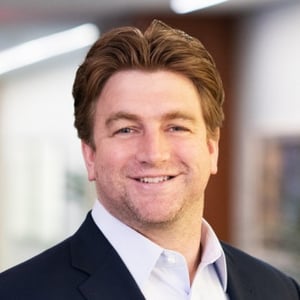
Founding Partner, Lodestar Law and Economics PLLC
Josh is the founder of Lodestar Law and Economics, PLLC. On January 1, 2013, the U.S. Senate unanimously confirmed Wright as a Commissioner of the Federal Trade Commission (FTC). He is a leading scholar in antitrust law, economics, intellectual property, regulation, and consumer protection, and has published more than 100 articles and book chapters, co-authored a leading antitrust casebook, and edited several book volumes focusing on these issues. Commentators have recognized Wright as “widely considered his generation’s greatest mind on antitrust law,” and his academic work ranks him as one of the most cited antitrust academics in the world. Wright was also awarded the Paul M. Bator Award by the Federalist Society in 2014 to “an academic who demonstrated excellence in legal scholarship, a commitment to teaching, a concern for students, and who has made a significant public impact.” Wright also served as the Executive Director of the Global Antitrust Institute, the world’s premiere academic institute focused upon antitrust education for judges and regulators and has taught hundreds of judges and thousands of regulators from dozens of countries.
Wright’s practice focuses upon helping clients solve complex competition, consumer protection, and regulatory problems by providing legal and economic analysis, strategic advice and counseling, and economic expert testimony.
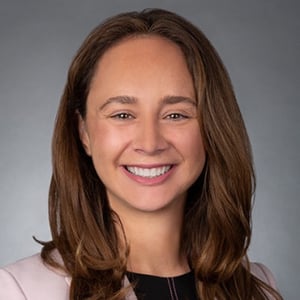
Partner, Kirkland & Ellis LLP
Elyse Dorsey is a partner in the Washington, D.C., office of Kirkland & Ellis LLP. Elyse's practice encompasses a wide array of antitrust and competition matters across the globe. She is uniquely situated to advise clients in domestic and international competition matters, given her combination of government and private practice experience.
Elyse has a focus in cutting edge competition issues, as well as privacy, data security, and consumer protection matters. She has represented clients across levels of government, from state agencies to the U.S. Supreme Court. Prior to joining Kirkland, Elyse served as Counsel to the Assistant Attorney General at the U.S. Department of Justice's Antitrust Division. Her work at the Antitrust Division covered a spectrum of legal and policy matters, including IP and technology issues, the Division's appellate and amicus brief programs, and its international and competition policy efforts. Elyse joined the Division from the U.S. Federal Trade Commission, where she served as Attorney Advisor to Commission Noah Joshua Phillips. While at the Commission, she advised on key cases, matters, and policies affecting industries across the economy--from digital and tech to pharmaceuticals and hospitals and more.
Elyse is a recognized thought leader in the antitrust and competition communities. She has been a frequent nominee and recipient of antitrust writing awards for her scholarship in this space. She has also served as an adjunct professor at George Mason University's Scalia Law School for several years, helping to launch their Antitrust LL.M. program; and she previously served as a visiting scholar at the University of Virginia.
Professor of Law, Stanford Law School
Orin S. Kerr is a Professor of Law at Stanford Law School, where he teaches and writes in the areas of criminal procedure and computer crime law. Kerr earned mechanical engineering degrees from Princeton University and Stanford University before graduating with a J.D. from Harvard Law School. He is a former law clerk to Justice Anthony M. Kennedy at the United States Supreme Court and Judge Leonard I. Garth of the U.S. Court of Appeals for the Third Circuit.
Co-Founder, Trustee, and Legal Advisor, Reason Foundation and Ge, Individual Rights Foundation
Manuel "Manny" Klausner was one of the founding partners in Reason Enterprises, which began publishing Reason magazine in 1971, three years after the publication's creation. He became editor in the summer of 1972 and a senior editor in June 1978. In 1978 he co-founded the Reason Foundation with Tibor Machan and Bob Poole. He remains on the board of the Reason Foundation today, is a stalwart supporter of the Federalist Society, and a libertarian lawyer extraordinaire.
Executive Director, Society for the Rule of Law
Partner, Norton Rose Fulbright US LLP
Samuel Romero Ramer, who has served at the highest levels of the Executive and Legislative Branches of the United States Government and held many positions relevant to federal investigations of businesses, is a partner in Norton Rose Fulbright's regulations, investigations, securities, compliance and white collar crime teams in Washington, DC. Mr. Ramer guides clients through all aspects of criminal and civil investigations and congressional inquiries. He also represents individuals facing criminal investigation.
Mr. Ramer's government experience includes, most recently, serving as Senior Associate Counsel to the President of the United States. In that capacity, he provided advice to senior White House policymakers on the most important issues facing the Nation and guided them through congressional and other inquiries. He also led one of the Department of Justice's 12 major divisions as Acting Assistant Attorney General. Among his responsibilities was serving as the Department's principal liaison with Congress, guiding the most senior officials in the Department through the Senate confirmation process, and consulting with the Attorney General and Deputy Attorney General on the Department's policy positions and enforcement priorities.
From 2011 to 2014, Mr. Ramer served as Senior Majority Counsel to the Judiciary Committee of the House of Representatives. In that position, he was responsible for oversight of all matters regarding the Department of Justice and led several of the Committee's most important legal reform initiatives. Previously, he served as counsel to the Senate Judiciary Committee, where he also played a key role in oversight of the Department of Justice.
Prior to his time serving in the Legislative Branch, Mr. Ramer was an accomplished prosecutor. As an assistant United States attorney in Washington, DC and an assistant district attorney in the Bronx and Manhattan, he tried dozens of cases to jury verdict, and conducted a large number of complex investigations.
Mr. Ramer's in-house industry experience includes being the General Counsel and VP of Government Relations at Symplicity, a cutting-edge software company. During his tenure, he successfully guided the company through debarment proceedings, multiple investigations, and a government monitor program. As part of the management team, he directed the development of a best-in-class compliance program, culminating in the successful sale of the company to a large private investment fund.
Ramer is an active member of the Hispanic Bar Association of the District of Columbia, and a member of the prestigious Edward Bennett Williams American Inn of Court. He is licensed in New York and the District of Columbia.
Partner, Horvitz & Levy LLP
Jeremy Rosen is nationally renowned for his proficiency in numerous issues arising under the First Amendment and California’s anti-SLAPP law. Using that knowledge, Jeremy has helped a wide variety of clients – including churches, private businesses, and individuals – defeat lawsuits that seek to impose liability on clients for exercising their rights of petition, free speech, and free exercise of religion. He has also handled hundreds of appeals in numerous appellate courts, including the Ninth Circuit Court of Appeals, the California Supreme Court, and California’s intermediate appellate courts. In addition to First Amendment and anti-SLAPP cases, his cases have involved numerous important issues regarding anti-trust, class actions, wage and hour law, employment law, breach of contract, California’s Unfair Competition Law, CEQA, the enforceability of arbitration clauses, hospital peer review, the scope of public employee whistleblower protection, and the application of the primary assumption of risk doctrine.
Jeremy is a partner at the firm, which he joined in 2001. He is a California State Bar Certified Appellate Specialist and a member of the California Academy of Appellate Lawyers.
Jeremy directed the Pepperdine University School of Law Ninth Circuit Appellate Advocacy Clinic for 6 years. The Clinic represents individuals in the Ninth Circuit who are identified by the court as needing pro bono counsel. Jeremy also previously served a three-year term where he was appointed by the Ninth Circuit to serve as one of 18 appellate lawyer representatives to the court.
Jeremy is a member of the National Chamber Litigation Center’s California Litigation Advisory Committee. Before joining the firm, Jeremy was a Litigation Associate with Munger, Tolles & Olson.

The Trump Presidency’s Impact on the Future of the Conservative/Libertarian Legal Movement
Orin S. Kerr, Manuel S. Klausner, Gregg Thomas Nunziata, Samuel Ramer, Jeremy B. Rosen
Five leading conservative and libertarian lawyers assess the impact of the Trump presidency on the...
The Trump Presidency’s Impact on the Future of the Conservative/Libertarian Legal Movement
Orin S. Kerr, Manuel S. Klausner, Gregg Thomas Nunziata, Samuel Ramer, Jeremy B. Rosen
Five leading conservative and libertarian lawyers assess the impact of the Trump presidency on the...
Topics
Former Senator Carl Levin’s Defense of the Filibuster
President Joe Biden’s announcement that he is open to reforming the Senate’s filibuster has energized...
The Trump Presidency’s Impact on the Future of the Conservative/Libertarian Legal Movement
Los Angeles Lawyers Chapter
The Trump Presidency’s Impact on the Future of the Conservative/Libertarian Legal Movement
Los Angeles Lawyers Chapter
Topics
Why Did California's Prop 16 Fail? A County-by-County Assessment
By a margin of 57% to 43%, California voters in 2020 rejected Proposition 16, which...
Deep Dive Episode 163 – Shapers of Cyber Speech: Silicon Valley and American Discourse
Neil Chilson, Billy Easley, Stewart A. Baker
In January, Twitter and Facebook removed President Trump and many of his followers' accounts while...
Topics
How to Research the Constitutionality of Impeaching Former Presidents
Recently I’ve pivoted from 38 years of writing books and law review articles to spending...
Topics
Groundhog Day: President Biden's China Strategy
On February 2, as Americans observed the quasi-holiday Groundhog Day, the Arleigh-Burke class guided-missile destroyer...
Deep Dive Episode 162 – Is Common Carrier the Solution to Social-Media Censorship?
Richard A. Epstein, Joshua D. Wright, Elyse Dorsey
Recently, Big Tech companies have come under fire from all sides for their content moderation...