
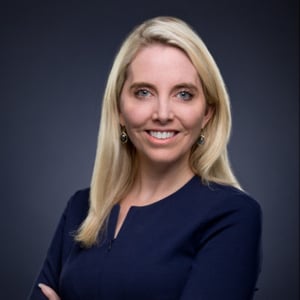
Co-Chair, Republican National Lawyers Association
Jennifer Bukowsky is a syndicated talk radio host, Co-Chair of the Republican National Lawyers Association, and Vice-Chair of the Missouri Republican Party.
An accomplished criminal defense attorney, Jennifer has handled more than 1,400 cases ranging from trespass to first-degree murder. She clerked for Missouri Supreme Court Judge Mary R. Russell, served as an Assistant Public Defender, and later built her own firm before launching Show-Me Defenders in 2021.
Her contributions have been widely recognized with awards including the David J. Dixon Appellate Advocacy Award, the President’s Service Award from the Missouri Association of Criminal Defense Attorneys, the Distinguished Recent Alumni Award from the University of Missouri School of Law, and “20 Under 40” honors from the Columbia Business Times. She has helped shape Missouri law as a member of committees that revised the Criminal Code and drafted the state’s expungement bill—both now enacted.
A leader in conservative legal circles, Jennifer serves on the Missouri Supreme Court’s Task Force on Criminal Justice and the Show-Me Institute Board, previously taught the Innocence Clinic at Mizzou, and has deployed multiple times as an election attorney for the Republican National Lawyers Association.
A University of Missouri School of Law graduate with highest honors and Order of the Coif membership, she also holds bachelor’s and master’s degrees in accountancy and is a licensed CPA. She lives in Columbia, Missouri, with her husband and two sons.
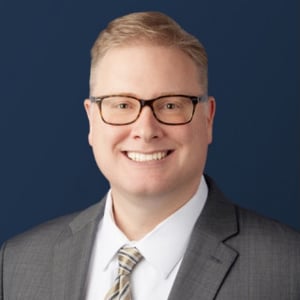
Senior Legal Fellow, Pacific Legal Foundation
Steve Davis is a Senior Legal Fellow in Pacific Legal Foundation’s Constitutional Scholarship group and chair's the Federalist Society's Property Rights Practice Group Executive Committee. Steve’s work at PLF focuses on the study of the U.S. Constitution’s protection of property rights, and he plans and conducts Pacific Legal Foundation-sponsored conferences, symposia, and academic workshops on property rights issues and the Constitution. He enjoys pursuing constitutional scholarship research, writing, and speaking and is a frequent speaker at law and history seminars.
Prior to joining PLF, Steve litigated all stages of property rights cases in federal trial and appellate courts in private practice at large and small law firms. He filed property rights claims on behalf of hundreds of private property owners who own land in over a dozen states against the federal government, litigating those claims through trial and appeal. He also maintained a robust amicus-party practice in the U.S. Supreme Court, filing briefs on behalf of many legal scholars and public-interest groups.
Beginning in 2006, Steve served as an Assistant United States Attorney for the Eastern District of Missouri, litigating civil rights, constitutional tort, tort, and employment discrimination claims in federal district court and the Eighth Circuit Court of Appeals.
Following law school, Steve began his legal career pursing his passion for public policy and the legislative process in the Missouri legislature, where he served first as chief of staff to the minority leader of the Missouri House of Representatives and then was twice elected by the members of the House as the House’s 62nd Chief Clerk and Administrator.
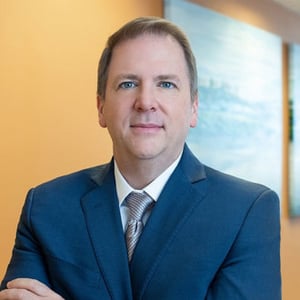
Partner, Stinson LLP
Chuck draws on 25 years’ experience litigating and negotiating very high profile cases, primarily involving some sort of government action, to help offer clients a broad and insightful perspective on Missouri's government and judiciary.
In its annual 100+ List, The Missouri Times newspaper said: Chuck Hatfield's "time at the highest levels of state government have made him very sought after as an attorney in private practice. There is probably no attorney who knows more members of the judiciary and the executive branch in the state. He is also known for his quick wit on social media and willingness to take on tough cases." He has personally handled more than a dozen major cases before the Missouri Supreme Court. Chuck regularly appears before administrative agencies as well as trial and appellate courts at both the state and federal levels.
In his regulatory practice, Chuck has handled matters involving every department of Missouri government. As an outgrowth of his regulatory- based litigation, Chuck is a highly rated commercial litigator. He defends complex high-stakes litigation including class actions involving regulated industries such as securities, insurance and merchandising practices. He chairs the firm’s Financial Services and Class Action Litigation division and its Government Solutions group.
Chuck understands the importance of providing great legal service and value to his clients. As an attorney certified in Legal Project Management (LPM), he has been trained in matter budgeting and management in order to provide transparency and efficiency to his clients.
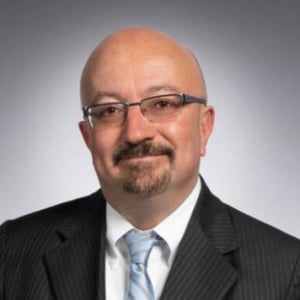
Earl F. Nelson Professor of Law, University of Missouri at Columbia School of Law
Gary Myers is the Earl F. Nelson Professor of Law at the School of Law. Myers received his juris doctor with honors from Duke University School of Law and graduated summa cum laudewith a bachelor’s degree in economics from New York University. He also earned an MA in economics from the Duke University Graduate School as part of a joint degree program while at Duke. Myers was an article editor on the Duke Law Journaland was a member of the Moot Court Board. After graduation, he served as a law clerk for Judge Gerald Tjoflat of the U.S. Court of Appeals for the Eleventh Circuit in Jacksonville, Fla. He then practiced complex commercial litigation with the Atlanta law firm of Powell, Goldstein, Frazer & Murphy, which has since merged with the Bryan Cave law firm.
Before serving as the sixteenth dean at the School of Law from 2012 to 2016, Myers was a long-time member of the faculty at the University of Mississippi School of Law. At Mississippi, Myers held the Ray & Louise Stewart Lectureship and served as its first associate dean for research. Myers has been a visiting professor of law at the College of William & Mary School of Law and Tulane University School of Law. He also served as a Distinguished Visiting Professor of Law at the Loyola University School of Law in New Orleans.
Myers is an elected member of the American Law Institute, a member of the American Law and Economics Association, and a member of the American Intellectual Property Law Association. He is the author or coauthor of a series of five books: (1) Intellectual Property: Cases & Materials (West 4th edition 2012); (2) Principles of Intellectual Property (West 2d edition 2012); (3) Entertainment Law: Cases & Materials (West 5th edition 2016); (4) Intellectual Property: Questions & Answers (LexisNexis 2d edition 2014); and (5) The Intersection of Intellectual Property & Antitrust Law (West 2007). He is also the author of more than a dozen articles, including publications in the Duke Law Journal, the Minnesota Law Review, the Washington & Lee Law Review, the Columbia-VLA Journal of Law & the Arts and the Journal of Intellectual Property Law.
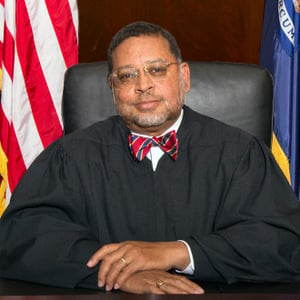
Former Michigan Supreme Court Justice
Robert P. Young, Jr., retired justice of the Michigan Supreme Court, promoted initiatives to measure judicial performance, track public satisfaction, adopt best practices, streamline court processes, and implement technologies that expand public access, increase efficiency, and boost productivity of trial courts. From 2018 to 2019 he served as vice president and general counsel at Michigan State University. Mr. Young previously served 18 years as a member of the Michigan Supreme Court, including as chief justice from 2011 to January 2017. Before that, he was a judge of the Michigan Court of Appeals. Mr. Young has served on the boards of many charitable groups, including the Detroit Urban League, United Community Services of Metropolitan Detroit, and Vista Maria, a resource center for abused and neglected young women and girls. A former commissioner of the Michigan Civil Service Commission, he was a trustee of Central Michigan University, University Liggett School, and the Grosse Pointe Academy. Mr. Young is a former chair of the Greater Detroit Chamber of Commerce Leadership Detroit. He had been an adjunct professor at Wayne State University Law School for more than 20 years and more recently taught at Michigan State University Law School.
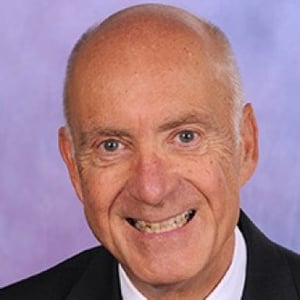
Distinguished Service Professor of Law; Chair, Levin Center at Wayne Law Faculty Committee, Wayne State University Law School
Following graduation with distinction from The University of Michigan Law School in 1964, where he served on the law review and was elected a member of the Order of the Coif, Professor Mogk practiced law with Shearman & Sterling in New York City. In addition to corporate law and litigation, his practice included providing legal counsel to the pioneering program revitalizing the Bedford-Stuyvesant neighborhood of Brooklyn, New York.
He joined the Wayne Law faculty in 1968, one year after Detroit's major civil disturbance, to focus upon critical issues facing America's distressed urban communities. His work has included research, teaching and engagement in the field of urban law and policy on such issues as economic development, neighborhood rehabilitation and intergovernmental cooperation. Professor Mogk frequently contributes editorial commentary on critical urban issues to the major media outlets.
Professor Mogk has assumed many public leadership positions, including his recent position as Chair of the Michigan Council on Labor and Economic Growth and as past Chair of Habitat for Humanity Detroit from 1999 to 2006. He has been an adviser to the state, Wayne County and the city of Detroit on a variety of urban development initiatives, including the Michigan State Housing Development Authority and the City of Detroit Planning and Development Department. He has also served on the Detroit Board of Education, Executive Committee of the Southeast Michigan Council of Governments and Michigan Construction Code Commission. From 1974-1994 he was executive director of the Michigan Energy and Resource Research Association, a nonprofit state, university and industry scientific partnership developing renewable energy policy and projects for Michigan.
He has received special commendations from the Michigan Legislature and Detroit Common Council and was selected Outstanding Professor by the law school student body in 1979, 1983 and 1994, 1997, 2003 and 2016 by the alumni in 1993. Professor Mogk was named one of the Ten Outstanding Young Men in the Unites States (U.S. Jaycees) in 1973.
He teaches courses in Property, State and Local Government Law, Land Use Planning, and Urban Development. Professor Mogk was a visiting fellow at the University of Warwick in England during 1985-86, and the University of Utrecht, the Netherlands, in 2001. He has served as editor of the Michigan International Lawyer, published by the State Bar of Michigan, and a member of the State Bar's Land Title Standards Committee.
Urban Agriculture Policy Paper
Professor Mogk led two former students, Sarah Kwiatkowski and Mary Jo Weindorf, on an urban agriculture policy paper for the city of Detroit. The paper, titled Promoting Urban Agriculture as an Alternative Land Use for Vacant Properties in the City of Detroit: Benefits, Problems and Proposals for a Regulatory Framework for Successful Land Use Integration, was submitted to Detroit Mayor Dave Bing and Detroit City Council President Charles Pugh in August 2010 .
Journalist/Author
Trevor W. Coleman is a national award-winning journalist and author who served s Chief Speechwriter to Michigan Gov. Jennifer M. Granholm and as Director of Communications for the Michigan Department of Civil Rights and the Governor’s Southeast Michigan office. Coleman was also a long time member of the editorial board of the Detroit Free Press where he won numerous awards for editorial and column writing prior to his appointment to the Granholm administration. He is currently working fulltime on the authorized biography of legendary federal Judge Damon J. Keith. Its working title is “Crusader for Justice: The Life and Amazing Times of Federal Judge Damon J. Keith.”
As the Director of Communications for the Michigan Department of Civil Rights, he was responsible for crafting a global communications strategy which included developing all internal and external communications policies, managing media relations and executive speechwriting responsibilities. Because of his unique joint appointment, he was also required to establish an effective external communications strategy for the Governor’s Office for SE Michigan. In that position he also served as the official liaison to the Governor’s Advisory Council on Arab and Chaldean Affairs and the Governor’s Advisory Council on Asian and Pacific Islander Affairs.
As Chief Speechwriter for Governor Granholm, Coleman wrote or contributed to all major public policy speeches including in the areas of international relations, automotive industry, education, economics, budgetary, race relations, and health, poverty and gender issues. He wrote major commencement addresses and contributed to State of the State address. Coleman also wrote the Governor’s guest OPEDS for state and regional newspapers as well as articles for public policy and other niche magazines. This included the Detroit News, Detroit Free Press, Detroit Crain’s Business, Detroit Magazine, the Michigan Chronicle and others. He also helped develop the Governor’s communication strategy for her “One Michigan” tour and campaign to unite citizens.
As a member of the editorial board of the Detroit Free Press, Coleman specialized in writing on education, health care and urban policy. He also frequently wrote on civil rights, civil liberties and the U.S. criminal justice system. He was the editorial board’s senior foreign affairs writer for three years. Prior to joining the Free Press, Coleman was an urban affairs and civil rights reporter for The Detroit News, an editorial writer for the Cincinnati Enquirer, reporter and columnist for the Hartford Courant and city desk reporter for the Times-Leader in Wilkes-Barre, Pennsylvania. He was also a contributing editor and writer for Emerge Magazine, Black Enterprise and the NAACP Crisis Magazine. Coleman also wrote a Sunday column for several years for his hometown newspaper, The Hudson Register Star.
Among his many journalism awards are a 2001 American Diabetes Association Award of Merit for a series of editorials urging the state to expand medical coverage for diabetics; a 1999 Michigan Press Association Award for column writing; a 1999 National Association of Black Journalist Award for Commentary; the 1998 Detroit Press Foundation Michigan Journalism Award for Commentary; the 1993 Detroit Press Foundation Journalism Award for News Reporting, 1993 Best of Gannett Award for News Reporting and the 1993 and 1999 Lincoln University Unity Awards for coverage of minority and social issues. Coleman is listed in “Who’s Who among African-Americans,” and in 2010 was listed in the “Who’s Who of Black Detroiters.”
Among his many honors have been a 2009 Michigan Department of Civil Rights Dedicated Service Award, 2008 Brown Chapel AME Church Civil Rights Leadership Award, 2004 Macomb County NAACP Freedom Fund Leadership Award, 2004 Over Comers Ministries Inc. Leadership Award, 2002 Wayne Community College District Award for Community Service and the 1993 Distinguished Alumni Award, from the Kappa Chapter of Alpha Phi Alpha Fraternity at The Ohio State University.
He has been a guest speaker at many colleges and universities across the nation; among them Harvard Law School, The Ohio State University, the University of Michigan and University of Michigan School of Law, Michigan State University, Wayne State University, The University of Toledo Law School, Delaware State University, Schoolcraft College, Wayne Community College and many others. He has also appeared on numerous television and radio talk and public affairs programs.
A native of New York, he received his undergraduate degree in communications from The Ohio State University and is a fellow at the Knight Center for Specialized Journalism at the University of Maryland. He is also is a graduate of the American Press Institute in Reston, VA and Poynter Institute in Fla. Coleman resides in Bloomfield Hills and is the divorced father of two children Sydnie, a college junior and TJ, a high school junior.
Attorney (of counsel), Witte Law Offices
Matthew G. Davis practices in the areas of appellate law, civil rights (including alleged violations of the First and Second Amendments), election law, campaign finance, and defamation. Mr. Davis is also experienced in general civil litigation.
Mr. Davis graduated from the The Ohio State University with a bachelors of arts in journalism in 1990 and earned his juris doctorate from Thomas M. Cooley Law School in 2005. He started his legal career in the pre-hearing division of the Michigan Court of Appeals before becoming law clerk for Judge Brian K. Zahra. Following his clerkship, Mr. Davis joined Witte Law Offices as an associate.
Prior to his legal career, Mr. Davis spent approximately twelve years as a reporter for various daily newspapers, including the Columbus ( Ohio ) Dispatch, the St. Paul (Minn. ) Pioneer Press, and the Detroit Free Press, where he covered the state Legislature in Lansing. Mr. Davis left newspapers to attend the Thomas M. Cooley Law School and, concomitantly, serve as director of communications for the Michigan Department of Corrections and the Michigan Department of Attorney General. Mr. Davis led the creation and development of the Offender Tracking Information System at the MDOC, which allows Internet access of offender information.
Racial Justice Staff Attorney, ACLU of Michigan
Through his work as the attorney for the Racial Justice Project of the ACLU of Michigan, Mark P. Fancher addresses: racially disproportionate rates of incarceration; racial discrimination against public school students of color, racial profiling, public defender system reform, attacks on affirmative action and juvenile sentencing issues.
Fancher was formerly the Senior Staff Attorney for the Sugar Law Center for Economic and Social Justice where he specialized in workers' rights. He served on the staff of the State Bar of Michigan from 1998 to 2000 where he coordinated projects to encourage greater pro bono participation by Michigan's lawyers. He was a visiting assistant clinical professor at the University of Michigan Law School from 1996 through 1998.
Before moving to Michigan, Fancher was the Director of Litigation for Camden Regional Legal Services in New Jersey. He has also been in private practice where he specialized in employment discrimination and community economic development. Fancher is a graduate of Rutgers University School of Law - Camden. He received a Bachelor of Science Degree from the University of Tennessee.
Fancher has played a leadership role in the National Conference of Black Lawyers (NCBL) for numerous years. He is a past chair of the organization’s International Affairs Section, and he served as NCBL’s national co-chair from 1995-1998. He is also a member of the State Bar of Michigan Pro Bono Initiative.
Fancher has lectured across the country and written extensively on issues that include: self-determination for Africa and the African Diaspora; indigenous peoples’ land and resource rights; and political repression in the U.S.
Co-Founder, XIV Foundation
Jennifer Gratz is a modern-day civil rights leader. In 1997 she challenged race preferences (also known as affirmative action) at the University of Michigan and was victorious at the U.S. Supreme Court.
Ms. Gratz was the lead plaintiff in the landmark case Gratz v. Bollinger which challenged affirmative action at the University of Michigan. On June 23, 2003 the U.S. Supreme Court ruled that Ms. Gratz was discriminated against and U-M’s admission policy was unconstitutional. However, in a companion case decided the same day (Grutter v. Bollinger), the Supreme Court allowed race preferences to continue at U-M’s law school. Ms. Gratz called the split decision flawed and continued the fight for equality in her home state. She spearheaded the Michigan Civil Rights Initiative (MCRI), a state constitutional amendment that made race and gender preferences unconstitutional in public education, employment and contracting. In Nov 2006 Michigan voters approved MCRI by a 16-point landslide.
At CPAC following the Michigan vote, Ms. Gratz was honored with the prestigious Ronald Reagan Award from the American Conservative Union for leadership. Jennifer has spent many years working to end programs that grant preferential treatment based on race or sex and because of Ms. Gratz’s leadership eight states have now banned race and gender preferences.
Recently, Ms. Gratz co-founded the XIV Foundation (XIV) and Equal Protection Advocates (EPA). XIV, named after the 14th amendment, is a not-for-profit 501c3 dedicated to teaching the personal and societal advantages of fair and equal treatment. EPA is a 501c4 dedicated to advocating for fair and equal treatment without regard to race or gender for all Americans.
Ms. Gratz’s story and work has been featured in nearly every major media outlet – Fox News, CNN, MSNBC, Dateline, 60 Minutes, The Today Show, Wall Street Journal, NY Times, Washington Post, Washington Times, LA Times, Detroit Free Press, Detroit News, National Review, US News and World Report, Newsweek, Time Magazine, People Magazine, Glamour Magazine – to name a few.
Editorial Cartoonist, Editorial Writer, and Weekly Columnist, The Detroit News
Henry Payne is an editorial cartoonist, editorial writer, and weekly columnist The Detroit News.
A Pulitzer-Prize nominated cartoonist, Payne produces five local editorial cartoons a week for The News. He also writes and draws a weekly column, “Payne & Ink.” Additionally, Payne draws five cartoons a week on national and international subjects for United Feature Syndicate in Kansas City which distributes his cartoons to 40 newspaper clients worldwide. His work is reprinted in USA Today, National Review,Townhall.com and other publications.
Payne has been voted Best Editorial Cartoonist in Michigan by the Associated Press. He has been a runner-up for both the Pulitzer and Mencken awards.
As a writer, Payne reports regularly on economic, consumer and environmental issues. His articles have appeared in The Wall Street Journal, The Weekly Standard magazine, National Review, Reason, Scripps Howard News Service and newspapers around the country. He also is a correspondent for National Review’s popular “Planet Gore” blog.
Payne came to The Detroit News in 1999 after 13 years as an editorial cartoonist, writer, and editor forScripps Howard News Service in Washington, DC .
Payne published his first book, “Payne & Ink: The Cartoons and Commentary of Henry Payne, 2000-2001,” in 2002. He has also illustrated two children’s books for Random House: “Where did Daddy’s Hair Go?” (by Joe O’Connor) in 2006, and Dr. Seuss’ “The Ear Book” in 2007. In 1998, Payne created “Hub & Axel,” a comic panel distributed by the Tribune Company Syndicate about an American family and its very American passion for the automobile.
Born in 1962 in Charleston, West Virginia, Payne received a degree in history from Princeton University in 1984. As editorial cartoonist for two student newspapers, The Daily Princetonian and the Nassau Weekly, Payne won the College Media Advisers Cartoon Contest and the Tribune Company Syndicate’s National College Cartoonist’s Contest. Upon graduation from Princeton, Payne began his newspaper career as staff artist and editorial cartoonist with the Charleston (WV) Daily Mail. In 1986 he joined Scripps Howard News Service and began syndication with United Feature in 1987.
Payne is an active race car driver, tennis and squash player. He is the father of two boys and lives with wife, Talbot, in Bloomfield Hills, Michigan.

Senior Legal Fellow, Edwin Meese III Institute for the Rule of Law, Advancing American Freedom

President, Thomas M. Cooley Student Chapter
Penelope holds a Political Science and Pre-Law undergraduate degree from the University of Texas at El Paso. She also received a Master of Science degree in Intelligence and National Security Studies with focus on Latino Immigration from the University of Texas at El Paso. Penelope has worked in several projects within the Latino Community such the LSPI Pre-Law Institute at UTEP as an outreach minority coordinator for recruitment of young Latino and underrepresented minorities to participate in the pre-law institute and later access IVY league Law Schools all across the country. Under the Kauffman Initiative she worked as an outreach specialist for the Hispanic Entrepreneur Center at UTEP She is now a J.D Law candidate 2014 at Thomas M. Cooley Law School.
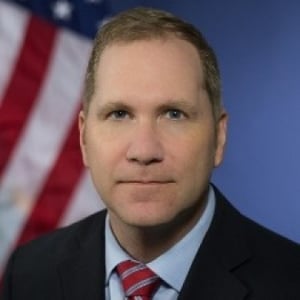
U.S. Attorney, Eastern District of Michigan, U.S. Department of Justice
Matthew Schneider is the United States Attorney for the Eastern District of Michigan.
As the United States Attorney, Mr. Schneider is the chief federal law enforcement official in the Eastern District of Michigan, which contains approximately 6.5 million people in 34 counties. The office is widely recognized for significant prosecutions involving international terrorism, violent crime, public corruption, environmental crime, financial fraud, drug trafficking, civil rights and numerous other criminal and civil matters. As the United States Attorney, Mr. Schneider manages more than 230 employees, including approximately 120 Assistant U.S. Attorneys in Detroit, Flint and Bay City.
Prior to his appointment, Schneider was the Chief Deputy Attorney General for the State of Michigan. In that position, he supervised the office’s 40,000 ongoing cases and managed a budget of over $100 million in taxpayer funds. He had previously served as Chief Legal Counsel for the Michigan Office of Attorney General, where he was the lead counsel representing the Governor and the State of Michigan in the City of Detroit federal bankruptcy case.
Schneider previously served as the Michigan Supreme Court’s Chief of Staff and General Counsel. Schneider provided overall direction for the administration of Michigan’s Judicial Branch of government and served as chief legal counsel to the Chief Justice and the Justices.
Schneider is a former Assistant United States Attorney in Detroit. He focused on prosecuting corrupt public officials and members of organized crime, as well as street gangs and outlaw motorcycle gangs. He also handled an anti-terrorism caseload.
Prior to becoming a federal prosecutor, Schneider served as Senior Advisor and Assistant General Counsel in the White House Budget Office. He previously practiced international law with the Washington, D.C. firm of Wiley Rein LLP, where he represented American companies in suits against foreign governments for unfair business and trade actions.
Schneider has been an adjunct law professor for several years and has spoken and written on numerous aspects of constitutional law and criminal procedure. He is a graduate of the University of Michigan Law School and Michigan State University’s James Madison College. He is originally from Frankenmuth, Michigan.
Publius comes from the pen name Alexander Hamilton, James Madison, and John Jay used when they wrote 85 publicly printed letters now known as the Federalist Papers. Hamilton chose “Publius” as a name that would represent friends of the newly proposed American republic - Publius Valeria Publicola was a Roman general who helped to found the Roman Republic. The Federalist Society continues the tradition of publishing things under the name Publius in celebration of our constitutional roots and recognition that author credit is not always necessary.

Milton R. Underwood Chair in Free Enterprise, Vanderbilt University Law School
Brian Fitzpatrick is the Milton R. Underwood Chair in Free Enterprise and Professor of Law at Vanderbilt Law School, where his research focuses on class action litigation, federal courts, judicial selection, and constitutional law. He is best known for his empirical studies of class action settlements as well as his book The Conservative Case for Class Actions (University of Chicago Press, 2019). Professor Fitzpatrick joined Vanderbilt's law faculty in 2007 after serving as the John M. Olin Fellow at New York University School of Law. He graduated first in his class from Harvard Law School and went on to clerk for Judge Diarmuid O'Scannlain on the U.S. Court of Appeals for the Ninth Circuit and Justice Antonin Scalia on the U.S. Supreme Court. After his clerkships, Professor Fitzpatrick practiced commercial and appellate litigation for several years at Sidley Austin in Washington, D.C., and served as Special Counsel for Supreme Court Nominations to U.S. Senator John Cornyn. Before earning his law degree, Fitzpatrick graduated summa cum laude with a bachelor's of science in chemical engineering from the University of Notre Dame. He has received the Hall-Hartman Outstanding Professor Award, which recognizes excellence in classroom teaching, for his Civil Procedure and Federal Courts courses.
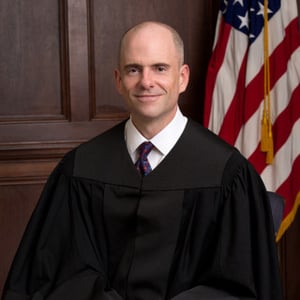
Judge, United States Court of Appeals, Eleventh Circuit
Judge Kevin C. Newsom is a member of the United States Court of Appeals for the Eleventh Circuit. He sits in Birmingham, Alabama.
Before his appointment to the bench, Judge Newsom was the head of the appellate practice group at Bradley Arant Boult Cummings LLP and, before that, the Solicitor General of Alabama. As a practicing lawyer, Judge Newsom argued four cases in the Supreme Court of the United States, and nearly 40 more in the United States Courts of Appeals and state supreme and appellate courts.
Judge Newsom graduated summa cum laude from Samford University and magna cum laude from Harvard Law School, where he was an articles editor on the Harvard Law Review. Following law school, Judge Newsom clerked for Judge Diarmuid F. O’Scannlain of the United States Court of Appeals for the Ninth Circuit and Justice David H. Souter of the Supreme Court of the United States.
Judge Newsom teaches at Harvard Law School, Yale Law School, Stanford Law School, and the University of Chicago Law School. His published work has appeared in the Yale Law Journal and the Harvard Law Review.
Milton R. Underwood Chair in Free Enterprise, Vanderbilt University Law School
Brian Fitzpatrick is the Milton R. Underwood Chair in Free Enterprise and Professor of Law at Vanderbilt Law School, where his research focuses on class action litigation, federal courts, judicial selection, and constitutional law. He is best known for his empirical studies of class action settlements as well as his book The Conservative Case for Class Actions (University of Chicago Press, 2019). Professor Fitzpatrick joined Vanderbilt's law faculty in 2007 after serving as the John M. Olin Fellow at New York University School of Law. He graduated first in his class from Harvard Law School and went on to clerk for Judge Diarmuid O'Scannlain on the U.S. Court of Appeals for the Ninth Circuit and Justice Antonin Scalia on the U.S. Supreme Court. After his clerkships, Professor Fitzpatrick practiced commercial and appellate litigation for several years at Sidley Austin in Washington, D.C., and served as Special Counsel for Supreme Court Nominations to U.S. Senator John Cornyn. Before earning his law degree, Fitzpatrick graduated summa cum laude with a bachelor's of science in chemical engineering from the University of Notre Dame. He has received the Hall-Hartman Outstanding Professor Award, which recognizes excellence in classroom teaching, for his Civil Procedure and Federal Courts courses.
Judge, United States Court of Appeals, Eleventh Circuit
Judge Kevin C. Newsom is a member of the United States Court of Appeals for the Eleventh Circuit. He sits in Birmingham, Alabama.
Before his appointment to the bench, Judge Newsom was the head of the appellate practice group at Bradley Arant Boult Cummings LLP and, before that, the Solicitor General of Alabama. As a practicing lawyer, Judge Newsom argued four cases in the Supreme Court of the United States, and nearly 40 more in the United States Courts of Appeals and state supreme and appellate courts.
Judge Newsom graduated summa cum laude from Samford University and magna cum laude from Harvard Law School, where he was an articles editor on the Harvard Law Review. Following law school, Judge Newsom clerked for Judge Diarmuid F. O’Scannlain of the United States Court of Appeals for the Ninth Circuit and Justice David H. Souter of the Supreme Court of the United States.
Judge Newsom teaches at Harvard Law School, Yale Law School, Stanford Law School, and the University of Chicago Law School. His published work has appeared in the Yale Law Journal and the Harvard Law Review.

Panel Two: Defending Unpopular Clients: The Ethics of Targeting Attorneys, Firms, and Clients for Reprisals
Jennifer K. Bukowsky, Stephen Davis, Charles Hatfield, Gary Myers
The 2022 Missouri Chapters Conference took place on January 24, 2022, at the Missouri State...
Taking Poletown: A Community’s Fight Over Economic Justice & Eminent Domain
Robert P. Young, John Mogk
In the early 1980s, General Motors found the perfect place to build a new factory...
State Court Docket Watch News Clips: 11/30/2015
A former legislative staffer and two North Carolina voters have filed suit challenging the constitutionality...
Topics
State Court Docket Watch News Clips: 7/29/2015
A Michigan Supreme Court ruling resulted in the state's 2012 "Right to Work" law applying to...
The Twilight of Race-Based Preferences in College Admissions
Trevor W. Coleman, Matthew G. Davis, Mark Fancher, Jennifer Gratz, Henry Payne, Hans A. Von Spakovsky, Penelope S. Williams
The Michigan Lawyers Chapter hosted this event on February 12, 2014, at Thomas M. Cooley...
2009 U.S. Supreme Court Round-Up
Nashville, TennesseeMichigan's Big Four: An Analysis of the Modern Michigan Supreme Court
Matthew Schneider
In May 2000, the Wall Street Journal featured an update on the Michigan Supreme Court that praised...
Michigan's Big Four: An Analysis of the Modern Michigan Supreme Court
Matthew Schneider
In May 2000, the Wall Street Journal featured an update on the Michigan Supreme Court...
2008 U.S. Supreme Court Round-Up
Michigan Supreme Court Upholds Voter Photo ID Law
Publius
On July 18, 2007, the Michigan Supreme Court upheld a provision of Michigan election law...