

Senior Fellow and Director of Constitutional Studies, Manhattan Institute
Ilya Shapiro is a senior fellow and director of constitutional studies at the Manhattan Institute and a contributing editor of City Journal. Previously he was executive director and senior lecturer at the Georgetown Center for the Constitution, and before that a vice president of the Cato Institute.
Shapiro is the author of Lawless: The Miseducation of America’s Elites (2025) and Supreme Disorder: Judicial Nominations and the Politics of America’s Highest Court (2020), coauthor of Religious Liberties for Corporations? (2014), and editor of 11 volumes of the Cato Supreme Court Review (2008-18). He has contributed to a variety of academic, popular, and professional publications, including the Wall Street Journal, Harvard Journal of Law & Public Policy, Washington Post, Los Angeles Times, USA Today, National Review, and Newsweek. He also regularly provides commentary for various media outlets, writes the Shapiro’s Gavel newsletter on Substack, and once appeared on the Colbert Report.
Shapiro has testified many times before Congress and state legislatures and has filed more than 500 amicus curiae “friend of the court” briefs in the Supreme Court. He lectures regularly on behalf of the Federalist Society, is a member of the board of fellows of the Jewish Policy Center, was an inaugural Washington Fellow at the National Review Institute, and has been an adjunct law professor at the George Washington University and University of Mississippi. He is also the chairman of the board of advisers of the Mississippi Justice Institute, a barrister in the Edward Coke Appellate Inn of Court, and a former member of the Virginia Advisory Committee to the U.S. Commission on Civil Rights.
Earlier in his career, Shapiro was a special assistant/adviser to the Multi-National Force in Iraq on rule-of-law issues and practiced at Patton Boggs and Cleary Gottlieb. Before entering private practice, he clerked for Judge E. Grady Jolly of the U.S. Court of Appeals for the Fifth Circuit. He holds an AB from Princeton University, an MSc from the London School of Economics, and a JD from the University of Chicago Law School.

Founding Partner, Benbrook Law Group
Brad has litigated business and public policy matters throughout the United States for over 25 years. He represents businesses of all sizes in civil litigation and disputes with administrative agencies. Brad also regularly represents individuals and groups in constitutional and public policy litigation in the trial and appellate courts. He regularly submits amicus briefs on behalf of clients at the Supreme Court of the United States on significant cases. Brad is often hired as special litigation counsel in complex family law, bankruptcy, and trust and estate litigation.
After graduating from law school, Brad worked as a judicial clerk for Judge J.L. Edmondson of the United States Court of Appeals for the Eleventh Circuit in Atlanta. Brad received his law degree from the University of California at Berkeley after graduating from Stanford University, where he was a four-year letterman on the golf team.
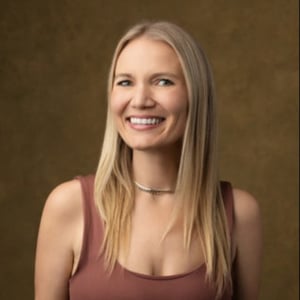
Constitutional Scholarship Director and Senior Legal Analyst, Pacific Legal Foundation
Anastasia Boden is Director of Constitutional Scholarship at Pacific Legal Foundation, where she leads the organization’s Supreme Court commentary and directs scholarly analysis in support of the firm’s litigation. She has represented entrepreneurs and small businesses nationwide in challenges to onerous licensing regimes, anti-competitive titling restrictions, Certificate of Need (“competitor’s veto”) laws, and other forms of unnecessary red tape that block economic opportunity.
Prior to this role, Anastasia developed nearly a dozen constitutional challenges to Certificate of Need laws across the country, helping spur legislative reform in Montana, Pennsylvania, and West Virginia. Her victories include a ruling invalidating Houston’s busking restrictions, multiple appellate decisions expanding access to the courts for civil rights plaintiffs, and the legislative repeal of Virginia’s happy-hour advertising ban.
Her writings on law and liberty have been featured in USA Today, The Washington Post, The Wall Street Journal, the Los Angeles Times, the Chicago Tribune, Forbes, and more, and she has appeared on Headline News, CBS News, Fox News, ReasonTV, Newsmax, and John Stossel. In 2020, she was featured on Libertarian Party presidential candidate Jo Jorgensen’s Supreme Court shortlist.
Anastasia earned her BA with dean’s honors from the University of California, Santa Barbara, and her JD from Georgetown University Law Center, where she was research assistant to Professor Randy E. Barnett—the “intellectual godfather” of the constitutional challenge to Obamacare. She is the co-creator of the podcast Dissed, about infamous Supreme Court dissents. She authors the biweekly newsletter SCOTUS Scoop and the column, “In Dissent” for SCOTUSblog.
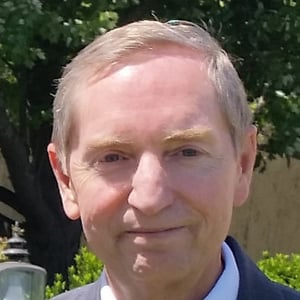
Legal Director & General Counsel, Criminal Justice Legal Foundation
Kent S. Scheidegger has been the Legal Director of the Criminal Justice Legal Foundation since December 1986. He also served as Chairman of the Criminal Law Practice Group of the Federalist Society 2003 to 2005. His articles on criminal and constitutional law have been published in law reviews, national legal publications, and congressional reports. Legal arguments authored by Mr. Scheidegger have been cited and incorporated in several precedent-setting United States Supreme Court decisions.
After receiving a degree in physics with honors from New Mexico State University in 1976, Mr. Scheidegger served for six years in the United States Air Force as a Nuclear Research Officer. He took his law degree with distinction from the University of the Pacific, McGeorge School of Law in 1982 and practiced civil law in Northern California. He was general counsel of California Cooler, Inc. from 1984 until 1986, when he joined the Foundation.

Director of Equality and Opportunity Litigation, Pacific Legal Foundation
Joshua directs the litigation for PLF’s Equality and Opportunity Program, where he fights to dismantle unconstitutional barriers to opportunity, freeing individuals to rise based on their choices, character, and ability.
Joshua joined PLF as an attorney in 2007. His litigation practice has covered all PLF subject areas with a particular focus on equality and opportunity. Joshua argued PLF’s 13th case before the United States Supreme Court, Cedar Point Nursery v. Hassid, where the court ruled that a California regulation that allowed union organizers onto private property violated the Fifth Amendment’s Takings Clause. Other litigation highlights of his include ending a decades-long racial quota in Hartford, Connecticut, lifting a ban on boys’ dancing in Minnesota, and vindicating an entrepreneur’s right to start a moving business in Kentucky.
Joshua’s writings have been published by the USA Today, Wall Street Journal, and Washington Post. And his research has been published in journals such as Texas Review of Law & Politics, Alabama Civil Rights & Civil Liberties Law Review, Journal of Civil Rights & Economic Development, and Northern Illinois University Law Review. He has appeared on national television and radio, including PBS Newshour, NPR’s All things Considered, Stossel, and Univision.
Joshua earned his BA with distinction from the University of Wisconsin-Madison with a triple major in political science, international relations, and German. He earned his JD cum laude from Michigan State College of Law where he was on the law review and trial practice institute. Joshua lives in Sacramento, California with his wife and three children. He loves playing chess and rooting for Wisconsin sports teams.
Joshua is a member of the bar only in the state of California.
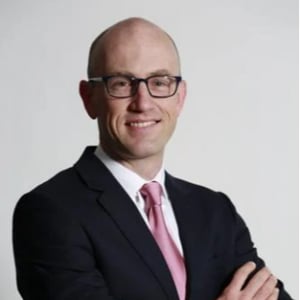
United States District Judge, Eastern District of Texas
Prior to taking the bench, Judge Barker served as Deputy Solicitor General of Texas, arguing appeals and public-law cases for the State. Before his state-government service, Judge Barker was an appellate and IP partner at Yetter Coleman in Houston. Before that, he spent four years in the Appellate Section of the DOJ’s Criminal Division. While there, he taught appellate advocacy at the National Advocacy Center, completed a Pegasus Scholarship with the English Inns of Court, and served on detail as a Special Assistant U.S. Attorney in the Eastern District of Virginia. Judge Barker served as a law clerk to Judge William Bryson on the Federal Circuit and Chief Judge John Walker on the Second Circuit. He earned his B.S. in computer engineering summa cum laude from Texas A&M and his J.D. from the University of Texas, where he graduated first in his class.
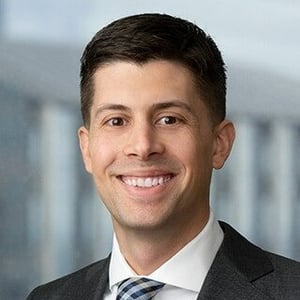
Clinical Professor, The University of Texas at Austin School of Law
John Greil co-teaches the Law and Religion Clinic, where he supervises student-led representations of clients in need of litigation, transaction, and consulting services. He is an active trial-level and appellate litigator in state and federal court and regularly supports clients in the United States Supreme Court. An expert on law and religion, Professor Greil also teaches a seminar titled Understanding Conservative Legal Thought. Before joining the faculty, he practiced at Vinson & Elkins LLP and clerked on the federal district and court of appeals.

Partner and Co-Chair, Constitutional and Appellate Law Practice Group, Gibson, Dunn & Crutcher LLP
Allyson N. Ho is a partner in the Dallas office of Gibson, Dunn & Crutcher LLP and co‐chair of the Firm’s nationwide Appellate and Constitutional Law practice group.
Mrs. Ho is “undoubtedly one of the premier appellate lawyers in the United States” (Chambers). She has presented over 100 oral arguments in federal and state courts nationwide, including multiple high‐stakes cases on behalf of business before the U.S. Supreme Court.
Her most significant winning arguments include a U.S. Supreme Court reversal worth billions of dollars for unionized employers in the Sixth Circuit; a U.S. Supreme Court reversal limiting the power of federal regulators; a multi‐billion dollar environmental win in the Fifth Circuit; a multi‐billion dollar commercial victory for the founder of a technology company in the Appellate Division of the New York Supreme Court; a billion dollar environmental win in the Houston Court of Appeals; a nine‐figure commercial victory in the Corpus Christi Court of Appeals; and a nine‐figure arbitration win in the Fifth Circuit.
Among her numerous accolades, Mrs. Ho is one of only a small group of appellate lawyers nationwide, and the only one in Texas, to be nationally ranked by Chambers every year for the past ten years (2012‐21). She is also one of the few appellate lawyers nationwide to be named to the BTI Client Service All‐Stars List, an honor bestowed by the corporate counsel community for lawyers “who stand above all the others in delivering the absolute best in client service.” She is also routinely named as a leading appellate lawyer by Benchmark, The Best Lawyers in America®, The Legal 500, Texas Super Lawyers, and D Magazine.
Mrs. Ho has received the Gregory S. Coleman Outstanding Appellate Lawyer Award (Texas Bar Foundation, June 22, 2018), been named a “Distinguished Leader” (Texas Lawyer, Sep. 1, 2017) and “Appellate MVP” (Law360, Nov. 23, 2015), and been recognized on the “Appellate Hot List” (National Law Journal, Nov. 16, 2015). In addition, she has been profiled in “Texas Powerhouse” (Law360, Aug. 2, 2021), “Texas Appellate Power Couple” (Texas Lawbook, January 7, 2021), “Litigators of the Week” (The American Lawyer, May 8, 2020), “Litigation Powerhouse” (Law360, Aug. 10, 2016), “Supreme Court Insider” (National Law Journal, July 21, 2016), “Supreme Court Specialists, Mostly Male, Dominated Arguments This Term” (National Law Journal, May 11, 2016), “Attorney of the Year Finalist” (Texas Lawyer, Nov. 2, 2015), “Litigation Department of the Year” (Texas Lawyer, June 1, 2015), “Employment Group of the Year” (Law360, Jan. 13, 2015), “A Supreme Month: Lawyer Credits Preparedness in Ability to Argue Two U.S. High Court Cases in Three Weeks” (Texas Lawyer, Dec. 8, 2014), “High Court Debuts for Two Lawyers” (National Law Journal, Nov. 3, 2014), “Women in Business Awards” (Dallas Business Journal, Aug 29, 2014), “Litigation Departments of the Year” (Texas Lawyer, June 2, 2014), “Winning Women” (Texas Lawyer, Aug. 22, 2011), and “High court practitioners: increasingly diverse” (National Law Journal, June 6, 2011).
Federal and State Appellate Practice
Mrs. Ho has argued a series of high stakes, landmark cases on behalf of the business community before the U.S. Supreme Court. National Law Journal called her a “Veteran SCOTUS Advocate” in the “upper echelons of Supreme Court practice.” Law360 named her a “Supreme Court Star” and “one of the nation’s preeminent appellate lawyers.” And EmpiricalSCOTUS.com ranked her among “the most successful attorneys that currently practice before the Court.” Mrs. Ho once argued two significant business cases before the Court within the span of 21 days—including a “significant ruling for employers” that “paved a new path for companies paying millions of dollars in retiree health care benefits” (Law360), as well as a landmark administrative law dispute in which “several justices agreed with Ho’s contention that SCOTUS should revisit and overrule its own precedent” (Law360). She also prevailed against the EEOC in a case that the employment defense bar called “good news for employers across the country.” And in “the most important patent case in modern history” according to patent law experts, her argument before the Court was credited for “pick[ing] up two votes that pundits thought unreachable.”
She has appeared before every federal court of appeals in the country, including en banc arguments before the Fourth and Sixth Circuits. She has successfully represented business clients in every circuit, including the First (Pruco Life Insurance Company), Second (Swiss Federation; Rite Aid), Third (Johnson & Johnson), Fourth (Genex Services), Fifth (United Space Alliance LLC; Elliott Co.; MERSCORP; 24 Hour Fitness USA, Inc.; Stream Energy; Health Management Systems), Sixth (Deutsche Bank; American Airlines; M&G Polymers), Seventh (Expedia), Eighth (Cotter), Ninth (Boeing; JP Morgan Chase Bank), Tenth (Mitchell International), Eleventh (AstraZeneca), D.C. (FedEx), and Federal (Repros Therapeutics) Circuits.
In addition, Mrs. Ho regularly appears in state appellate courts across the country. She has argued numerous cases in the Texas Supreme Court, Texas appellate courts in Dallas, Houston, San Antonio, Corpus Christi, and Eastland, and state appellate courts in Arizona, Michigan, New York, Ohio, Oklahoma, and West Virginia, prevailing on behalf of Ford Motor Company, PepsiCo, International Paper, Tenet, GameStop, Deutsche Bank, and Unit.
Government and Public Service Experience
Mrs. Ho has a distinguished record of experience at the highest levels of the federal government. She served as Special Assistant to President George W. Bush, Counselor to Attorney General John Ashcroft, and law clerk to Justice Sandra Day O’Connor of the U.S. Supreme Court and Judge Jacques L. Wiener Jr. of the U.S. Court of Appeals for the Fifth Circuit.
Her record of public service also includes appointments to various boards and commissions. Among the most notable are her election as a member of the Administrative Conference of the United States, a trustee of the United States Supreme Court Historical Society, and a trustee of the Texas Supreme Court Historical Society. She is also vice chair of the Federal Judicial Evaluation Committee, appointed by U.S. Senators John Cornyn and Ted Cruz to evaluate potential appointments of all federal judges and U.S. Attorneys in Texas, and has previously served on the U.S. Magistrate Judge Merit Selection Panel for the Northern District of Texas.
Other Background Information
An active pro bono litigator, Mrs. Ho works most frequently with the First Liberty Institute and as amicus counsel for the State and Local Legal Center, the National Organization for Victim Assistance, and the National Crime Victim Law Institute. She is a frequent public speaker and active member of the Federalist Society, the American Law Institute, and the Washington Legal Foundation’s Legal Policy Advisory Board.
Mrs. Ho graduated from Duke University magna cum laude with a B.A. in English, Rice University with an M.A. and Ph.D. in English Literature, and the University of Chicago Law School with high honors. She was a member of the Law Review and Order of the Coif. She and her husband Jim, a federal judge, have a twin daughter and son.
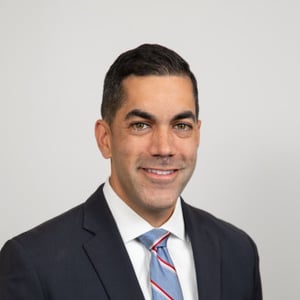
Managing Attorney, Institute for Justice
Arif Panju serves as a managing attorney with the Institute for Justice. He leads IJ’s Texas office and litigates cases involving free speech, property rights, economic liberty, and educational choice.
Arif is co-counsel in the case of Carson v. Makin in the U.S. Supreme Court. Carson is a challenge to Maine’s exclusion of religious educational options from the state’s school choice program.
Arif’s work has resulted in court victories in both federal and state court. He vindicated the free speech rights of tour guides in Billups v. City of Charleston. He secured a victory for economic liberty in Brantley v. Kuntz, freeing hairbraiding schools in Texas from onerous restrictions and paving the way for the abolishment of the state’s braiding license at the Texas Legislature. In Patel v. Texas Department of Licensing and Regulation, Arif helped secure a landmark victory in the Texas Supreme Court, establishing a new test for reviewing the constitutionality of economic regulations.
Arif’s work at IJ has been featured by outlets including The Wall Street Journal, New York Times, Washington Post, The Atlantic, Texas Tribune, and dozens more nationwide. His opinions and views on legal issues have been published in several outlets, including the Dallas Morning News, Austin American-Statesman, and USA Today. Arif sits on the board for the Freedom of Information Foundation of Texas.
Arif graduated law school with honors from Southern Methodist University. During law school he clerked on the United States Senate Committee on the Judiciary. Arif lives in Austin, Texas.

Partner, Lehotsky Cohn LLP
Will Thompson handles clients’ most sensitive and complicated matters. He specializes in complex litigation and solving time-sensitive problems.
Mr. Thompson has represented clients at every stage of complex litigation. He has first-chaired trials in state and federal court and led trial teams through multiple, high-profile evidentiary hearings on preliminary injunctions. He has handled complicated commercial matters, including antitrust, class-action, and constitutional issues. For example, Mr. Thompson represented major construction firms in a multi-billion-dollar construction dispute that resulted in no liability for his clients. He also has argued an expedited appeal in the Fifth Circuit and successfully obtained multiple emergency stays of lower-court orders.
Before joining Lehotsky Cohn LLP, Mr. Thompson served as Acting Chief of the Special Litigation Unit at the Texas Attorney General’s Office, where he gained extensive trial litigation experience. He secured multiple injunctions against federal agency action and successfully challenged local regulations as preempted by state law in both federal and state courts. Mr. Thompson also successfully defended Texas’s redistricting maps against constitutional challenges in both federal and state courts.
Mr. Thompson also previously served as an Assistant General Counsel to Texas Governor Greg Abbott. In that role, he provided in-house counsel to the Governor on numerous regulatory matters, including writing and submitting comments on proposed federal regulatory actions and monitoring state regulatory agencies. He also oversaw outside litigation teams representing the Governor in court.
Mr. Thompson was formerly a litigator at Gibson, Dunn & Crutcher LLP. He was a law clerk for Judge Andrew S. Oldham of the U.S. Court of Appeals for Fifth Circuit and Judge Diarmuid F. O’Scannlain of the U.S. Court of Appeals for the Ninth Circuit.
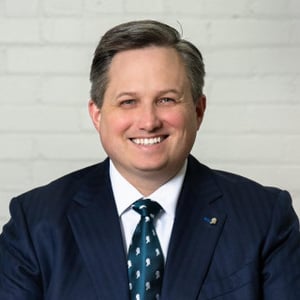
President and CEO, The Federalist Society
Sheldon Gilbert is the President and CEO of The Federalist Society. Gilbert has been involved in the conservative and libertarian legal movement since law school, and has served in prominent roles at both nonprofit organizations as well as corporate America.
A longtime constitutional litigator, Gilbert has represented clients through amicus and party briefs in nearly a hundred cases at the U.S. Supreme Court, at both the certiorari and merits stages. Most recently, Gilbert served as Senior Lead Counsel for Strategic Initiatives at Walmart, the world’s largest company, where he led teams providing legal advice related to government enforcement, internal investigations, government relations, public relations, and special projects at the center of law and policy.
Before joining Walmart, Gilbert served as Vice President for Content and Development and Senior Fellow for Constitutional Studies at the National Constitution Center, a congressionally chartered non-partisan center for constitutional education and debate, where he led both fundraising and programming efforts. While at the NCC, Gilbert helped ensure that the Center’s programming and exhibits incorporated constitutional perspectives from experts on both the right and the left, including the launch of the Center’s landmark permanent exhibit on the Civil War and the Reconstruction Amendments.
Prior to the National Constitution Center, Gilbert served as the director of the Institute for Justice’s Center for Judicial Engagement (CJE), where he educated the public about the role of the courts and the Constitution, where he frequently hosted discussions and debates on constitutional issues, and often spoke at Federalist Society lawyer and student chapters across the country.
He was also a litigator with the U.S. Chamber Litigation Center, the litigation arm of the U.S. Chamber of Commerce, where he represented the U.S. Chamber in over 400 cases in federal and state courts addressing a wide range of legal issues, from free speech to property rights.
Gilbert is a graduate of the George Washington University Law School where he helped found a first-of-its-kind National Religious Freedom Moot Court, which hosted law students from across the country to debate important, emerging religious liberty issues. After graduating from GWU, he also taught as a professorial lecturer at the school.
A graduate of the University of Utah, Gilbert is a child of the Mountain West, where he was born in a coal mining town in Utah and raised in Idaho near the Grand Tetons. Before going to law school, Gilbert’s diverse interests led him to work in a wide range of roles, from software development project management for a nonprofit, to working in his University’s radiobiology research lab, to volunteer service in Rio de Janeiro, Brazil for his church.
Gilbert is married with four children.
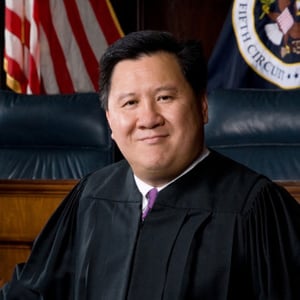
Judge, United States Court of Appeals, Fifth Circuit
James C. Ho is a Circuit Judge on the U.S. Court of Appeals for the Fifth Circuit. Before taking the bench on January 4, 2018, he was a partner and co-chair of the national Appellate and Constitutional Law practice group of Gibson, Dunn & Crutcher LLP.
As an appellate litigator for over a decade, including three years as the Solicitor General of Texas, Judge Ho presented 50 oral arguments in federal and state courts nationwide. He won numerous appeals, including three merits cases at the U.S. Supreme Court. He was routinely ranked among the nation’s leading lawyers by Benchmark, Chambers, Law360, The Legal 500, and The National Law Journal, among other publications. His work has been cited favorably by courts at every level of both the federal and state judiciaries. He won a Best Brief Award from the National Association of Attorneys General for every year that he served as solicitor general, and he is the only state solicitor general in history to be invited by the U.S. Supreme Court to express the views of a state.
Judge Ho has served in all three branches of the federal government. On the Senate Judiciary Committee, he served as chief counsel of the Subcommittees on the Constitution and Immigration under Senator John Cornyn. At the Justice Department, he served as Special Assistant to the Assistant Attorney General for Civil Rights and an attorney-advisor at the Office of Legal Counsel. He clerked for Judge Jerry E. Smith of the U.S. Court of Appeals for the Fifth Circuit and Justice Clarence Thomas of the U.S. Supreme Court.
His record of public service also includes appointments as vice chair of the Federal Judicial Evaluation Committee in Texas and co-chair of the National Asian Pacific American Bar Association Judiciary Committee, and as a member of the U.S. Magistrate Judge Merit Selection Panel for the Northern District of Texas, the U.S. delegation to the United Nations Committee on the Elimination of Racial Discrimination, and the Continuity of Government Commission.
In addition, Judge Ho has served as an Adjunct Professor of Law at the University of Texas School of Law, where he taught seminars on U.S. Supreme Court Litigation and Religious Liberty. He has authored numerous articles in respected law reviews nationwide, including an annual feature on exemplary judicial writing for The Green Bag Almanac & Reader. He previously served as senior editor of The Green Bag and as co-editor of Pub. L. Misc.
Judge Ho graduated from Stanford University with honors and a B.A. in Public Policy in 1995, and the University of Chicago Law School with high honors in 1999. Before law school, he was a legislative aide to California State Senator Quentin Kopp. He and his wife Allyson live in Dallas, Texas, with their twin daughter and son.
Constitutional Scholarship Director and Senior Legal Analyst, Pacific Legal Foundation
Anastasia Boden is Director of Constitutional Scholarship at Pacific Legal Foundation, where she leads the organization’s Supreme Court commentary and directs scholarly analysis in support of the firm’s litigation. She has represented entrepreneurs and small businesses nationwide in challenges to onerous licensing regimes, anti-competitive titling restrictions, Certificate of Need (“competitor’s veto”) laws, and other forms of unnecessary red tape that block economic opportunity.
Prior to this role, Anastasia developed nearly a dozen constitutional challenges to Certificate of Need laws across the country, helping spur legislative reform in Montana, Pennsylvania, and West Virginia. Her victories include a ruling invalidating Houston’s busking restrictions, multiple appellate decisions expanding access to the courts for civil rights plaintiffs, and the legislative repeal of Virginia’s happy-hour advertising ban.
Her writings on law and liberty have been featured in USA Today, The Washington Post, The Wall Street Journal, the Los Angeles Times, the Chicago Tribune, Forbes, and more, and she has appeared on Headline News, CBS News, Fox News, ReasonTV, Newsmax, and John Stossel. In 2020, she was featured on Libertarian Party presidential candidate Jo Jorgensen’s Supreme Court shortlist.
Anastasia earned her BA with dean’s honors from the University of California, Santa Barbara, and her JD from Georgetown University Law Center, where she was research assistant to Professor Randy E. Barnett—the “intellectual godfather” of the constitutional challenge to Obamacare. She is the co-creator of the podcast Dissed, about infamous Supreme Court dissents. She authors the biweekly newsletter SCOTUS Scoop and the column, “In Dissent” for SCOTUSblog.
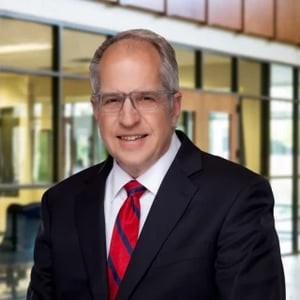
Senior Counsel, First Liberty Institute
Jordan Lorence is Senior Counsel in FLI’s Washington, D.C. office, where he represents First Liberty in strategic efforts promoting religious liberty, and works on important First Amendment projects and litigation, including those at the U.S. Supreme Court.
Lorence has a long career of litigating religious liberty cases since 1984. He has worked for many public interest law firms, including Alliance Defending Freedom, Home School Legal Defense Association, the North Star Legal Center and Concerned Women for America.
He has worked on important religious liberty cases. Lorence worked on school choice cases at the Supreme Court, such as Witters v. Washington Department of Services for the Blind (1986), and Trinity Lutheran (2016), which laid the foundation for First Liberty’s crucial win in Carson v. Makin (2022), requiring Maine to include religious schools in its school choice program.
Lorence argued before the U.S. Supreme Court in Regents of the University of Wisconsin v. Southworth (2000). He represented prolife Christian law students from the University of Wisconsin Law School who objected to the University’s requirement that they pay a mandatory student fee that funded the advocacy of student pro-abortion groups. Other Supreme Court cases Lorence has worked on include NIFLA v. Becerra (2018), protecting prolife pregnancy centers from a California statute requiring them to post signs explaining how pregnant women could obtain state-funded abortions; Masterpiece Cakeshop (2017), involving a Christian cake artist sued by the State of Colorado for declining to design a case celebrating the wedding of a same-sex couple and other cases such as Christian Legal Society v. Martinez (2012), Rosenberger v. University of Virginia (1995), Hurley v. GLIB (1995) and Lamb’s Chapel v. Center Moriches Center Moriches School District (1993).
Churches and other religious groups in New York City obtained the right to rent vacant public schools on weekends to conduct worship services after Lorence’s tenacious 20 years of litigation in Bronx Household of Faith. Lorence won protection for churches facing eviction from discriminatory zoning ordinances in Minnesota in Cornerstone Bible Church v. City of Hastings, Minnesota (1991). He also argued at the New Mexico Supreme Court one of the first cases in the nation defending a Christian wedding photographer charged by the State of New Mexico with discrimination for declining to create photos celebrating the commitment ceremony of a lesbian couple in Elane Photography v. Willock (2013).
Lorence defended home schooling families from intrusive school officials during his time working at Home School Legal Defense Association (HSLDA) in the 1980s and 1990s. HSLDA also tasked Lorence with establishing a sister organization in Canada to protect home schooling families there. He traveled extensively in Canada from British Columbia to Prince Edward Island speaking to families how they could protect their right to home school under relevant Canadian law.
Lorence earned his undergraduate degree in journalism from Stanford University and his law degree from the University of Minnesota, his home state. Lorence was born and raised in Minnesota, where he worked one summer building Mighty Dump trucks at Tonka Toys in Mound, Minnesota. For two years immediately after he graduated from law school, Lorence served as the head administrator for a Minnesota Senate committee.
He speaks extensively on First Amendment and other legal issues. Lorence has spoken at least 75 law schools and many legal conferences. Prominent publications such as the Wall Street Journal, the Washington Post and others have printed his opinion pieces on key legal issues involving religious liberty and freedom of speech. He has appeared on such media outlets as Fox News, CNN, National Public Radio, NBC’s Today Show, BBC radio and many others.
Lorence and his wife Marilyn have been married 40 years. They live in the Washington, D.C. area where they raised their seven children.
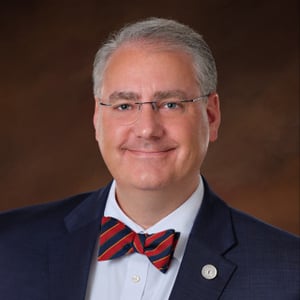
Judge, Court of Criminal Appeals Judge, Tennessee Court of Appeals
Judge Tom Greenholtz serves on the Tennessee Court of Criminal Appeals, Eastern Section, where he hears direct appeals in criminal and post-conviction matters from across the state. Appointed by Governor Bill Lee and confirmed by the General Assembly in 2022, he brings to the appellate bench a record that includes seven years as a judge in Hamilton County Criminal Court and prior private practice with Chambliss, Bahner & Stophel, where his work encompassed municipal and governmental law, complex civil litigation, labor and employment matters, and appellate advocacy. He began his legal career as a law clerk to the Honorable William M. Barker of the Tennessee Supreme Court. He earned his juris doctor from the University of Tennessee, summa cum laude.
Beyond his judicial responsibilities, Judge Greenholtz serves on the Tennessee Supreme Court’s Technology Oversight Committee, and he is an ex-officio member of the supreme court’s Advisory Commission on the Rules of Practice and Procedure. A Fellow of the Chattanooga, Tennessee, and American Bar Foundations, he has long served as an adjunct professor of political science at the University of Tennessee at Chattanooga, teaching courses on constitutional law, civil liberties, and the judicial process. He and his wife, Kate, have two children and have called Chattanooga home since the mid-1980s.
Justice, Tennessee Supreme Court
Judge, Tennessee Court of Appeals
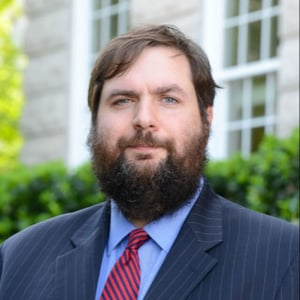
Judge, Tennessee Court of Appeal
Jeffrey Usman is a member of the Tennessee Court of Appeals. He earned his bachelor's degree from Georgetown University, his J.D. from Vanderbilt Law School, and his LL.M. from Harvard Law School. He clerked for Judge W. Harold Albritton of the United States District Court for the Middle District of Alabama and Judge Mary Beck Briscoe of the United States Court of Appeals for the Tenth Circuit. He also previously served as a career clerk for Justice William C. Koch, Jr. of the Tennessee Supreme Court and as an Assistant Attorney General for the State of Tennessee. Most recently, he was professor at the Belmont University College of Law for over a decade. At Belmont, he taught constitutional law related courses and was recognized 5 times with a best professor award.
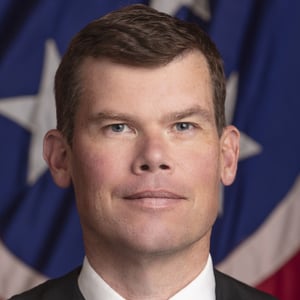
Judge, Tennessee Court of Criminal Appeals

Professor of Law, South Texas College of Law Houston
Josh Blackman is a national thought leader on constitutional law and the United States Supreme Court. Josh’s work was quoted during two presidential impeachment trials. He has testified before Congress and advises federal and state lawmakers. Josh regularly appears on TV, including NBC, CBS, ABC, Fox, and the BBC. Josh is also a frequent guest on NPR and other syndicated radio programs. He has published commentaries in the New York Times, Wall Street Journal, Washington Post, and leading national publications.
Since 2012, Josh has served as a professor at the South Texas College of Law Houston. He holds the Centennial Chair of Constitutional Law. Josh is an Adjunct Fellow at the Manhattan Institute. Josh has written more than seven dozen law review articles that have been cited more than a thousand times. Josh was selected as the Jurist of the Year by the Texas Journal of Law & Public Policy, received the inaugural Meese III Originalism Award, and was awarded the Inaugural Joseph Story Award. Josh was selected by Forbes Magazine for the “30 Under 30” in Law and Policy. Josh is the President of the Harlan Institute, and founded FantasySCOTUS, the Internet’s Premier Supreme Court Fantasy League. He blogs at the Volokh Conspiracyand posts@JoshMBlackman.
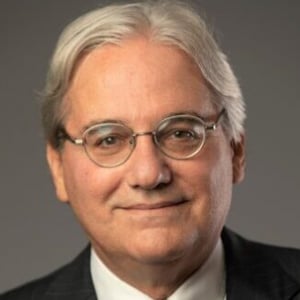
Clinical Professor of Law, Cornell Law School
William A. Jacobson is a Clinical Professor of Law and Director of the Securities Law Clinic.
He is a 1981 graduate of Hamilton College and a 1984 graduate of Harvard Law School. At Harvard he was Senior Editor of the Harvard International Law Journal and Director of Litigation for the Harvard Prison Legal Assistance Project.
Prior to joining the Cornell law faculty in 2007, Professor Jacobson had a highly successful civil litigation and arbitration practice in Providence, Rhode Island, concentrating in investment, employment, and business disputes in the securities industry, including many high profile cases reported in leading newspapers and magazines.
Professor Jacobson has argued cases in numerous federal and state courts, including the Courts of Appeal for the First, Fifth and Sixth Circuits, and the Rhode Island Supreme Court.
Professor Jacobson has a national reputation as a leading practitioner in securities arbitration. He was Treasurer, and is a former member of the Executive Committee and Board of Directors of the Public Investors Arbitration Bar Association, a professional organization of attorneys dedicated to protecting public investors. He frequently is quoted in national media on issues related to investment fraud and investor protection, and in the past has served as one of a small number of private practice attorneys who trained new arbitrators for the Financial Industry Regulatory Authority.
Professor Jacobson is co-author of the Securities Arbitration Desk Reference (Thomson-Reuters), updated annually.
Professor Jacobson also is the founder and publisher of Legal Insurrection, a popular politics and law website. He is frequently quoted in the media on political and legal topics, has authored many Op-Eds in major publications, and appears on television and radio to discuss politics and the law.
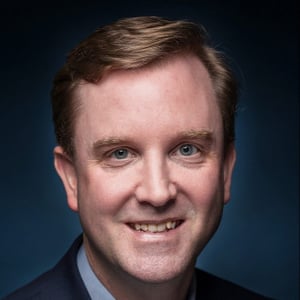
Vice President and Deputy Counsel, Wisconsin Institute for Law and Liberty
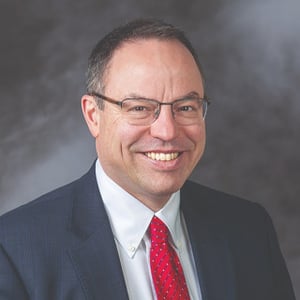
Professor of Law and J. Philip Johnson Faculty Fellow, University of North Dakota School of Law
Michael S. McGinniss is Professor of Law and J. Philip Johnson Faculty Fellow at the University of North Dakota School of Law, where he joined the faculty in 2010 and served as the Dean from 2019 to 2022. He chairs the executive committee for the Federalist Society's Practice Group on Professional Responsibility and Legal Education.
Before entering the legal academy, Professor McGinniss served for twelve years as a Disciplinary Counsel for the Supreme Court of Delaware. He currently teaches courses on Professional Responsibility, Advanced Legal Ethics, Civil Procedure, and Federal Courts. He also serves as Faculty Advisor for the North Dakota Law Review and the UND Law Federalist Society student chapter.
Professor McGinniss’ research and scholarship interests are wide-ranging and include lawyer and judicial ethics, lawyer discipline and regulation of the profession, constitutional law (especially First Amendment, separation of powers, and federalism), and cultural challenges faced by conservatives in the law schools and the legal profession. His most recent law review article, Declaring Independence to Secure Integrity: The Supreme Court Justices' Code of Conduct, was published in the Federalist Society Review. His article Expressing Conscience with Candor: Saint Thomas More and First Freedoms in the Legal Profession, was published in the Harvard Journal of Law & Public Policy.
Professor McGinniss has spoken to Federalist Society lawyer and student chapters across the country about judicial independence and ethics, especially relating to the federal courts and the United States Supreme Court Justices. In addition, he has spoken to several chapters about rising challenges to ideological diversity and targeting of conservative viewpoints in law schools and the legal profession. Although he is very pleased to speak on these and many other topics that may be of interest to lawyer and student chapters, in 2026-2027, he has particular interest in speaking on the topic “Lawyer Discipline as Political ‘Resistance’: Separation of Powers, Federalism, and the Rule of Law,” concerning his work-in-progress on the weaponization of professional disciplinary processes against conservative lawyers for political and ideological purposes.
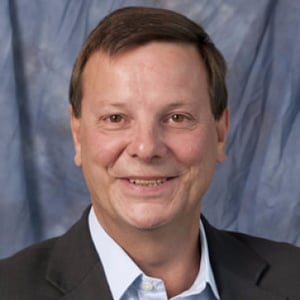
Professor of Law, Antonin Scalia Law School, George Mason University
Professor of Law Michael S. Greve joined the faculty of the Antonin Scalia Law School, George Mason University in fall 2012 after having served as John G. Searle Scholar at the American Enterprise Institute (AEI), where he specialized in constitutional law, courts, and business regulation and served as chairman of the Competitive Enterprise Institute. Prior to joining AEI, Greve was founder and co-director of the Center for Individual Rights, a public interest law firm specializing in constitutional litigation.
Greve has served previously as an adjunct professor at a number of universities, including Cornell and Johns Hopkins Universities, and has been a visiting professor at Boston College since 2004. He was awarded a PhD and an MA in government by Cornell University. Greve also earned a Diploma from the University of Hamburg in Germany.
A prolific writer, Greve is the author of nine books and a multitude of articles appearing in scholarly publications, as well as numerous editorials, short articles, and book reviews. He is a frequent speaker for professional and scholarly organizations and has made many appearances on radio and television.
In addition Greve has provided congressional and state legislative testimony, has lobbied and consulted in federal agency proceedings, and has provided litigation services and management in over 30 cases, including matters before the U.S. Supreme Court.
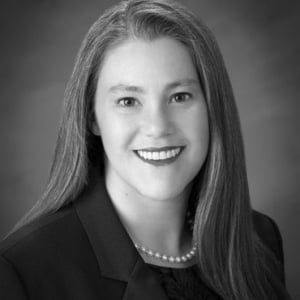
Judge, Arizona Court of Appeals, Division One
The Honorable Jennifer M. Perkins began service on the Arizona Court of Appeals, Division One, on October 30, 2017. At the time of her appointment by Governor Douglas Ducey, Judge Perkins was Assistant Solicitor General for the State of Arizona.
Judge Perkins was born in Portales, New Mexico, and primarily raised in Albuquerque. She attended the prestigious Albuquerque Academy from 1988-1995, before moving to Washington D.C. to attend the Elliott School of International Affairs at the George Washington University as a National Merit Scholar. Therafter, she relocated again to Dallas, Texas, and earned her juris doctor from the SMU Dedman School of Law, graduating cum laude in 2002.
Judge Perkins started her career at the law firm of Browning & Peifer (now Peifer, Hanson, Mullins, and Baker) in Albuquerque, New Mexico. While there, she litigated complex commercial matters including class action plaintiff and defense work, and assisted with employment and contract litigation. In 2003, the judge accompanied the Honorable James O. Browning in transitioning to the federal district court bench, serving as his first law clerk.
After her clerkship, Judge Perkins moved to Arizona to work for the Institute for Justice, Arizona Chapter, a public interest law firm. She spent five years with IJ-AZ litigating civil rights cases in Arizona and across the country. In 2009, the judge became Disciplinary Counsel for the Arizona Commission on Judicial Conduct, where she reviewed and prosecuted ethics complaints against state court judges throughout Arizona. After five years serving the state in this capacity, Judge Perkins entered private practice by joining an appellate law firm in Phoenix. While there, she worked on state and federal appeals involving a wide range of legal subjects, including complex business disputes, property rights, judicial ethics, and personal injury matters.
In January 2015, Judge Perkins joined the Office of the Arizona Attorney General to serve as the first Assistant Solicitor General; in that capacity, she was responsible for oversight of Attorney General Opinions and served as ethics counsel to the entire office. In addition to these two primary roles, the judge assisted on a variety of matters including trial and appellate litigation of election-related matters; federal appellate litigation with the Federalism Unit; state criminal appeals; and drafting amicus briefs on behalf of Arizona in state and federal courts.
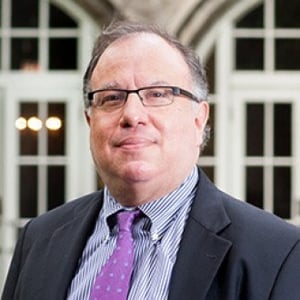
Harold Washington Professor of Law, Northwestern University Pritzker School of Law
Daniel B. Rodriguez, the Harold Washington Professor at the Law School, served as dean of the Law School from January 2012 through August 2018.
His principal academic work is in the areas of administrative law, local government law, statutory interpretation, federal and state constitutional law, and the law-business-technology interface.
Formerly, Professor Rodriguez served as Minerva House Drysdale Regents Chair in Law at the University of Texas-Austin; as a Research Fellow at Rice University’s Baker Institute for Public Policy; as Dean and Warren Distinguished Professor of Law at the University of San Diego School of Law; and, as a Professor of Law at University of California, Berkeley School of Law. He has also served as a visiting professor at several top law schools, including Stanford, Harvard, Columbia, University of Southern California, and Virginia.
Professor Rodriguez was the 2014 President of the Association of American Law Schools (AALS) and is currently serving as chair of the council of the American Bar Association Center for Innovation, a council member of the American Law Institute, and as an advisor to ROSS Intelligence, Inc.
Rodriguez received his law degree, with honors, from Harvard Law School and his undergraduate degree from California State University of Long Beach.
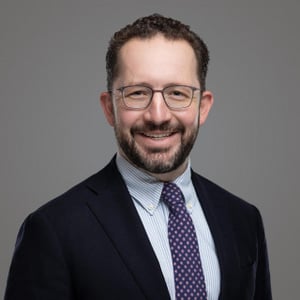
Executive Director, Alliance For Consumers; President & CEO, American Juris Link
O.H. Skinner is the President & CEO of American Juris Link, a nonprofit dedicated to accelerating nonprofit litigation to advance freedom, liberty, and the rule of law. O.H. has a long track record in facilitating strategic nonprofit litigation in his role as the Executive Director at Alliance For Consumers as well as from his time serving Arizona Attorney General Mark Brnovich in senior positions, including as Arizona Solicitor General. O.H. is a graduate of the University of Pennsylvania and Harvard Law School. Prior to joining the Arizona Attorney General's Office, O.H. practiced at WilmerHale and Ropes & Gray in Boston, and clerked for the Hon. J.L. Edmondson of the United States Court of Appeals for the Eleventh Circuit. In 2023, O.H. was a Wasserstein Public Interest Fellow at Harvard Law School, where he counseled students as a Harvard-identified “outstanding public interest attorney.”

Solicitor General, West Virginia
Michael Williams is the Solicitor General for the State of West Virginia. In that role, Michael represents the State in appeals before state and federal courts, including the U.S. Supreme Court. Michael also coordinates strategic affirmative litigation on the State’s behalf, including litigation against the federal government.
Before joining the Attorney General’s Office, Michael co-led the complex briefing and appeals group at a Michigan boutique firm, representing Fortune 50 companies and others in actions across the country. He also practiced in the litigation groups of two Washington, D.C. firms and clerked with the Appellate Division of the U.S. Attorney’s Office for the District of Maine.
Michael’s work has been honored with a Best Brief Award from the National Associationof Attorneys General and a Leader in the Law Award from Michigan Lawyers Weekly. He often speaks and writes on appellate-related issues.
Michael clerked twice in the Fourth Circuit: once with then-Chief Judge Deborah Chasanow of the U.S. District Court for the District of Maryland and later with Judge G. Steven Agee of the U.S. Court of Appeals for the Fourth Circuit. He attended George Washington University Law School and Bates College.

Supreme Court Preview: What's to Come in 2027?
Palm Beach Lawyer Chapter
West Palm Beach, FLSupreme Court Roundup and Preview - Sacramento
Sacramento Lawyer Chapter
Sacramento, CAPanel I: From Complaint to Canon: Litigating Constitutional Cases
Arlington, TXAnnual Constitution Day Address
Texas Lawyer Chapter
Austin, TX"The Constitution of 1789: A New Introduction" with Prof. Wurman
Connecticut Lawyer Chapter
Stamford, CTBias, DEI, and CLE: Navigating the Constitutional Limits of Mandatory Training
Josh Blackman, William Jacobson, Daniel Lennington, Michael S. McGinniss
Jurisdictions increasingly require attorneys to complete CLE credits addressing bias, diversity, and inclusion in the...
In Dissent: What Happened at the Supreme Court This Term?
Las Vegas Lawyer Chapter
Las Vegas, NVSupreme Court Cases, Connecting the Dots Past to Present
Minnesota Lawyer Chapter
Panel 2: How Appealing: Our Constitutions as Seen from the Second-Highest Bench
2026 Tennessee Chapters Conference
Nashville, TNFrom Pork Producers to Suncor: Extraterritoriality and Our Constitutional Structure
Michael S. Greve, Jennifer Perkins, Daniel B. Rodriguez, Oramel H. Skinner, Michael R. Williams
How far can states go in regulating conduct that has effects outside their borders?At the...