
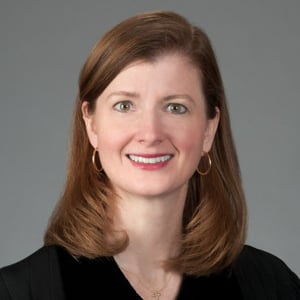
Judge, United States Court of Appeals, Eleventh Circuit
On March 20, 2018, Judge Elizabeth L. Branch (Lisa) was sworn in as a United States Circuit Judge for the Eleventh Circuit.
Judge Branch attended and graduated from Davidson College in North Carolina (B.A., cum laude, 1990), and Emory University School of Law (J.D., with distinction, 1994).
After graduating from law school, Judge Branch served as a federal law clerk to The Honorable J. Owen Forrester of the U.S. District Court for the Northern District of Georgia from 1994 to 1996. Following her clerkship, Judge Branch joined the litigation department of Smith, Gambrell & Russell, LLP in Atlanta as an associate and then a partner.
From 2004 to 2008, Judge Branch was a senior official in the Administration of President George W. Bush in Washington, D.C. She served first as the Associate General Counsel for Rules and Legislation at the U.S. Department of Homeland Security and then as the Counselor to the Administrator of the Office of Information and Regulatory Affairs at the U. S. Office of Management and Budget.
She returned to Smith Gambrell in 2008 as a litigation partner. Judge Branch then was appointed to the Court of Appeals of Georgia by Governor Nathan Deal, taking office on September 4, 2012, where she served until March 19, 2018.
Judge Branch is a member of the Board of Advisors of the Atlanta Lawyers Chapter for the Federalist Society for Law and Public Policy Studies.
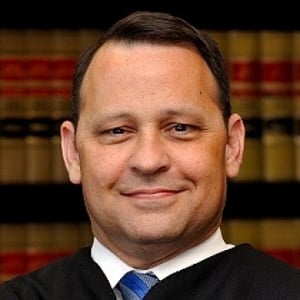
Arizona Supreme Court
Justice John Lopez IV serves on the Arizona Supreme Court. Before his appointment to the Supreme Court, Justice Lopez served as Arizona’s Solicitor General. Before that, he served in the U.S. Attorney’s Office as Executive assistant U.S. attorney; Chief assistant, U.S. Attorney's office in Phoenix; Chief of the Financial Crimes and Public Integrity Section; and Deputy appellate chief. Previous to that, Lopez worked as a legal advisor in the Regime Crimes Liaison Office of the Department of Justice, as an attorney with Bryan Cave, and a law clerk to Justice Charles Jones of the Arizona Supreme Court.
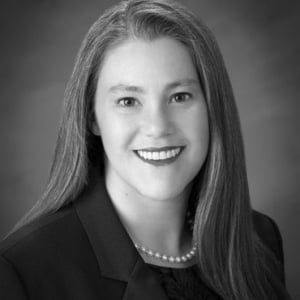
Judge, Arizona Court of Appeals, Division One
The Honorable Jennifer M. Perkins began service on the Arizona Court of Appeals, Division One, on October 30, 2017. At the time of her appointment by Governor Douglas Ducey, Judge Perkins was Assistant Solicitor General for the State of Arizona.
Judge Perkins was born in Portales, New Mexico, and primarily raised in Albuquerque. She attended the prestigious Albuquerque Academy from 1988-1995, before moving to Washington D.C. to attend the Elliott School of International Affairs at the George Washington University as a National Merit Scholar. Therafter, she relocated again to Dallas, Texas, and earned her juris doctor from the SMU Dedman School of Law, graduating cum laude in 2002.
Judge Perkins started her career at the law firm of Browning & Peifer (now Peifer, Hanson, Mullins, and Baker) in Albuquerque, New Mexico. While there, she litigated complex commercial matters including class action plaintiff and defense work, and assisted with employment and contract litigation. In 2003, the judge accompanied the Honorable James O. Browning in transitioning to the federal district court bench, serving as his first law clerk.
After her clerkship, Judge Perkins moved to Arizona to work for the Institute for Justice, Arizona Chapter, a public interest law firm. She spent five years with IJ-AZ litigating civil rights cases in Arizona and across the country. In 2009, the judge became Disciplinary Counsel for the Arizona Commission on Judicial Conduct, where she reviewed and prosecuted ethics complaints against state court judges throughout Arizona. After five years serving the state in this capacity, Judge Perkins entered private practice by joining an appellate law firm in Phoenix. While there, she worked on state and federal appeals involving a wide range of legal subjects, including complex business disputes, property rights, judicial ethics, and personal injury matters.
In January 2015, Judge Perkins joined the Office of the Arizona Attorney General to serve as the first Assistant Solicitor General; in that capacity, she was responsible for oversight of Attorney General Opinions and served as ethics counsel to the entire office. In addition to these two primary roles, the judge assisted on a variety of matters including trial and appellate litigation of election-related matters; federal appellate litigation with the Federalism Unit; state criminal appeals; and drafting amicus briefs on behalf of Arizona in state and federal courts.
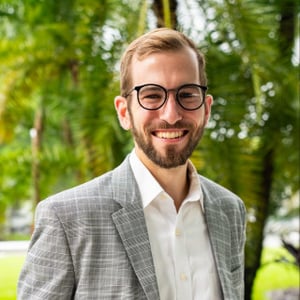
AI Innovation and Law Fellow, University of Texas School of Law
Kevin Frazier is an AI Innovation and Law Fellow with University of Texas School of Law.
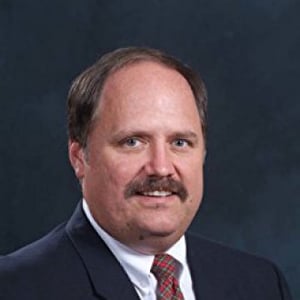
Distinguished Professor of Law, Jamie L. Whitten Chair of Law and Government, University of Mississippi School of Law
Professor Ronald J. Rychlak is the Jamie L. Whitten Chair of Law and Government and Distinguished Professor of Law at the University of Mississippi. He is a legal advisor to the Holy See’s delegation to the United Nations and chair of the Mississippi Advisory Committee to the U.S. Civil Rights Commission. He serves as the university’s Faculty Athletic Representative and is on the executive committee of the Southeastern Conference (SEC). In 2019 he received the university’s highest research and publication recognition, the “Distinguished Research and Creative Achievement Award” based upon his reputation for scholarly activity and leadership roles in professional societies. In 2023, he received the Algernon Sydney Sullivan Award, the University’s highest award in honor of service, for “placing service to others and the community before oneself, while embodying the qualities of honesty, morality, ethics, integrity, responsibility, determination, courage, and compassion.” In 2024, he was voted “Outstanding Law Professor” by the law school student body.
Ron is the author, co-author, or editor of twelve books and over 100 articles. The Congregation for the Causes of Saints at the Vatican called his book, Hitler, the War, and the Pope “definitive” in its response to charges made against the leader of the Catholic Church during World War II. He has been published in Notre Dame Law Review, UCLA Law Review, The Washington Post, The Wall Street Journal, and numerous other periodicals and journals. Media appearances include CNN, ABC, Fox News, The National Geographic TV Network, The Military Channel, C-SPAN, and more.
Ron and his wife Claire are proud of their six children, two sons-in-law, one daughter-in-law, and three granddaughters. They live in Oxford, Mississippi.

Tazewell Taylor Professor of Law and William H. Cabell Research Professor, William & Mary Law School
Jonathan H. Adler joined the William & Mary law faculty as the Tazwell Taylor Professor of Law and William H. Cabell Research Professor in 2025. Prior to joining the faculty, he was the inaugural Johan Verheij Memorial Professor of Law and the founding Director of the Coleman P. Burke Center for Environmental Law at the Case Western Reserve University School of Law.
Professor Adler is the author or editor of seven books, including Climate Liberalism: Perspectives on Liberty, Property and Pollution (Palgrave, 2023), Marijuana Federalism: Uncle Sam and Mary Jane (Brookings Institution Press, 2020), Business and the Roberts Court (Oxford University Press, 2016) and Rebuilding the Ark: New Perspectives on Endangered Species Act Reform (AEI Press, 2011).
His articles have appeared in publications ranging from the Harvard Environmental Law Review and Yale Journal on Regulation to the Wall Street Journal, New York Times, and Washington Post. He has testified before Congress a dozen times, and his work has been cited in the U.S. Supreme Court. A 2024 study identified Professor Adler as the seventh most cited legal academic in administrative and environmental law from 2019 to 2023.
Professor Adler is a contributing editor to Civitas Outlook and a regular contributor to the popular legal blog, The Volokh Conspiracy. A regular commentator on constitutional and regulatory issues, he has appeared on numerous radio and television programs, ranging from the PBS Newshour and National Public Radio to the Fox News Channel and Entertainment Tonight.
Professor Adler is a senior fellow at the Property & Environment Research Center in Bozeman, Montana. In 2018, Professor Adler was elected to membership in the American Law Institute and helped co-found the organization Checks and Balances. In 2024, Professor Adler was appointed a public member of the Administrative Conference of the United States.
Professor Adler clerked for the Honorable David B. Sentelle on the U.S. Court of Appeals for the District of Columbia Circuit.
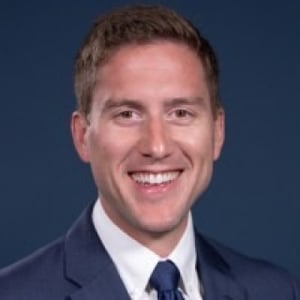
Chief Deputy Solicitor General, Director of the Tenth Amendment Center, Ohio Attorney General's Office
John serves in the Office of the Solicitor General as a Deputy Solicitor General and as the Director of the Tenth Amendment Center. In his role, John monitors federal actions, orders, statutes, and regulations for potential overreach and advises the Solicitor General about potential actions to protect the interests of the State of Ohio. John works in both state and federal courts, including the U.S. Supreme Court, the U.S. Courts of Appeals, and the Ohio Supreme Court.
John previously practiced as a litigator at two large law firms in Columbus. He clerked for Judge Joseph Hood on the U.S. District Court for the Eastern District of Kentucky and Judge Eugene Siler for the U.S. Court of Appeals for the Sixth Circuit.
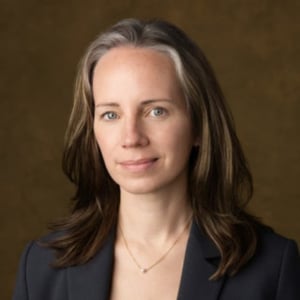
Senior Fellow in Executive Power, Cato Institute
Molly Nixon is a senior fellow at the Cato Institute, where she focuses on the scope, use, and history of executive power as well as its limits under the Constitution. Molly was previously an attorney with Pacific Legal Foundation’s separation of powers practice, where she litigated cases challenging congressional delegations of legislative power and executive branch overreach. Before that, she served as an Attorney-Advisor at the Department of the Interior and as Legislative Counsel for Congressman Justin Amash.
Molly holds a J.D. from New York University School of Law and a B.A. in History and International Relations from Boston University. She clerked for the U.S. District Court for the District of Alaska and practiced law at a firm in New York City for several years before moving to Washington, D.C.
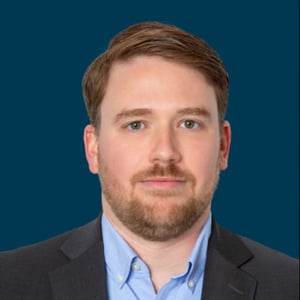
Attorney, Separation of Powers, Pacific Legal Foundation
Josh Robbins is an attorney in Pacific Legal Foundation’s separation of powers group. He litigates cases to defend the structural protections of the U.S. and state constitutions that guarantee liberty for all Americans. He wants to help ensure Americans receive due process from the government when their lives and property are at stake and that the laws are made by our democratically elected representatives and not by unaccountable bureaucrats.
As an attorney in private practice, Josh saw firsthand how the government can embroil people (and even large corporations) in years-long legal battles. At PLF, he works to provide those without great resources an opportunity to vindicate their right to a properly ordered government, which is the right of all Americans.
Prior to joining PLF, Josh was an associate at a large law firm where he litigated cases in federal and state courts. He clerked for the Honorable Jerry E. Smith of the United States Court of Appeals for the Fifth Circuit in Houston.
Josh earned a B.A. in economics and international studies from Yale University and a J.D. from the University of Virginia School of Law. While at UVA, he served as an articles editor for the Virginia Law Review. He lives in Alexandria, Virginia, and enjoys hiking, swimming, and attending Washington Nationals games.
Josh is a member of the bar only in the states of Virginia and D.C.
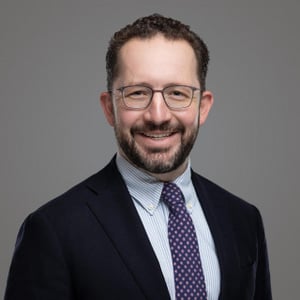
Executive Director, Alliance For Consumers; President & CEO, American Juris Link
O.H. Skinner is the President & CEO of American Juris Link, a nonprofit dedicated to accelerating nonprofit litigation to advance freedom, liberty, and the rule of law. O.H. has a long track record in facilitating strategic nonprofit litigation in his role as the Executive Director at Alliance For Consumers as well as from his time serving Arizona Attorney General Mark Brnovich in senior positions, including as Arizona Solicitor General. O.H. is a graduate of the University of Pennsylvania and Harvard Law School. Prior to joining the Arizona Attorney General's Office, O.H. practiced at WilmerHale and Ropes & Gray in Boston, and clerked for the Hon. J.L. Edmondson of the United States Court of Appeals for the Eleventh Circuit. In 2023, O.H. was a Wasserstein Public Interest Fellow at Harvard Law School, where he counseled students as a Harvard-identified “outstanding public interest attorney.”
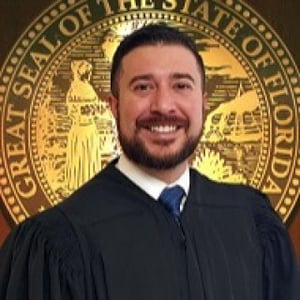
Judge, Eleventh Judicial Circuit of Florida
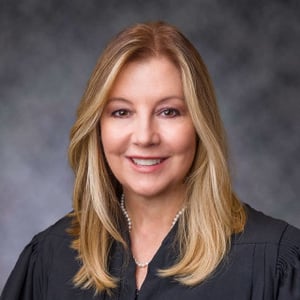
Judge, Florida Third District Court of Appeal
Judge Norma S. Lindsey was appointed to the Third District Court of Appeal by Governor, now Senator, Rick Scott and took her seat on the Court on June 19, 2017. She was previously appointed to the Circuit Court of the Eleventh Judicial Circuit in 2011 by then Governor Scott, where she served until she joined the appellate bench. Judge Lindsey began her judicial career in January of 2006 when she was appointed to the Miami-Dade County Court by Governor Jeb Bush.
Judge Lindsey is the Chief Judge Elect and currently serves as Chair of the Education Committee for the Florida Conference of District Court of Appeal Judges, as a member of the Florida Court Education Counsel, and as a member of the District Court of Appeal Budget Commission.
She previously served as a member of the District Court of Appeal Performance and Accountability Commission, and as a member of the Florida Supreme Court Committee on Standard Jury Instructions in Civil Cases. She also previously served as the Third DCA Representative to the Appellate Practice Section of the Florida Bar and as a member of the Florida Supreme Court Work Group on Appellate Court Reporting Requirements. And, she is a former member of the Florida Supreme Court Work Group on County Court Jurisdiction, and a former Judicial Liaison to the Real Property and Probate Section of the Florida Bar.
Prior to her appointment to the Third District Court of Appeal, Judge Lindsey served as an Associate Judge on Florida’s Fourth District Court of Appeal in December of 2014 and in July of 2016. She also served on more than two dozen Circuit Appellate Panels in the Appellate Division of the Eleventh Judicial Circuit during her time as a Circuit judge.
Judge Lindsey has been active throughout her career in judicial education having served as a faculty member and co-chair of the Civil Track for the Florida College of Advanced Judicial Studies and as a faculty member of the Florida Judicial College, the Florida Conferences of Circuit Court Judges and the Florida Conference of County Court Judges. In addition, she has lectured and taught numerous CLE courses at events sponsored by national, state and local bar associations, law schools and community groups.
Outside of the courtroom, Judge Lindsey is an active volunteer judge of student competitions. She has served as a volunteer judge for the Orseck Memorial Moot Court Competition at the annual Florida Bar Conference, the University of Miami School of Law Mock Trial and Moot Court Competitions, as well as student competitions at St. Thomas University College of Law and Florida International College of Law, the Legal Services of Greater Miami First Annual Legal Eagle Closing Argument Competition, the ABA Section of Labor and Employment Student Trial Advocacy Program, and the Southeastern United States Regional Black Law Students Association Mock Trial Competition.
Judge Lindsey is the recipient of the University of Miami School of Law Alumni Achievement Award, the Dade County Bar Association Lifetime Achievement Award, and the Boys and Girls Clubs of America National Service to Youth Award. She is a former Big Sister in the Big Brothers Big Sisters School to Work Program and has been recognized for her work on the Women’s Committee of Big Brothers Big Sisters of Greater Miami. Judge Lindsey earned Hon. Mention Recognition as a High School All-American in Track and Field after winning the Virginia State AA High School high jump championship two years in a row.
Prior to taking the bench, Judge Lindsey practiced commercial litigation. She also served as a member and chair of the Judicial Nominating Commission for Florida’s Third District Court of Appeal, the Executive Director of Florida’s Growth Management Study Commission, and as Associate General Counsel for Boys and Girls Clubs of Miami-Dade.
Judge Lindsey earned her law degree at the University of Miami School of Law. She earned her Bachelor of Business Administration in Economics from Marshall University, where she was the Captain of the Women’s Track and Field Team and the recipient of the Arlene Stooke Award for Leadership Excellence.
She is married to attorney H. Eugene Lindsey, III, and they are the proud parents of a beautiful daughter.
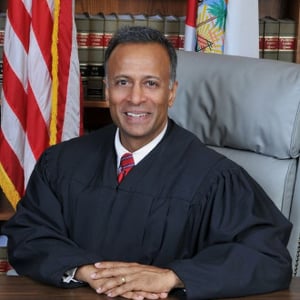
United States District Judge, United States District Court for the Southern District of Florida
On December 20, 2019, Raag Singhal received his judicial commission to serve on the United States District Court for the Southern District of Florida. Judge Singhal is the first Asian American in history to serve as an Article III judge in the jurisdiction of the Eleventh Circuit (Alabama, Georgia and Florida).
Immediately prior to becoming a federal judge, Judge Singhal spent eight years as a State Circuit Court Judge in Broward County, Florida, having been appointed by then-Governor Rick Scott in 2011. During that period of time, Singhal served, at times, in the Criminal, Civil and Mental Health divisions and was fortunate enough to sit as an Associate Judge on Florida’s Fourth District Court of Appeal on four occasions.
As a lawyer, Singhal gained experience at a civil litigation firm followed by three years as an Assistant State Attorney. After that, Singhal ran a successful criminal defense practice in Fort Lauderdale for eighteen years. During that time, he handled more than two hundred jury trials including thirty first-degree murder cases.
Judge Singhal has had leadership roles in many law-related groups. He is past-President of the Broward Association of Criminal Defense Lawyers and the Stephen H. Booher Chapter of the American Inns of Court. He was on the Board of Directors of the Broward County Bar Association, and is a frequent speaker at events for various local Bar groups such as the Asian Pacific American Bar Association and the Federalist Society. Singhal was also Associate Dean of the Florida College for Advanced Judicial Studies upon his elevation to the federal court system.
Judge Singhal received his law degree from Wake Forest University School of Law in 1989 where he was very active in Moot Court activities, and was on the winning team of the J. Braxton Craven National Moot Court Competition (4th Amendment). He received his undergraduate degree in Political Science from Rice University in 1986.

Senior Fellow, Civitas Institute, University of Texas, Austin
Linda Denno is a senior fellow at the Civitas Institute. She is also Associate Dean of the University of Arizona, College of Applied Science and Technology headquartered at the branch campus in Sierra Vista, Arizona. Dr. Denno’s strategic vision and commitment to academic excellence is demonstrated by the fact that two of the College’s academic programs—Cyber Operations and Intelligence & Information Operations—have been designated as National Centers of Academic Excellence.
Dr. Denno has earned numerous awards for teaching and for university and community service in her more than 35 years in higher education, including multiple outstanding teaching awards. She was awarded the Silver Rose for Outstanding Contributions to the US Army Military Intelligence Corps; and the Meritorious Public Service Medal, the highest civilian award given by the US Army.

Deputy Editor-in-Chief, Harvard Journal of Law & Public Policy
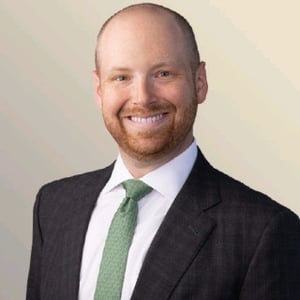
Solicitor General, Iowa Office of the Attorney General
Eric Wessan serves as Iowa’s Solicitor General in the Iowa Attorney General’s Office. In that role, Wessan leads Iowa’s litigation before State and federal appellate courts, including the Iowa and U.S. Supreme Courts. Before that role, Wessan worked on complex commercial litigation at two large law firms in Chicago. Wessan also served as a law clerk for the Honorable James C. Ho on the U.S. Court of Appeals for the Fifth Circuit and for the Honorable John F. Kness on the U.S. District Court for the Northern District of Illinois. Wessan is a graduate of the University of Chicago Law School, with honors, and of the University of Chicago.
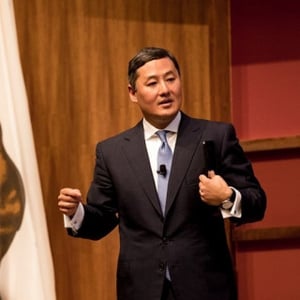
Emanuel S. Heller Professor of Law, University of California at Berkeley; Thomas Smith Senior Research Fellow, Civitas Institute, University of Texas at Austin
John Yoo is the Emanuel Heller Professor of Law at the University of California at Berkeley. He is also the Thomas Smith Senior Research Fellow, Civitas Institute, at the University of Texas at Austin. He is also a Nonresident Senior Fellow at the American Enterprise Institute.
His most recent book, The Politically Incorrect Guide to the Supreme Court, co-authored with Robert Delahunty, was published in 2023. Professor Yoo’s other books include Defender-in-Chief: Trump’s Fight for Presidential Power; Striking Power: How Cyber, Robots, and Space Weapons Change the Rules for War; Point of Attack: Preventive War, International Law, and Global Welfare; and Crisis and Command: A History of Executive Power from George Washington to George Bush.
He is a co-author of volumes 1 and 2 of R. Rossum, G. Tarr, V. Munoz & J. Yoo American Constitution Law (Routledge, 2026), and a co-editor of the eight-volume series on the 250th anniversary of the American Revolution, We Hold These Truths, with Yuval Levin and Adam White of the American Enterprise Institute.
Professor Yoo has published more than 100 articles in academic journals on subjects including national security, constitutional law, international law, and the Supreme Court. He also regularly contributes to the editorial pages of the Wall Street Journal, New York Times, Washington Post, Los Angeles Times, and National Review, among others.
Professor Yoo has served in all three branches of government. He was an official in the U.S. Department of Justice, where he worked on national security and terrorism issues after the 9/11 attacks. He served as general counsel of the U.S. Senate Judiciary Committee. He has been a law clerk for Supreme Court Justice Clarence Thomas and federal appeals Judge Laurence Silberman. He has been a visiting professor at the University of Texas at Austin’s School of Civic Leadership, Seoul National University, the Interdisciplinary Center Herzliya, Keio University, Trento University, the University of Chicago, and the Free University of Amsterdam.
Professor Yoo supervises the Public Law and Policy Program and the California Constitution Center. He also serves on the boards of Founding Forward, the Washington Legal Foundation, the Pacific Legal Foundation, the Ulysses Grant Institute, the Federalist Society’s Separation of Powers and Federalism Division, the Universidad Cientifica del Sur Law School, and the Asia-Pacific Law Institute at Seoul National University. He is a winner of the Federalist Society’s Paul Bator award and the Heritage Foundation’s Edwin Meese III Originalism Lectureship.
Professor Yoo graduated from Yale Law School and summa cum laude from Harvard College.
Senior Fellow, Civitas Institute, University of Texas, Austin
Linda Denno is a senior fellow at the Civitas Institute. She is also Associate Dean of the University of Arizona, College of Applied Science and Technology headquartered at the branch campus in Sierra Vista, Arizona. Dr. Denno’s strategic vision and commitment to academic excellence is demonstrated by the fact that two of the College’s academic programs—Cyber Operations and Intelligence & Information Operations—have been designated as National Centers of Academic Excellence.
Dr. Denno has earned numerous awards for teaching and for university and community service in her more than 35 years in higher education, including multiple outstanding teaching awards. She was awarded the Silver Rose for Outstanding Contributions to the US Army Military Intelligence Corps; and the Meritorious Public Service Medal, the highest civilian award given by the US Army.
Deputy Editor-in-Chief, Harvard Journal of Law & Public Policy
Solicitor General, Iowa Office of the Attorney General
Eric Wessan serves as Iowa’s Solicitor General in the Iowa Attorney General’s Office. In that role, Wessan leads Iowa’s litigation before State and federal appellate courts, including the Iowa and U.S. Supreme Courts. Before that role, Wessan worked on complex commercial litigation at two large law firms in Chicago. Wessan also served as a law clerk for the Honorable James C. Ho on the U.S. Court of Appeals for the Fifth Circuit and for the Honorable John F. Kness on the U.S. District Court for the Northern District of Illinois. Wessan is a graduate of the University of Chicago Law School, with honors, and of the University of Chicago.
Emanuel S. Heller Professor of Law, University of California at Berkeley; Thomas Smith Senior Research Fellow, Civitas Institute, University of Texas at Austin
John Yoo is the Emanuel Heller Professor of Law at the University of California at Berkeley. He is also the Thomas Smith Senior Research Fellow, Civitas Institute, at the University of Texas at Austin. He is also a Nonresident Senior Fellow at the American Enterprise Institute.
His most recent book, The Politically Incorrect Guide to the Supreme Court, co-authored with Robert Delahunty, was published in 2023. Professor Yoo’s other books include Defender-in-Chief: Trump’s Fight for Presidential Power; Striking Power: How Cyber, Robots, and Space Weapons Change the Rules for War; Point of Attack: Preventive War, International Law, and Global Welfare; and Crisis and Command: A History of Executive Power from George Washington to George Bush.
He is a co-author of volumes 1 and 2 of R. Rossum, G. Tarr, V. Munoz & J. Yoo American Constitution Law (Routledge, 2026), and a co-editor of the eight-volume series on the 250th anniversary of the American Revolution, We Hold These Truths, with Yuval Levin and Adam White of the American Enterprise Institute.
Professor Yoo has published more than 100 articles in academic journals on subjects including national security, constitutional law, international law, and the Supreme Court. He also regularly contributes to the editorial pages of the Wall Street Journal, New York Times, Washington Post, Los Angeles Times, and National Review, among others.
Professor Yoo has served in all three branches of government. He was an official in the U.S. Department of Justice, where he worked on national security and terrorism issues after the 9/11 attacks. He served as general counsel of the U.S. Senate Judiciary Committee. He has been a law clerk for Supreme Court Justice Clarence Thomas and federal appeals Judge Laurence Silberman. He has been a visiting professor at the University of Texas at Austin’s School of Civic Leadership, Seoul National University, the Interdisciplinary Center Herzliya, Keio University, Trento University, the University of Chicago, and the Free University of Amsterdam.
Professor Yoo supervises the Public Law and Policy Program and the California Constitution Center. He also serves on the boards of Founding Forward, the Washington Legal Foundation, the Pacific Legal Foundation, the Ulysses Grant Institute, the Federalist Society’s Separation of Powers and Federalism Division, the Universidad Cientifica del Sur Law School, and the Asia-Pacific Law Institute at Seoul National University. He is a winner of the Federalist Society’s Paul Bator award and the Heritage Foundation’s Edwin Meese III Originalism Lectureship.
Professor Yoo graduated from Yale Law School and summa cum laude from Harvard College.
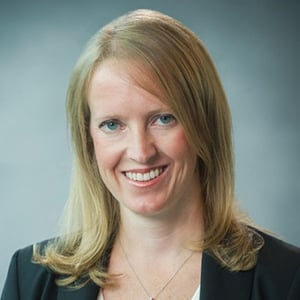
Partner, Clement & Murphy, PLLC
Erin Murphy is founding partner of Clement & Murphy, PLLC. She is widely recognized as one of the nation’s leading Supreme Court and appellate advocates. She has argued dozens of cases in appellate and trial courts throughout the country, including the Supreme Court and nearly all of the federal courts of appeals. Erin has long been ranked by Chambers & Partners rankings as a leading appellate practitioner, and the National Law Journal has named her one of the nation’s “Outstanding Women Lawyers.” Erin also has an active pro bono practice, through which she has successfully represented many religious organizations and adherents, criminal defendants, asylum applicants, adoptive parents, and more.
Erin is an adjunct professor at her alma mater the Georgetown University Law Center, a member and former officer of the Edward Coke Appellate Inn of Court, and a frequent speaker on topics relating to the Supreme Court and appellate advocacy. In her spare time, Erin serves on the board of directors of Street Law.
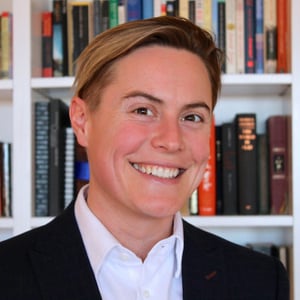
Associate Professor of Legal Studies & Business Ethics, The University of Pennsylvania Wharton School of Business
Amanda Shanor is an Assistant Professor at the University of Pennsylvania Wharton School, where her scholarship focuses on constitutional and administrative law, and in particular the First Amendment.
Shanor is a graduate of Yale Law School and Yale College, and a PhD candidate in law at Yale University. She served as a law clerk to Judges Cornelia T.L. Pillard and Judith W. Rogers on the D.C. Circuit, and Judge Robert W. Sweet in the Southern District of New York. She has taught at both Yale and Georgetown law schools and has published in the New York University Law Review, the Harvard Law Review Forum, and the Yale Law Journal Forum, among others. She is a contributor to Take Care and the co-author of a textbook on counterterrorism law.
Prior to joining the academy, Amanda worked in the National Legal Department of the American Civil Liberties Union on the organization’s Supreme Court litigation, including Masterpiece Cakeshop. Previously, she litigated a number of constitutional and national security cases with Professor David Cole, including Humanitarian Law Project v. Holder, while a fellow at Georgetown.
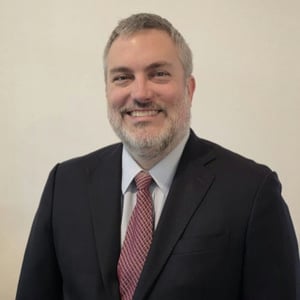
Host, The Prosecutors Podcast; Partner, Culper Law
Brett J. Talley is former a federal prosecutor (appellate chief in the Middle District of Alabama) and host of the true crime podcast "The Prosecutors." Brett has served as nominations chief and deputy assistant attorney general at the US Department of Justice, Advisor to the White House Counsel, speechwriter to Senator Rob Portman, a political and legal communications professional, deputy state solicitor general, staff writer for a presidential campaign, award-nominated horror fiction author (possibly related to the previous items on the list), US District and 11th Circuit judicial clerk, and adjunct law school professor. He is currently a partner ar Culper Law. Along the way, Brett has been involved at some level in the confirmation of a full majority of the sitting justices on the U.S. Supreme Court and scores of U.S. district and appellate court judges. A native Alabamian, Brett earned his undergraduate degree in History and Philosophy from the University of Alabama and JD from Harvard Law School. He lives in Montgomery with his wife Annie and their three small kids.
Solicitor General, Iowa Office of the Attorney General
Eric Wessan serves as Iowa’s Solicitor General in the Iowa Attorney General’s Office. In that role, Wessan leads Iowa’s litigation before State and federal appellate courts, including the Iowa and U.S. Supreme Courts. Before that role, Wessan worked on complex commercial litigation at two large law firms in Chicago. Wessan also served as a law clerk for the Honorable James C. Ho on the U.S. Court of Appeals for the Fifth Circuit and for the Honorable John F. Kness on the U.S. District Court for the Northern District of Illinois. Wessan is a graduate of the University of Chicago Law School, with honors, and of the University of Chicago.

Laurence H. Silberman Chair in Constitutional Governance, American Enterprise Institute; Executive Director, Antonin Scalia Law School’s C. Boyden Gray Center for the Study of the Administrative State
Adam J. White is the Laurence H. Silberman Chair in Constitutional Governance and senior fellow at the American Enterprise Institute, where he focuses on the Supreme Court and the administrative state. He also directs the Antonin Scalia Law School’s C. Boyden Gray Center for the Study of the Administrative State.
He writes on regulation and constitutional government for a variety of publications. He practiced law in Washington, D.C., after clerking for the D.C. Circuit's Judge David Sentelle. He also has been chairman of the ABA's Administrative Law Section.
In 2021, he served on the Presidential Commission on the Supreme Court of the United States, where he criticized “Court packing” and other efforts to restructure the Supreme Court.
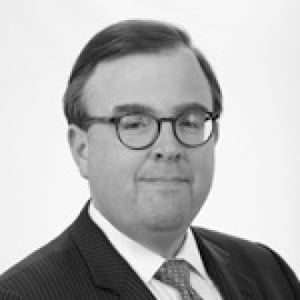
Partner, Morgan, Lewis & Bockius LLP
Michael Edney defends executives and corporations in criminal prosecutions and agency enforcement actions, successfully challenging numerous regulatory agencies—from the Justice Department to the US Securities and Exchange Commission and the US Commodity Futures Trading Commission, among others—against federal government overreach. Many of the regulations Mike has convinced the courts to reverse would have arbitrarily ended hundreds of businesses absent the courts’ intervention. He has also successfully challenged government decisions to break contracts and end projects in cooperation with private industry.
In addition to his criminal defense practice, Mike regularly brings actions challenging government agency regulations as illegal and unconstitutional before they are enforced. He has sued government agencies and reversed their attempted regulations seeking to upend the energy, financial, and tobacco industries.
His civil litigation practice spans beyond anti-regulatory suits. He has brought some of the leading First Amendment cases in the country. On behalf of The Washington Free Beacon, he vindicated the publication’s First Amendment right to access sealed court records before the Arizona Supreme Court. He has defended corporations in bet-the-company litigation concerning securities, environmental, employment, and fair housing. He has represented states at the request of their governors. He has repeatedly served as counsel for former Attorneys General of the United States when they appear as amici curiae before the Supreme Court.
Mike also represents clients on numerous national security matters, including the Classified Information Procedures Act, the Foreign Agent Registration Act, matters before the Committee on Foreign Investment in the United States, government cybersecurity investigations into companies regarded as critical national infrastructure, the handling of classified information by government contractors, and prepublication review of books authored by former government officials for sensitive and classified information.
His private practice draws from a half decade of prior government service. During the administration of former President George W. Bush, he served as deputy legal advisor to the National Security Council at the White House and in the Office of Legal Counsel at the United States Department of Justice, where he helped the administration address many legal issues pertaining to the United States' post-9/11 campaign against terrorism.
Before joining Morgan Lewis, Mike was a litigation partner at another global law firm.
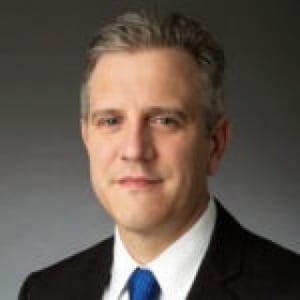
Non-Resident Senior Fellow, Reiss Center on Law and Security at NYU School of Law
Christopher Fonzone is a Non-Resident Senior Fellow at the Reiss Center on Law and Security at NYU School of Law. Fonzone served as the Assistant Attorney General for the Office of Legal Counsel (OLC) at the Department of Justice from 2023 to 2025. OLC, by delegation from the Attorney General, provides written opinions and other legal advice to the President and all executive branch agencies on a wide range of issues, with a focus on matters of particular complexity or importance, including sensitive national security matters.
Fonzone previously held a number of other government roles. From 2021 to 2023, he was the General Counsel of the Office of the Director of National Intelligence. During the Obama Administration, Fonzone was Deputy Assistant and Deputy Counsel to President Obama and the Legal Adviser to the National Security Council (NSC). And earlier in his career, Fonzone was Special Counsel to General Counsel of the Department of Defense and served in career roles at the Department of Justice, both at OLC and on the Civil Division’s Appellate Staff. Fonzone also served as a Member on the J. William Fulbright Foreign Scholarship Board from 2017 to 2019.
Outside of government, Fonzone is currently a Member of Anthropic’s National Security and Public Sector Advisory Council, where he supports the identification and development of AI applications that strengthen U.S. capabilities in key areas and assists in the development of industry-leading standards to promote a “race to the top” for responsible national security AI solutions. He was also the lead national security counsel to the Biden-Harris Transition, and a partner in Sidley Austin’s Privacy and Cybersecurity group, with a practice that focused on a wide range of issues related to information technology and cybersecurity.
Fonzone has lectured and taught classes on national security law at a variety of law schools, and his writing on national security and other legal topics has been published in a variety of forums, including the Washington Post, Newsweek, Lawfare, and Just Security.
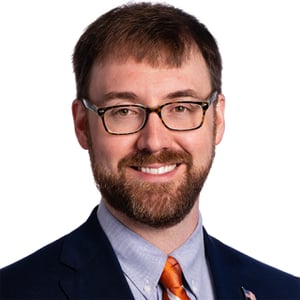
Senior Legal Fellow, Courts and the Constitution, Legal Policy Center, The Heritage Foundation
Zack is a Senior Legal Fellow of Courts and the Constitution at The Heritage Foundation.
He previously served for several years as an Assistant United States Attorney in the Northern District of Florida. Prior to that, he spent two years as an associate in the Washington, D.C. office of Cleary Gottlieb Steen & Hamilton, which he joined after clerking for the Hon. Emmett R. Cox on the United States Court of Appeals for the Eleventh Circuit.
Smith received his undergraduate, master’s, and law degrees from the University of Florida. During law school, Smith served as the Editor in Chief of the Florida Law Review and served on the executive boards of several student organizations, including the UF Chapter of the Federalist Society.
Partner, Morgan, Lewis & Bockius LLP
Michael Edney defends executives and corporations in criminal prosecutions and agency enforcement actions, successfully challenging numerous regulatory agencies—from the Justice Department to the US Securities and Exchange Commission and the US Commodity Futures Trading Commission, among others—against federal government overreach. Many of the regulations Mike has convinced the courts to reverse would have arbitrarily ended hundreds of businesses absent the courts’ intervention. He has also successfully challenged government decisions to break contracts and end projects in cooperation with private industry.
In addition to his criminal defense practice, Mike regularly brings actions challenging government agency regulations as illegal and unconstitutional before they are enforced. He has sued government agencies and reversed their attempted regulations seeking to upend the energy, financial, and tobacco industries.
His civil litigation practice spans beyond anti-regulatory suits. He has brought some of the leading First Amendment cases in the country. On behalf of The Washington Free Beacon, he vindicated the publication’s First Amendment right to access sealed court records before the Arizona Supreme Court. He has defended corporations in bet-the-company litigation concerning securities, environmental, employment, and fair housing. He has represented states at the request of their governors. He has repeatedly served as counsel for former Attorneys General of the United States when they appear as amici curiae before the Supreme Court.
Mike also represents clients on numerous national security matters, including the Classified Information Procedures Act, the Foreign Agent Registration Act, matters before the Committee on Foreign Investment in the United States, government cybersecurity investigations into companies regarded as critical national infrastructure, the handling of classified information by government contractors, and prepublication review of books authored by former government officials for sensitive and classified information.
His private practice draws from a half decade of prior government service. During the administration of former President George W. Bush, he served as deputy legal advisor to the National Security Council at the White House and in the Office of Legal Counsel at the United States Department of Justice, where he helped the administration address many legal issues pertaining to the United States' post-9/11 campaign against terrorism.
Before joining Morgan Lewis, Mike was a litigation partner at another global law firm.
Non-Resident Senior Fellow, Reiss Center on Law and Security at NYU School of Law
Christopher Fonzone is a Non-Resident Senior Fellow at the Reiss Center on Law and Security at NYU School of Law. Fonzone served as the Assistant Attorney General for the Office of Legal Counsel (OLC) at the Department of Justice from 2023 to 2025. OLC, by delegation from the Attorney General, provides written opinions and other legal advice to the President and all executive branch agencies on a wide range of issues, with a focus on matters of particular complexity or importance, including sensitive national security matters.
Fonzone previously held a number of other government roles. From 2021 to 2023, he was the General Counsel of the Office of the Director of National Intelligence. During the Obama Administration, Fonzone was Deputy Assistant and Deputy Counsel to President Obama and the Legal Adviser to the National Security Council (NSC). And earlier in his career, Fonzone was Special Counsel to General Counsel of the Department of Defense and served in career roles at the Department of Justice, both at OLC and on the Civil Division’s Appellate Staff. Fonzone also served as a Member on the J. William Fulbright Foreign Scholarship Board from 2017 to 2019.
Outside of government, Fonzone is currently a Member of Anthropic’s National Security and Public Sector Advisory Council, where he supports the identification and development of AI applications that strengthen U.S. capabilities in key areas and assists in the development of industry-leading standards to promote a “race to the top” for responsible national security AI solutions. He was also the lead national security counsel to the Biden-Harris Transition, and a partner in Sidley Austin’s Privacy and Cybersecurity group, with a practice that focused on a wide range of issues related to information technology and cybersecurity.
Fonzone has lectured and taught classes on national security law at a variety of law schools, and his writing on national security and other legal topics has been published in a variety of forums, including the Washington Post, Newsweek, Lawfare, and Just Security.
Senior Legal Fellow, Courts and the Constitution, Legal Policy Center, The Heritage Foundation
Zack is a Senior Legal Fellow of Courts and the Constitution at The Heritage Foundation.
He previously served for several years as an Assistant United States Attorney in the Northern District of Florida. Prior to that, he spent two years as an associate in the Washington, D.C. office of Cleary Gottlieb Steen & Hamilton, which he joined after clerking for the Hon. Emmett R. Cox on the United States Court of Appeals for the Eleventh Circuit.
Smith received his undergraduate, master’s, and law degrees from the University of Florida. During law school, Smith served as the Editor in Chief of the Florida Law Review and served on the executive boards of several student organizations, including the UF Chapter of the Federalist Society.

2026 Annual Arizona Dinner - Promises of 1776: Perspectives from the Bench
Phoenix, AZThe Future of Birthright Citizenship: What’s Next After Trump v. Barbara (Part Two)
Linda Denno, Will Randolph, Eric Wessan, John C. Yoo
On June 30, the Supreme Court held in Trump v. Barbara that nearly all children...
The Future of Birthright Citizenship: What’s Next After Trump v. Barbara (Part Two)
Linda Denno, Will Randolph, Eric Wessan, John C. Yoo
On June 30, the Supreme Court held in Trump v. Barbara that nearly all children...
AI-Induced Constitutional Disequilibrium
North Dakota Lawyer Chapter
Fargo, NDSupreme Court Preview: What Is in Store for October Term 2026?
Erin E. Murphy, Amanda Shanor, Brett J. Talley, Eric Wessan, Adam White
Registration is now closed No registration is needed to view the live stream, which will be...
Distrust, Tyranny, and the Bill of Rights
Evansville Lawyer Chapter
Evansville, INOff the Record? The Constitutionality of the Presidential Records Act
Michael J. Edney, Christopher Fonzone, Zack Smith
For nearly fifty years, the Presidential Records Act has governed the preservation, ownership, and eventual...
Off the Record? The Constitutionality of the Presidential Records Act
Michael J. Edney, Christopher Fonzone, Zack Smith
For nearly fifty years, the Presidential Records Act has governed the preservation, ownership, and eventual...
A Seat at the Sitting - October 2026
Miami Lawyer Chapter's Annual Law Review and Journal Topic Selection Night: Legal Scholarship at America's 250th Anniversary
Miami Lawyer Chapter
Miami, FL